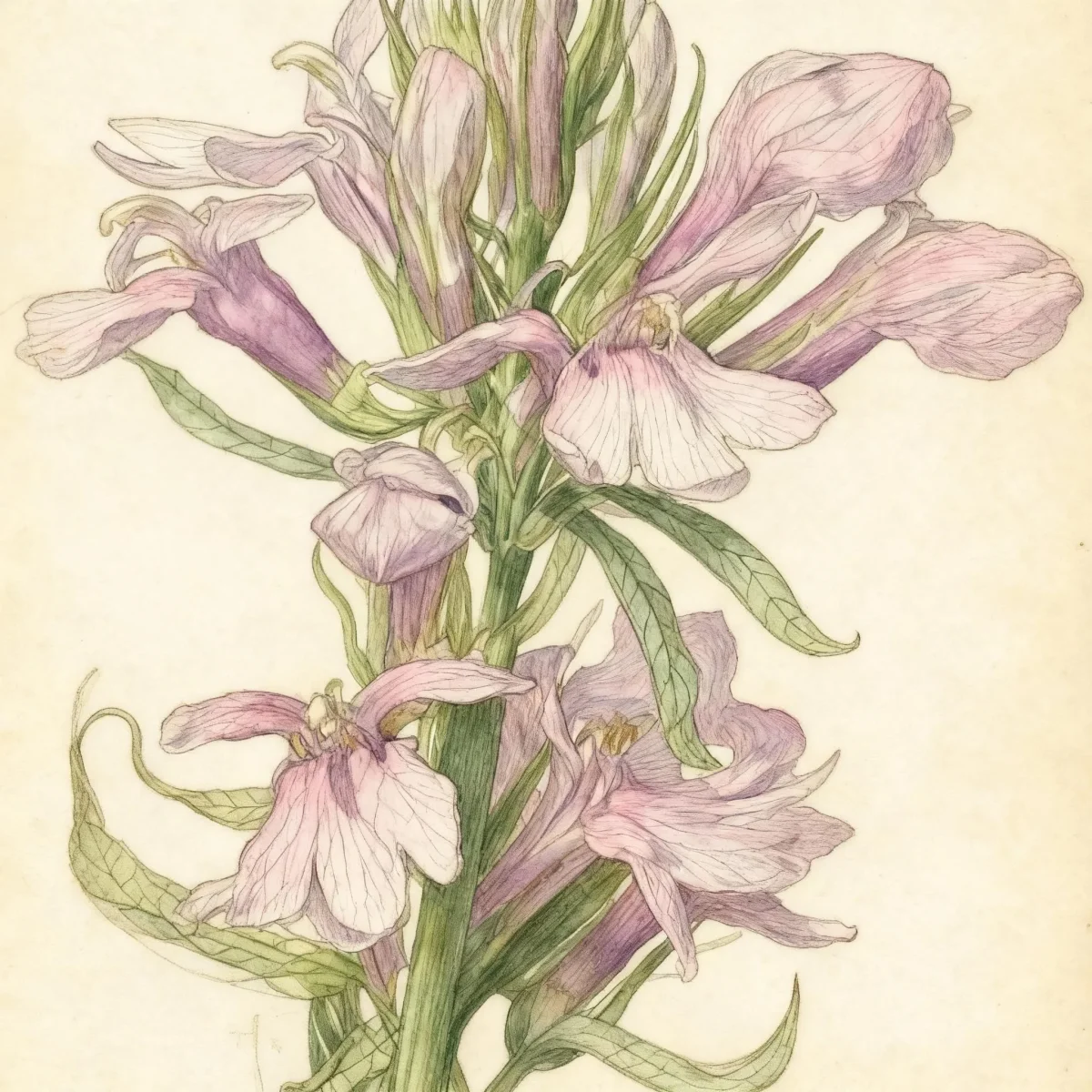
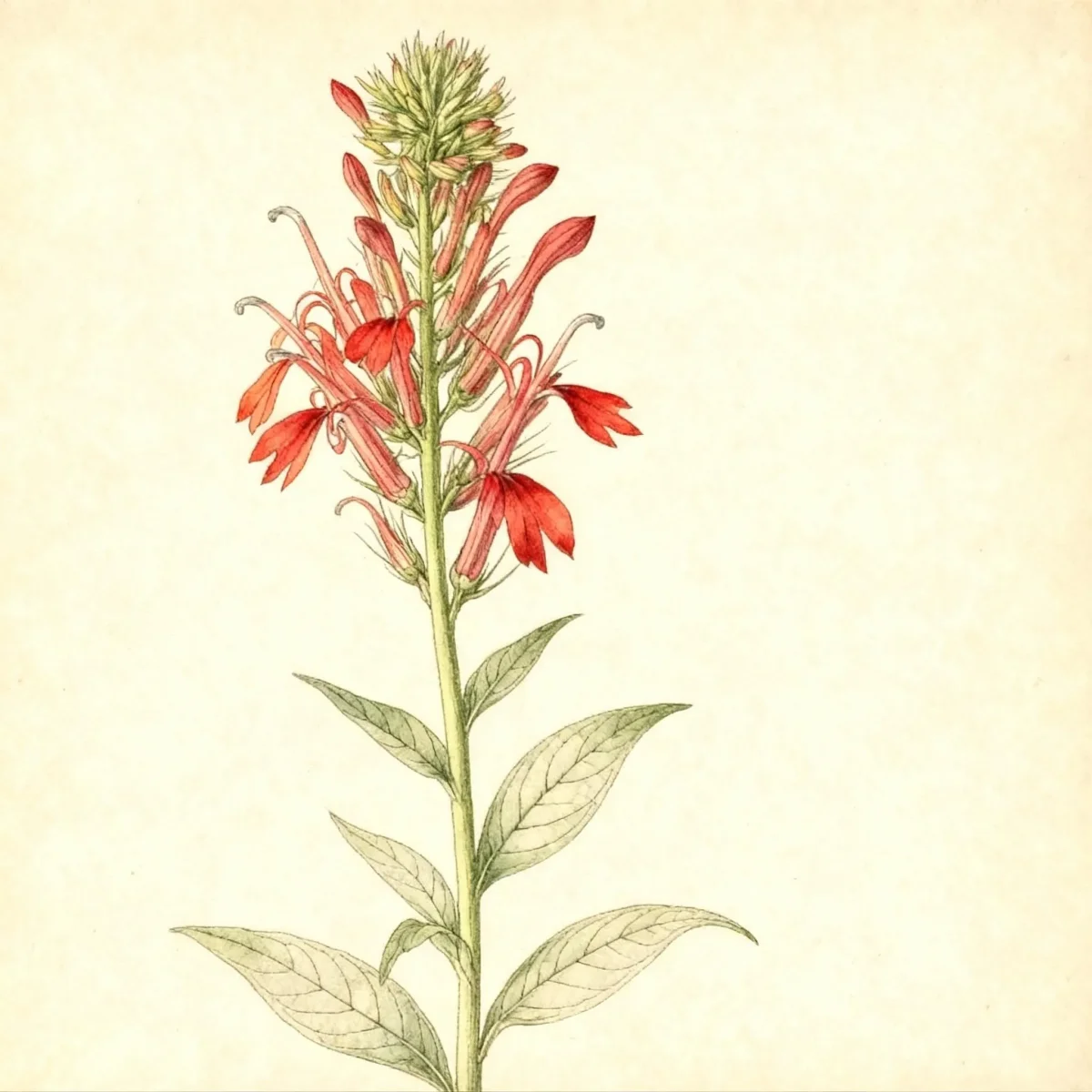
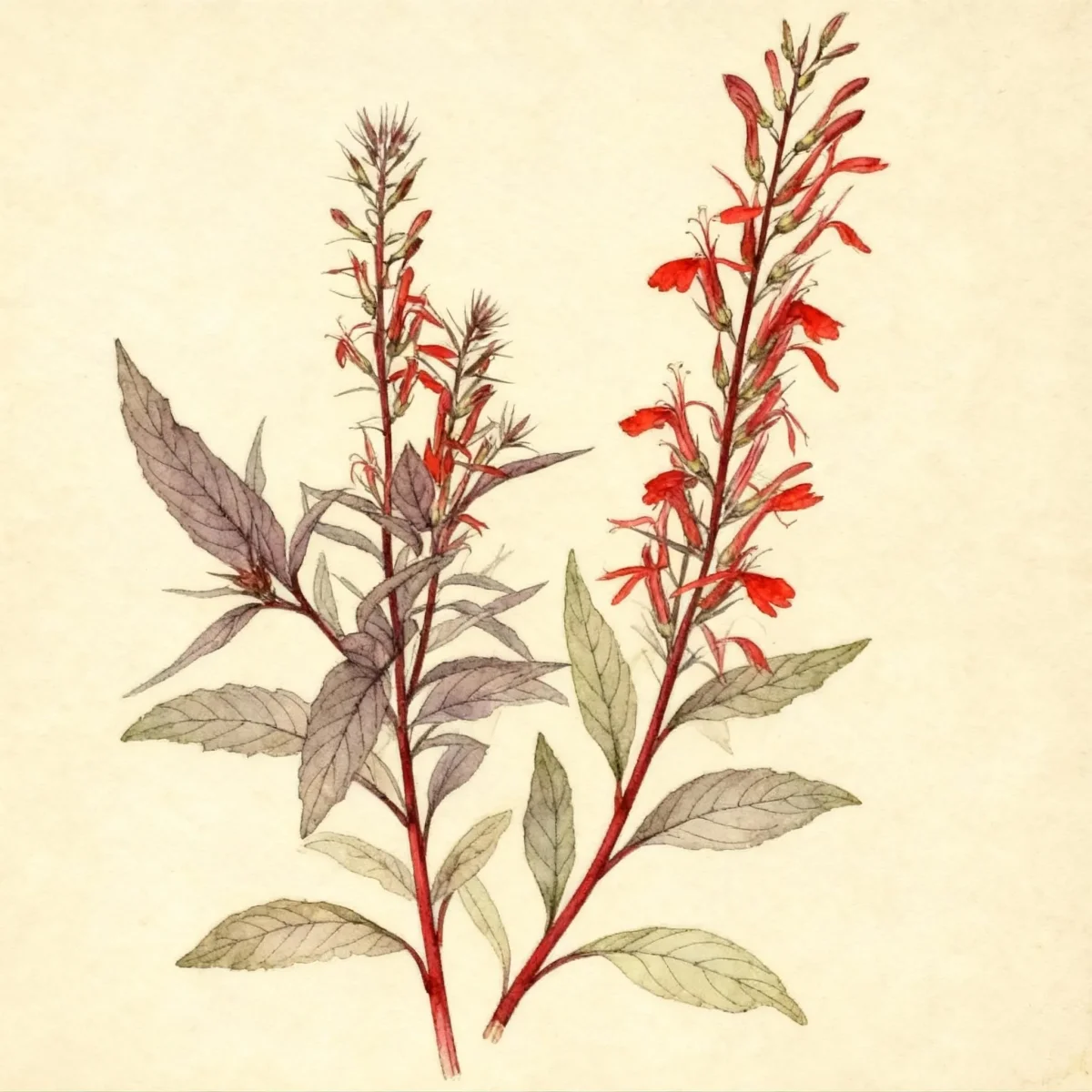
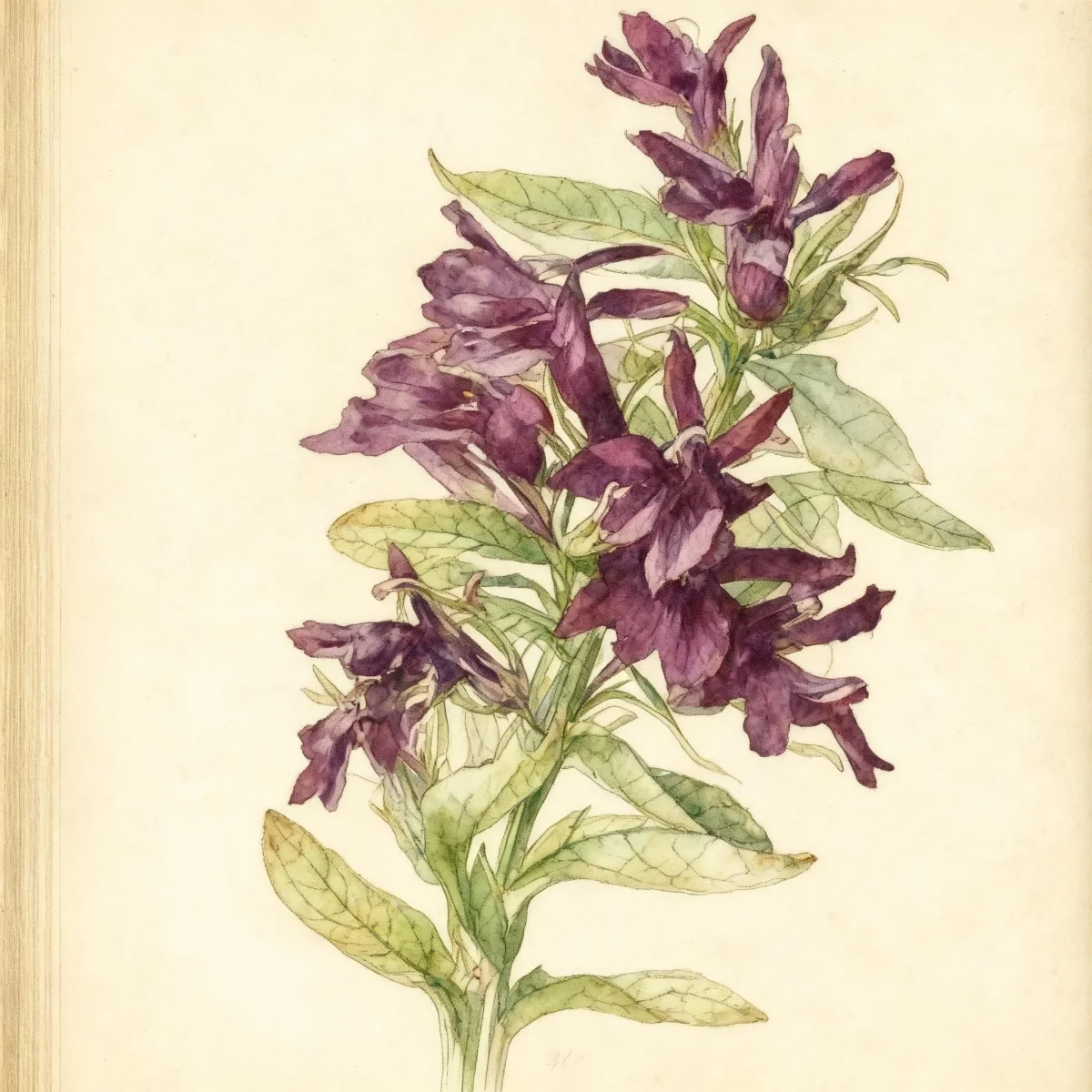
Cardinal flower (Lobelia cardinalis 'Queen Victoria')
Vibrant Lobelia cardinalis 'Queen Victoria' offers intense red blooms from July to September, drawing hummingbirds to wet, sunny spots.
Scroll down to discover growing tips, care requirements, companion plants, and more

Complete Plant Information
Overview
The Cardinal flower, Lobelia cardinalis ‘Queen Victoria’, is celebrated for its spectacular late-season display of vivid, cardinal red blooms that stand tall above dark foliage. This cultivar is particularly valued for being slightly tougher and better adapted to standard garden conditions than some of its wild relatives. Its striking color ensures it becomes a major focal point when many other perennials are fading.
As an herbaceous perennial originating from moist habitats, the Cardinal flower thrives when its cultural needs—specifically consistent moisture and ample sun—are met. It reliably grows between 3 to 4 feet tall, providing excellent vertical interest in the garden border.
Perhaps its greatest attraction is its ability to draw in wildlife; the tubular flowers are irresistible to hummingbirds and butterflies throughout mid to late summer. Planting Lobelia cardinalis ‘Queen Victoria’ correctly ensures seasons of dramatic color and ecological benefit, especially in damp sections of the landscape.
Fast Facts
- Plant Family: Campanulaceae
- Plant Type: Herbaceous perennial
- Hardiness Zones: USDA Zones 4-9
- Size at Maturity:
- Height: 3-4 ft
- Spread: 1.5-2 ft
- Bloom Time: July to September
- Bloom Description: Vivid red
- Sun Exposure: Full sun to part shade
- Water Needs: Medium to wet
- Maintenance Level: Medium
How to Grow
Planting the Cardinal flower is best achieved in spring or early fall, ensuring it is situated in rich soil that retains moisture readily. Lobelia cardinalis ‘Queen Victoria’ demands consistently moist conditions; the soils should never be allowed to dry out, making it an ideal choice for rain gardens or near water features. While it tolerates brief flooding, consistent water is key to its success.
Care involves monitoring moisture levels closely, especially during hot, dry spells. In cooler northern climates, this plant can handle full sun, but in hotter regions, afternoon shade is critical to prevent wilting and scorching. Fertilizing is often unnecessary in rich soils, but a balanced, slow-release fertilizer applied in spring can benefit growth if the soil is poor.
Seasonal attention is required, particularly regarding winter protection in colder zones (USDA zone 4). Apply a protective layer of root mulch around the base of the Lobelia cardinalis ‘Queen Victoria’ in late autumn. This mulch insulates the roots, preventing damage from harsh freezing and mitigating root heaving caused by freeze-thaw cycles.
Landscape Uses
The unique water requirements and intense color of the Cardinal flower make it perfect for specific landscape niches. It excels as a primary feature in rain gardens, where its need for medium to wet soil is satisfied by natural accumulation or supplemental irrigation. It is also highly effective along the margins of ponds, streams, or in wet transition areas of woodland gardens.
Use Lobelia cardinalis ‘Queen Victoria’ to provide essential late-season height and drama to the back of borders. When planted near structures that reflect heat, ensure the soil remains deeply saturated. Pairing its scarlet red spires with contrasting foliage, such as the blue-green leaves of irises or the broad hostas found in shade gardens, maximizes its visual impact.
For those creating habitats specifically for nectar feeders, this plant is essential. Placing several plants together creates a powerful visual beacon that reliably attracts hummingbirds throughout the late summer right up until the first hard frost.
Standout Features
Flower Qualities
- Showy
Noteworthy Characteristics
The Missouri native Lobelia cardinalis, commonly called cardinal flower, typically grows natively in moist areas like streamsides and swamps. This somewhat short-lived, clump-forming perennial features erect spikes of large, cardinal red flowers, often reaching 3 to 4 feet tall, borne on upright stalks with dark green, lance-shaped leaves. The vibrant, tubular blooms attract hummingbirds and butterflies, significantly enhancing garden ecology. Specifically, the ‘Queen Victoria’ cultivar is known to be more robust and tend to live longer in cultivated settings.
Tolerances
- Rabbit
- Deer
- Wet Soil
Potential Problems
Overall, Lobelia cardinalis ‘Queen Victoria’ enjoys a relatively clean bill of health regarding major pests and diseases. The primary nuisance may come from soft-bodied invertebrates; snails and slugs may chew on and damage the foliage, particularly when young. Monitor susceptible areas and employ appropriate organic controls, such as baits or copper barriers, if pest pressure becomes severe.
One critical caution for home gardeners is toxicity. The foliage of this plant contains various alkaloids that are poisonous if ingested by humans. Ensure placement away from areas frequently accessed by small children or pets who might chew on plant material.
While generally hardy, some gardeners note that hybrid lobelias can sometimes fail to thrive in specific local conditions, although the ‘Queen Victoria’ variety is better adapted. Maintaining consistent cultural requirements—especially moisture—is the best preventative measure against stress-related issues.
Frequently Asked Questions
What hardiness zones is Cardinal flower suitable for?
The Lobelia cardinalis ‘Queen Victoria’ is generally hardy across USDA Zones 4 through 9, providing excellent flexibility for many North American gardeners seeking vibrant red color.
How large does Lobelia cardinalis ‘Queen Victoria’ grow?
This perennial typically reaches a mature height between 3 and 4 feet tall, with a spread usually ranging from 1.5 to 2 feet wide, offering vertical interest in the perennial border.
What sun exposure does Cardinal flower need?
For the best performance of Lobelia cardinalis ‘Queen Victoria,’ aim for a location receiving full sun to part shade. If growing in hotter climates, provide protection from the intense afternoon sun.
When does Cardinal flower bloom?
This spectacular perennial delivers its vivid red flowers late in the season, blooming reliably from July through September.
Conclusion
The Lobelia cardinalis ‘Queen Victoria’ is an unmatched choice for adding intense scarlet brilliance to wet or moist garden areas late in the season. Its strong visual appeal and capacity to support hummingbirds make it invaluable for both aesthetic design and wildlife benefit. Before planting, confirm your site provides consistent moisture and select a spot where you can admire its spectacular hummingbird visitors.
Companion Planting
Selecting companions for the Cardinal flower is simplified by its preference for consistently damp soil. Plants that share these wet meadow or waterside requirements will thrive alongside it, creating a cohesive planting scheme. Hostas, particularly those with chartreuse or variegated leaves, offer excellent contrasting color and texture while appreciating similar soil moisture levels, although they may prefer more shade than the lobelia.
For sunny, wet spots, consider pairing Lobelia cardinalis ‘Queen Victoria’ with moisture-loving Filipendula (Meadowsweet) or certain tall sedges (Carex species). These companions should also bloom in the late summer or early fall to maintain visual interest when the lobelia is at its peak. Ensure companions do not grow so aggressively that they smother the occasionally shorter-lived Cardinal flower clump.
Wildlife Benefits
This plant is a powerhouse for attracting beneficial wildlife due to its highly visible, nectar-rich tubular flowers. Few garden plants rival the Cardinal flower in its ability to draw in hummingbirds; their long bills are perfectly adapted to probe the specific structure of the red blossoms. This makes Lobelia cardinalis ‘Queen Victoria’ an essential component for any dedicated hummingbird garden design.
Beyond the famous avian visitors, the bright red racemes also serve as significant sources of nectar for various pollinator species, including butterflies. Planting in groups or drifts maximizes visibility, effectively creating a high-traffic feeding station throughout the late summer months when other primary nectar sources might be diminishing.