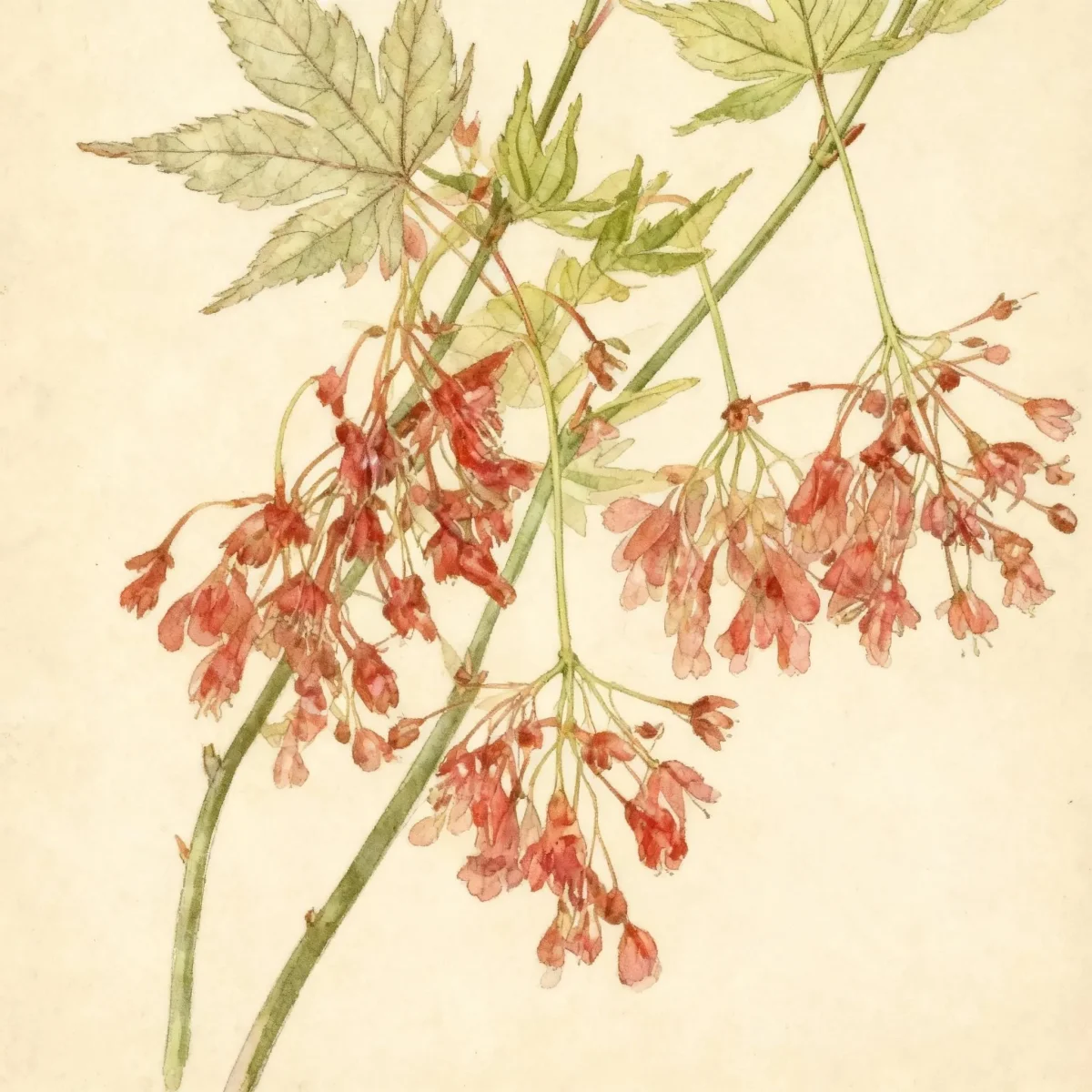
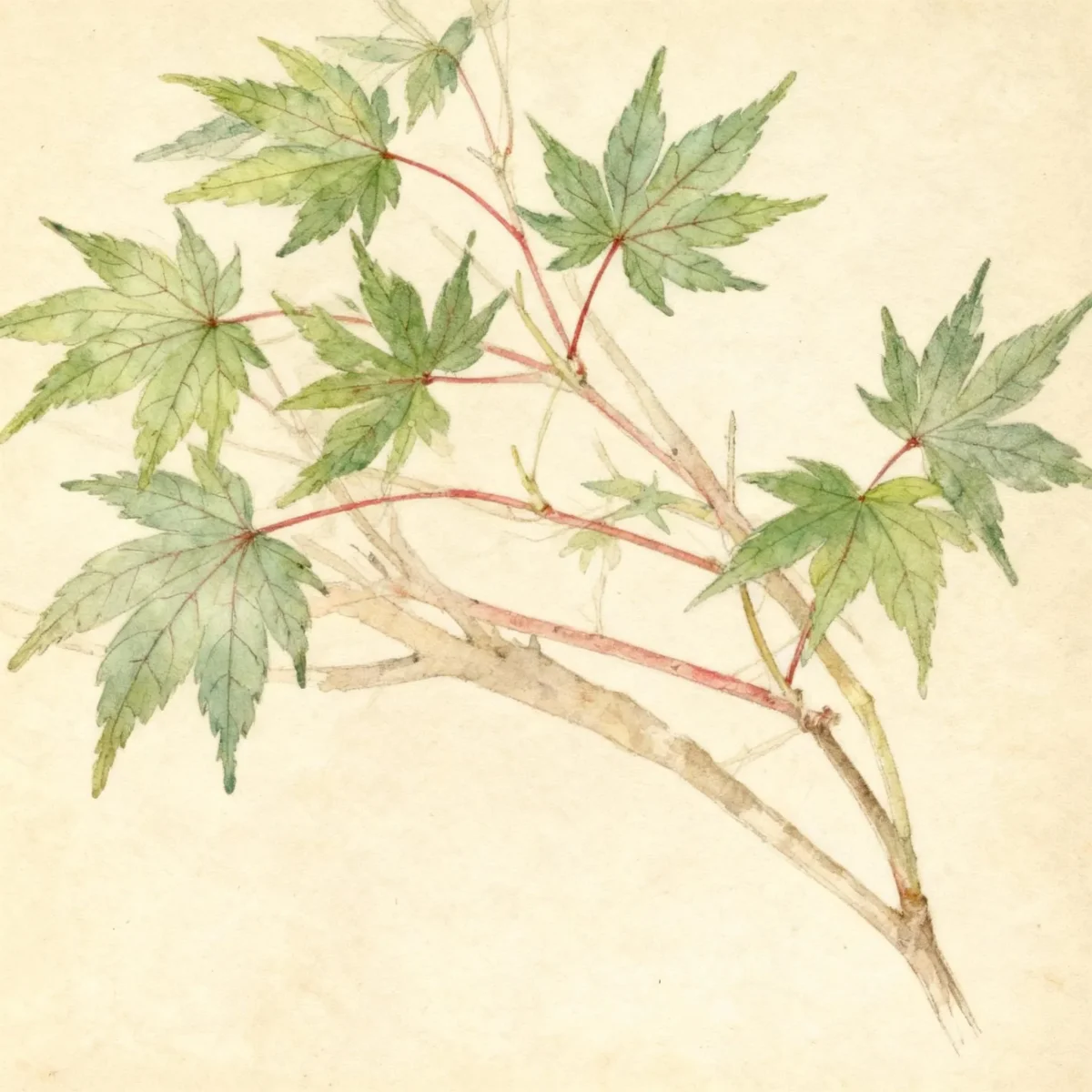
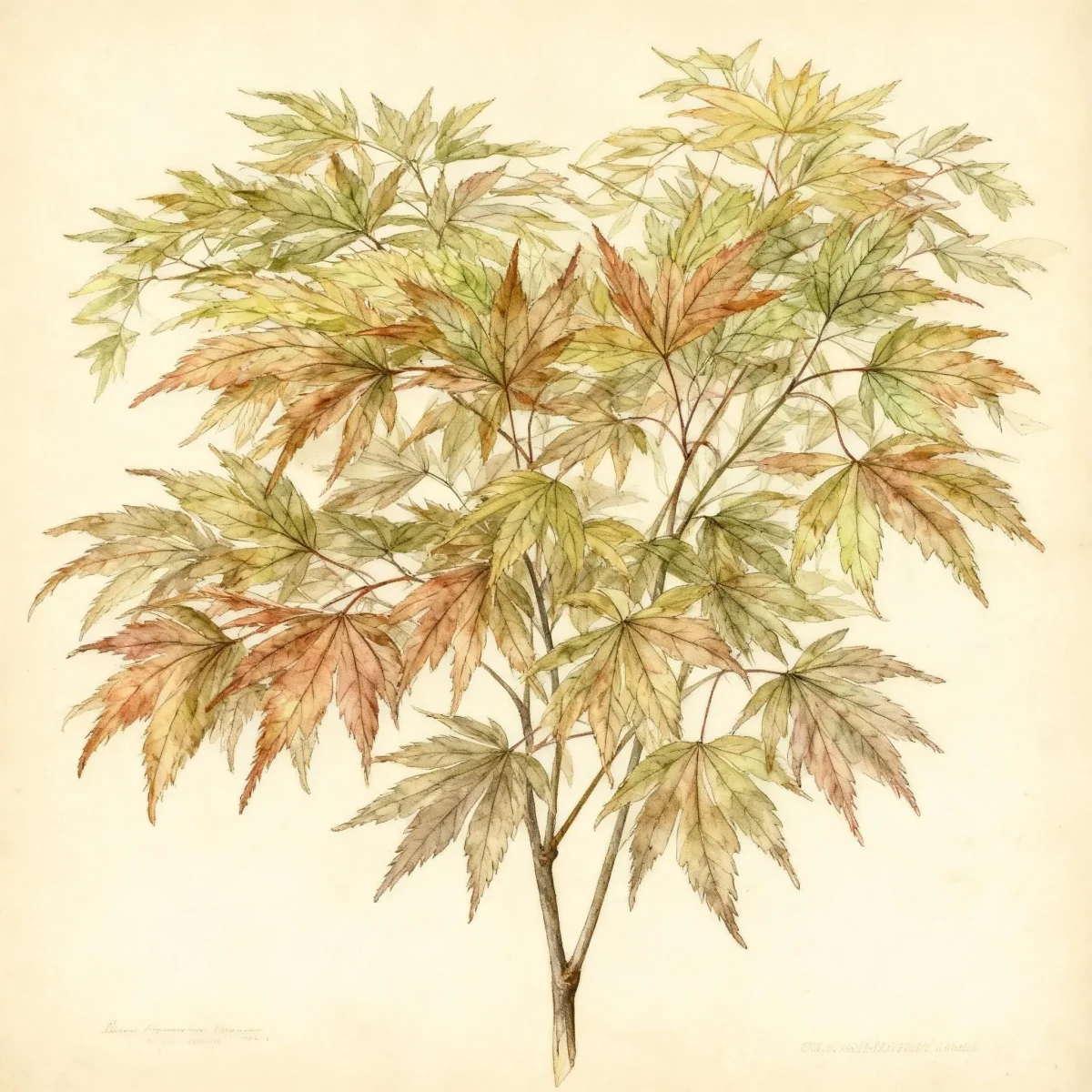
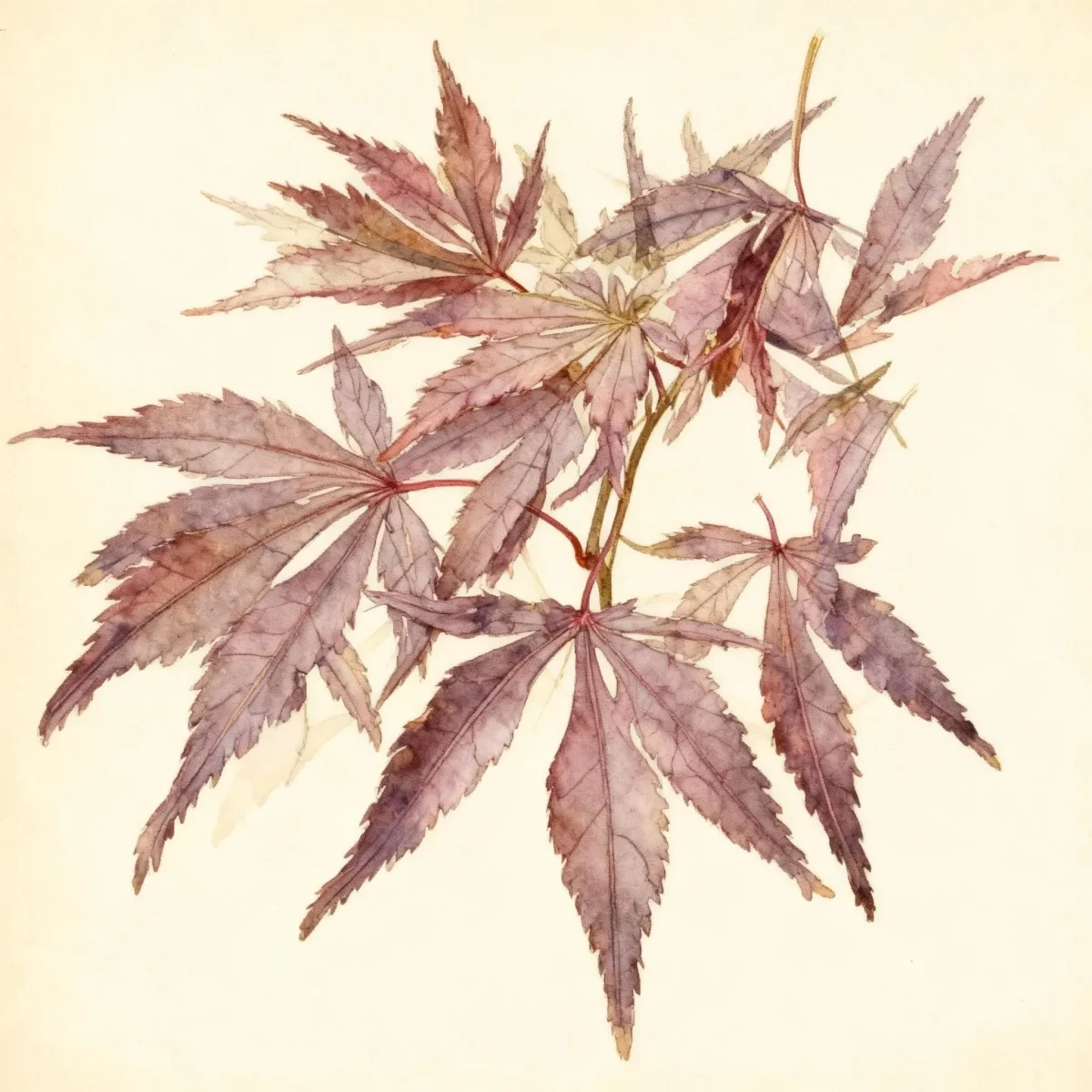
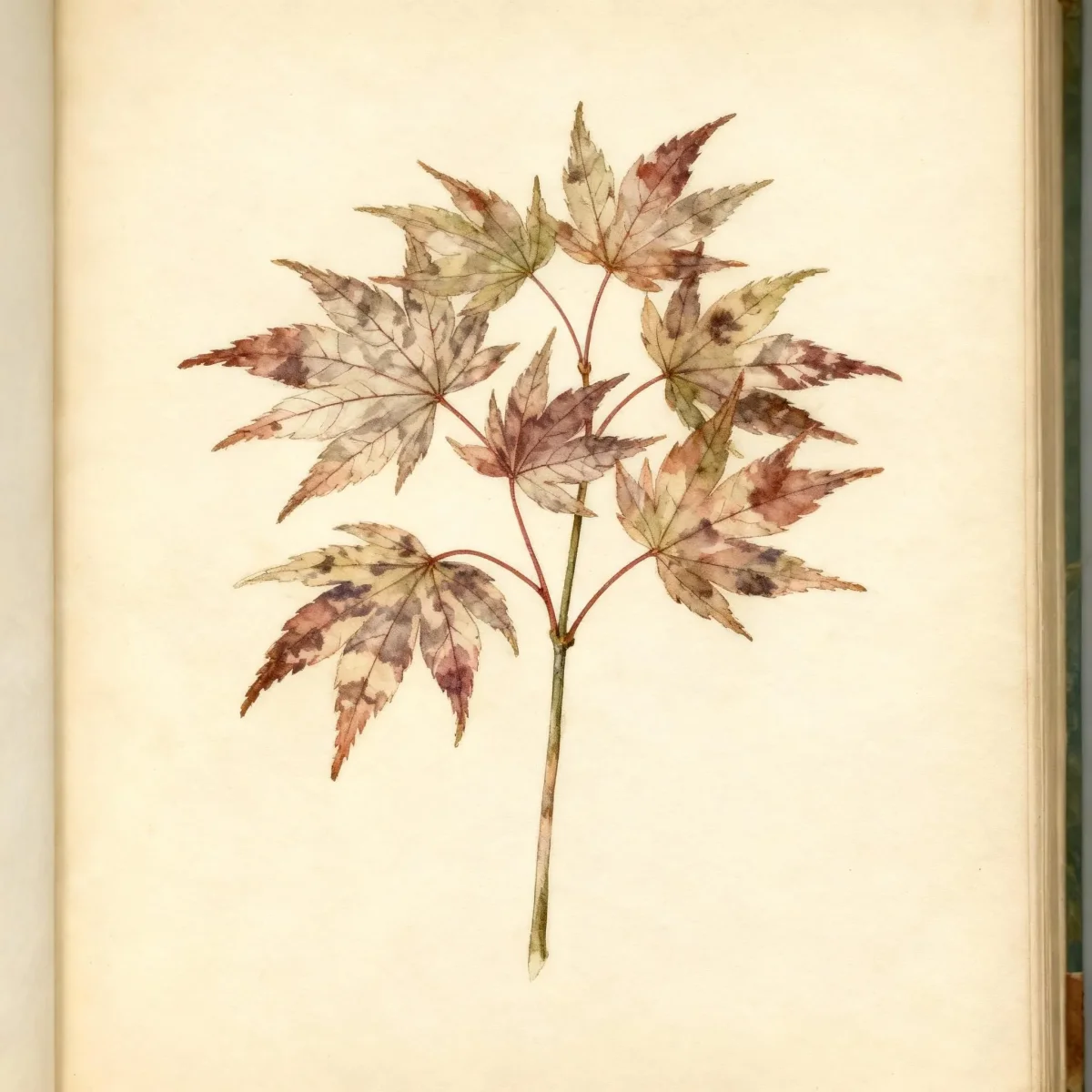
Japanese maple (Acer palmatum 'Villa Taranto')
Acer palmatum 'Villa Taranto' is a compact Japanese maple, 6-10 ft tall, prized for its narrow-lobed, reddish-purple to green foliage and low maintenance.
Scroll down to discover growing tips, care requirements, companion plants, and more
Complete Plant Information
Overview
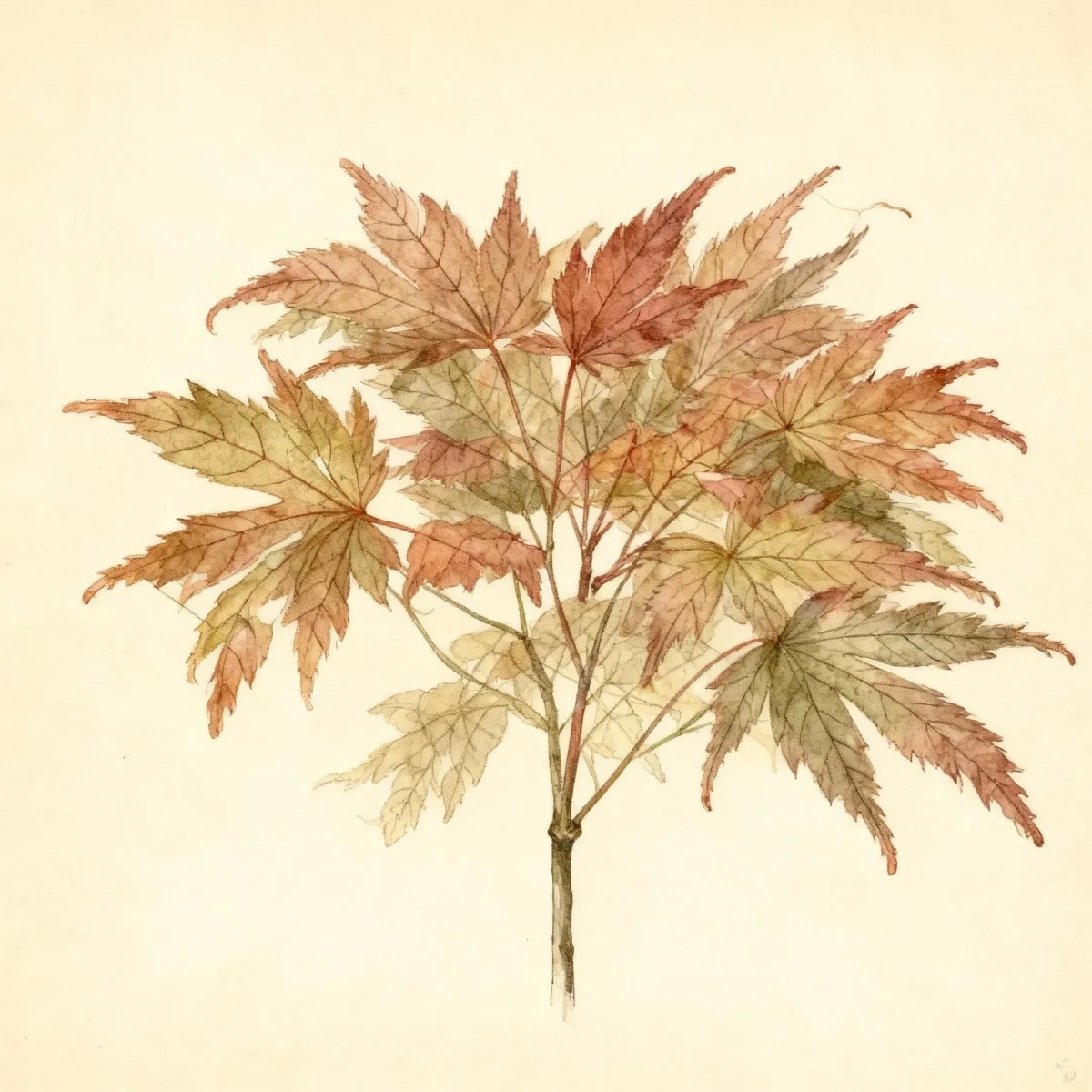
The Acer palmatum ‘Villa Taranto’, a striking cultivar of the popular Japanese maple, offers gardeners a highly manageable, compact form ideal for smaller landscapes or specimen planting. This cultivar is celebrated for its unique foliage texture, featuring palmate leaves with very narrow lobes that emerge reddish-purple before maturing. Its dense, mounding structure provides year-round visual interest, making it a valuable addition to nearly any garden design.
As a deciduous tree, Acer palmatum ‘Villa Taranto’ offers seasonal drama, shifting from its youthful summer tones to beautiful golden orange hues in the autumn. It exhibits low maintenance requirements when sited correctly, reflecting the desirable traits of many well-chosen Japanese maple varieties. Gardeners should focus on providing optimal soil and protection from harsh environmental factors to ensure this beautiful specimen thrives.
This specific Japanese maple generally reaches heights between 6 and 10 feet, making it significantly smaller than the species standard. Its manageable stature ensures it won’t overwhelm the space, allowing the distinct leaf shape and color progression of the ‘Villa Taranto’ to shine through as an accent piece.
Fast Facts
- Plant Family: Sapindaceae
- Plant Type: Tree
- Hardiness Zones: USDA Zones 5-8
- Size at Maturity:
- Height: 6-10 ft
- Spread: 4-7 ft
- Bloom Time: April
- Bloom Description: Reddish-purple
- Sun Exposure: Full sun to part shade
- Water Needs: Medium
- Maintenance Level: Low
How to Grow
The Acer palmatum ‘Villa Taranto’ performs best when planted in moist, organically rich, and slightly acidic, well-drained soils. While it benefits from full sun in cooler northern zones, gardeners in warmer regions should prioritize part afternoon shade to prevent new foliage from scorching during hot summer periods. Always site this Japanese maple away from locations prone to strong winds and avoid excessively hot or dry spots.
Consistent soil moisture is crucial for the health of your Acer palmatum ‘Villa Taranto’. Apply a layer of mulch around the base to help keep the roots cool and retain necessary soil moisture, especially when the plant is establishing or during dry spells. Fertilize lightly in the spring just before the leaves begin to emerge to support robust growth.
Pruning should be kept to an absolute minimum for this dwarf Japanese maple. If trimming is necessary, undertake the work in late fall or mid-winter. Avoid any pruning during the spring or summer months, as cutting the branches at these times often results in significant sap bleeding from the wounds.
Landscape Uses
Japanese maples, including the refined Acer palmatum ‘Villa Taranto’, are primarily cultivated for their distinctive foliage and elegant architectural shapes. This compact form excels as a specimen or accent plant, drawing the eye where needed in a mixed border or foundation planting. Its manageable size also makes it an excellent choice for woodland garden margins, providing dappled shade interest.
Consider using the ‘Villa Taranto’ where a formal structure isn’t required; its mounding habit works well near entryways or tucked into rock gardens where its fine texture contrasts nicely with bolder foliage. Because it maintains a controlled size, this Japanese maple is also successfully grown in large tubs or patio containers, allowing for flexible placement throughout the growing season.
Standout Features
Flower Qualities
- Insignificant
Noteworthy Characteristics
Acer palmatum, commonly called Japanese maple, is a deciduous shrub or small tree that typically grows to 10-25’ (infrequently to 40’) tall. The ‘Villa Taranto’ cultivar is distinctively compact and mounding, usually reaching only 6-10’ tall over time. It features palmate, 5-lobed leaves up to 3.5” long that possess very narrow lobes, emerging reddish-purple in spring, shifting to green with red overtones in summer, and turning a vibrant golden orange in autumn. While small reddish-purple springtime flowers are present, they are appreciated more upon close inspection rather than from a distance.
Tolerances
- Rabbit
- Black Walnut
Potential Problems
Acer palmatum ‘Villa Taranto’ can be susceptible to a variety of fungal diseases, including stem canker, leaf spots, botrytis, anthracnose, and root rots, alongside verticillium wilt. Management involves ensuring excellent drainage and good air circulation to reduce fungal pressure. Address pest issues promptly; watch for aphids, scale, borers, bagworms, and bothersome mites. A significant cultural concern is that early spring foliage is susceptible to damage from late frosts. Furthermore, if the soil pH is too high, the Japanese maple may exhibit chlorosis (yellowing of older leaves).
Frequently Asked Questions
What hardiness zones is Japanese maple suitable for?
The Acer palmatum ‘Villa Taranto’ is reliably hardy in USDA Zones 5 through 8. Always confirm your local conditions before planting this Japanese maple outside these parameters.
How large does Acer palmatum ‘Villa Taranto’ grow?
This cultivar is valued for being compact, typically fitting well into landscapes with a mature height range of 6 to 10 feet tall and a spread between 4 and 7 feet wide.
When does Japanese maple bloom?
The small, somewhat attractive flowers of the Acer palmatum ‘Villa Taranto’ appear in April and are usually described as reddish-purple in color.
What sun exposure does Acer palmatum ‘Villa Taranto’ need?
This plant prefers a location receiving full sun to part shade exposure. Providing some afternoon shade is recommended, especially in the hottest regions within its hardiness range.
Conclusion
The Acer palmatum ‘Villa Taranto’ provides exceptional texture and manageable size, establishing itself as a standout specimen for refined garden designs. Its changing foliage color throughout the seasons ensures multi-month interest, making this Japanese maple a worthwhile investment. Before planting, ensure your site offers the slightly acidic, consistently moist soil that this beautiful cultivar requires for optimal health.
Companion Planting
When planning the understory plantings for your Acer palmatum ‘Villa Taranto’, focus on plants that share similar cultural requirements for moisture and acidity while providing textural contrast. Hostas are excellent companions, offering broad, bold leaves below the fine texture of the Japanese maple, provided they are placed where the maple offers some afternoon shade. Shade-loving groundcovers like Japanese forest grass (Hakonechloa macra) or various creeping sedums can suppress weeds and cool the soil surface near the roots of the Acer palmatum.
For color contrast, consider using plants with bright white or light yellow blooms that pop against the deep greens and reds of the foliage. Astilbes thrive in the dappled light created by the canopy and appreciate the consistent moisture that benefits the Japanese maple. Proper companion selection enhances the aesthetic appeal while contributing to a healthier microclimate for your star specimen.
Seasonal Care Calendar
Spring care centers on nourishment and protection; fertilize before the leaves emerge and remain vigilant for unexpected late frosts which can damage newly emerging foliage on the Japanese maple. Summer maintenance focuses squarely on consistent watering, ensuring the soil stays moist, which is vital to preventing leaf scorch on your Acer palmatum ‘Villa Taranto’.
As fall approaches, enjoy the spectacular golden orange color transformation. Winter is the optimal time for any necessary pruning, generally limited to removing dead or crossing branches in late fall or mid-winter to prevent sap bleeding associated with spring pruning. Avoid disturbing the root zone near established specimens during freezing weather.