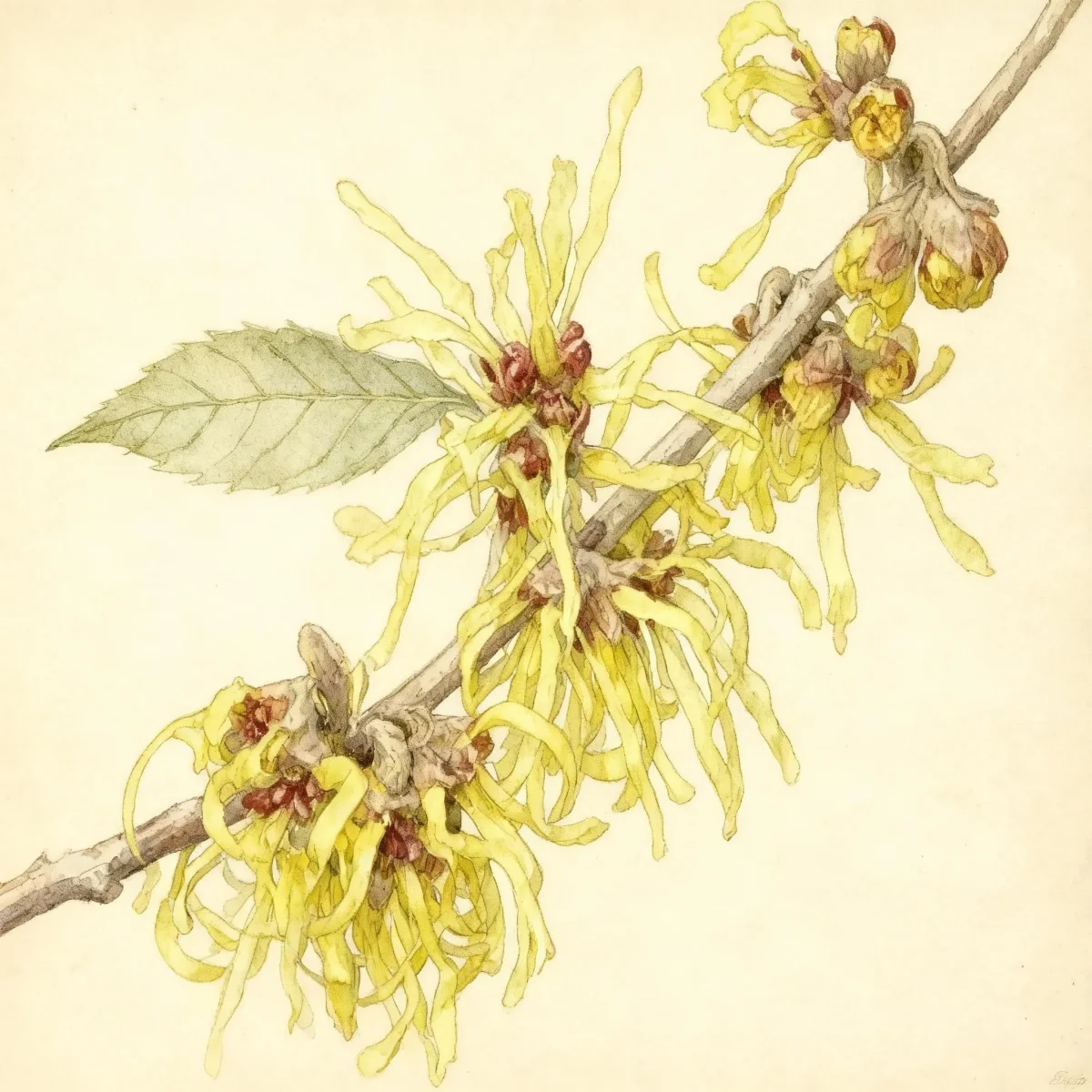
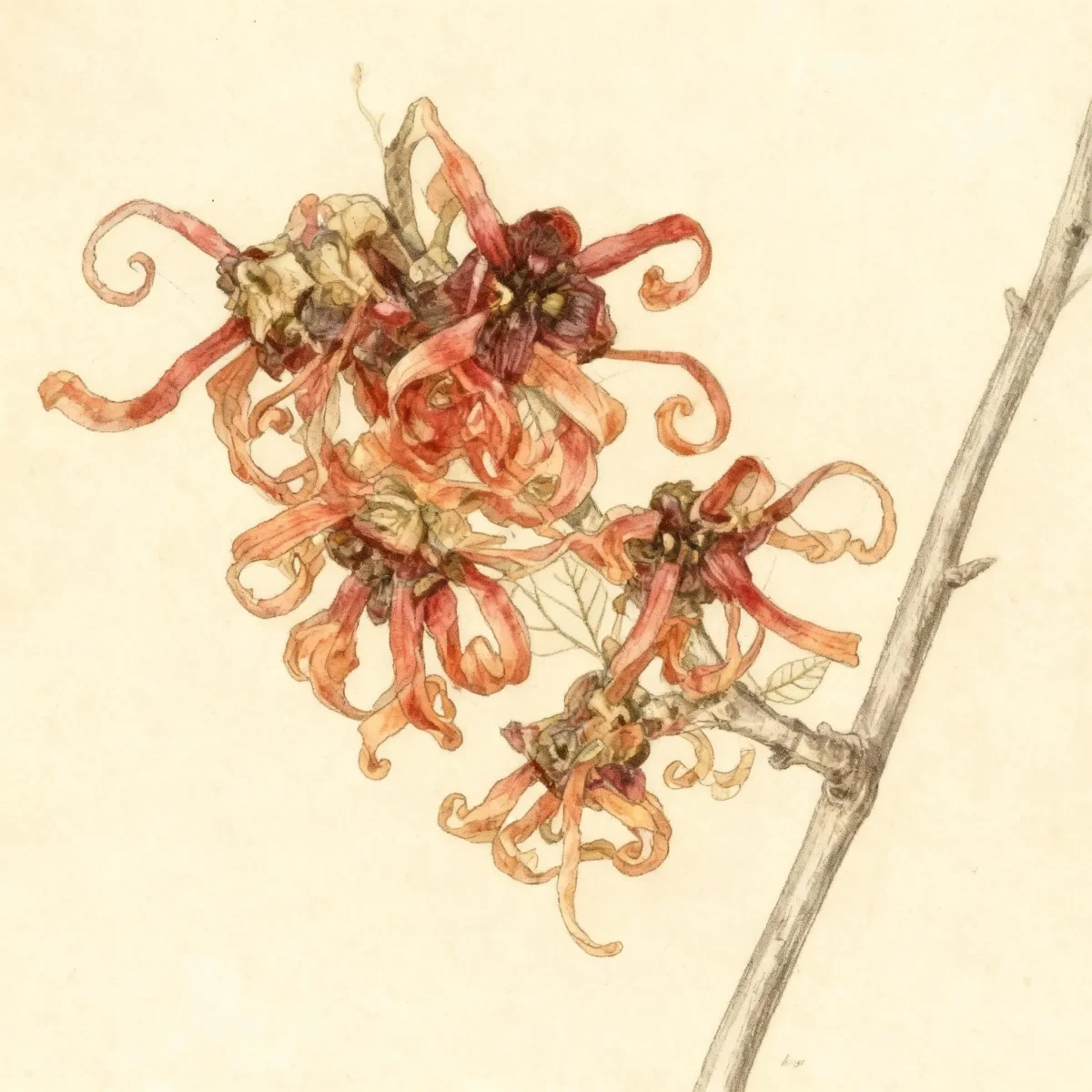
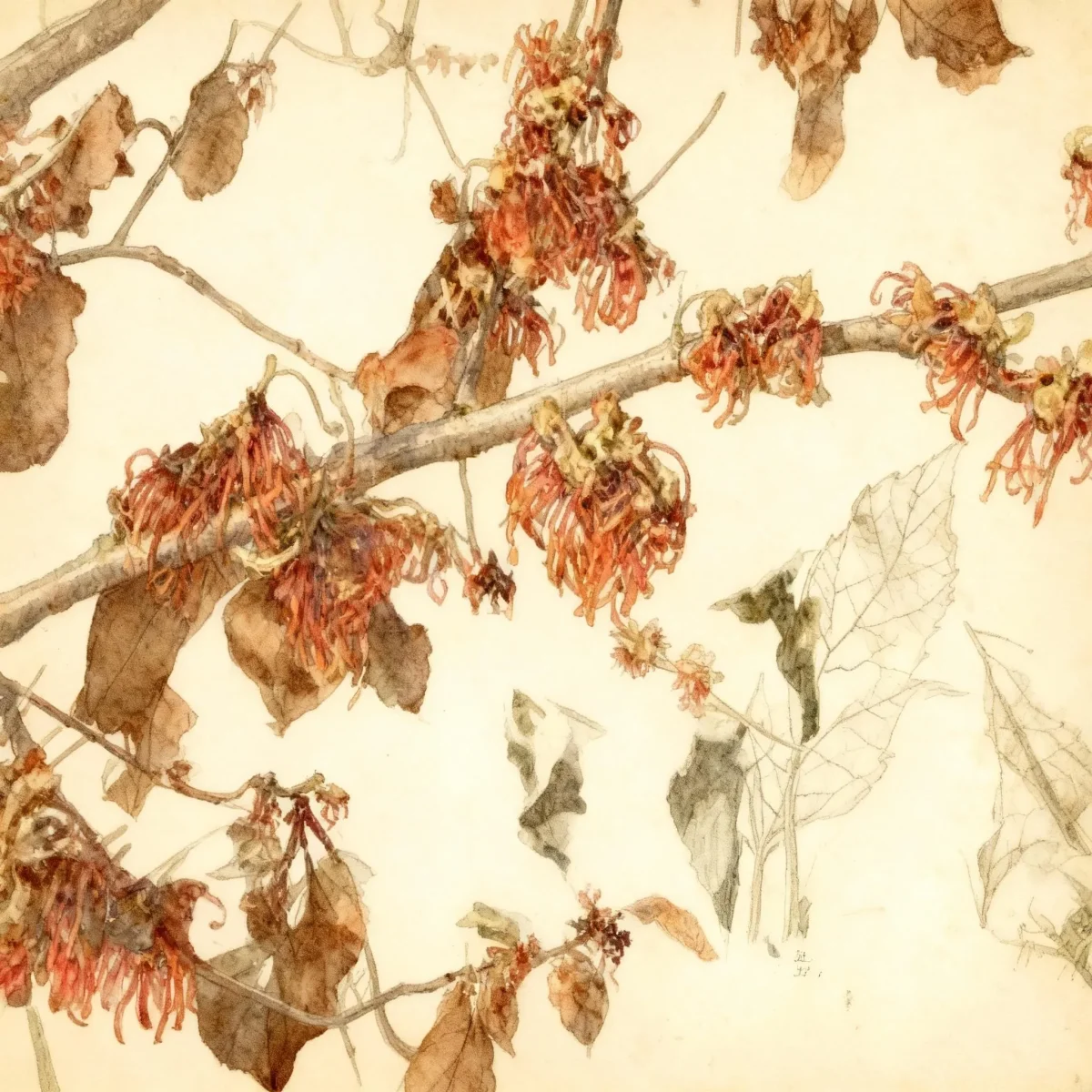
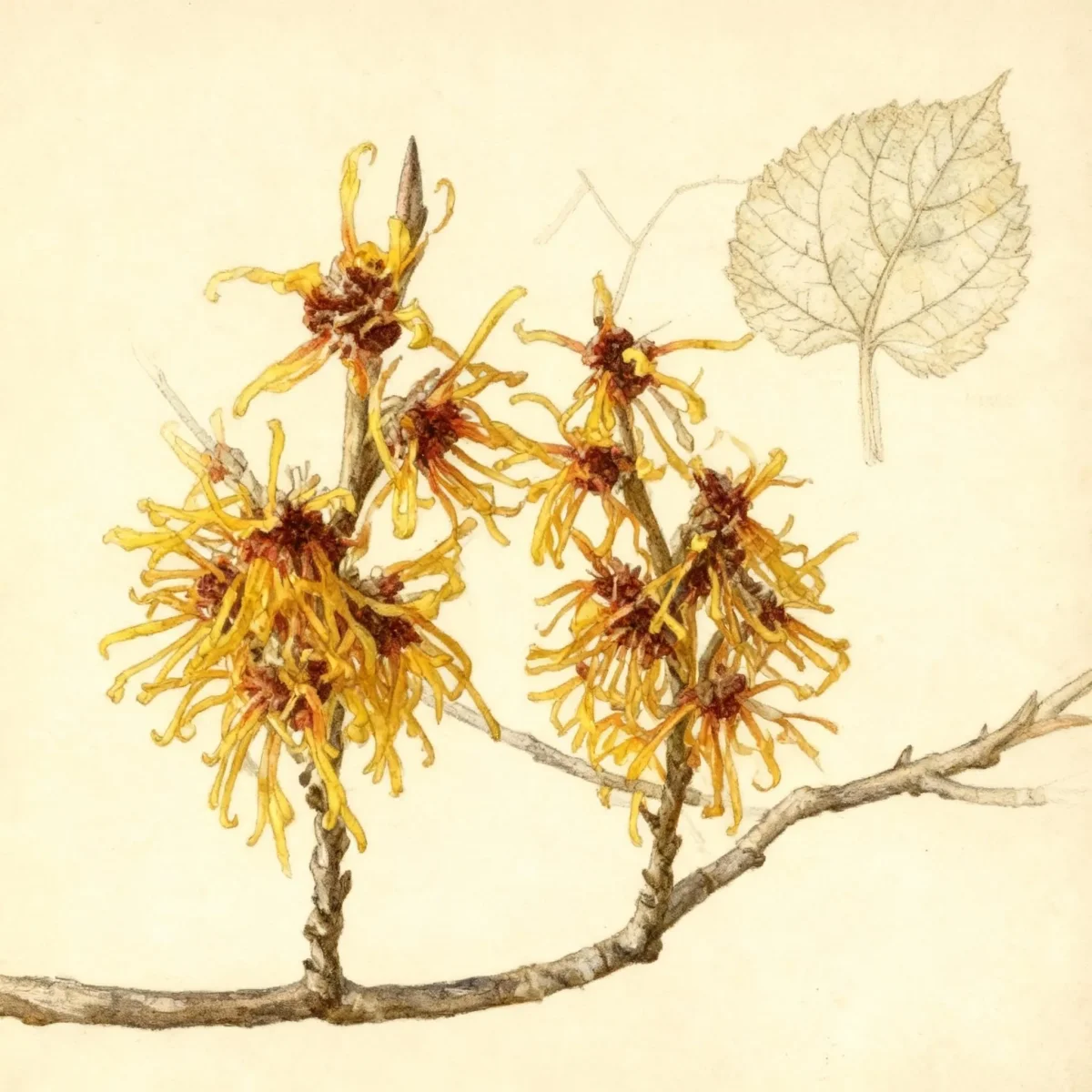
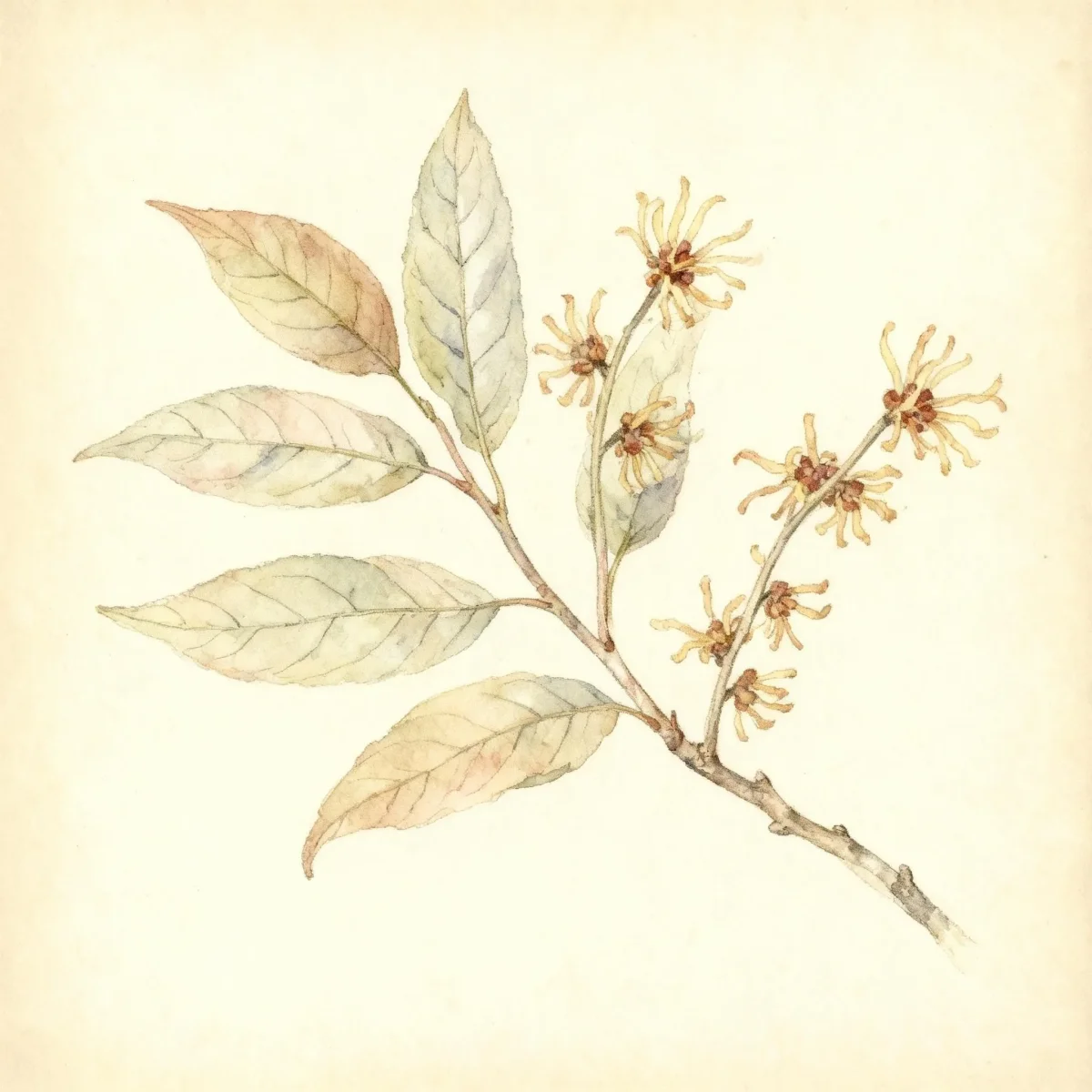
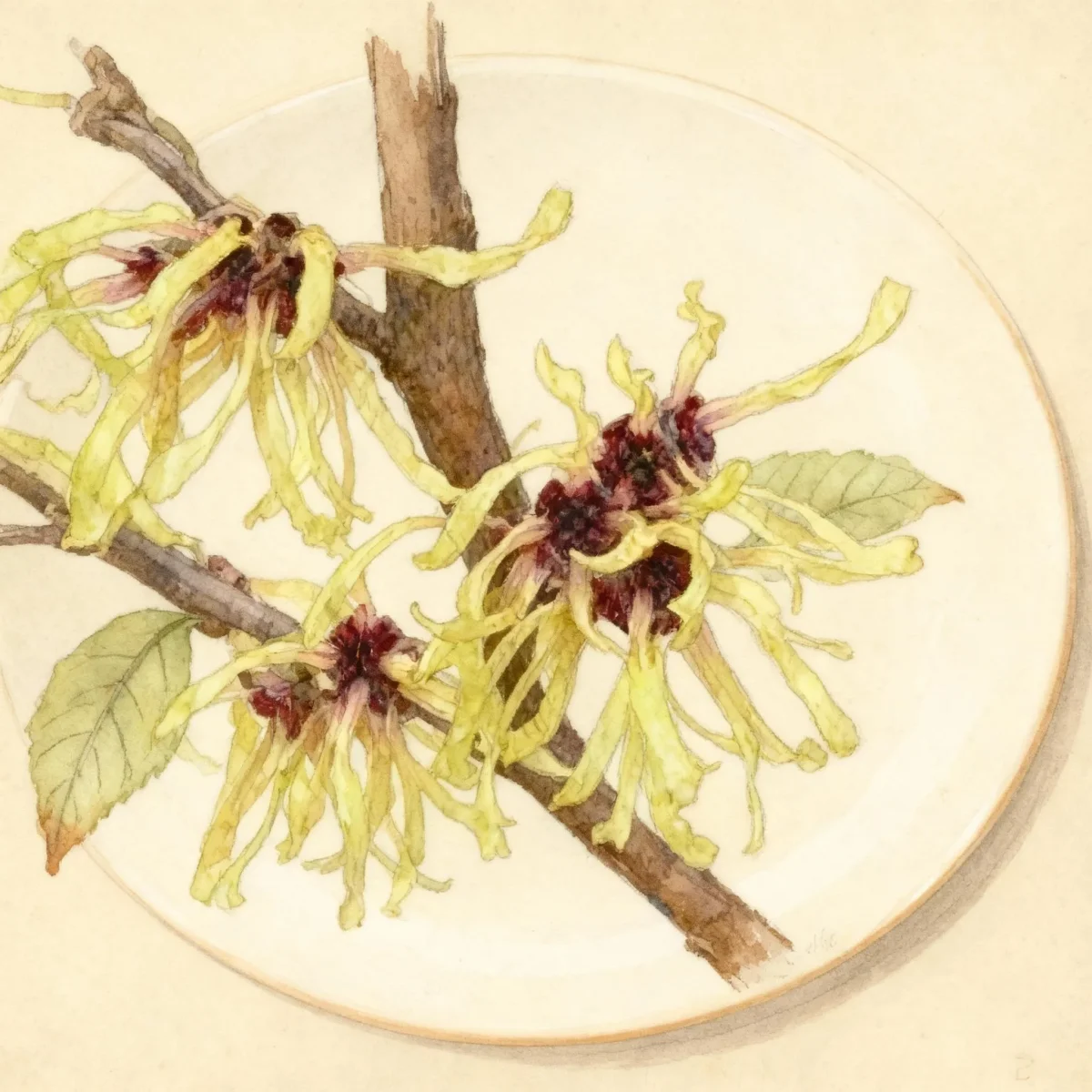
Witch hazel (Hamamelis × intermedia 'Orange Encore')
Hamamelis × intermedia 'Orange Encore' is a low-maintenance Witch hazel known for its orange-yellow late flowers and crimson fall color.
Scroll down to discover growing tips, care requirements, companion plants, and more

Complete Plant Information
Overview
Hamamelis × intermedia ‘Orange Encore’ offers significant ornamental value, often noted for its stunning, late-season color display. This hybrid Witch hazel is prized by gardeners for providing visual interest when most other woody plants are dormant or just beginning to awaken. It is a robust, deciduous shrub capable of anchoring structural plantings in the landscape.
This specific cultivar, Hamamelis × intermedia ‘Orange Encore’, emerges with unique foliage, starting maroon-tinted before maturing to green, and finishing with a brilliant crimson fall display. Although it produces small, fragrant orange-yellow flowers in spring, its overall structure and seasonal color transitions make it a superior landscape specimen. It is generally considered a low-maintenance choice once established in the correct conditions.
Gardeners looking for reliable, multi-season color combined with pest resistance will find Hamamelis × intermedia ‘Orange Encore’ a valuable addition. Its ability to tolerate less-than-ideal soil conditions, such as clay, combined with deer resistance, boosts its practical appeal for challenging sites.
Fast Facts
- Plant Family: Hamamelidaceae
- Plant Type: Deciduous shrub
- Hardiness Zones: USDA Zones 5-5
- Size at Maturity:
- Height: 8-12 ft
- Spread: 8-12 ft
- Bloom Time: March to April
- Bloom Description: Orange-yellow
- Sun Exposure: Full sun to part shade
- Water Needs: Medium
- Maintenance Level: Low
How to Grow
The best time to plant Hamamelis × intermedia ‘Orange Encore’ is typically in the fall or early spring when plants are dormant or semi-dormant. Locate this Witch hazel where it can receive full sun, as this maximizes flower production, though it tolerates part shade. It thrives in average, medium moisture, well-drained soils and prefers those that are organically rich and slightly acidic. Consistent moisture is key; inadequate water during summer may cause leaf scorch.
Maintenance for Hamamelis × intermedia ‘Orange Encore’ is thankfully low. While it tolerates clay soils, ensure excellent drainage is maintained. Fertilizing is rarely needed if the soil is rich. Pruning, if required for size control or shape maintenance, should be done promptly in the spring immediately after the flowering period concludes.
A critical cultural task involves managing root suckers. Promptly remove any new growth emerging from below the graft union to maintain the desired cultivar characteristics. Avoid heavy pruning late in the season, as this might interfere with next year’s flower buds.
Landscape Uses
As a superior winter-flowering shrub, Hamamelis × intermedia ‘Orange Encore’ excels as a bold specimen plant where its late flowers or strong fall color can be admired against evergreen backdrops. Its mature size, reaching 8 to 12 feet tall and wide, makes it suitable for screening or establishing a taller shrub border, offering excellent mid-layer structure in woodland gardens.
When integrating this Witch hazel into landscape designs, consider companions that emerge later in the season, allowing the Hamamelis to take center stage during the early spring transition. Planting near large rocks or complementing evergreen foundation plantings helps highlight its unusual blooms and striking foliage. Because of its resilience, it offers good structural mass for erosion control on gentle slopes.
Standout Features
Flower Qualities
- Showy
- Fragrant
Noteworthy Characteristics
Hamamelis × intermedia hybrids are crosses between Japanese witch hazel (H. Japonica) and Chinese witch hazel (H. Mollis), resulting in medium to large, loosely-branched deciduous shrubs. These hybrids are particularly noted for their spidery, often fragrant, mid- to late-winter flowers which appear just as they emerge in spring. The cultivar ‘Orange Encore’ is especially noted for its foliage, which emerges tinted maroon before maturing, and then shifts to a showy crimson red in the autumn months.
Tolerances
- Deer
- Erosion
- Clay Soil
Potential Problems
Insect pests are generally a minor concern for Hamamelis × intermedia ‘Orange Encore’. Gardeners should inspect foliage for signs of chewing damage caused by caterpillars or Japanese beetles, especially during warmer months. Monitoring for scale insects or leafminers is also recommended, though infestations rarely require chemical intervention. Potential diseases, primarily powdery mildew or occasional leaf spots, are usually manageable through proper site selection encouraging good air circulation.
Frequently Asked Questions
What hardiness zones is Witch hazel suitable for?
Hamamelis × intermedia ‘Orange Encore’ is best suited for USDA Hardiness Zones 5 through 5.
How large does Hamamelis × intermedia ‘Orange Encore’ grow?
This Witch hazel typically matures to a height between 8 and 12 feet, with a similar spread of 8 to 12 feet.
When does Witch hazel bloom?
This shrub produces its unique blooms between March and April, featuring an orange-yellow color.
What sun exposure does Witch hazel need?
For optimal flowering, Hamamelis × intermedia ‘Orange Encore’ requires full sun to part shade conditions.
Conclusion
Hamamelis × intermedia ‘Orange Encore’ provides essential multi-season interest, bridging the gap between winter dormancy and spring growth with its unique bloom and colorful foliage transitions. This low-maintenance Witch hazel offers practical benefits like deer resistance and clay tolerance. Before planting this spectacular specimen, confirm that your garden falls within USDA Zone 5 to ensure successful establishment.
Companion Planting
Selecting appropriate neighbors is crucial for showcasing the unique timing of Hamamelis × intermedia ‘Orange Encore’. Consider pairing it with early-flowering bulbs like snowdrops (Galanthus) or crocus, which provide foreground color shortly before the Witch hazel’s flowers fully open. As this shrub prefers moist, rich soil, moisture-loving perennials or groundcovers that thrive in dappled light are excellent choices for the understory.
In woodland garden settings, ferns and later-blooming rhododendrons or azaleas serve as superb structural companions. Their lush summer foliage will provide a rich, dark green backdrop that contrasts beautifully with the lighter greens and eventual crimson hues shown by the Hamamelis foliage throughout the growing season.
Seasonal Care Calendar
Spring care focuses less on feeding and more on evaluation. Immediately following bloom (March/April), perform any necessary pruning to shape your Witch hazel. Ensure consistent medium watering, especially as summer approaches, to prevent leaf scorch during dry spells.
Summer maintenance should be minimal, focusing chiefly on checking for pests like caterpillars. If your site experiences drought, supplement water; remember that established Hamamelis × intermedia ‘Orange Encore’ tolerates drought better than many shrubs but performs best with moisture.
Autumn is the reward period, as the leaves of this Witch hazel turn a showy crimson red. Once leaves drop, inspect the base of the plant, promptly removing any root suckers that may have developed below the graft union to maintain cultivar integrity. Winter preparation is minimal due to its hardiness in Zones 5-5.