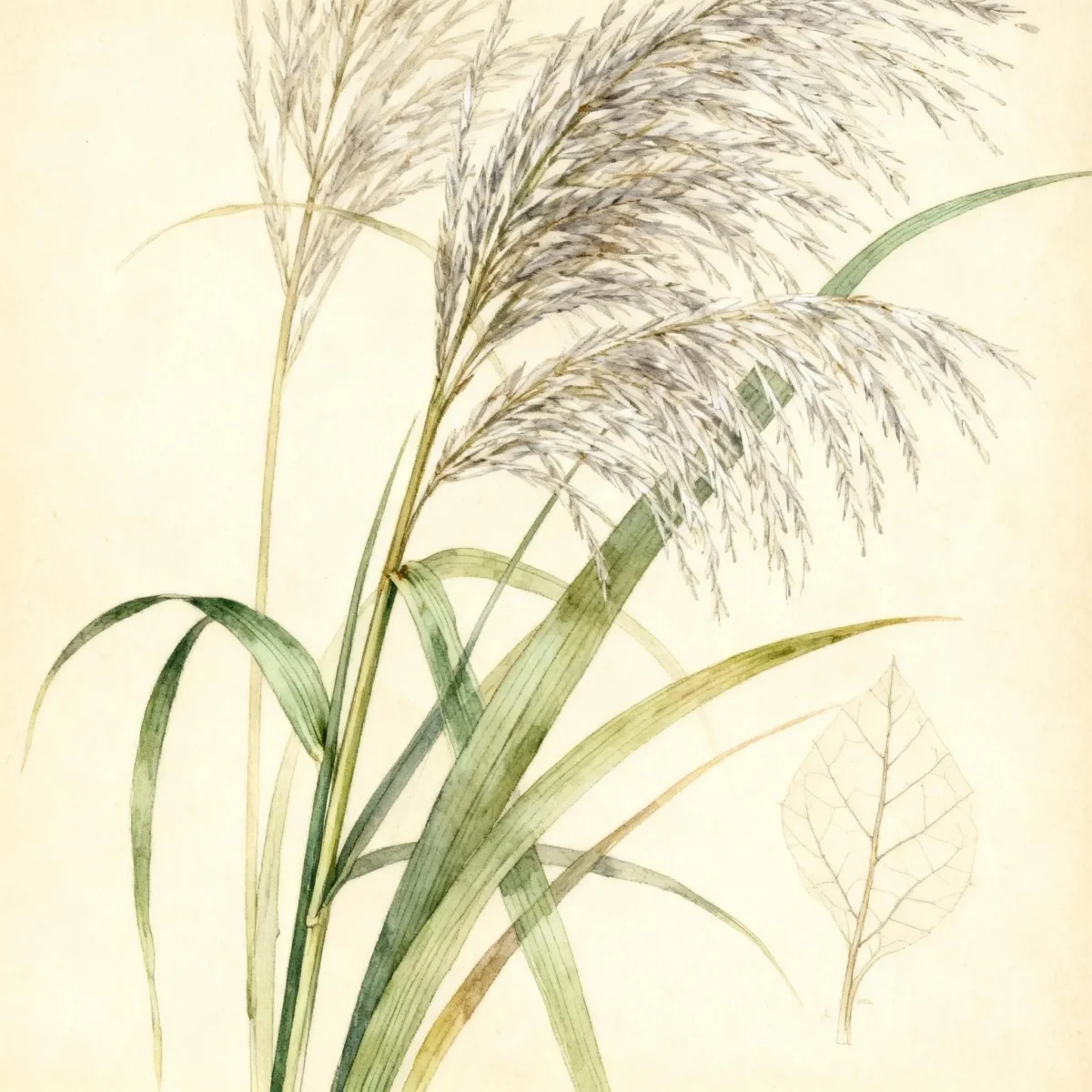
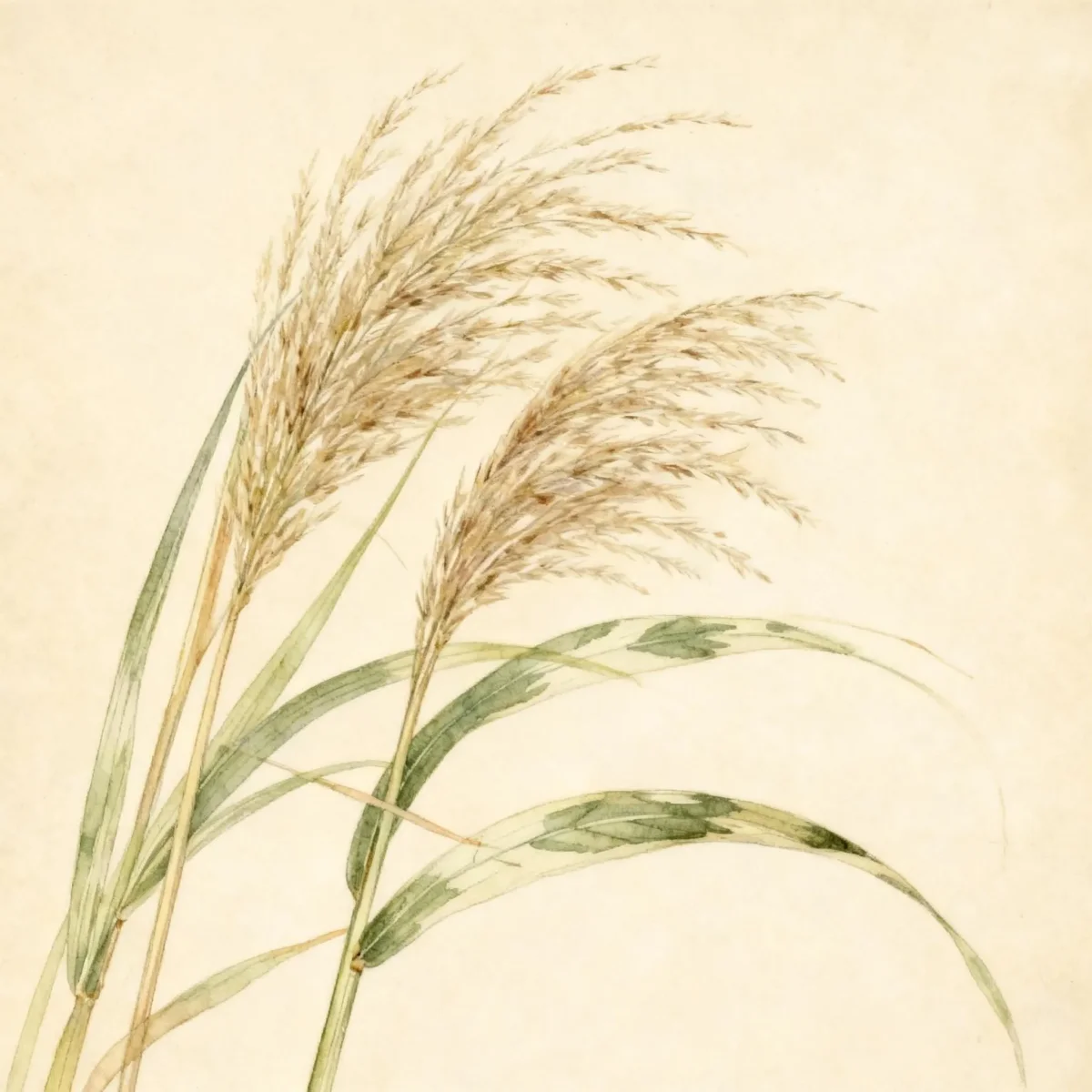
Eulalia (Miscanthus sinensis 'Pünktchen')
Miscanthus sinensis 'Pünktchen' (Eulalia) offers striking zebra-striped foliage, growing 5-7 ft tall with low maintenance in zones 5-9.
Scroll down to discover growing tips, care requirements, companion plants, and more
Complete Plant Information
Overview
Miscanthus sinensis ‘Pünktchen’, widely known by its common name Eulalia, provides striking vertical interest in the garden thanks to its distinctive, horizontally banded foliage. This cultivar features dark green leaves dramatically striped with golden yellow bands, resembling the popular zebra grass but often maintaining a more compact form in the main foliage clump. As a clump-forming, warm-season grass, it offers excellent structure and movement, maturing to heights between 5 and 7 feet when flower stalks are included.
Gardeners value Eulalia for its season-long performance, especially its tolerance for a wide range of conditions and its striking winter interest provided by persistent flower plumes. This grass establishes slowly via short rhizomes but generally maintains a tight clump, minimizing aggressive spreading concerns for most regions. Its overall resilience makes Miscanthus sinensis ‘Pünktchen’ a reliable, low-effort addition to perennial borders, delivering a dynamic focal point from summer through the following spring.
Fast Facts
- Plant Family: Poaceae
- Plant Type: Ornamental grass
- Hardiness Zones: USDA Zones 5-9
- Size at Maturity:
- Height: 5-7 ft
- Spread: 5-6 ft
- Bloom Time: August to February
- Bloom Description: Reddish-brown
- Sun Exposure: Full sun to part shade
- Water Needs: Medium
- Maintenance Level: Low
How to Grow
Plant Miscanthus sinensis ‘Pünktchen’ in the spring or early fall, ensuring it receives full sun for the most vigorous growth and best flowering display. While it prefers moist, well-drained soil, this Eulalia grass demonstrates remarkable tolerance for various soil types, including heavy clays and well-drained sandy soils. Placement in areas receiving afternoon shade are acceptable, though excessive shade reduces vigor and increases the tendency for the clumps to flop, diminishing the strong upright habit.
Watering should be consistent, aiming for medium moisture, especially while the plant is establishing its root system. Miscanthus sinensis ‘Pünktchen’ generally requires low maintenance once mature and establishes slowly, expanding its circumference only slightly each year via short rhizomes. Fertilization is usually unnecessary unless the soil is extremely poor; rich soils can encourage flopping.
The most significant annual task involves winter cleanup. It is crucial to leave the foliage standing throughout winter, as this provides essential crown protection and valuable architectural interest, particularly when dusted with snow or frost. Cut the entire foliage mass close to the ground in late winter, just before the new shoots begin to emerge from the crown. Propagate mature clumps via division during this late winter/early spring window.
Landscape Uses
Miscanthus sinensis ‘Pünktchen’ serves as a versatile architectural element capable of anchoring various landscape designs. Its upright, fountain-like habit makes it an excellent specimen planting where its yellow-banded leaves can be admired up close. Use it as an accent when grouping three or more together to create a bold statement against softer perennial textures or evergreen backdrops.
This Eulalia is well-suited for defining borders, adding vertical structure to mixed perennial borders, or integrating into naturalized meadow settings. Because the dried flower plumes are long-lasting, they contribute significantly to late-season visual interest, making this grass valued in cottage gardens. Furthermore, it handles the edge of pond or water garden peripheries well, provided the soil remains well-drained, confirming its utility beyond standard perennial beds.
Standout Features
Flower Qualities
- Showy
- Good Cut
- Good Dried
Noteworthy Characteristics
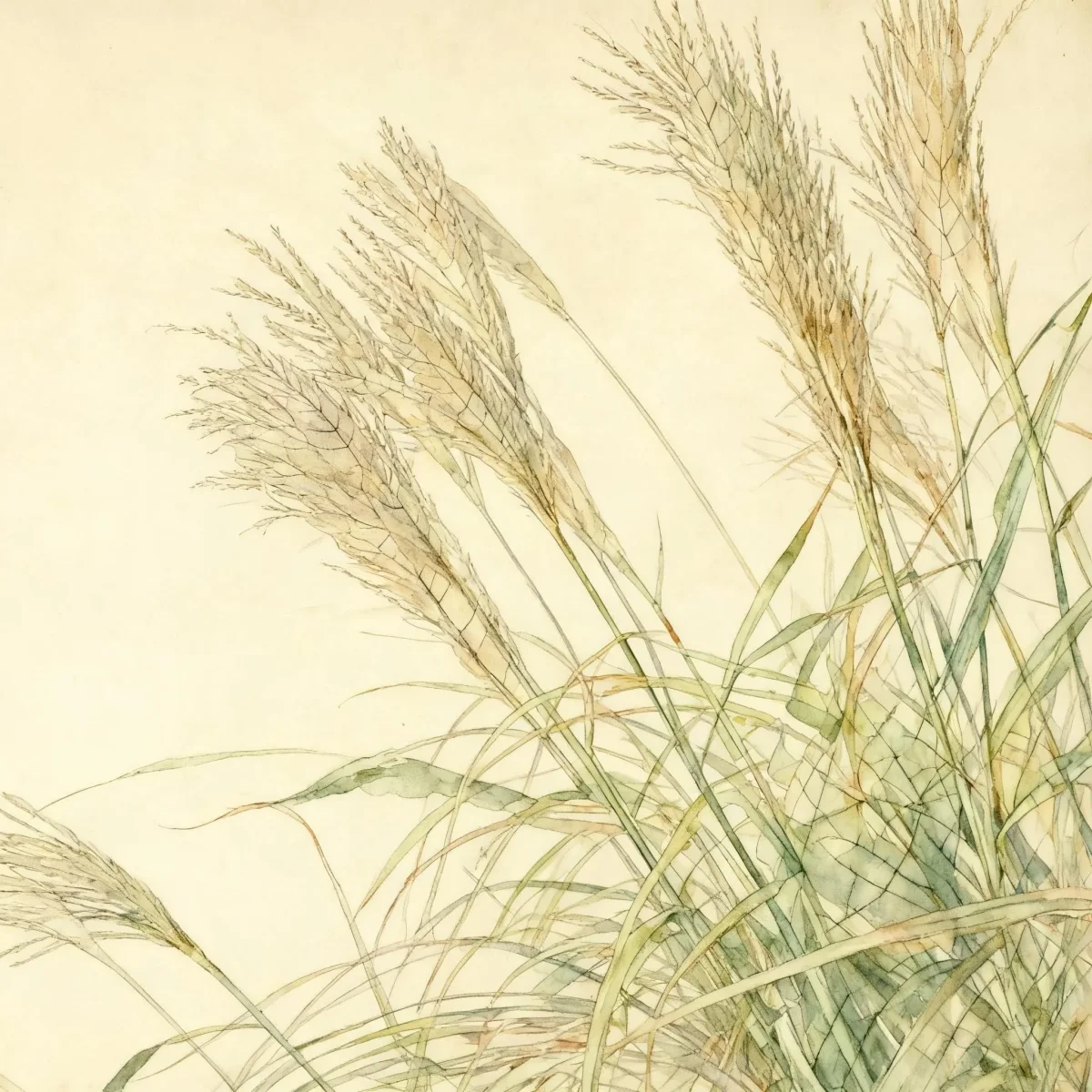
Miscanthus sinensis, known commonly as Eulalia grass, is prized for its dense, upward-arching stems creating a fountain-like silhouette, with linear leaves featuring silvery midribs. The cultivar ‘Pünktchen’ specifically offers finely-textured, dark green leaves horizontally banded with golden yellow, reminiscent of zebra striping. Blooming occurs late summer through fall with reddish-brown plumes that persist decoratively well into the following winter, offering excellent seasonal transition.
Tolerances
- Drought
- Erosion
- Dry Soil
- Black Walnut
- Air Pollution
Potential Problems
This grass generally avoids serious insect or disease issues, contributing to its low maintenance rating. However, growers in the U.S. should be aware of specialized threats like miscanthus mealybug, which causes stunted growth by living inside the stems and is difficult to eradicate. Miscanthus blight, a fungal issue, attacks the blades and sheaths, while leaf rust is also possible. In milder parts of its range, gardeners must be vigilant against invasive spread, as Miscanthus sinensis can reseed readily; using mulch helps suppress unwanted germination.
Frequently Asked Questions
What hardiness zones is Eulalia (Miscanthus sinensis ‘Pünktchen’) suitable for?
Miscanthus sinensis ‘Pünktchen’ is reliably cold-hardy across USDA Zones 5 through 9. Always confirm your local zone before planting.
How large does Eulalia (Miscanthus sinensis ‘Pünktchen’) grow?
The foliage clump typically reaches 3 to 4 feet tall, but the flower stalks extend significantly higher, bringing the total height of the grass to 5 to 7 feet tall when in full glory. The spread is usually between 5 and 6 feet.
What sun exposure does Miscanthus sinensis ‘Pünktchen’ need?
For optimal health, dense clumping, and best flowering performance, the grass requires full sun, though it will tolerate light afternoon shade (part shade).
When does Eulalia bloom?
The distinctive reddish-brown, tassel-like flowers appear above the foliage starting in late August and continue to provide ornamental interest through February.
Conclusion
The zebra-striped foliage and reliable structure of Miscanthus sinensis ‘Pünktchen’ establish it as a premier choice among ornamental grasses needing low long-term input. This Eulalia offers superior visual texture throughout the growing season and into winter, tolerating challenging conditions like drought and soil compaction. Before installing, ensure your site falls within USDA Zones 5-9 and provides at least partial sun exposure to maximize the unique banded leaf display.
Companion Planting
Choosing thoughtful companions can enhance the vertical structure provided by Miscanthus sinensis ‘Pünktchen’. Pair this upright grass with large, mounding perennials, such as Coneflowers (Echinacea) or Sedums, which can mature in front of the grass to hide the base during early summer before the Miscanthus fully fills out. For late-season color, contrast the upright texture of Eulalia with billowy late-blooming Asters or Joe Pye Weed (Eutrochium), creating dynamic layers within a meadow or mixed border design.
Propagation Tips
Since Miscanthus sinensis ‘Pünktchen’ forms a dense, slowly creeping clump, the standard method for increasing its numbers is by division of the crown. This process should be performed in late winter or very early spring, immediately before active new growth begins. Use a sharp spade or Hori-Hori knife to carefully dig out a section of the established clump, ensuring the separated piece has a healthy mass of roots and several active buds. Immediate replanting into prepared soil will help the new division establish successfully, though patience is needed as Miscanthus establishment can be slow.