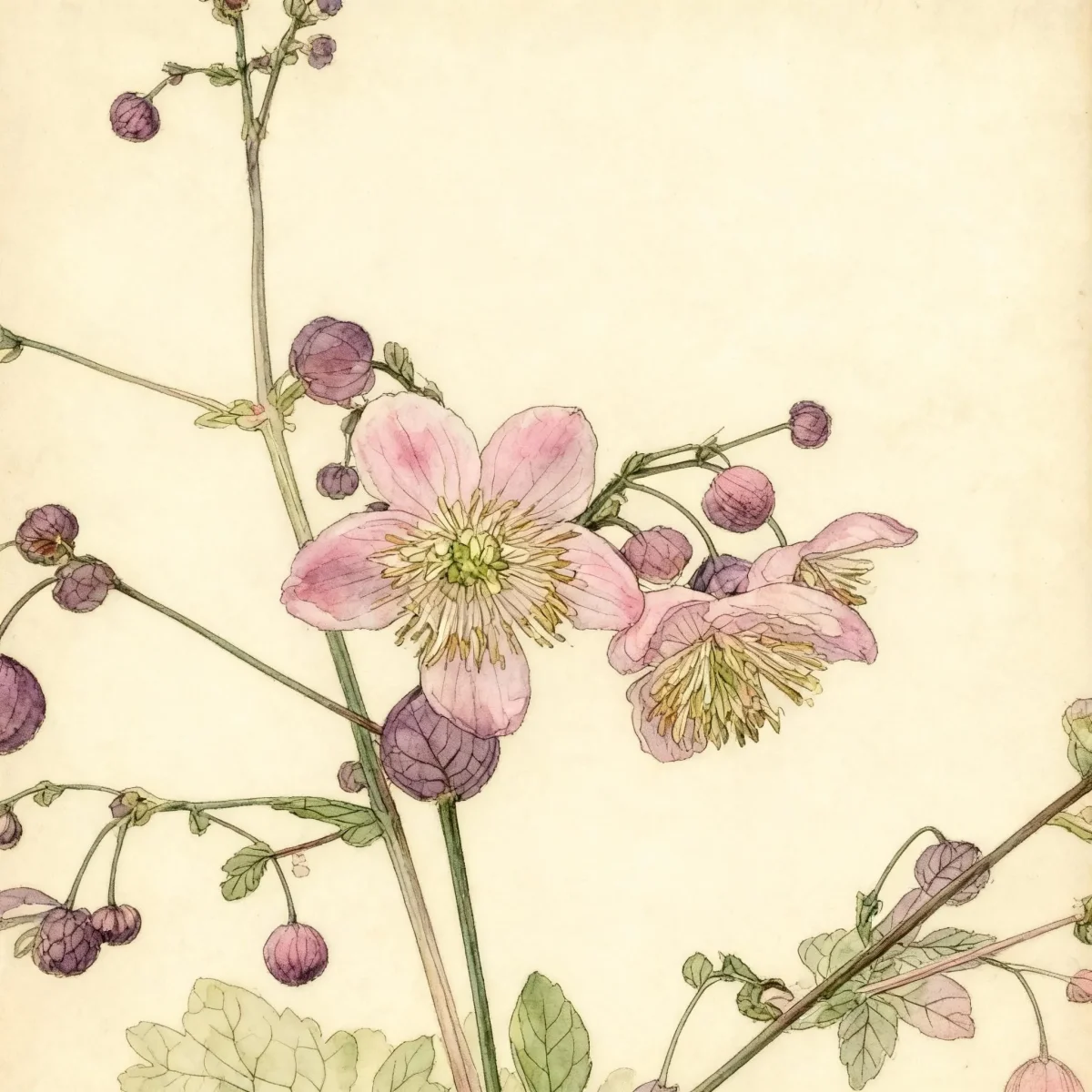
Meadow rue (Thalictrum rochebruneanum)
Discover Thalictrum rochebruneanum, or Meadow rue, an airy perennial offering lacy foliage and lavender-purple summer blooms. Hardy in zones 4-7.
Scroll down to discover growing tips, care requirements, companion plants, and more
Complete Plant Information
Overview
Thalictrum rochebruneanum, commonly known as Meadow rue, is prized in the garden for its exceptional airiness and late-season color display. This slender, clump-forming perennial introduces fine, lacy texture via its bluish-green, columbine-like foliage, providing excellent contrast to bolder leaves. Its value lies in its statuesque height and the delicate clouds of lavender-purple flowers that emerge when many other perennials begin fading.
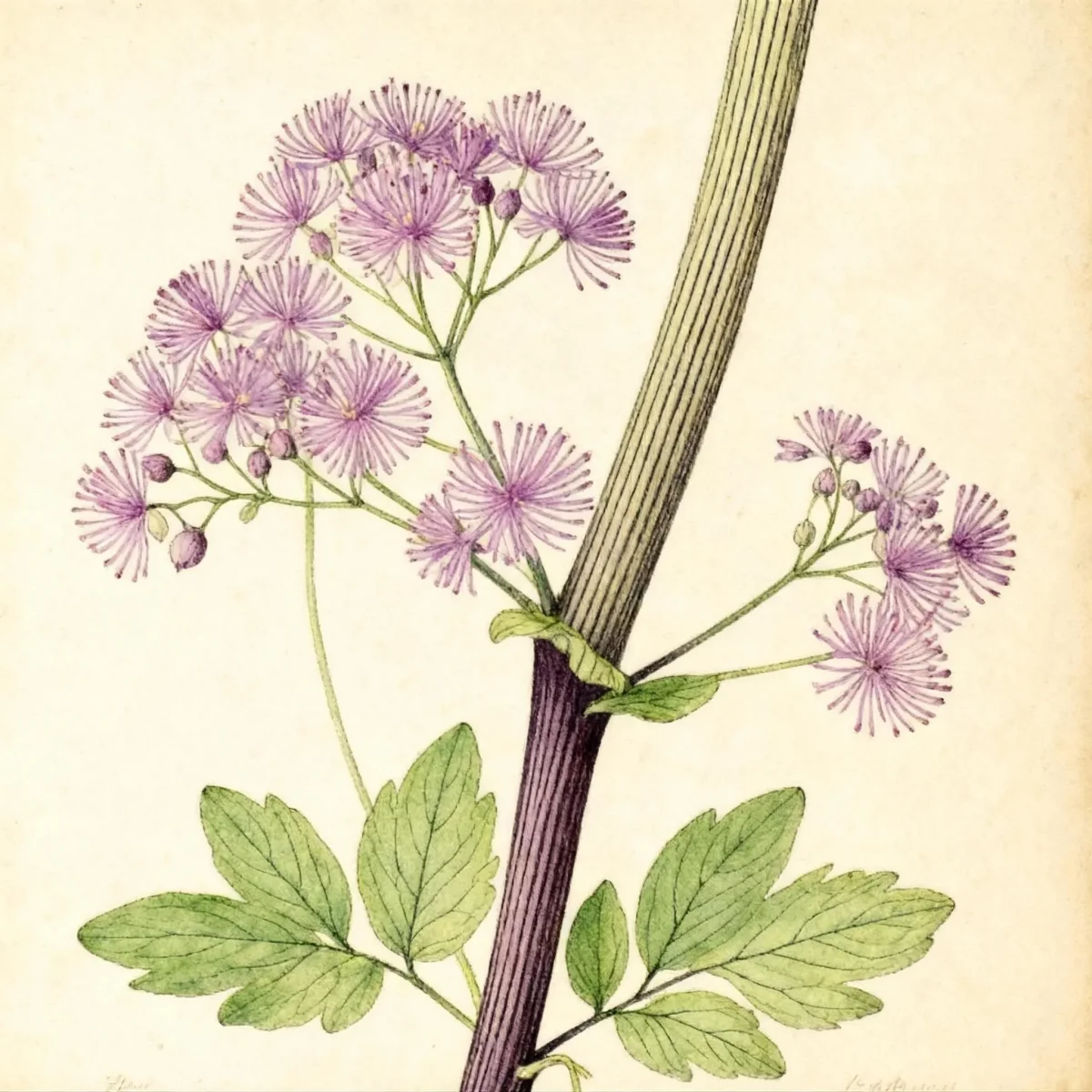
The bloom structure of Thalictrum rochebruneanum features tiny, pendulous flowers accented by bright yellow stamens, held aloft on sturdy stems, often reaching 4 to 6 feet tall. This height makes it an outstanding vertical element in the border, providing spectacle without appearing heavy or dense. Gardeners appreciate that this species of Meadow rue tends to have strong stems, often negating the need for staking.
As a low-maintenance addition to mixed plantings, this Japanese native thrives in conditions that mimic its preferred woodland edge habitat. It offers reliable texture and color from mid-summer into early autumn, making Thalictrum rochebruneanum a standout architectural feature that demands attention.
Fast Facts
- Plant Family: Ranunculaceae
- Plant Type: Herbaceous perennial
- Native Range: Japan
- Hardiness Zones: USDA Zones 4-7
- Size at Maturity:
- Height: 4-6 ft
- Spread: 2-3 ft
- Bloom Time: July to September
- Bloom Description: Lavender-purple
- Sun Exposure: Full sun to part shade
- Water Needs: Medium
- Maintenance Level: Low
How to Grow
To establish thriving Thalictrum rochebruneanum, select a location that offers average, medium moisture soil, ensuring it is well-drained. While it tolerates full sun, this beautiful Meadow rue performs best when protected from the harshest afternoon heat, preferring light, dappled shade. Incorporate rich, humusy organic matter into the soil during planting preparation to maximize vigor.
Watering should remain consistent during establishment, aiming for medium moisture levels; mature plants are reasonably drought-tolerant but will look their best with adequate consistent moisture, especially during dry spells. Fertilization is generally not required if the soil is rich, but a yearly application of compost in spring can benefit long-term health. Staking is usually unnecessary due to the sturdy nature of the stems supporting the airy blooms.
Gardeners must be mindful of regional climates; Thalictrum rochebruneanum may struggle in areas characterized by hot, humid summers, so choosing cooler microclimates within its hardiness range (Zones 4-7) is crucial for success. Near the end of the season, allow foliage to die back naturally to replenish the root system before an annual spring cleanup.
Landscape Uses
This tall, airy plant excels at adding essential vertical lift and late-summer bloom interest to the perennial border. Thalictrum rochebruneanum functions perfectly as a background element where its height can anchor shorter plantings, yet its openness prevents it from creating a visual barrier. Consider massing several plants together to achieve the spectacular overall effect mentioned in its description.
For a naturalistic design, integrate Meadow rue into wildflower gardens or meadow plantings where its fine texture blends seamlessly with ornamental grasses and soft-textured flowers. Grouping this plant allows its fine structure to catch the breeze, creating beautiful movement across the landscape.
Companion planting works well with plants that appreciate similar moisture and light, such as Astilbe, large Hostas (in shadier spots), or taller, sturdy perennials like Joe Pye Weed or Sedum ‘Autumn Joy’ which share its late-season interest timeline.
Standout Features
Flower Qualities
- Showy
Noteworthy Characteristics
Thalictrum rochebruneanum, commonly called meadow rue or lavender mist meadow rue, is a slender, clump-forming perennial which features lacy, fine-textured, bluish-green, pinnately compound, columbine-like foliage (3-4 ternate). Tiny, pendulous, lavender-purple flowers with contrasting yellow stamens appear in late summer (July-September in St. Louis) in loose, airy clusters atop sturdy, purple flower stems which rise well above the foliage to 4-6’ tall (infrequently to 8’). When massed, the overall effect of the bloom can be spectacular.
Tolerances
- Rabbit
- Deer
Potential Problems
Generally, Thalictrum rochebruneanum maintains a clean profile regarding pests and diseases. Serious infestations or chronic problems are rare for this species of Meadow rue. Occasionally, gardeners may observe issues with powdery mildew or rust, particularly if air circulation is poor or humidity levels are consistently high.
Management for fungal issues involves ensuring adequate spacing between plants to promote airflow, especially in humid summer regions where this plant may already be stressed. Avoid overhead watering late in the day, which can foster fungal growth on the foliage surfaces.
Frequently Asked Questions
What hardiness zones is Meadow rue suitable for?
Thalictrum rochebruneanum is hardy and adaptable in USDA Zones 4 through 7.
How large does Meadow rue grow?
This perennial typically reaches a mature height between 4 and 6 feet tall, with a spread of 2 to 3 feet wide.
What sun exposure does Meadow rue need?
This plant thrives best in conditions ranging from full sun to light, dappled part shade.
When does Meadow rue bloom?
Meadow rue provides its lavender-purple blooms throughout the late summer, specifically from July through September.
Conclusion
The combination of its ethereal texture, mid-to-late summer bloom time, and reliable size makes Thalictrum rochebruneanum an invaluable tool for creating depth in the perennial garden. This specific type of Meadow rue offers reliable vertical structure supported by sturdy stems, minimizing maintenance needs. Ensure your site offers medium moisture and dappled shade if summers are intense, and incorporate this magnificent plant this season.
Companion Planting
When selecting partners for Thalictrum rochebruneanum, focus on plants that appreciate similar rich, well-drained soil and medium moisture while offering contrasting foliage texture or color. For bold contrast, try planting shorter, dark-leaved cultivars of Heuchera or deep-purple foliage plants like certain varieties of dark-leaved Sedum. These pairings allow the airy nature of the Meadow rue to shine through.
Consider complementing the lavender-purple blooms with clear white or pale yellow flowers that bloom concurrently in mid-to-late summer. Ornamental grasses that share its moderate height and love for sun/part-shade transitions, such as Calamagrostis ‘Karl Foerster’, can enhance the meadow aesthetic that this plant naturally evokes.
Seasonal Care Calendar
Spring is the primary time for prep work; cut back any remaining old stems from the previous season before new growth begins emerging. If soil quality is a concern, add a layer of compost around the base to enrich the humus content of the soil near the roots of your Thalictrum rochebruneanum.
During the peak growing season (summer), primarily focus on monitoring water needs, ensuring the soil remains consistently moist but never waterlogged, especially if sited in full sun. Deadheading is generally not required for this species, as the airy spent flowers often add winter interest, and the plant’s structure is naturally supported.
Wildlife Benefits
While the flowers of Thalictrum rochebruneanum are airy and delicate, the contrasting yellow stamens are often attractive to smaller beneficial insects seeking pollen in the late summer garden. Its dense clump-forming habit also offers low-level cover for small ground dwellers seeking refuge during the day.
The fine, lacy foliage provides a unique textural element that may occasionally be browsed by rabbits or deer, although garden reports suggest moderate deer tolerance. Planting in mass helps reduce overall browsing impact because the visual appeal of the structure outweighs minor herbivory.
Propagation Tips
The most straightforward way to propagate Thalictrum rochebruneanum is through basal division. This should be performed in the early spring just as the new shoots are beginning to emerge from the crown. Carefully dig up the entire clump and gently tease apart the root structure into several viable sections, ensuring each new division has several healthy growth buds.
Replant the divisions immediately into prepared, moisture-retentive soil, ensuring they are planted at the same depth they were previously growing. Proper division helps rejuvenate older clumps, which may become congested over time, leading to diminished flowering performance.