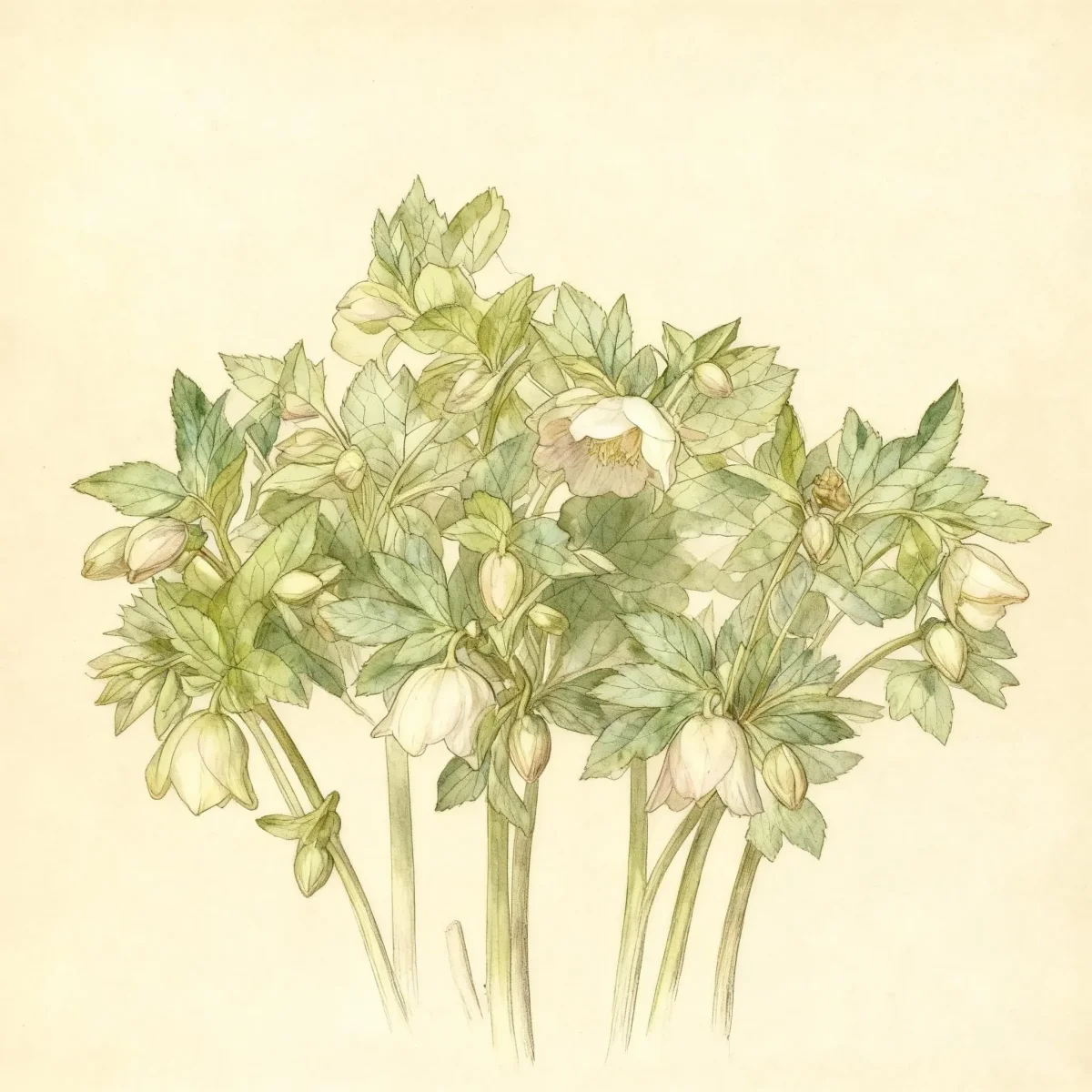
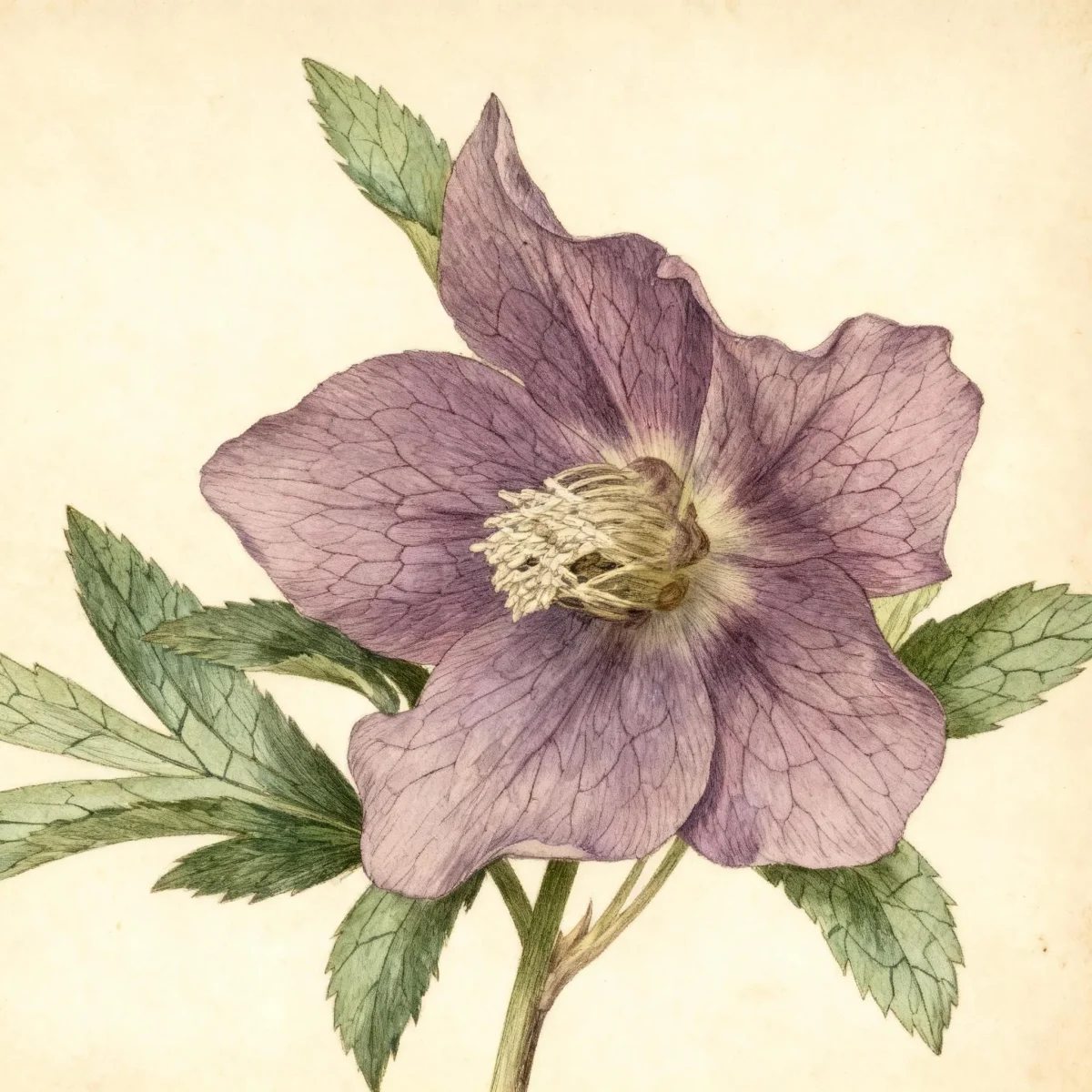
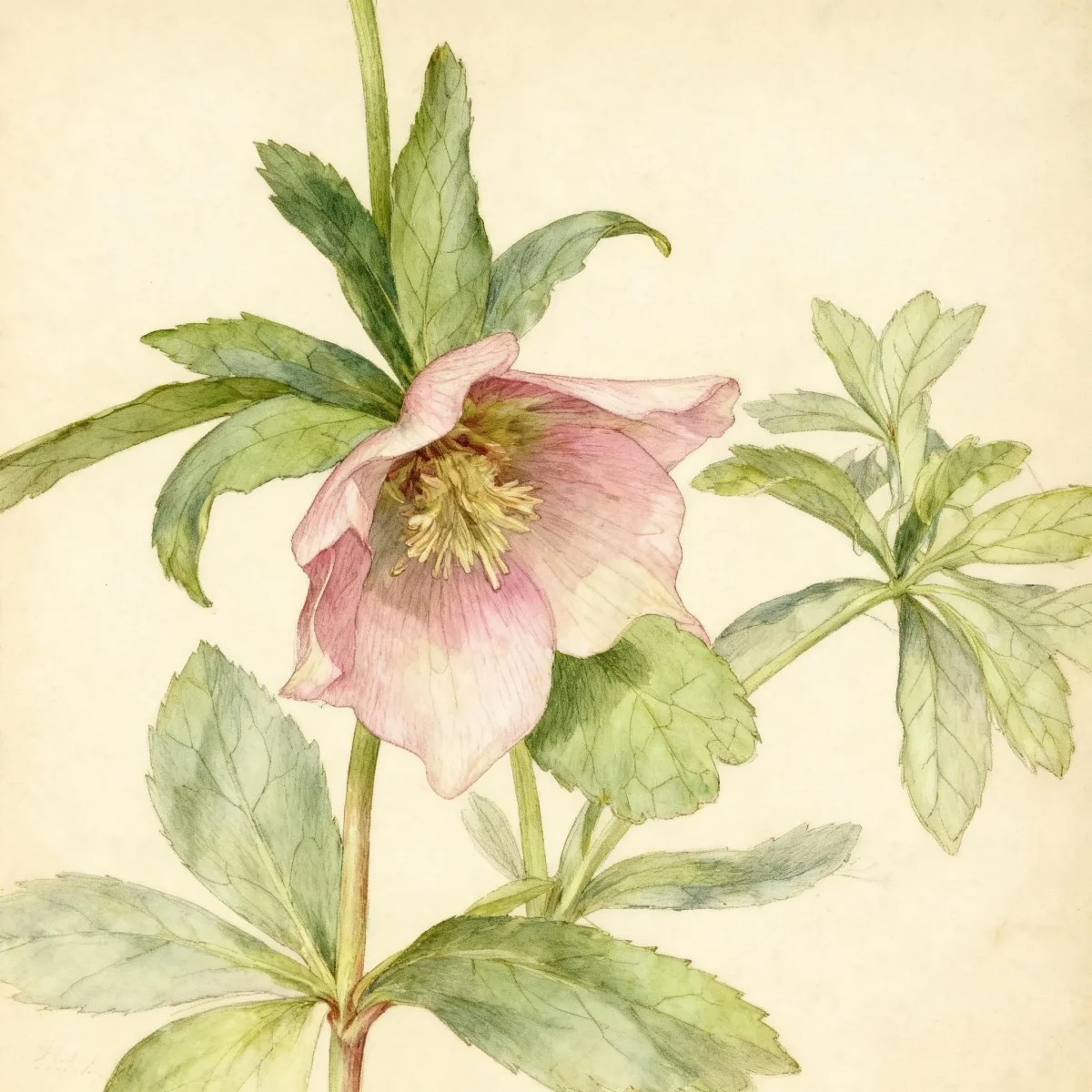
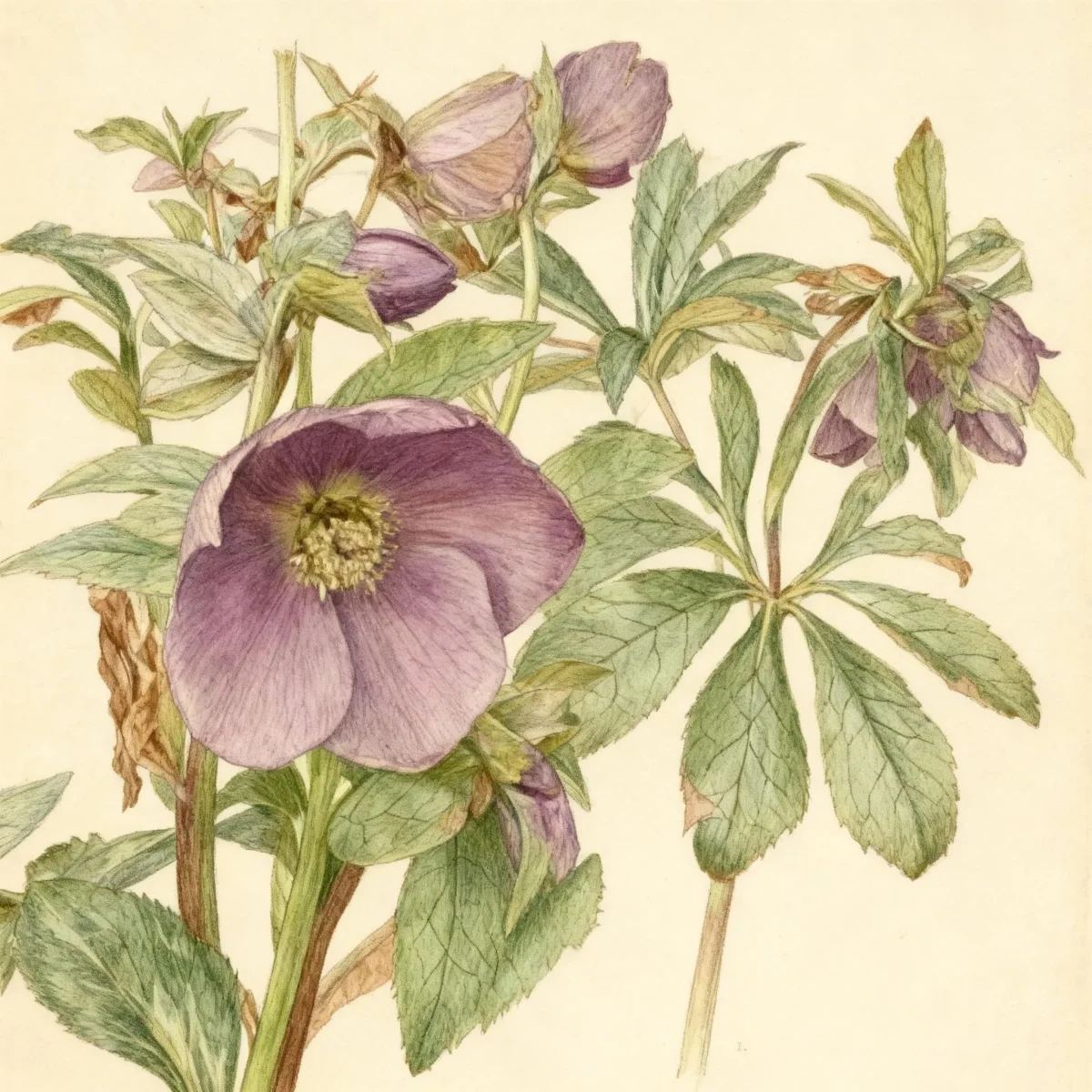
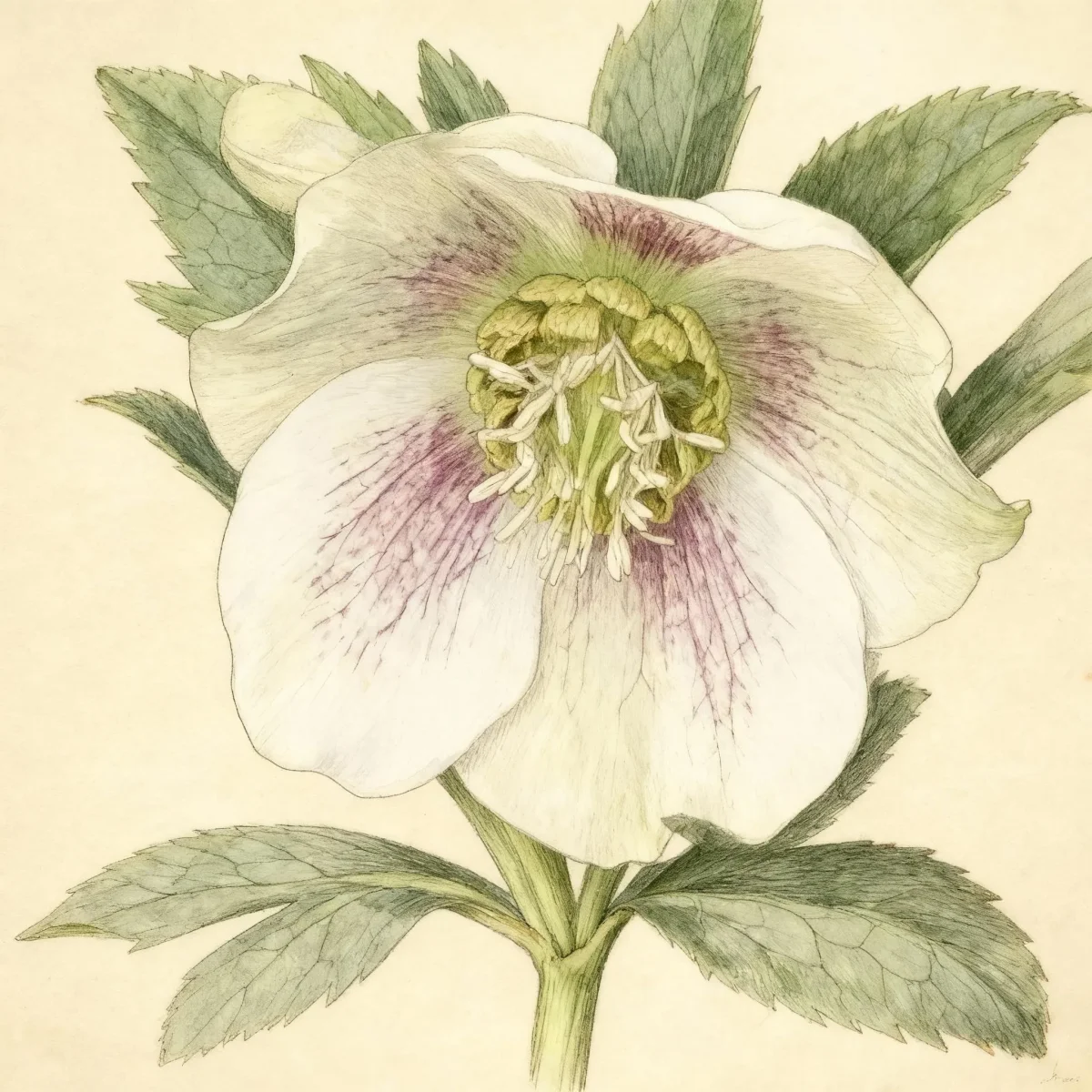
Hellebore (Helleborus × hybridus 'Yellow Lady')
The Helleborus × hybridus 'Yellow Lady' Hellebore is a low-maintenance perennial offering pale yellow blooms from March to May in shady spots.
Scroll down to discover growing tips, care requirements, companion plants, and more
Complete Plant Information
Overview
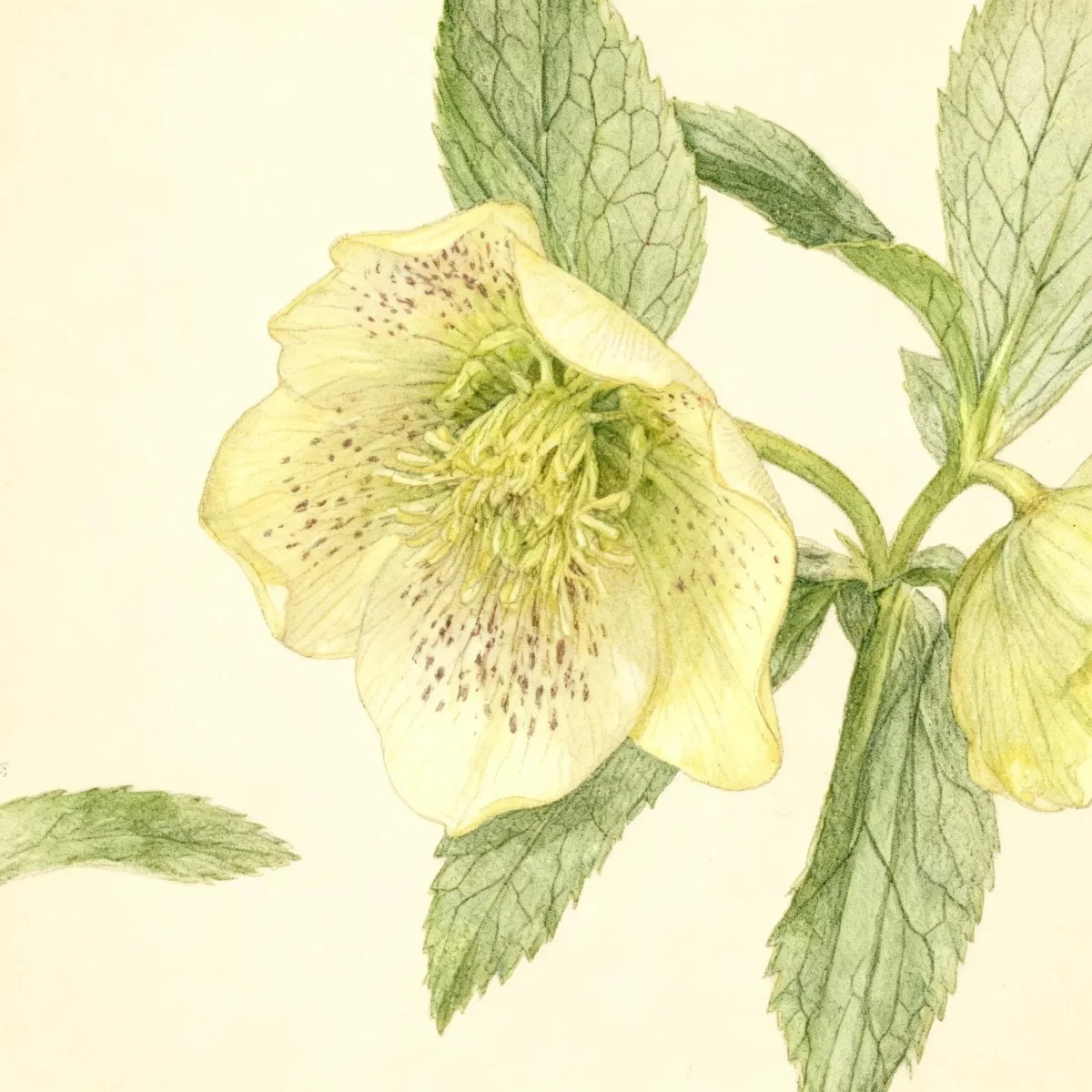
The Helleborus × hybridus ‘Yellow Lady’ is a highly sought-after herbaceous perennial, valued for breaking the monotony of late winter and early spring landscapes when many other plants are dormant. This specific Hellebore cultivar offers striking cup-shaped flowers that display a lovely pale yellow hue, often accentuated with maroon spotting—a wonderful welcome to the returning season. As a tough, clump-forming perennial, the Hellebore thrives equally well in deep shade, making it an essential structural plant for woodland gardens or under dense canopies.
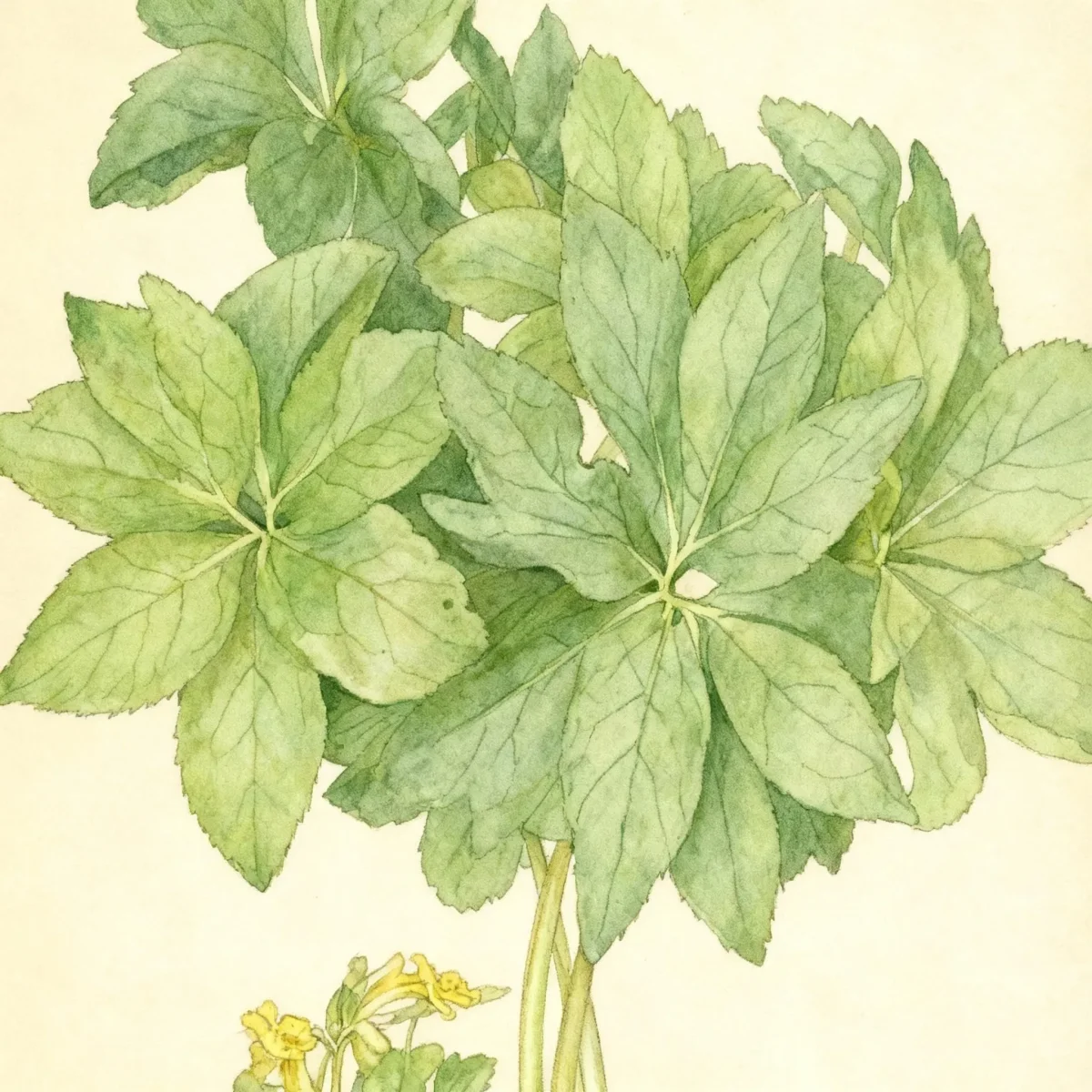
These plants provide year-round interest thanks to their attractive, leathery, evergreen foliage, which offers a constant backdrop texture in the garden. While blooming commences early, the overall maintenance required for Helleborus × hybridus ‘Yellow Lady’ is remarkably low once established in appropriate conditions. Gardeners appreciate this Hellebore not only for its resilient nature but for its ability to establish colonies and provide reliable color where few other perennials dare to flower.
Fast Facts
- Plant Family: Ranunculaceae
- Plant Type: Herbaceous perennial
- Hardiness Zones: USDA Zones 4-9
- Size at Maturity:
- Height: 1-1.5 ft
- Spread: 1-1.5 ft
- Bloom Time: March to May
- Bloom Description: Pale yellow with maroon spotting
- Sun Exposure: Part shade to full shade
- Water Needs: Medium
- Maintenance Level: Low
How to Grow
For the best success with your Helleborus × hybridus ‘Yellow Lady’, plant it during the cooler seasons, such as early spring or fall, giving roots time to establish before summer heat. This Hellebore prefers rich, fertile, humusy soils that are slightly alkaline and maintain medium moisture levels. Proper drainage is crucial, as Hellebores are susceptible to rot in overly saturated conditions. Locate plants where they will receive part shade to full shade, ideally benefiting from protection from harsh winter wind exposure.
Care is minimal once established. Water regularly enough to keep the soil consistently moist, especially during dry spells, reflecting its ‘medium’ water needs. Established plants generally do not require fertilization if the soil structure is rich. After the bloom period concludes, prune back the flowering stems to encourage the production of fresh, clean foliage for the remainder of the season, ensuring the evergreen leaves remain tidy.
Established clumps of Hellebore can become congested over time. If division is necessary, undertake this task in the late summer to early fall. Be aware that while hybrid hellebores sometimes grow true to type from seed, plants grown this way may take two full years before they reward the gardener with their first flowers.
Landscape Uses
The primary landscape suggestion for the Helleborus × hybridus ‘Yellow Lady’ is to naturalize it within shady beds, allowing the clumps to slowly spread via self-seeding under trees or large shrubs. The early bloom time, often marking the true transition away from winter, makes it ideal for positioning near walkways, patios, or windows where its structure and color can be easily enjoyed. Mass plantings create an excellent, attractive ground cover that remains green all year long.
Consider pairing this Hellebore with other shade-loving perennials that emerge slightly later, such as Hostas or Ferns, ensuring continuous seasonal interest even after the pale yellow flowers of the Helleborus fade. Woodland gardens are the perfect habitat, where the plant can benefit from dappled light filtering through mature canopy trees. Planting Helleborus × hybridus ‘Yellow Lady’ in groups emphasizes its clumping habit and early color display.
Standout Features
Flower Qualities
- Showy
Noteworthy Characteristics
Hybrid hellebores, sometimes commonly called hybrid Lenten roses or hybrid winter roses, are bushy, clump-forming perennials which typically grow to 12-15” tall. They are noted for producing single, cup-shaped flowers (typically 2-3” diameter) with five showy, usually overlapping petals (technically sepals), but sometimes come in a double flowered form. Bloom typically commences in mid to late winter extending into early spring. ‘Yellow Lady’ is specifically noted for its glossy, leathery, evergreen, dark green leaves and its late winter to early spring bloom of pale yellow flowers with maroon spotting.
Tolerances
- Deer
- Heavy Shade
Potential Problems
This Hellebore variety typically suffers from no serious insect or disease problems, contributing to its low maintenance rating. Occasional issues growers may encounter include crown rot, particularly if drainage is poor, and leaf spot. As a critical warning for households with pets or children, all parts of the Hellebore—the leaves, stems, and roots—are poisonous if ingested. Proper site selection to avoid areas where curious animals might disturb the roots, and ensuring the plant is kept far from accessible edible gardens, is key for safe cultivation.
Frequently Asked Questions
What hardiness zones is Hellebore suitable for?
The Helleborus × hybridus ‘Yellow Lady’ Hellebore is quite adaptable, tolerating USDA Hardiness Zones 4 through 9.
How large does Hellebore grow?
This perennial typically achieves a mature height between 1 and 1.5 feet tall, with a similar spread of 1 to 1.5 feet wide.
What sun exposure does Helleborus × hybridus ‘Yellow Lady’ need?
This specific Hellebore variety performs best when situated in areas ranging from part shade to full shade, making it a superb choice for dark garden corners.
When does Hellebore bloom?
You can expect the showy, pale yellow with maroon spotting flowers of the Helleborus × hybridus ‘Yellow Lady’ to appear between March and May.
Conclusion
The Helleborus × hybridus ‘Yellow Lady’ delivers exceptional value through its reliable, early-season color and evergreen structure, minimizing garden effort while maximizing visual impact. This hardy Hellebore stands out as a champion of the shade garden, providing beauty when little else is active. Before purchasing, confirm that your chosen site offers the preferred rich, well-drained soil and check your local USDA hardiness zone compatibility.
Companion Planting
When selecting companions for Helleborus × hybridus ‘Yellow Lady’, focus on other shade-tolerant perennials that share similar moisture requirements and bloom later in the season. Lilyturf (Liriope) serves as an excellent year-round edging plant beneath the Hellebore foliage. Spring ephemerals like Bloodroot or Squill offer early color before the Hellebore fully takes over, while later-blooming shade lovers such as Lungwort (Pulmonaria) can mask the fading flower stems in late spring.
Design Ideas for Deep Shade
This Hellebore excels in creating structure in areas receiving minimal direct sunlight. Use it extensively under dense evergreen trees where soil conditions permit. For a sophisticated, monochromatic winter interest display, group Helleborus × hybridus ‘Yellow Lady’ with white or deep purple blooming hellebores nearby. In woodland edge settings, allow them to naturalize, leading the eye from the cool shade toward brighter borders, breaking up the dark space with their bright, albeit pale, yellow flowers.