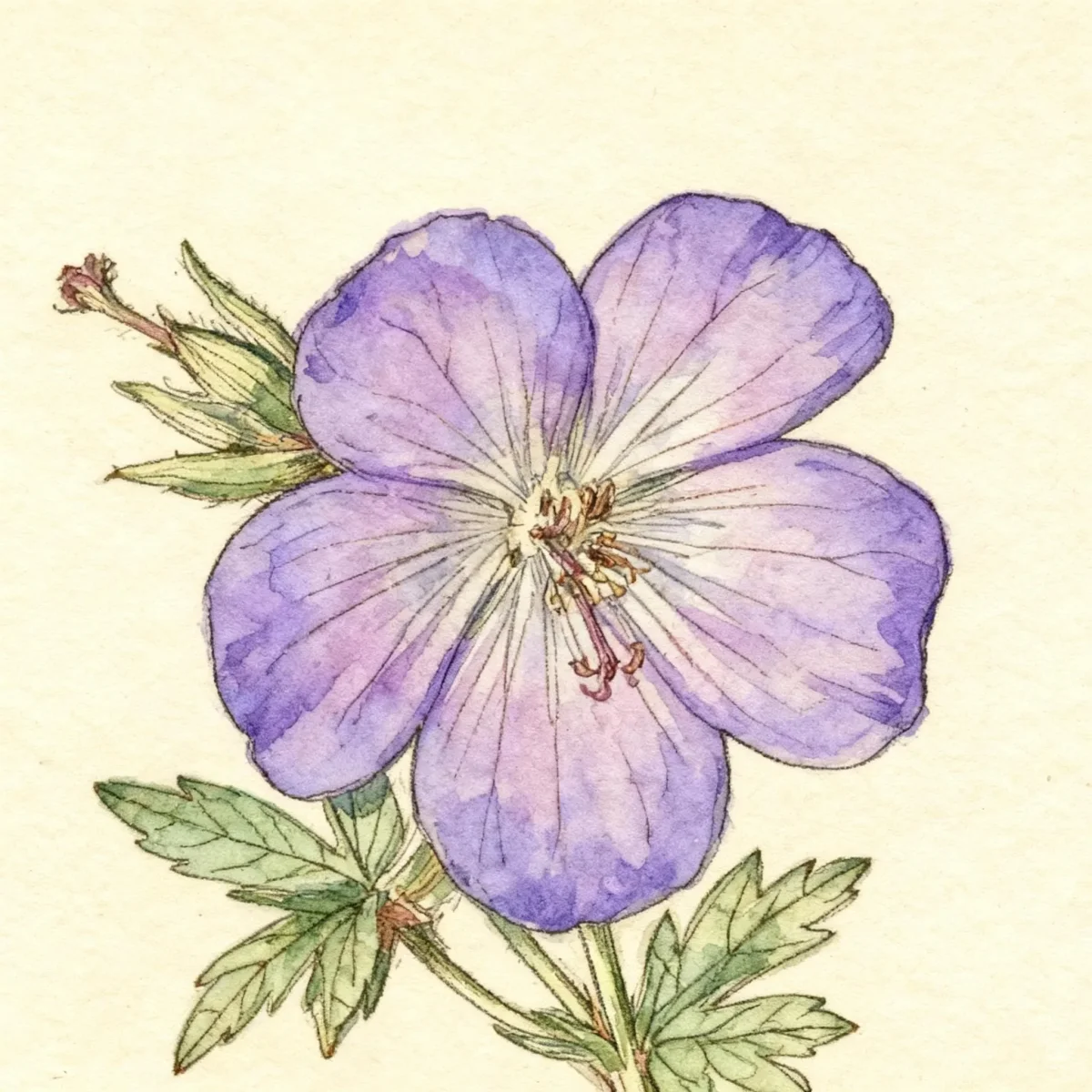
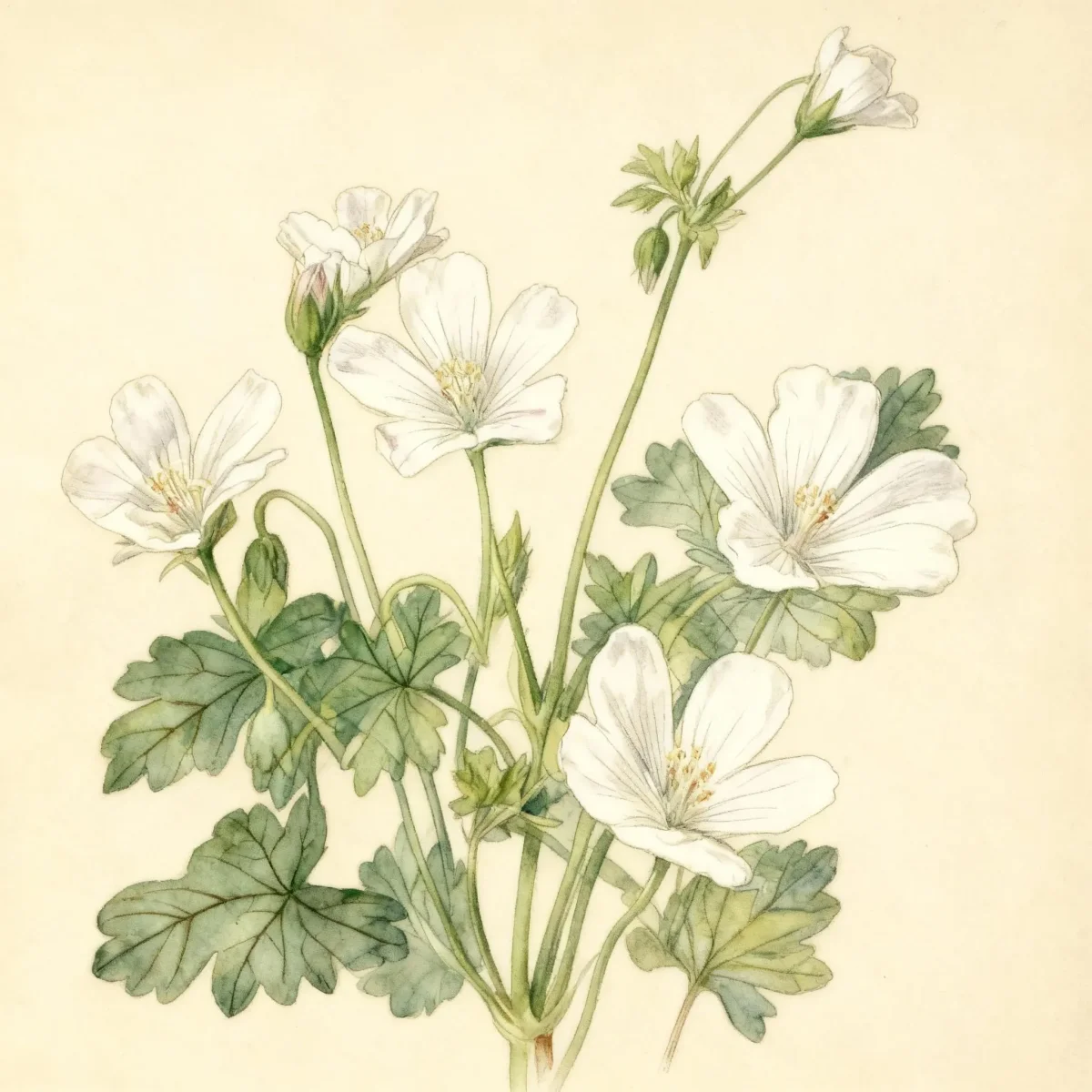
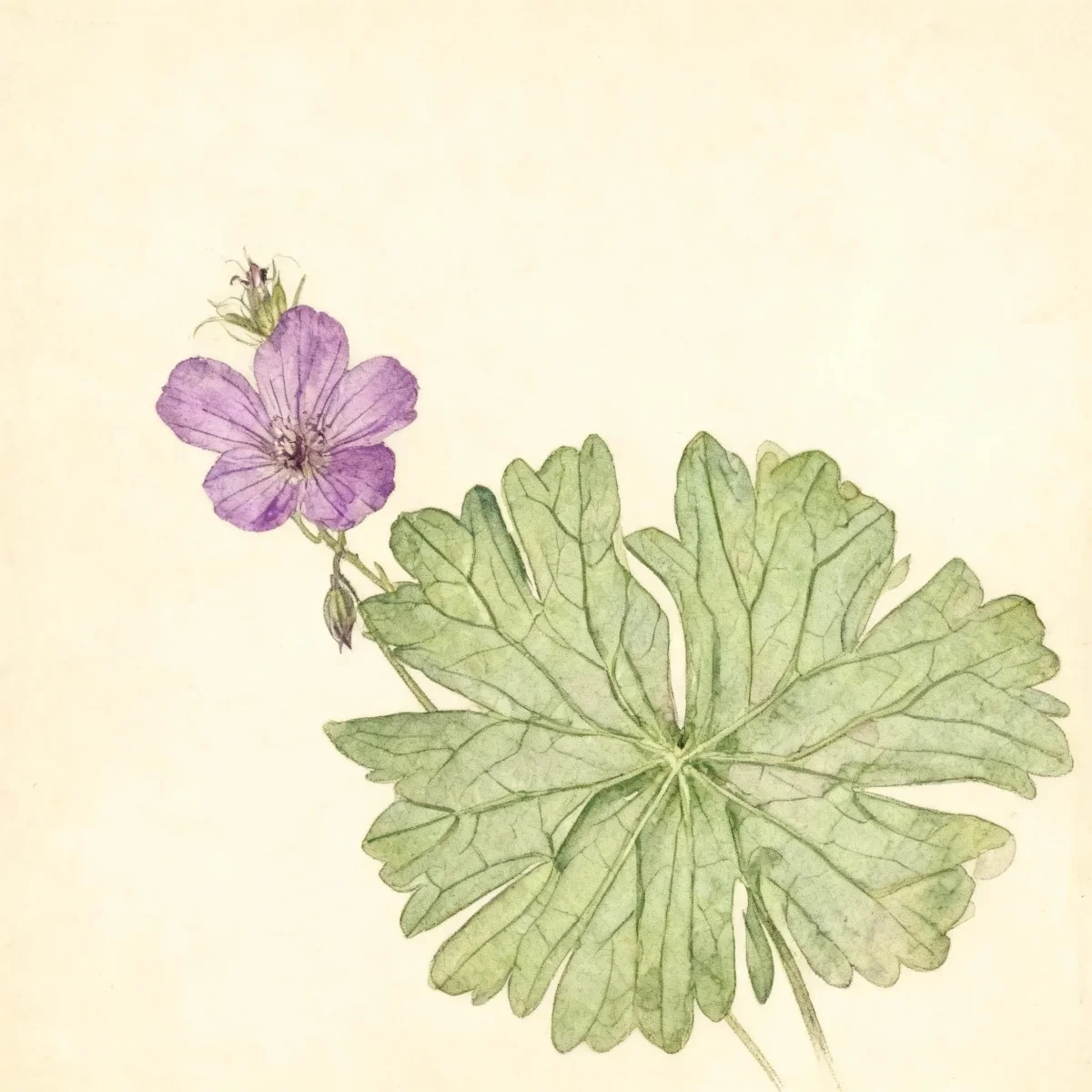
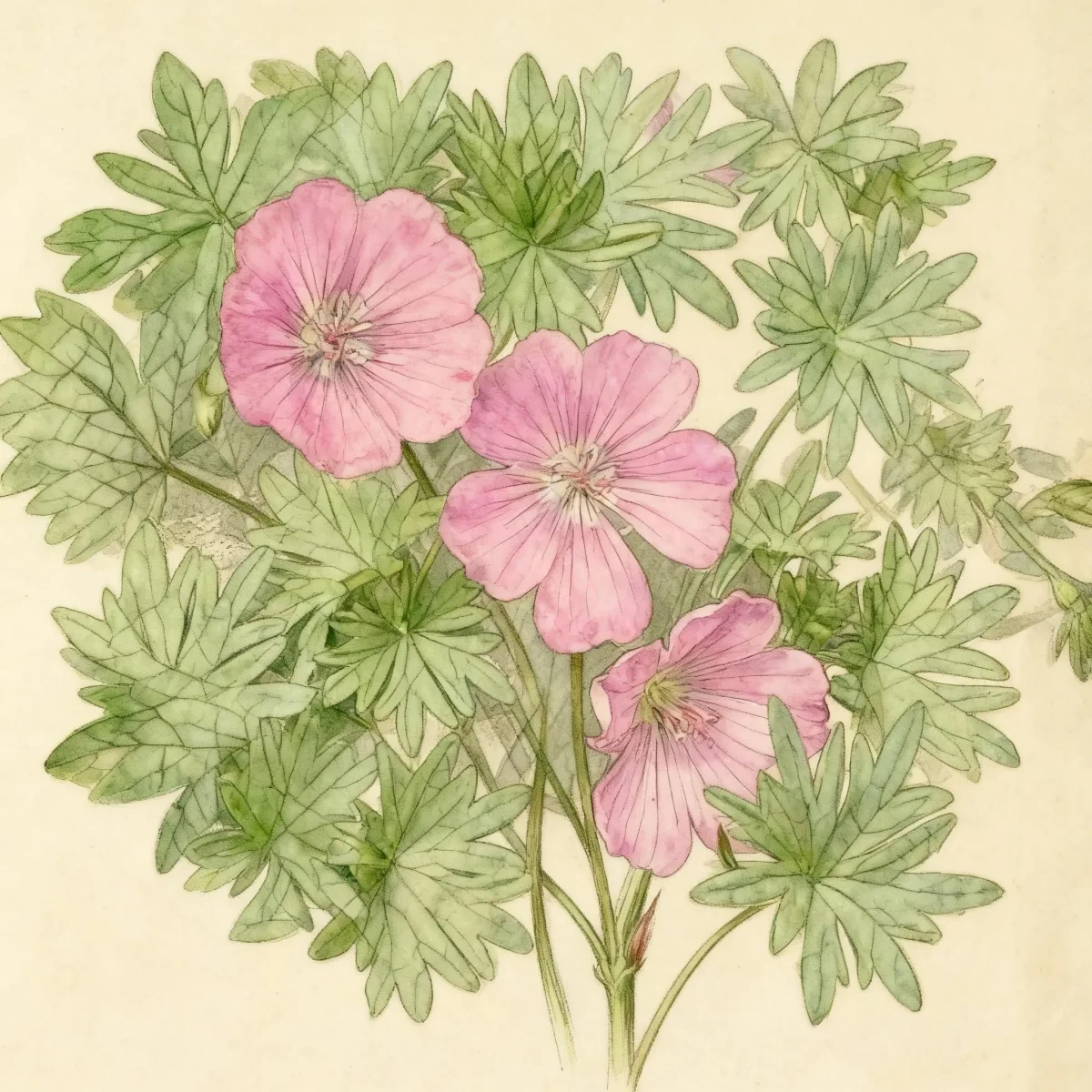
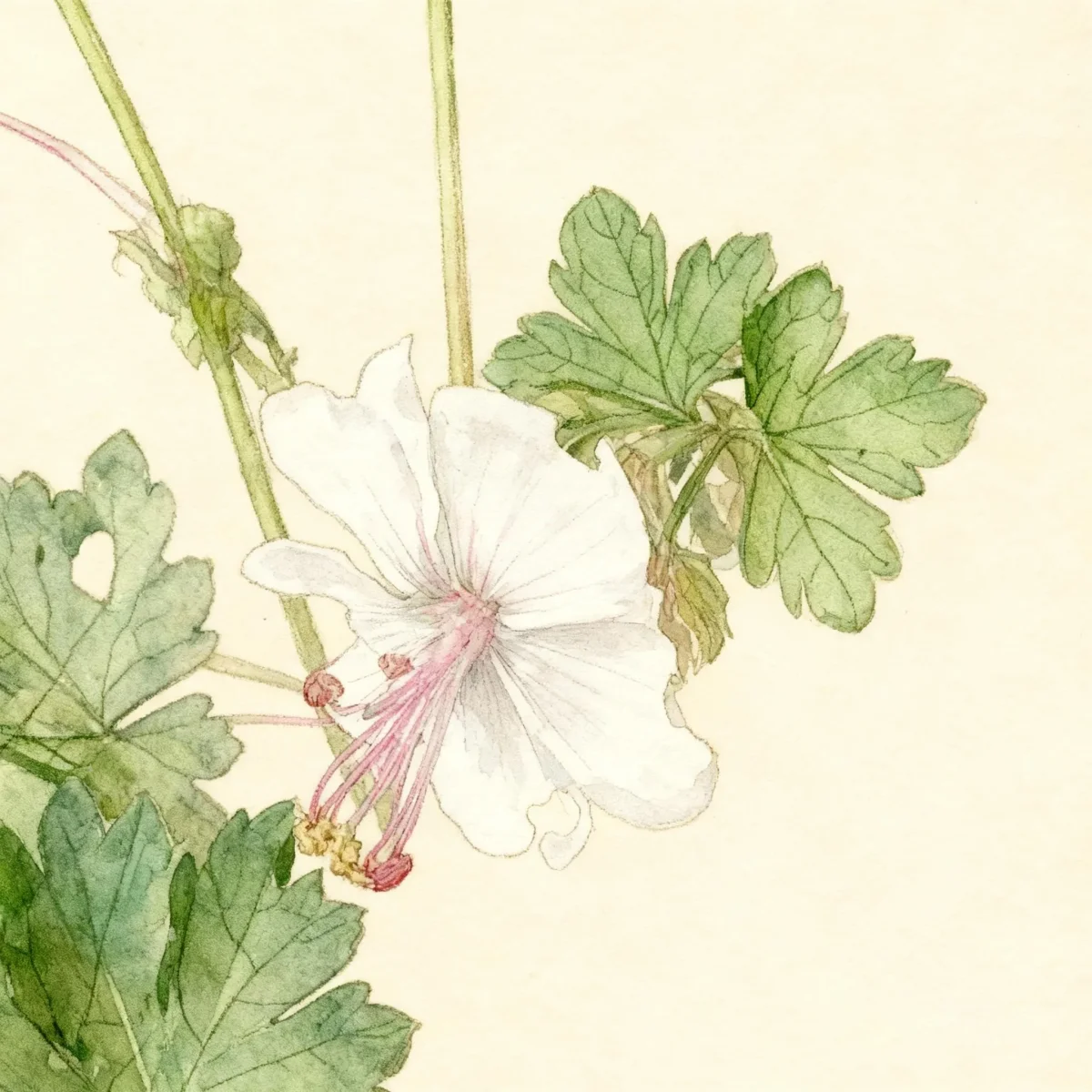
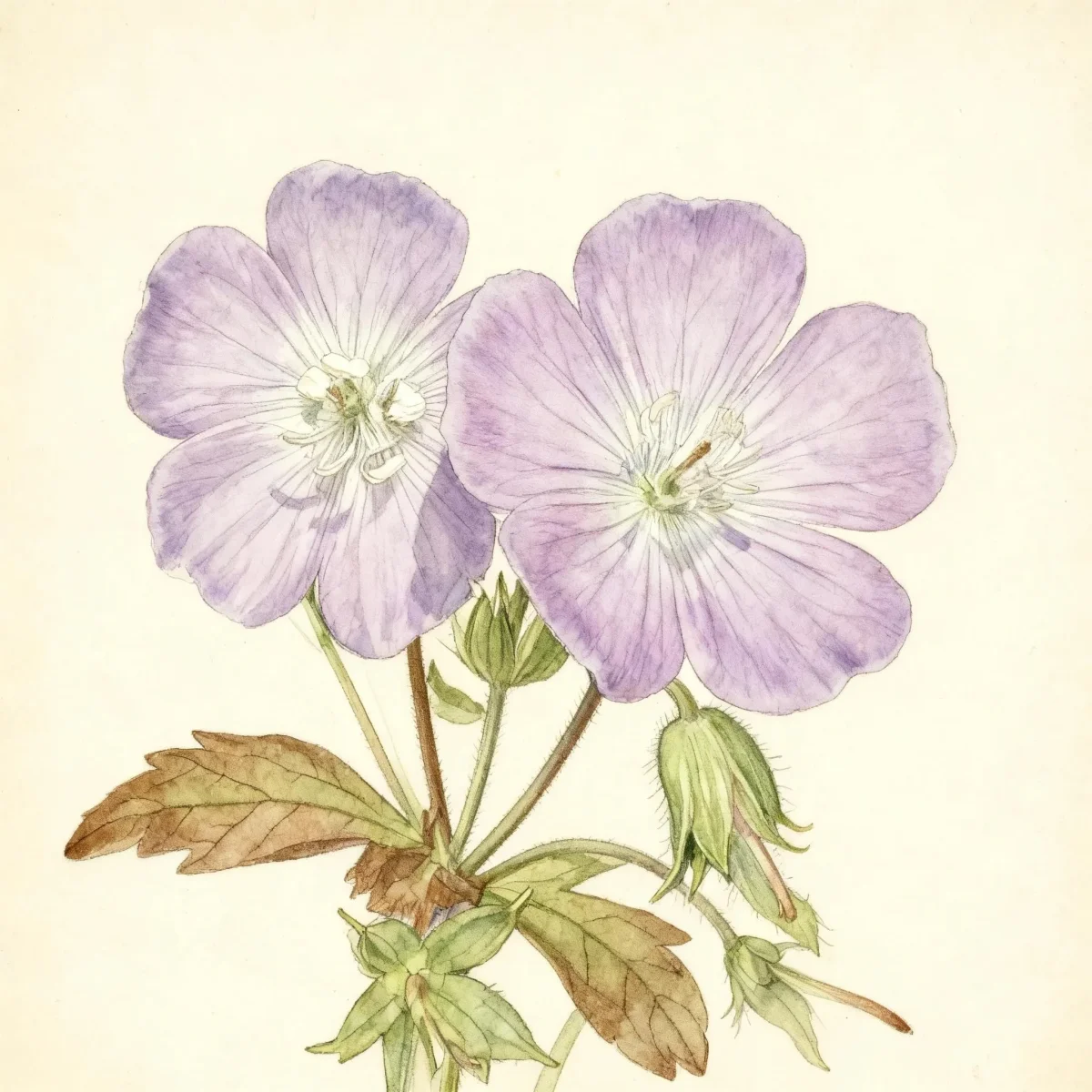
Meadow cranesbill (Geranium pratense (Victor Reiter Junior strain))
Geranium pratense (Victor Reiter Junior strain) boasts striking blue-purple flowers and handles sun to part shade well. Low maintenance Meadow cranesbill.
Scroll down to discover growing tips, care requirements, companion plants, and more
Complete Plant Information
Overview
The Geranium pratense (Victor Reiter Junior strain), widely known as Meadow cranesbill, is a highly valued herbaceous perennial prized for its robust constitution and attractive coloration. This specific strain offers saucer-shaped violet to blue-purple flowers and notably develops bronze-purple foliage, offering visual interest well beyond the primary bloom window. As a clump-forming perennial, it provides reliable texture and color, performing best where given consistent moisture and sun exposure.
This cultivar remains manageable in size, typically forming a mound between 1.5 and 2 feet tall and wide, making it slightly more contained than the straight species of Geranium pratense. Its low maintenance requirements and tolerance for common garden pests like deer and rabbits make the Meadow cranesbill an excellent choice for adding long-season interest to mixed borders and cottage gardens.
Gardeners appreciate the resilience of the Geranium pratense (Victor Reiter Junior strain), though its preference for cooler conditions should guide placement in hotter regions. Its ability to thrive between USDA Zones 4 and 7 ensures broad usability across temperate climates seeking dependable, showy, blue-toned flowers.
Fast Facts
- Plant Family: Geraniaceae
- Plant Type: Herbaceous perennial
- Hardiness Zones: USDA Zones 4-7
- Size at Maturity:
- Height: 1-2 ft
- Spread: 1-2 ft
- Bloom Time: May to July
- Bloom Description: Blue-purple
- Sun Exposure: Full sun to part shade
- Water Needs: Medium
- Maintenance Level: Low
How to Grow
Plant Geranium pratense (Victor Reiter Junior strain) in spring or fall when conditions are mild, ensuring it receives full sun for best flowering, though part afternoon shade is welcome in extreme summer heat. The ideal setting involves average, well-drained soil enriched with organic matter, particularly if you aim for peak performance, as this species thrives in organically rich, moist conditions. Proper drainage is crucial to prevent root issues throughout the growing season.
Water needs are medium; maintain consistent soil moisture, especially during dry spells, but avoid saturation. This plant is generally low maintenance, benefiting from minimal intervention. If you cut back the plant after the initial flush of bloom, you might encourage a sparse rebloom extending into late summer or fall, though flower production may diminish earlier in hot, humid summers.
Tall stems on the species Geranium pratense can sometimes require staking, but the more compact Victor Reiter Junior strain often minimizes this need. Be aware that this geranium generally dislikes prolonged exposure to hot, humid summers and is best avoided south of Zone 7 gardening regions. Prepare beds by incorporating compost to ensure the soil structure supports this meadow native well.
Landscape Uses
The reliable stature and striking blue-purple flowers make Meadow cranesbill highly effective when used for mass planting or grouping in various garden settings. These perennials excel when positioned in the middle or front of borders, providing reliable color structure against taller background plants. They integrate seamlessly into traditional cottage gardens where lush, informal plantings are desired.
For rock gardens, the Geranium pratense (Victor Reiter Junior strain) works well when placed where its foliage can spill slightly over stone edges. Consider pairing them with plants that share their cultural needs, such as silver-leaved companions or late-blooming spire-shaped flowers that offer contrast to the cranesbill’s mounding habit. Although not explicitly listed for containers, its neat size suggests it could perform well in large pots if kept consistently moist.
Standout Features
Flower Qualities
- Showy
Noteworthy Characteristics
Geranium pratense, commonly called meadow cranesbill, is native to northern Europe, central Asia and China. It is a clump-forming perennial that typically grows to 24-36” tall. Blue-purple flowers (each to 1 1/2” diameter) bloom in clusters (dense cymes) above the foliage from late spring to mid-summer. A sparse late summer or fall rebloom may occur in some areas if plants are cut back after the primary bloom period. Green basal leaves (3-6” wide) are deeply cut into 7-9 toothed lobes. Flowers give way to dehiscent fruits (capsules composed of several one-seeded carpels which shatter somewhat explosively at maturity expelling seed often significant distances). This species was introduced into North America with subsequent naturalization occurring over time in Canada from Newfoundland to Alberta and in the U.S. From Minnesota to New England south of Pennsylvania. Genus name comes from the Greek word geranos meaning crane in reference to the fruit which purportedly resembles the head and beak of a crane. Specific epithet means growing in meadows. Common name of cranesbill is also in reference to the bird-like beak on the carpels. Victor Reiter Junior strain is noted for its saucer-shaped violet flowers and bronze purple foliage. It has a more compact form than the straight species, typically growing in a mound to 15-24” tall and as wide. Flowers usually bloom from late spring to late summer, but sometimes bloom time will be shorter (ending in mid-summer) in hot summer climates. Sparse late summer to fall rebloom may occur. Leaves emerge purple in spring, gradually changing to dark green with purple-hued edges by summer. This strain of geranium is named after Victor Reiter, Jr., prominent San Francisco gardener and cofounder of the California Horticultural Society.
Tolerances
- Rabbit
- Deer
Potential Problems
This plant exhibits excellent durability as it faces no serious insect or disease problems requiring intensive management. Good cultural practices, especially ensuring well-draining soil and avoiding excessive humidity, will maintain its vigor year after year. Monitor for excessive dryness which can stress the plant, although insect issues are rare for established Meadow cranesbill.
Frequently Asked Questions
What hardiness zones is Meadow cranesbill suitable for?
The Geranium pratense (Victor Reiter Junior strain) is suitable for USDA Hardiness Zones 4 through 7.
How large does Meadow cranesbill grow?
This specific strain typically grows to a height of 1 to 2 feet and spreads between 1 and 2 feet wide, offering a manageable, mounding habit.
When does Meadow cranesbill bloom?
The primary bloom time for the Geranium pratense (Victor Reiter Junior strain) is from May through July, producing attractive blue-purple flowers.
What sun exposure does Meadow cranesbill need?
It performs optimally in full sun but tolerates partial shade, positioning it well for gardens receiving sun throughout the morning and afternoon shade during the hottest part of the day.
Conclusion
The Meadow cranesbill, specifically the Geranium pratense (Victor Reiter Junior strain), offers gardeners a resilient, low-maintenance perennial with superior blue-violet color and interesting bronze-tinged foliage. Its adaptability across sun and moisture conditions within its hardiness range makes it a reliable performer. Check your local USDA zone compatibility and plan to incorporate this excellent cranesbill into your spring planting scheme for established summer beauty.
Companion Planting
Selecting companions based on shared moisture and sun requirements will optimize the health of your Meadow cranesbill. Pair it with plants that enjoy medium water and full to partial sun, such as Siberian Iris or Russian Sage (Perovskia atriplicifolia), which offer contrasting flower shapes and textures without competing aggressively for resources. Low-growing edging plants, such as creeping thyme or certain low sedums, create a soft transition from paths or lawn areas to the taller mounds of the cranesbill.
Seasonal Care Calendar
For spring preparation, ensure soil is amended with compost immediately as new growth emerges, which aids in robust flowering for the Geranium pratense (Victor Reiter Junior strain). Summer care focuses primarily on watering during dry spells, especially in hotter climates, and deadheading spent blossoms if you are aiming to encourage that sparse, secondary bloom. In autumn, foliage may die back; avoid heavy pruning and simply tidy up any remaining dead material before winter sets in, as the plant itself is quite hardy.