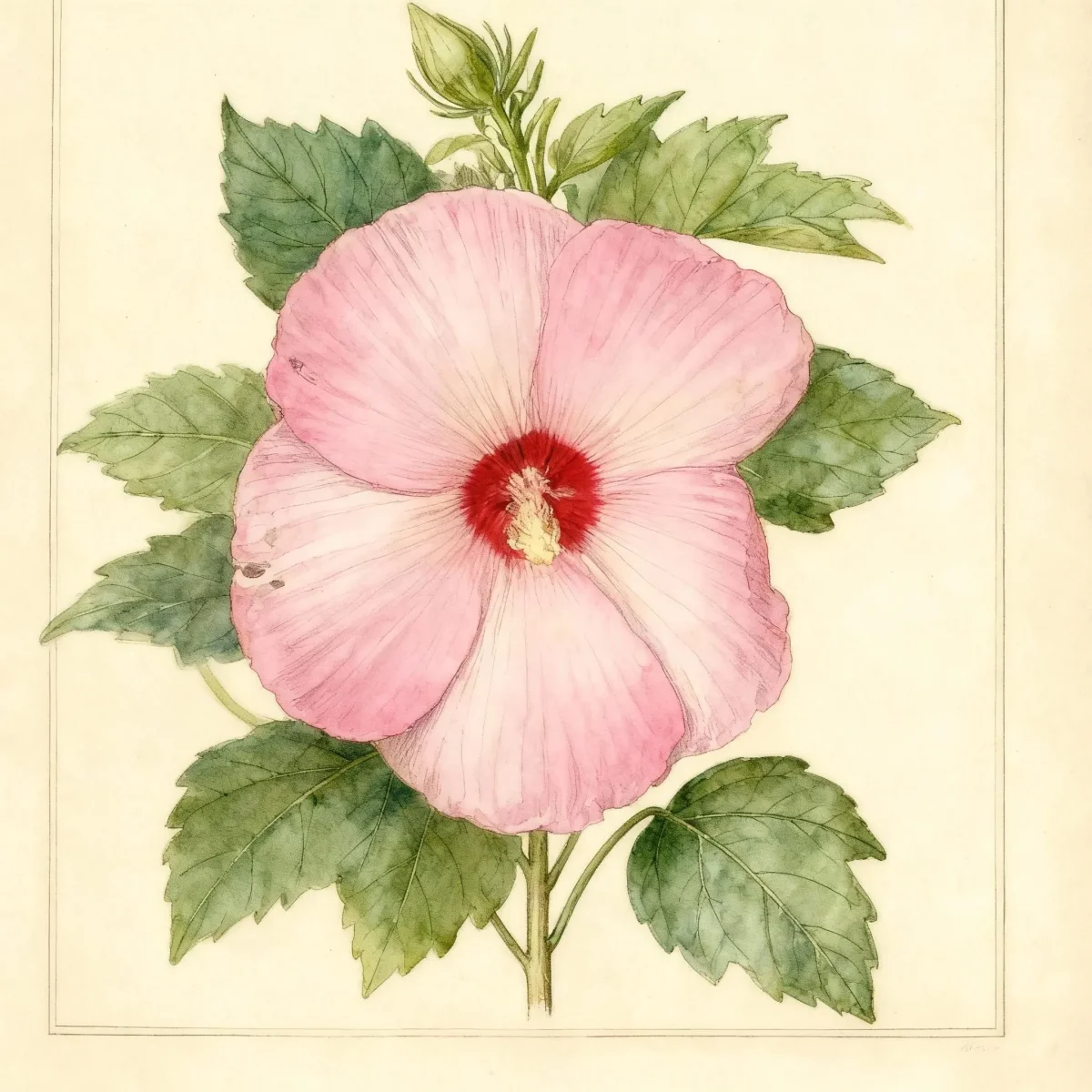
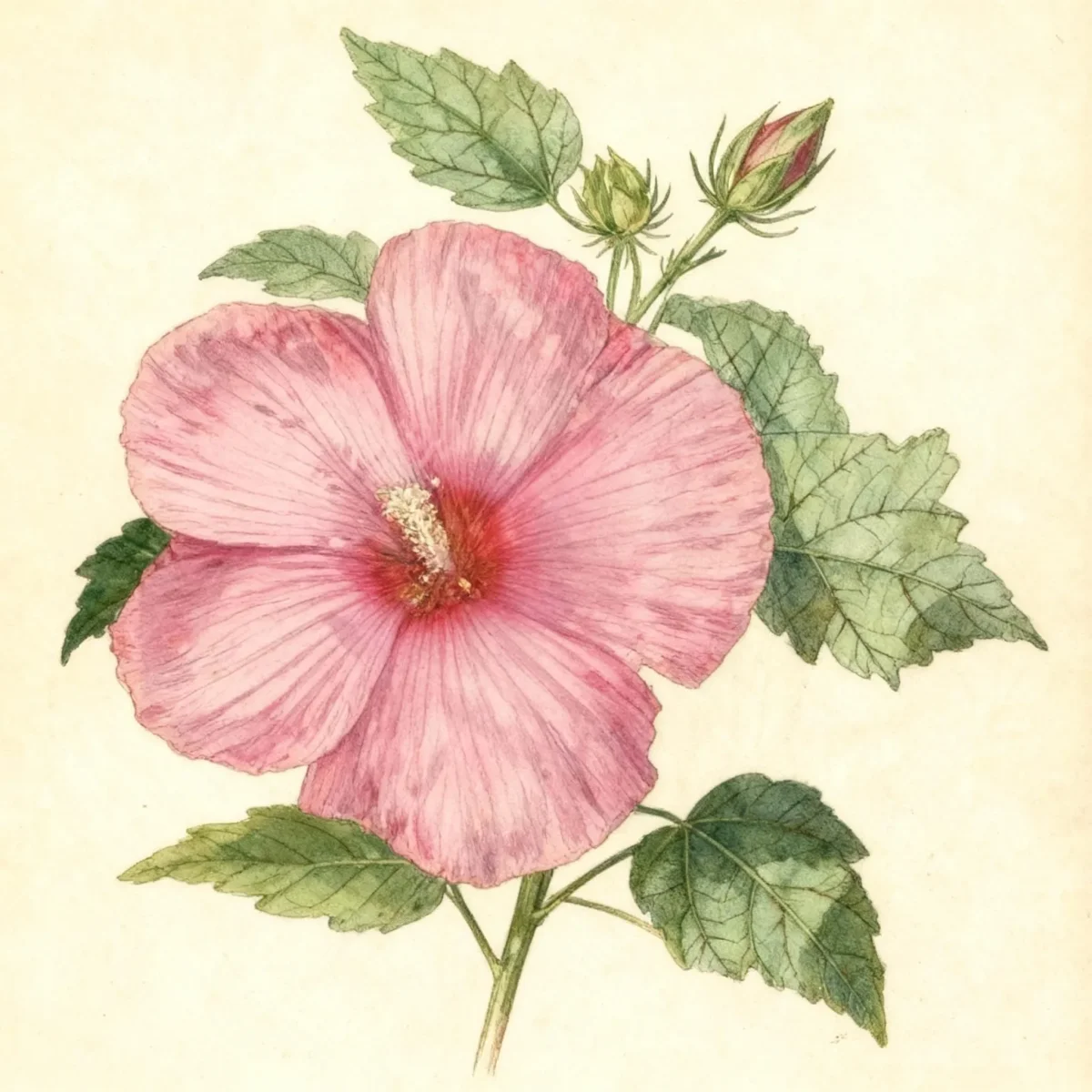
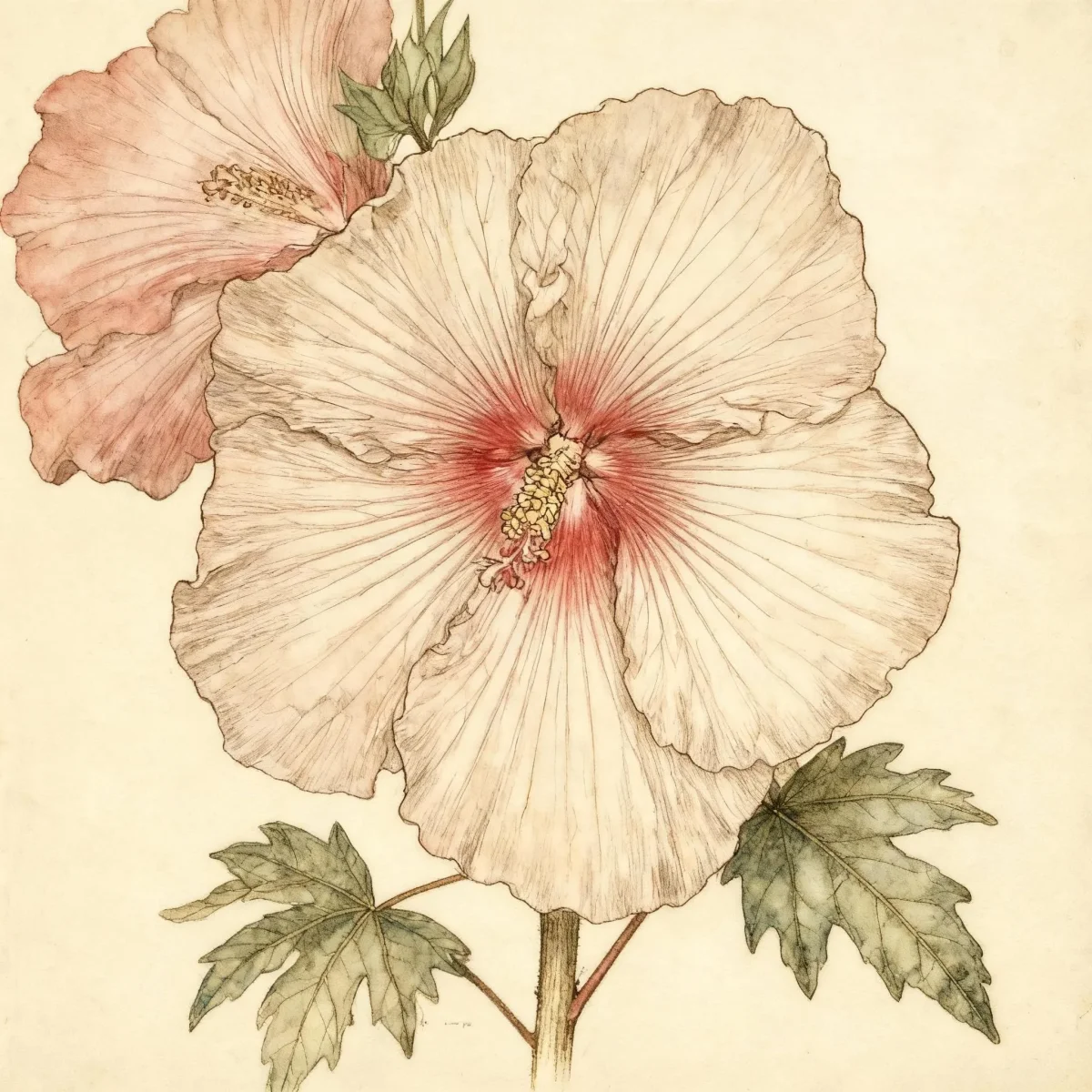
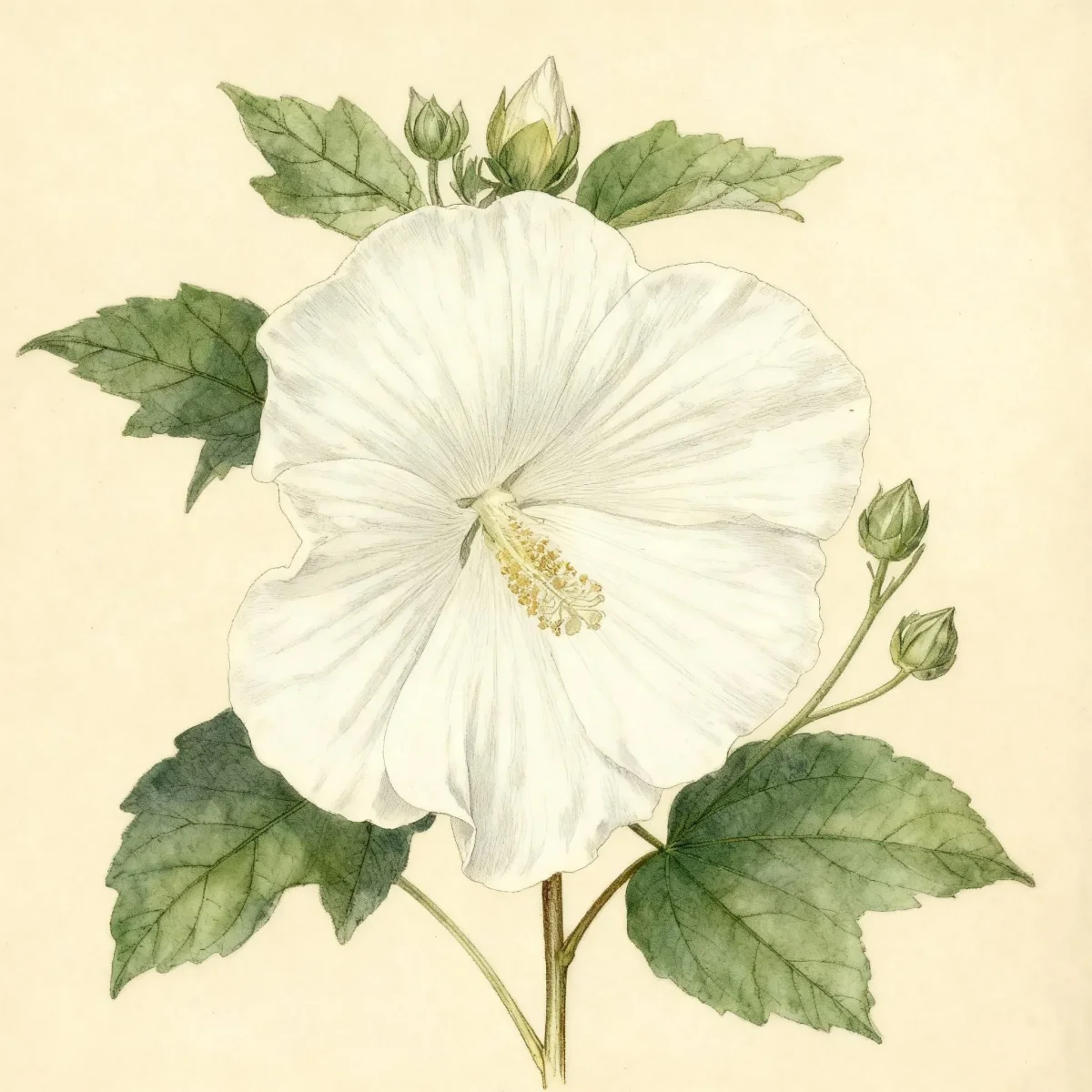
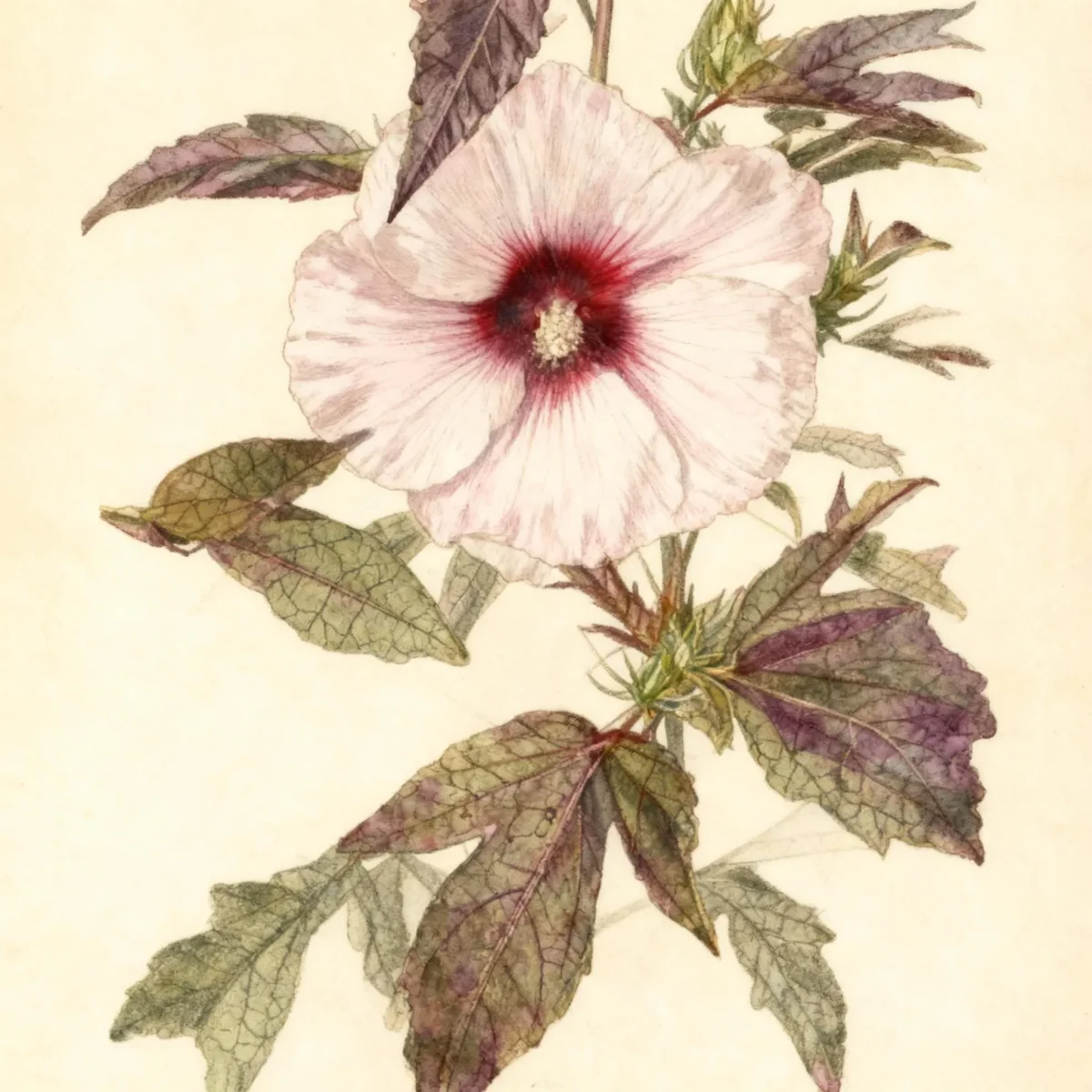
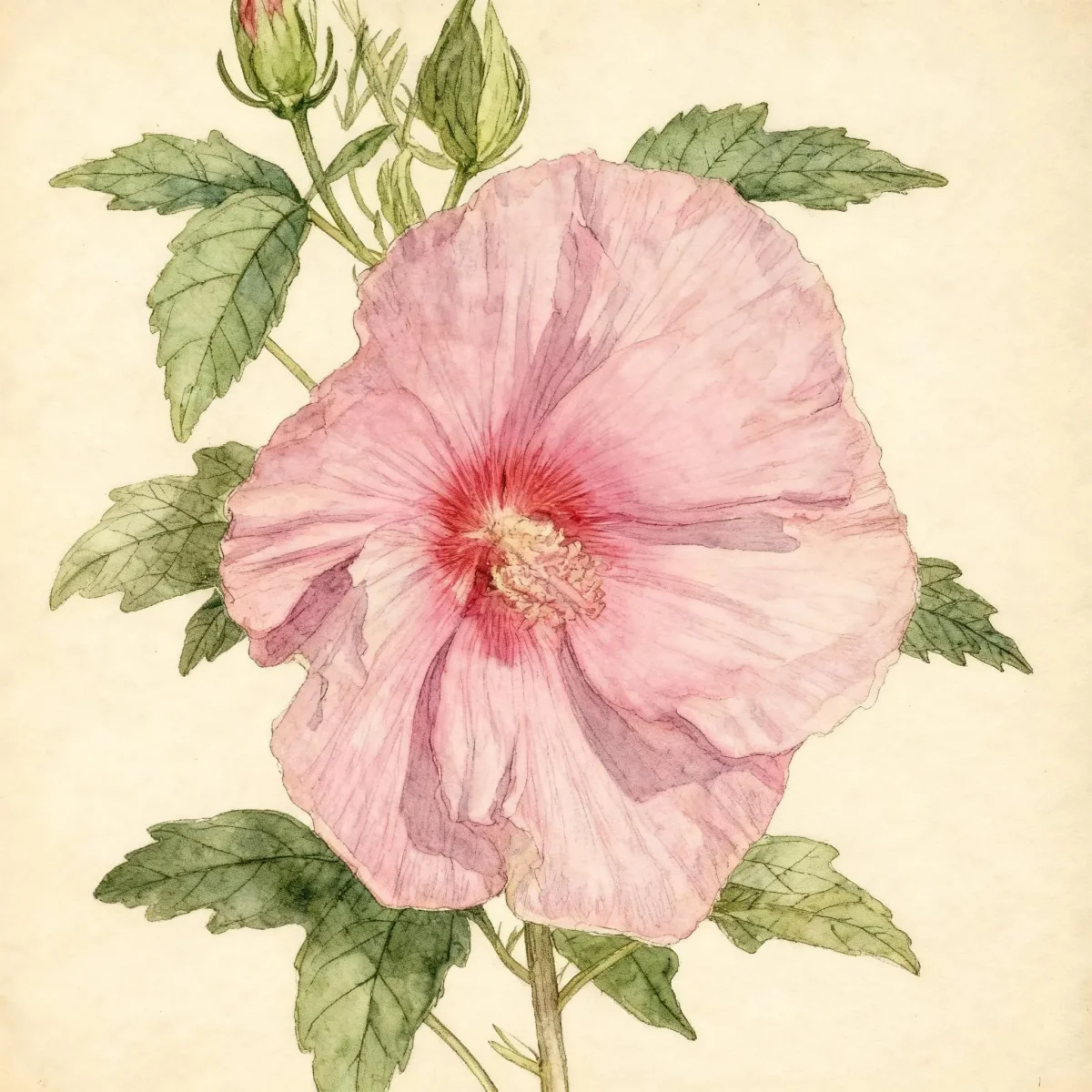
Common rose mallow (Hibiscus 'Everest White')
Discover Hibiscus 'Everest White', a low-maintenance Common rose mallow renowned for massive white flowers that bloom from July to September in zones 5-9.
Scroll down to discover growing tips, care requirements, companion plants, and more

Complete Plant Information
Overview
Hibiscus ‘Everest White’, also known as Common rose mallow, is a highly valued herbaceous perennial celebrated for its truly dramatic summer blooms. This cultivar produces dinner plate-sized flowers, often reaching up to 12 inches in diameter, setting it apart in the perennial garden. As a hybrid hardy hibiscus, Hibiscus ‘Everest White’ offers tropical aesthetics with reliable winter hardiness across many temperate climates.
This vigorous plant performs best when sited in full sun, which ensures the strongest stems and an abundance of its signature white flowers with deep red eyes. It thrives in moist conditions, making it an excellent choice for rain gardens or areas where consistent moisture is naturally available. Despite its dramatic appearance, gardeners will find the Common rose mallow surprisingly low maintenance throughout the season.
With a height range of 3 to 4 feet and a spread of 2 to 3 feet, Hibiscus ‘Everest White’ provides significant architectural interest in the mid-to-back border. Its reliable mid-summer to early fall blooming period guarantees vibrant color when many other perennials begin to fade.
Fast Facts
- Plant Family: Malvaceae
- Plant Type: Herbaceous perennial
- Hardiness Zones: USDA Zones 5-9
- Size at Maturity:
- Height: 3-4 ft
- Spread: 2-3 ft
- Bloom Time: July to September
- Bloom Description: White with red eye
- Sun Exposure: Full sun
- Water Needs: Medium to wet
- Maintenance Level: Low
How to Grow
Planting should occur in spring after the danger of frost has passed. Locate your Hibiscus ‘Everest White’ where it receives full sun; although it tolerates some light shade, full sun maximizes flower production and air circulation, which is crucial for discouraging potential diseases. This plant prefers moist, organically rich soils but adapts well to average garden conditions, provided deep and consistent watering is maintained, especially during dry spells.
Consistent moisture is key; leaf scorch is a common issue if soils are allowed to dry out. Water deeply rather than frequently, aiming to keep the root zone consistently damp. Regular fertilization during the growing season will support the rapid growth and heavy flowering habit of the Common rose mallow.
Deadhead spent individual flowers daily to maintain a tidy appearance throughout the long bloom season. In late autumn, after foliage has died back, cut stems down to approximately 3 to 4 inches above the ground. Be patient in spring, as new growth from Hibiscus ‘Everest White’ is notoriously slow to emerge, but the plant will rapidly develop once warmth arrives.
Landscape Uses
The striking size and late-season color provided by Hibiscus ‘Everest White’ make it incredibly versatile. It excels as a specimen plant where its huge blooms can capture attention, or planted in groups for a mass accent effect along borders. Considering its preference for moisture, one of its most practical roles is in rain gardens or along the edges of streams and ponds, where it not only looks magnificent but also helps manage excess water.
Use this tall perennial to create a temporary hedge or to divide larger garden spaces. When planting in drifts, the Common rose mallow provides incredible visual impact during the dog days of summer. Pair it with shorter, sun-loving perennials that can handle similar moisture levels for continuous visual interest.
Standout Features
Flower Qualities
- Showy
Noteworthy Characteristics
Hybrid hardy hibiscus cultivars are often the result of complex breeding work involving multiple U.S. native species. Hibiscus ‘Everest White’ is a sturdy, rounded, woody-based cultivar famous for its dinner plate-sized, 5-petaled, hollyhock-like flowers that can reach up to 12 inches across. These large blooms are white with distinct red eyes and feature a prominent, pale yellow central staminal column, providing stunning texture against the glossy dark green foliage.
Tolerances
- Deer
- Wet Soil
Potential Problems
While generally robust, gardeners should monitor Hibiscus ‘Everest White’ for some leaf spots, blights, rusts, and canker, which are more likely in overly humid or crowded conditions. Ensure good air circulation to mitigate fungal issues. Insect pests like Japanese beetles, sawflies, whiteflies, and aphids can occasionally appear. Japanese beetles are notorious for skeletonizing foliage quickly; manual removal or targeted treatment is necessary if infestations are severe. Critically, avoid letting the soil dry out, as this rapidly leads to leaf scorch and stress the plant.
Frequently Asked Questions
What hardiness zones is Common rose mallow suitable for?
Hibiscus ‘Everest White’ is hardy in USDA Zones 5 through 9, allowing cultivation across a broad range of North American climates.
How large does Hibiscus ‘Everest White’ grow?
This cultivar typically reaches a height of 3 to 4 feet and spreads between 2 to 3 feet wide at maturity.
When does Hibiscus ‘Everest White’ bloom?
The blooming period for this variety is reliably long, running from July right through September, showcasing white flowers with striking red eyes.
What sun exposure does Common rose mallow need?
For best performance, Hibiscus ‘Everest White’ requires full sun exposure, though it will tolerate a bit of light shade.
Conclusion
Hibiscus ‘Everest White’ is an unbeatable source of large, dramatic floral color during the intense heat of mid to late summer. The combination of stunning white blooms and robust, low-maintenance growth makes the Common rose mallow a staple for large perennial borders and water-wise landscapes. Before planting, confirm your soil moisture and zone compatibility to ensure this vigorous hibiscus thrives in your garden setting.
Propagation Tips
While Hibiscus ‘Everest White’ is often purchased as a container plant, propagation is achievable for the avid gardener. The most common method for maintaining cultivar purity is division, which should be performed in early spring just as the new shoots are beginning to emerge, but before they grow too tall. Alternatively, cuttings taken from softwood growth during the summer can be rooted under proper humidity to yield new woody-based individuals.
Companion Planting
Because the Common rose mallow demands medium to wet soils and full sun, careful companion selection is essential. Choose other moisture-loving perennials that share the same sun requirements for cohesive planting schemes. Excellent partners include Joe Pye Weed (Eutrochium), Cardinal Flower (Lobelia cardinalis), or Switchgrass (Panicum virgatum), as these plants will not compete excessively for water and will visually complement the large stature of the Hibiscus ‘Everest White’.