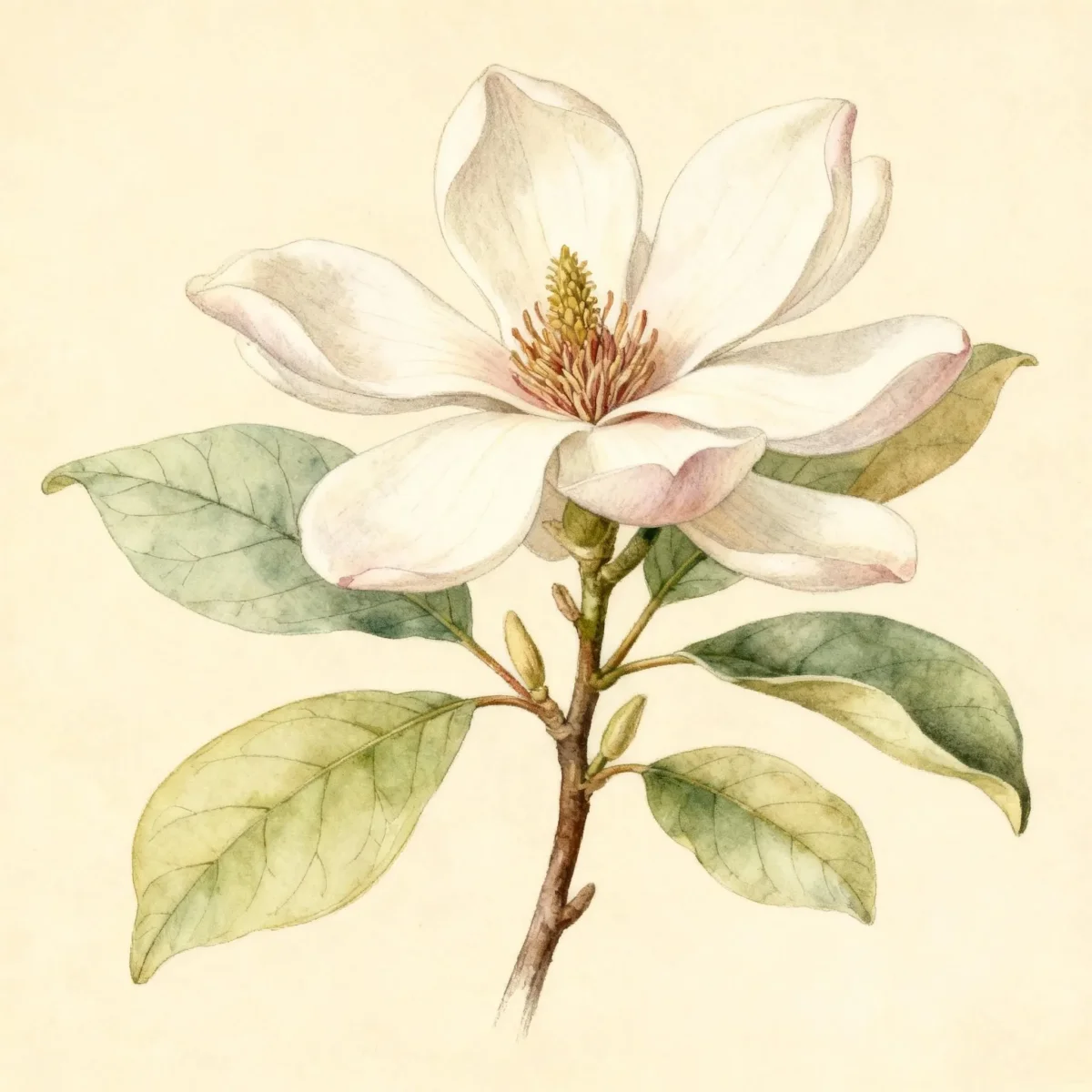
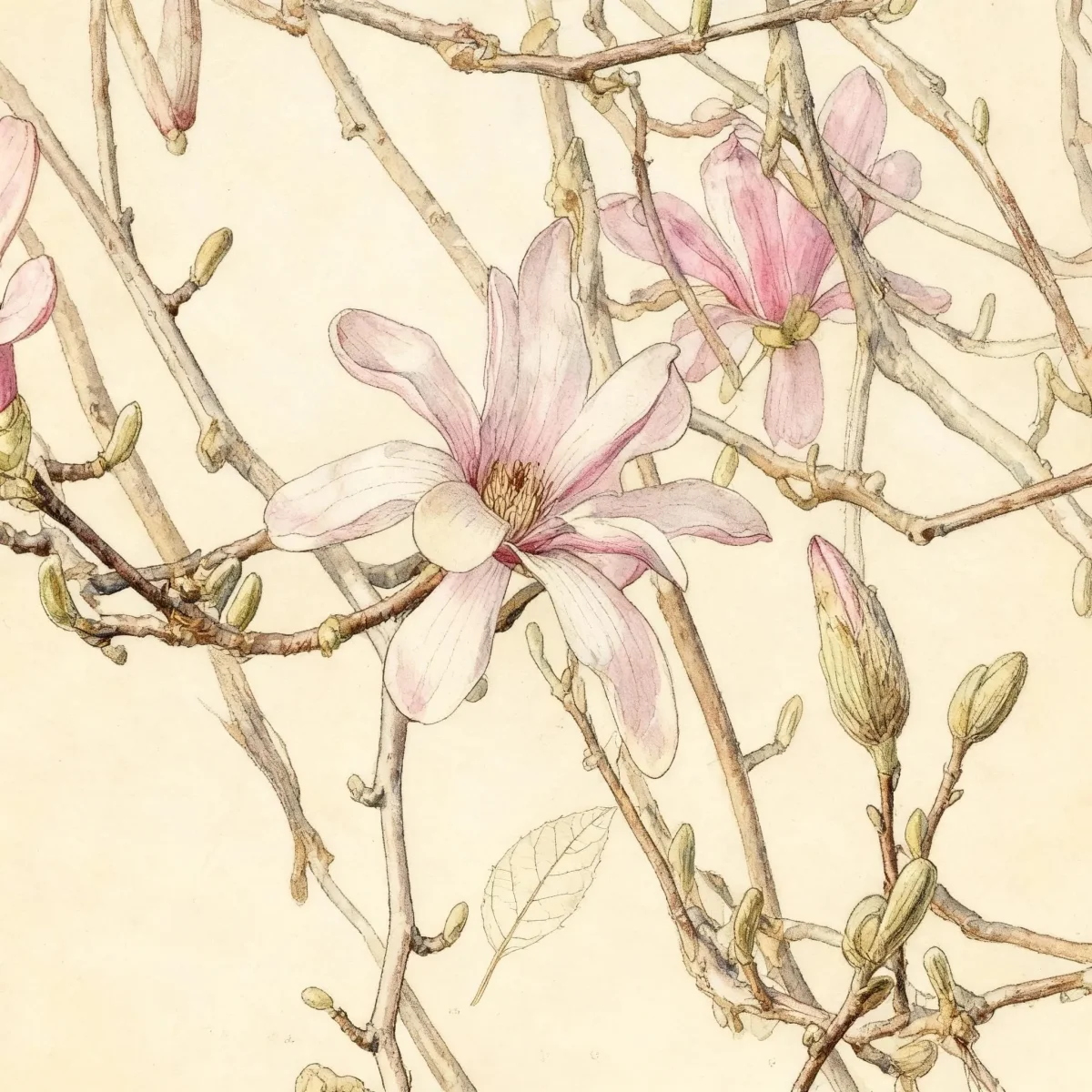
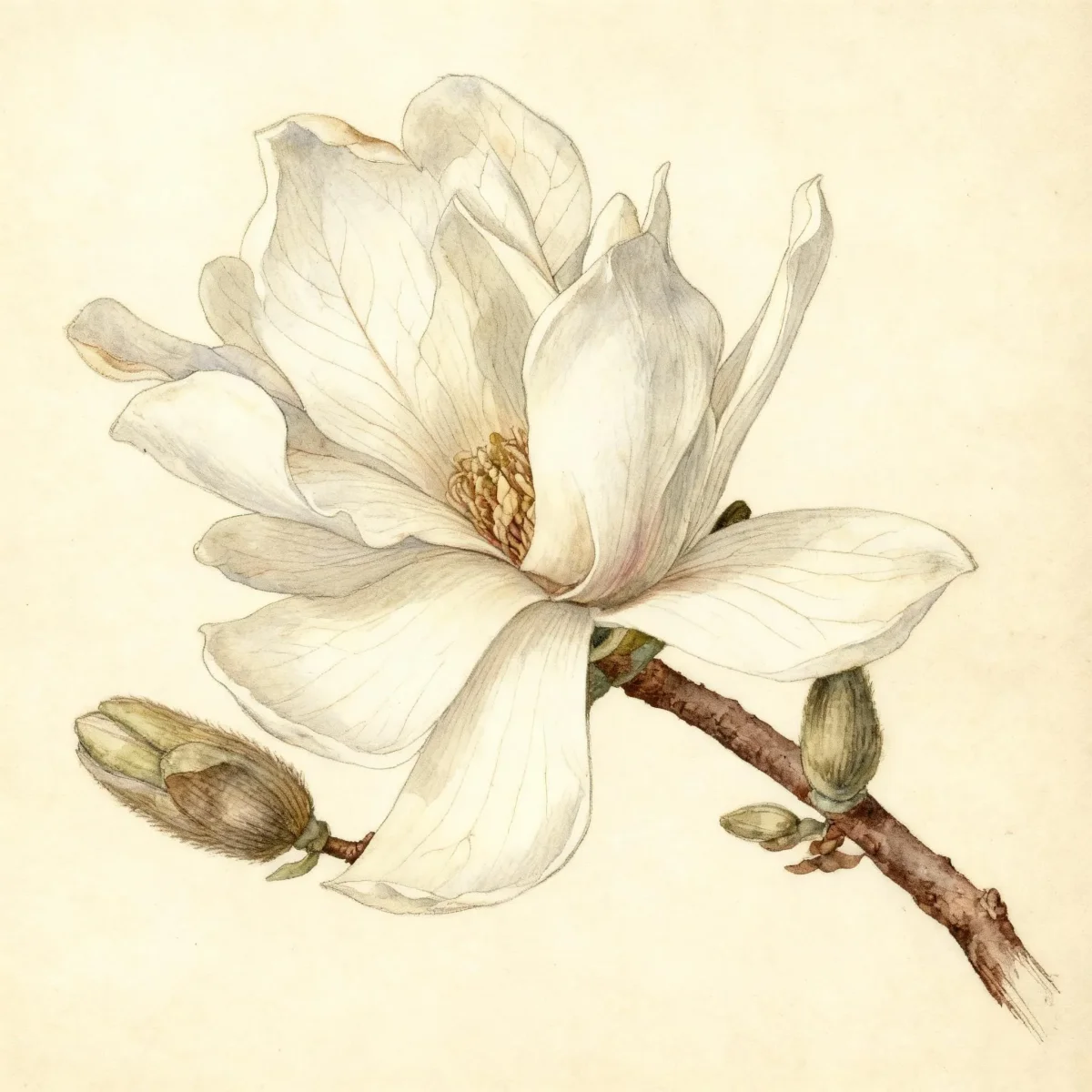
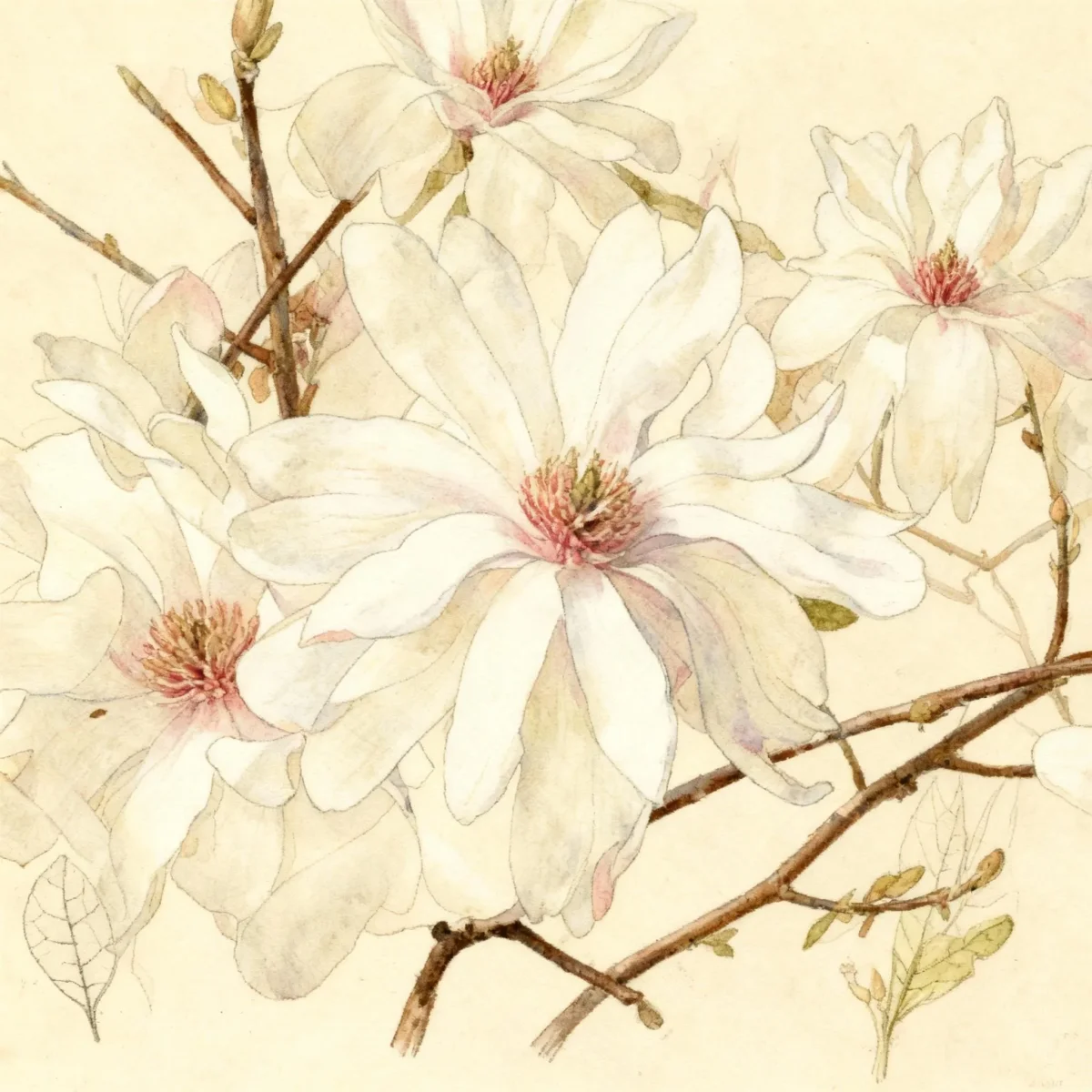
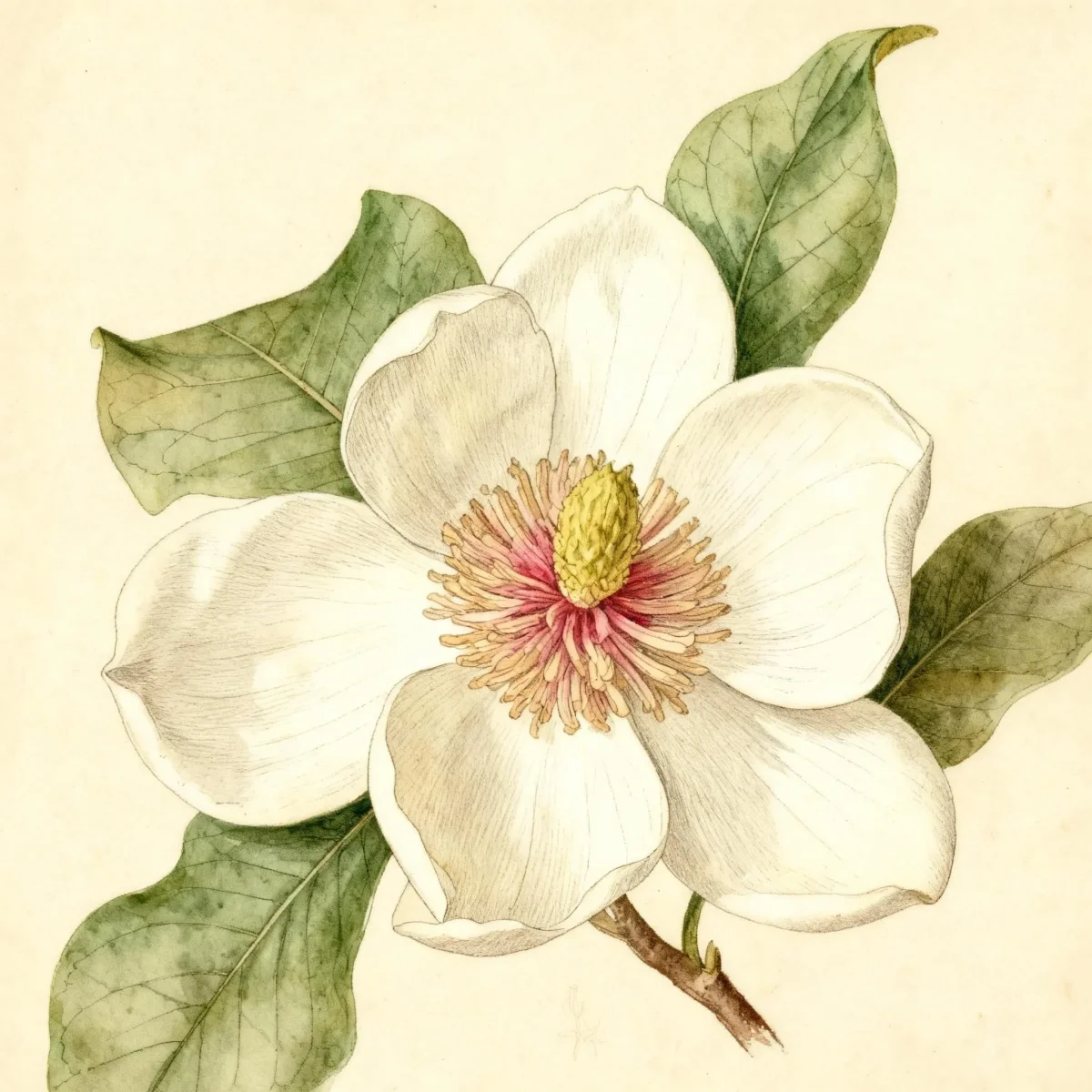
Magnolia (Magnolia × loebneri 'Powder Puff')
Discover Magnolia × loebneri 'Powder Puff', a beautiful compact deciduous tree known for fragrant white blooms in early spring.
Scroll down to discover growing tips, care requirements, companion plants, and more
Complete Plant Information
Overview
Magnolia × loebneri ‘Powder Puff’ is a highly desirable compact deciduous hybrid tree, celebrated for its spectacular floral display in early spring. As a cultivar of the Loebner magnolia, this specimen offers the grace of a larger Magnolia without consuming excessive garden space, making it ideal for smaller landscapes or specimen planting. Its fragrance and showy nature ensure it becomes a focal point as soon as it breaks dormancy.
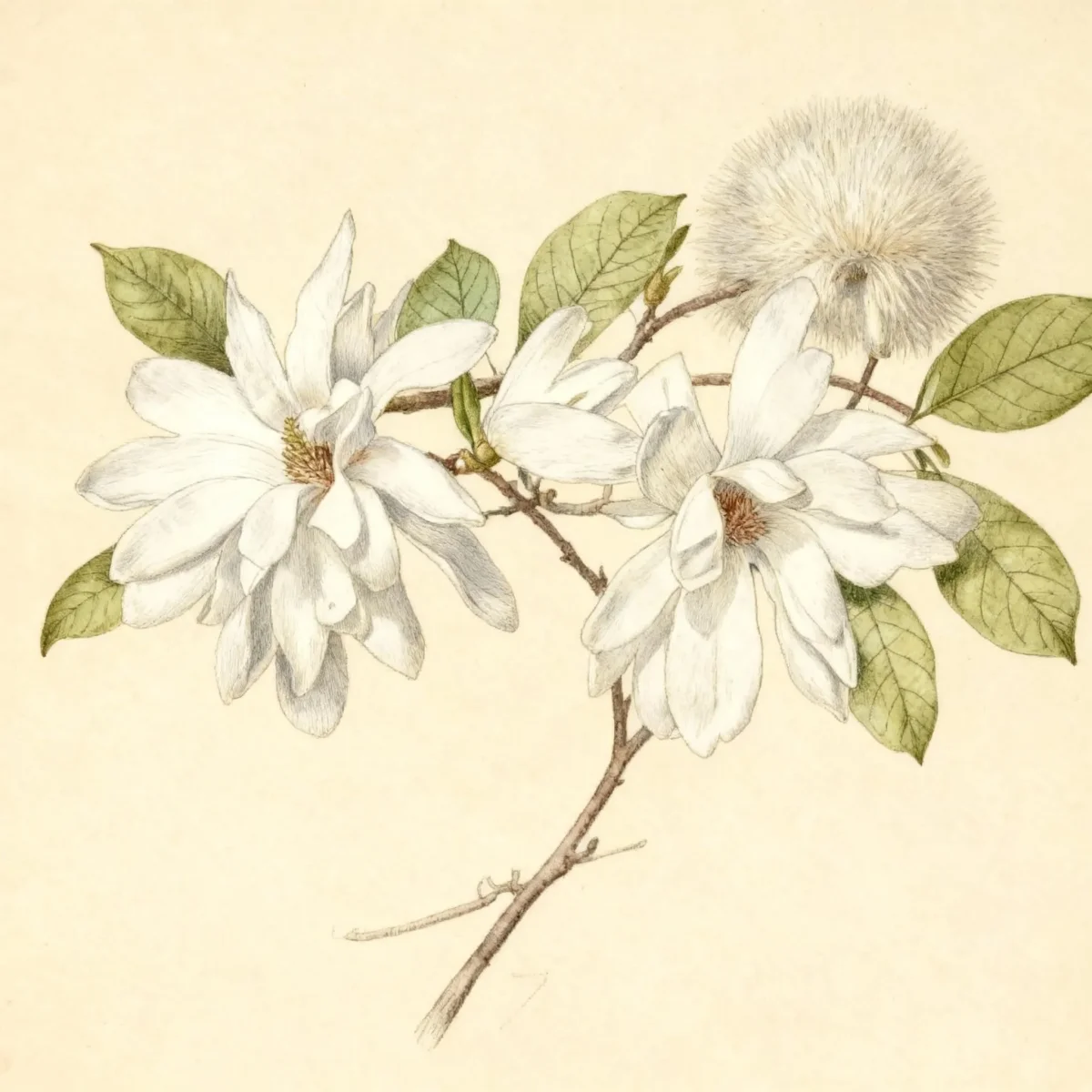
This specific variety, Magnolia, is noted for its exceptional, multi-tepaled pure white blooms which appear before the foliage emerges, creating a stunning visual impact in late winter or early spring. Gardeners focusing on multi-season interest will appreciate the foliage turning deep green before the attractive cone-like fruits potentially form later in the season. Successful cultivation of Magnolia × loebneri ‘Powder Puff’ relies on providing consistent moisture and protection from harsh environmental conditions.
For those seeking an early spring showstopper, the Magnolia × loebneri ‘Powder Puff’ is an excellent choice. It typically matures into a rounded, multi-trunked small tree, fitting well into mixed borders or as a standalone feature. Patience is required, as this beautiful tree may take a few years to establish and begin flowering robustly.
Fast Facts
- Plant Family: Magnoliaceae
- Plant Type: Tree
- Hardiness Zones: USDA Zones 5-9
- Size at Maturity:
- Height: 10-20 ft
- Spread: 10-18 ft
- Bloom Time: March to April
- Bloom Description: White
- Sun Exposure: Full sun to part shade
- Water Needs: Medium
- Maintenance Level: Medium
How to Grow
Planting Magnolia × loebneri ‘Powder Puff’ should occur in the spring or fall when temperatures are mild. Select a location offering full sun for the best flowering, though light afternoon shade is acceptable. The soil must be moist, organically rich, and very well-drained; this Magnolia cultivar is intolerant of consistently waterlogged or excessively dry soil conditions.
Consistent moisture is key to successful growth; provide medium watering, especially as the tree establishes its root system. Avoid fertilizing excessively, as this can encourage weak, leafy growth over flower production. Pruning is minimal for this compact cultivar, focusing primarily on removing crossing or damaged branches during the dormant season.
Protecting early blooms is crucial. Because the flowers emerge before the foliage, they are highly susceptible to damage from late spring frosts. Site your Magnolia × loebneri ‘Powder Puff’ in a slightly protected spot, buffering it from harsh, cold winds that exacerbate frost damage. Furthermore, be aware this hybrid is intolerant of many common urban air pollutants.
Landscape Uses
Magnolia × loebneri ‘Powder Puff’ excels when utilized as a specimen tree, drawing immediate attention to its magnificent early spring flowers. Its manageable size, reaching only 10 to 20 feet tall, makes it perfect for placement on a manicured lawn or as the anchor of a foundation planting. It also performs beautifully on the periphery of a naturalized woodland setting, where its light structure can mingle with taller understory trees.
Consider pairing this flowering tree with late-blooming shrubs or perennials that will mask the fading flowers once the Magnolia foliage emerges fully. Spring bulbs like daffodils or early tulips provide wonderful ground-level accents beneath the canopy. For long-term design, utilize its upright, rounded habit against structures or near patios where its fragrance can be best enjoyed.
This variety serves effectively within a multi-layered shrub border, providing essential vertical structure without overpowering smaller neighboring plants. The contrast between its stark white blooms and the deep greens or bronzes of surrounding evergreen shrubs enhances its visual impact during the crucial blooming window.
Standout Features
Flower Qualities
- Showy
- Fragrant
Fruit Qualities
- Showy
Noteworthy Characteristics
Magnolia × loebneri, commonly called Loebner magnolia, is a deciduous hybrid magnolia resulting from a cross between M. Kobus and M. Stellata. It is generally grown as a small, multi-trunked tree with a rounded crown. Its signature feature is the emergence of fragrant, star-like white flowers (4-6” wide) with numerous tepals in early spring before the leaves appear. The cultivar ‘Powder Puff’ is particularly noted for its exceptional, numerous pure white tepals, giving it a distinctly full, powder-puff appearance up to 20 feet tall.
Tolerances
Potential Problems
The most significant recurring challenge when growing Magnolia × loebneri ‘Powder Puff’ is the threat posed by late spring frosts. Since the flowers develop and bloom quite early in the season, a sudden temperature dip after bud break can severely damage or entirely destroy the blossoms for the year.
To mitigate this risk, gardeners must select a planting site that offers natural protection. Avoid low-lying areas where cold air settles, and situate the tree against a warm south-facing wall if possible, which can raise ambient temperatures slightly. While this specific Magnolia is resilient once established, protecting those delicate early flowers is key to enjoying the full fragrance and visual display.
Frequently Asked Questions
What hardiness zones is Magnolia suitable for?
Magnolia × loebneri ‘Powder Puff’ thrives in USDA Hardiness Zones 5 through 9, offering reliable perennial performance across a wide geographic range.
How large does the Magnolia × loebneri ‘Powder Puff’ grow?
This compact cultivar typically reaches mature heights between 10 and 20 feet, with a manageable spread of 10 to 18 feet, maintaining a rounded shape suitable for smaller gardens.
What sun exposure does Magnolia × loebneri ‘Powder Puff’ need?
For optimal flower production and overall health, plant this variety where it receives full sun, though it can tolerate partial shade, especially during hot afternoons.
When does Magnolia × loebneri ‘Powder Puff’ bloom?
The magnificent bloom time for this Magnolia is generally in early spring, occurring from March into April, featuring abundant white flowers before the leaves emerge.
Conclusion
The Magnolia × loebneri ‘Powder Puff’ provides unparalleled early spring interest due to its fragrant, showy white blooms and appealing compact structure. This Loebner Magnolia is a dependable choice for specimen planting, provided that cultural needs—moist, rich soil and protection from late frosts—are met. Evaluate your hardiness zone compatibility and begin planning your planting location this coming fall or spring to enjoy this stunning Magnolia hybrid soon.
Companion Planting
When selecting companions for your Magnolia × loebneri ‘Powder Puff’, focus on plants that share its preference for moist, organically rich soils and do not compete aggressively for root space. Since early blooms are susceptible to frost, choose shrubs like late-flowering Azaleas or Rhododendrons that leaf out later, providing both visual interest and a microclimate buffer without shading the Magnolia’s flowers too early.
Acid-loving groundcovers, such as Pachysandra or Vinca minor, work well beneath the slow-spreading canopy, helping to keep the root zone cool and consistently moist—a vital condition for all Magnolias. Avoid planting shallow-rooted lawn grasses too close to the trunk, as turf competition can lead to stress, hindering the performance of your beautiful flowering tree.
Design Ideas
The formal structure and spectacular spring display of Magnolia make it perfect for use near formal garden entrances or as a central feature in a transition space leading to a woodland garden. Because it often develops multiple trunks, consider siting it where the structure can be admired from multiple angles rather than solely pressed against a fence line.
For contemporary designs, plant the Magnolia × loebneri ‘Powder Puff’ against a backdrop of dark, evergreen hedging. This high-contrast planting emphasizes the pure white, multi-petaled form of the flowers dramatically during the overcast days of early spring. As the tree matures, its dappled shade provides an excellent environment for shade-tolerant hostas and ferns.