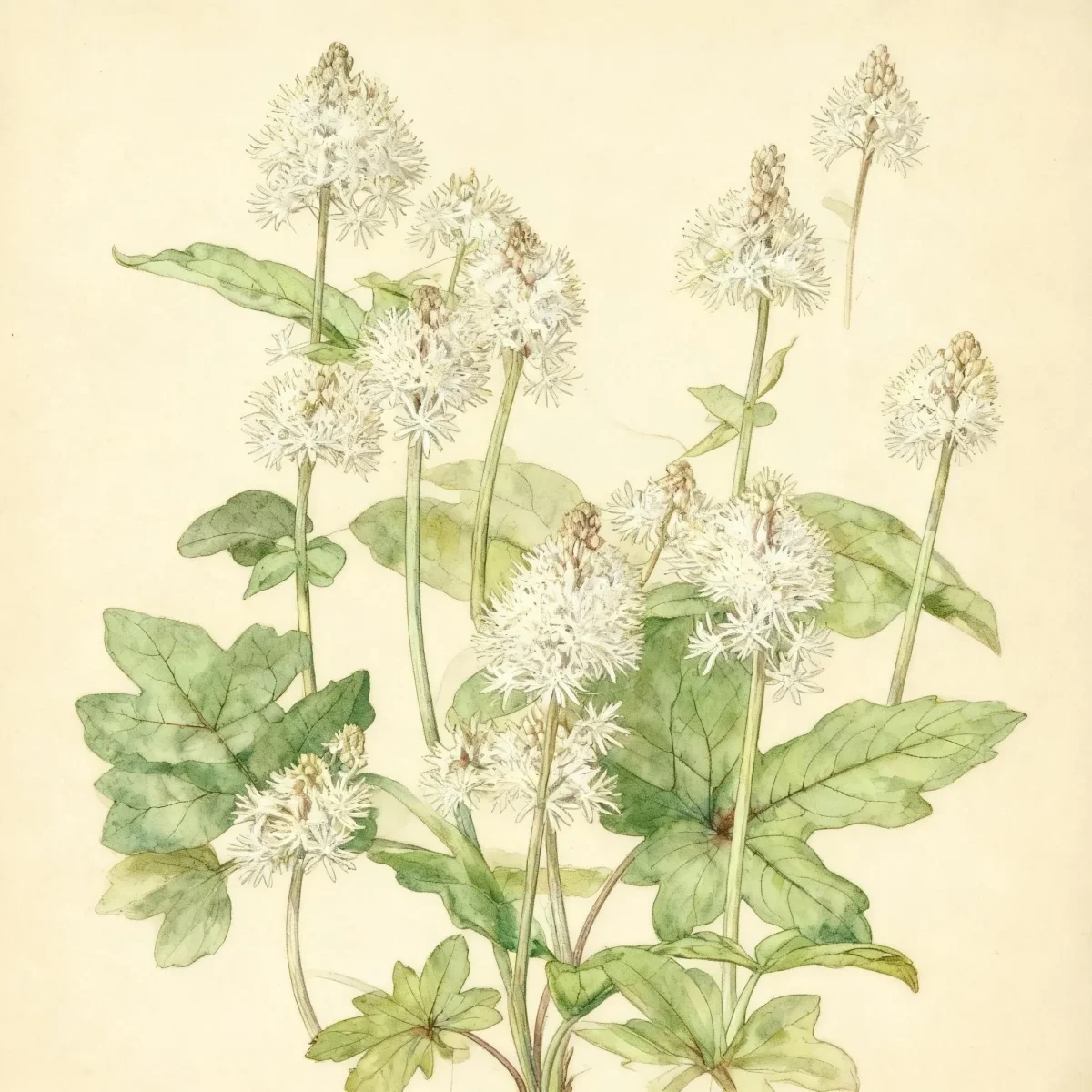
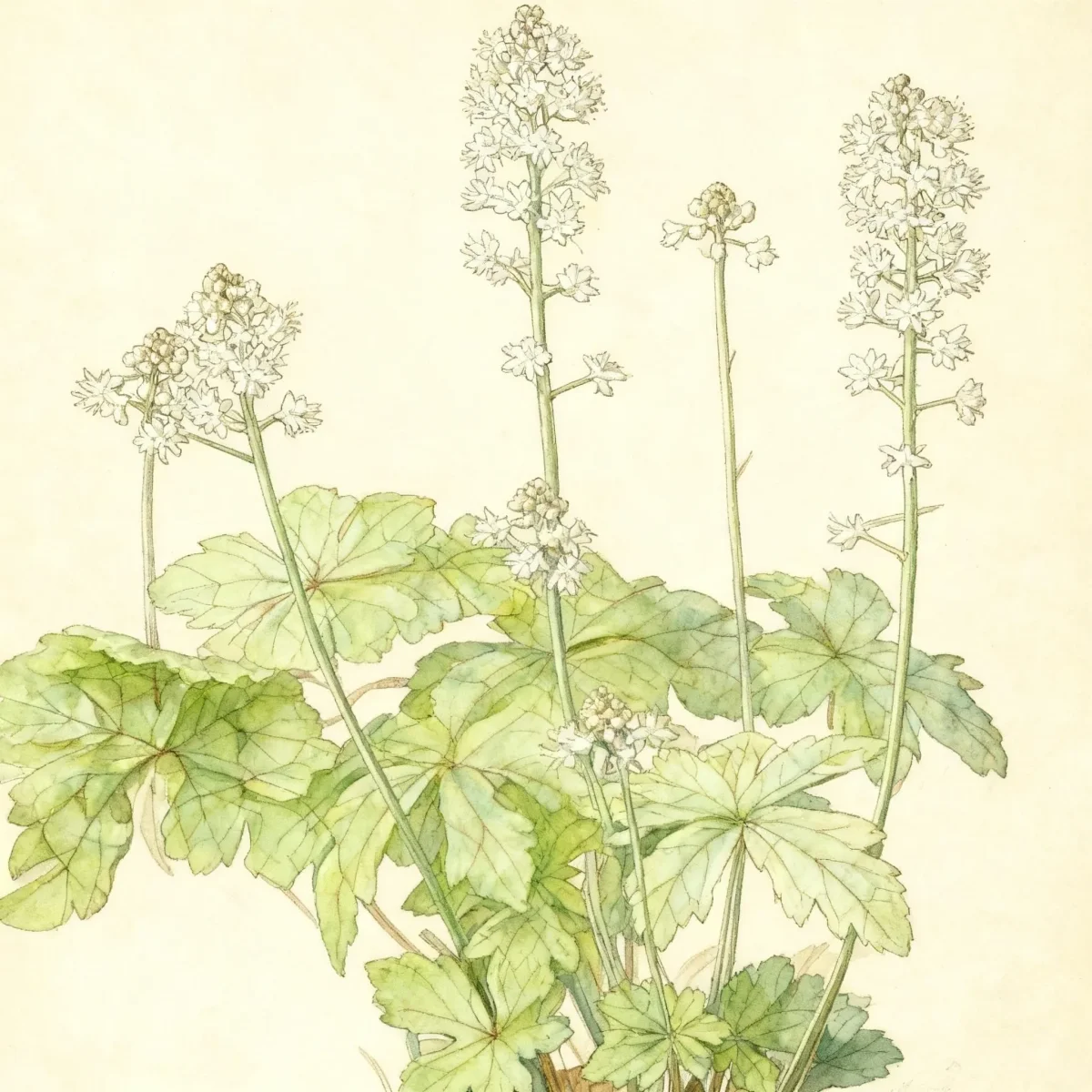
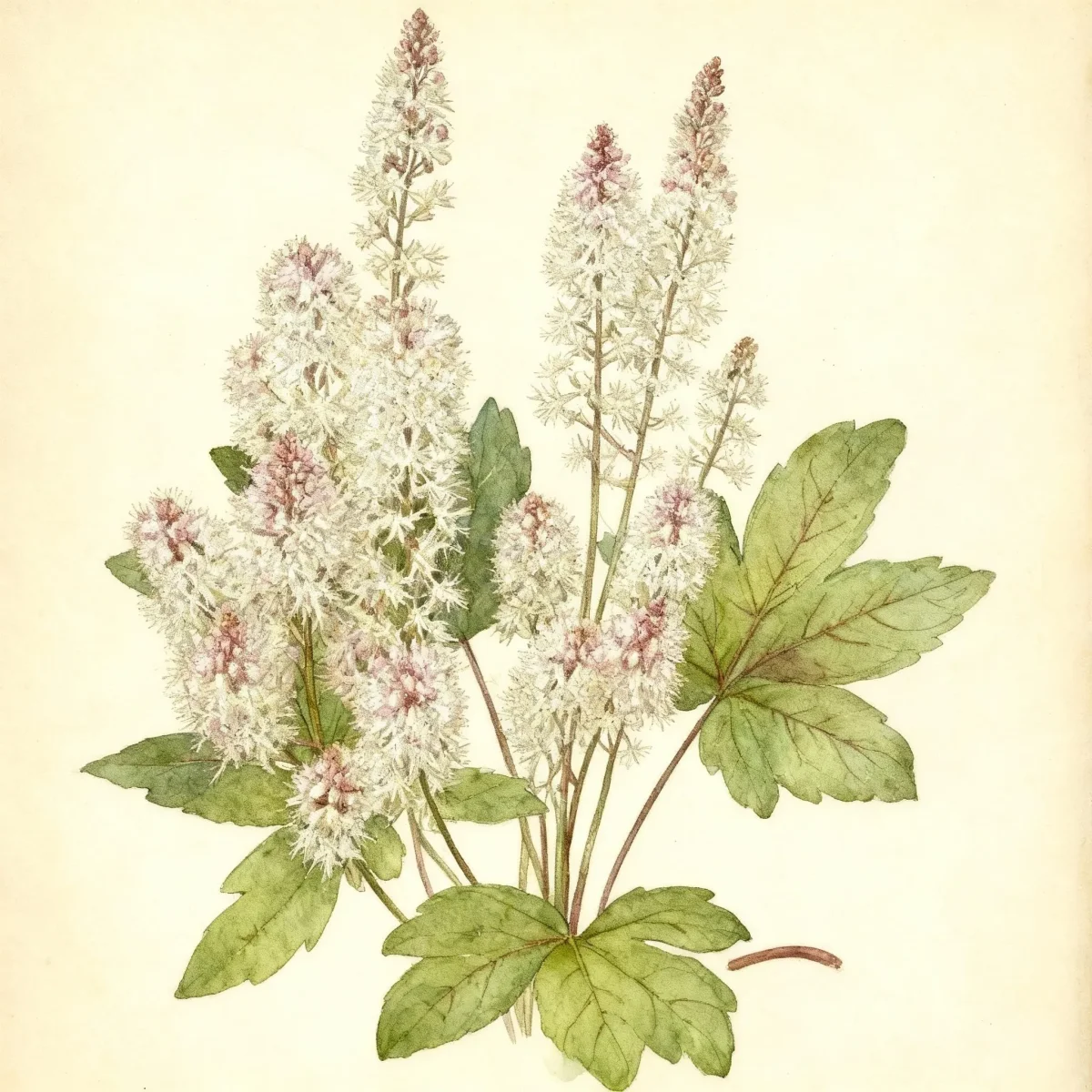
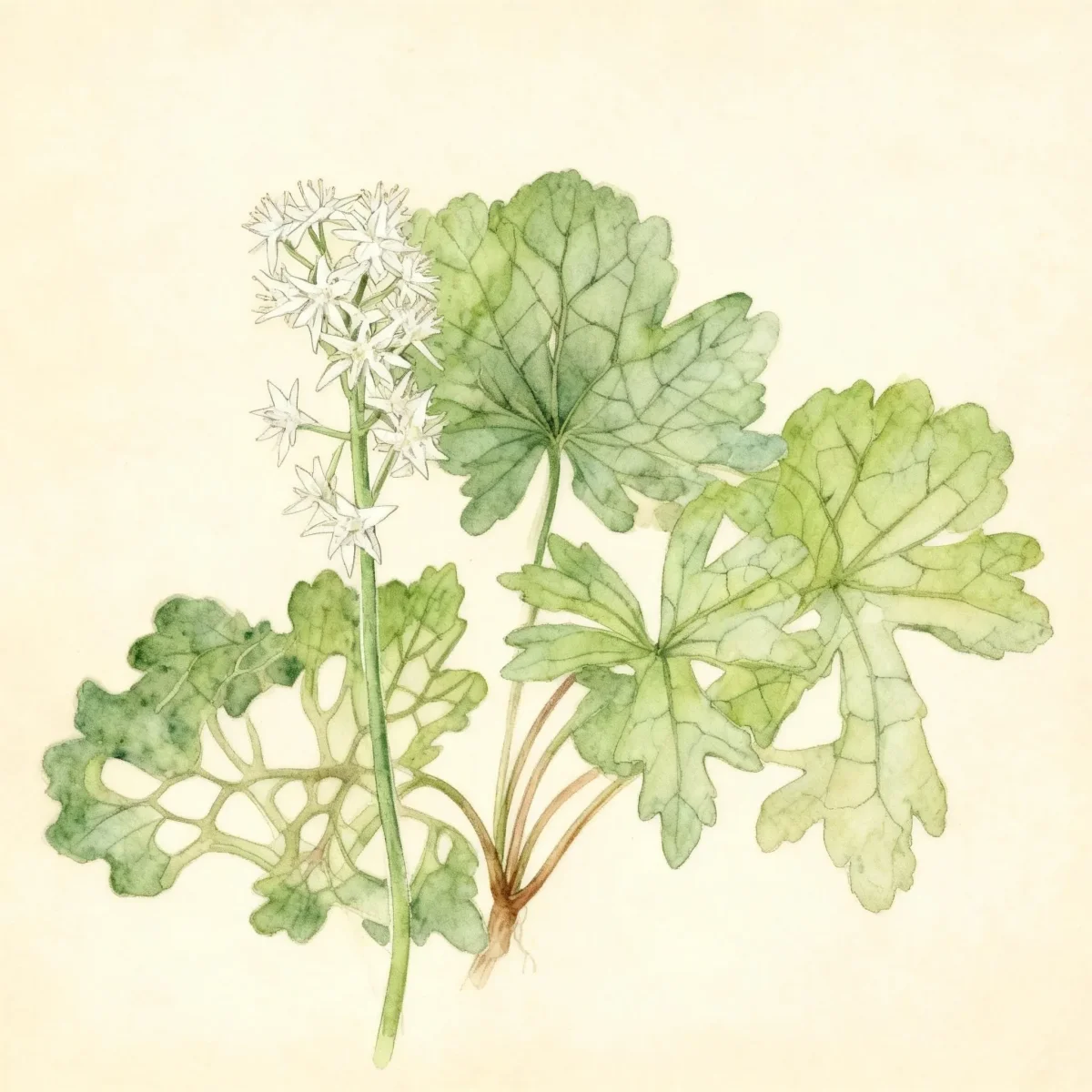
Foam flower (Tiarella 'Black Velvet')
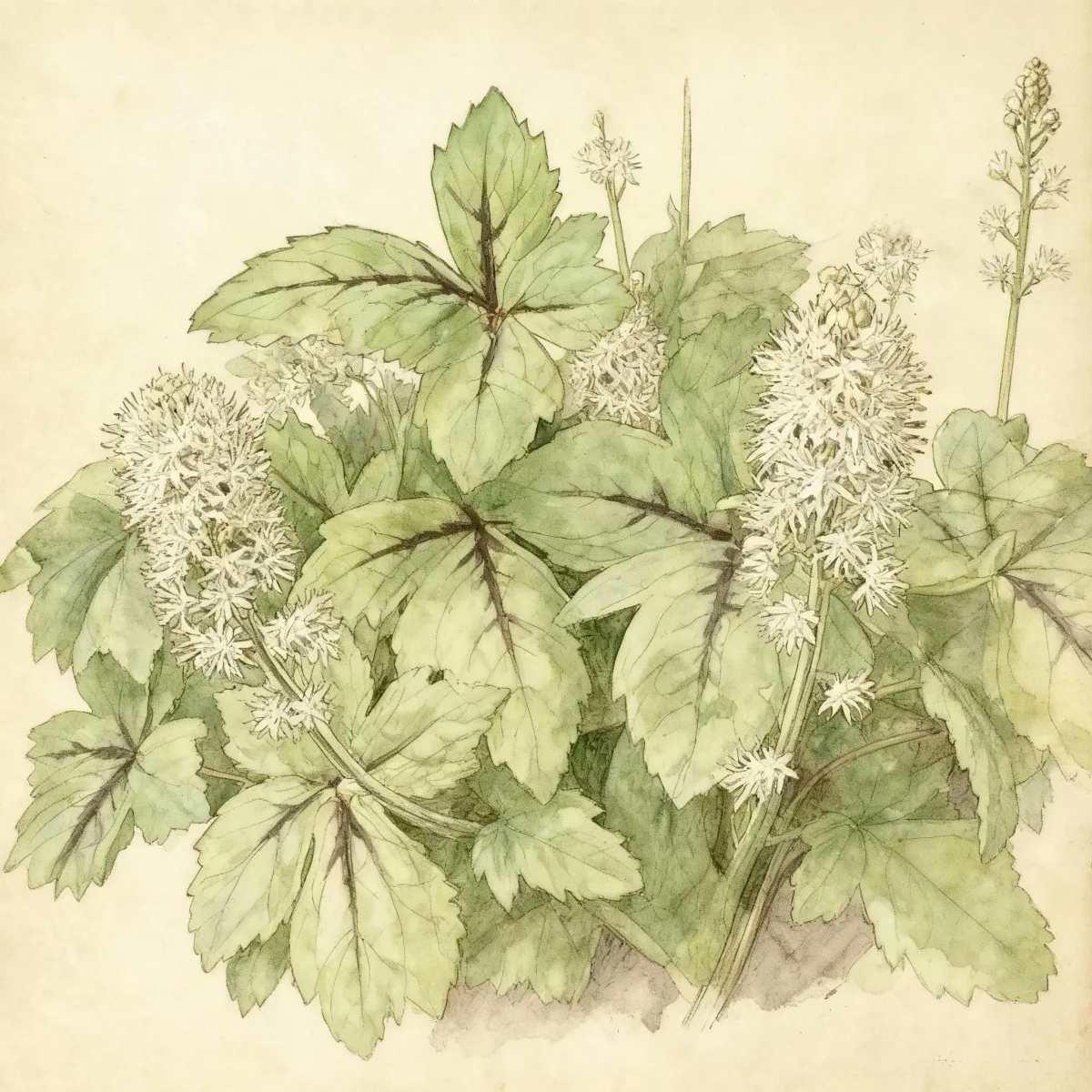
Tiarella 'Black Velvet' is a striking Foam flower cultivar valued for its dark, intricately marked foliage and delicate pinkish-white spring blooms.
Scroll down to discover growing tips, care requirements, companion plants, and more
Complete Plant Information
Overview
Tiarella ‘Black Velvet’, commonly known as Foam flower, is an exceptional choice for gardeners seeking year-round visual interest in shaded garden spaces. This clump-forming hybrid is celebrated primarily for its highly decorative foliage, featuring dark green leaves dramatically marked with black center blotches and striping. It provides a dense, attractive ground cover even when not in bloom.
Beyond its striking leaves, the Foam flower delivers a soft display of tiny, pinkish-white flowers in spring. These blooms rise above the mounding foliage on airy racemes, creating a delicate, bottlebrush effect that brightens shady borders. Tiarella ‘Black Velvet’ offers low maintenance while providing rich texture and color contrast.
As a notable member of the Saxifragaceae family, this plant thrives where many other ornamentals struggle—deep shade where soil remains consistently moist. It integrates perfectly into woodland settings, providing excellent coverage and reliable performance across USDA Zones 4 through 9.
Fast Facts
- Plant Family: Saxifragaceae
- Plant Type: Herbaceous perennial
- Hardiness Zones: USDA Zones 4-9
- Size at Maturity:
- Height: 1-1.5 ft
- Spread: 1-1.5 ft
- Bloom Time: May
- Bloom Description: Pinkish-white
- Sun Exposure: Part shade to full shade
- Water Needs: Medium
- Maintenance Level: Low
How to Grow
Plant Tiarella ‘Black Velvet’ in the spring or fall when soil temperatures are moderate. Success hinges on location choice; this Foam flower requires part shade to full shade, mimicking its woodland origins. The best growth is achieved in humusy, organically rich, moisture-retentive soils that are well-drained.
Watering should be consistent, requiring a medium approach; never allow the soil to fully dry out, especially during warm periods. Be cautious of overly wet conditions, which, particularly in winter, can be fatal to the roots. While generally low maintenance, the removal of spent flower spikes after blooming will significantly improve the tidy appearance of the foliage mound.
In colder zones, the foliage might become only partially retained, depending on winter severity; in milder areas, Tiarella ‘Black Velvet’ acts semi-evergreen. Applying a thick layer of organic mulch annually helps conserve moisture and regulate soil temperature, benefiting the shallow root systems commonly found in this genus.
Landscape Uses
Tiarella ‘Black Velvet’ excels as a standout textural specimen or when used en masse for a dense, dark underplanting. It is an excellent selection for shaded areas such as rock gardens, woodland gardens, and along the fronts of borders where its low stature won’t obscure taller companions. Massing these plants creates an incredibly effective, weed-suppressing ground cover.
Due to its moisture needs and shade tolerance, consider planting this Foam flower near streams, ponds, or in perpetually moist areas of the landscape. It pairs beautifully with other shade-loving woodland perennials like Helleborus, Hostas with contrasting light foliage, or ferns.
Furthermore, the compact size of Tiarella ‘Black Velvet’ makes it a strong performer in containers, either as a textural element within a mixed planting scheme or utilized alone to showcase its unique foliage and spring flower spires.
Standout Features
Flower Qualities
- Showy
Noteworthy Characteristics
Tiarella is a genus of about 7 species of herbaceous perennials from East Asia and North America. They make good ground covers in woodland gardens and shady borders. Plants are in the same family as and somewhat suggestive of Heuchera, Tellima and Mitella. Genus name comes from the Greek tiara meaning a small crown in reference to the form of the fruit. ‘Black Velvet’ is a clump-forming foamflower hybrid which is noted for its attractive foliage and its spires of pinkish-white flowers in spring. It forms a basal foliage mound of lobed, deeply cut, dark green leaves with black center blotches and black striping along the lobe veins. Tiny white flowers tinged with pink bloom in spring in bottle-brush-like racemes atop erect, wiry, mostly leafless stems which rise above the foliage mound.
Tolerances
- Deer
Potential Problems
This plant generally boasts an excellent disease and pest resistance profile, presenting few serious insect or disease issues under ideal conditions. Gardeners should remain vigilant, however, for the development of powdery mildew, especially in areas with poor air circulation or high humidity.
Management of common garden nuisances should focus on physical intervention. Susceptibility to root weevils and slugs means that scouting regularly and manually removing pests, or employing appropriate baits for slugs, is the most effective control strategy for Tiarella ‘Black Velvet’.
Frequently Asked Questions
What hardiness zones is Foam flower suitable for?
Tiarella ‘Black Velvet’ is reliably hardy across USDA Zones 4 through 9, making it adaptable to a wide range of continental climates.
How large does Tiarella ‘Black Velvet’ grow?
This variety typically reaches a height between 1 to 1.5 feet and spreads to a similar width of 1 to 1.5 feet, forming a neat ground cover mound.
When does Foam flower bloom?
The delicate blooms of Tiarella ‘Black Velvet’ generally appear in May, showcasing distinctive pinkish-white flowers held above the foliage.
What sun exposure does Foam flower need?
This plant strongly prefers lower light conditions, thriving best when situated in part shade to full shade environments.
Conclusion
The exceptional, richly patterned foliage of Tiarella ‘Black Velvet’ establishes it as an indispensable foundation plant for any shaded border or woodland garden design. Its reliability, low maintenance profile, and beautiful spring flowering secure its value as a premier ground cover. Before planting, ensure your site offers consistent moisture and deep shade to allow this Foam flower to fully express its dark, velvety potential.
Companion Planting
Selecting companions that share the cultural needs of Tiarella ‘Black Velvet’ enhances the overall tapestry of the shade garden. Look for plants that appreciate similar humus-rich, moist soil and protection from harsh afternoon sun. Brunnera macrophylla, especially varieties with silver markings, offers excellent contrast in leaf color and texture.
Consider pairing the Foam flower with low-growing Astilbe varieties, which bloom later in the season, ensuring continuous color interest after the Tiarella’s May display fades. For height variation, Aralia, or various native woodland Phlox species provide vertical accent without competing heavily for surface light.
Seasonal Care Calendar
Spring is the optimal time to refresh the planting site by incorporating well-aged compost around the base of your established Tiarella ‘Black Velvet’. This feeding regimen supports the best foliage development throughout the growing season. After the pale pinkish-white flower spikes finish, deadheading encourages the plant to put energy back into leaf production rather than seed set.
Summer care focuses primarily on moisture management. Since this perennial requires medium water and dislikes drying out, deep, infrequent watering during dry spells is key to preventing leaf scorch and maintaining the lush appearance of the foliage. Avoid overhead watering late in the day to reduce mildew risk.
In autumn, clean up any dead or damaged leaves, though in milder climates, the foliage may persist semi-evergreen. Apply a fresh layer of mulch to insulate the root zone before winter sets in, protecting the crowns of your Foam flower through cold periods.