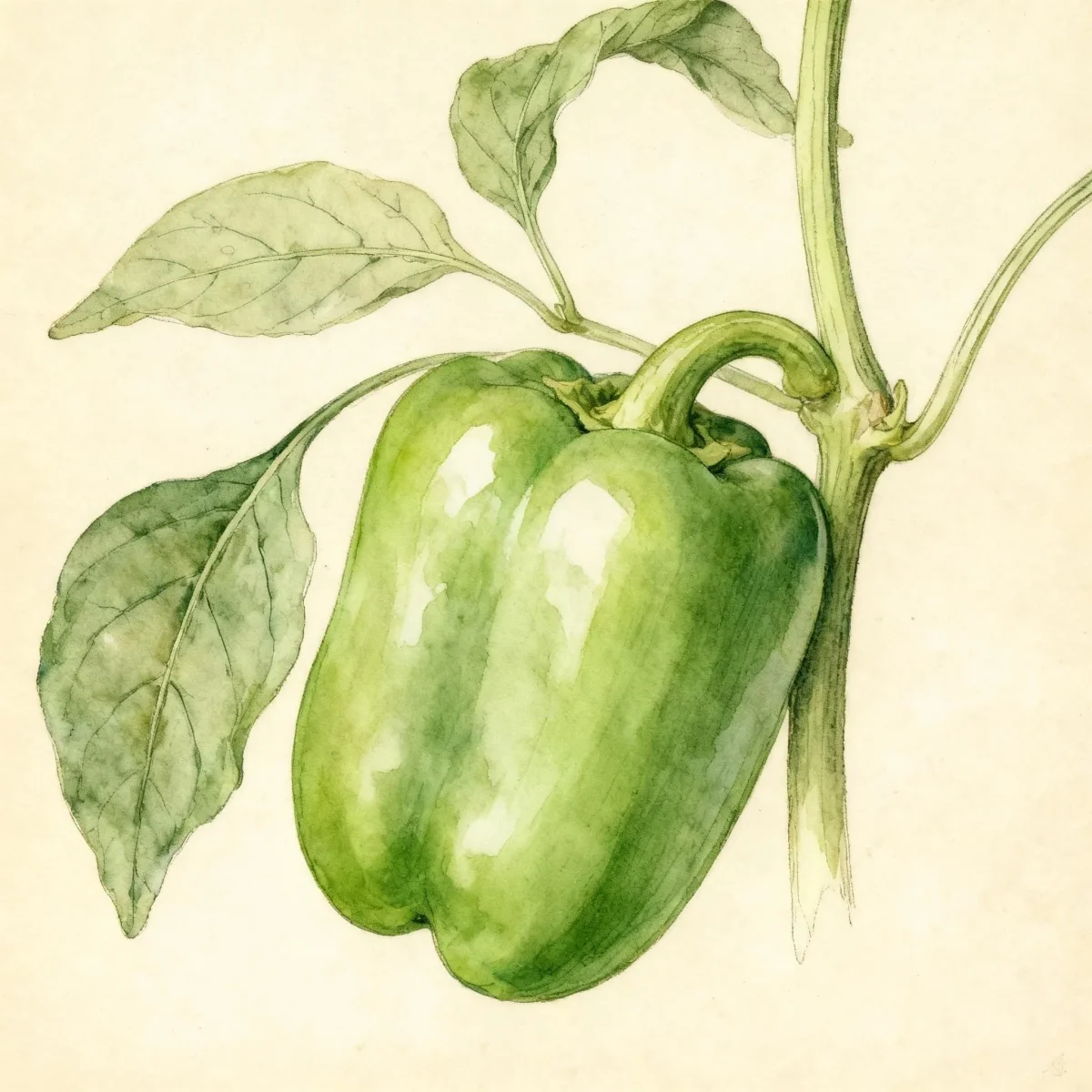
Sweet bell pepper (Capsicum annuum 'Park's Early Thickset')
Grow Capsicum annuum 'Park's Early Thickset' for early, edible sweet bell pepper harvests. Low maintenance and high yielding in zones 9-11.
Scroll down to discover growing tips, care requirements, companion plants, and more
Complete Plant Information
Overview
Capsicum annuum ‘Park’s Early Thickset’ is a highly valued cultivar prized by home gardeners for its reliable production of sweet bell pepper fruit relatively early in the season. As an improved hybrid, this variety sets its four-lobed fruit close to the crown, benefiting from good foliage cover which naturally helps prevent sunscald. Although botanically a herbaceous perennial, this sweet bell pepper is most often cultivated as an annual due to its frost-tender nature.
This variety thrives in warm conditions, demanding full sun exposure to properly develop its glossy green leaves and eventually mature the fruit to a bright scarlet color. Its low maintenance level, combined with its productivity, makes Capsicum annuum ‘Park’s Early Thickset’ an excellent choice for vegetable patches and containers alike. Gardeners appreciate its heritage within the pepper family, offering tangible edible rewards alongside decorative appeal.
Peppers, in general, represent some of the earliest cultivated New World crops, and this modern hybrid continues that tradition by providing a quality vegetable harvest. For those in colder climates, the option exists to treat this plant as a container specimen and carry it over winter indoors, provided sufficient light is available. Successful growing hinges on warmth, consistent moisture, and careful attention to soil health.
Fast Facts
- Plant Family: Solanaceae
- Plant Type: Herbaceous perennial
- Hardiness Zones: USDA Zones 9-11
- Size at Maturity:
- Height: 1.5-2 ft
- Spread: 1-2 ft
- Bloom Time: Flowers not showy
- Bloom Description: White
- Sun Exposure: Full sun
- Water Needs: Medium
- Maintenance Level: Low
How to Grow
Starting seeds for Capsicum annuum ‘Park’s Early Thickset’ should occur indoors 6 to 8 weeks before the projected last frost date. Use peat pots, planting three seeds per pot and subsequently thinning to the single strongest seedling to minimize root disturbance, which peppers strongly dislike. Transplanting into the garden should only occur after all danger of frost has passed and night temperatures consistently remain above 55°F.
Site selection is crucial; peppers require a sunny location with moist, organically rich, and fertile, well-drained soil. Space plants 18 to 24 inches apart, maintaining the same distance between rows. Once established, maintain medium water needs, ensuring plants never suffer from drought stress, especially during fruit set. Pinching young plants helps encourage a bushier habit, leading to better yields of sweet bell pepper fruit.
Mulching the soil between plants is highly beneficial for retaining moisture and regulating soil temperature. Gardeners should practice crop rotation, avoiding areas where tomatoes or eggplants (also Solanaceae) grew recently, as this minimizes the risk of soil-borne diseases and pathogens. While grown primarily as an annual, these frost-tender perennials adapt well to container life.
Landscape Uses
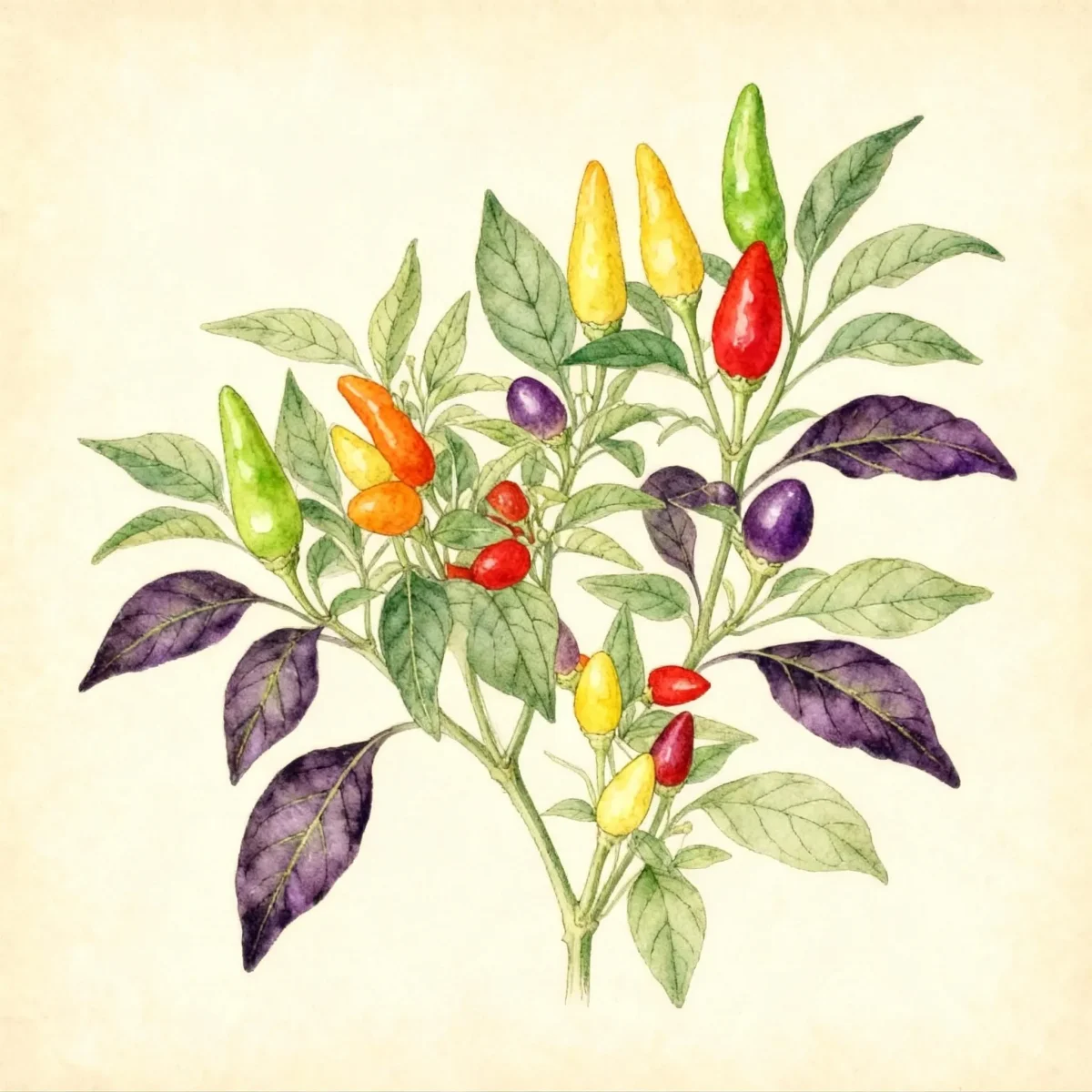
The ornamental qualities of this pepper variety extend beyond its utility as a vegetable. The foliage of Capsicum annuum ‘Park’s Early Thickset’ provides a deep green backdrop for the developing, glossy fruit, making it highly decorative along borders or pathways. As the fruit ripens, the display shifts, often showcasing green, yellow, and scarlet colors simultaneously on the same plant.
These plants perform exceptionally well in containers, which aids in managing soil conditions and allows for easy relocation indoors if needed in marginal zones. Pair them with lower-growing herbs or annual flowers that share similar full-sun, well-drained soil requirements to create dynamic displays. Their upright, compact habit makes them effective middle-layer plantings in mixed vegetable beds focused on edible landscaping.
Standout Features
Fruit Qualities
- Showy
- Edible
Noteworthy Characteristics
Most cultivated peppers, including this sweet bell pepper, offer a fascinating juxtaposition of categories; while labeled sweet, they share kinship with hot varieties. ‘Park’s Early Thickset’ is notable for maturing relatively early—about 45 days post-transplant—and it develops attractive four-lobed fruit well-protected by foliage from sunscald. Furthermore, this specific cultivar carries resistance to Tobacco mosaic virus, offering an advantage in disease management.
Tolerances
- Drought
Potential Problems
Capsicum annuum ‘Park’s Early Thickset’ can be susceptible to common pepper issues, including fungal and bacterial leaf spots, wilts, and stem/root rot. Management starts with good cultural practices, such as proper spacing for air circulation and avoiding overhead watering patterns that leave foliage wet. Be vigilant for common insect pests like aphids, white flies, cutworms, pepper maggots, and the Colorado potato beetle.
Taller specimens, especially those laden with fruit, may require staking or other forms of support to prevent snapping or lodging. Avoiding consecutive plantings in the same soil spot is critical due to the carryover risk of pathogens affecting peppers, tomatoes, and eggplants. Early detection of mosaic virus or wilts necessitates immediate removal of the affected plant to prevent spread.
Frequently Asked Questions
What hardiness zones is Sweet bell pepper suitable for?
Capsicum annuum ‘Park’s Early Thickset’ is best suited for USDA Zones 9 through 11, although it is frequently grown as an annual in cooler regions.
How large does Capsicum annuum ‘Park’s Early Thickset’ grow?
This variety typically reaches a mature height between 1.5 to 2 feet tall and spreads between 1 to 2 feet wide.
What sun exposure does Sweet bell pepper need?
This plant requires full sun exposure to thrive and produce a good harvest of sweet bell pepper fruit.
When does Capsicum annuum ‘Park’s Early Thickset’ bloom?
The flowers are generally not showy, appearing white, and signal the start of the fruiting period.
Conclusion
Capsicum annuum ‘Park’s Early Thickset’ provides gardeners with a reliable, low-maintenance source of highly desirable sweet bell pepper fruit, often maturing faster than comparable types. Its ornamental appeal ensures it looks attractive throughout its growing season, culminating in bright scarlet harvests. Before planting, ensure your climate aligns with USDA Zones 9-11 or plan for starting seeds early indoors for summer enjoyment.
Companion Planting
Selecting appropriate companions can boost the health and productivity of your sweet bell pepper patch. Plants that require similar high-sun exposure and consistent, medium moisture levels are ideal neighbors for Capsicum annuum ‘Park’s Early Thickset’. Good companions include bush beans, which fix nitrogen beneficial for pepper production, and basil, which is rumored to improve pepper flavor.
Avoid planting too closely with members of the nightshade family, as noted in the culture requirements, to prevent the buildup of shared soil-borne diseases. Instead, place your peppers near heat-loving herbs like thyme or marigolds, which can help deter some potential insect pests while fitting seamlessly into the sunny garden environment.
Container Growing
Due to its manageable size (1.5 to 2 feet tall and wide), Capsicum annuum ‘Park’s Early Thickset’ is an excellent candidate for container gardening. Use pots that allow for at least 18 inches of depth to accommodate its root structure, ensuring the pot has excellent drainage, which is vital for all pepper cultivation.
When grown in containers, water needs are usually higher than in the ground, as potting mix dries out faster. Consistent feeding with a balanced fertilizer is necessary to sustain continuous fruit production throughout the season. Bringing containers indoors before the first frost allows dedicated gardeners to maintain this herbaceous perennial for longer periods.