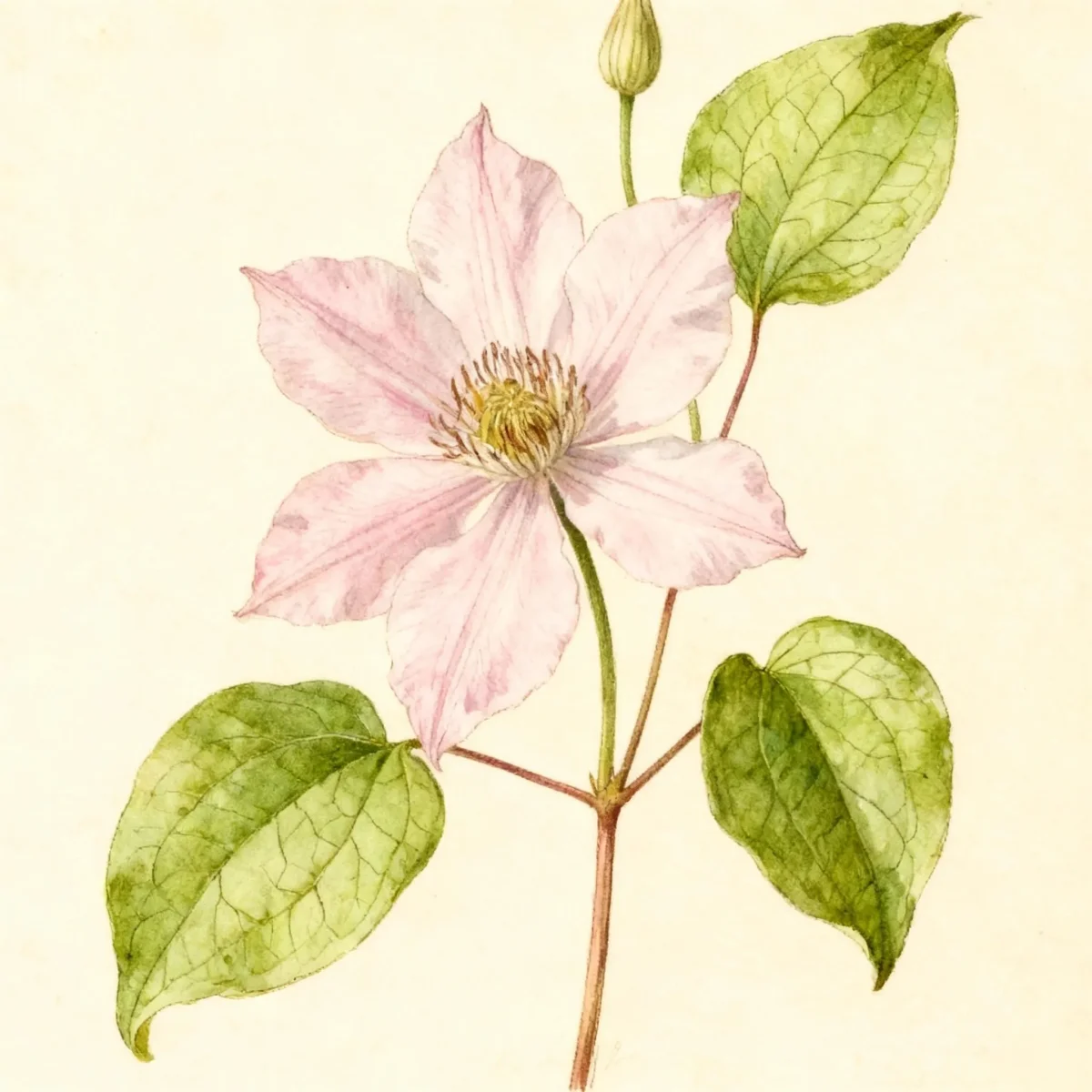
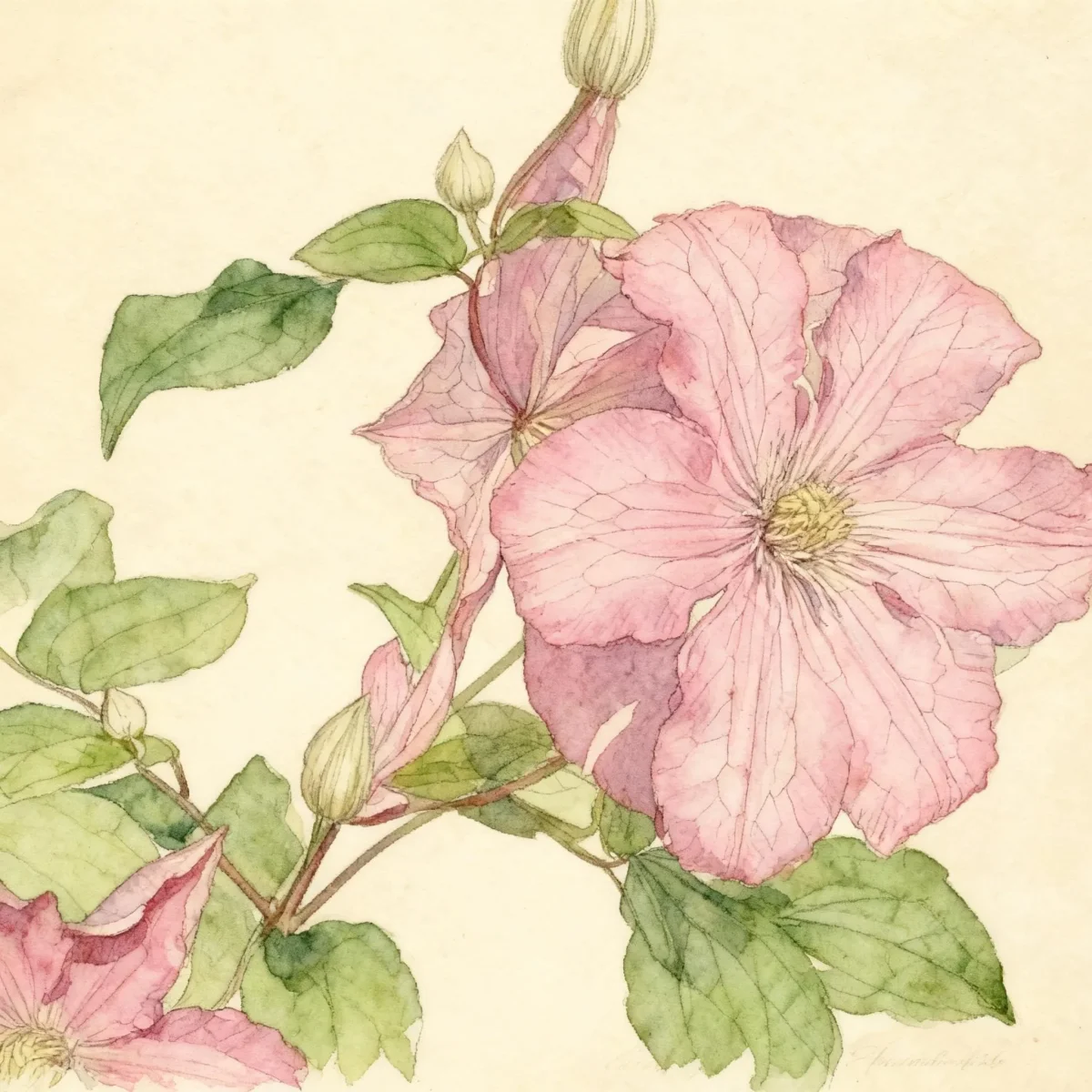
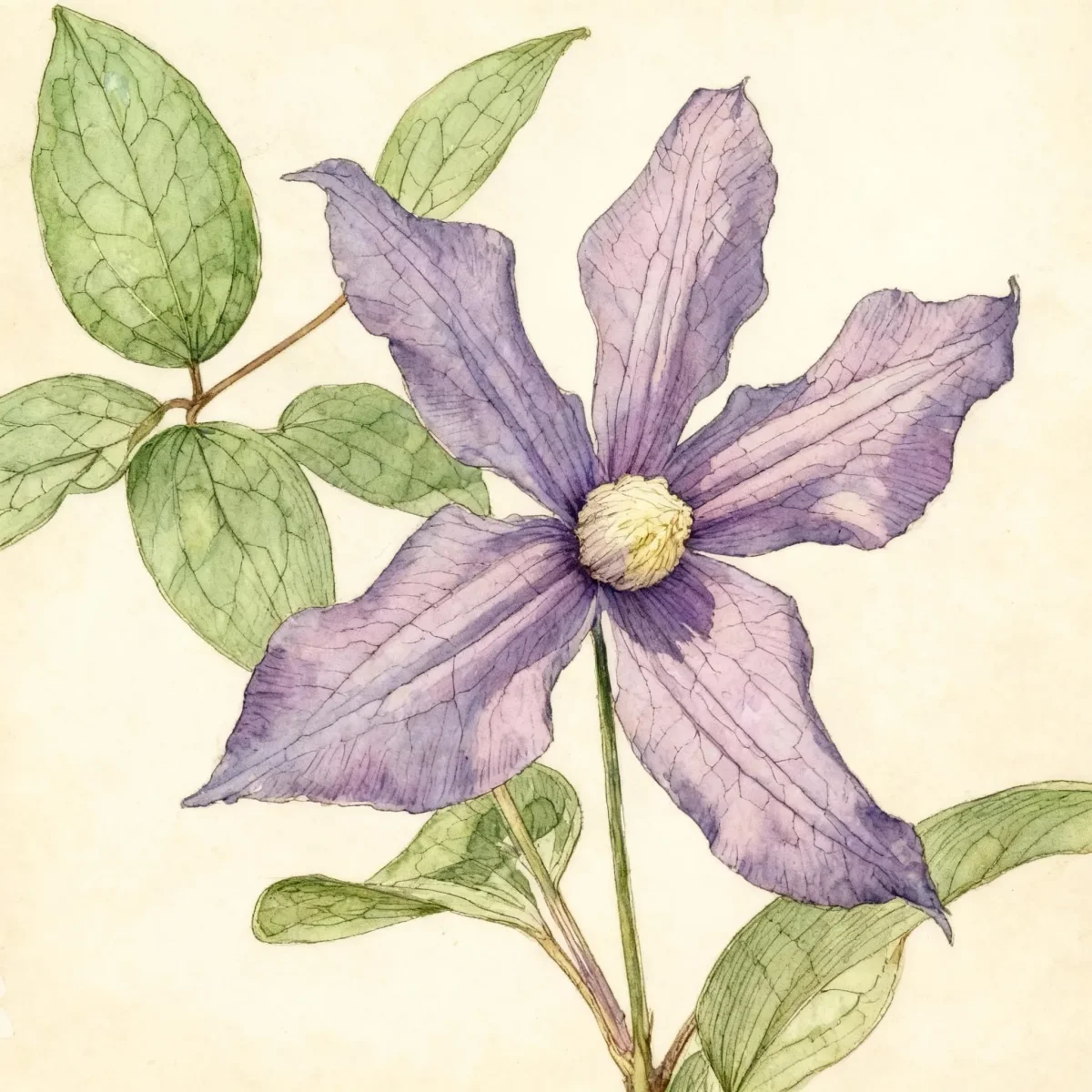
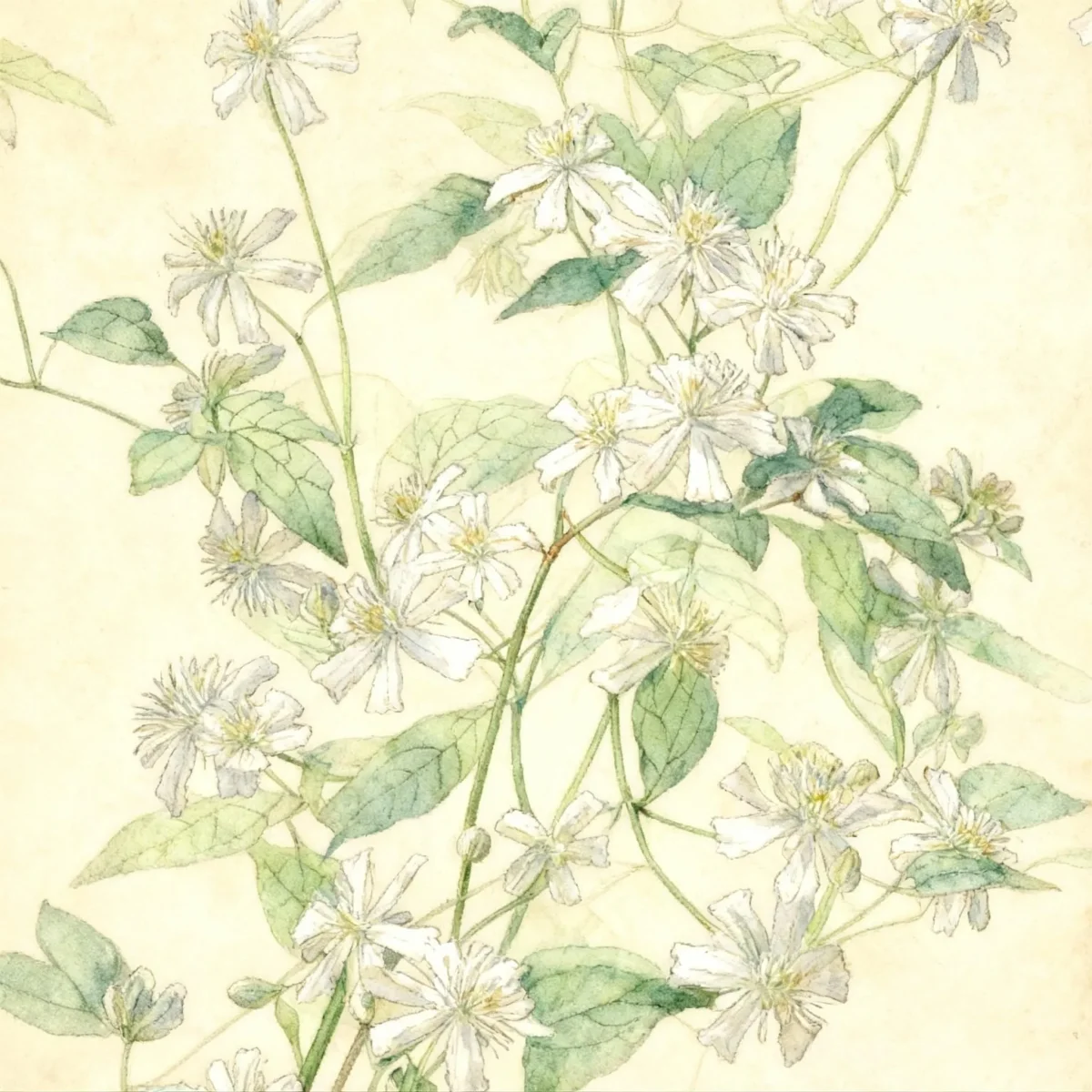
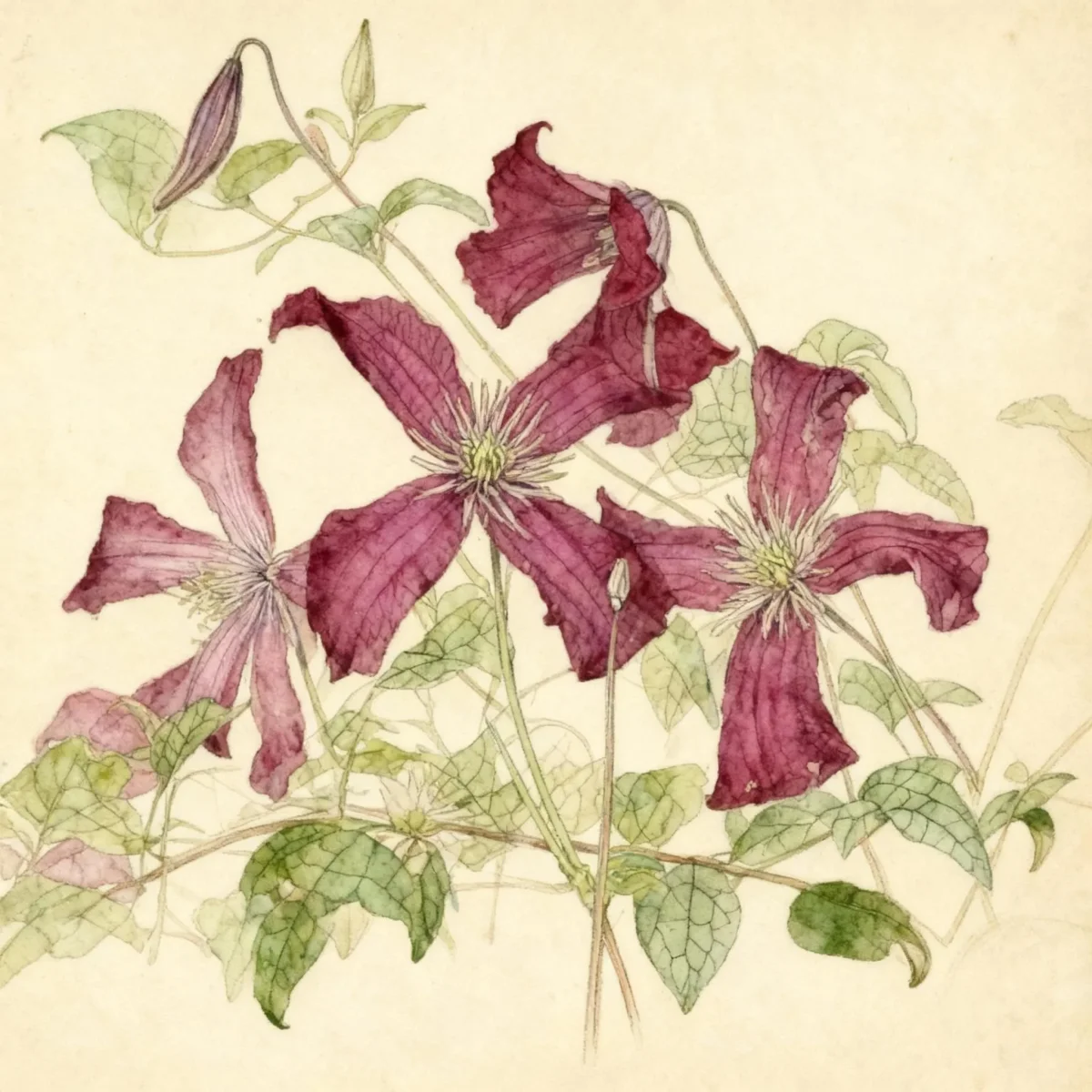
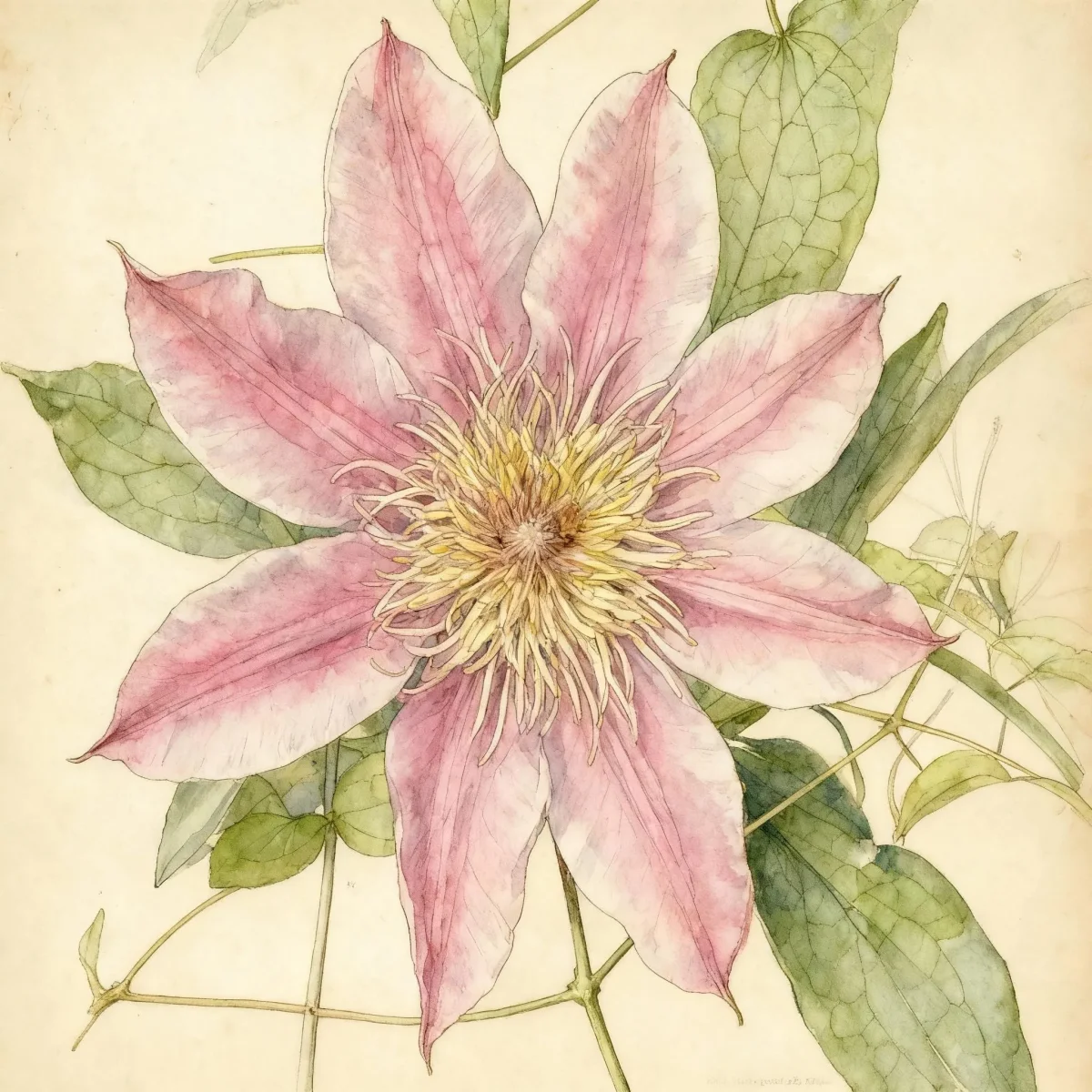
Clematis (Clematis 'Fair Rosamond')
Clematis 'Fair Rosamond' offers showy, fragrant white flowers with red bars. Hardy in zones 4-9, this vigorous vine requires medium maintenance.
Scroll down to discover growing tips, care requirements, companion plants, and more
Complete Plant Information
Overview
Clematis ‘Fair Rosamond’ is a large-flowering hybrid cultivar highly valued for its prolific and distinctly patterned blooms. This versatile Clematis typically produces showy white flowers subtly marked with striking red bars, accented by vibrant purple stamens, providing exceptional early to late-season color interest. As a woody, deciduous vine, Clematis ‘Fair Rosamond’ relies heavily on support structures to achieve its mature height of 8 to 14 feet, making it an excellent vertical accent in the landscape.
Successful cultivation of this magnificent Clematis hinges on respecting its classic requirement: shaded roots and sunny tops. By implementing specific cultural practices that keep the root zone cool and moist, gardeners can encourage robust growth and abundant flowering throughout the summer months. The genus Clematis offers hundreds of options, but ‘Fair Rosamond’ stands out for its combination of visual beauty and reliable performance across multiple hardiness zones.
This cultivar belongs to Pruning Group 2, meaning it offers the reliable benefit of flowering on both old and new wood. Whether utilized on an arbor or softening a north-facing wall, Clematis provides architectural height and movement, transforming plain garden structures into vibrant focal points.
Fast Facts
- Plant Family: Ranunculaceae
- Plant Type: Vine
- Hardiness Zones: USDA Zones 4-9
- Size at Maturity:
- Height: 8-14 ft
- Spread: 3-6 ft
- Bloom Time: June to September
- Bloom Description: White with red bars and purple stamens
- Sun Exposure: Full sun to part shade
- Water Needs: Medium
- Maintenance Level: Medium
How to Grow
Planting should occur when the soil is workable, either in spring or fall, ensuring the vine is situated where its crown receives adequate light while the roots remain shaded and cool. Clematis ‘Fair Rosamond’ thrives in fertile, well-drained soils with medium moisture retention capabilities. It is crucial to site vining Clematis so the flowering parts receive full sun to part shade, but the root area must be protected from intense midday sun, especially in hotter climates.
Ongoing care requires maintaining consistently medium moisture levels; never allow the soil around the roots to completely dry out. This Clematis needs a sturdy trellis, arbor, or other support system early in its life, as it climbs by twining leaf stalks. Keep the root zone cool by planting low-growing perennials, small shrubs, or applying a thick layer of root mulch around the base.
This specific cultivar, Clematis ‘Fair Rosamond’, is classified under Pruning Group 2. This means generally minimal pruning is required for established woody stems; however, if you prune it hard in fall or spring, expect flowering to be reduced or delayed, but not entirely prevented.
Landscape Uses
Clematis vines offer unparalleled vertical interest, and the architectural height of a mature Clematis ‘Fair Rosamond’ is ideal for covering fences, arbors, or lampposts, immediately adding drama to the garden framework. Plant them near structures where their stunning white and red-barred flowers can be easily viewed and appreciated from ground level upward.
These vines serve as magnificent softeners for hardscaping elements, or they can be strategically placed to scramble through supporting shrubs or small evergreens, which helps shade the root zone as required. For defined structure, plant Clematis ‘Fair Rosamond’ near containers, allowing the vine to cascade slightly or climb upward, creating a living column of color.
Standout Features
Flower Qualities
- Showy
- Fragrant
Noteworthy Characteristics
Clematis is a genus of over 250 species, most of which are woody to semi-woody deciduous vines climbing by twining leaf stalks or in some cases trailing over support, but in a few cases grow as freestanding or sprawling herbaceous perennials and small deciduous or evergreen shrubs. Cultivated plants are often divided into three groups based on pruning needs, with ‘Fair Rosamond’ being Group 2, flowering on both old and new wood. Genus name comes from the Greek word klematis, an old name applied to climbing plants.
Tolerances
- Deer
- Black Walnut
Potential Problems
Gardening with Clematis introduces some specific challenges that require vigilance. The most critical concern is wilt or stem rot, which can prove fatal to the plant if left unchecked. Preventative measures include ensuring excellent soil drainage and avoiding waterlogged conditions, especially around the crown.
Common secondary issues include fungal problems like powdery mildew, leaf spots, and rust, often exacerbated by poor air circulation. For potential insect pests such as aphids, slugs/snails, scale, and earwigs, regular inspection and prompt, targeted treatment are necessary, with increased monitoring for spider mites during dry, hot periods.
Frequently Asked Questions
What hardiness zones is Clematis ‘Fair Rosamond’ suitable for?
Clematis ‘Fair Rosamond’ is suitable for USDA Hardiness Zones 4 through 9.
How large does Clematis ‘Fair Rosamond’ grow?
This vigorous vine typically reaches a mature height between 8 and 14 feet, with a spread of 3 to 6 feet wide.
What sun exposure does Clematis need?
This Clematis performs best in locations receiving full sun to part shade, always ensuring the roots are kept shaded and cool.
When does Clematis ‘Fair Rosamond’ bloom?
You can expect vigorous blooming from June through September, featuring flowers described as white with red bars and purple stamens.
Conclusion
Clematis ‘Fair Rosamond’ is an invaluable addition to vertical gardens, offering a spectacular combination of large, distinctive, and fragrant flowers blooming reliably across a long season. The dual flowering habit common to this Group 2 Clematis ensures continuous visual rewards. Before planting, confirm both your location’s hardiness zone and plan for robust support to maximize the stunning display of this popular Clematis hybrid.
Companion Planting
Selecting companions for Clematis ‘Fair Rosamond’ should focus on species that offer dense, low-growing foliage to shade the vine’s root zone naturally. Low-growing perennials like Hostas, Peonies, or Geraniums work exceptionally well, as they thrive in partial shade and their growth habit prevents the sun from scorching the Clematis roots.
These ground-covering companions must have low water requirements similar to the Clematis itself, or alternatively, they should be plants that can tolerate the consistently moist (but never soggy) soil preferred by the vine. Ensure the companions do not aggressively compete for nutrients or overcrowd the base of the Clematis structure too quickly in the growing season.
Pruning Group 2 Strategy
Understanding that Clematis ‘Fair Rosamond’ is a Group 2 pruner is the key to maintaining its bloom cycle effectively. Group 2 vines flower on the previous year’s growth (old wood) in early summer, and then again on new growth later in the season. Typically, pruning should involve removing only dead or weak stems in early spring down to a strong, healthy bud.
If you must cut back mature stems for aesthetic reasons or severe dieback, never remove more than one-third of the plant mass or cut down to the ground, as a hard pruning will eliminate the main flush of early summer flowers. This less intensive pruning strategy preserves the flowering display while keeping the structure tidy enough for inspection for potential pest issues.