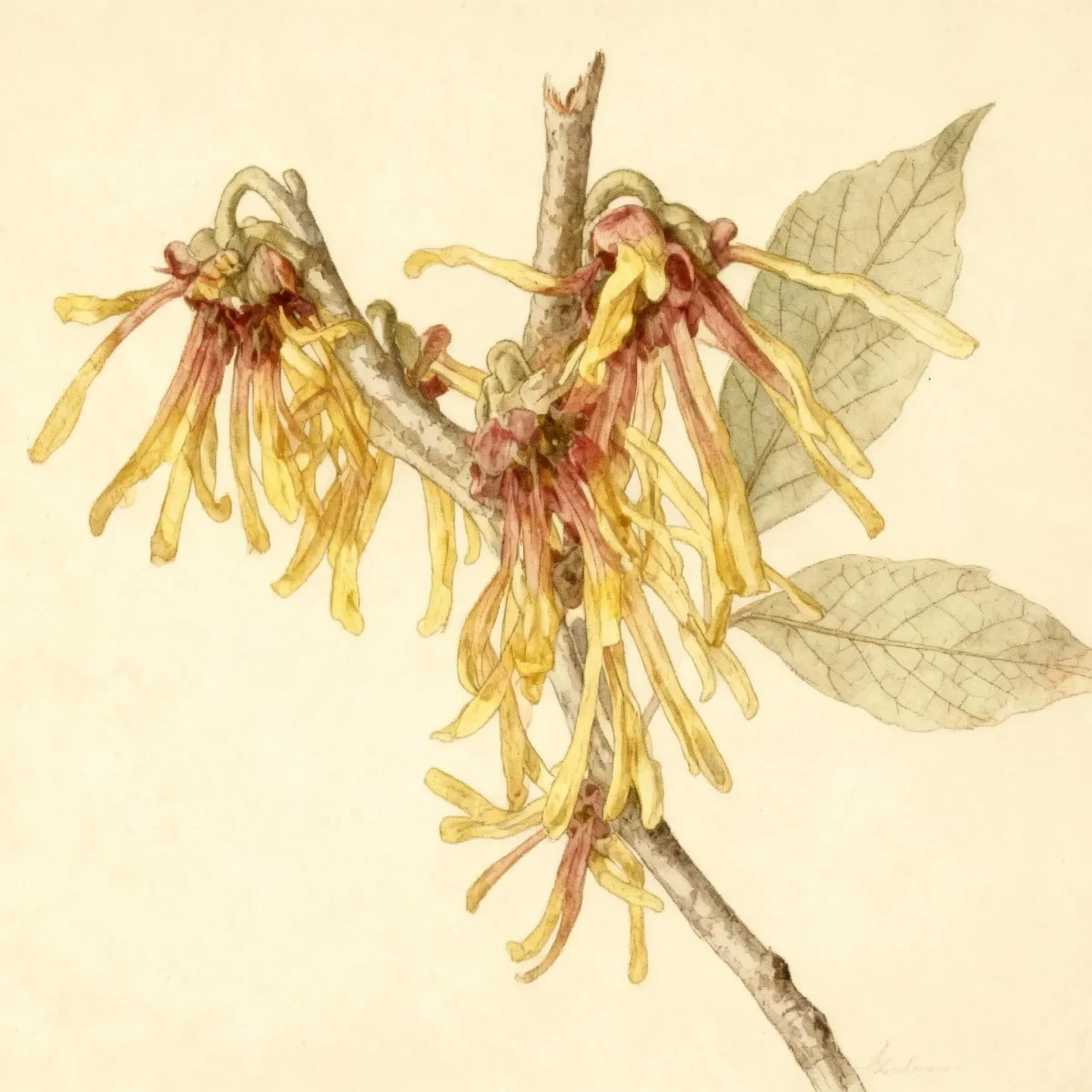
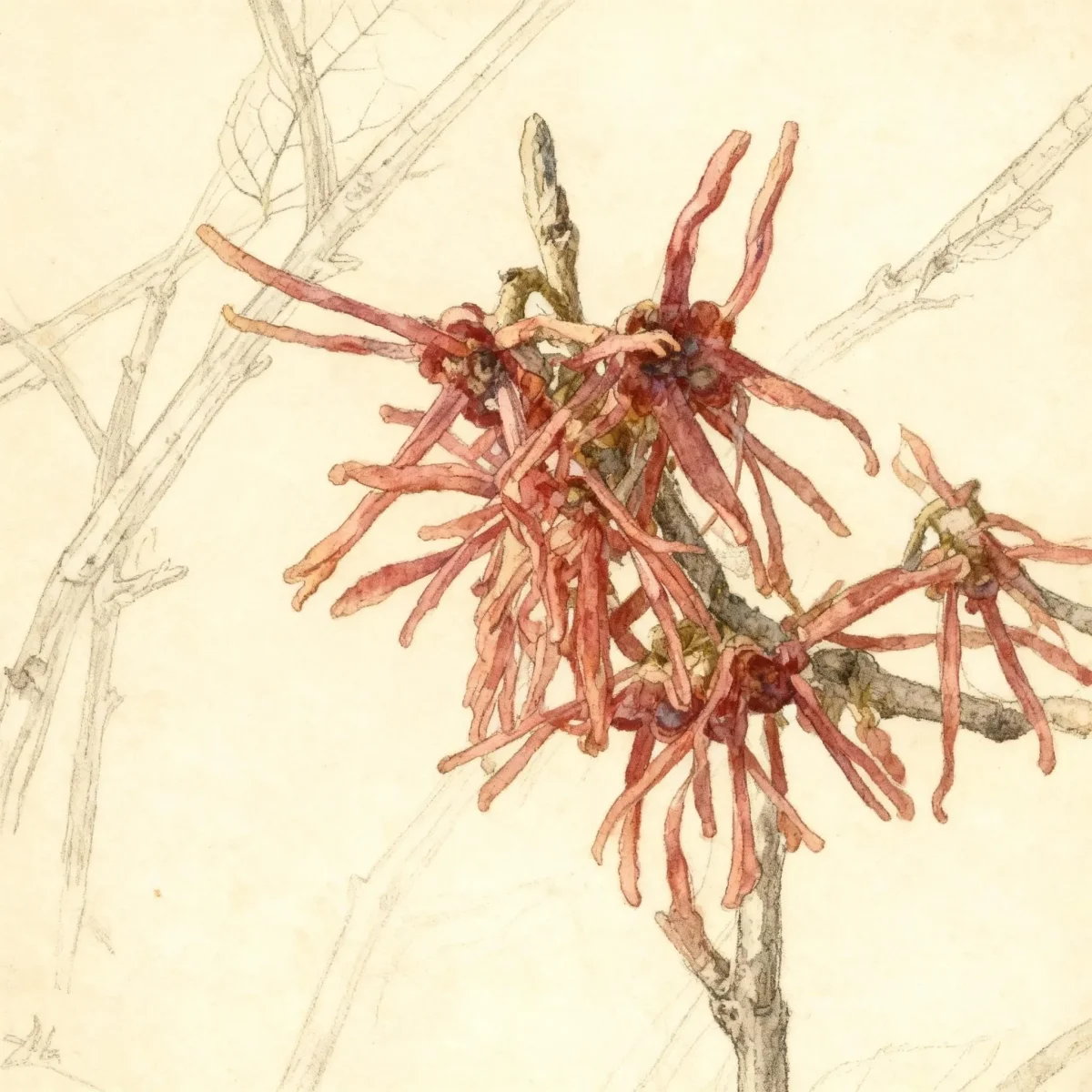
Ozark witch hazel (Hamamelis vernalis 'Washington Park')
Hamamelis vernalis 'Washington Park', the Ozark witch hazel, is valued for its late winter bloom of reddish-purple flowers in zones 4-8.
Scroll down to discover growing tips, care requirements, companion plants, and more
Complete Plant Information
Overview
Hamamelis vernalis ‘Washington Park’, known commonly as Ozark witch hazel, offers a spectacular display of color during the bleakest part of the year. Its mild perfume and delicate, ribbon-like petals provide essential visual interest from January through March, long before most other landscape plants wake up. This cultivar originated at the Washington Park Arboretum, bringing reliable winter performance to many gardens.
As a deciduous shrub native to the Ozark Plateau, Hamamelis vernalis ‘Washington Park’ is remarkably adaptable once established. It typically matures into a rounded specimen, reaching 5 to 8 feet tall and wide, making it an excellent structural plant in mixed borders or as a stand-alone feature. Gardeners appreciate the low maintenance required for this hardy specimen.
The value of Ozark witch hazel extends beyond its winter show; it transitions through the seasons with attractive foliage and wildlife tolerance. Its ability to handle tough conditions, including clay soils, ensures that it remains a practical and stunning choice for challenging garden spots where other shrubs might falter.
Fast Facts
- Plant Family: Hamamelidaceae
- Plant Type: Deciduous shrub
- Hardiness Zones: USDA Zones 4-8
- Size at Maturity:
- Height: 5-8 ft
- Spread: 5-8 ft
- Bloom Time: January to March
- Bloom Description: Reddish-purple
- Sun Exposure: Full sun to part shade
- Water Needs: Medium
- Maintenance Level: Low
How to Grow
Plant Hamamelis vernalis ‘Washington Park’ during the dormant season—fall is ideal, followed by early spring, before bud break. It prefers consistently moist, well-drained soil but is highly accommodating, tolerating heavy clay soils remarkably well, which is a significant asset for a winter bloomer. Full sun encourages the best flowering, although it tolerates partial shade, which may reduce bloom density.
Watering should be consistent, especially during the first year or two to establish a robust root system. Once established, this Ozark witch hazel variety requires medium water and is relatively drought-tolerant thanks to its native resilience. Due to its inherently low maintenance level, fertilization is rarely necessary unless the soil is extremely poor.
Pruning is minimal; focus only on removing dead, damaged, or crossing branches right after the bloom period finishes. Avoid heavy summer pruning, as this might disrupt next year’s flower bud formation. Its natural mounding form generally retains an attractive shape without constant shaping, making the care cycle very simple for the gardener.
Landscape Uses
This shrub excels as a superior winter-flowering centerpiece in the landscape, providing necessary color when the garden is otherwise monochromatic. Hamamelis vernalis ‘Washington Park’ works beautifully in shrub borders where its late-season structure and fragrance can be showcased against evergreen backdrops. Consider using it as a screen or a tall hedge, as it spreads via suckers to create dense, attractive groupings.
For woodland gardens, Ozark witch hazel provides texture and reliable winter interest. Its tolerance for erosion and clay soil makes it an excellent choice for stabilizing banks, positioning it where other ornamental shrubs struggle. When selecting companions, utilize plants that offer contrasting textures or significant summer/fall color to complement the mid-winter performance of the witch hazel.
As a good specimen plant, place Hamamelis vernalis ‘Washington Park’ where its fragrance can be best appreciated, such as near a walkway or outdoor seating area. Its compact size (5-8 feet) ensures it doesn’t overwhelm smaller garden rooms while still providing significant impact.
Standout Features
Flower Qualities
- Showy
- Fragrant
Noteworthy Characteristics
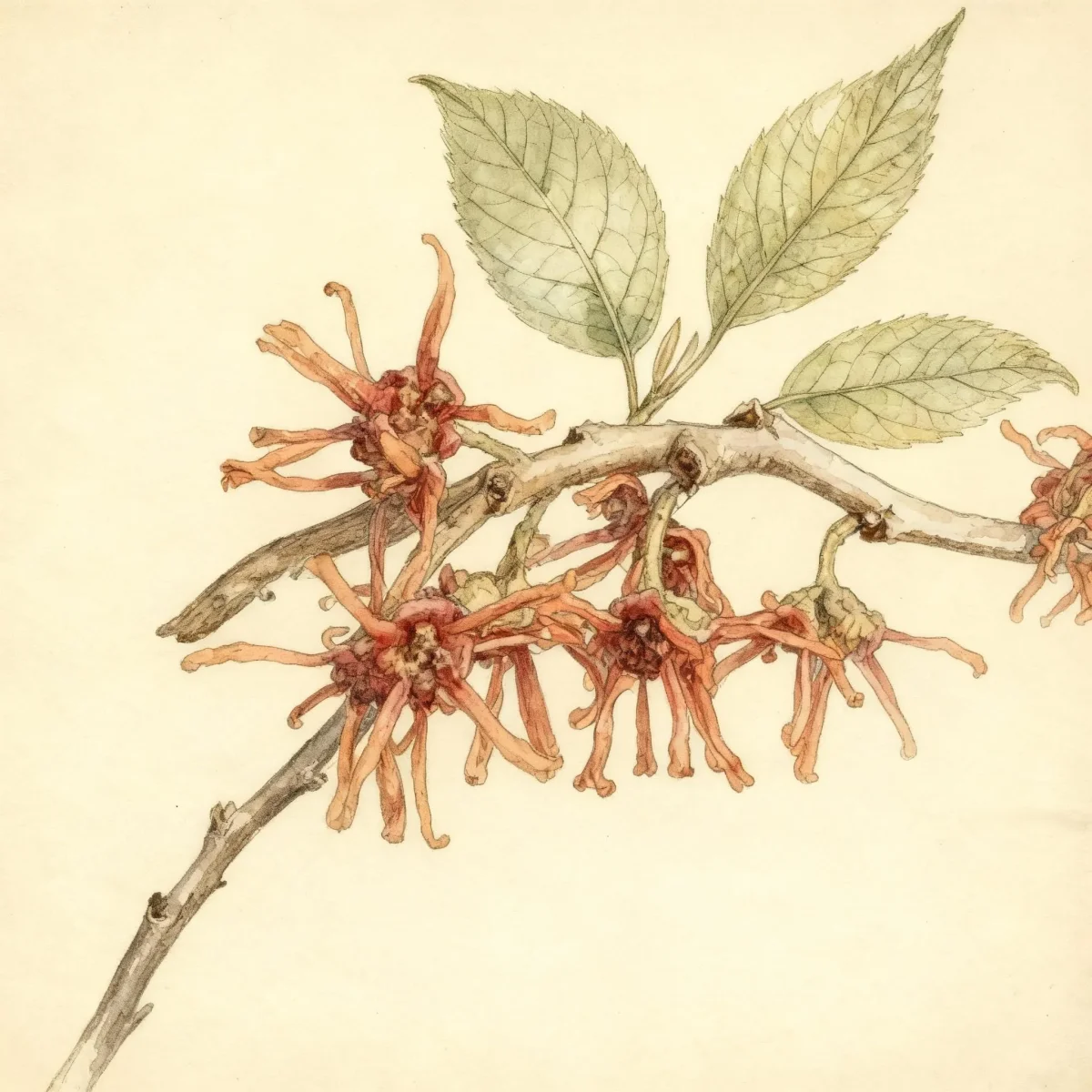
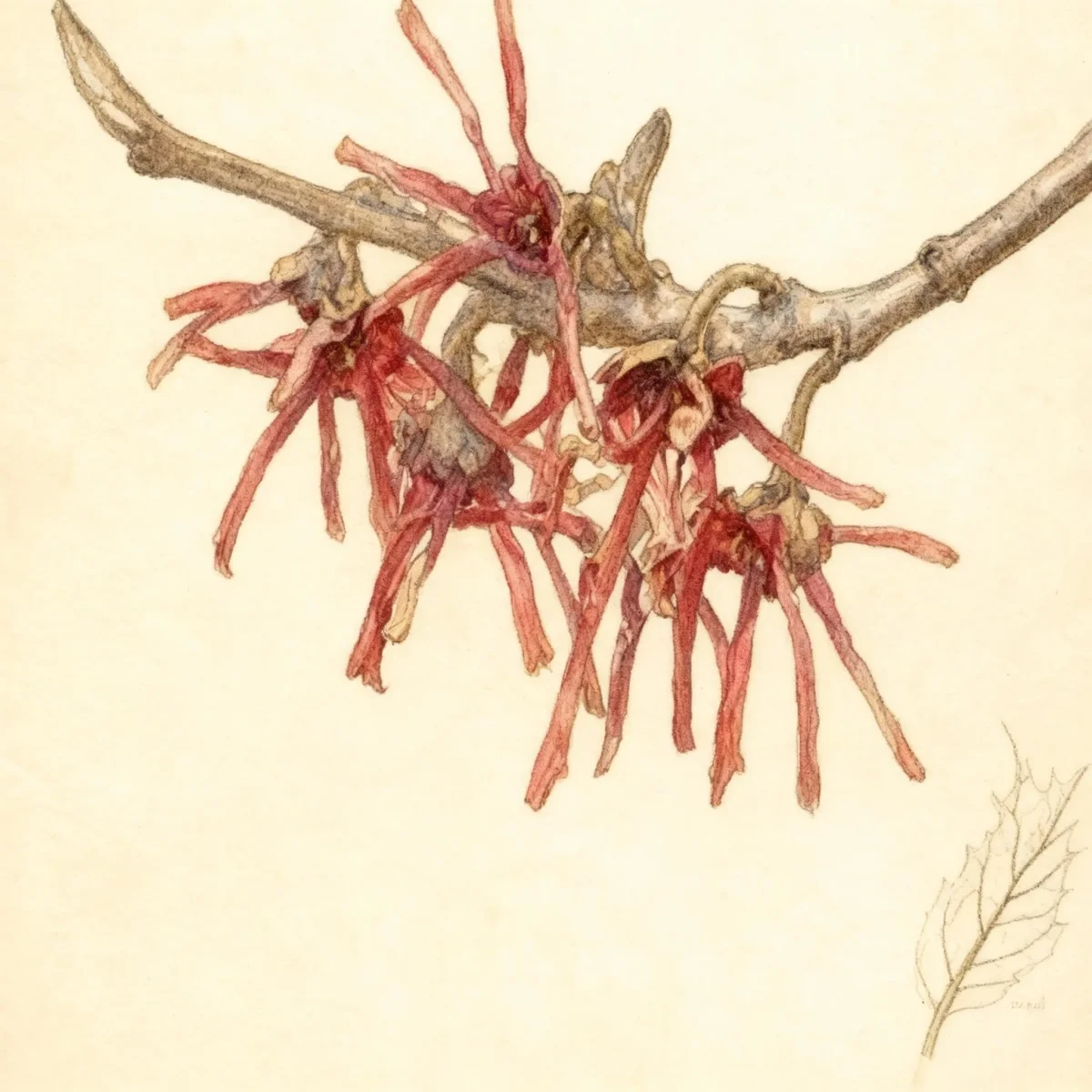
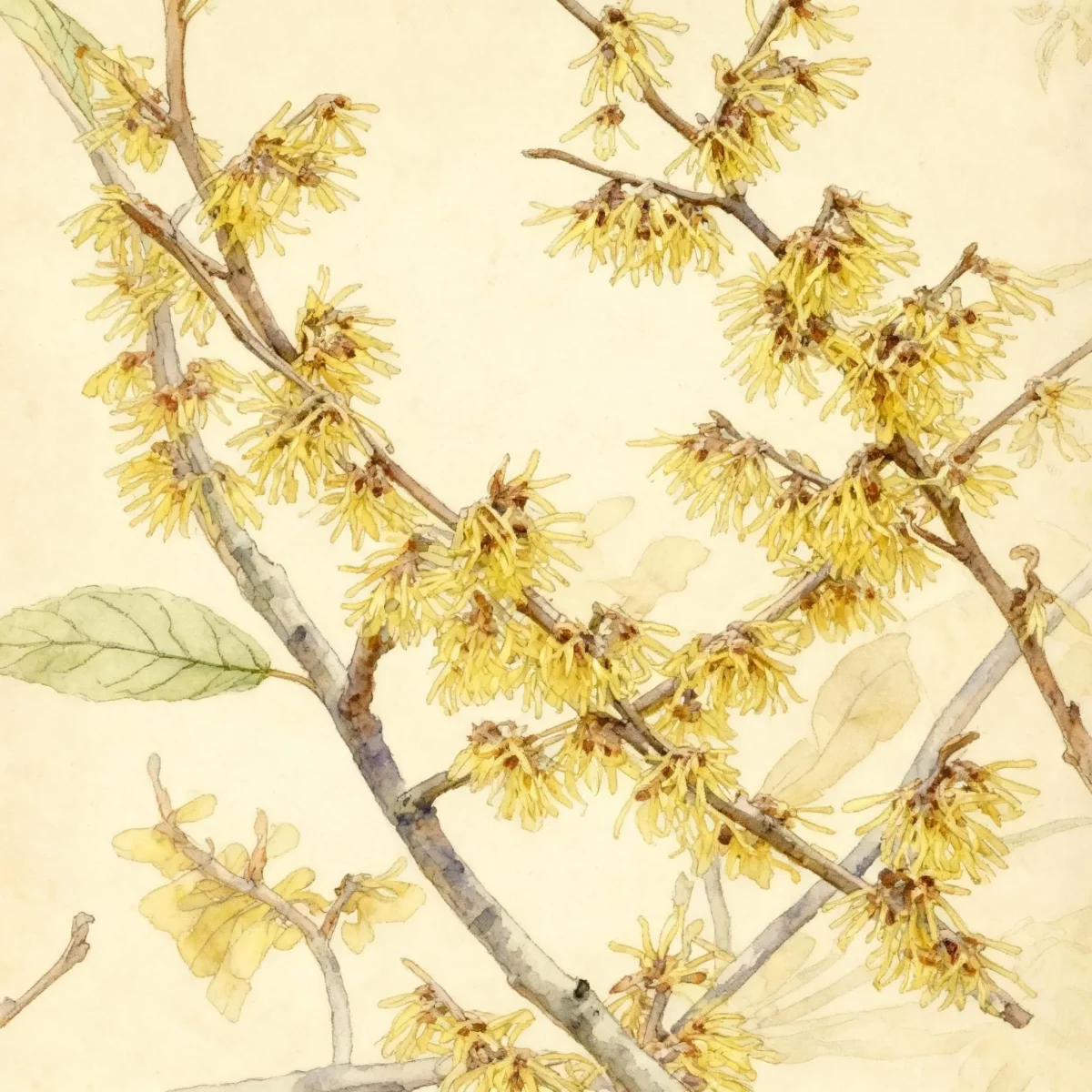
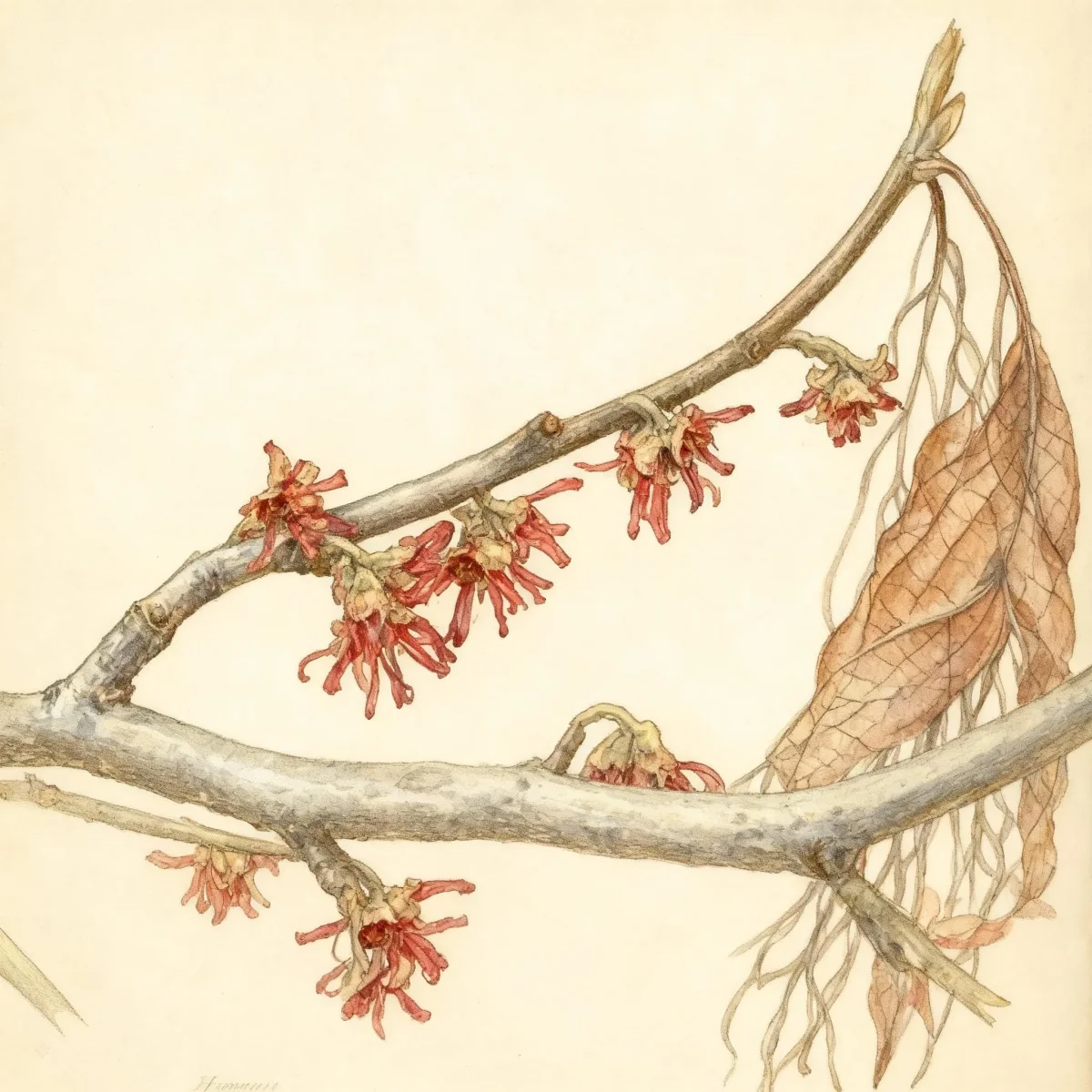
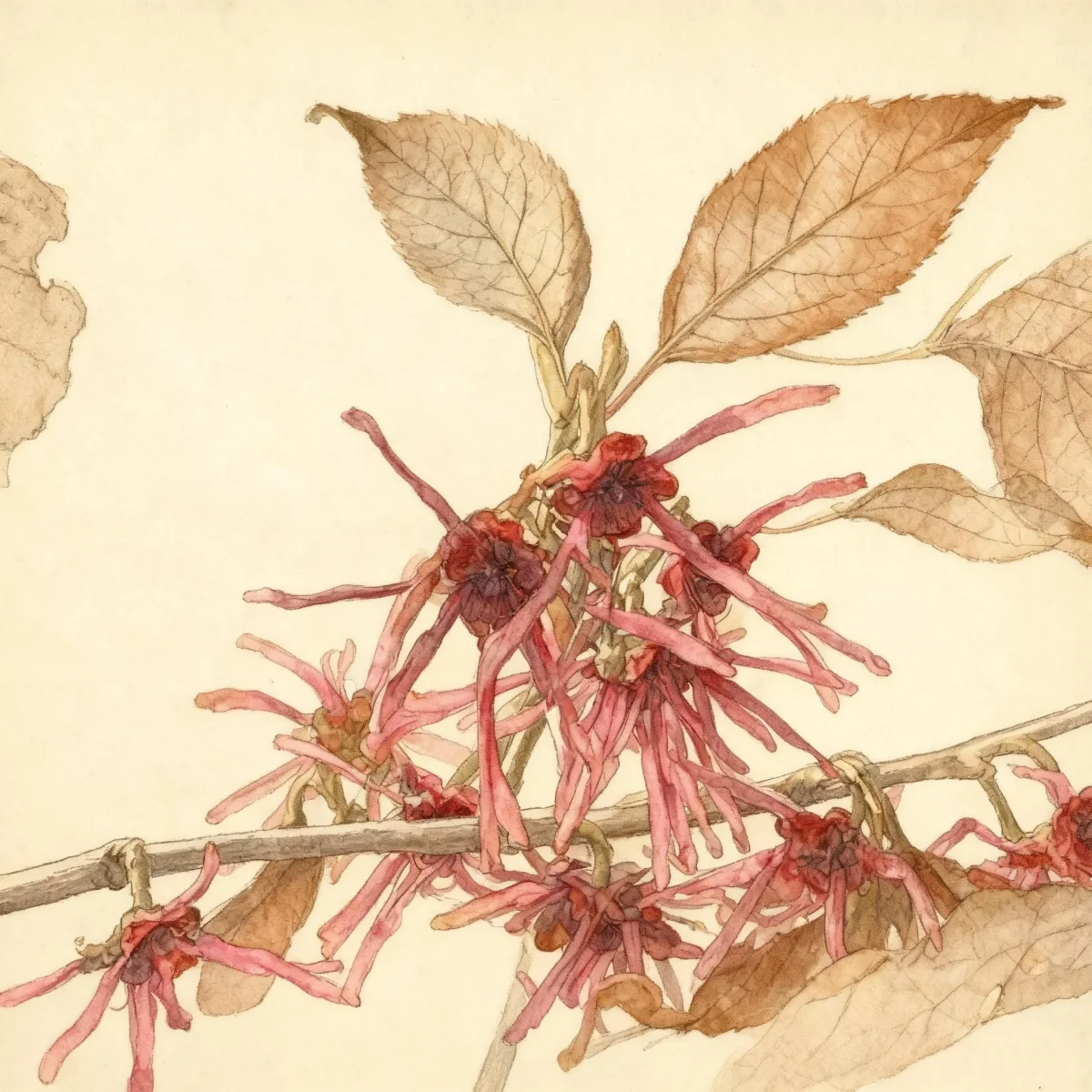
Hamamelis vernalis, commonly called Ozark witch hazel, is native to the Ozark Plateau extending from southern Missouri through northwestern Arkansas to eastern Oklahoma. In Missouri, it is typically found in gravelly stream beds, bases of rocky slopes along streams and less frequently in rocky wooded hillsides where it spreads by suckers to form large colonies (Steyermark). It typically grows to 6’ tall. Flowers in axillary clusters appear in mid to late winter (January-March in St. Louis) prior to the emergence of the foliage in a variety of colors ranging from pale yellow to dark reddish purple. Each flower has four, narrow, ribbon-like, curled and crinkled petals (each to only 1/3” long) that are usually red at the base transitioning to copper orange at the tip. Calyx cup is dull red. Ovate-rounded leaves (to 3” long) emerge light green with reddish-bronze tints in spring, but quickly mature to medium to dark green. Golden yellow fall color. Fruit is a non-showy dehiscent capsule which splits open in September-October to release its seeds.Genus name comes from the Greek words hama meaning at same time and melon meaning apple or fruit in reference to the occurrence of both fruit and flowers at the same time on this shrub (particularly in the case of fall flowering members of the genus).Specific epithet from Latin means spring in reference to the flower bloom.‘Washington Park’ features mildly fragrant, reddish-purple flowers. It originated at the Washington Park Arboretum in Seattle, Washington. Flowers bloom in axillary clusters along bare stems from late January to March. Each flower has four, narrow, ribbon-like, straight petals (each to 1/4” long) that are reddish-purple. Calyx is purple. It typically grows in a rounded form to 5-8’ tall and as wide. Obovate-rounded leaves (to 4” long) mature to blue-green. Fall color is an often exciting blend of yellow and orange maturing to red
Tolerances
- Deer
- Erosion
- Clay Soil
Potential Problems
Insect pests are usually a minor concern for Hamamelis vernalis ‘Washington Park’. Gardeners should occasionally monitor for caterpillars or Japanese beetles, which may chew unsightly holes in the leaves during the summer growing season. Other potential invaders include gall aphids, scale insects, leafrollers, and leafminers, although these rarely cause permanent damage.
Disease issues are infrequent but can occasionally include powdery mildew or minor leaf spots. Given the Ozark witch hazel’s inherent hardiness and low maintenance needs, chemical treatments are seldom recommended. Good air circulation and avoiding overhead watering can help mitigate most fungal concerns naturally.
Frequently Asked Questions
What hardiness zones is Ozark witch hazel suitable for?
This resilient shrub, including the ‘Washington Park’ cultivar, is suitable for USDA Hardiness Zones 4 through 8, offering adaptability across a wide range of climates.
How large does Hamamelis vernalis ‘Washington Park’ grow?
At maturity, this cultivar typically reaches a size of 5 to 8 feet in height and spreads to a similar width of 5 to 8 feet, forming a dense, rounded habit.
When does Ozark witch hazel bloom?
The primary draw of this plant is its bloom time, occurring in the late winter, specifically from January through March, featuring its lovely reddish-purple flowers.
What sun exposure does Hamamelis vernalis ‘Washington Park’ need?
For the most prolific winter blooming, ensure this Ozark witch hazel receives full sun exposure, though it tolerates partial shade conditions successfully.
Conclusion
Hamamelis vernalis ‘Washington Park’ is a highly valuable structural shrub, rewarding gardeners with unique, fragrant bloom displays precisely when the garden needs illumination. Its tolerance for clay and deer browsing further enhances its utility in diverse landscape settings. Before planting, confirm your site is within USDA Zones 4-8 and plan for its mid-winter flowering window to maximize the effect of this spectacular Ozark witch hazel.
Companion Planting
When selecting plants to feature alongside Hamamelis vernalis ‘Washington Park’, consider species that either contrast its winter interest or provide strong color displays when the witch hazel is dormant or just leafing out. Early spring bulbs, such as Crocus or Snowdrops, bloom concurrently with the flowers of Ozark witch hazel and provide ground-level color contrast.
For summer screening, utilize broadleaf evergreens like Rhododendron or Boxwood masses to create a dark green backdrop. These provide visual weight throughout the year, emphasizing the shrub’s fine-textured winter branching. Since this plant spreads via suckers and forms colonies, give it adequate space to develop naturally so it doesn’t overcrowd smaller border plants.
Wildlife Benefits
The fragrance and timing of the bloom period for Hamamelis vernalis ‘Washington Park’ are significant for early-season pollinators emerging from dormancy. The flowers attract small flies and other specialist early bees seeking early nectar sources during late winter or early spring warmth spells.
Furthermore, the resulting fruit, though not showy, provides a food source. The dehiscent capsule splits open to release seeds, which can be consumed by birds. Planting Ozark witch hazel contributes to biodiversity by supporting wildlife activity during transition seasons.