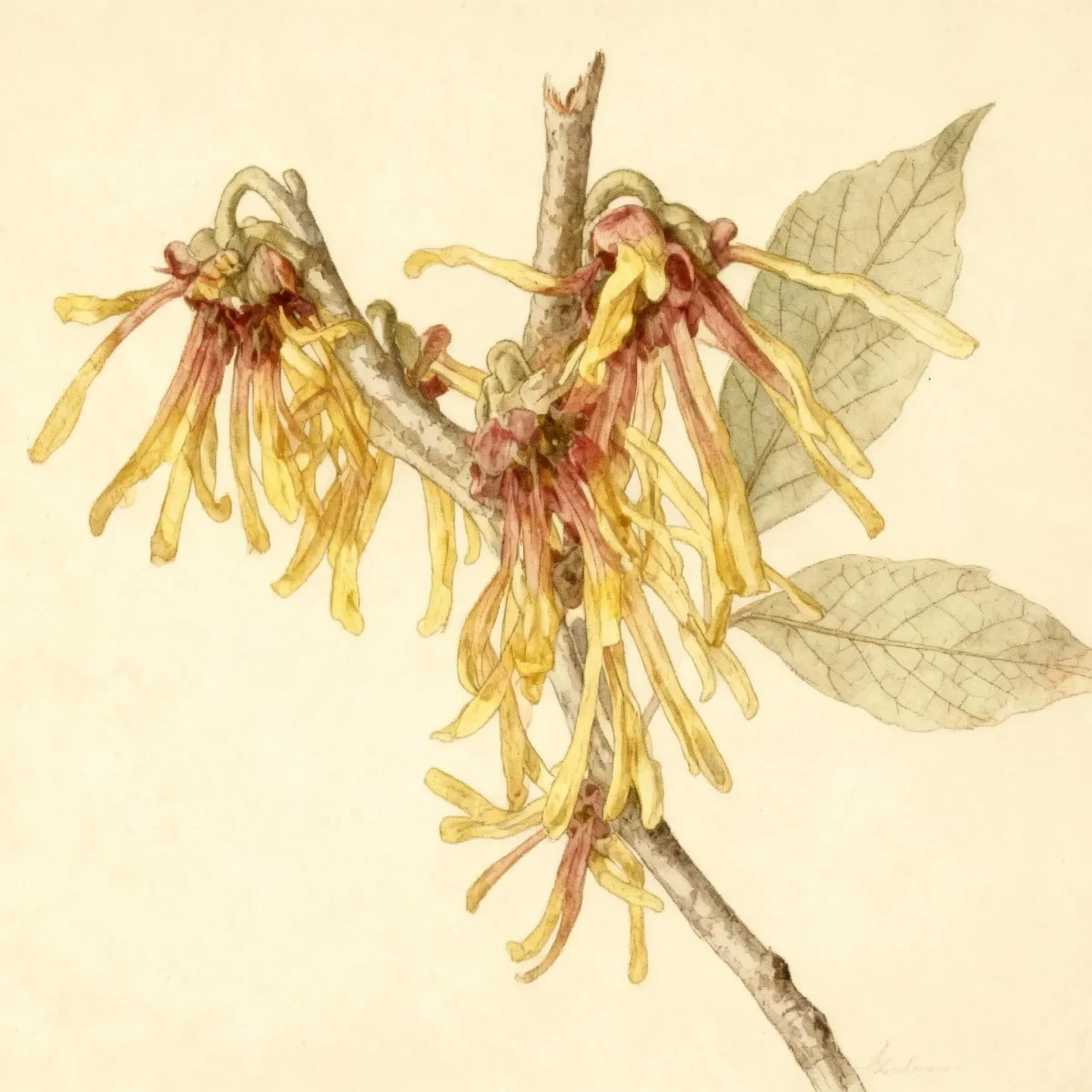
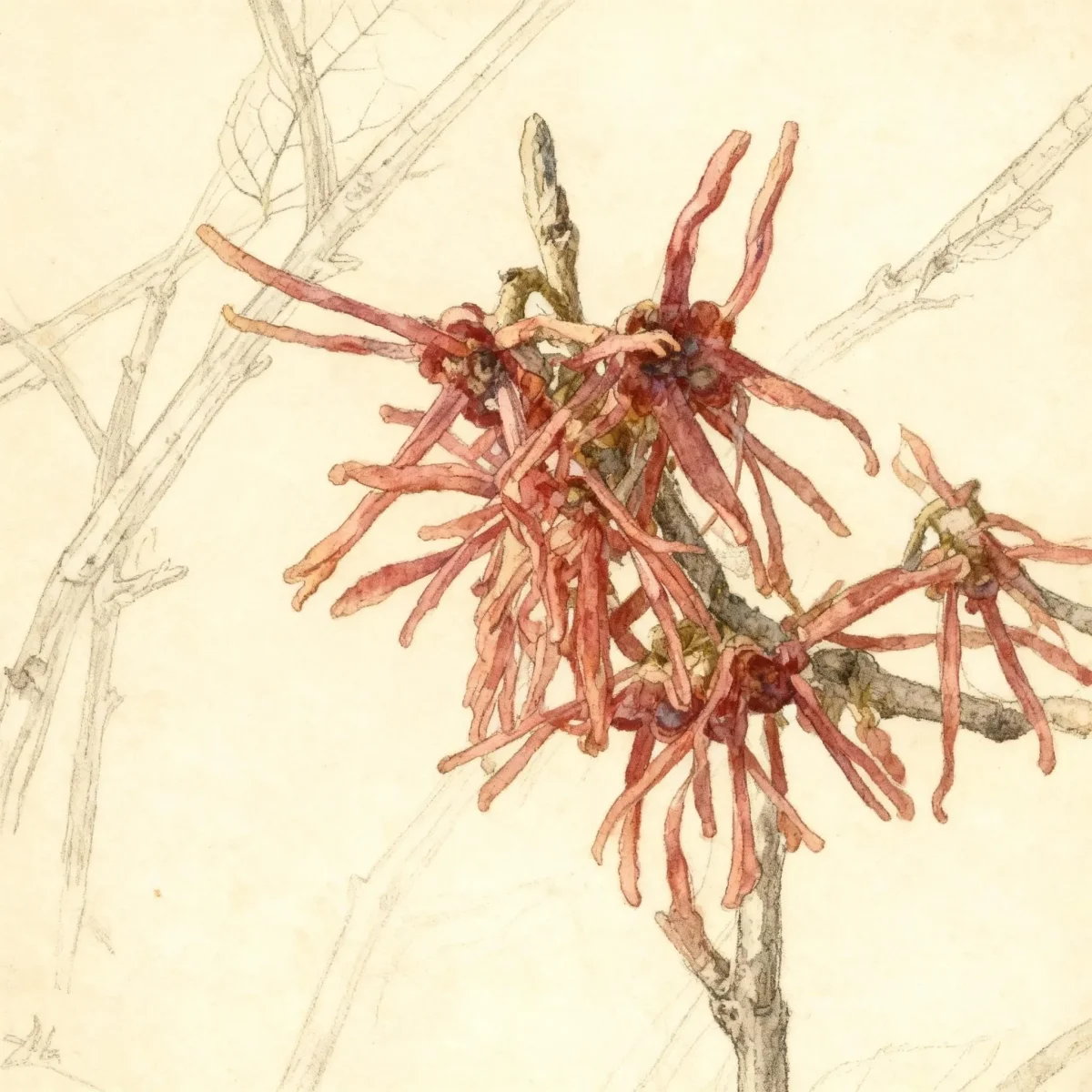
Ozark witch hazel (Hamamelis vernalis 'Squib')
Hamamelis vernalis 'Squib' is a low-maintenance shrub delivering fragrant yellow blooms in deep winter, ideal for Ozark witch hazel interest.
Scroll down to discover growing tips, care requirements, companion plants, and more
Complete Plant Information
Overview
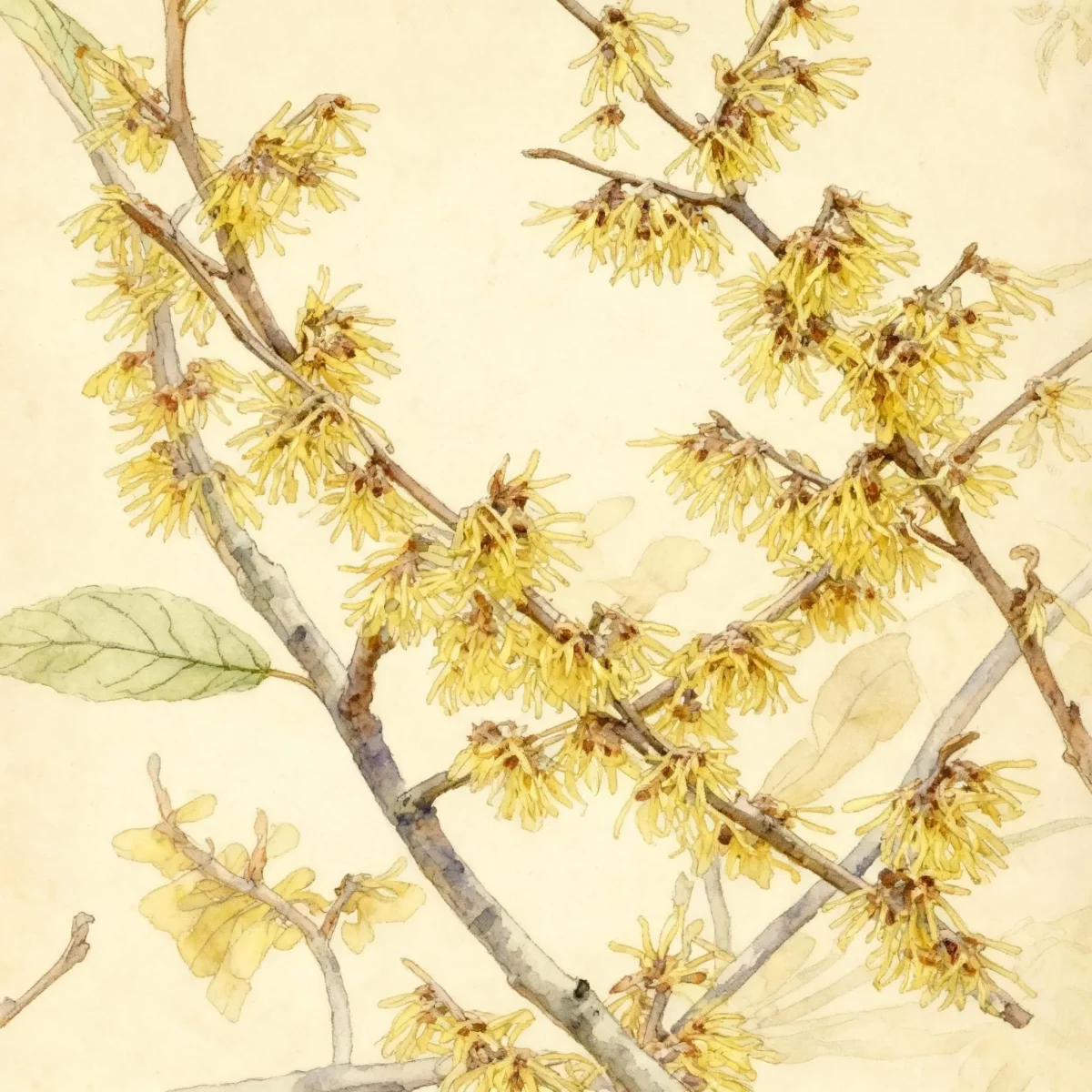
The Ozark witch hazel, specifically the cultivar Hamamelis vernalis ‘Squib’, provides exceptional winter interest when most landscapes appear dormant. This deciduous shrub is highly valued for its early bloom, often lighting up the late winter garden with its mildly fragrant, cadmium yellow flowers. As native species of this Ozark witch hazel thrive in certain regions, ‘Squib’ brings that rugged dependability into cultivated settings across USDA Zones 4 through 8.
Hamamelis vernalis ‘Squib’ offers multi-season appeal despite its primary show occurring between January and March. Beyond its unique winter blossoms, it develops elliptical leaves that mature to blue-green before offering reliable yellow fall color. Its manageable size, typically reaching 5 to 8 feet tall and wide, makes it surprisingly versatile for landscapes seeking consistent, low-maintenance structure.
Gardeners appreciate the low maintenance commitment associated with this cultivar. Tolerant of deer, minor erosion issues, and even clay soils (provided drainage is adequate), the Ozark witch hazel establishes itself as a reliable backbone plant. Use Hamamelis vernalis ‘Squib’ to anchor shrub borders or provide natural screening.
Fast Facts
- Plant Family: Hamamelidaceae
- Plant Type: Deciduous shrub
- Hardiness Zones: USDA Zones 4-8
- Size at Maturity:
- Height: 5-8 ft
- Spread: 5-8 ft
- Bloom Time: January to March
- Bloom Description: Yellow
- Sun Exposure: Full sun to part shade
- Water Needs: Medium
- Maintenance Level: Low
How to Grow
Planting the Ozark witch hazel is best accomplished in the cooler seasons—early spring or fall—to allow the roots to establish before summer heat stress. Ensure the chosen location offers well-drained soil, as standing water is detrimental, even though Hamamelis vernalis ‘Squib’ tolerates clay. Full sun encourages the best flowering display, though it tolerates partial shade gracefully.
Watering requires consistency; aim for consistently medium moisture. Leaf scorch can occur during summer droughts, so supplemental watering during dry spells is recommended, especially when establishing a new shrub. Fertilizing is rarely necessary; focus on amending the soil with organic matter to maintain that preferred acidic, rich environment.
Pruning should be done immediately after the winter flowering concludes in early spring. This timing is crucial as pruning later risks removing next year’s flower buds. During pruning, focus on shaping the shrub or managing colonial spread by promptly removing any root suckers that emerge, particularly those below the graft union if applicable.
Landscape Uses
This cultivar functions exceptionally well as a superior winter-flowering specimen, breaking up the monotony of cold-season landscapes. The structure and early color provided by Hamamelis vernalis ‘Squib’ make it an excellent anchor for shrub borders where evergreen plants might otherwise dominate visually. It also serves admirably as a natural screen or tall hedge due to its dense, upright growth habit.
Consider pairing the Hamamelis vernalis ‘Squib’ with late-blooming spring bulbs or early perennials that will emerge as the witch hazel finishes flowering. Its structure complements fine-textured evergreens, providing a contrast in texture and form during the winter months. In woodland garden settings, plant it where you can easily view the unique flower structure during winter walks.
Standout Features
Flower Qualities
- Showy
- Fragrant
Noteworthy Characteristics
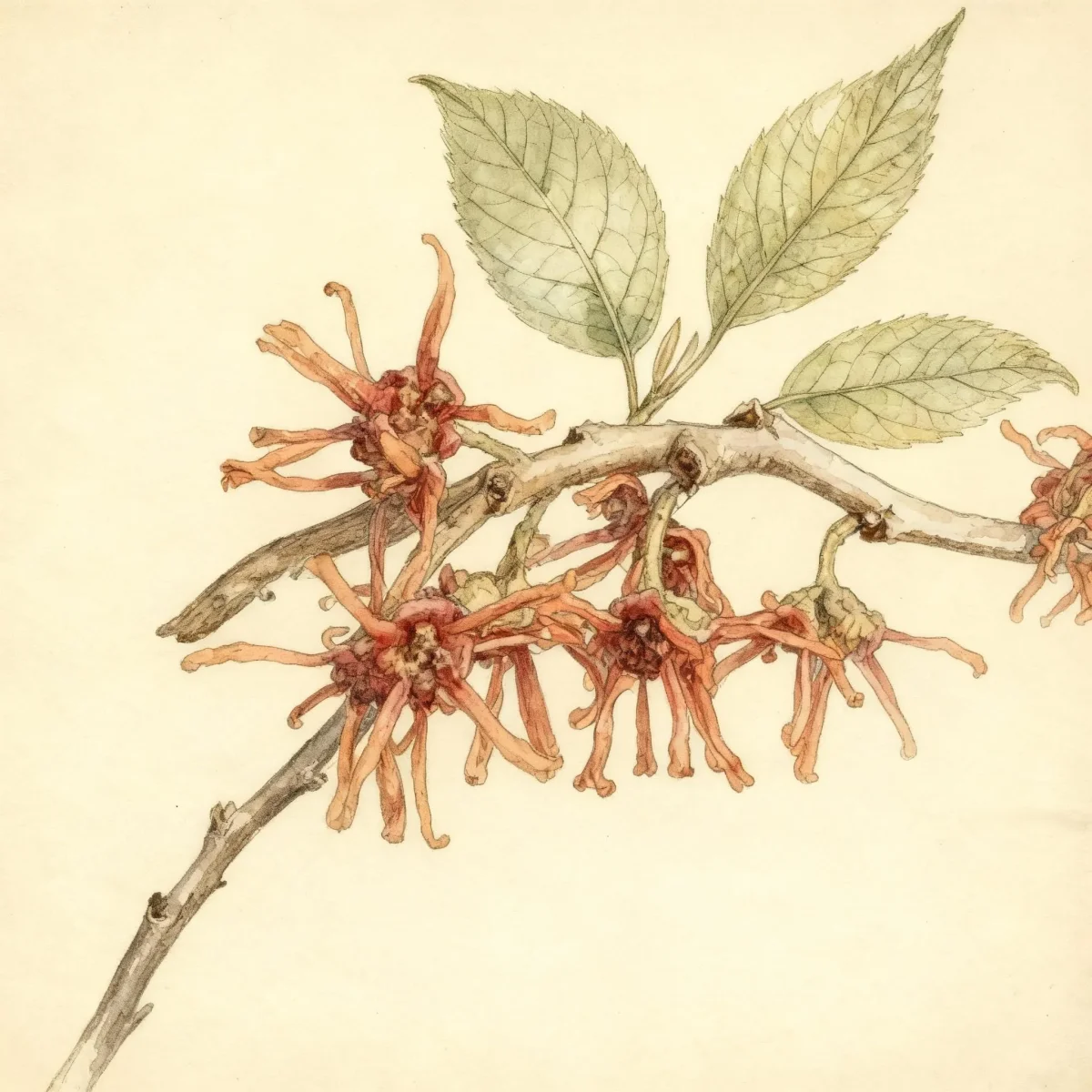
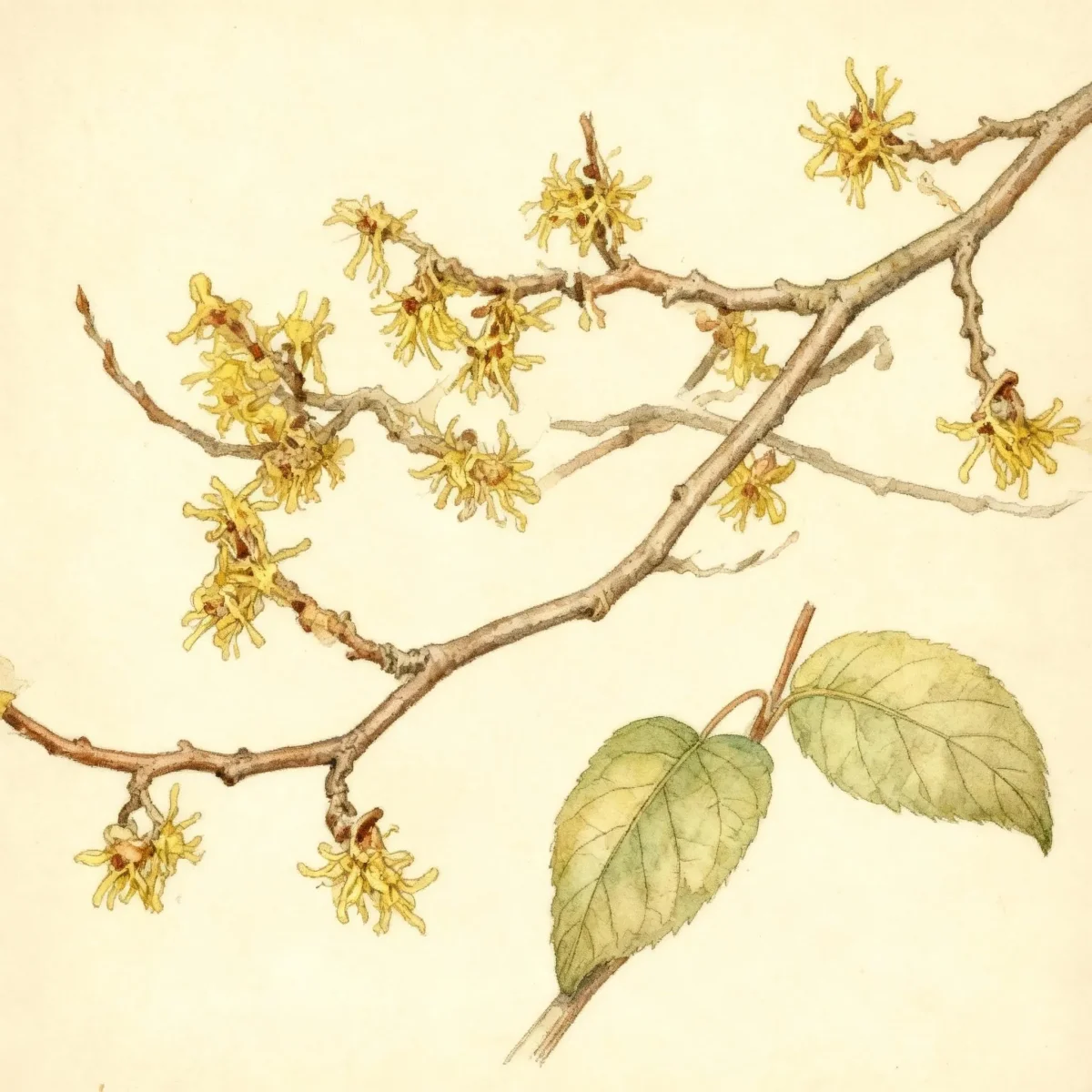
Hamamelis vernalis, commonly called Ozark witch hazel, is native to the Ozark Plateau extending from southern Missouri through northwestern Arkansas to eastern Oklahoma. Flowers appear in axillary clusters along bare stems from late January to March, prior to foliage emergence, featuring narrow, ribbon-like petals that are cadmium yellow on the ‘Squib’ cultivar. It typically grows to a rounded form between 5-8’ tall and wide, maturing to blue-green foliage that turns yellow in the fall.
Tolerances
- Deer
- Erosion
- Clay Soil
Potential Problems
Insect issues are generally minor for the Ozark witch hazel. Gardeners should inspect foliage for evidence of caterpillars or Japanese beetles, both of which may chew on the leaves during warmer months. More subtle pests like gall aphids, scale, leafrollers, and leafminers might be present but rarely cause structural damage severe enough to warrant chemical intervention.
Potential diseases include powdery mildew, which can be managed by ensuring good air circulation through proper spacing and pruning. Occasional leaf spots or various rots can also occur, usually tied to overly saturated soil conditions or extreme humidity. Since maintenance is low, proactive monitoring is often sufficient; chemical treatments are usually unnecessary unless an infestation becomes severe or persistent.
Frequently Asked Questions
What hardiness zones is Hamamelis vernalis ‘Squib’ suitable for?
This Ozark witch hazel cultivar is hardy across USDA Zones 4 through 8.
How large does Ozark witch hazel grow?
Hamamelis vernalis ‘Squib’ is expected to mature to a height and spread between 5 and 8 feet.
When does Hamamelis vernalis ‘Squib’ bloom?
This winter-blooming shrub features yellow flowers appearing from January through March.
What sun exposure does Ozark witch hazel need?
For optimal performance and the best bloom set, this shrub prefers full sun, though it will adapt to part shade conditions.
Conclusion
The Hamamelis vernalis ‘Squib’ stands out as a robust, low-effort plant that rewards patience with spectacular winter color and unique fragrance. Its reliability against deer, erosion, and challenging clay soils makes the Ozark witch hazel an excellent choice for year-round landscape structure. Before planting, confirm that your site provides the medium moisture and good drainage necessary for this dependable shrub to thrive.
Companion Planting
Selecting companions for Hamamelis vernalis ‘Squib’ requires focusing on plants that either tolerate or appreciate the late winter bloom and the subsequent deciduous canopy. Because witch hazel prefers moist, acidic soils, consider pairing it with acid-loving evergreens like Rhododendrons or Azaleas, which provide green structure during the winter when the yellow flowers of the Ozark witch hazel are visible.
When the Hamamelis finishes flowering, early spring ephemerals or bulbs emerge, making excellent groundcovers beneath its developing canopy. Plants with contrasting evergreen foliage, such as various Hellebores (Lenten Rose), begin their bloom period just as the witch hazel emerges from dormancy. This combination creates layers of interest moving from late winter through early spring.
Seasonal Care Calendar
Winter maintenance for Hamamelis vernalis ‘Squib’ involves observation rather than labor; enjoy the yellow, fragrant blooms against the snow. In early spring, immediately following flowering, address pruning needs—this is the only time to control shape or size without sacrificing next year’s flowers.
As spring transitions into summer, monitor moisture levels carefully, especially during dry spells, to prevent leaf scorch typical of the species, ensuring consistent watering. Summer pruning should be avoided entirely. In the fall, rake up any fallen leaves to reduce potential overwintering sites for fungal spores, though the plant’s natural golden fall color adds a final aesthetic touch.