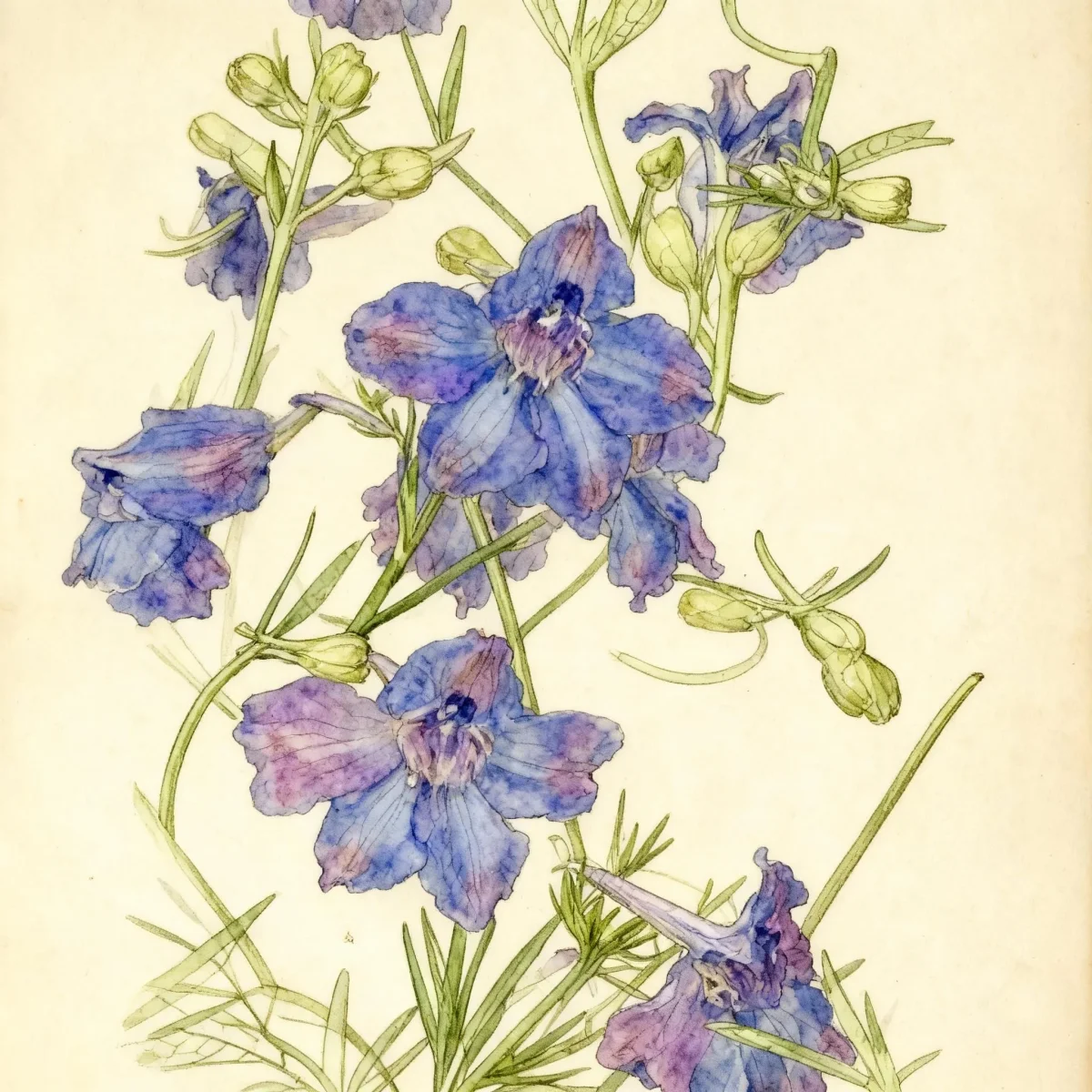
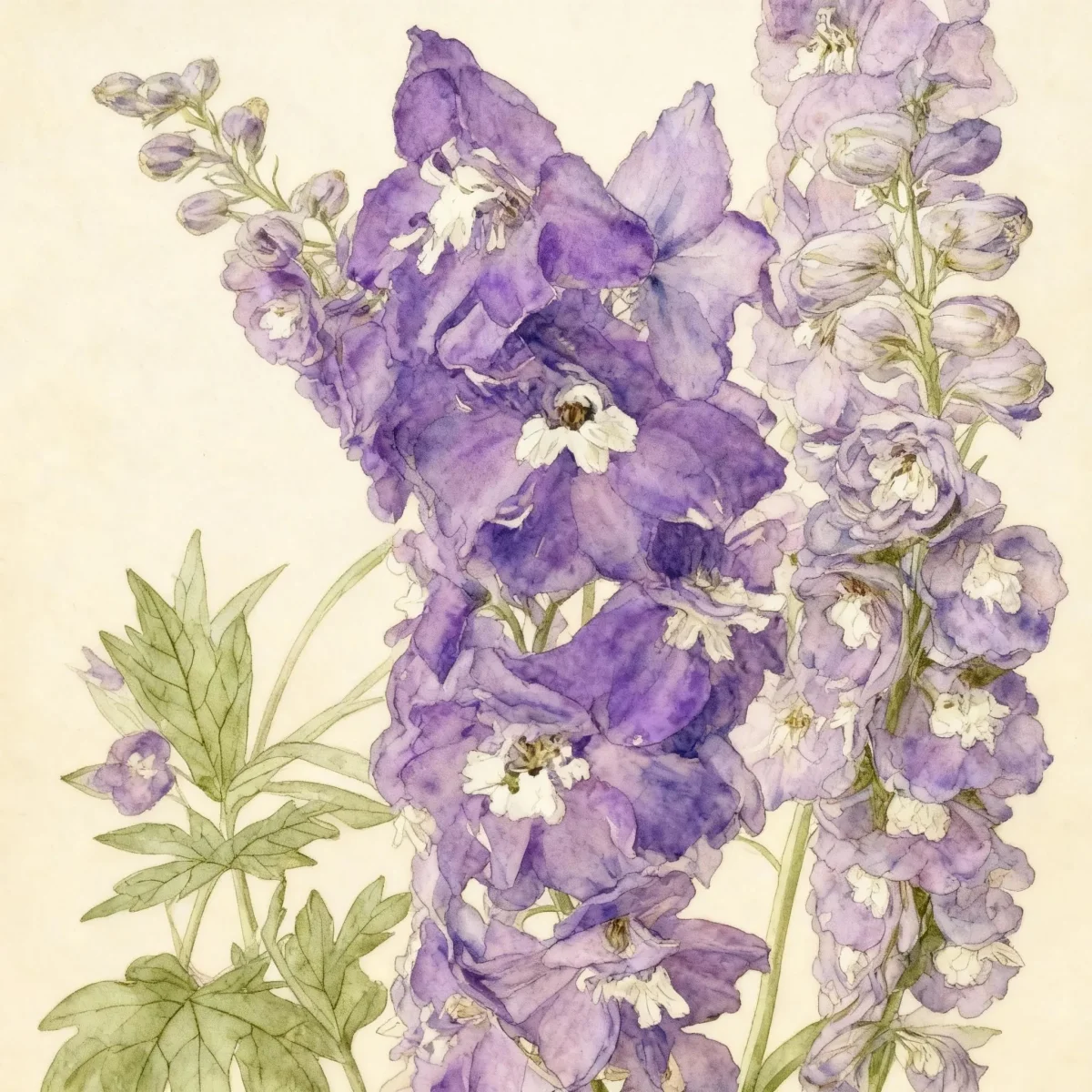
Giant larkspur (Consolida ajacis)
Grow striking Giant larkspur (Consolida ajacis), a showy annual blooming blue, pink, or white from June to August in full sun.
Scroll down to discover growing tips, care requirements, companion plants, and more
Complete Plant Information
Overview
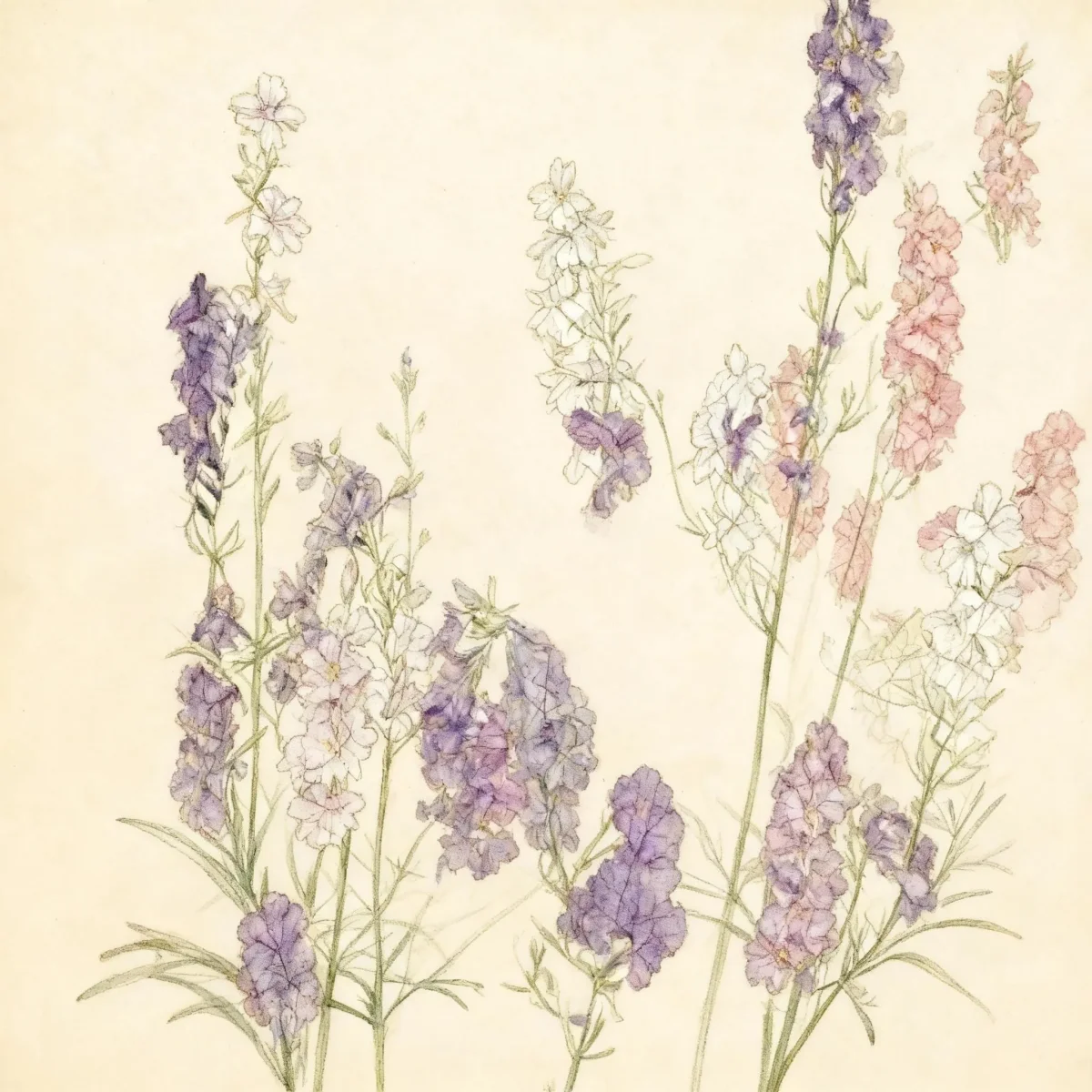
Giant larkspur, botanically known as Consolida ajacis, is a highly valued cool-weather annual celebrated for its dramatic vertical flower spikes. Bearing deeply cut, palmate leaves, this plant brings height and rich color to summer gardens, often displaying shades of blue, though pink and white varieties exist. It is relatively easy to grow from seed, establishing quickly to provide structure from early summer until the heat of mid-summer often causes decline in warmer regions.
This annual offers exceptional visual impact, making it a staple in cottage garden designs and mixed borders where vertical accents are desired. Though its run is typically short-lived compared to perennials, the prolific bloom period of Consolida ajacis more than compensates for its annual nature. Gardeners appreciate the low maintenance required once established, provided basic soil and water needs are met.
Native to the Mediterranean region, giant larkspur readily naturalizes in some areas across the U.S., proving its adaptability in temperate climates. Whether grown for its showy spikes in the landscape or harvested as an excellent cut flower, Consolida ajacis warrants a spot in gardens that can accommodate its preference for cooler growing conditions.
Fast Facts
- Plant Family: Ranunculaceae
- Plant Type: Annual
- Native Range: Mediterranean
- Hardiness Zones: USDA Zones 2-11
- Size at Maturity:
- Height: 2-4 ft
- Spread: 1-1.5 ft
- Bloom Time: June to August
- Bloom Description: Blue, pink or white
- Sun Exposure: Full sun
- Water Needs: Medium
- Maintenance Level: Low
How to Grow
Consolida ajacis thrives best when established early and protected from intense summer heat. As a cool weather annual, decide your sowing strategy based on your location; northern gardens benefit from direct sowing outdoors in early spring, while southern gardeners should sow seeds outdoors in the fall for spring color. For the earliest bloom, start seeds indoors 8 to 10 weeks before your last spring frost date, using individual peat pots to minimize root disturbance during transplanting.
Soil preparation is crucial for success; ensure the ground is loose, moderately rich, and offers excellent drainage, as wet soils must be avoided. When planting out or thinning direct-sown seedlings, space plants about 9 to 12 inches apart to allow for adequate air circulation around the developing stems. While full sun is preferred, plants can tolerate some light afternoon shade in extremely hot climates, which can help extend their blooming period slightly.
Watering should remain consistent, aiming for medium moisture levels without allowing the soil to become waterlogged. Maintenance is generally low, but deadheading spent flowers is highly recommended. Removing faded blooms encourages the plant to produce further spikes and delays the natural tendency to go to seed, thereby prolonging the vibrant display of giant larkspur throughout the season.
Landscape Uses
The striking height and clustered blooms of Consolida ajacis make it an indispensable element in traditional beds and borders. Plant giant larkspur toward the middle or back of sunny borders to provide a dramatic vertical contrast against lower-growing mounding perennials or daisies. They excel in cottage gardens, blending seamlessly with roses, phlox, and daisies, echoing the classic, somewhat informal look these gardens are known for.
Beyond the border, these tall spires are exceptional as cut flowers. Harvest stems when the lower three or four flowers are open but before they fully blow open, ensuring a long vase life for fresh arrangements. The dried seed heads also offer architectural interest for winter arrangements.
If you want the traditional height of giant larkspur but lack space, seek out the shorter cultivars available in various color mixtures. Even in smaller settings, these reliable annuals bring the unmistakable texture and color associated with classic English-style gardening.
Standout Features
Flower Qualities
- Showy
Noteworthy Characteristics
Consolida ajacis, commonly called giant larkspur, is native to the southern Europe and the Mediterranean region. It is a showy annual that grows 2-3’ (less frequently to 4’) tall on stems clad with deeply cut, palmate leaves. Blue flowers (uncommonly pink or white) bloom in showy spike-like racemes from late spring throughout summer in cool northern climates. Leaves, flowers and seeds are toxic if ingested, an important consideration for gardeners with pets or small children.
Tolerances
Potential Problems
Consolida ajacis is generally robust, suffering from few serious insect or disease issues when planted in its preferred conditions. The most common potential ailment gardeners might encounter is powdery mildew, especially in areas with high humidity or poor air circulation around the foliage. To prevent this fungal issue, ensure adequate spacing when planting the seeds or transplants, and avoid overhead watering late in the day.
If mildew does appear, treat affected areas promptly with an appropriate fungicide or a cultural remedy like a diluted milk spray. Otherwise, managing the plant’s environment—particularly ensuring well-drained soil and avoiding excessive heat—will keep issues minimal, ensuring a robust display from your giant larkspur all season long.
Frequently Asked Questions
What hardiness zones is Giant larkspur suitable for?
Giant larkspur (Consolida ajacis) is remarkably adaptable, growing well in USDA Zones 2 through 11.
How large does Giant larkspur grow?
Typically, this annual reaches a height between 2 and 4 feet, with a spread of approximately 1 to 1.5 feet wide.
What sun exposure does Consolida ajacis need?
Consolida ajacis requires full sun exposure to produce the most vigorous growth and abundant blooms.
When does Giant larkspur bloom?
The primary blooming window for Giant larkspur is from June through August, displaying striking flowers that are typically blue, pink, or white.
Conclusion
The Consolida ajacis offers impressive vertical accents and rich color with relatively simple cultural needs, making giant larkspur a favorite annual for season-long garden impact. Remember that it prefers cooler conditions, so plan your sowing dates accordingly based on your local climate to maximize its bloom time.
Companion Planting
Since Consolida ajacis provides strong vertical lines and blooms early to mid-summer, choose companions that offer contrasting textures or late-season interest. Low-growing herbs like creeping thyme or annual alyssum make excellent ground covers that suppress weeds near the base of the taller larkspur stems. For mid-level companions that tolerate similar sunlight and moisture needs, consider planting it alongside zinnias (which thrive as the larkspur fades) or salvias, which provide contrasting color palettes while sharing the full sun requirement.
Propagation Tips
Cultivating Consolida ajacis is straightforward, as it grows easily from seed; however, direct sowing outdoors is often preferred due to the plant’s sensitivity to root disturbance. If you choose to start indoors for an early start, use biodegradable containers, such as peat pots, to minimize root shock during transplanting into the garden bed. Ensure the soil is cool and moist before sowing, and once seedlings have developed a few true leaves, thin them aggressively to the recommended 9-12 inch spacing outdoors, as overcrowding leads to weak stems and increased disease risk.