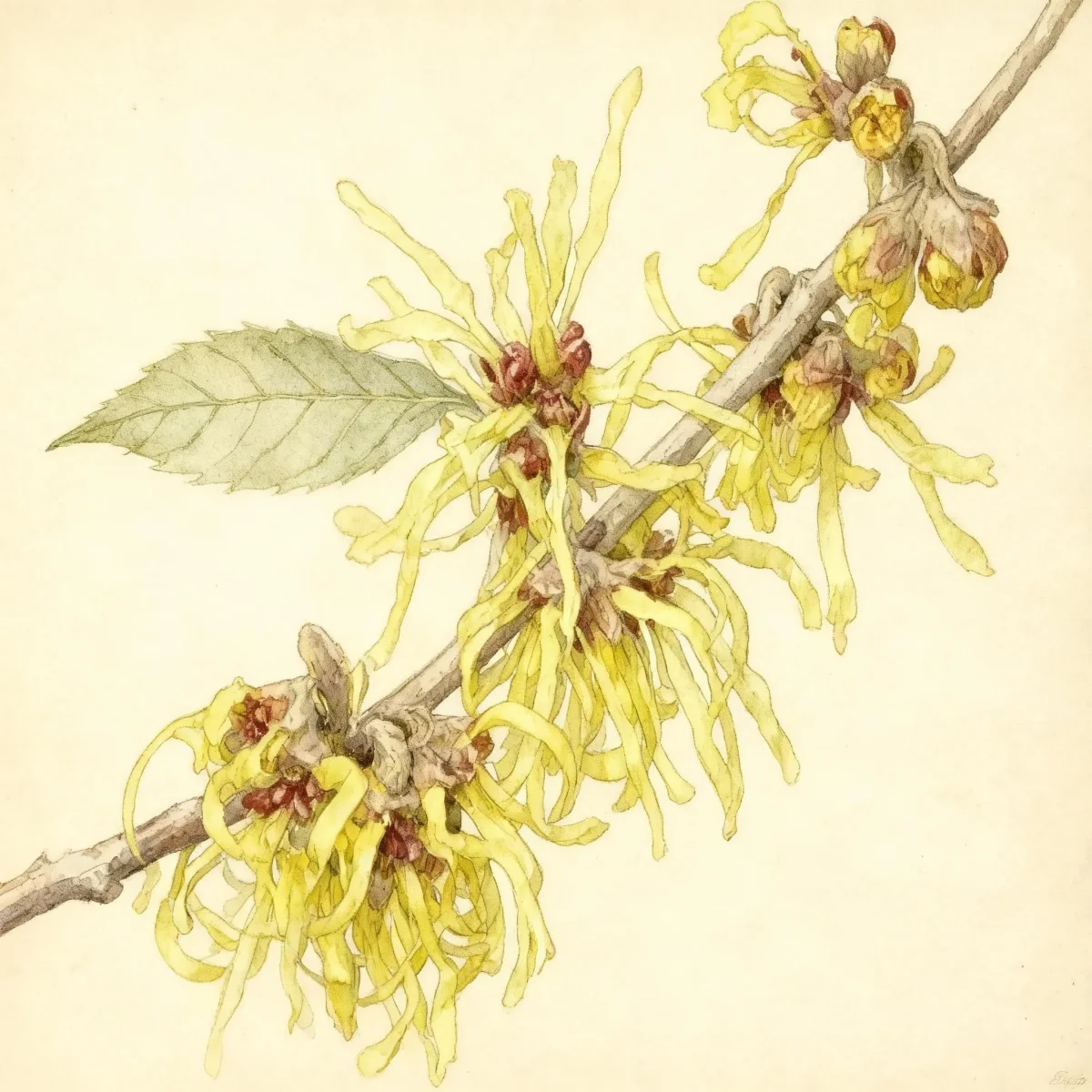
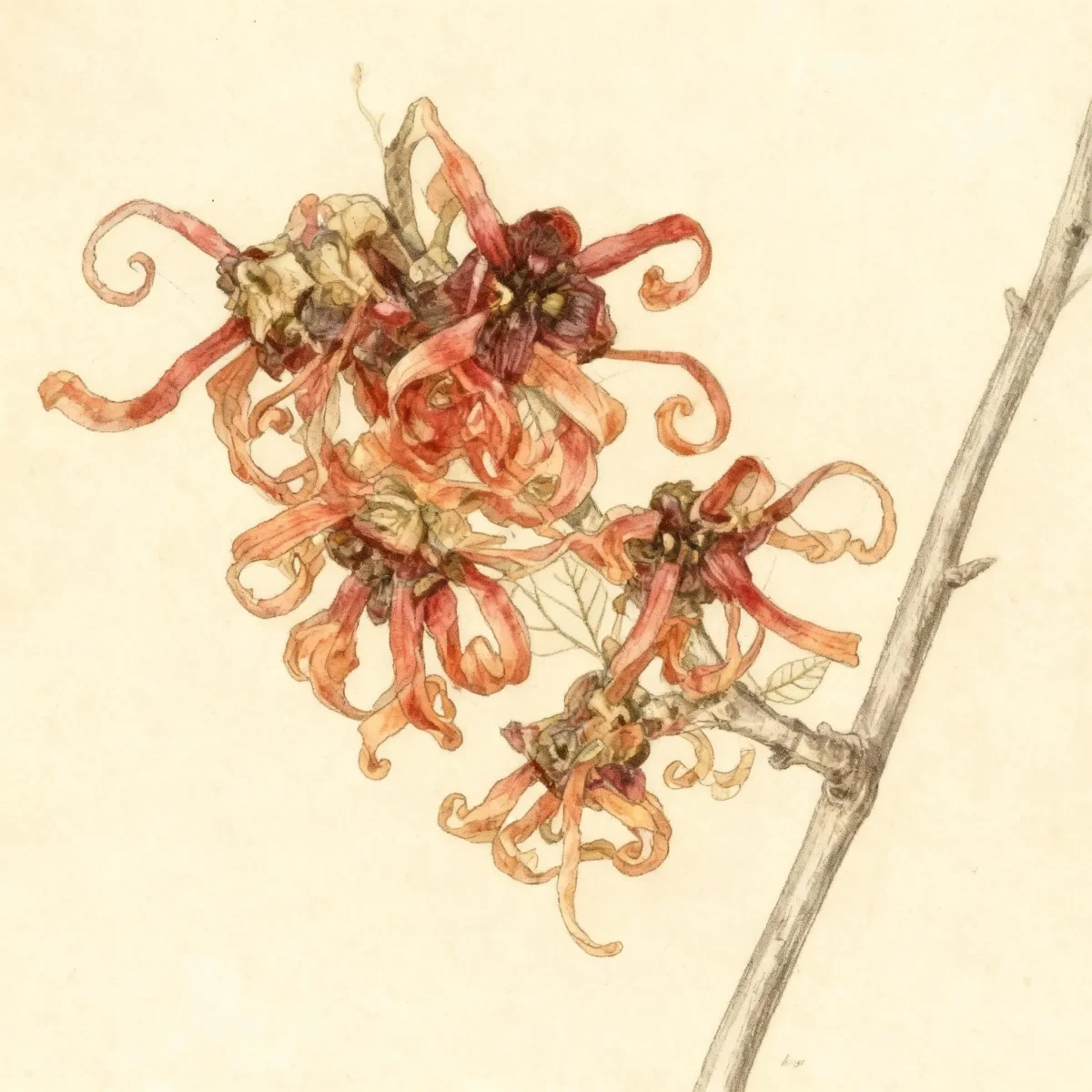
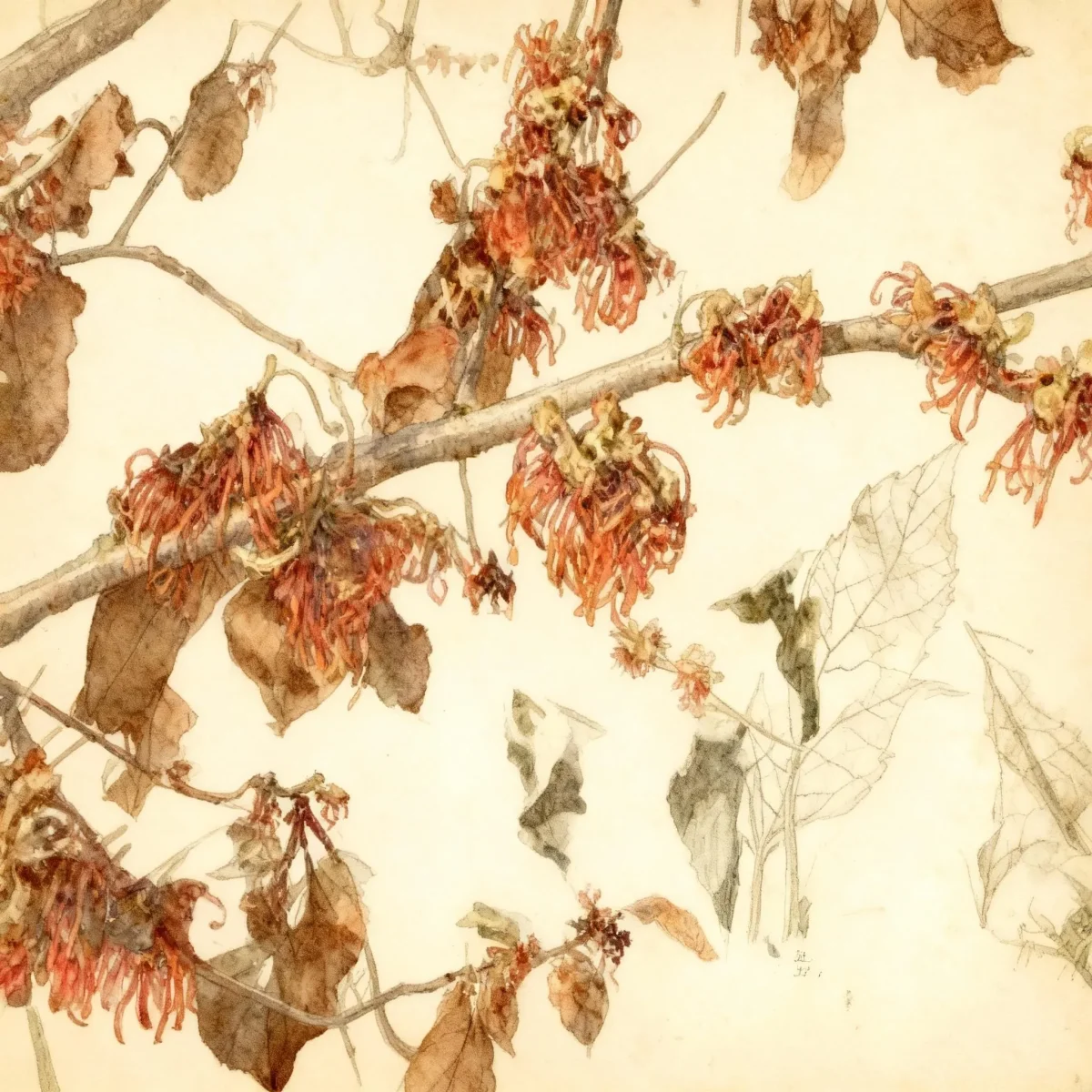
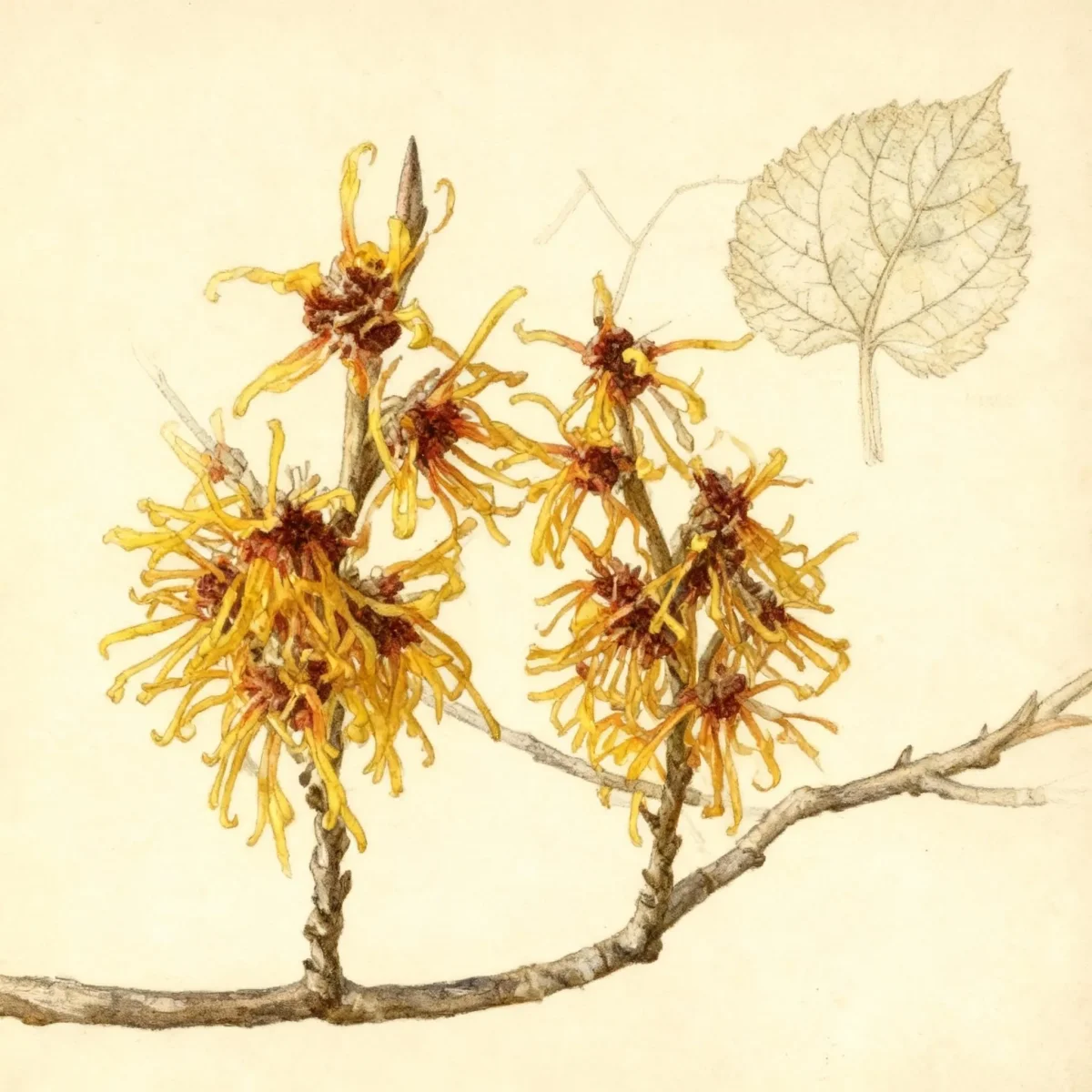
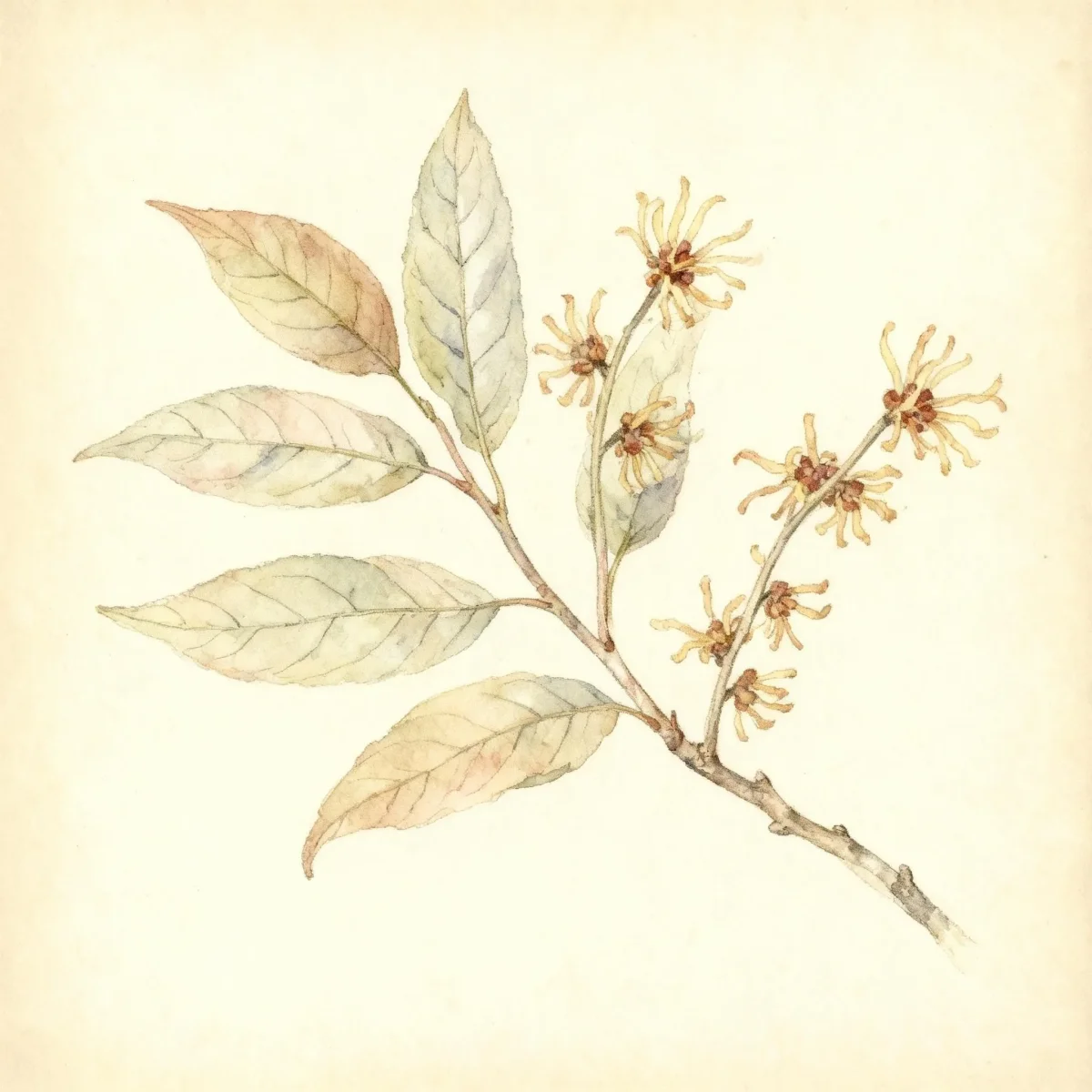
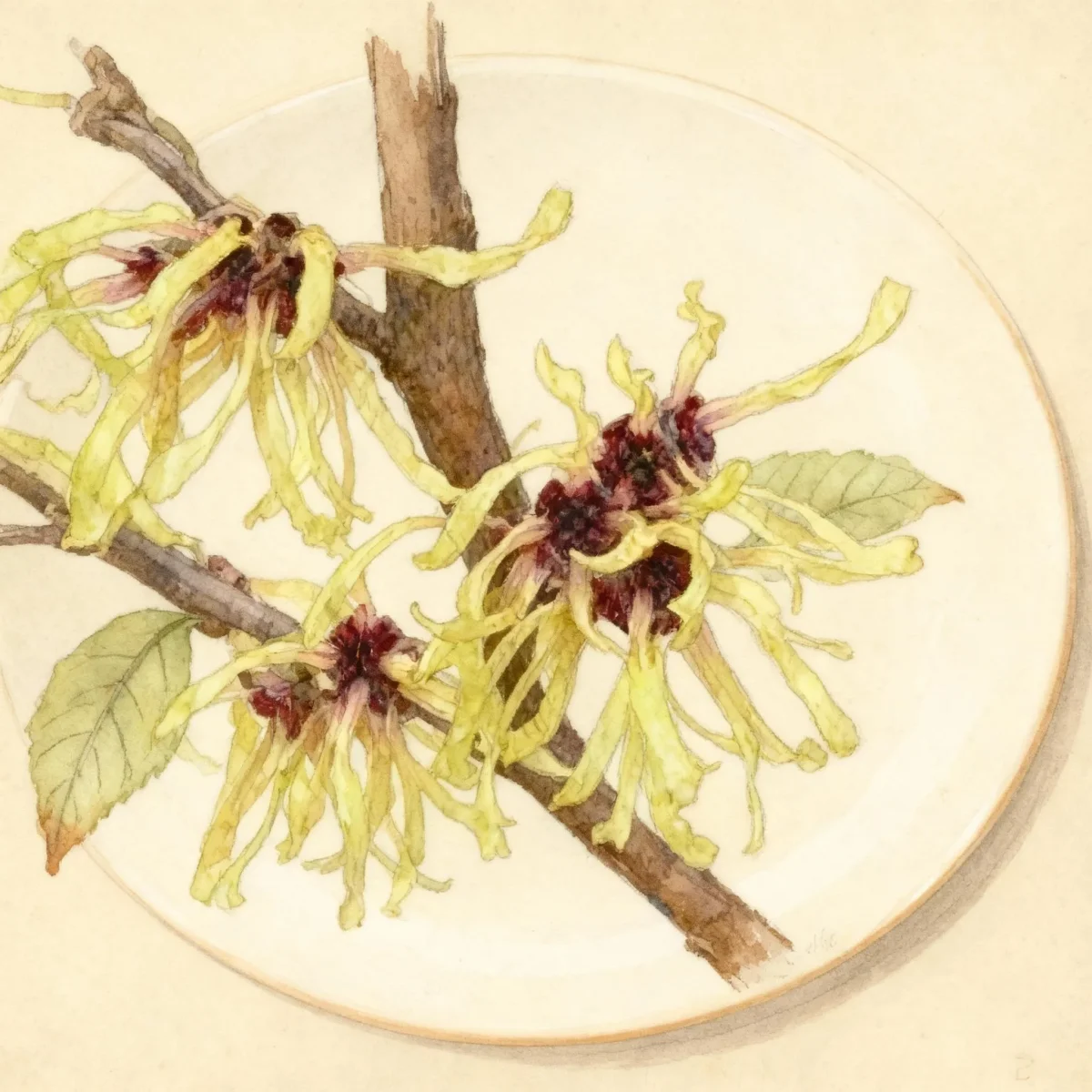
Witch hazel (Hamamelis × intermedia 'Adieu')
Hamamelis × intermedia 'Adieu' Witch hazel offers spectacular late-winter yellow blooms, low maintenance, and tolerance for clay soil.
Scroll down to discover growing tips, care requirements, companion plants, and more
Complete Plant Information
Overview
The Hamamelis × intermedia ‘Adieu’, commonly known as Witch hazel, is highly valued for providing essential structure and color during the dormant season. This deciduous shrub typically explodes with ribbon-like yellow flowers along bare stems from late winter into early spring, long before its deciduous neighbors wake up. As a hybrid between Japanese and Chinese witch hazels, it combines desirable traits, growing into an upright specimen reaching 8 to 11 feet tall. Gardeners appreciate the low maintenance requirements and excellent seasonal interest provided by this Witch hazel cultivar.
Fast Facts
- Plant Family: Hamamelidaceae
- Plant Type: Deciduous shrub
- Hardiness Zones: USDA Zones 5-8
- Size at Maturity:
- Height: 8-11 ft
- Spread: 6-8 ft
- Bloom Time: February to March
- Bloom Description: Yellow with red at base
- Sun Exposure: Full sun to part shade
- Water Needs: Medium
- Maintenance Level: Low
How to Grow
Planting Hamamelis × intermedia ‘Adieu’ is best done in the spring or fall when temperatures are milder. Select a location that receives full sun for the most spectacular flowering, though it tolerates part shade. This shrub thrives in average, medium moisture, well-drained soils, preferring rich soil with high organic content and slightly acidic pH.
Consistent moisture is crucial for establishing your Witch hazel; dry spells during summer may lead to leaf scorch. While the species tolerates clay soils better than many woody ornamentals, excellent drainage must be ensured. Pruning should occur promptly in the spring immediately after the flowering period concludes to shape the plant or manage its size.
A vital aspect of care involves diligently removing any root suckers that emerge, especially those growing from below the graft union, to maintain the desired cultivar characteristics and prevent unwanted colonial spread. Otherwise, maintenance remains low, focusing mainly on yearly monitoring for pests or disease.
Landscape Uses
Hamamelis × intermedia ‘Adieu’ excels as a specimen plant due to its striking winter bloom. Its eventual size makes it suitable for providing structure in the back of shrub borders or acting as a unique screen or tall hedge when planted in a row. The upright habit of this particular Witch hazel allows it to integrate well into woodland gardens where its late-season flowers contrast beautifully with evergreen backdrops. Consider planting it near pathways or seating areas where its mid-winter presence can be fully appreciated.
Standout Features
Flower Qualities
- Showy
Noteworthy Characteristics
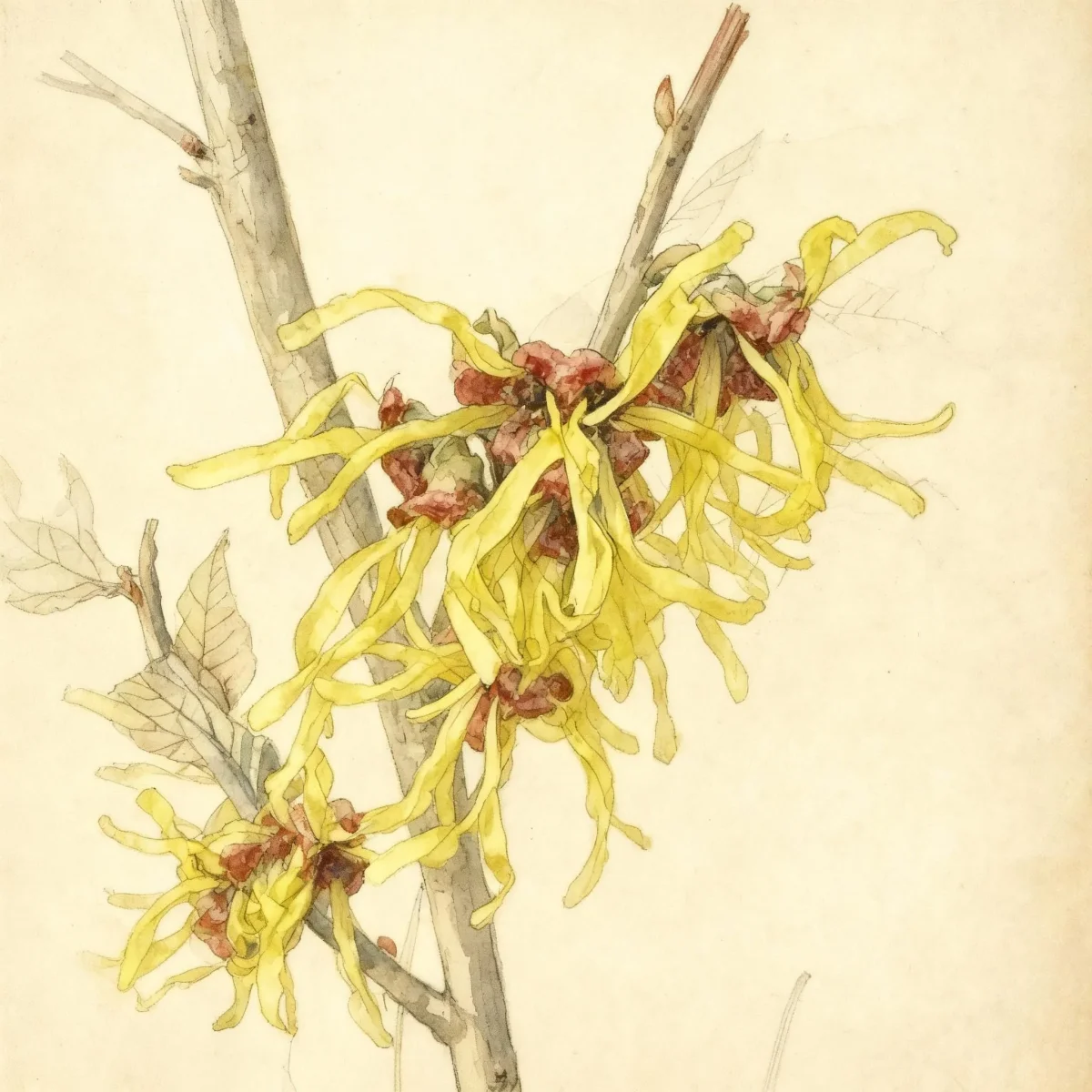
Hamamelis × intermedia hybrids are noted for their spidery, mid- to late-winter flowers that appear before the foliage emerges. The cultivar ‘Adieu’ typically matures as an upright shrub, noted for its showy, non-fragrant flowers featuring narrow, curled, yellow petals often flushed with red at the base. The autumn leaf color transitions to yellow, offering a final seasonal flourish before leaf drop.
Tolerances
- Deer
- Erosion
- Clay Soil
- Air Pollution
Potential Problems
Common issues involve chewing insects like caterpillars and Japanese beetles damaging the leaves during the growing season. Aphids, scale insects, leafrollers, and leafminers can also be present, though rarely cause systemic harm to a healthy Hamamelis × intermedia ‘Adieu’. Fungal issues remain relatively minor, typically appearing as powdery mildew or occasional leaf spots, usually requiring no chemical intervention if air circulation is adequate.
Frequently Asked Questions
What hardiness zones is Witch hazel suitable for?
Hamamelis × intermedia ‘Adieu’ is reliably hardy in USDA Zones 5 through 8, thriving across a wide range of temperate climates.
How large does Hamamelis × intermedia ‘Adieu’ grow?
This cultivar typically reaches a mature height between 8 and 11 feet, with a spread generally ranging from 6 to 8 feet wide.
When does Witch hazel bloom?
This spectacular Witch hazel provides bloom time generally from February through March, putting on a show before spring emergence.
What sun exposure does Hamamelis × intermedia ‘Adieu’ need?
For optimal winter flowering, full sun exposure is recommended, although the plant will grow adequately in partial shade conditions.
Conclusion
The Hamamelis × intermedia ‘Adieu’ provides unmatched seasonal interest, transforming the bleak mid-winter landscape with its unique floral display. As a vigorous, low-maintenance Witch hazel, it is an indispensable element for winter structure. Plan your planting location carefully to ensure adequate space and consistent moisture, and enjoy years of reliable color from this superb deciduous shrub.
Companion Planting
Selecting appropriate companions for Hamamelis × intermedia ‘Adieu’ helps ensure its best performance throughout the year. Since Witch hazel prefers moist, well-drained soil, pair it with other acid-loving, moisture-tolerant woodland natives. Early spring bulbs like snowdrops or crocus provide foreground interest during the Hamamelis bloom time but will die back before competing for summer moisture. In the fall, consider planting late-blooming asters or sedums nearby to transition the garden interest smoothly before the Witch hazel flowers return.
Design Ideas
Utilize the upright habit of this cultivar to layer plantings effectively. Place Hamamelis × intermedia ‘Adieu’ behind shorter, evergreen foundation shrubs like dwarf rhododendrons or boxwoods to provide a contrast in texture and maintain winter structure. Its presence near an east-facing wall or large window captures the pale yellow flowers beautifully on dark winter afternoons, maximizing the visual impact of this reliable landscape shrub.