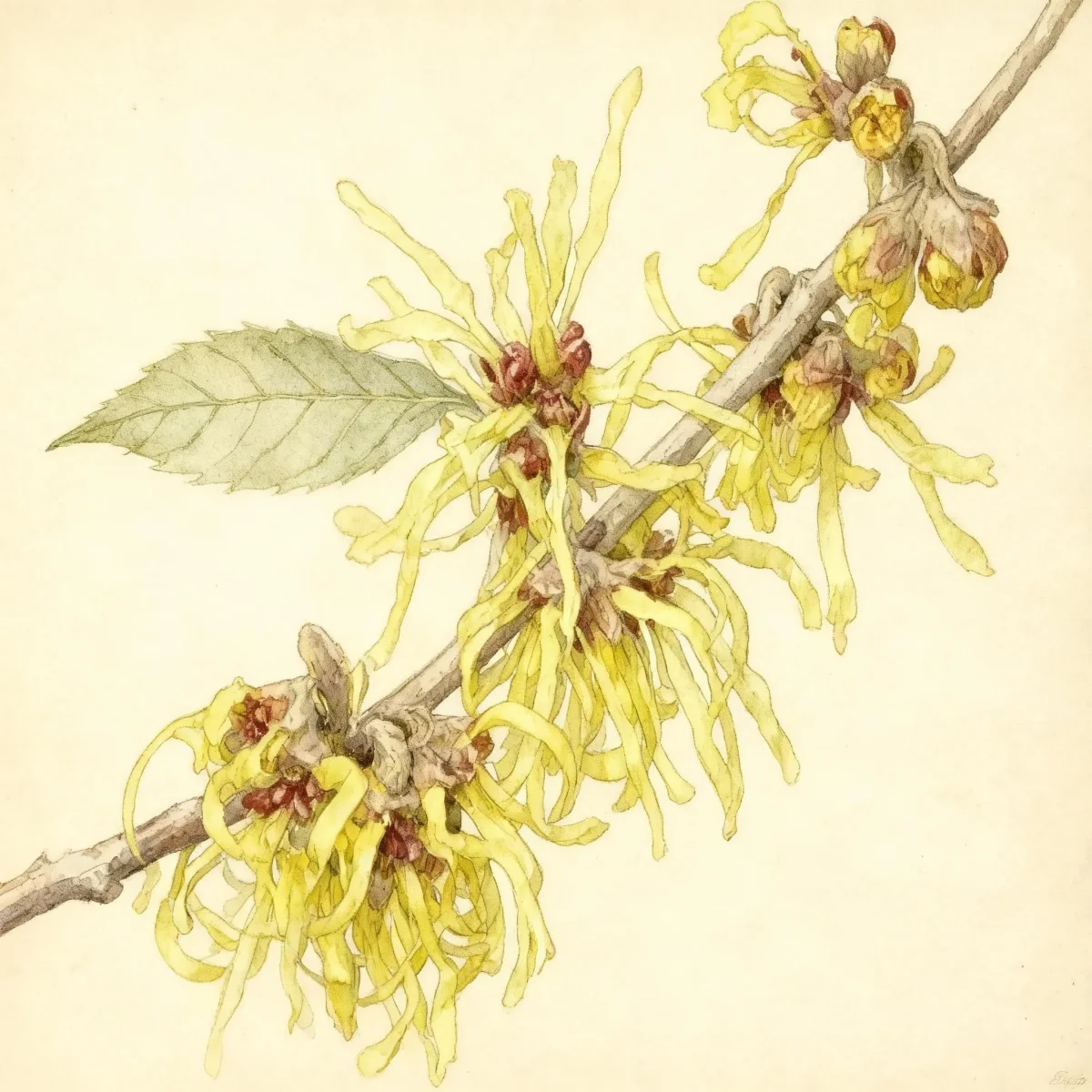
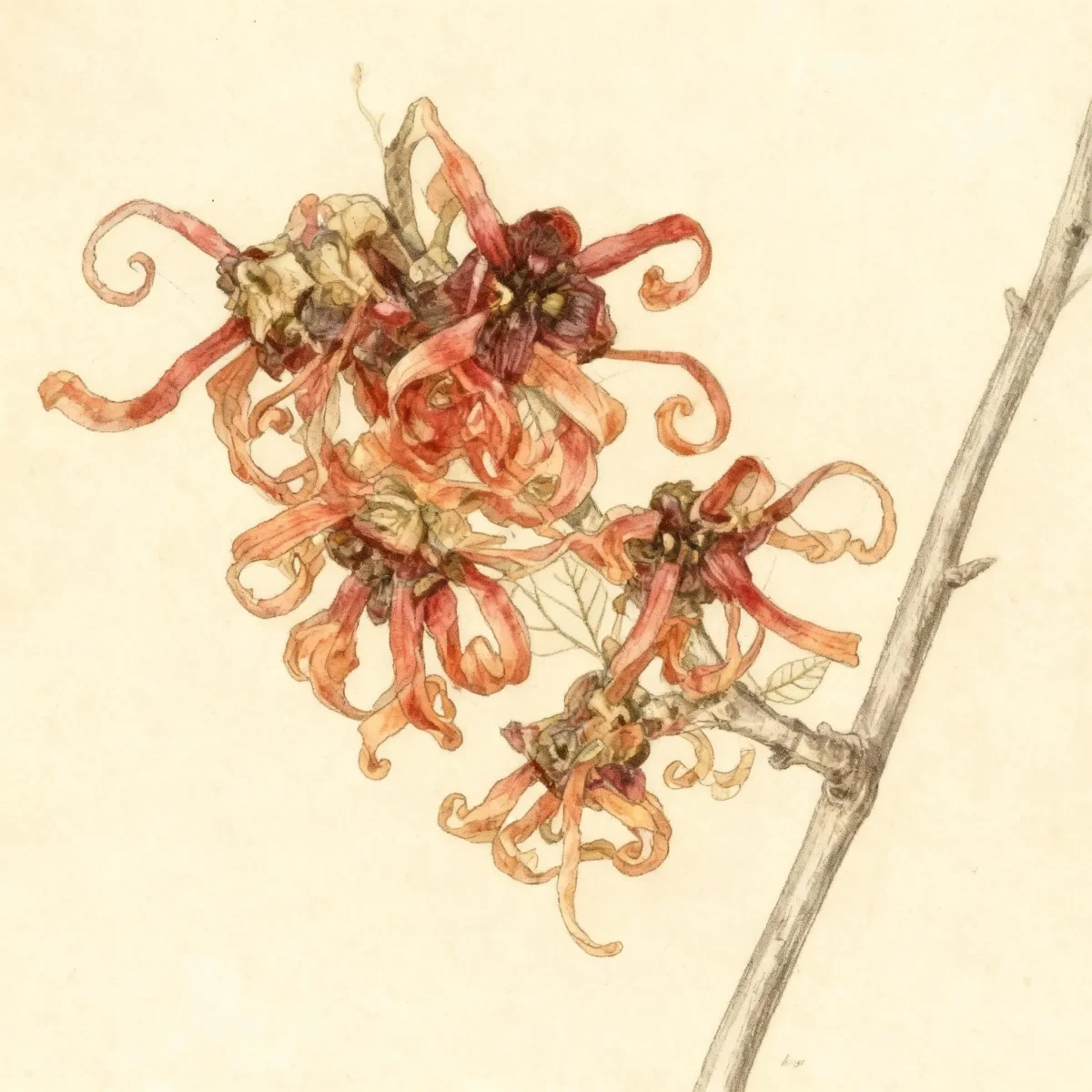
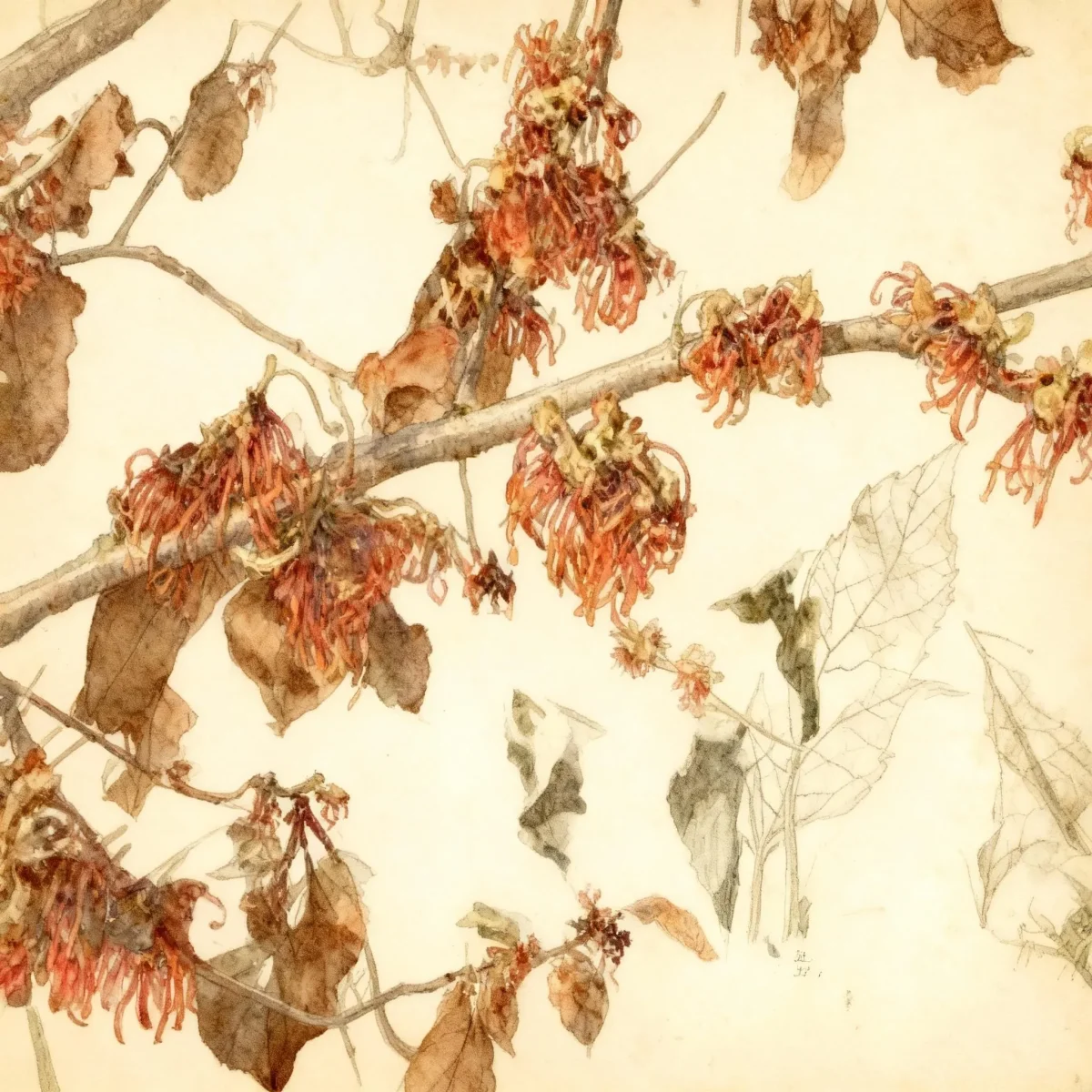
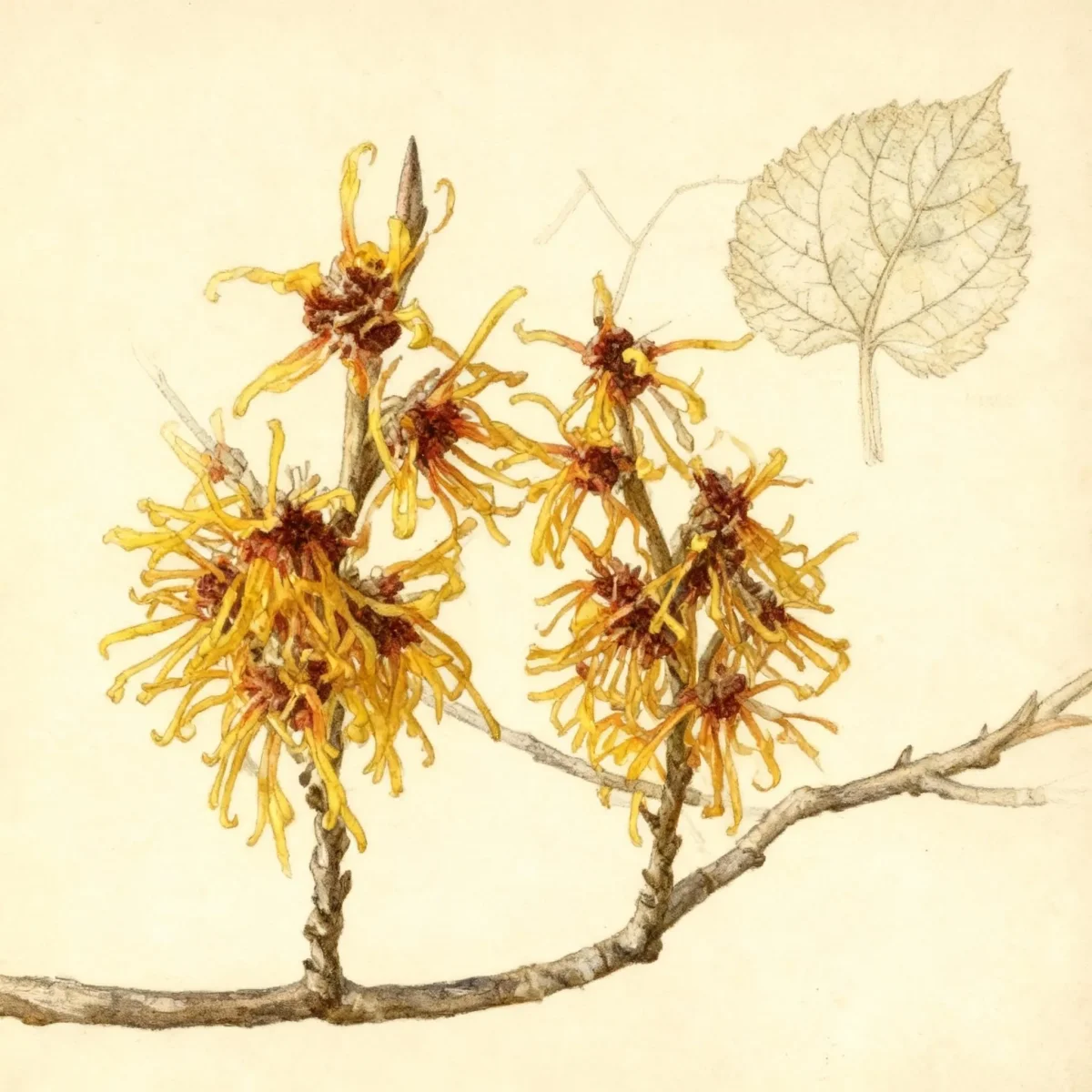
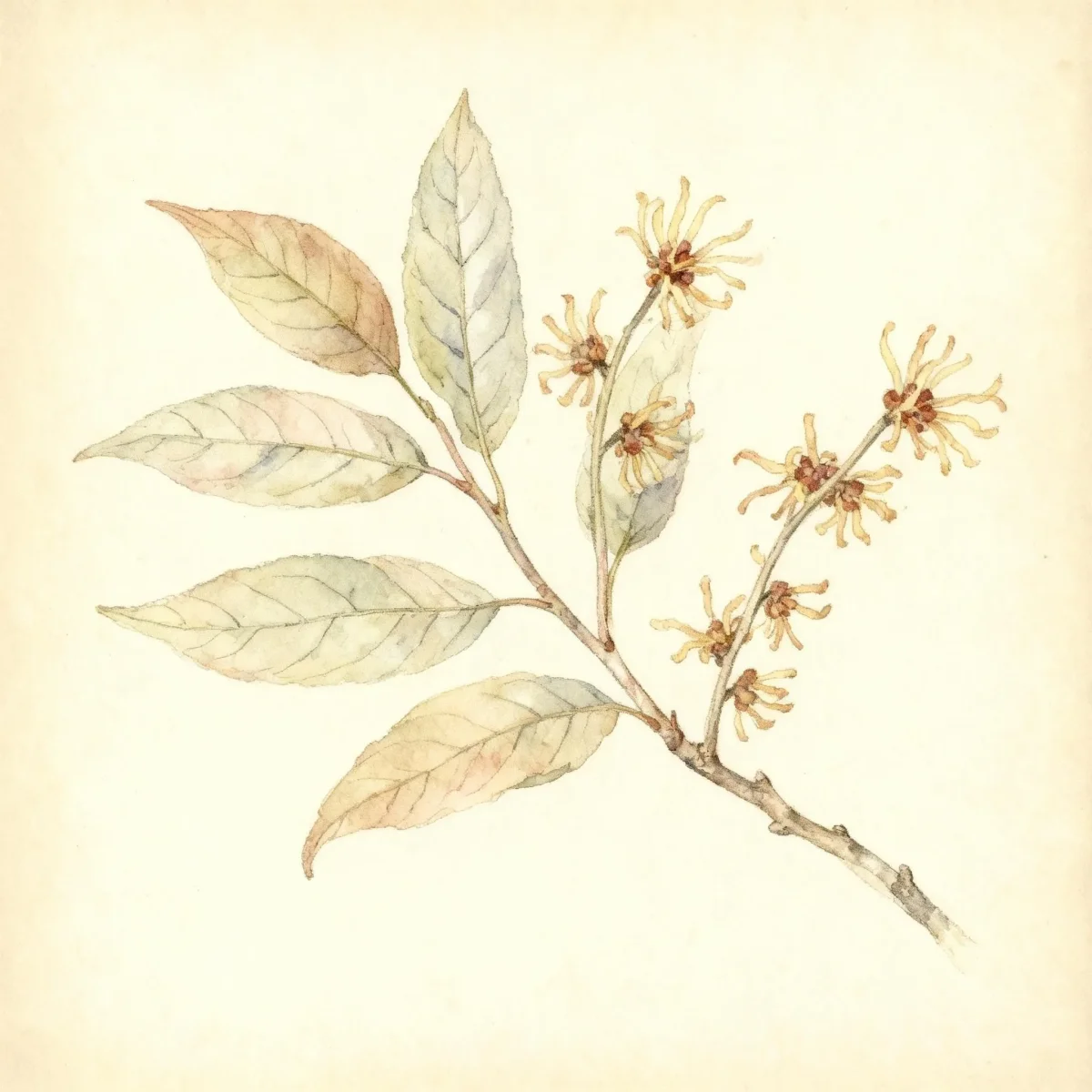
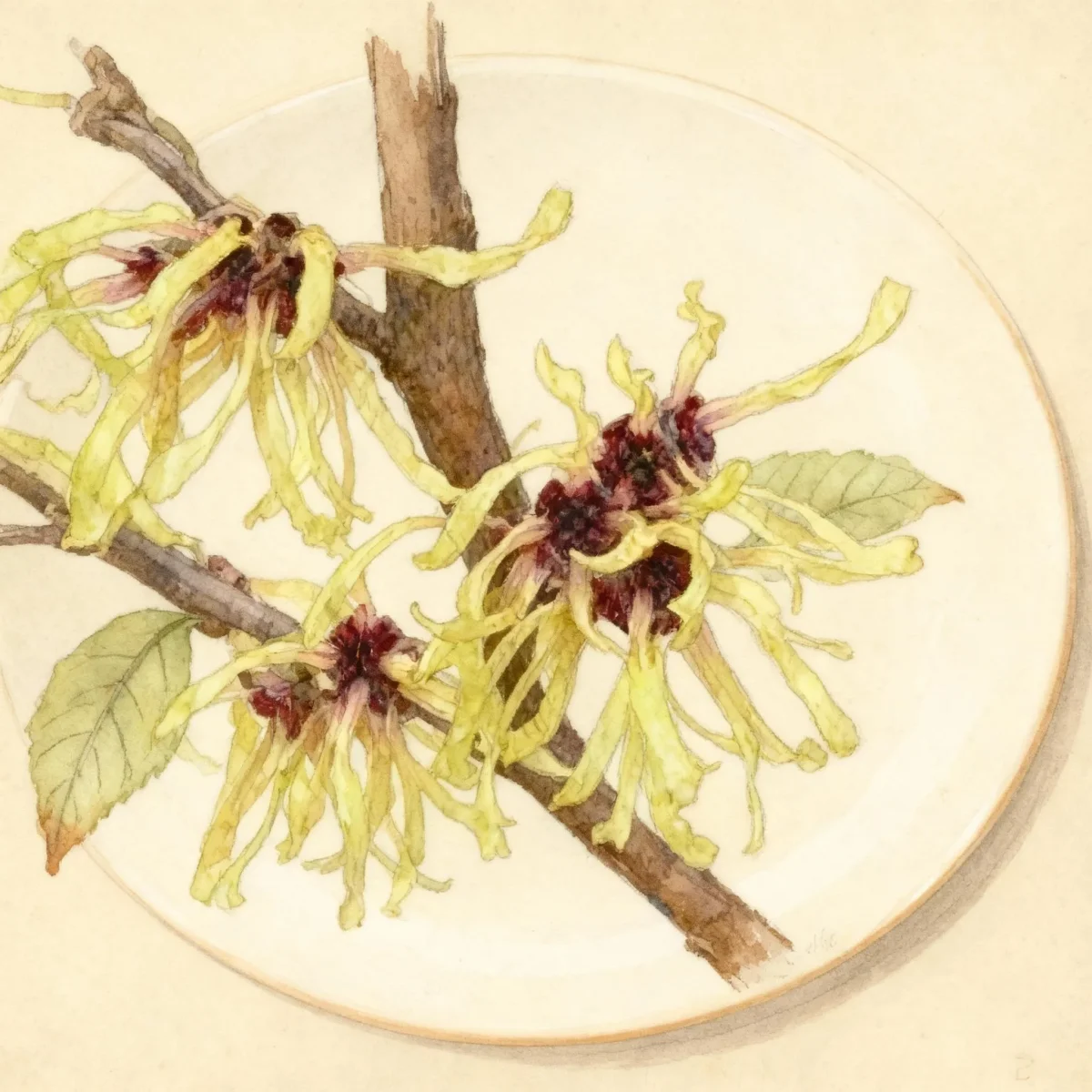
Witch hazel (Hamamelis × intermedia 'Georges')
Discover Hamamelis × intermedia 'Georges' Witch hazel, a striking deciduous shrub offering reliable, spidery red winter blooms and excellent fall color.
Scroll down to discover growing tips, care requirements, companion plants, and more
Complete Plant Information
Overview
Hamamelis × intermedia ‘Georges’, commonly known as Witch hazel, provides spectacular winter interest when most other plants are dormant. This vigorous hybrid is highly valued for its unusual, ribbon-like flowers that burst forth along bare branches in the coldest months. As an upright, medium-to-large deciduous shrub, the Hamamelis × intermedia ‘Georges’ offers reliable structure throughout the year.
Cultivating this Witch hazel ensures a multi-season display; beyond the mid-winter flowering period, it also delivers attractive foliage that transitions to warm maroon, yellow, and red tones in autumn. Its relatively low maintenance and ability to tolerate certain challenging soils make Hamamelis × intermedia ‘Georges’ an excellent choice for permanent landscape structure.
These hybrids bridge the gap between Asian species, resulting in robust plants noted for their unique, spidery blooms that brighten the winter landscape. Gardeners prize this cultivar specifically for its intense red flower coloration.
Fast Facts
- Plant Family: Hamamelidaceae
- Plant Type: Deciduous shrub
- Hardiness Zones: USDA Zones 5-8
- Size at Maturity:
- Height: 10-12 ft
- Spread: 6-9 ft
- Bloom Time: January to March
- Bloom Description: Red petals
- Sun Exposure: Full sun to part shade
- Water Needs: Medium
- Maintenance Level: Low
How to Grow
The best time to plant this Witch hazel is during fall or early spring while the plant is dormant. Locate the Hamamelis × intermedia ‘Georges’ where it receives full sun, as this maximizes flower production, though it tolerates partial shade. This species prefers moist, acidic, organically rich soils but demonstrates some tolerance for clay soils, provided drainage remains excellent.
Consistent moisture is crucial, especially during summer, as periods of drought can lead to leaf scorch. While low maintenance overall, prompt removal of root suckers arising below the graft union is important to maintain the desired upright form of the Hamamelis × intermedia ‘Georges’.
Pruning should be performed sparingly, ideally in the spring immediately after the flowering period concludes. This timing ensures you do not remove next year’s potential bloom buds. Pruning helps control size and maintain an open shape to showcase the winter flowers.
Landscape Uses
The robust size and unique flowering time make this Witch hazel an exceptional choice as a specimen plant, drawing the eye during deep winter. It functions splendidly as a screen or a tall hedge, offering density and structure well beyond the growing season.
Consider planting Hamamelis × intermedia ‘Georges’ in woodland gardens or mixed shrub borders where its bare-branch display can contrast with evergreen plantings nearby. Its eventual height and spread mean it requires thoughtful placement away from immediate foundation walls but provides excellent vertical definition in larger landscapes.
Standout Features
Flower Qualities
- Showy
Noteworthy Characteristics
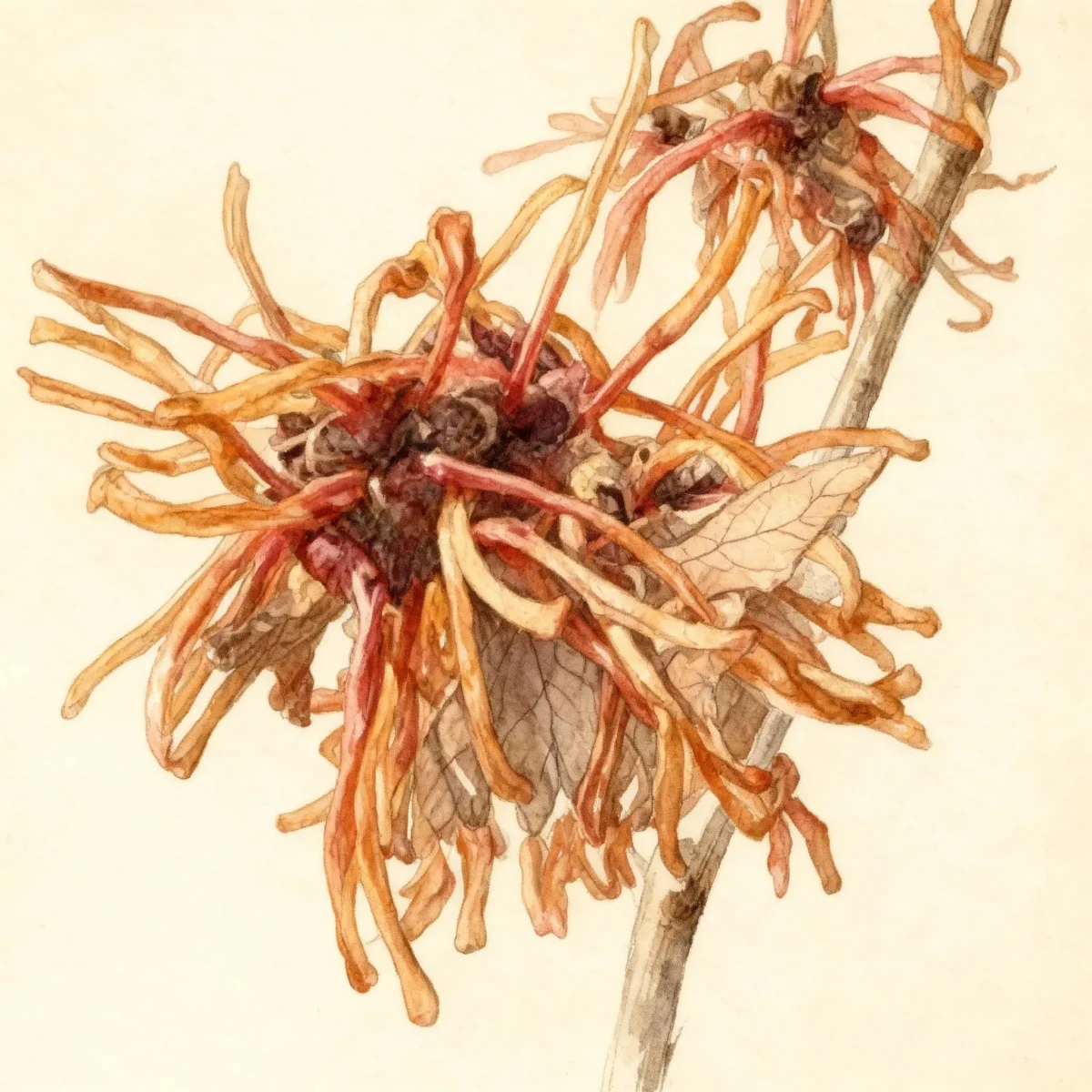
Hamamelis × intermedia hybrids represent crosses between the Japanese and Chinese witch hazels, resulting in medium to large, loosely-branched deciduous shrubs. They are highly valued for their distinctive, often spidery mid- to late-winter flowers that appear before any spring foliage emerges. The cultivar ‘Georges’ specifically features flowers with narrow, ribbon-like, red petals that can deepen to coppery-red at the tips. Mature Hamamelis × intermedia ‘Georges’ typically develops an upright form, reaching 10 to 12 feet tall and 6 to 9 feet wide, with medium green summer leaves that turn attractive maroon and orange shades in the fall.
Tolerances
- Deer
- Erosion
- Clay Soil
Potential Problems
While generally hardy, Hamamelis × intermedia ‘Georges’ may occasionally attract leaf-chewing pests like Japanese beetles or caterpillars during the active growing season. Gardeners should also monitor for subtle signs of scale, gall aphids, or leafminers, although these issues rarely require aggressive chemical intervention. The primary concern is ensuring proper soil moisture management, as lack of water can lead to unsightly summer leaf scorch.
Frequently Asked Questions
What hardiness zones is Witch hazel suitable for?
This variety of Witch hazel is suitable for USDA Hardiness Zones 5 through 8.
How large does Hamamelis × intermedia ‘Georges’ grow?
It typically matures to a height between 10 and 12 feet tall, with a spread ranging from 6 to 9 feet wide.
What sun exposure does Witch hazel need?
For the best flowering displays, Hamamelis × intermedia ‘Georges’ benefits from full sun exposure, although it can successfully grow in part shade.
When does Witch hazel bloom?
This showy shrub produces its unique flowers from January through March, offering brilliant color when few other plants are flowering.
Conclusion
The Hamamelis × intermedia ‘Georges’ stands out as an indispensable shrub, primarily for its rare ability to provide vibrant, nearly fluorescent red blooms in the depths of winter. Its moderate maintenance requirements and respectable hardiness make this Witch hazel a dependable feature plant. Check your local hardiness zone and plan to plant this spectacular specimen this fall for guaranteed mid-winter cheer.
Companion Planting
When planning a border featuring Witch hazel, select companions based on complementary timing or texture. Because Hamamelis × intermedia ‘Georges’ flowers so early, pairing it near evergreen shrubs like Holly (Ilex species) or Boxwood (Buxus) offers strong structural contrast against the bare stems. In spring, as the Hamamelis foliage emerges, early bulbs like Muscari or Narcissus provide excellent groundcover interest before the shrub fully leafs out. Ensure companions share the preference for medium moisture and well-drained soil profiles.
Seasonal Care Calendar
Late Winter (January–March): Enjoy the primary attraction—the red flowers of your Hamamelis × intermedia ‘Georges’. Avoid pruning during this time. Mid-Spring (April–May): Monitor aggressively for root suckers rising beneath the graft union and remove them immediately to maintain desired cultivar characteristics. Early Summer (June–July): Pay close attention to soil moisture levels; provide deep watering if extended dry periods occur to prevent leaf scorch, especially for younger plants. Late Summer/Fall (August–November): Allow the foliage to display its rich maroon and orange fall color. Late Fall (Post-Leaf Drop): Apply a layer of organic mulch around the base, keeping it away from the main trunk, to help conserve moisture and moderate soil temperatures heading into winter.