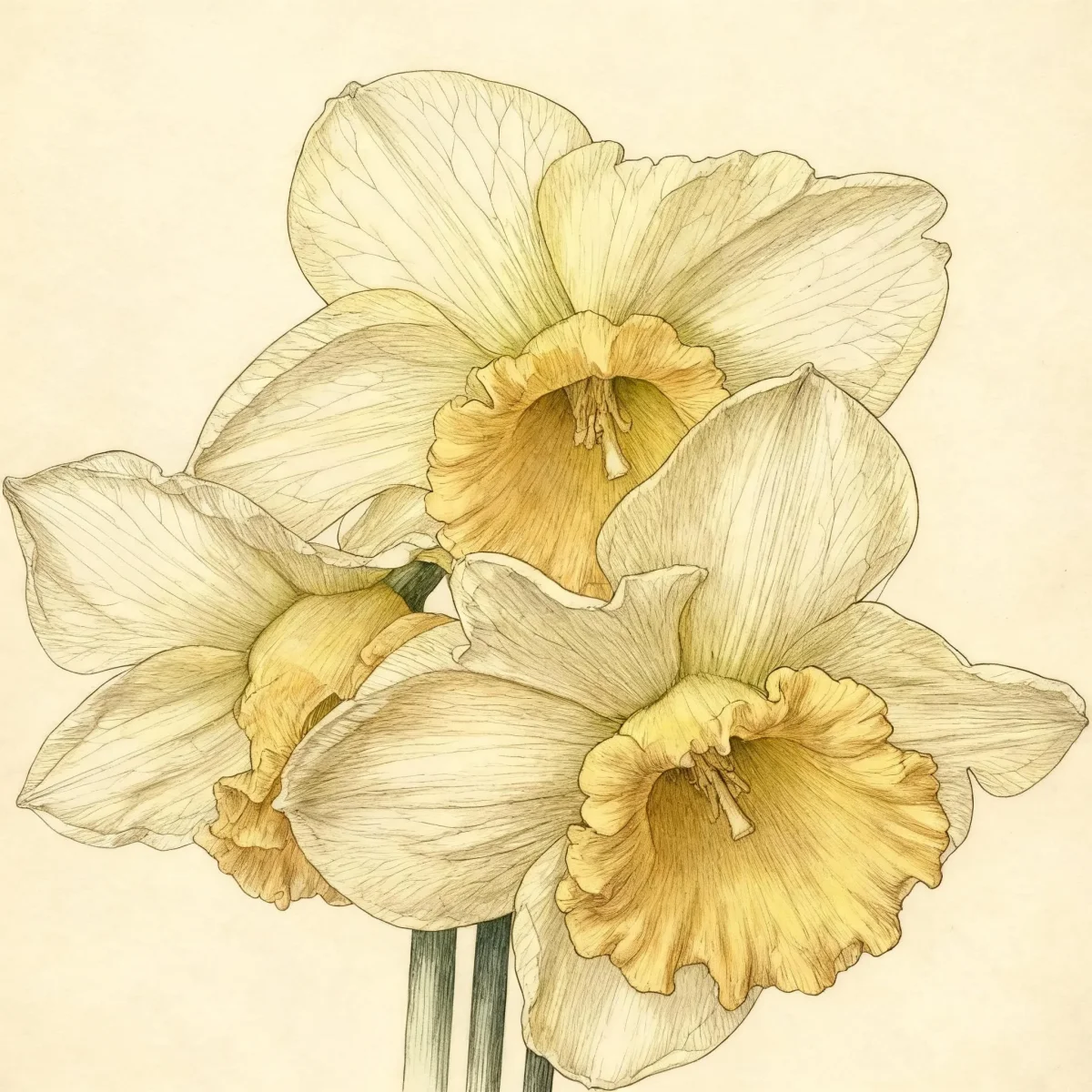
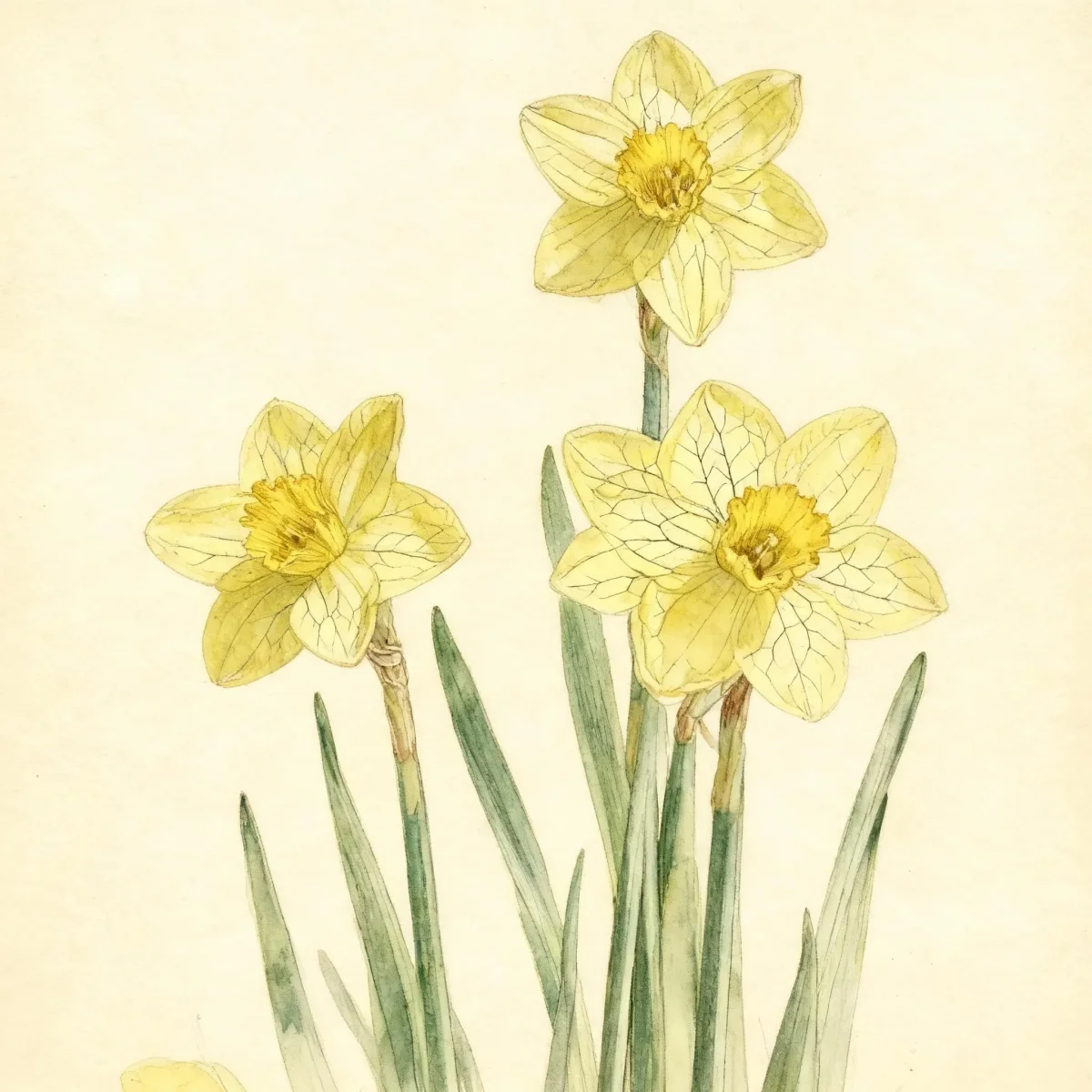
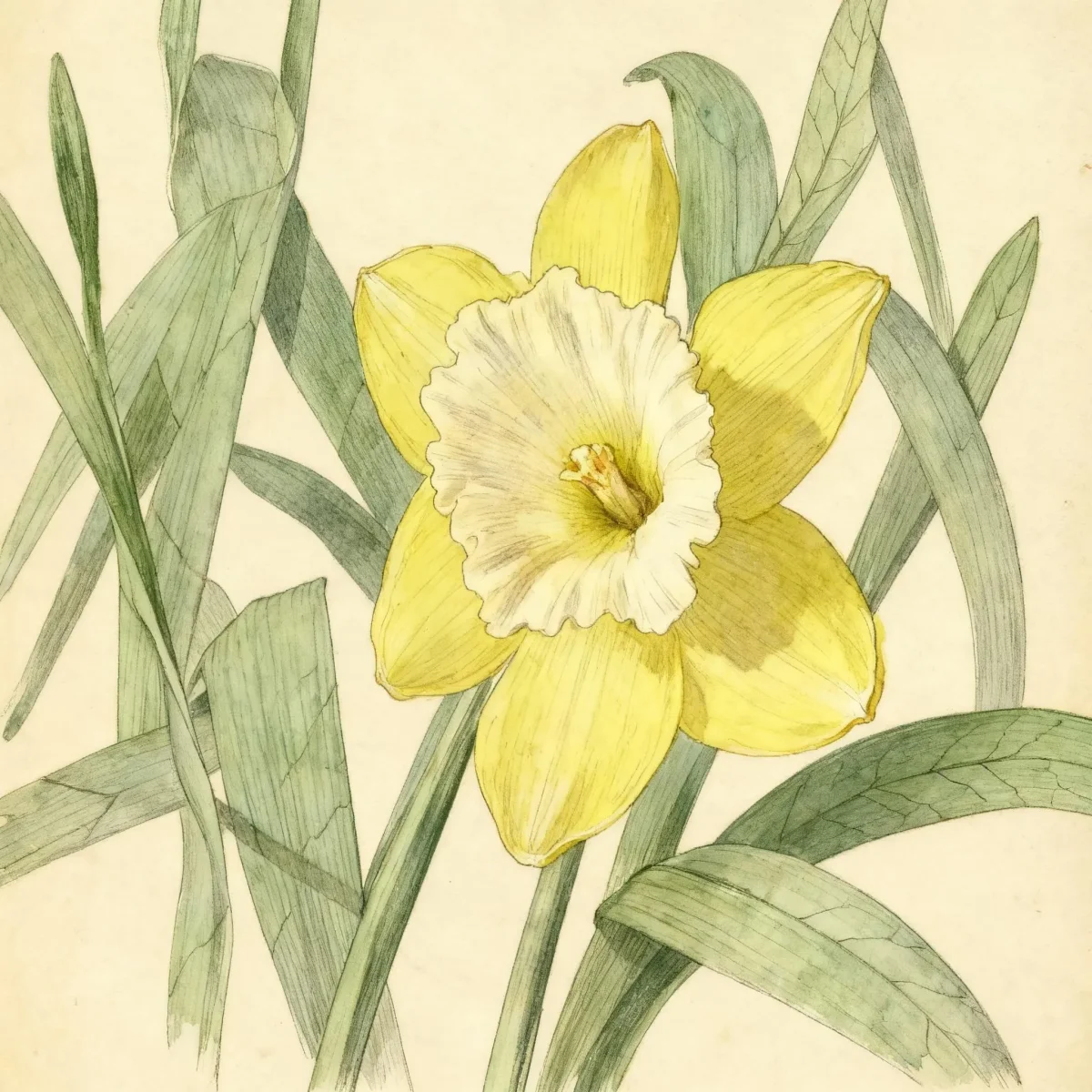
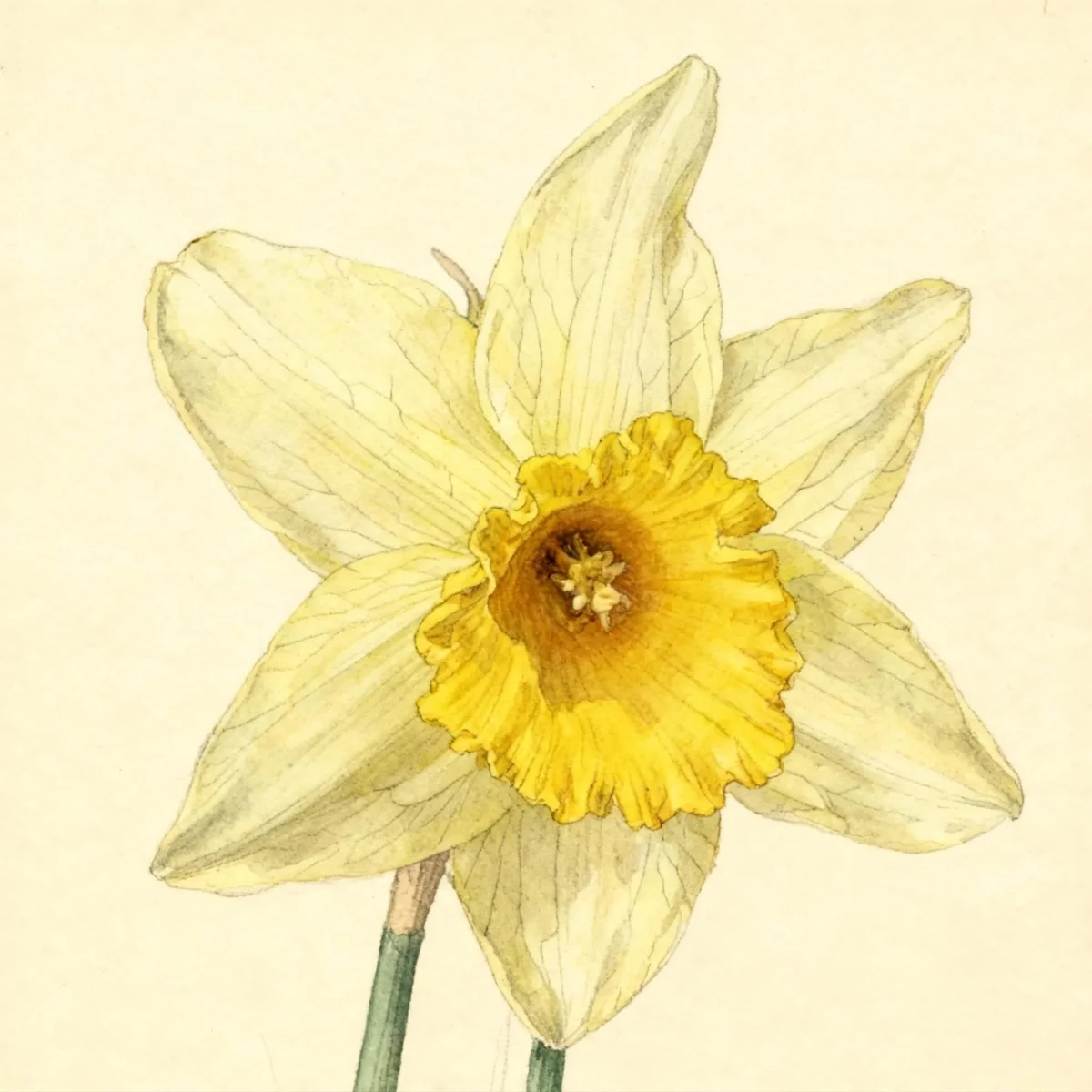
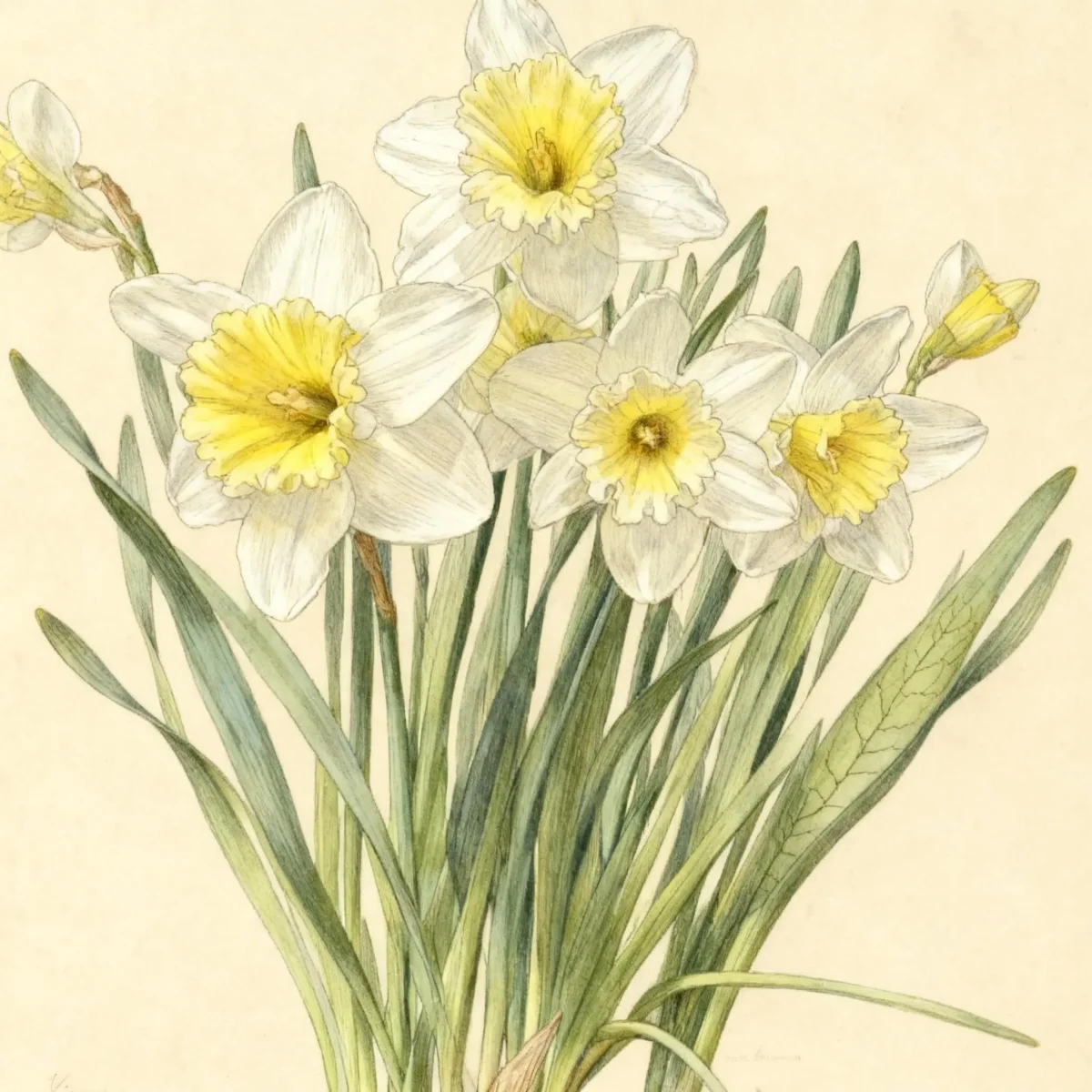
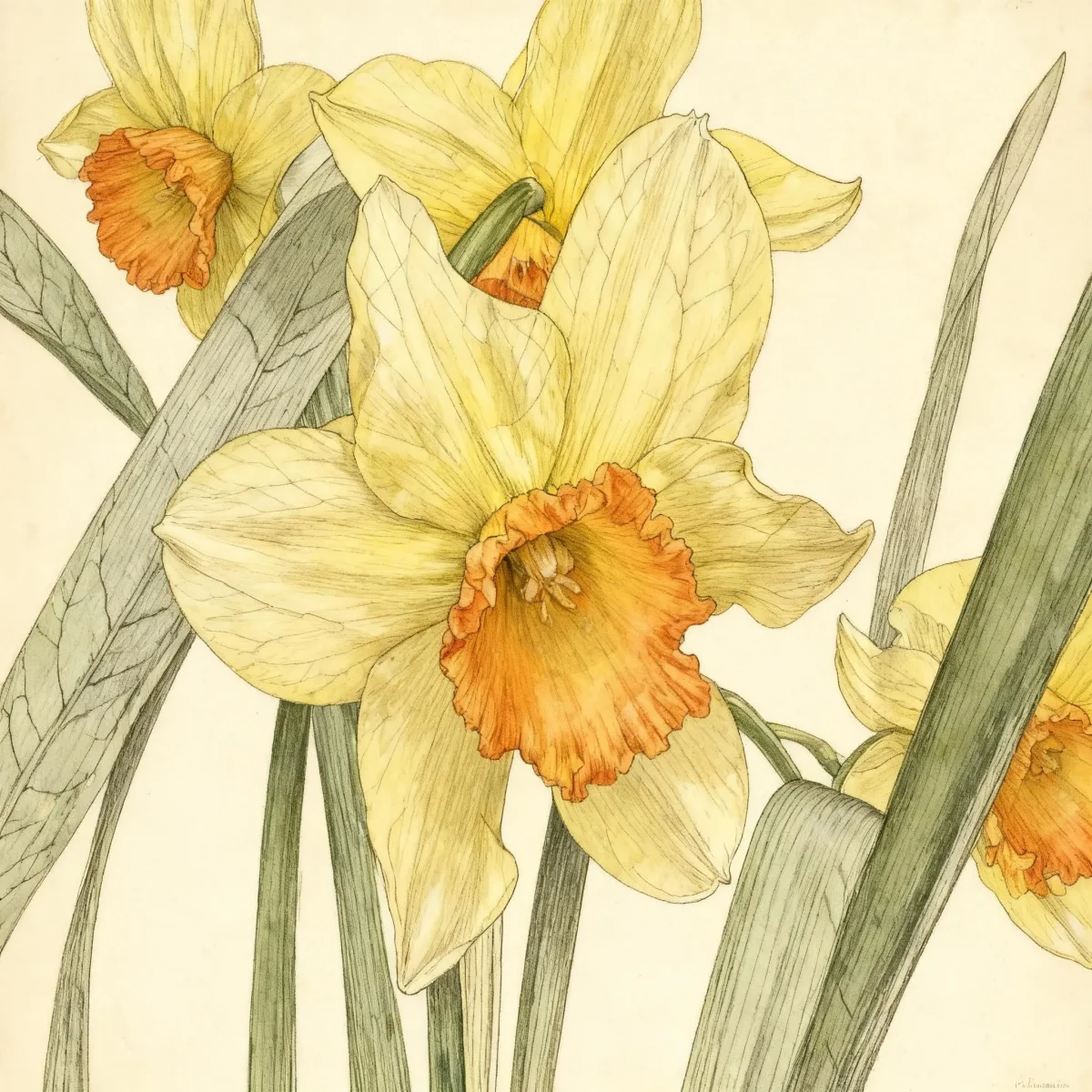
Large-cupped daffodil (Narcissus 'Easter Morn')
Narcissus 'Easter Morn' is a stately Large-cupped daffodil featuring white blooms, perfect for low-maintenance spring displays.
Scroll down to discover growing tips, care requirements, companion plants, and more
Complete Plant Information
Overview
Narcissus ‘Easter Morn’ is a highly valued addition to the early to mid-spring garden, celebrated for its classic structure and clean coloration. As a member of Division II, this Large-cupped daffodil displays a cup (corona) that is longer than one-third but shorter than the full length of the petals (perianth segments). Gardeners appreciate Narcissus ‘Easter Morn’ for its reliable performance, low maintenance requirements, and striking presentation of pure white petals surrounding a matching white cup, sometimes with a pink tinge.
These bulbs establish themselves gracefully, reaching heights between 1 and 1.5 feet, providing excellent vertical accent in spring bulb arrangements. They thrive in average, well-drained soils, offering robust color before many other perennials awaken. The ease of care associated with this daffodil ensures that it returns year after year, making it a superb choice for naturalizing in drifts or using in formal borders.
For optimal impact, plant Narcissus ‘Easter Morn’ in quantity where their individual beauty contributes to a sweeping display of white in April. They require minimal fuss once established, providing reliable, pest-free cheer, which solidifies the status of this Large-cupped daffodil as a spring garden essential.
Fast Facts
- Plant Family: Amaryllidaceae
- Plant Type: Bulb
- Hardiness Zones: USDA Zones 3-8
- Size at Maturity:
- Height: 1-1.5 ft
- Spread: 0.5-1 ft
- Bloom Time: April
- Bloom Description: White petals and white cup
- Sun Exposure: Full sun to part shade
- Water Needs: Medium
- Maintenance Level: Low
How to Grow
Planting Narcissus ‘Easter Morn’ bulbs is best achieved in the early to mid-fall, ensuring they have time to establish roots before the ground freezes. Site them where they receive full sun to partial shade, recognizing that the flowers tend to face the brightest light source, so place any shade areas toward the back of the viewing location. They require average, medium-moisture, well-drained soil; excellent drainage is crucial to prevent bulb rot. Plant each bulb two to three times as deep as the bulb is tall, ensuring at least 3 inches of soil covers the top, spacing larger bulbs 8–10 inches apart and smaller ones closer to 4 inches apart.
Care during the growing season involves keeping the soil uniformly moist, though once established, this Large-cupped daffodil gracefully handles periods of drought while dormant. After the stunning April blooms fade, deadhead the flowers to prevent seed formation, but absolutely allow the foliage to remain intact until it yellows naturally. Cutting the leaves prematurely depletes the energy reserves stored in the bulb for next year’s display.
These bulbs can remain undisturbed for many years, forming increasingly large clumps. If the bulb quality or quantity declines significantly over time, divide the clumps immediately after the foliage has completely died back, allowing you to refresh the planting or share the bounty of Narcissus ‘Easter Morn’.
Landscape Uses
Daffodils, unlike tulips, are prized because they offer excellent perennial performance, making them ideal for long-term landscape planning. Narcissus ‘Easter Morn’ excels when planted in generous groupings, from small clusters of six up to sweeping drifts that celebrate the arrival of spring. They look fantastic massed under developing trees or in open woodland areas where the light shifts throughout the season.
Consider using this white Large-cupped daffodil along the front edges of perennial borders, where their clean flowers contrast beautifully with emerging emerging foliage from later-blooming perennials. They mix exceptionally well with other spring-flowering bulbs, such as early tulips or grape hyacinths, providing layers of texture and bloom time succession. Allowing Narcissus ‘Easter Morn’ to naturalize in lawns or meadow-like settings is another effective design strategy, providing seasonal interest without annual replanting.
Standout Features
Flower Qualities
- Showy
Noteworthy Characteristics
Narcissus is a genus featuring about 50 species of bulbous perennials originating from Europe and North Africa, serving as a cornerstone of the spring garden. Flowers generally manifest a trumpet or cup (the corona) surrounded by six petals (perianth segments) in various colors, and blooms appear either singly or in clusters atop vertical stems. ‘Easter Morn’ is classified as a large-cupped daffodil (Division II), characterized by a cup length greater than one-third but less than the petal length, with this specific cultivar rising 14-16 inches tall in mid-season April. The foliage consists of narrow, strap-shaped, green leaves rising in erect clumps, providing a neat finish after the beautiful white flowers have passed.
Tolerances
- Rabbit
- Deer
- Drought
Potential Problems
Daffodils, including Narcissus ‘Easter Morn’, generally exhibit excellent pest and disease resistance when planted in appropriate, well-drained soil conditions. The primary cultural issue observed is bulb rot, which stems directly from overly wet or poorly aerated soil, emphasizing the need for sharp drainage during fall planting. Infrequently, gardeners might encounter pests such as slugs, snails, narcissus bulb fly, or narcissus nematode, though these rarely cause severe damage if the culture is correct. Keep an eye out for Narcissus yellow stripe virus, an infrequent concern, and remember that deer and rabbits typically avoid consuming these bulbs due to the presence of natural toxins.
Frequently Asked Questions
What hardiness zones is Large-cupped daffodil suitable for?
Narcissus ‘Easter Morn’ is successfully grown in USDA Hardiness Zones 3 through 8.
How large does Large-cupped daffodil grow?
This variety typically reaches a mature height of 1 to 1.5 feet, with a spread ranging from 0.5 to 1 foot wide.
When does Large-cupped daffodil bloom?
This daffodil variety flowers during April, providing white petals and a white cup when its bloom time arrives.
What sun exposure does Large-cupped daffodil need?
Narcissus ‘Easter Morn’ performs best when sited in an area that receives full sun to part shade.
Conclusion
The Narcissus ‘Easter Morn’ offers gardeners a highly reliable, aesthetically pleasing, and remarkably low-maintenance spring perennial in return for a single fall planting. This beautiful Large-cupped daffodil delivers crisp white blooms right on schedule in April, naturally resisting common garden pests. To ensure a spectacular return year after year, confirm your soil offers excellent drainage and plan your planting during the cooler months of early to mid-fall.
Companion Planting
Selecting appropriate companions ensures continuous visual interest as the spring season progresses into summer. Since Narcissus ‘Easter Morn’ requires foliage to remain uncut until it yellows, pair it with low-growing perennials that will naturally emerge later to cover the dying daffodil leaves. Consider planting early-blooming perennials like creeping phlox or Iberis (Candytuft) around the base of the bulbs; these will begin flowering just as the daffodil foliage starts to decline, creating a seamless transition of color. Early Columbine varieties or plants like Brunnera macrophylla also work well, as their leaves obscure the fading foliage while enjoying similar sun/shade requirements during the spring months.
Propagation Tips
While Narcissus ‘Easter Morn’ bulbs generally remain productive for many seasons, division becomes necessary when clumps become overly crowded, resulting in smaller blooms. The best time for division is immediately after the foliage has completely ripened and died back, usually in late spring or early summer, before the foliage has been cut or is entirely gone. Carefully lift the entire clump using a garden fork, taking care not to nick the bulbs. Gently tease the offset bulbs apart by hand, ensuring each new division has viable basal plate tissue attached. Replant the separated bulbs promptly according to the recommended depth and spacing guidelines for this Large-cupped daffodil.