Crown imperial (Fritillaria imperialis)
Fritillaria imperialis, the stunning Crown imperial, offers showy, fragrant, bell-shaped blooms in spring. Grow in full sun zones 5-8.
Scroll down to discover growing tips, care requirements, companion plants, and more
Complete Plant Information
Overview
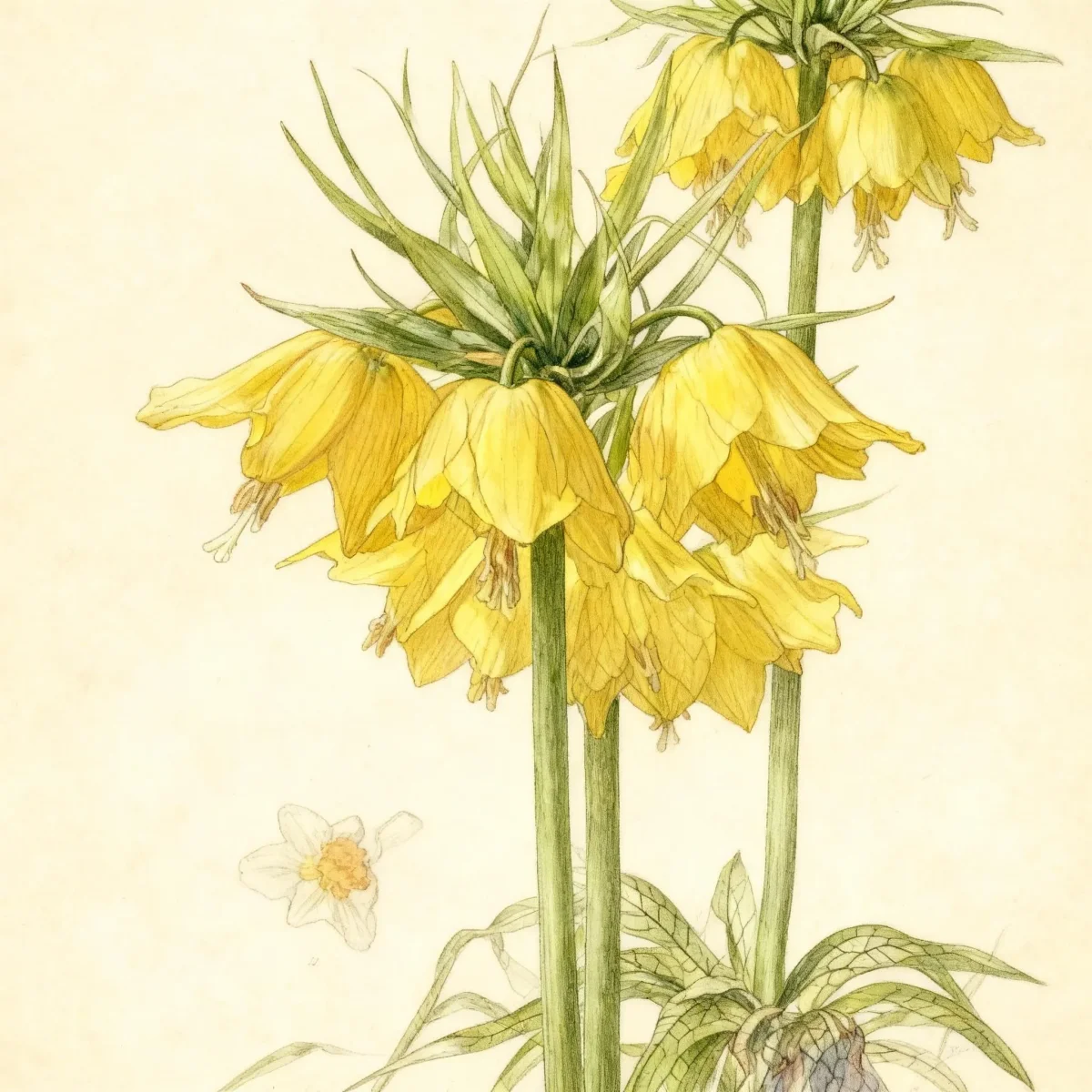
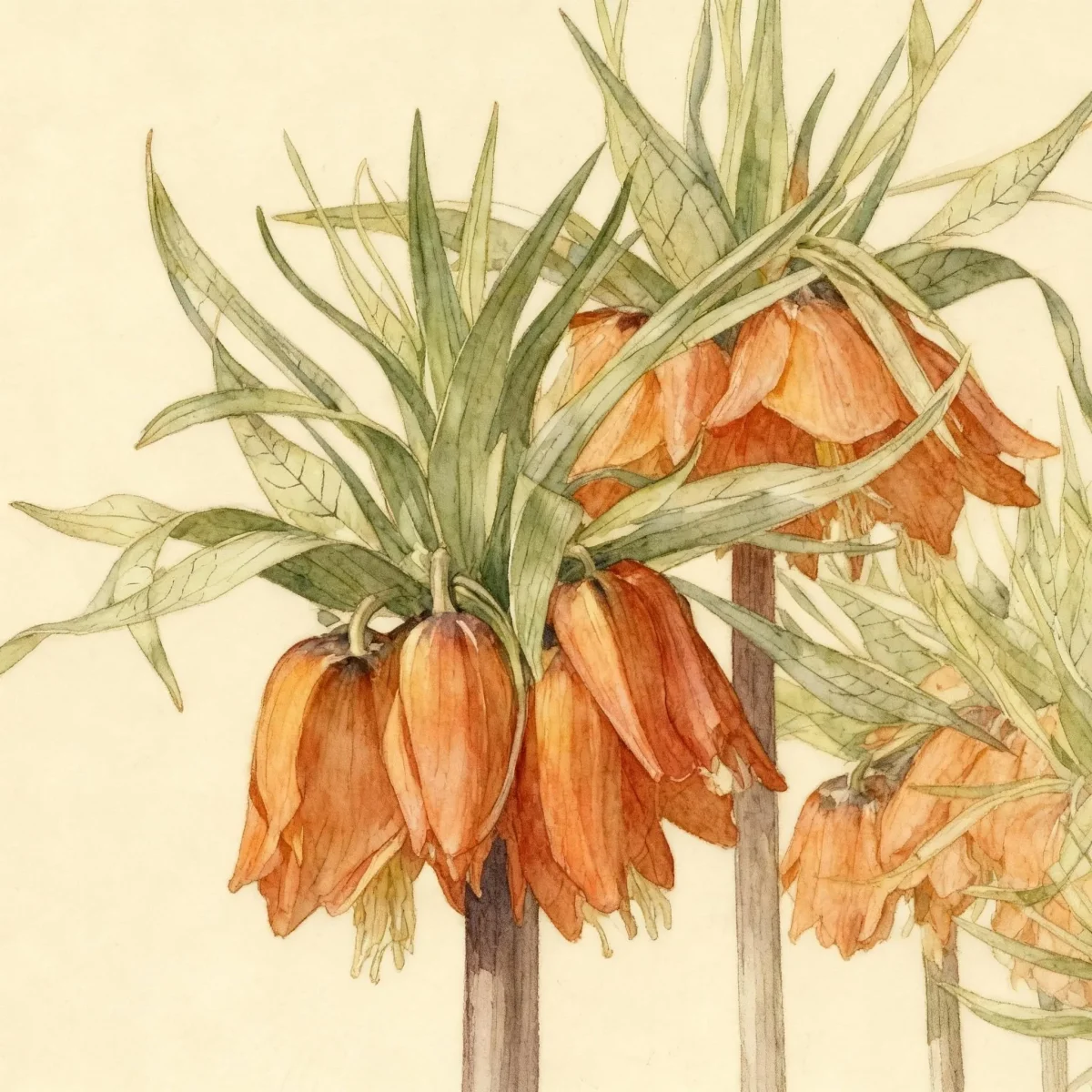
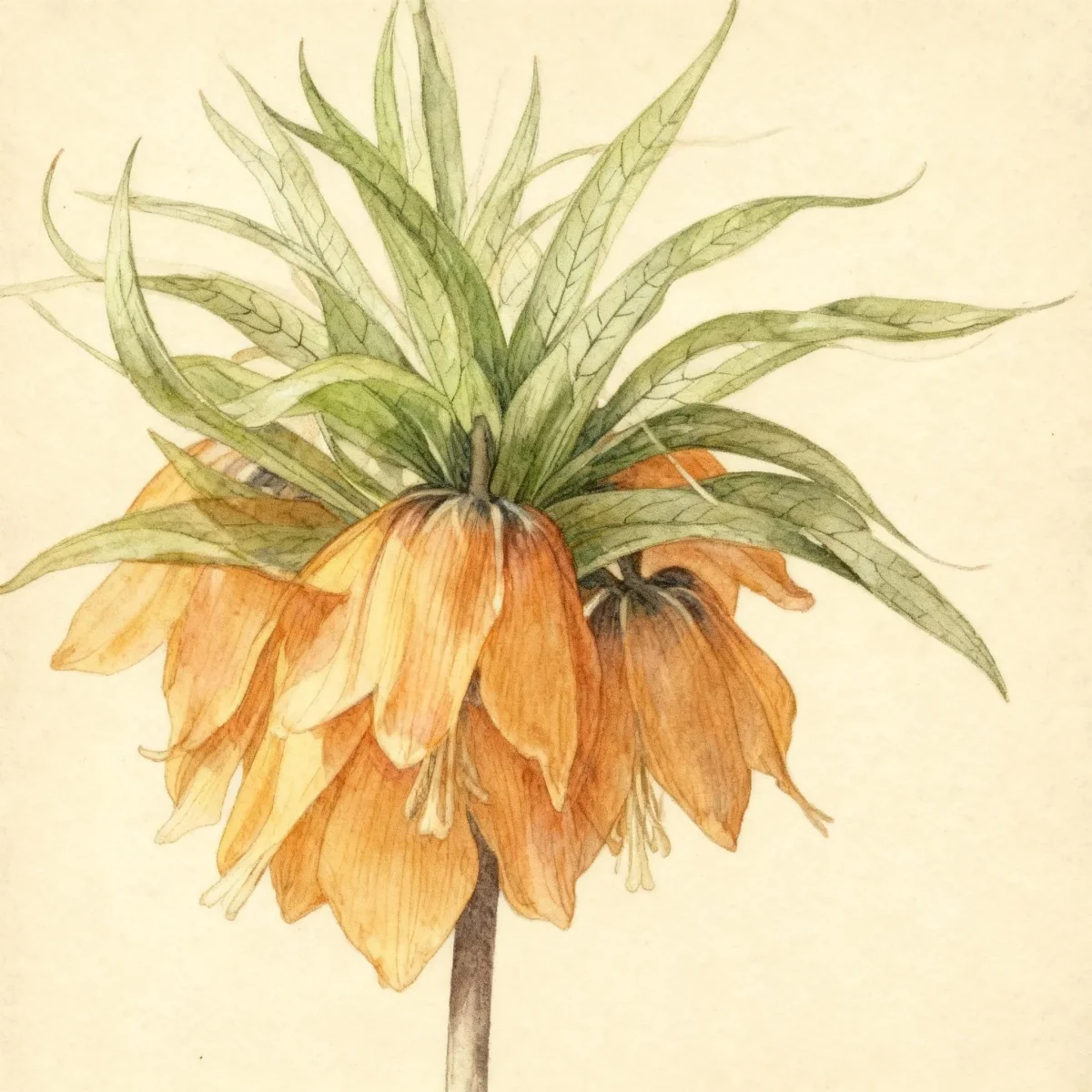
The Crown imperial (Fritillaria imperialis) is an undeniable showstopper in the spring garden, famed for its height and dramatic floral display. Each thick, stout stem terminates in a crown of drooping, bell-shaped flowers, often topped with a tuft of green bracts, giving it a distinct, royal appearance. This impressive bulb, Fritillaria imperialis, provides vibrant color, typically in shades of orange, red, or yellow, making it spectacular when sited correctly.
Valued for its architectural structure, the Crown imperial quickly reaches heights of 3 to 4 feet, positioning it perfectly for the rear of borders. While the flowers are noted for being fragrant, be aware that all parts of the plant emit a distinct skunky odor, which actually aids in protection from pests. Gardeners should treat these large, fragile bulbs gently during autumn planting to ensure successful emergence the following May or June.
This bulb thrives when given rich, well-draining conditions, mirroring its native habitat in Southwestern Asia. Successful cultivation of Fritillaria imperialis relies heavily on proper planting depth and orientation to prevent moisture accumulation in the stem base. When mature groupings are established, the impact of this regal plant is simply unparalleled in the early season landscape.
Fast Facts
- Plant Family: Liliaceae
- Plant Type: Bulb
- Native Range: Southwestern Asia to Himalayas
- Hardiness Zones: USDA Zones 5-8
- Size at Maturity:
- Height: 3-4 ft
- Spread: 1-1.5 ft
- Bloom Time: May to June
- Bloom Description: Orange, red, or yellow
- Sun Exposure: Full sun to part shade
- Water Needs: Medium
- Maintenance Level: Medium
How to Grow
Planting Fritillaria imperialis bulbs is best done in the fall. Choose a location that receives full sun, though light afternoon shade is appreciated, particularly in the warmer parts of its USDA hardiness range (Zones 5-8). As specified for cultivation in areas like St. Louis gardens, the soil must be deep, organically rich, and possess excellent drainage to prevent rot. Plant the large bulbs approximately 6 inches deep, spacing them 9 to 12 inches apart center-to-center. Crucially, orient the bulbs on their side, ensuring the central depression or “stem hole” is positioned sideways, preventing water from pooling and leading to bulb decay.
Ongoing care throughout the growing season is straightforward, requiring medium water consistency, especially as the plant emerges and blooms in late spring. Fertilization is rarely necessary if the soil was amended richly at planting time. Once the stunning April/May bloom fades, allow the foliage to completely die back naturally; this process allows the bulb to store energy for the following year, as the Crown imperial enters summer dormancy.
Since the bulbs are fragile, they are best left undisturbed once planted. If division or relocation becomes necessary, plan for the dormant period following foliage dieback. In colder regions within its range, providing a good winter mulch after the ground freezes offers essential thermal protection to the large bulbs of the Crown imperial.
Landscape Uses
The sheer vertical impact of the Fritillaria imperialis dictates its best placement in the garden design. Groupings of 6-12 at the rear of a border can be spectacular, providing a commanding backdrop for mid-height spring bloomers like tulips or early peonies. Avoid placing them where their foliage decline in early summer will look messy; instead, tuck them behind later-emerging perennials that will fill the void as the Fritillaria imperialis bulbs go dormant.
Due to their height and robust structure, Crown imperial selections are excellent focal points in mixed perennial borders intended to draw the eye upward. They pair well aesthetically with upright architectural plants, though care should be taken since the specific scent of the plant may influence nearby companion selection. Ensure planting sites feature rich, deep soil necessary for supporting the tall, thick stems throughout their growing cycle.
Standout Features
Flower Qualities
- Showy
- Fragrant
Noteworthy Characteristics
Fritillaria imperialis, commonly called crown imperial, is an impressive plant that grows 3-4’ tall. Each bulb produces a thick, stout, upright, ramrod-straight flowering stem which rises to 4’ tall. Lance-shaped green stem leaves (to 6” long) with wavy margins appear in whorls around the lower 1/2 of the stem. Each stem is topped in spring with a crown of orange or red, drooping, bell-shaped flowers topped by a small pineapple-like tuft of leaf-like bracts. Yellow-flowered varieties are also available in commerce. All parts of the plant have a skunky odor.
Tolerances
- Rabbit
- Deer
- Black Walnut
Potential Problems
The primary threat to Fritillaria imperialis is bulb rot, particularly when bulbs are planted incorrectly or in heavy, poorly draining soil where water accumulates. Preventative measures include planting bulbs sideways and amending soil heavily with organic matter for drainage. Beyond rot, these plants are susceptible to several fungal and viral issues, including leaf spot, rust, and occasionally mosaic virus. Monitor foliage closely for spotting or discoloration; infected material should be promptly removed and discarded (not composted) to limit spore spread.
Because the bulb rot issue is so significant, rigorous attention to planting technique and soil composition is mandatory for long-term success with the majestic Crown imperial. If rust is observed, applying a fungicide labeled for bulb-borne diseases during wet spring weather may offer some protection, though cultural control remains the best defense for these high-value blooms.
Frequently Asked Questions
What hardiness zones is Crown imperial suitable for?
The Crown imperial is suitable for gardeners in USDA Hardiness Zones 5 through 8.
How large does Fritillaria imperialis grow?
When mature, Fritillaria imperialis typically reaches a height between 3 and 4 feet, with a spread of 1 to 1.5 feet.
When does Fritillaria imperialis bloom?
This species blooms in late spring, generally spanning from May into June, producing flowers described as orange, red, or yellow.
What sun exposure does Crown imperial need?
Fritillaria imperialis prefers a location that receives full sun to part shade conditions for optimal performance.
Conclusion
The Fritillaria imperialis, or Crown imperial, provides unmatched vertical drama and vibrant color early in the growing season, making it a worthwhile addition to substantial borders. Successfully cultivating this magnificent bulb hinges on correct, shallow planting in rich, well-drained soil during the fall months. Check your local climate to ensure your zone falls between 5 and 8, and plan your planting to experience the splendor of this unique spring specimen.
Companion Planting
Selecting good companions is vital for the Fritillaria imperialis as its foliage declines relatively early in the summer. Excellent partners are those that emerge later, effectively masking the thinning foliage of the spent bulb. Consider planting late-flowering Alliums, which share similar sun and soil needs but emerge later in the season. Alternatively, vigorous perennials that establish a dense base layer, such as certain varieties of Hostas or Siberian Iris, can visually absorb the space left behind by the receding Crown imperial leaves.
Ensure any companion plants do not compete aggressively for nutrients or water, thus stressing the large bulb system. Since the Crown imperial requires deep, rich soil, choose perennials that appreciate similar fertility levels. Avoid plants known to spread rapidly via underground runners which might disturb the dormant bulbs you wish to leave undisturbed.
Designing with Height
Leveraging the 3 to 4-foot height of Fritillaria imperialis is key to successful border composition. Use them to anchor corners of island beds or as striking specimens interspersed throughout the mid-to-back third of a formal border design. Their unique upright structure contrasts beautifully with mounding plants or billowing ornamental grasses that fill in the middle ground later in the season.
When incorporating the Crown imperial into permanent landscape beds, remember its specific requirements regarding bulb placement. Because the location will ideally remain undisturbed for years, use markers or place non-perennial annuals nearby for the first few seasons until you learn the exact location of the dormant underground structure. A singular, boldly colored Fritillaria imperialis can serve as a powerful vertical accent, guiding the viewer’s eye across the landscape.