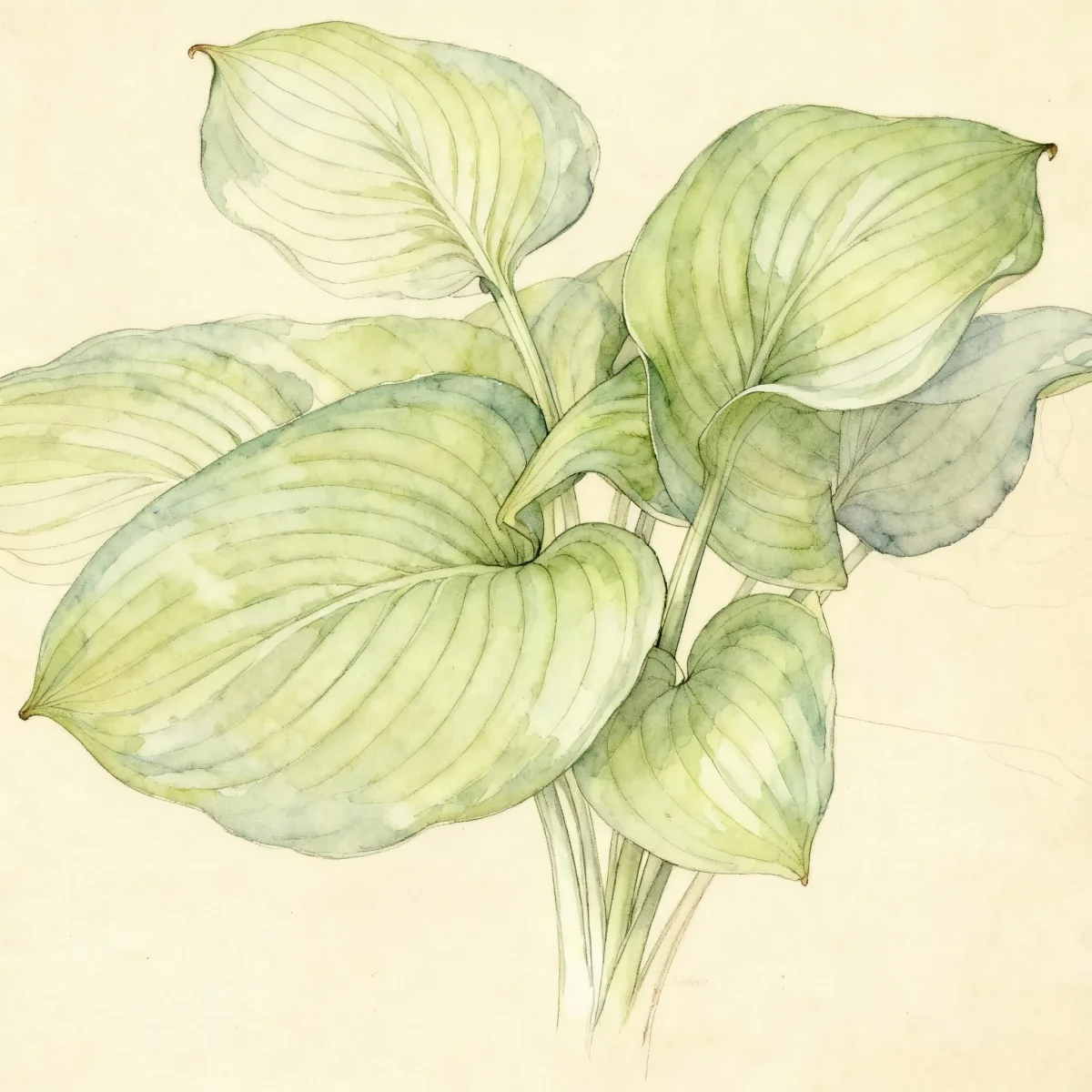
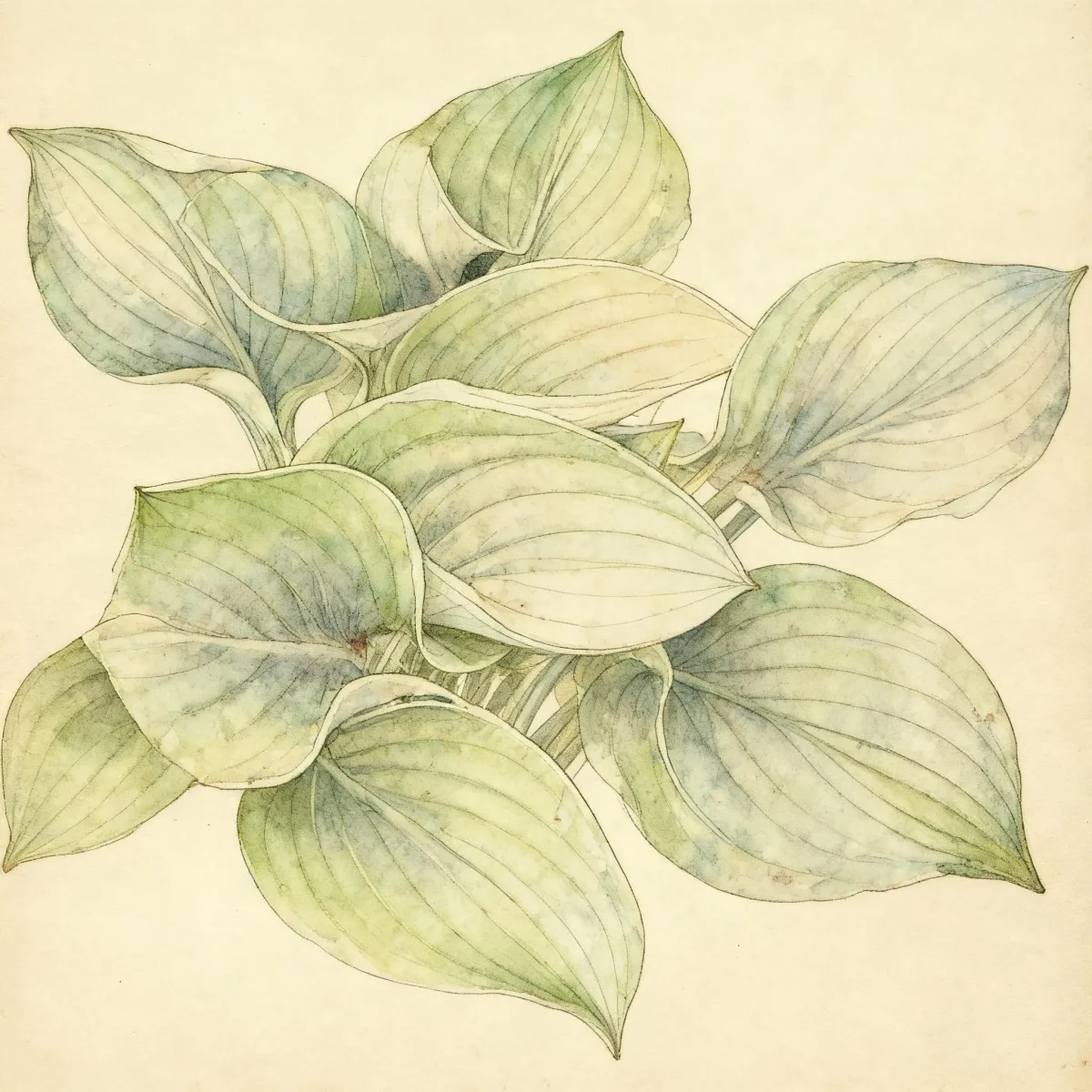
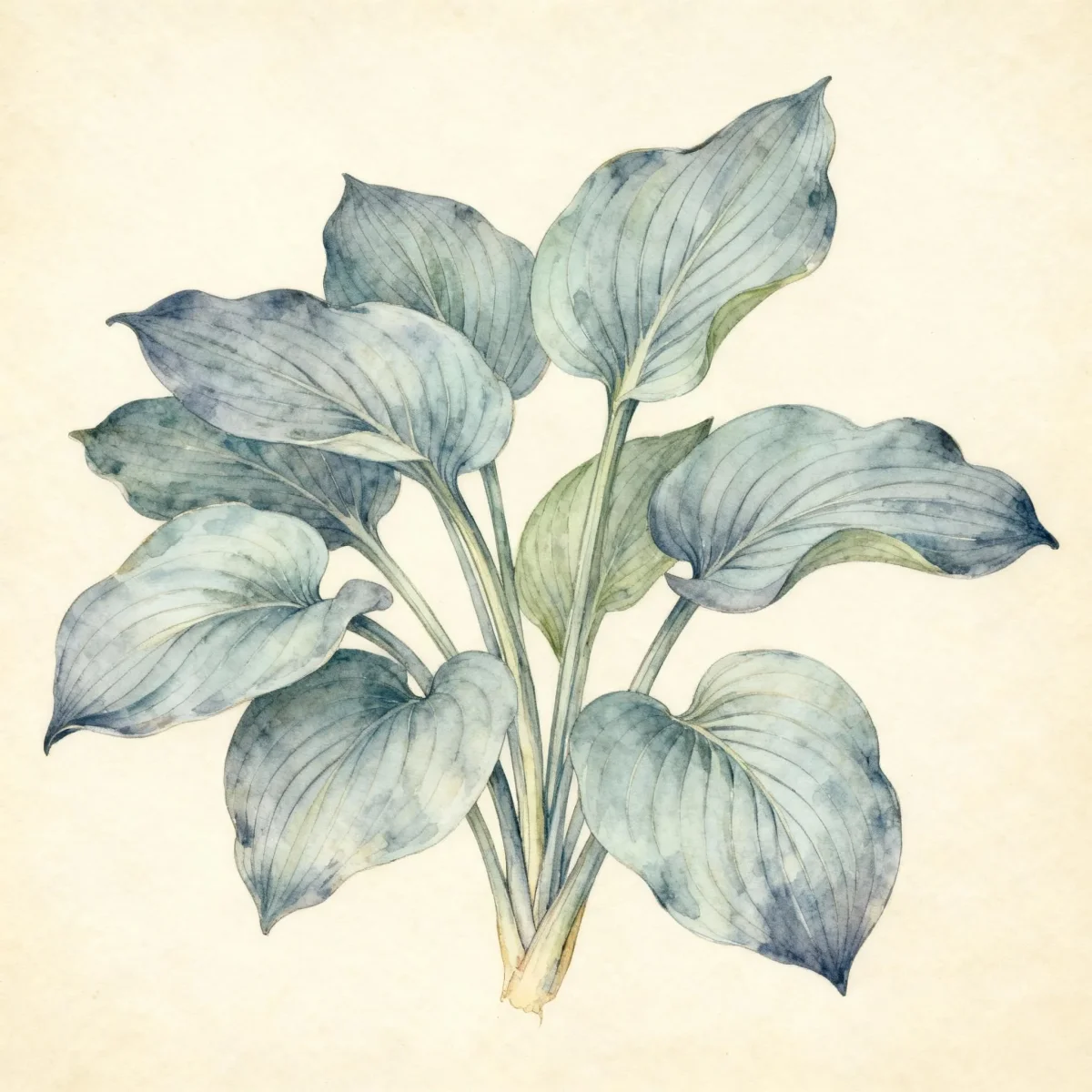
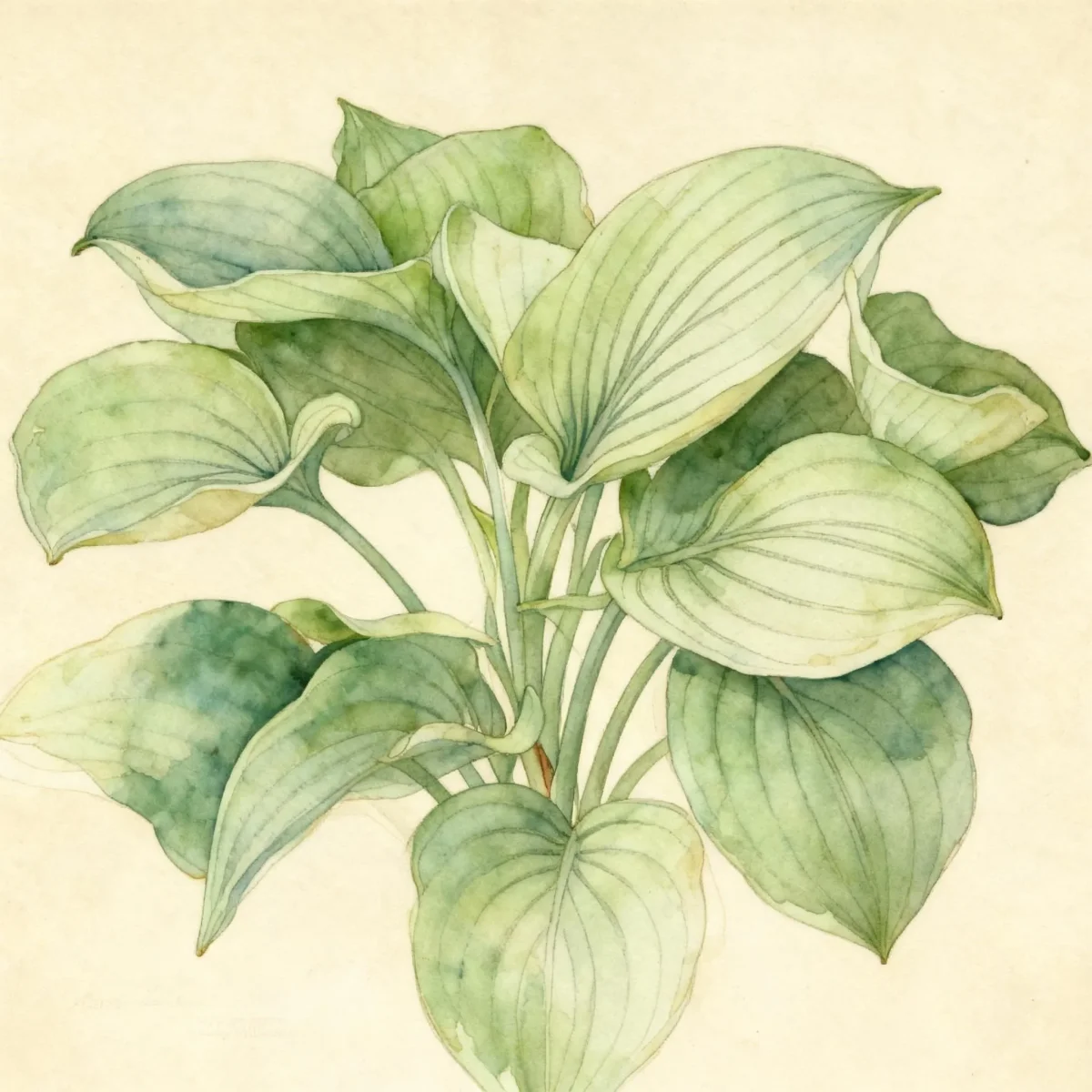
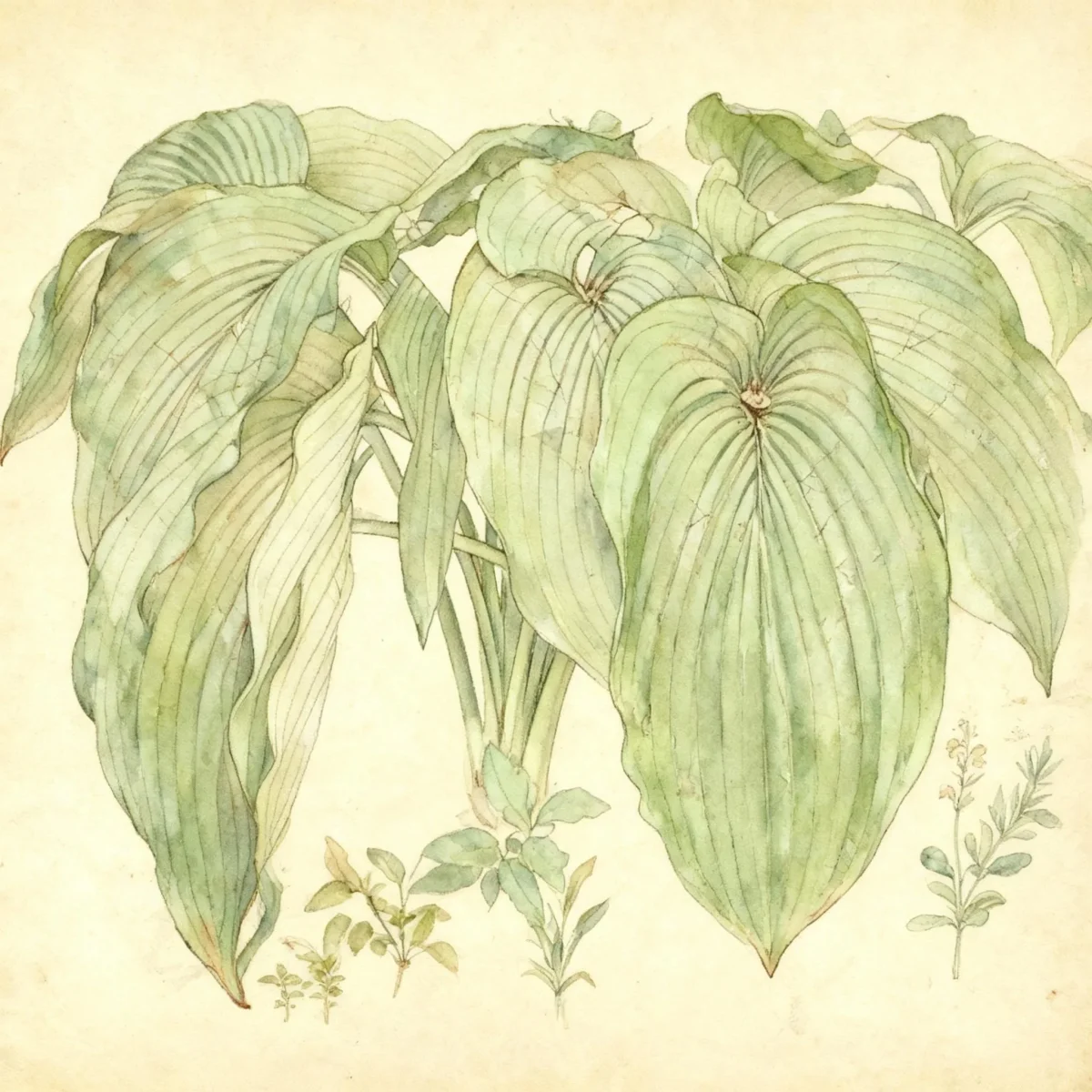
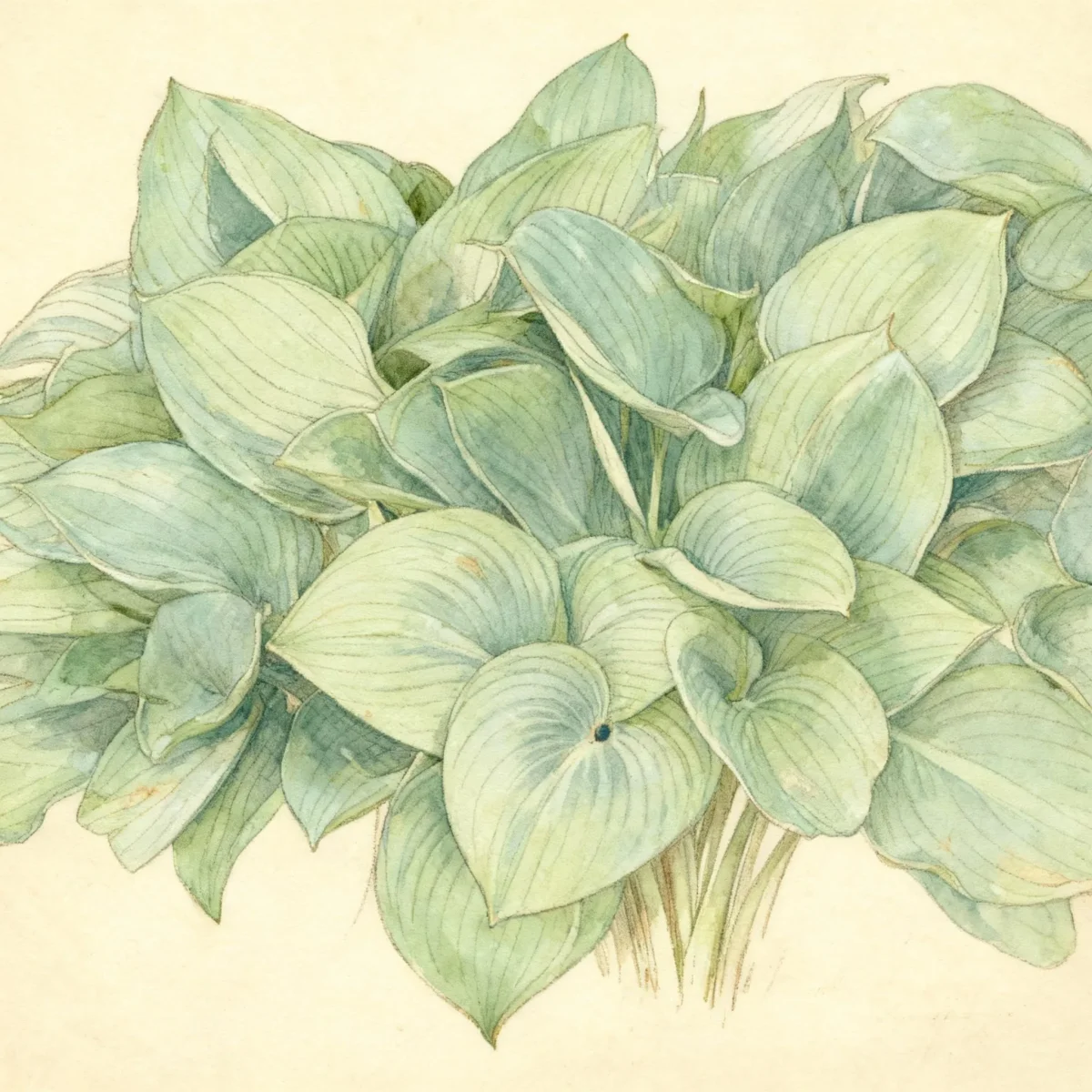
Hosta (Hosta 'Vim and Vigor')
Hosta 'Vim and Vigor' is a giant, low-maintenance perennial offering glossy, dark green foliage and pale lavender blooms in summer.
Scroll down to discover growing tips, care requirements, companion plants, and more
Complete Plant Information
Overview
Hosta ‘Vim and Vigor’ stands out as a magnificent, giant variety prized primarily for its exceptional, long-lasting foliage display. This cultivar, a sport of chartreuse-leaved H. ‘Sum and Substance’, matures into a substantial mound capable of reaching up to five feet wide over time, providing commanding structure in shaded areas. Gardeners value the Hosta genus instantly for its versatility, and Hosta ‘Vim and Vigor’ delivers low maintenance combined with high visual impact.
This herbaceous perennial thrives where many other ornamentals struggle, flourishing reliably in deep shade conditions while maintaining glossy, deep green leaves that resist fading. When properly situated and consistently irrigated, this Hosta develops its full potential, becoming a backbone planting in woodland or shady borders throughout its long lifespan. The resulting landscape feature offers both architectural presence and subtle summer blooms of pale lavender flowers.
Grown widely across temperate regions, the Hosta genus offers reliable performance, making Hosta ‘Vim and Vigor’ an essential selection for filling challenging, low-light garden spots. Its robust nature and substantial leaf size mean it requires minimal fuss once established, cementing its status as a gardener favorite worldwide.
Fast Facts
- Plant Family: Asparagaceae
- Plant Type: Herbaceous perennial
- Hardiness Zones: USDA Zones 3-8
- Size at Maturity:
- Height: 2-3 ft
- Spread: 3-5 ft
- Bloom Time: July to August
- Bloom Description: Pale lavender
- Sun Exposure: Part shade to full shade
- Water Needs: Medium
- Maintenance Level: Low
How to Grow
Planting Hosta ‘Vim and Vigor’ is best done in spring or autumn, ensuring the central crown is situated correctly—level with the soil surface. Choose a location offering consistently moist, organically rich, well-drained soil. While these robust plants tolerate heavy shade, they perform optimally in part shade, receiving dappled light or just a few hours of morning sun, which enhances leaf quality.
Ongoing care revolves around consistent moisture management. Established Hosta ‘Vim and Vigor’ possesses some drought tolerance, especially those with thicker leaves, but consistent watering is crucial for achieving maximum size and maintaining leaf integrity. Apply water directly to the soil beneath the leafy canopy to minimize fungal issues on the foliage.
Maintenance for this low-maintenance perennial is minimal. Divide plants as needed, typically in early spring before the large leaves fully unfurl, or in the fall. Always place Hosta in locations that offer protection from harsh winds, which can tear or buffet the large leaves, ensuring the signature mounding habit remains intact throughout the season.
Landscape Uses
Hostas are the foundational element for shade gardens, celebrated primarily for their foliage texture, color, and structure rather than their flowers. Hosta ‘Vim and Vigor’ is exceptionally effective when massed, creating a dense ground cover or foundational planting that blankets wide areas beneath deciduous trees. Its large size makes it an excellent background plant, contrasting beautifully against finer textured, smaller shade dwellers.
Consider planting Hosta ‘Vim and Vigor’ along shady borders where its impressive spread can be appreciated without crowding neighboring plants. They pair effectively with ferns, Astilbes, and woodland ephemerals that complete their cycle before the Hosta reaches full summer size. The dark green, glossy leaves provide a reliable, cool-toned accent year after year.
Standout Features
Flower Qualities
- Showy
Noteworthy Characteristics
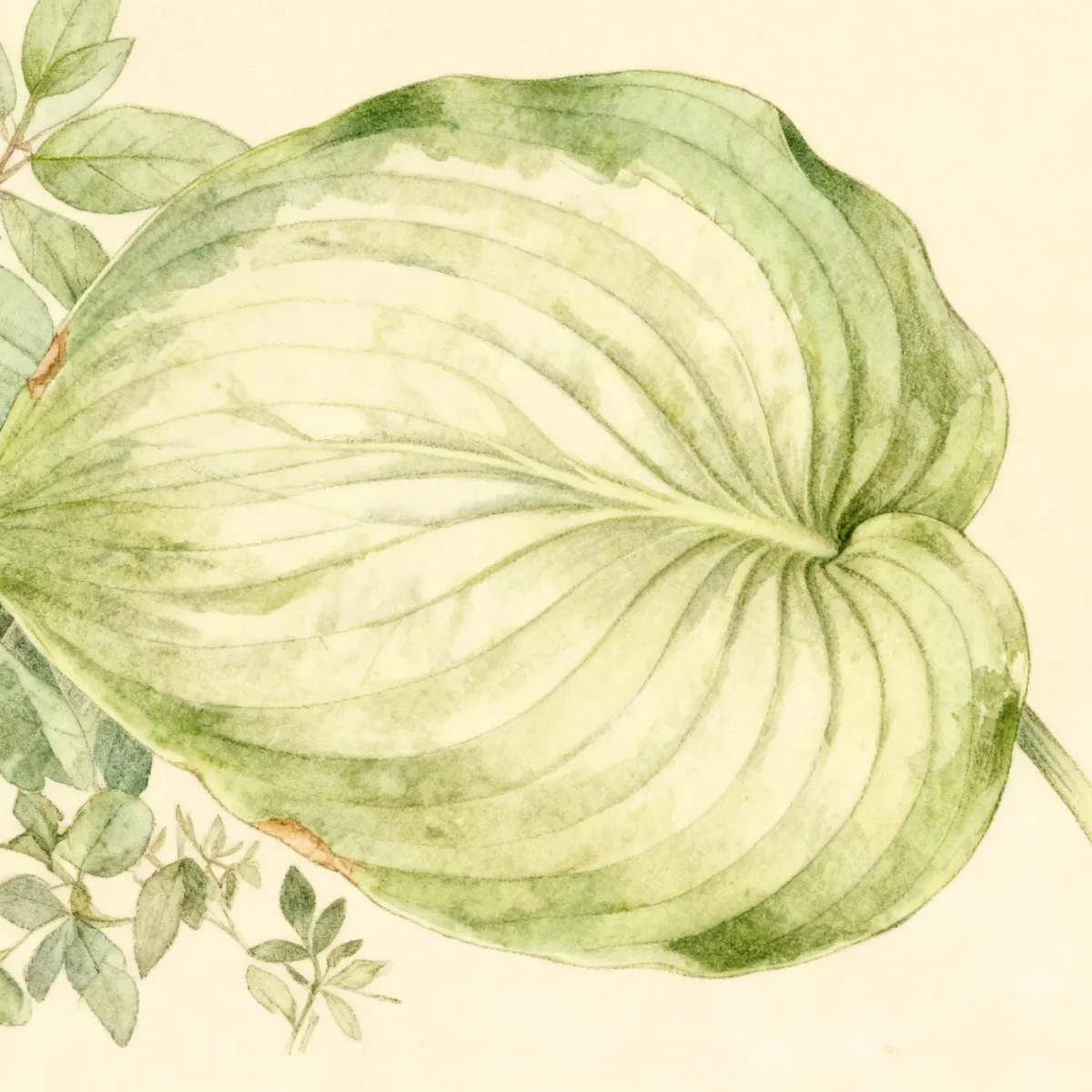
Hosta ‘Vim and Vigor’, a giant hosta cultivar, spreads into a massive mound featuring glossy, broad oval, dark green leaves up to 19 inches long. In summer, pale lavender, tubular flowers rise above the dense foliage mass on tall scapes, sometimes reaching five feet high. This impressive plant typically grows to 36 inches tall and expands significantly wider over the years.
Tolerances
- Heavy Shade
- Black Walnut
Potential Problems
Slugs and snails represent the most common threat to Hosta foliage, actively chewing jagged holes that severely compromise aesthetics quickly. Proactive management, such as applying baits, diatomaceous earth barriers, or using copper tape, is necessary, especially when leaves first emerge in spring. Monitor closely for signs of foliar nematodes, which cause interveinal browning, and promptly remove infected plants to contain viral issues like Hosta Virus X (HVX). Additionally, be aware that deer and rabbits frequently find the leaves a desirable food source and may graze voraciously if preventative measures are not taken.
Frequently Asked Questions
What hardiness zones is Hosta ‘Vim and Vigor’ suitable for?
Hosta ‘Vim and Vigor’ is reliably hardy across USDA Zones 3 through 8, offering broad applicability in cooler climates.
How large does Hosta ‘Vim and Vigor’ grow?
This large cultivar typically reaches 2 to 3 feet tall, but its spread can be extensive, often growing from 3 to 5 feet wide or more over time.
What sun exposure does Hosta need?
This Hosta variety prefers part shade to full shade conditions; too much intense sun can scorch the large leaves.
When does Hosta bloom?
The pale lavender, funnel-shaped flowers of the Hosta generally appear during the mid-summer months, specifically from July to August.
Conclusion
Hosta ‘Vim and Vigor’ is an indispensable, low-maintenance perennial perfectly suited for transforming dark corners into lush, textural focal points within the garden. Its massive, glossy, dark green foliage provides unparalleled structural interest throughout the growing season, complemented by summer blooms. Ensure you check your local hardiness zone compatibility before planting this exceptional Hosta this spring or fall.
Companion Planting
When selecting partners for Hosta ‘Vim and Vigor’, focus on plants that share similar moisture and shade requirements to ensure balanced growth. Ferns, such as Japanese Painted Ferns or Autumn Ferns, offer a delicate, contrasting texture against the broad leaves of the Hosta. Consider plants with bright flower colors, like Astilbe or Bleeding Hearts, whose blooms provide vertical color pops beneath the architectural foliage mound of Hosta ‘Vim and Vigor’.
Propagation Tips
The primary method for increasing your supply of Hosta ‘Vim and Vigor’ is vegetative division of the central crown, a straightforward process ideal for managing overcrowding or sharing specimens. For the best results, wait until early spring when new shoots are just beginning to emerge, or aim for the fall after dormancy starts. Carefully dig up the entire clump, gently tease or cut the fleshy roots and rhizomes into sections, ensuring each division has several healthy “eyes” (growth points) attached to ensure successful reestablishment.