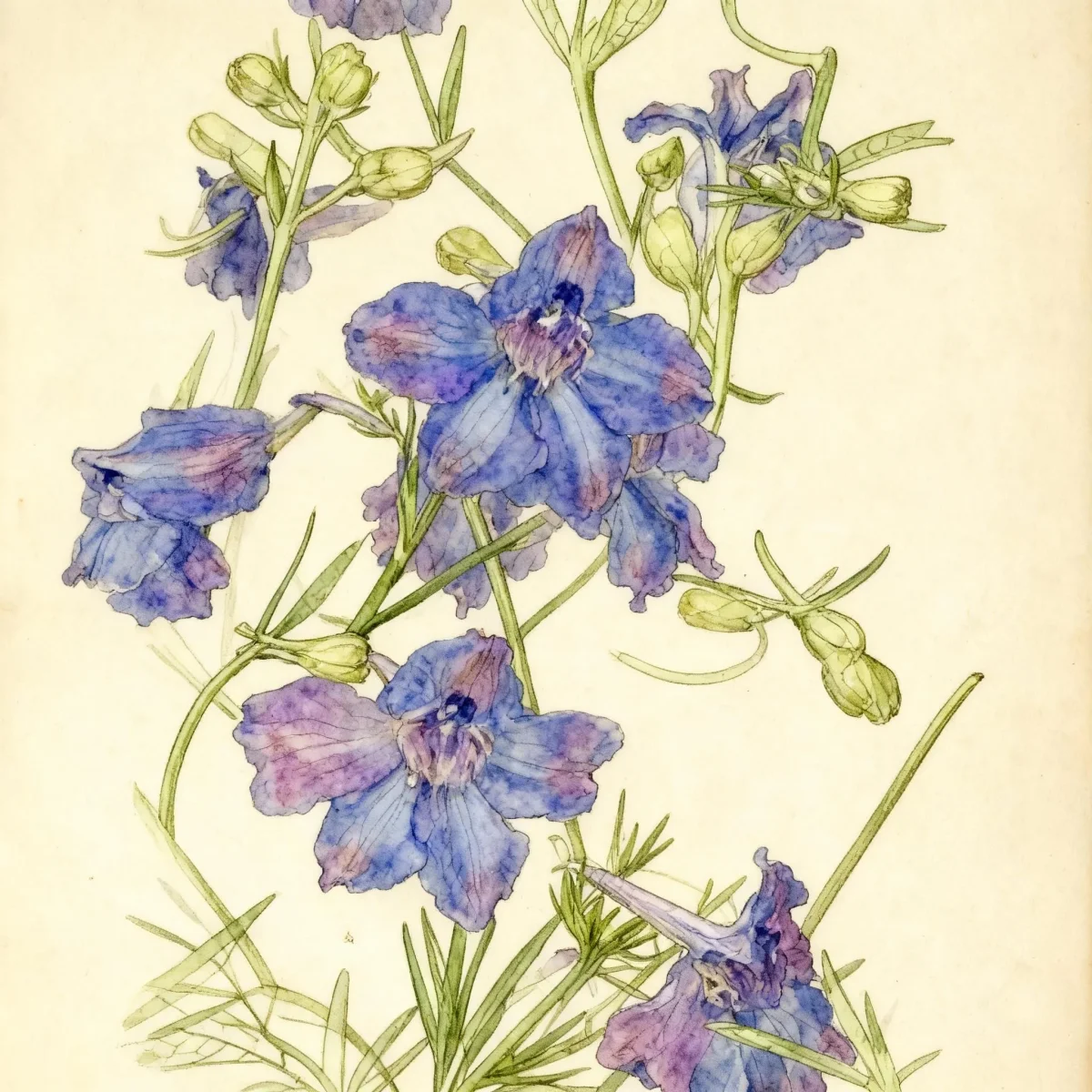
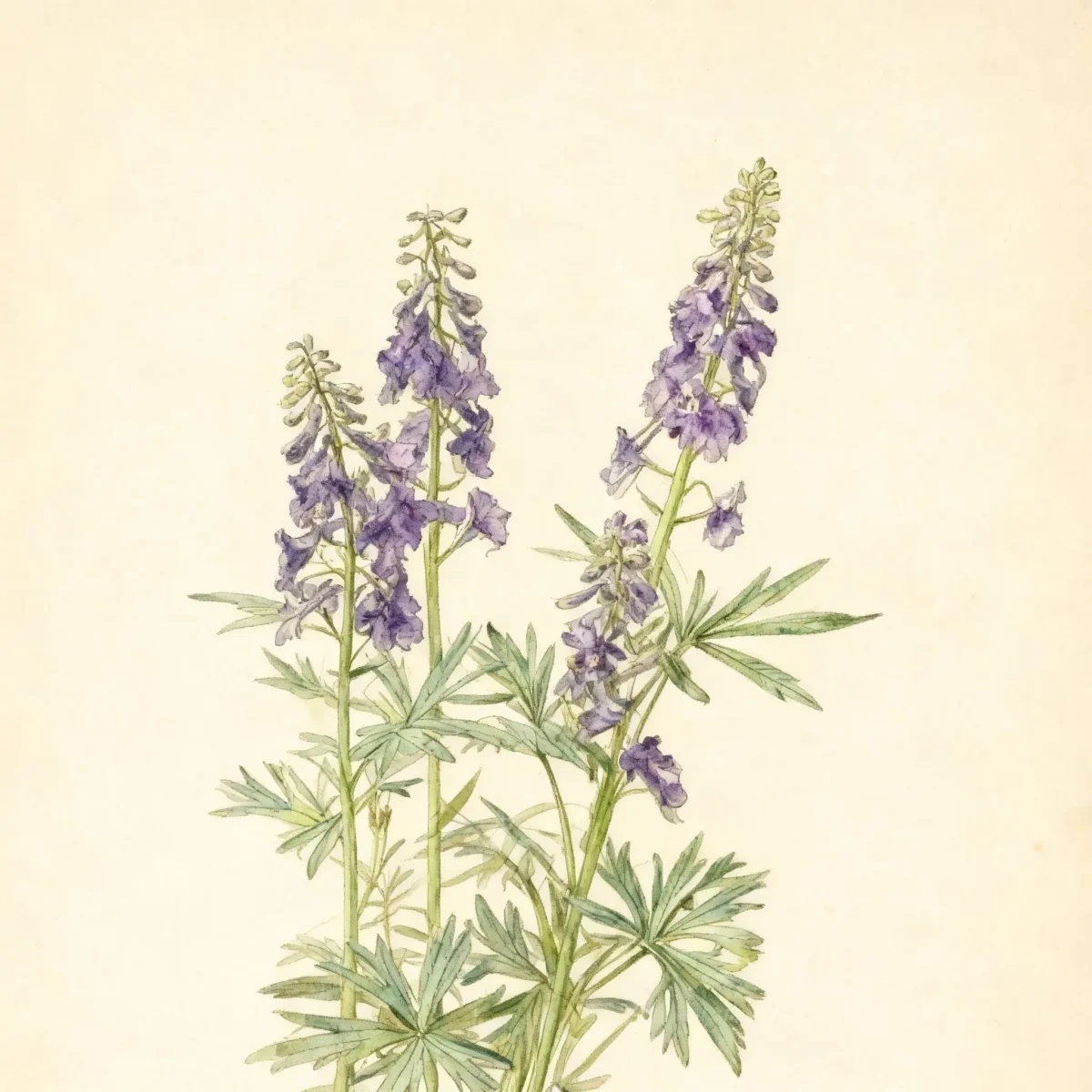
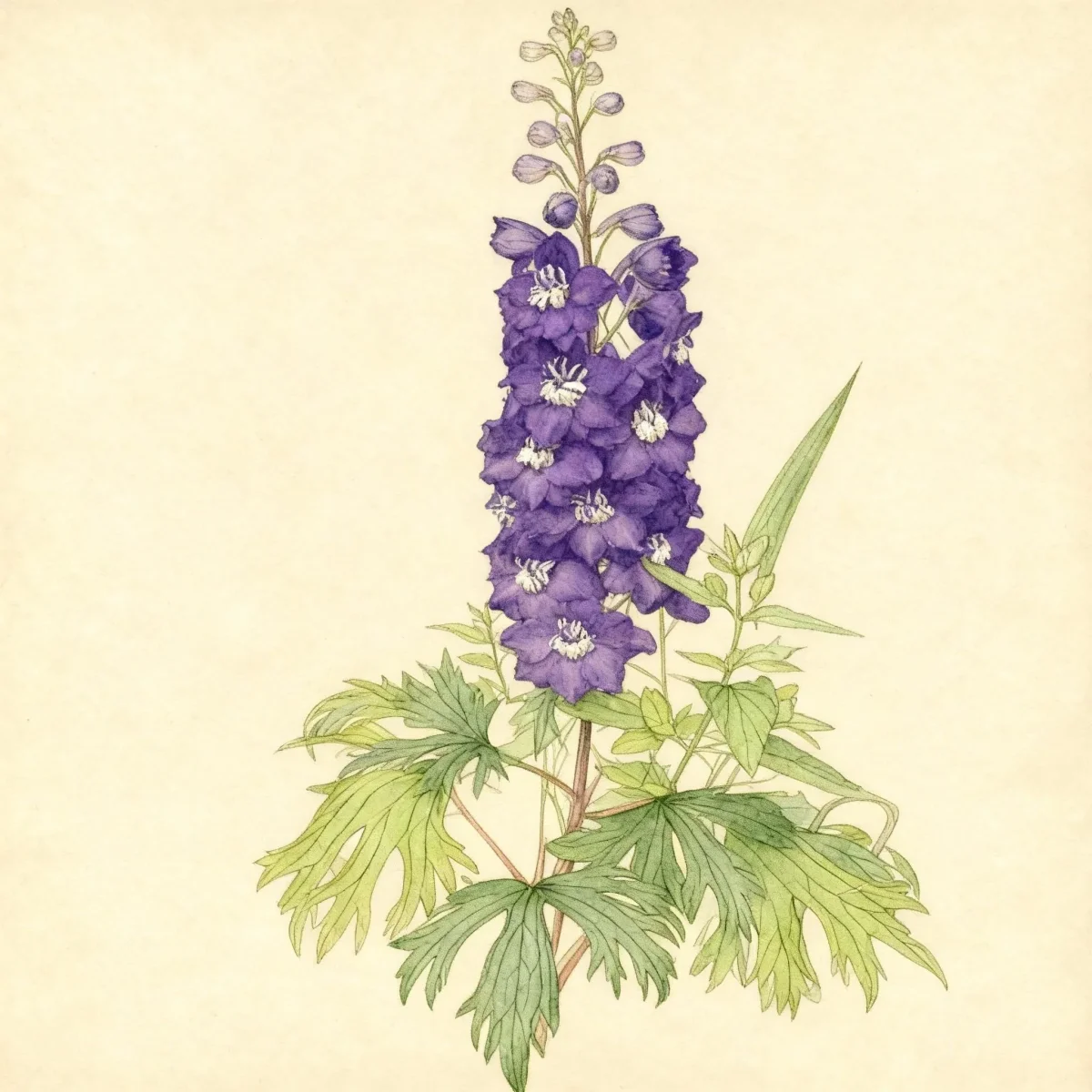
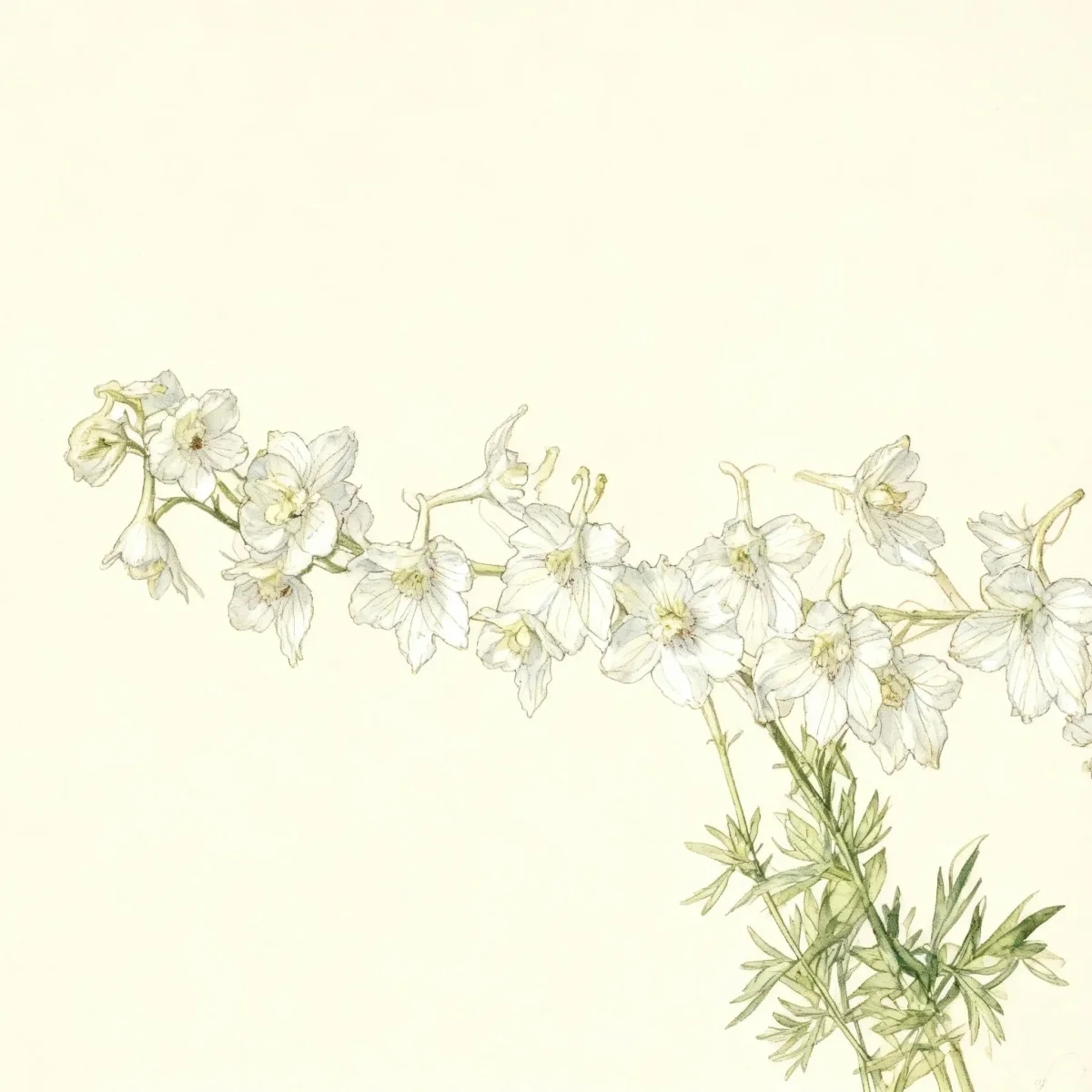
Larkspur (Delphinium (Pacific Hybrids))
Towering Delphinium (Pacific Hybrids), known as Larkspur, offers showy blue, white, pink, and violet spikes. Ideal for cottage gardens in Zones 3-7.
Scroll down to discover growing tips, care requirements, companion plants, and more
Complete Plant Information
Overview
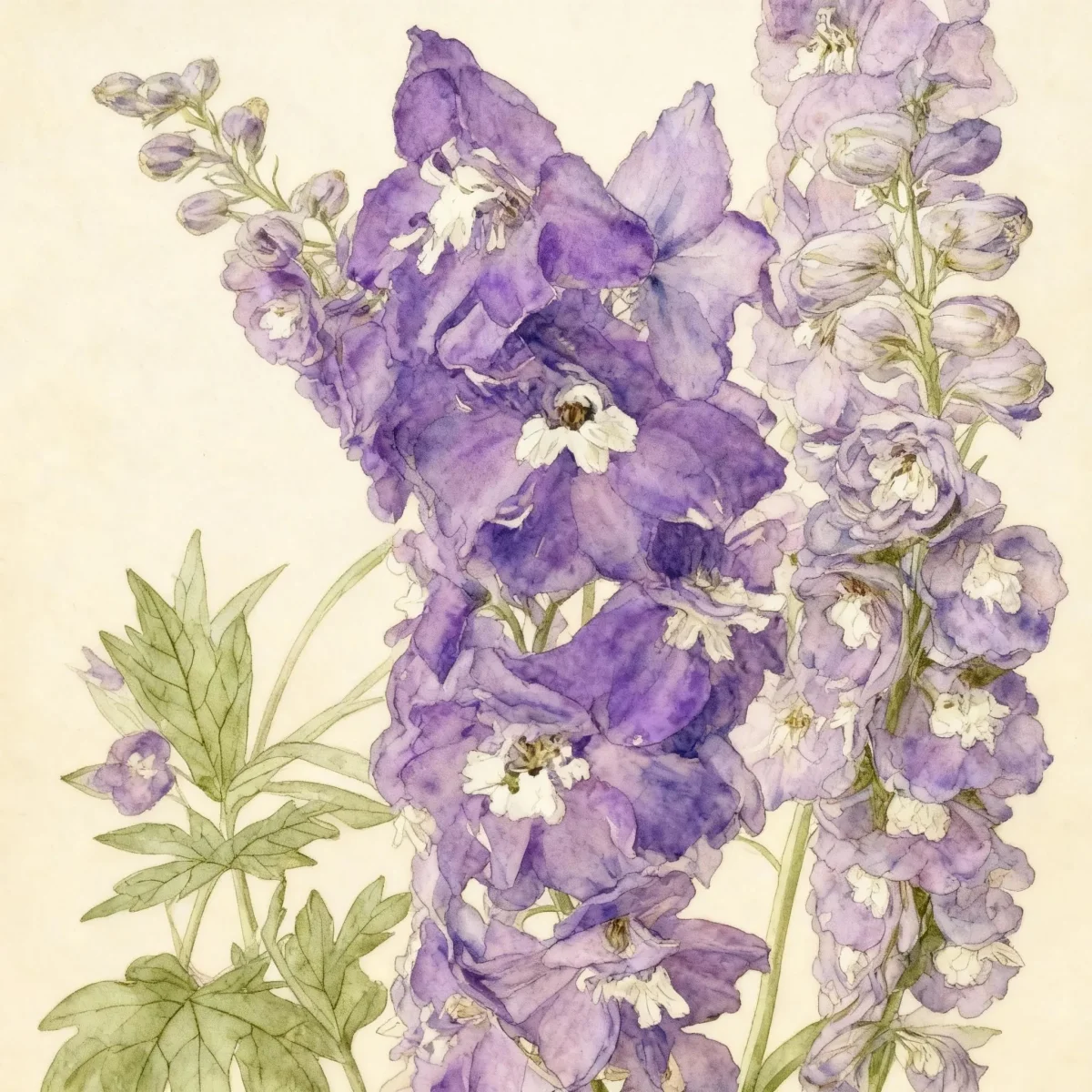
Delphinium (Pacific Hybrids), commonly recognized as Larkspur, provides dramatic vertical accents in the summer garden. These tall spires erupt in vibrant blues, whites, pinks, and violets, making them highly sought after for their aesthetic impact and superior qualities as a long-stemmed cut flower. While they are complex hybrids derived from the genus Delphinium, the Pacific Hybrids series specifically delivers reliable performance in suitable climates.
Growing Larkspur involves a commitment to medium maintenance, ensuring fertile soil and protection from harsh elements. These beautiful flowering plants thrive when given full sun, though some afternoon relief is appreciated in the hottest regions. Gardeners value the majestic height of these striking spires that define the backdrop of any planting scheme.
Though often treated as annuals in warmer locales, Delphinium (Pacific Hybrids) are winter-hardy perennials in colder regions, rewarding attentive care with reliable, showy blooms each season. Proper staking and deadheading are key practices to maintain their elegant form and encourage repeat flowering.
Fast Facts
- Plant Family: Ranunculaceae
- Plant Type: Herbaceous perennial
- Hardiness Zones: USDA Zones 3-7
- Size at Maturity:
- Height: 4-6 ft
- Spread: 2-3 ft
- Bloom Time: June to July
- Bloom Description: Blue, white, pink, violet
- Sun Exposure: Full sun
- Water Needs: Medium
- Maintenance Level: Medium
How to Grow
For success with Delphinium (Pacific Hybrids), prioritize site selection before planting. The best growing medium is fertile, humus-rich, well-drained soil with medium moisture retention. These plants perform well even in alkaline soils, making them adaptable to varying soil compositions. Plant crowns slightly above the soil line to prevent crown rot, especially if overwintering them in colder Zones 3-7.
Cultivation requires attention to environmental factors. These majestic plants prefer climates that feature cool summer temperatures. In regions experiencing intense heat, planting them where they receive some part afternoon shade can prevent stress. Since the tall flower spikes are susceptible to wind and storm damage, ensure you site your Larkspur in a sheltered spot or provide necessary staking early in the season.
Routine maintenance focuses on maximizing bloom duration and plant health. After the main flush of flowers fades in summer, promptly deadhead or cut the spent spikes back to the basal foliage. This crucial step often encourages a secondary bloom later in the late summer or fall. Remember that while these are perennials in cooler zones, they are short-lived or typically grown as annuals where summers are hot and humid, meaning they may not return reliably south of USDA Zone 7.
Landscape Uses
The towering stature of Larkspur makes it a superb backbone element in cottage gardens, echoing traditional country charm. They are unmatched when placed at the back of garden beds and borders, providing essential vertical structure against fences or walls. Planting Delphinium (Pacific Hybrids) in massed groupings or drifts amplifies their visual impact along pathways.
Consider planting them against a stockade fence or similar structure, which serves the dual purpose of offering necessary wind protection and creating a stunning, colorful backdrop. Beyond borders, these tall specimens are excellent as focal points when massed, drawing the eye upward. Furthermore, when harvested mid-bloom, they yield excellent cuts for indoor display, fulfilling their “Good Cut” quality.
Interestingly, while many garden classics attract deer, Larkspur is often left untouched; deer and rabbits usually do not cause significant problems to this specific genus. This makes Delphinium (Pacific Hybrids) a relatively safe, dramatic addition to areas where browsing wildlife is a concern.
Standout Features
Flower Qualities
- Showy
- Good Cut
Noteworthy Characteristics
Genus names often reflect plant shape, and Delphinium comes from the Greek delphis (dolphin), referencing the shape of some species’ developing flower buds. The Pacific Hybrid series is renowned for densely packed florets blooming on tall, slender terminal spikes, featuring a broad palette of blues, whites, pinks, and violets. These plants grow vigorously, reaching 4 to 8 feet tall, supported by clumps of divided, palmate green foliage.
Tolerances
- Deer
Potential Problems
Delphinium (Pacific Hybrids) demand consistent attention to remain pristine. They generally require considerable maintenance, including staking, pruning, and vigilance against disease, to perform optimally. Key fungal issues to watch for include powdery mildew, botrytis blight, and leaf spots. To mitigate mildew, ensure excellent air circulation by planting in full sun and watering plants directly at the base, avoiding wetting the foliage.
Poor soil drainage is a major concern, as wet feet inevitably lead to crown rot. Plant deeply enough to support the crown but never bury it too low. Pest management includes vigilance against slugs and snails, which can rapidly defoliate young growth. Larger plants may also attract aphids, leaf miners, stem borers, and mites.
Because of their height, tall Larkspur specimens must be sited in locations protected from strong winds, or staking must be implemented early. As an essential final caution, be aware that Delphinium plants are considered toxic to humans if ingested.
Frequently Asked Questions
What hardiness zones is Larkspur suitable for?
Larkspur, specifically the Delphinium (Pacific Hybrids), is winter hardy in USDA Zones 3 through 7.
How large does Larkspur grow?
These impressive herbaceous perennials typically achieve heights between 4 and 6 feet, with a spread of 2 to 3 feet at maturity.
What sun exposure does Delphinium (Pacific Hybrids) need?
Delphinium (Pacific Hybrids) requires full sun to develop the strongest stems and best resistance to powdery mildew.
When does Larkspur bloom?
This striking perennial variety generally blooms from June through July, showcasing flower colors described as blue, white, pink, and violet.
Conclusion
The stunning vertical architecture and rich coloring offered by Larkspur make Delphinium (Pacific Hybrids) a cornerstone for achieving grand, traditional garden displays. Though they necessitate medium maintenance, including diligent staking and attention to soil drainage, the reward is some of the showiest summer blooms available. Before planting, confirm that your garden falls within USDA Zones 3-7, and plan for staking to best showcase these magnificent towering spires.
Companion Planting
Choosing companions for Delphinium (Pacific Hybrids) should focus on plants that share similar sun and water needs. Since Larkspur requires well-drained and fertile soil, pairing them with other full-sun perennials that prefer consistent moisture, like Peonies or Oriental Poppies, works well, provided drainage is excellent. Avoid planting them immediately adjacent to shallow-rooted, aggressive spreaders that might compete for nutrients necessary for tall stalk development.
To enhance the cottage garden aesthetic, mix them with contrasting forms such as Shasta Daisies or Hardy Geraniums. The mounding habit of these companions can help hide the less attractive basal foliage once the Delphinium (Pacific Hybrids) begins its rapid summer ascent toward bloom. Integrating plants with finer textures nearby will emphasize the bold, columnar presence of the Larkspur spikes.
Design Ideas for Tall Flowers
Utilizing the 4-to-6-foot height of the Delphinium (Pacific Hybrids) is best achieved by placing them toward the rear of mixed borders. They serve as an architectural anchor, lending structure that prevents lower-growing plants from overwhelming the view. For visual balance, massing three or more plants together creates a significant color statement, rather than planting them as lonely singles.
Consider the “color blocking” technique when using Larkspur’s varied blues and whites. Plant a block of deep blue next to a block of pure white to maximize the contrast and intensity of the summer color show. Furthermore, their strong vertical lines contrast beautifully against softer, rounded shrubs or feathery grasses, adding dynamic tension to the design scheme.