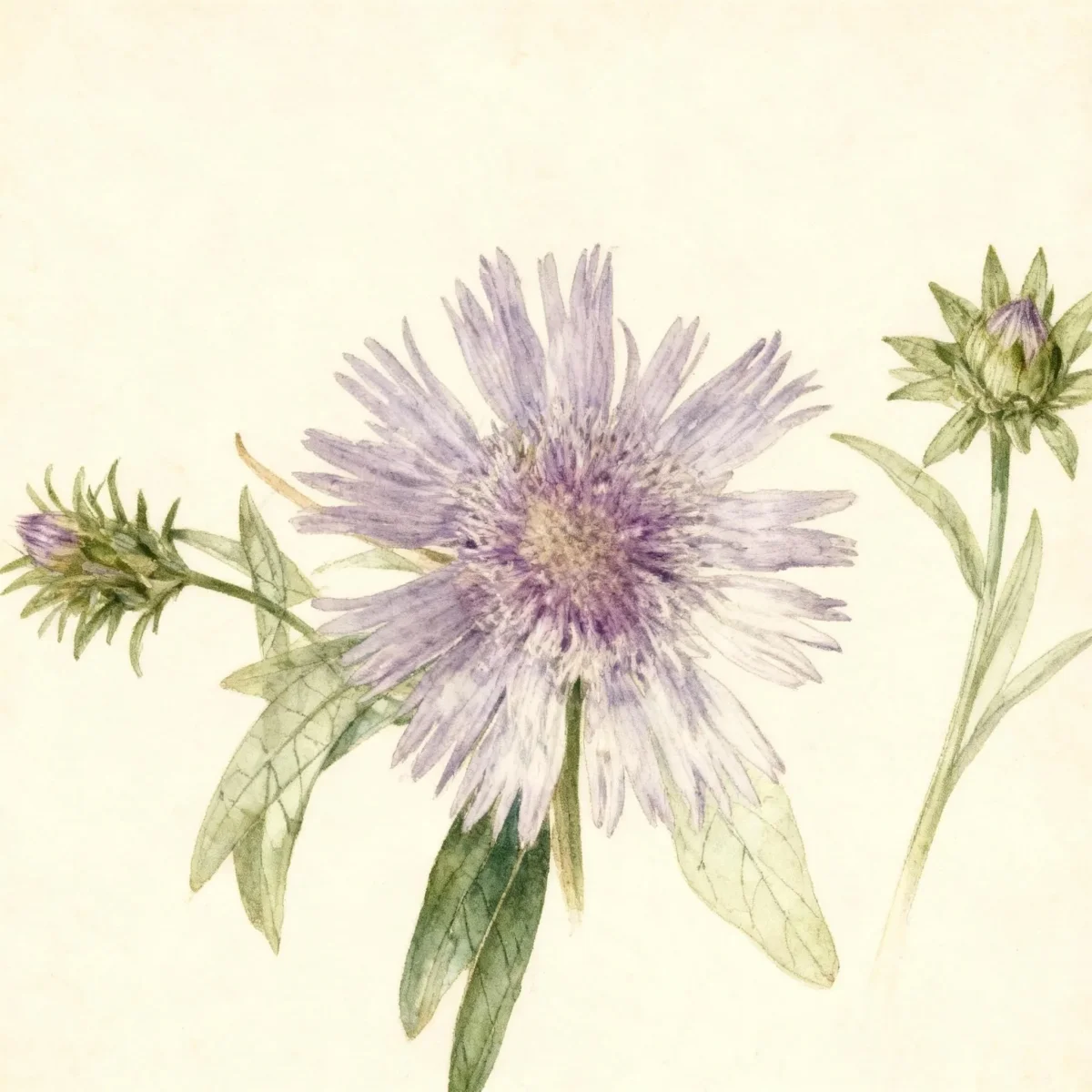
Stokes' aster (Stokesia laevis 'Klaus Jelitto')
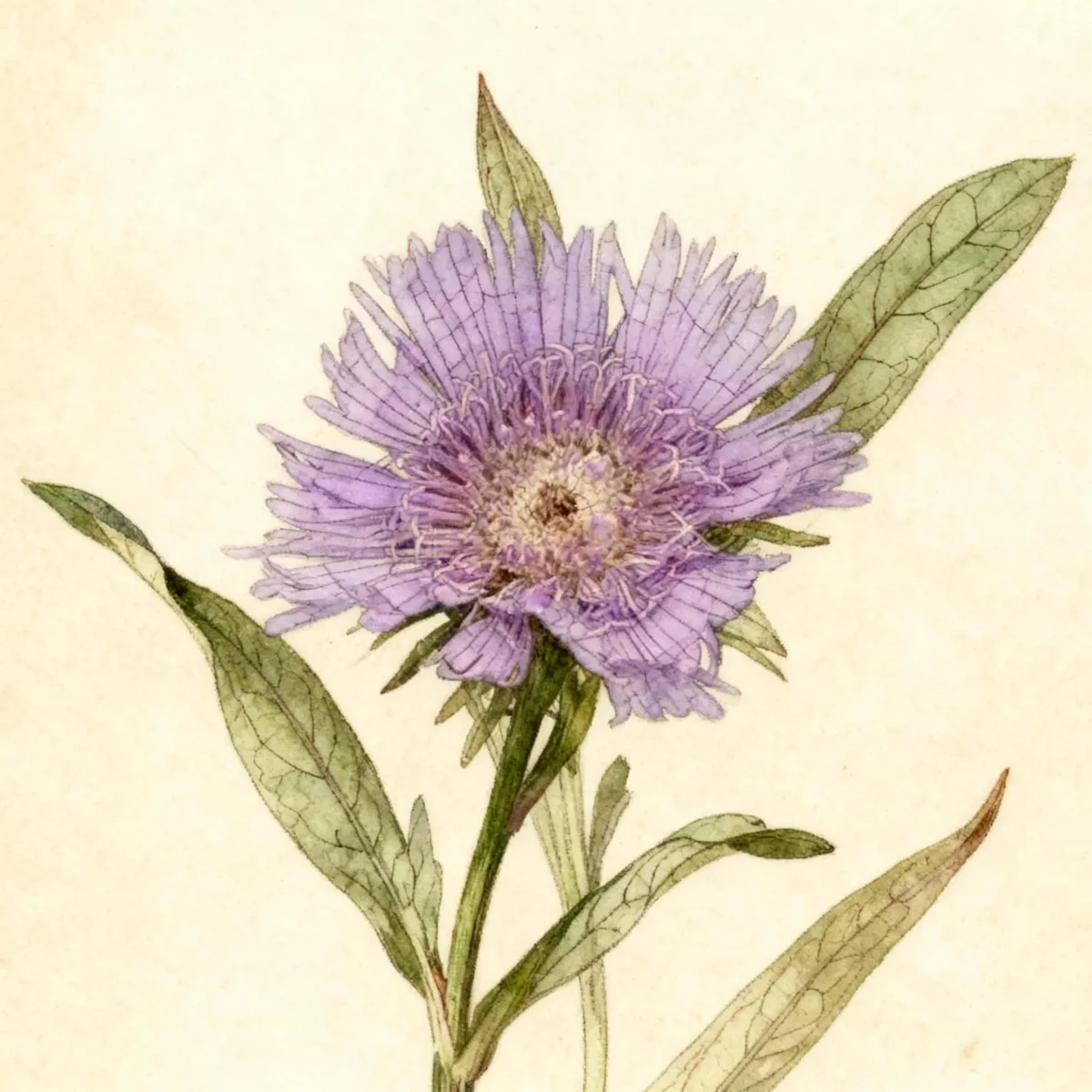
Stokes' aster 'Klaus Jelitto' offers stunning, large powder blue, cornflower-like blooms from May to July. A low-maintenance, drought-tolerant perennial for sunny borders.
Scroll down to discover growing tips, care requirements, companion plants, and more
Complete Plant Information
Overview
The striking Stokesia laevis ‘Klaus Jelitto’, commonly known as Stokes’ aster, is celebrated for its exceptionally large fluffy flowers resembling vibrant cornflowers. This particular cultivar provides a desirable powder blue hue that truly stands out in the summer garden. As an evergreen perennial in warmer climates, it offers reliable structure even outside the main growing season.
Stokesia laevis ‘Klaus Jelitto’ performs best when situated in full sun, though it can tolerate some filtered light. While it enjoys consistent moisture, its surprising drought tolerance makes it a resilient addition to sunny borders when established. Gardeners value this plant for its low maintenance requirement and its ability to provide long-lasting, showy color throughout the early and mid-summer months.
This species is native to wet pinewoods and savannas along the coastal plain, yet it adapts well to average garden soils provided they are meticulously well-drained. Proper soil drainage is crucial for the long-term health of Stokes’ aster, preventing winter rot, which is its primary vulnerability.
Fast Facts
- Plant Family: Asteraceae
- Plant Type: Herbaceous perennial
- Hardiness Zones: USDA Zones 5-9
- Size at Maturity:
- Height: 1-1.5 ft
- Spread: 1-1.5 ft
- Bloom Time: May to July
- Bloom Description: Powder blue
- Sun Exposure: Full sun
- Water Needs: Medium
- Maintenance Level: Low
How to Grow
Plant Stokesia laevis ‘Klaus Jelitto’ during the spring or fall when the soil is workable, ensuring it resides in a location receiving full sun exposure for the best possible flowering performance. The absolute key to success with this Asteraceae member is excellent drainage; the plant loathes wet feet, especially during winter dormancy. Amend heavy clay soils heavily with grit or sand to promote necessary drainage flow.
Once established, maintain medium moisture levels, allowing the top inch of soil to dry slightly between waterings. While Stokes’ aster exhibits good drought tolerance, supplemental watering during prolonged dry spells will sustain peak bloom quality. Do not over-fertilize; an average, undisturbed soil environment is often sufficient.
To encourage extended bloom into the autumn, actively deadhead individual spent flowers throughout the season. After the main flush concludes, remove the spent flowering stems entirely, cutting them back to the basal foliage rosette. In colder areas of its range (Zone 5), apply a layer of winter mulch after the ground freezes to insulate the evergreen basal leaves.
Landscape Uses
Stokesia laevis ‘Klaus Jelitto’ serves beautifully as a dependable edging plant along borders, providing a distinct texture contrast against foliage plants. Its sturdy yet airy habit also makes it an excellent component in traditional cottage gardens, where its soft blue hues blend seamlessly with pinks, whites, and yellows.
Due to its need for excellent drainage, consider planting Stokes’ aster near areas that receive consistent moisture but never stay soggy, such as along the edge of a dry perennial stream bed or within small, well-drained groupings. While generally low-growing, its structure pairs well with taller ornamental grasses or late-season bloomers that can hide any potential flopping of older stems.
Standout Features
Flower Qualities
- Showy
Noteworthy Characteristics
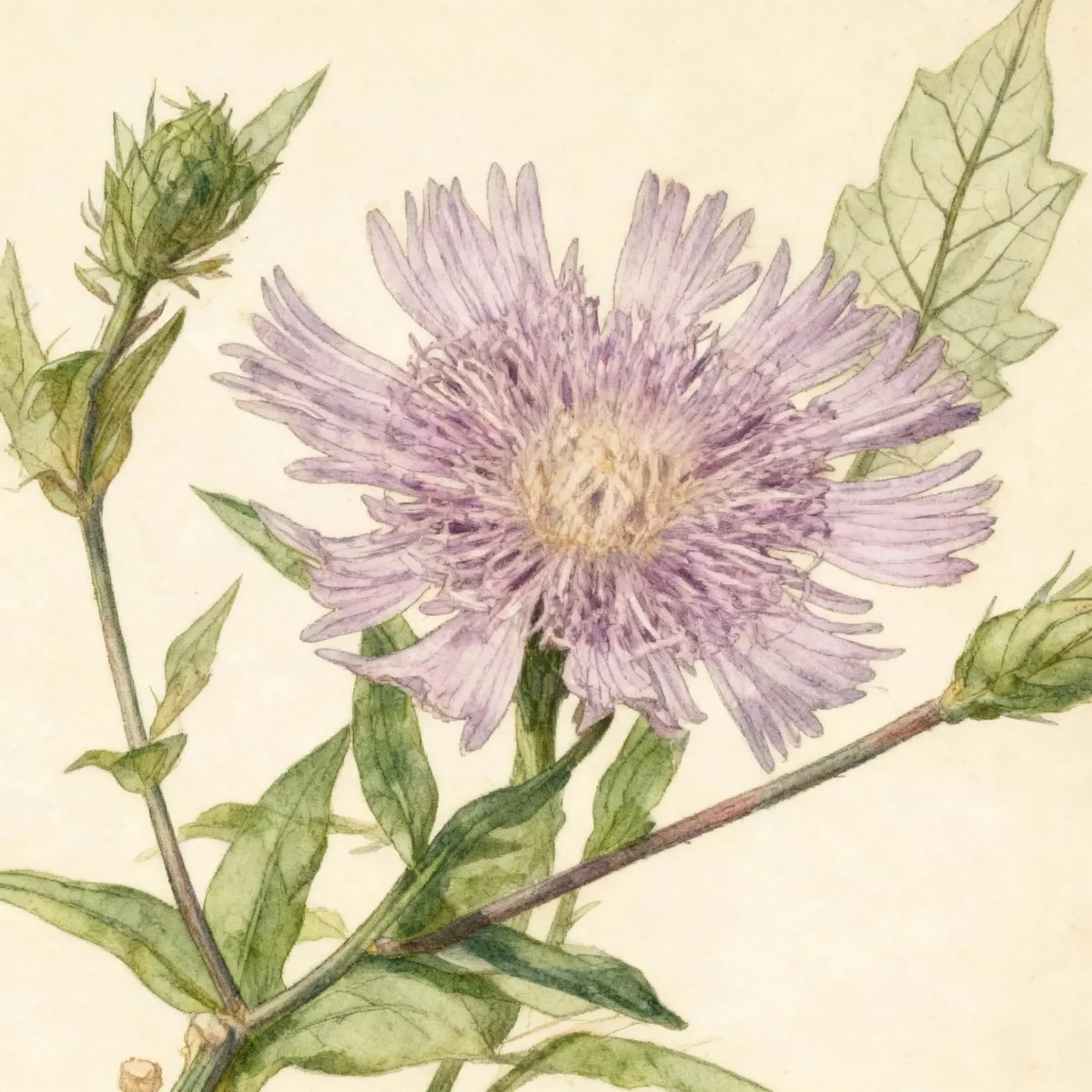
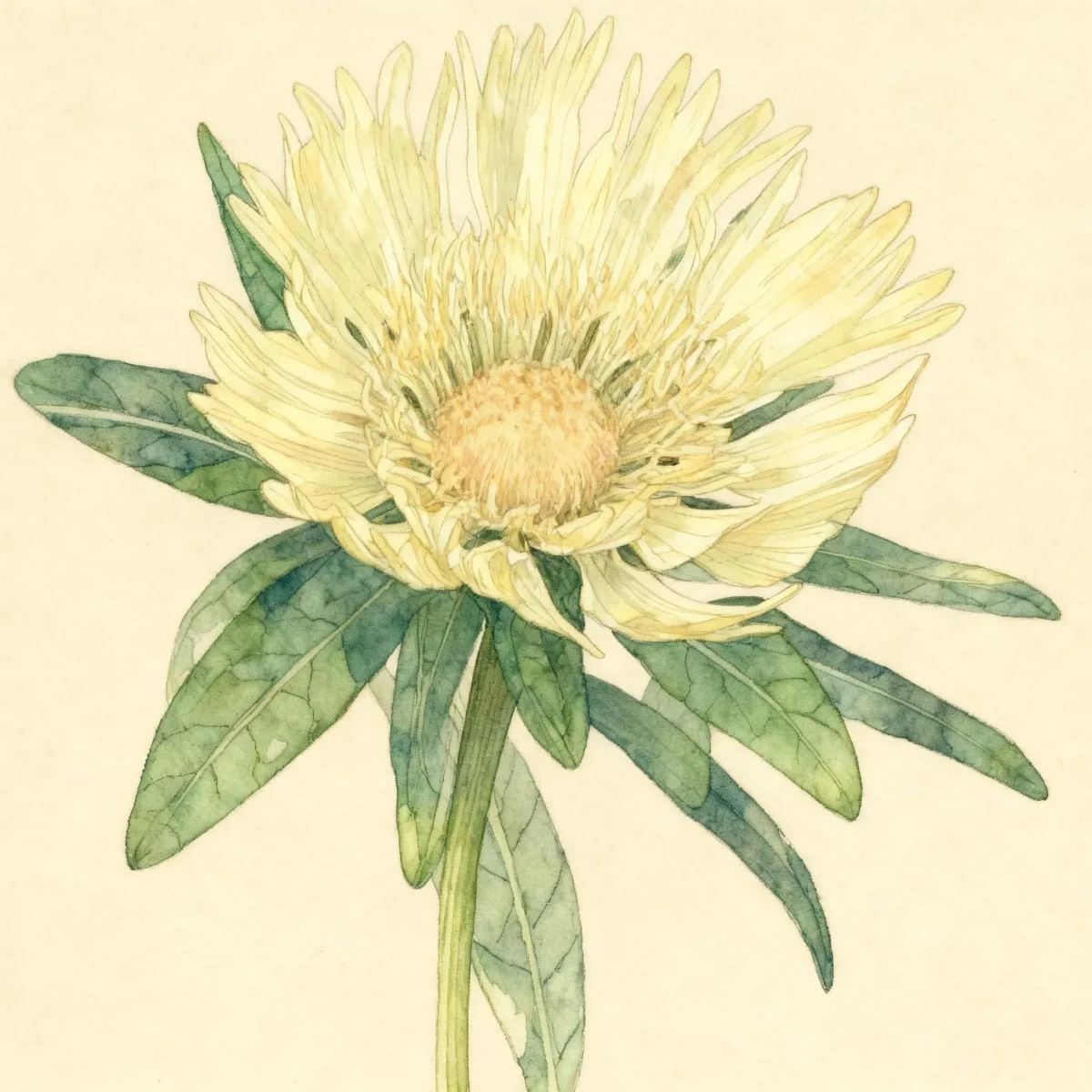
Stokesia laevis, commonly known as Stokes’ aster, is native to wetlands, bottomlands, wet pinewoods, savannas and ditches mostly along the coastal plain from North Carolina to Florida to Louisiana. It is an evergreen perennial that typically grows to 1-2’ tall. It features fluffy, cornflower-like, violet blue flowers (to 2 1/2” across), each with notched rays surrounding a pincushion center of feathery disk florets. ‘Klaus Jelitto’ features fluffy, cornflower-like, powder blue flowers (to 3-4” across) on generally erect, leafy stems growing to 15-20” tall from a rosette of oblong-lanceolate medium green leaves.
Tolerances
- Rabbit
- Drought
Potential Problems
This plant generally exhibits few significant insect or disease issues, simplifying its care routine. Gardeners should remain vigilant for the appearance of caterpillars, which occasionally feast on the foliage. A more common aesthetic issue involves the flower stems tending to flop, particularly after being subjected to heavy rain or strong thunderstorms. To minimize flopping, ensure the plant is sited where it receives full sun and plant it densely enough with companions that it can offer some mutual support.
Frequently Asked Questions
What hardiness zones is Stokes’ aster suitable for?
Stokesia laevis ‘Klaus Jelitto’ is reliably hardy across USDA Zones 5 through 9.
How large does Stokesia laevis ‘Klaus Jelitto’ grow?
This cultivar typically reaches a mature height between 1 and 1.5 feet tall, spreading about 1 to 1.5 feet wide.
What sun exposure does Stokes’ aster need?
For optimal performance and rich powder blue blooms, Stokes’ aster requires full sun exposure throughout the day.
When does Stokes’ aster bloom?
You can expect beautiful powder blue blooms on Stokesia laevis ‘Klaus Jelitto’ primarily from May through July.
Conclusion
The drought-tolerant and low-maintenance nature of Stokesia laevis ‘Klaus Jelitto’ makes it an essential choice for sunny borders requiring reliable, large-scale blue color. By prioritizing excellent soil drainage, especially during winter dormancy, gardeners can ensure this unique Stokes’ aster thrives for years. Check your local USDA hardiness zone compatibility and plan your planting this coming spring or fall.
Companion Planting
Choosing suitable neighbors is crucial when growing Stokes’ aster, mainly because companions should share its preference for high drainage and full sun. Consider pairing Stokesia laevis ‘Klaus Jelitto’ with plants that have contrasting textures, such as fine-bladed ornamental grasses like Stipa tenuissima, which allows air circulation around the base of the aster. Plants that thrive in drier, average soil, such as Lavender (Lavandula) or early-blooming low-growing Alliums, make excellent textural and color companions. Avoid grouping it with moisture-loving species, as this increases the risk of fungal issues affecting the Stokes’ aster during humid summer spells.
Wildlife Benefits
Although the primary draw of Stokesia laevis ‘Klaus Jelitto’ is aesthetic, its unique, fuzzy composite flower head is highly attractive to various beneficial insects. The pincushion center invites frequent visits from many types of native bees and butterflies seeking pollen and nectar during the mid-summer lull. While specific reports on butterfly host plant activity might be limited, the flower structure generally ensures good visibility and accessibility for pollinators. Including this perennial helps sustain local pollinator populations during its peak bloom time in early summer.