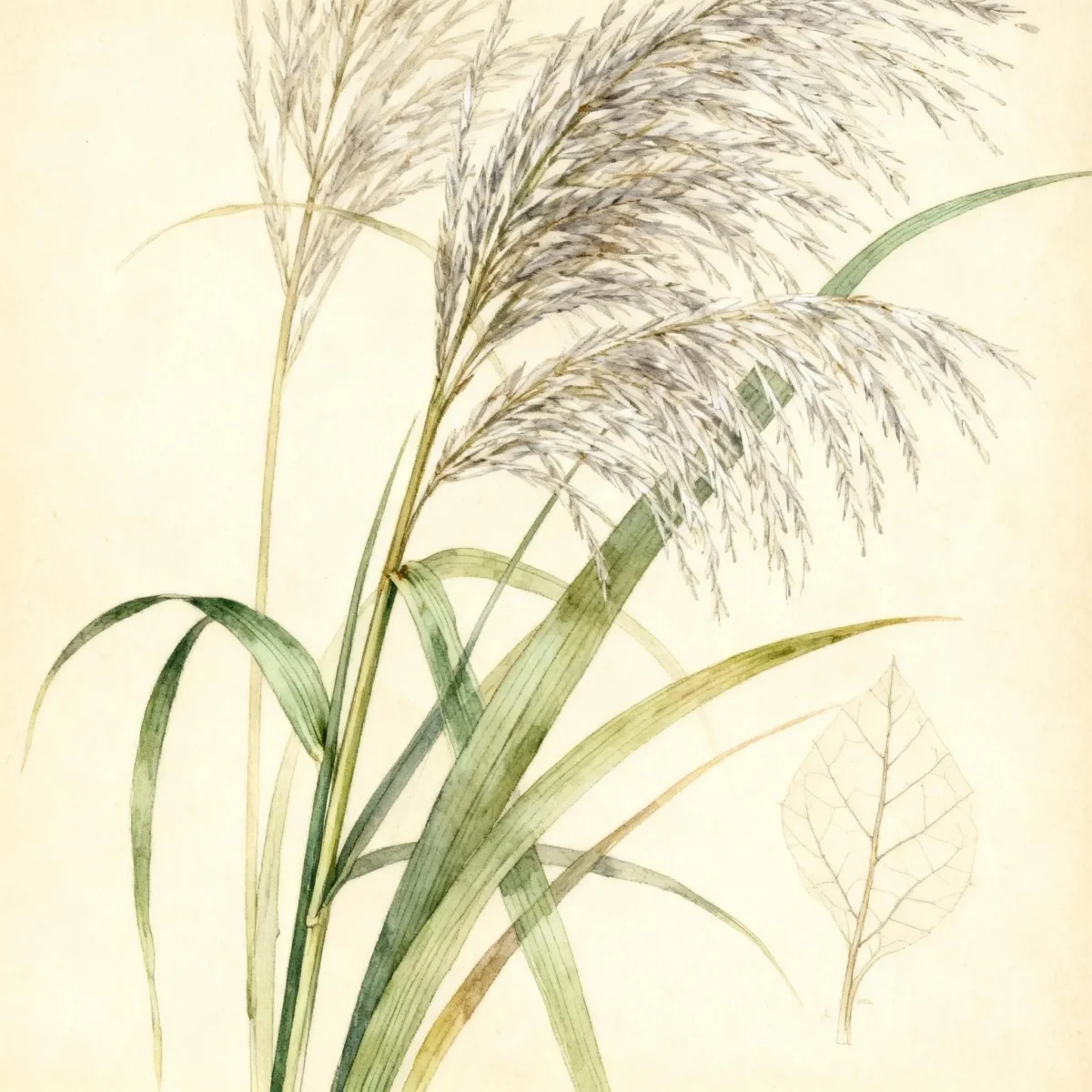
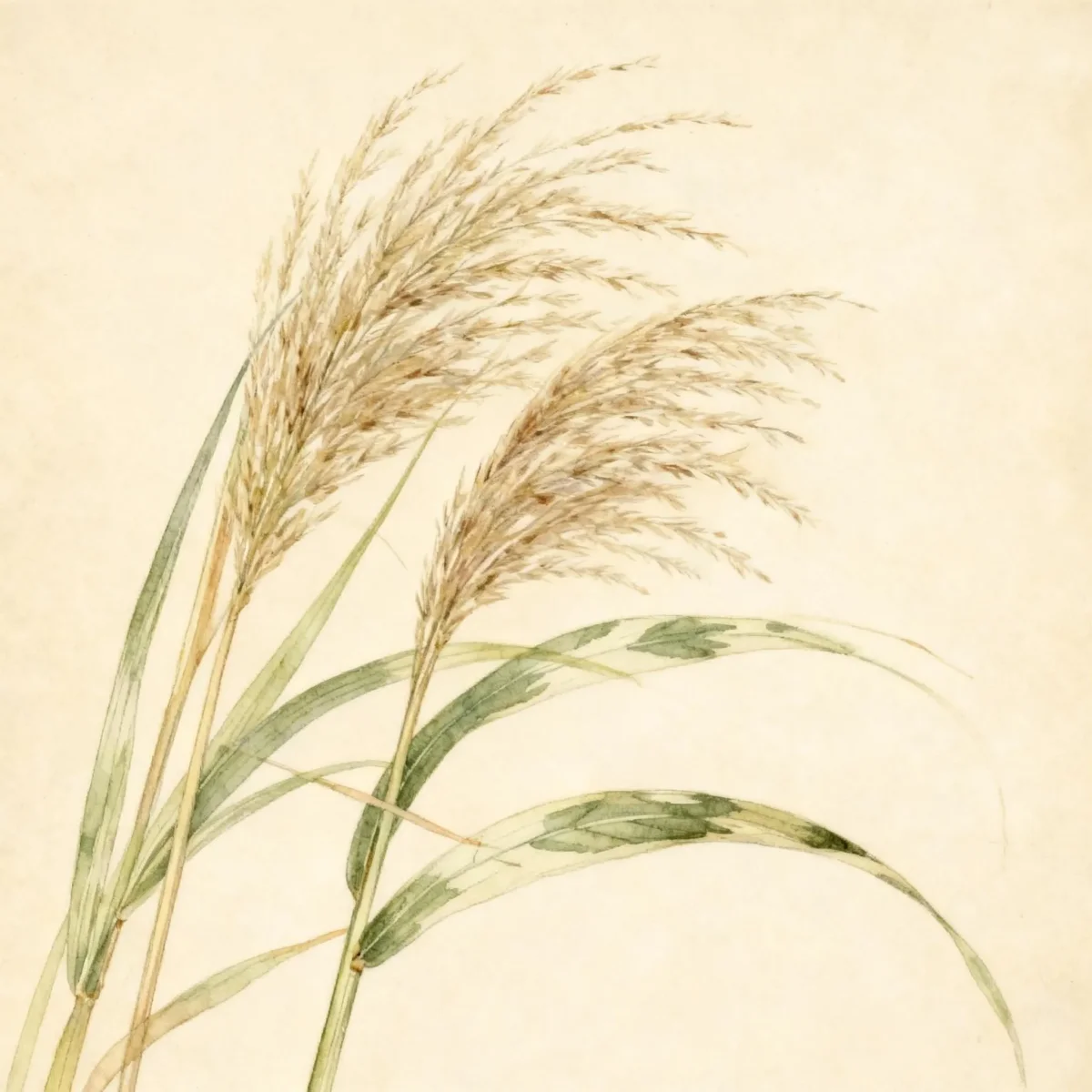
Eulalia (Miscanthus sinensis 'Gold Bar')
Miscanthus sinensis 'Gold Bar', or Eulalia, offers striking horizontally banded yellow/green foliage, growing 4-5 ft tall as a low-maintenance ornamental grass.
Scroll down to discover growing tips, care requirements, companion plants, and more
Complete Plant Information
Overview
Miscanthus sinensis ‘Gold Bar’, commonly referred to as Eulalia grass, is prized by gardeners for its intense, ornamental foliage which features distinctive horizontal yellow bands against green. This compact, clump-forming warm-season grass provides strong vertical interest in the landscape throughout the growing season and into winter. It is an improved cultivar, often regarded as shorter and more densely banded than its parentage.
This eulalia variety typically matures at 4 to 5 feet tall with a manageable spread of 3 to 4 feet, lending itself well to defined border edges or as a specimen plant. It is relatively low maintenance once established, tolerating a variety of conditions while rewarding the gardener with dependable seasonal color and structure.
Planting Miscanthus sinensis ‘Gold Bar’ ensures year-round structure, as the foliage and flower plumes often remain attractive even after frost. While generally robust, ensuring adequate sun prevents flopping and maximizes the stunning golden banding that defines this cultivar.
Fast Facts
- Plant Family: Poaceae
- Plant Type: Ornamental grass
- Hardiness Zones: USDA Zones 5-9
- Size at Maturity:
- Height: 4-5 ft
- Spread: 3-4 ft
- Bloom Time: August to February
- Bloom Description: Burgundy
- Sun Exposure: Full sun to part shade
- Water Needs: Medium
- Maintenance Level: Low
How to Grow
To establish vibrant Miscanthus sinensis ‘Gold Bar’, plant in spring or early fall when conditions are mild. This eulalia thrives in average, medium moisture, well-drained soil. While it tolerates a wide range of soil compositions, including moisture-retentive clays, it performs best when planted in full sun, although it will tolerate light part shade.
Care is minimal once established. Water regularly during dry spells, as medium moisture is preferred, though it exhibits drought tolerance once roots are developed. Fertilization is rarely necessary; excessive feeding can lead to reduced flowering and increased floppiness. Allow the foliage to remain standing through winter to protect the crown and provide crucial structural interest against the snow.
The annual cleanup is essential for this grass. Cut all faded foliage close to the ground in late winter, just as new shoots begin to emerge in spring. Propagate Miscanthus sinensis ‘Gold Bar’ through division of the crown when clumps become too large, typically early spring. Be aware that in milder zones, this grass may eventually reseed, though mulching can help suppress unwanted seedlings.
Landscape Uses
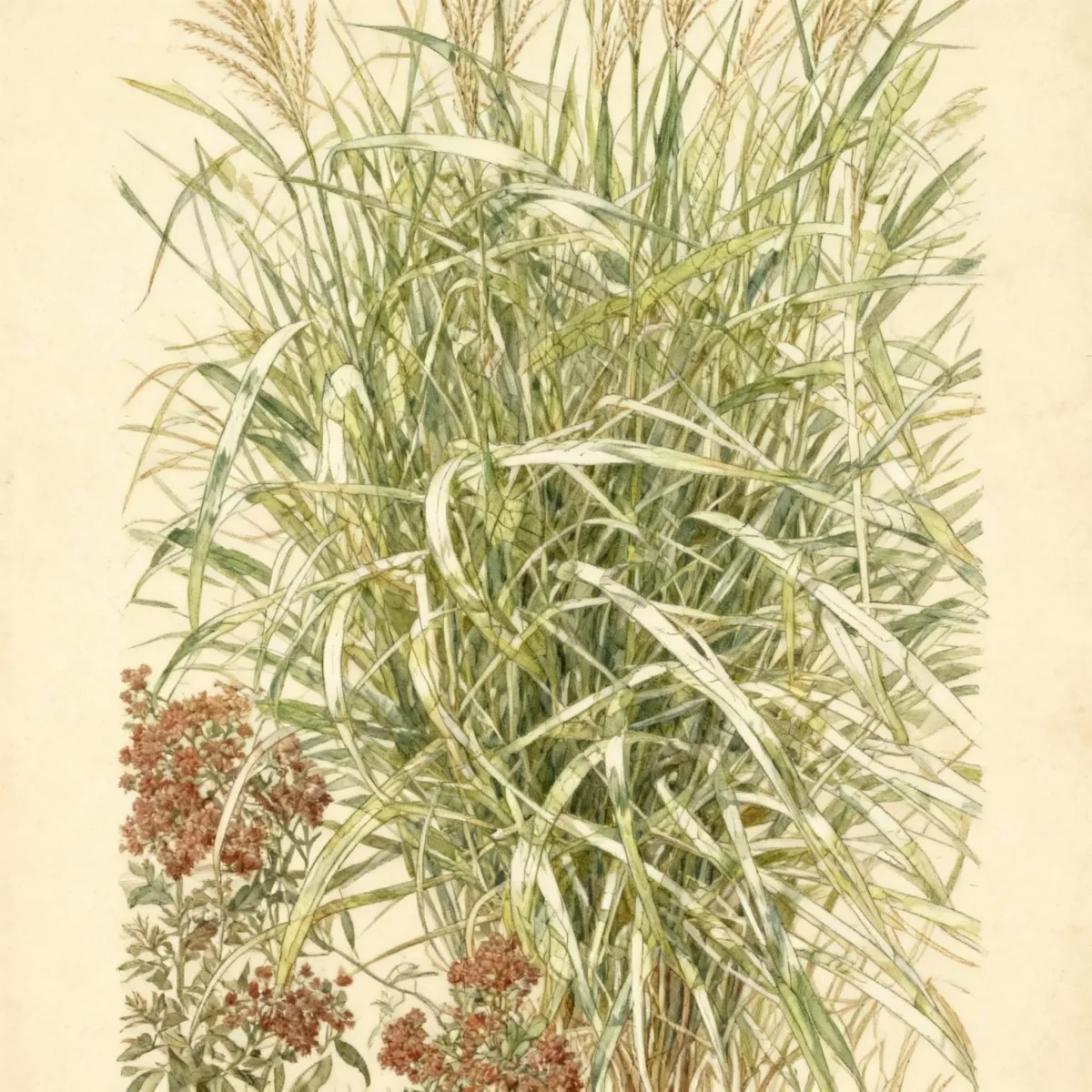
Miscanthus sinensis ‘Gold Bar’ serves as a versatile architectural element in garden design. Its compact height (4-5 ft) and upright habit make it perfect for use as an accent, specimen, or in small groupings where its banded foliage can be appreciated up close. It functions excellently in structured borders, adding texture that contrasts beautifully with broadleaf perennials and shrubs.
For cottage or wild gardens, this eulalia integrates seamlessly, particularly near peripheries of water features where its medium water needs can be met. The dried flower panicles are exceptionally long-lasting, making them valuable additions to dried floral arrangements, extending their usefulness long after the blooms first appear in autumn.
This cultivar’s structure also lends itself well to contemporary designs seeking clean lines, contrasting sharply with softer plantings. If you are looking to introduce dynamic, low-maintenance verticality showcasing consistent summer color, Miscanthus sinensis ‘Gold Bar’ is an excellent choice.
Standout Features
Flower Qualities
- Showy
Noteworthy Characteristics
Miscanthus sinensis, commonly known as Chinese silver grass or eulalia grass, is a dense, clump-forming warm-season grass native to East Asia. The cultivar ‘Gold Bar’ is specifically noted for its handsome, dense-upright-rigid growth habit featuring leaves with distinctive horizontal yellow bands maintained throughout the growing season. Tiny coppery-red flowers emerge above the foliage in autumn, maturing to beige and providing lasting winter interest.
Tolerances
- Drought
- Erosion
- Dry Soil
- Black Walnut
- Air Pollution
Potential Problems
Miscanthus sinensis ‘Gold Bar’ generally avoids frequent insect or disease issues, making it a reliable feature in the garden. Gardener vigilance is sometimes required against specific threats like the miscanthus mealybug, which infests the stems and stunts growth, or miscanthus blight, a fungal issue causing blade and sheath spots. Leaf rust can occasionally appear as well.
Management of miscanthus mealybug is challenging due to its sheltered location inside the stems; management often requires systemic applications or careful physical removal. To combat potential fungal issues like blight, ensure good air circulation by adhering to proper spacing and limiting overhead watering when possible. Invasive spread is another aspect to monitor, especially in warmer parts of its range, though clump division is the primary method of propagation for this cultivar.
Frequently Asked Questions
What hardiness zones is Eulalia suitable for?
Miscanthus sinensis ‘Gold Bar’, or Eulalia, is reliably hardy in USDA Zones 5 through 9.
How large does Eulalia grow?
This specific eulalia cultivar typically reaches a height between 4 and 5 feet, with a spread ranging from 3 to 4 feet wide.
What sun exposure does Miscanthus sinensis ‘Gold Bar’ need?
For the best performance, dense upright structure, and strongest foliage banding, Miscanthus sinensis ‘Gold Bar’ requires full sun, although it can tolerate partial shade.
When does Eulalia bloom?
The plumes of this ornamental grass emerge in the late summer and early autumn, with the bloom time noted as extending from August through February, displaying burgundy color upon emergence.
Conclusion
The striking, horizontally banded foliage of Miscanthus sinensis ‘Gold Bar’ provides unmatched seasonal structure and color, solidifying its place as a premier ornamental grass. Its low maintenance needs and tolerance to various stresses, including drought, make this eulalia a practical and rewarding addition to nearly any landscape design plan. Before planting, confirm that your local growing conditions fall within USDA Zones 5-9 to ensure optimal success for your Miscanthus sinensis ‘Gold Bar’.
Companion Planting
Selecting intelligent companions enhances the year-round display of this Miscanthus cultivar. Since Miscanthus sinensis ‘Gold Bar’ performs best in full sun and appreciates well-drained soil, pair it with drought-tolerant perennials that bloom in contrast, such as Coneflowers (Echinacea) or Daylilies (Hemerocallis). The upright, stiff habit of the eulalia contrasts beautifully with mounding or spreading groundcovers planted at its base.
Consider using plants that share its late-season aesthetic to maintain interest when the grass begins to fade. Sedums, shorter ornamental grasses like Calamagrostis ‘Karl Foerster’, or late-blooming Aster varieties work well. These combinations ensure that the garden retains texture and definition throughout the autumn and early winter months, complementing the residual tan color of the dried grass blades.
Propagation Tips
Propagation of this specific cultivar is best achieved through division of the crown, a task usually performed in very early spring before new growth begins. Wait until the Miscanthus sinensis ‘Gold Bar’ clump is large and dense, often every three to five years, before dividing. Dig widely around the clump and use a sharp spade to sever the root ball into smaller sections, ensuring each new piece retains viable roots and at least one strong growth bud.
For successful establishment, plant the separated divisions immediately into prepared soil that drains well, giving them consistent moisture during their first year. While the description notes that grasses like this can reseed, division is the only reliable method to ensure you replicate the exact desirable characteristics—the distinct yellow banding—of the parent Miscanthus sinensis ‘Gold Bar’.