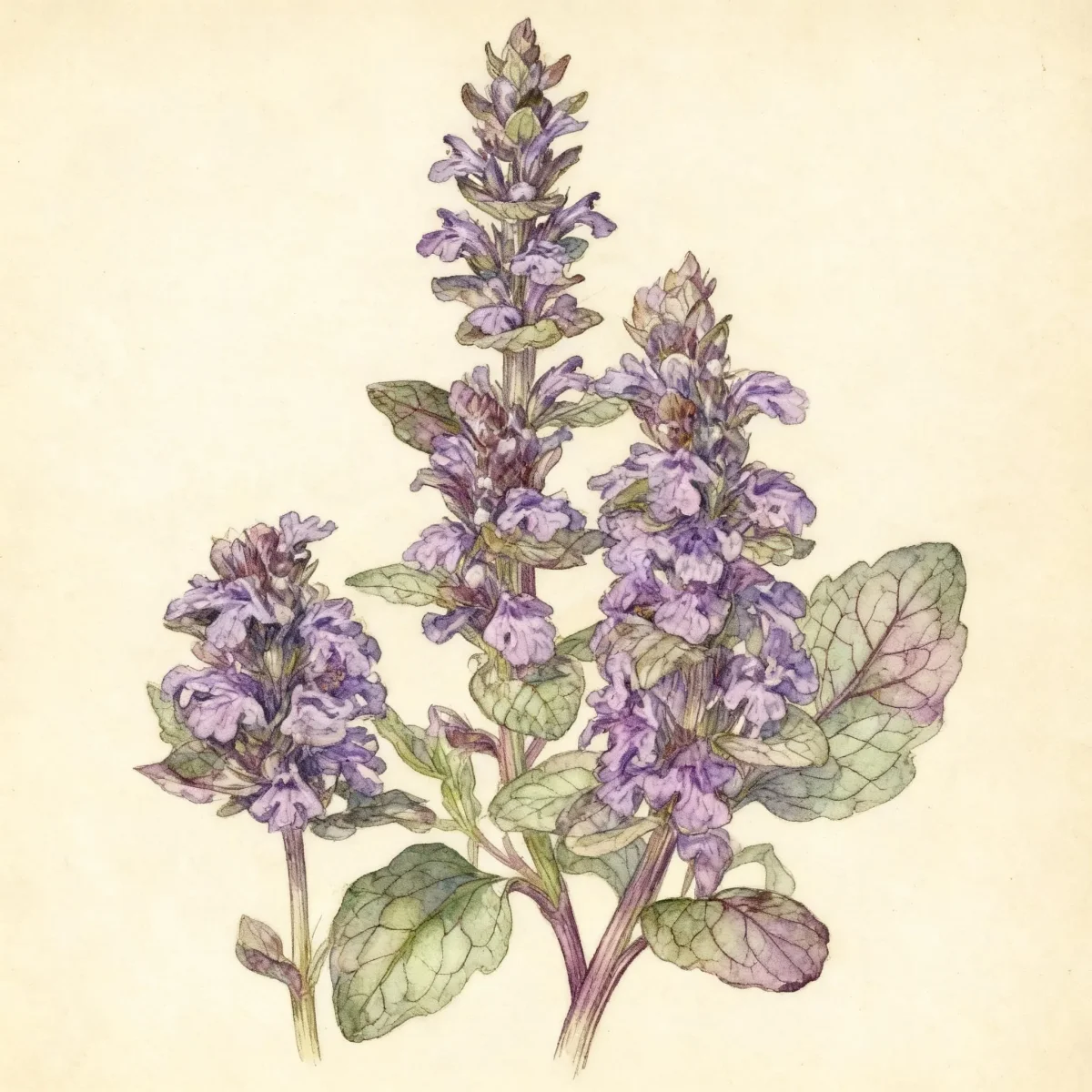
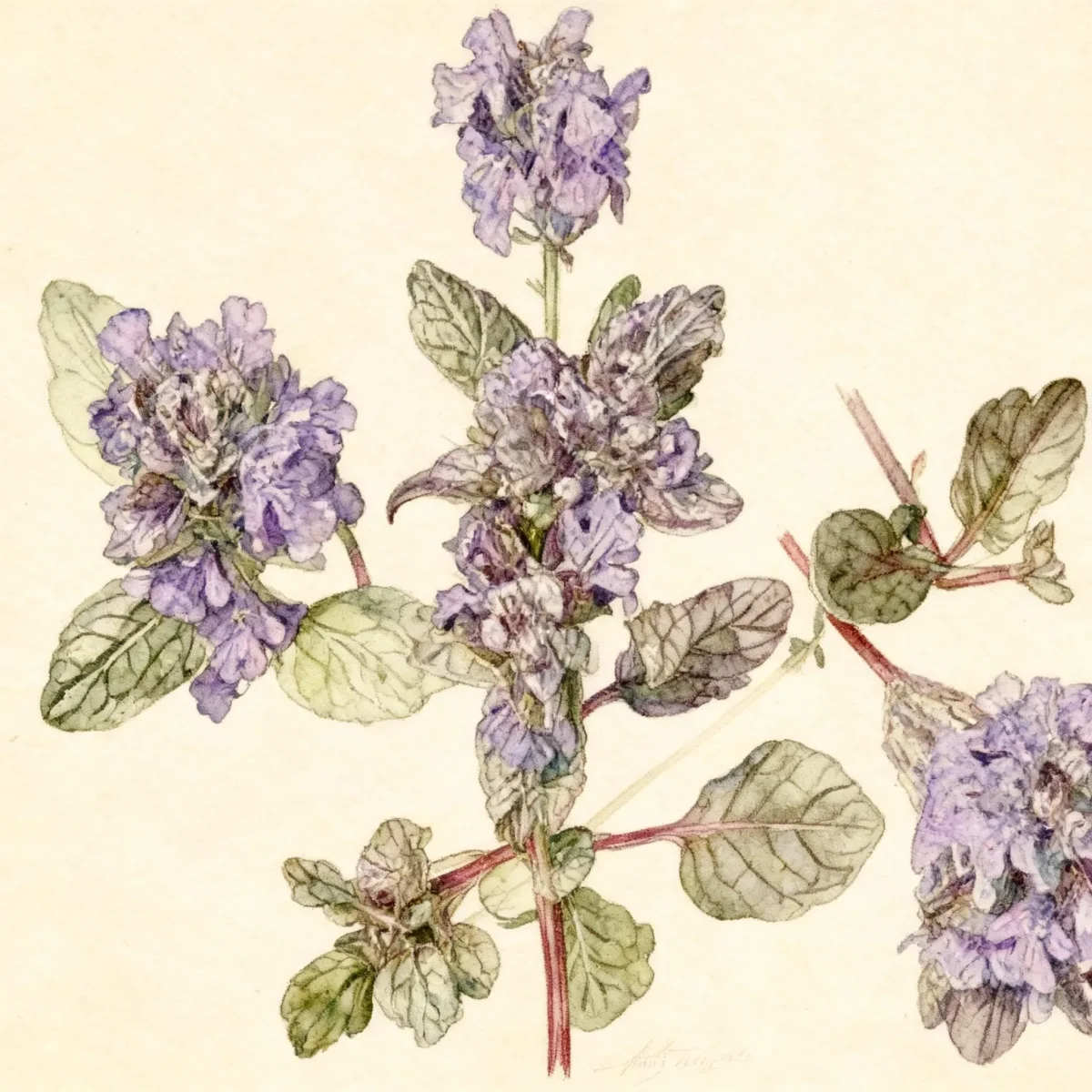
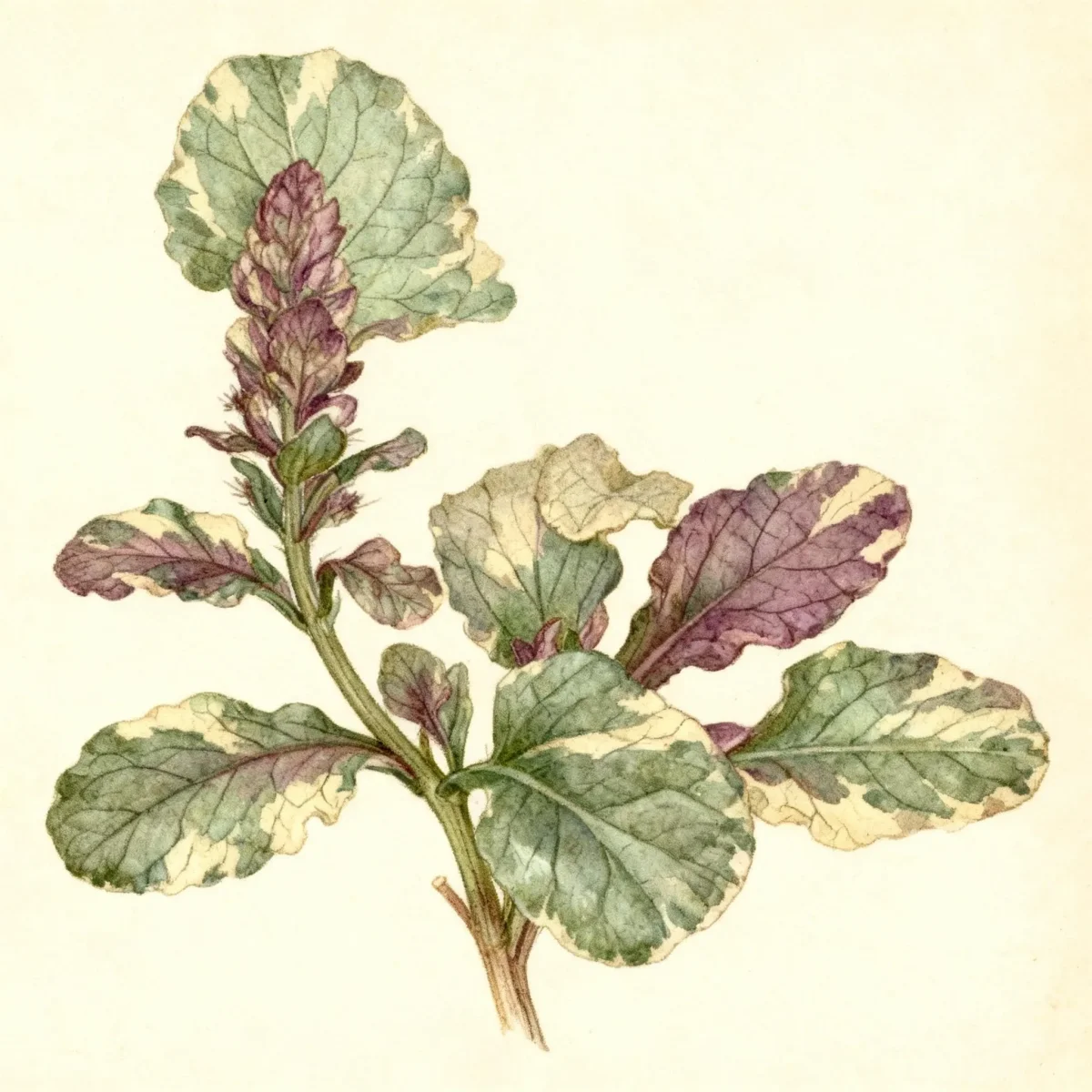
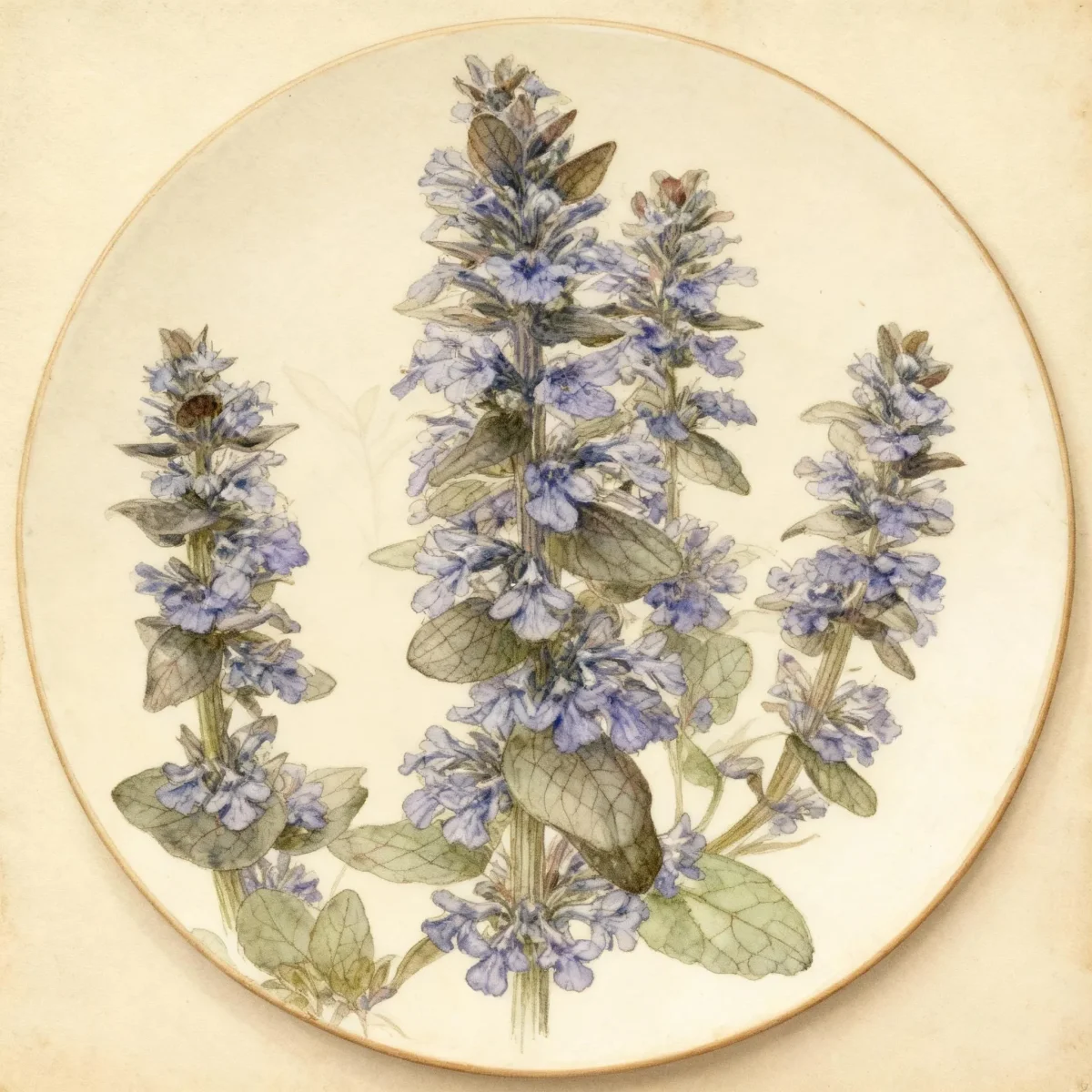
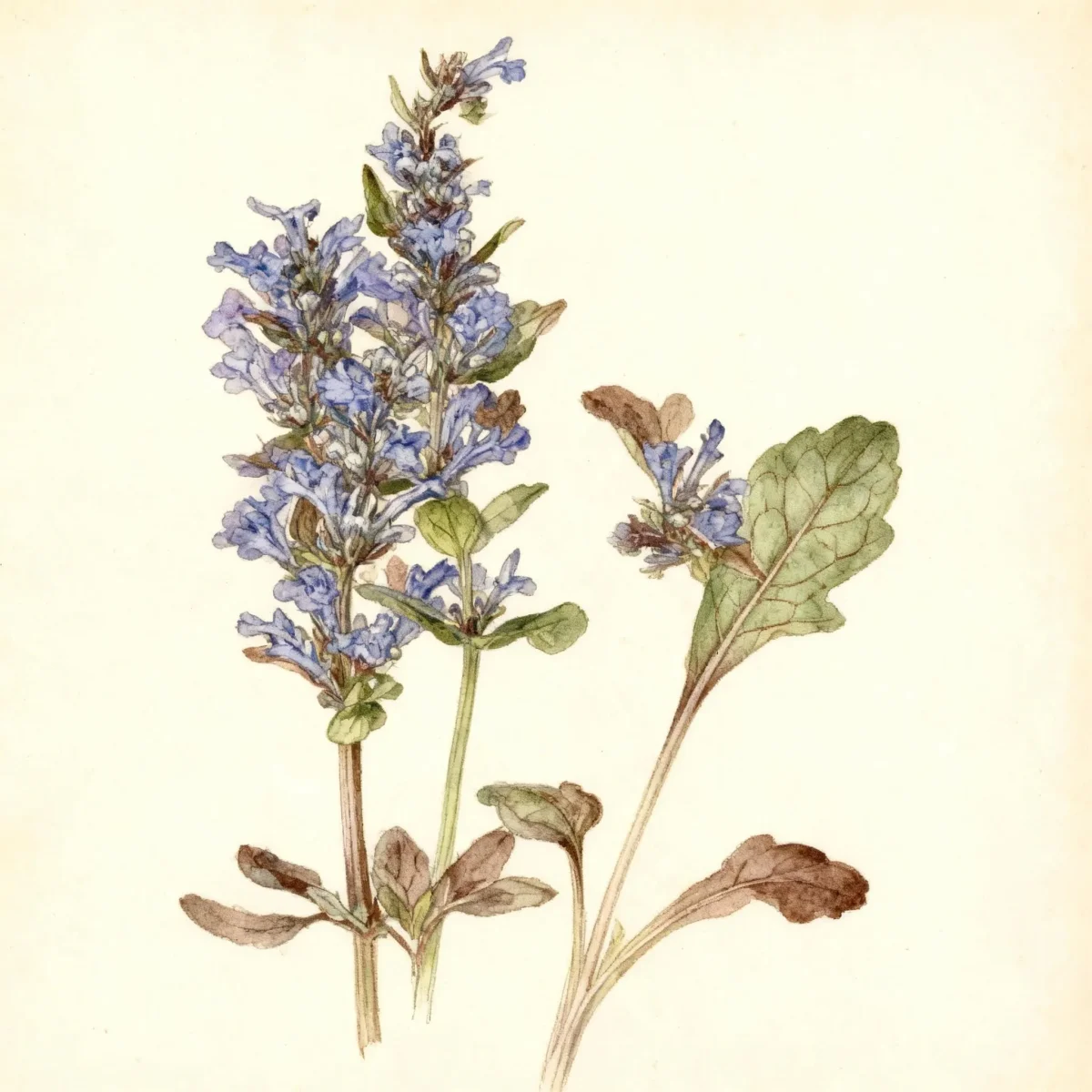
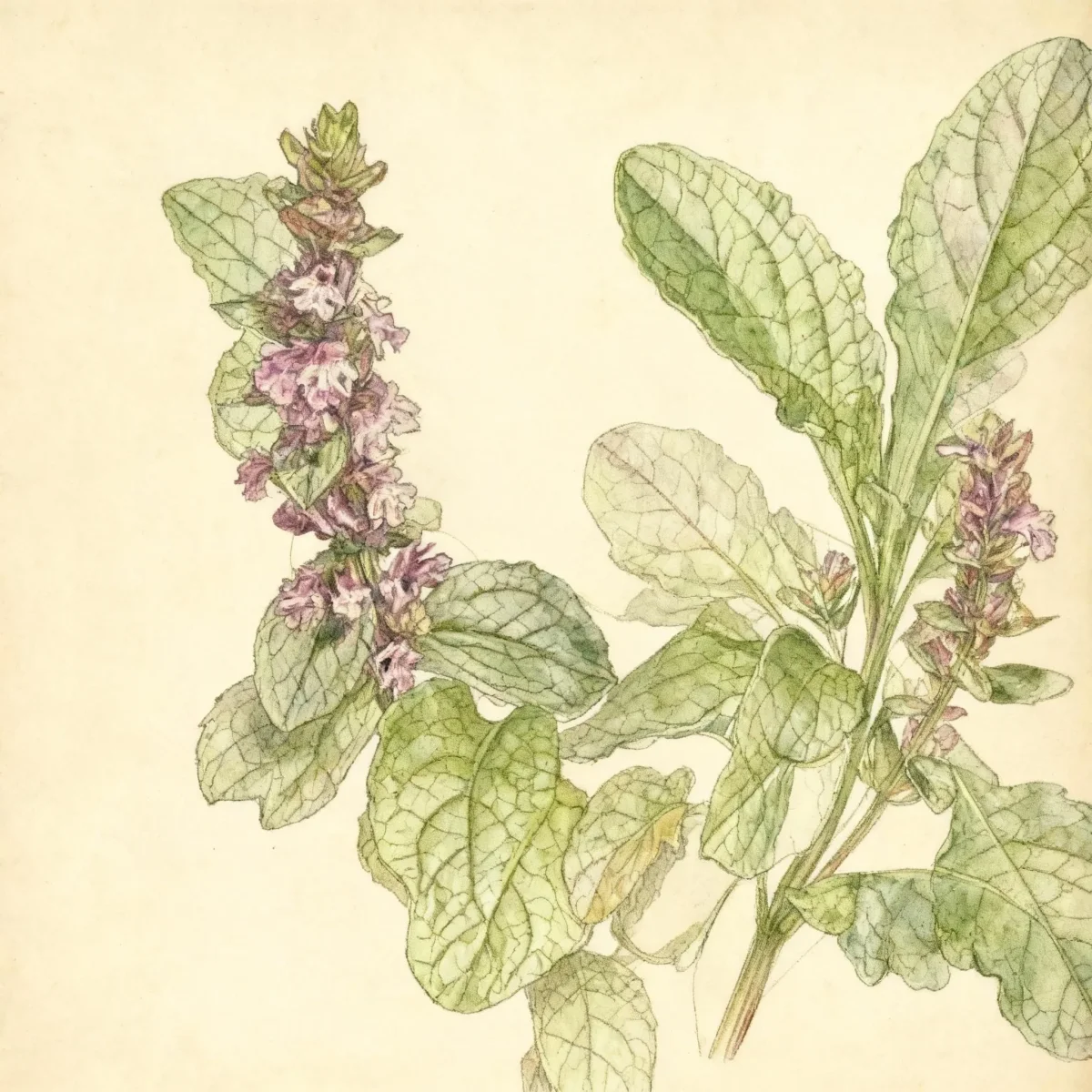
Bugleweed (Ajuga reptans 'Binblasca' BLACK SCALLOP)
Ajuga reptans 'Binblasca' BLACK SCALLOP offers deep purple foliage and violet blooms; this low-maintenance Bugleweed excels as a ground cover.
Scroll down to discover growing tips, care requirements, companion plants, and more
Complete Plant Information
Overview
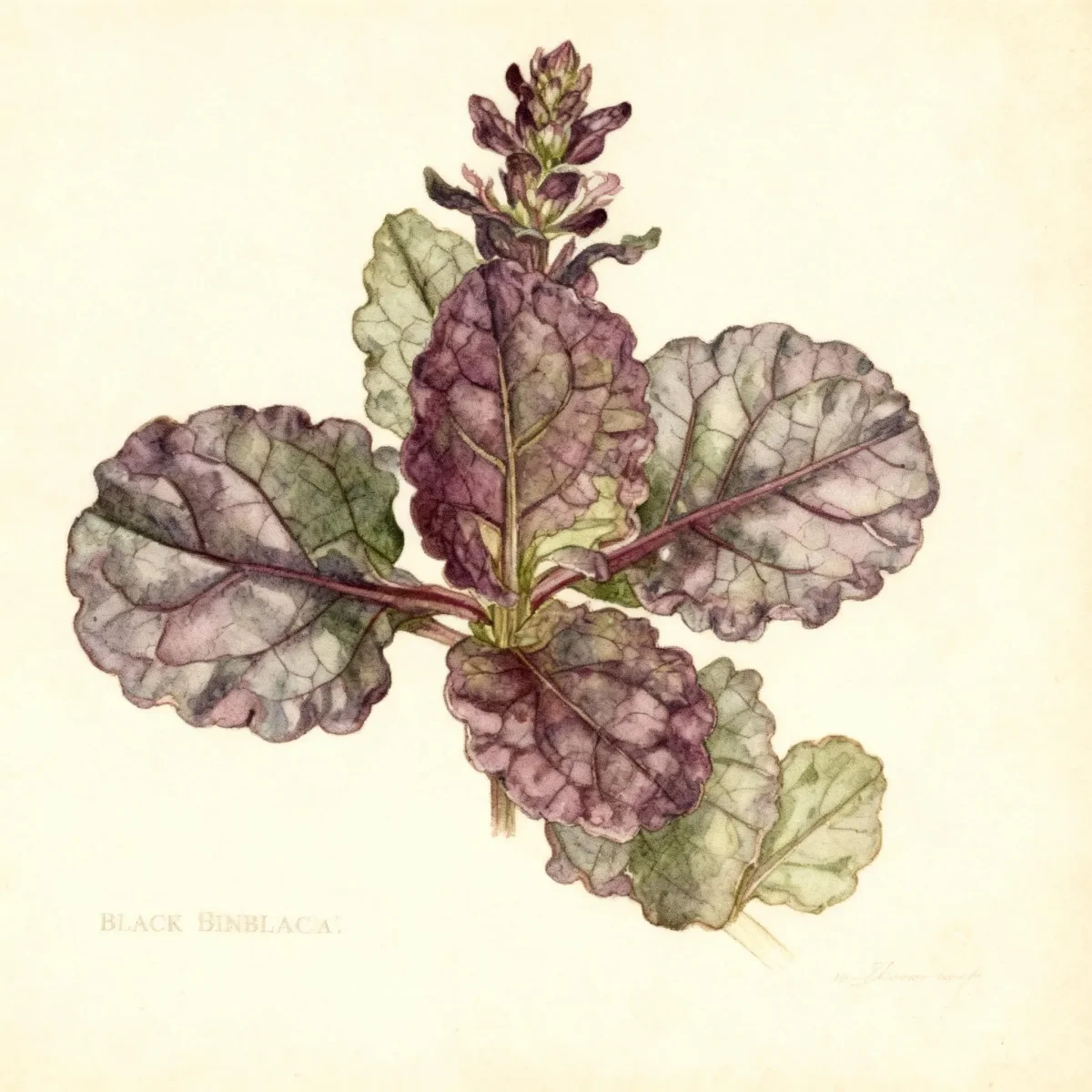
Ajuga reptans ‘Binblasca’ BLACK SCALLOP, commonly known as Bugleweed, is a highly valued, dense, mat-forming plant prized for its incredibly dark foliage. This cultivar stands out with leaves described as near black, providing superb contrast in shaded garden areas where many plants struggle. Its vigorous, creeping habit makes it a spectacular solution for controlling weeds and unifying landscape design.
This herbaceous perennial spreads via stolons, quickly forming a low, attractive carpet ideally suited for ground cover applications. While it produces spikes of fragrant, dark violet flowers in late spring, the consistent, deep coloration of the Ajuga reptans ‘Binblasca’ BLACK SCALLOP foliage remains its primary ornamental feature throughout the growing season.
Cultivated for its ability to thrive where other plants fail, this Bugleweed is low maintenance once established, requiring little more than occasional division if it becomes overcrowded. Gardeners seeking dark, reliable coverage will find Ajuga reptans ‘Binblasca’ BLACK SCALLOP an indispensable tool for creating dramatic textures under trees or along pathways.
Fast Facts
- Plant Family: Lamiaceae
- Plant Type: Herbaceous perennial
- Hardiness Zones: USDA Zones 4-9
- Size at Maturity:
- Height: 0.25-0.5 ft
- Spread: 0.5-2 ft
- Bloom Time: May to June
- Bloom Description: Violet
- Sun Exposure: Full sun to part shade
- Water Needs: Medium
- Maintenance Level: Low
How to Grow
Plant Ajuga reptans ‘Binblasca’ BLACK SCALLOP best when dividing existing clumps in spring or early fall, placing them 6 to 9 inches apart to encourage prompt ground cover formation. This Bugleweed performs excellently in average, medium moisture, well-drained soil. While it tolerates drier conditions, moist, humusy soils yield the best results. For optimal foliage saturation, ensure the plant receives several hours of sun daily; total shade may dull the characteristic dark color of the Ajuga reptans ‘Binblasca’ BLACK SCALLOP leaves.
Maintain consistent moisture, especially during establishment, though established plants are reasonably drought-tolerant. Fertilization is rarely required; focus efforts instead on management of plant density and health. In hot, humid climates, ensure good air circulation to mitigate the risk of crown rot, which is a common concern for this species.
If the planting becomes too dense, divide the creeping mats as needed, usually every few years. Post-flowering, the foliage can be rejuvenated by cutting the entire patch back close to the ground. Very large applications of Bugleweed can even be tidied up by mowing carefully on a high setting after the flowers fade to remove spent spikes. Remember that this is a patented cultivar and will not propagate true to type from seed.
Landscape Uses
The primary function of Ajuga reptans ‘Binblasca’ BLACK SCALLOP is as a dense, spreading ground cover, making it ideal for filling large, difficult shady areas where maintaining a traditional lawn is challenging. Its creeping nature allows it to effectively cover banks and slopes, stabilizing soil while providing year-round color contrast due to its deep, scalloped foliage. It looks stunning planted beneath deciduous trees or surrounding the base of established shrubs where its low profile will not compete visually.
Consider utilizing the dark foliage of this Bugleweed to make lighter features pop. It pairs beautifully when underplanted with spring bulbs, such as snowdrops, where the Ajuga foliage emerges to mask the fading bulb foliage later in the season. For design cohesion, avoid planting it immediately adjacent to standard lawn areas, as the vigorous stolons will quickly invade the turf, creating frustrating islands that require constant vigilance to remove.
Containers and rock gardens also benefit from the spreading texture of Ajuga reptans ‘Binblasca’ BLACK SCALLOP, allowing it to cascade slightly over edges while still acting as a dark, living mulch.
Standout Features
Flower Qualities
- Showy
Noteworthy Characteristics
Ajuga reptans, commonly called bugleweed, is a dense, rapidly spreading, mat-forming ground cover which features shiny, dark green leaves. The specific cultivar, BLACK SCALLOP, is noted for its dark maroon-purple leaves with distinctly scalloped margins, fragrant dark violet flowers, and a compact yet spreading habit. This plant carpets the ground, forming a 3-4” tall spread that can reach up to 36” wide over time, topped by flower spikes in spring.
Tolerances
- Rabbit
- Deer
- Black Walnut
Potential Problems
The most significant concern for Bugleweed maintenance, particularly in the humid environments of the South or in heavy, poorly draining soils, is crown rot. To prevent this, ensure planting sites offer excellent drainage and good air movement around the foliage mats. When dividing plants to maintain vigor or control spread, you are also indirectly improving air circulation through the planting. Aggressive spreading means gardeners must be careful where they place Ajuga reptans ‘Binblasca’ BLACK SCALLOP, actively avoiding perennial beds or lawns where its encroachment will be difficult to manage later.
Frequently Asked Questions
What hardiness zones is Bugleweed suitable for?
Ajuga reptans ‘Binblasca’ BLACK SCALLOP is hardy across USDA Zones 4 through 9.
How large does Bugleweed grow?
This low-growing perennial typically reaches a height between 0.25 and 0.5 feet, spreading outward to cover an area 0.5 to 2 feet wide.
What sun exposure does Ajuga reptans ‘Binblasca’ BLACK SCALLOP need?
For the best foliage color, provide this plant with several hours of direct sun per day (part shade). It will grow in full sun or full shade, but color intensity may vary.
When does Bugleweed bloom?
The fragrant, dark violet flowers appear on spikes from May into June.
Conclusion
Ajuga reptans ‘Binblasca’ BLACK SCALLOP offers low maintenance and high visual impact, especially due to its near-black, scalloped foliage which provides excellent year-round structure. This dependable Bugleweed excels as a spreader and weed suppressor in partial shade. Before planting, assess your site conditions, ensuring adequate drainage and space for its creeping habit to thrive.
Companion Planting
Choosing appropriate neighbors is key to maximizing the visual potential of Ajuga reptans ‘Binblasca’ BLACK SCALLOP. Because this plant prefers medium moisture and tolerates shade well, pair it with other shade-loving woodland plants that offer textural contrast. Hostas, particularly those with chartreuse or blue foliage, enhance the deep purple tones of the Bugleweed. Ferns create an airy backdrop against the dense mat formed by the Ajuga.
For spring color contrast before the Ajuga foliage fully develops, consider planting early bloomers like Snowdrops, as mentioned in its uses, or Muscari (grape hyacinth). Since its spread is managed via stolons, select companions that are not overly aggressive themselves, preventing resource competition while maintaining the aesthetic boundary you establish for the Bugleweed.
Propagation Tips
The most effective method for propagating Ajuga reptans ‘Binblasca’ BLACK SCALLOP is division, as this practice is necessary for plant rejuvenation anyway. Since this is a spreading plant, look for healthy stolons that have rooted away from the main crown, usually in the spring or early fall. Carefully sever these runners from the parent plant using a sharp trowel or knife.
Once detached, the rooted runner can be immediately transplanted to its new location, spacing them 6-9 inches apart for quick coverage. Ensure the newly transplanted piece has adequate moisture and is lightly shaded for the first few weeks to help establish its root system in the new location. Remember that seed propagation is discouraged for this named cultivar as the offspring will not reliably express the desirable black, scalloped foliage.