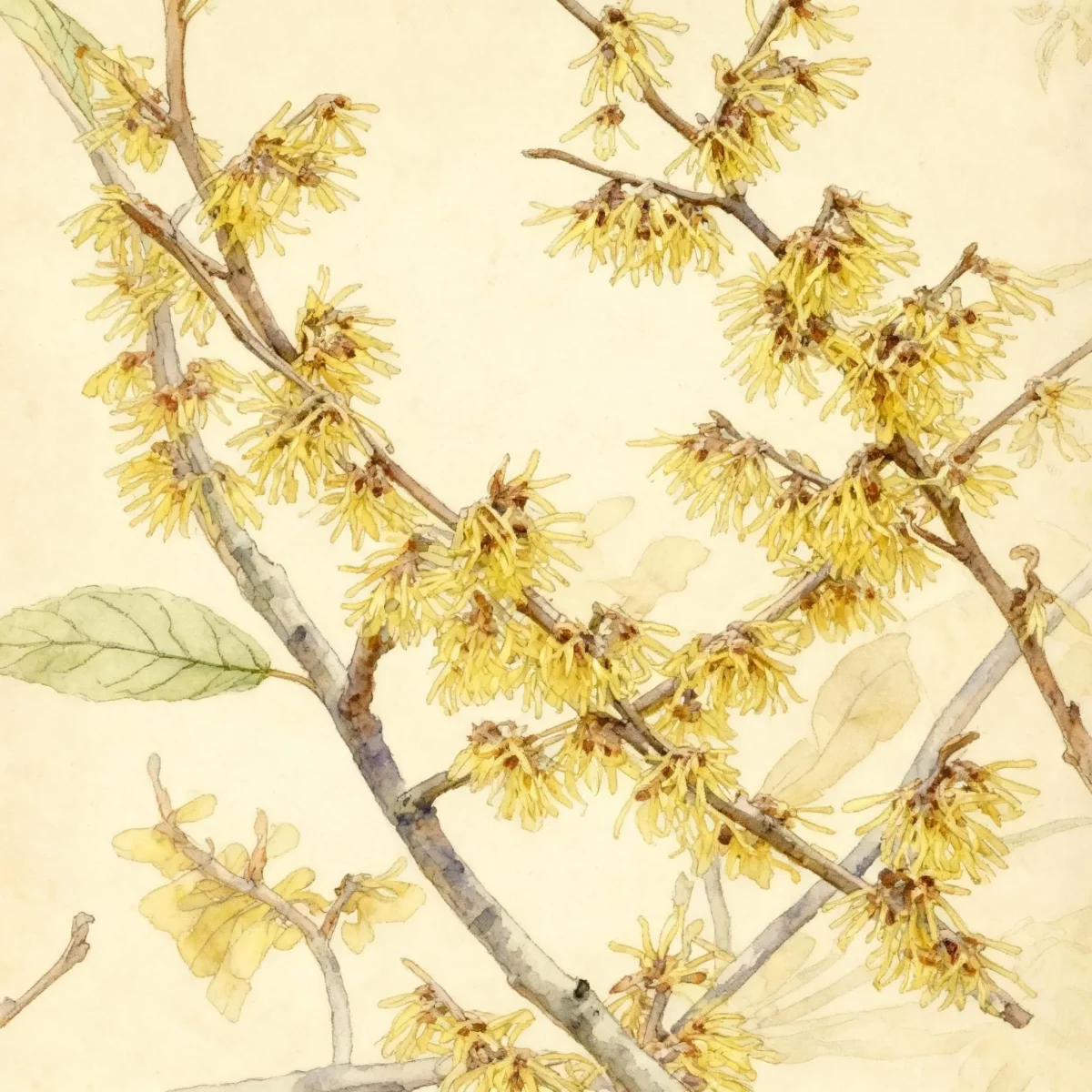
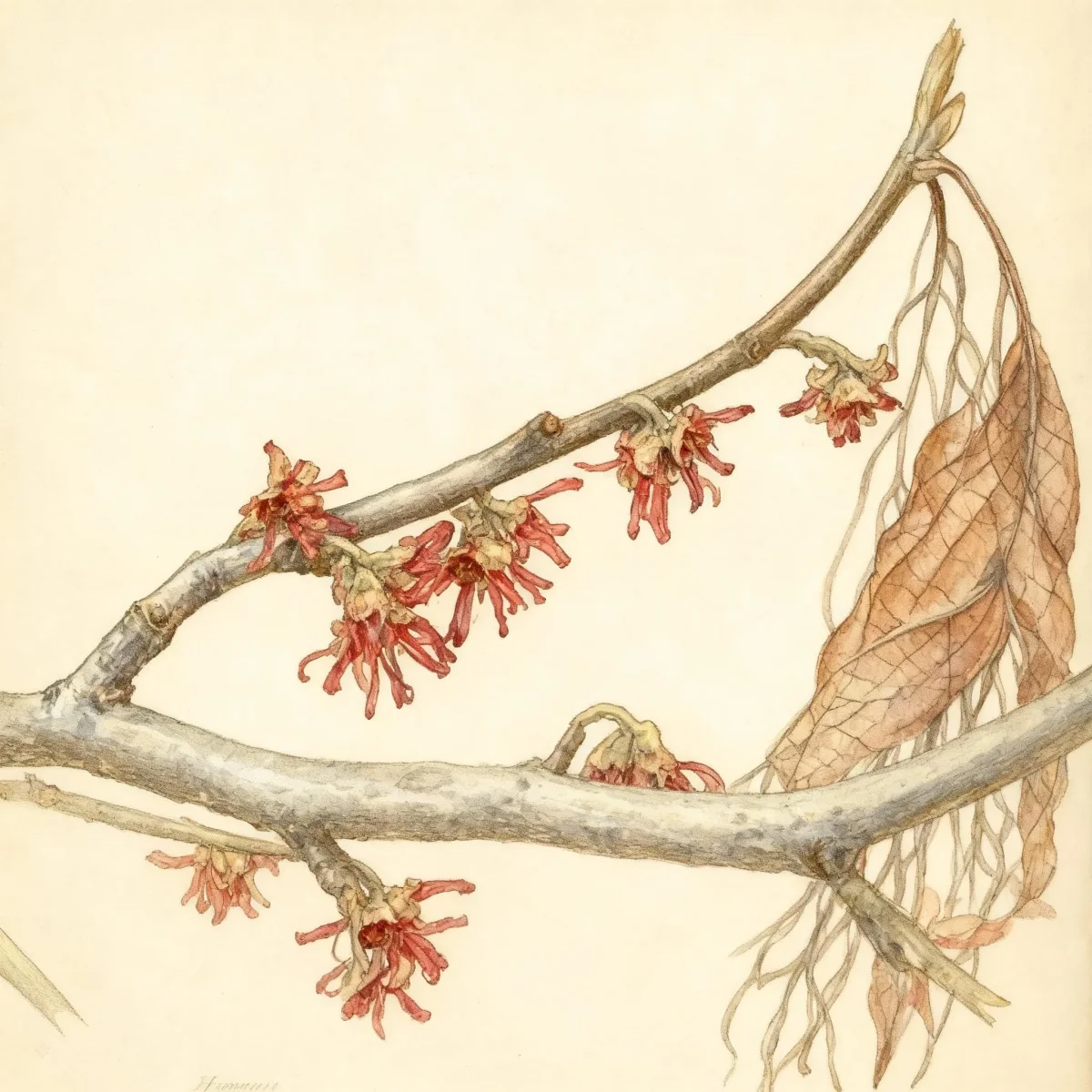
Common witch hazel (Hamamelis virginiana 'Green Thumb')
Hamamelis virginiana 'Green Thumb' offers unique two-toned foliage and late-season fragrant yellow flowers. A low-maintenance, deer-tolerant Common witch hazel.
Scroll down to discover growing tips, care requirements, companion plants, and more
Complete Plant Information
Overview
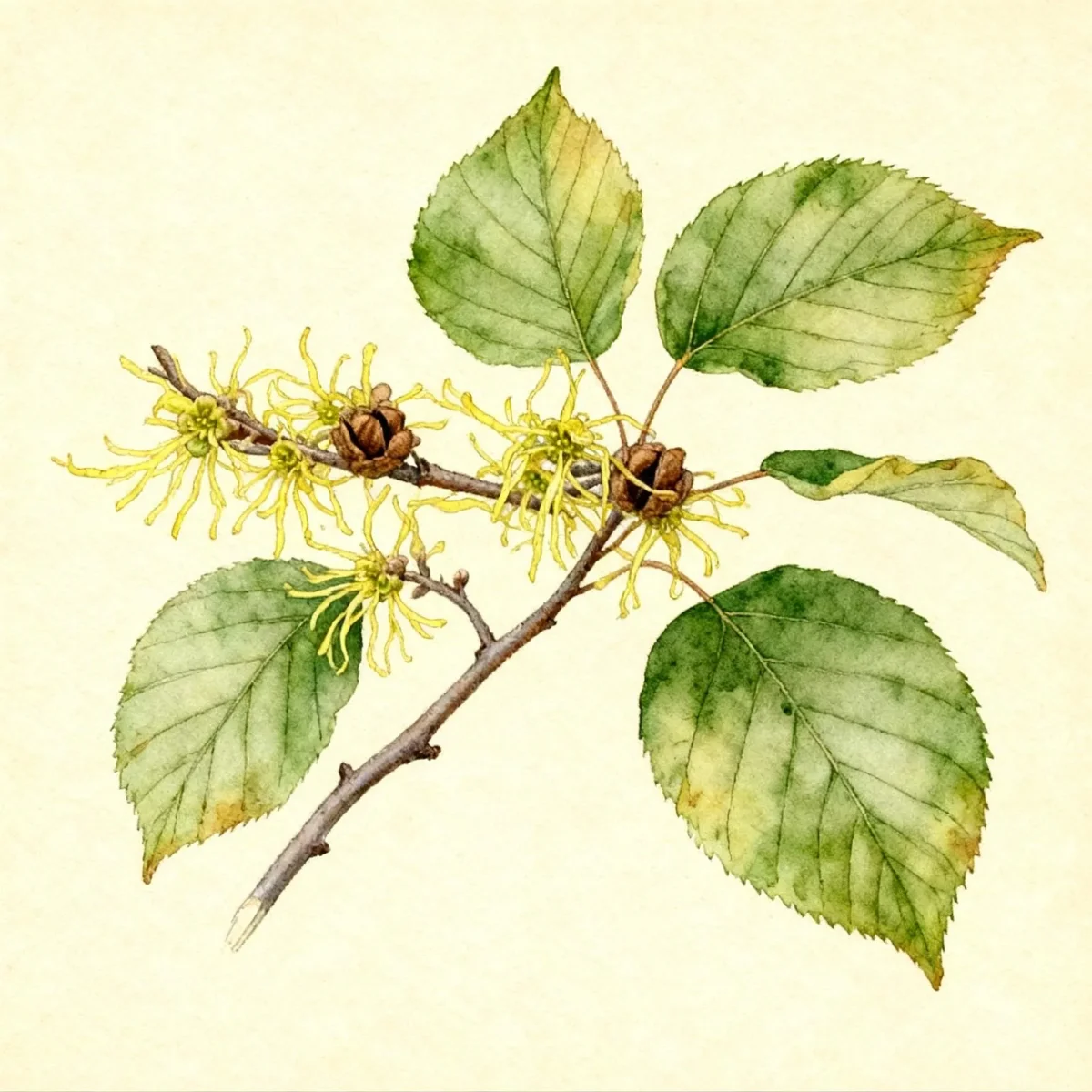
Hamamelis virginiana ‘Green Thumb’, commonly known as Common witch hazel, provides essential late-season interest when many other landscape plants are dormant. This cultivar is particularly valued for its distinctive foliage, which emerges in spring with an irregular dark green center surrounded by pale green edging. Functionally, this versatile, low-maintenance deciduous shrub provides excellent year-round structure in the garden.
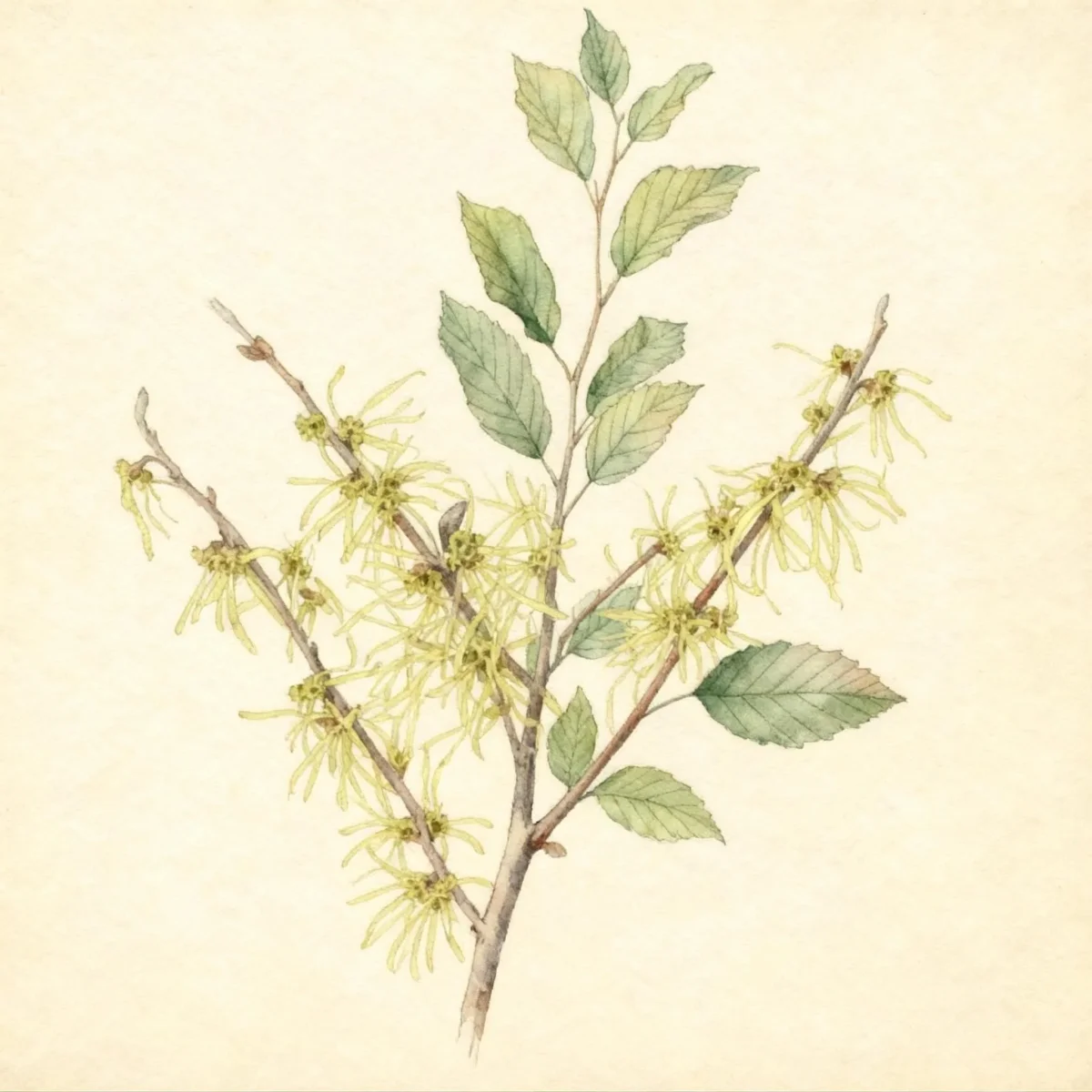
The late autumn to early winter bloom period is a key asset, offering clusters of fragrant, ribbon-petaled yellow flowers that contrast beautifully against the cooling landscape. Mature specimens of Hamamelis virginiana ‘Green Thumb’ typically reach 15 to 20 feet tall and wide, establishing themselves as substantial anchors in the garden design.
As a native woodland native, this shrub brings ecological value while thriving in a range of conditions, including resisting browsing by deer and tolerating heavy clay soils. Planting Hamamelis virginiana ‘Green Thumb’ ensures you have reliable color and form spanning the transition from fall deep into winter.
Fast Facts
- Plant Family: Hamamelidaceae
- Plant Type: Deciduous shrub
- Hardiness Zones: USDA Zones 3-8
- Size at Maturity:
- Height: 15-20 ft
- Spread: 15-20 ft
- Bloom Time: October to December
- Bloom Description: Yellow
- Sun Exposure: Full sun to part shade
- Water Needs: Medium
- Maintenance Level: Low
How to Grow
Planting Common witch hazel is best accomplished in early spring or fall, allowing the roots to establish before temperature extremes hit. Ideal locations receive full sun for the best flowering display, though the shrub tolerates light afternoon shade. It prefers moist, acidic, organically rich, well-drained soils, though it demonstrates impressive adaptability, even tolerating heavy clay soils.
Watering needs are medium; establishing plants require consistent moisture, especially during dry spells. Avoid allowing the soil to dry out completely, especially in its first few years. Little supplemental feeding is usually necessary if organic matter is incorporated into the soil at planting time.
Maintenance for Hamamelis virginiana ‘Green Thumb’ is generally low. The only structural pruning typically required is the removal of scattered suckers that may attempt to creep outward from the base, which should be promptly removed to manage its spreading habit. If heavier pruning is needed to shape the plant, perform this work in early spring just before new growth begins.
Landscape Uses
The spreading habit and unique late bloom make Common witch hazel an excellent choice for naturalizing areas or integrating into mixed woodland gardens where its form can be appreciated across seasons. Its tolerance for erosion makes it highly suitable for stabilizing banks or slopes where tougher plants are required.
Consider massing Hamamelis virginiana ‘Green Thumb’ in shrub borders where its winter flowers will provide cheer or using it as a screen or informal, tall hedge. Since the foliage of this cultivar is a highlight, Site these shrubs where you can observe the unique variegated leaves up close, rather than placing them too far into the background.
This plant functions beautifully in rain garden settings due to its preference for medium moisture and ability to handle wetter soil profiles better than many dry-loving shrubs. Design groupings with early spring bloomers like daffodils or late-blooming asters to create extended seasonal interest.
Standout Features
Flower Qualities
- Showy
- Fragrant
Noteworthy Characteristics
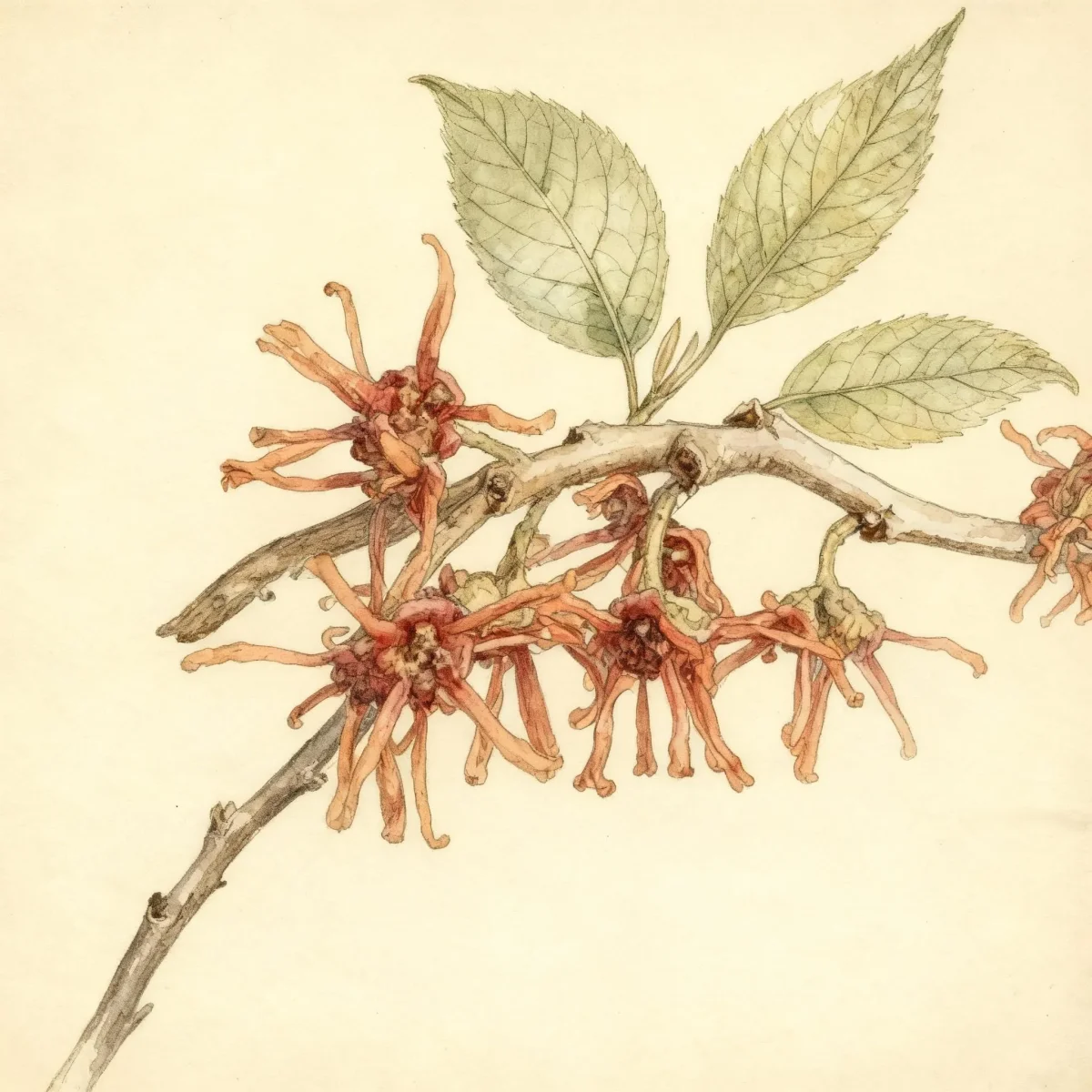
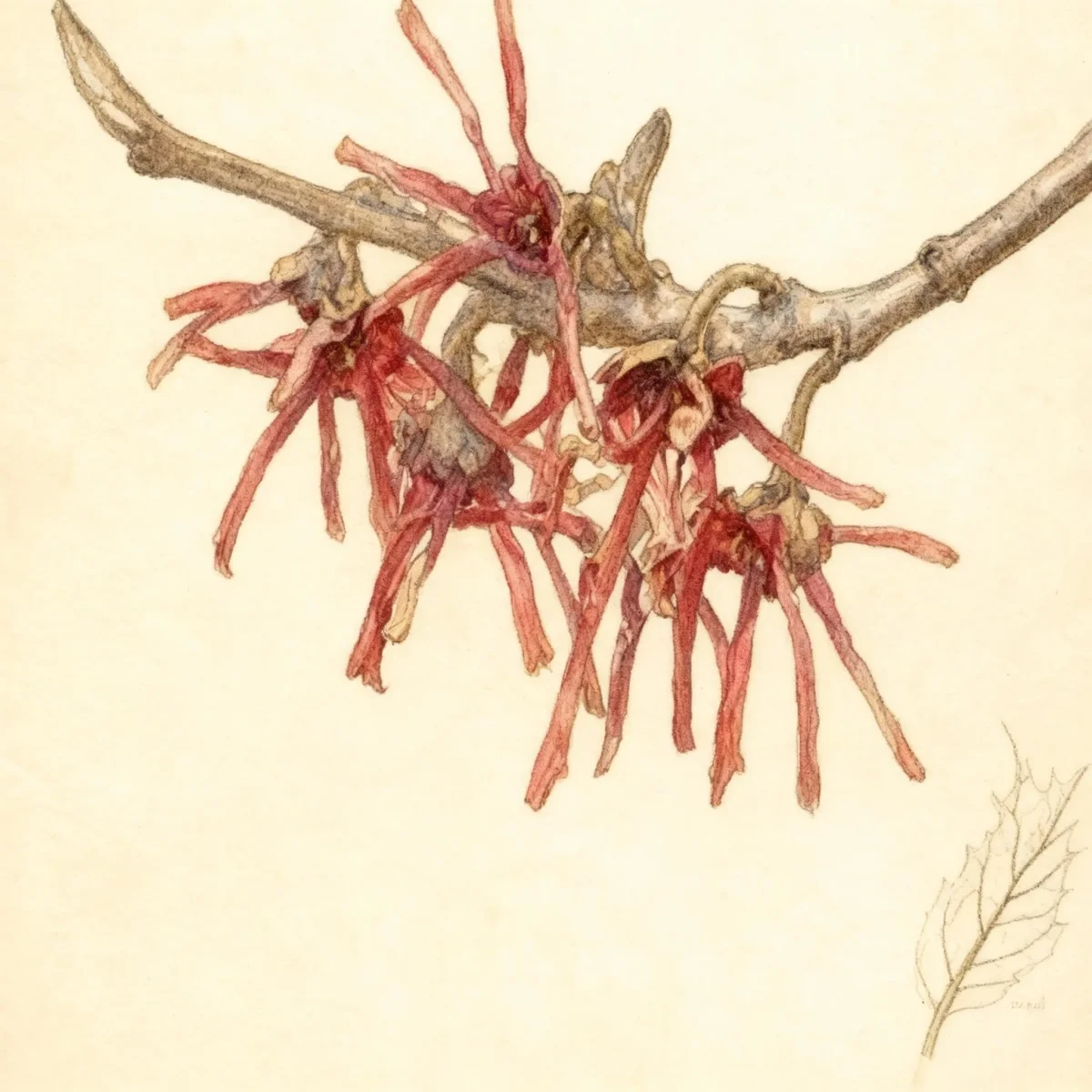
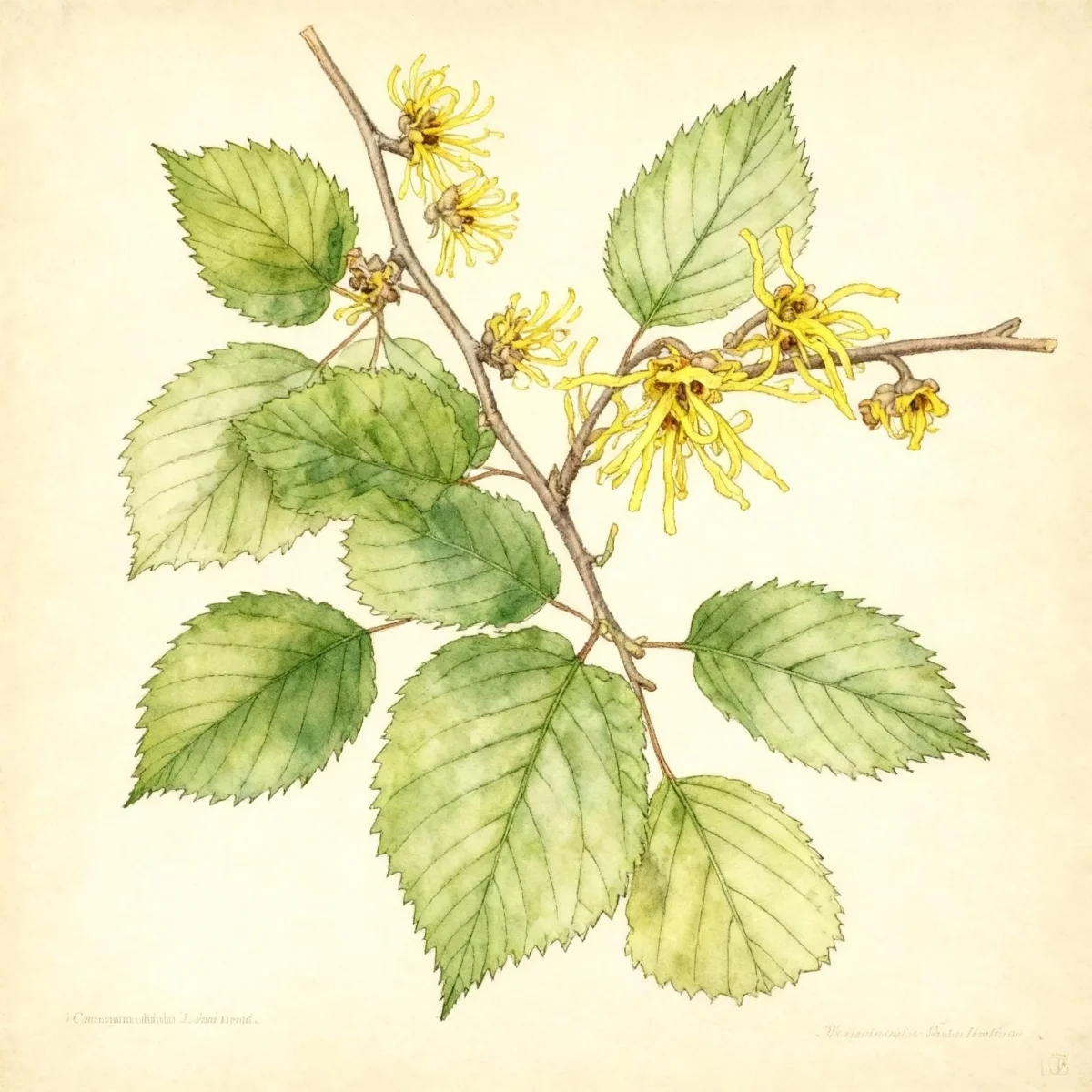
Hamamelis virginiana, known as common witch hazel, is a fall-blooming, deciduous shrub or small tree that is native to woodlands, forest margins and stream banks in eastern North America. It typically grows 15-20’ tall with a similar spread in cultivation, but can reach 30’ tall in its native habitat. Stem-hugging clusters of fragrant bright yellow flowers, each with four crinkly, ribbon-shaped petals, appear along the branches from October to December, usually after leaf drop but sometimes at the time of fall color. Specific epithet means from Virginia. ‘Green Thumb’ is a cultivar that is primarily distinguished from the species by its unique foliage; obovate leaves emerge in spring with an irregular dark green center surrounded by pale green.
Tolerances
- Deer
- Erosion
- Clay Soil
Potential Problems
While generally low-maintenance, Hamamelis virginiana ‘Green Thumb’ may occasionally be bothered by chewing insects. Caterpillars and Japanese beetles may chew on the leaves during the main growing season.
Be observant for potential insect pests such as gall aphids, scale insects, leafrollers, and leafminers, although these pests rarely cause significant cosmetic or structural damage. In terms of disease, powdery mildew is the most common issue, sometimes accompanied by minor leaf spots, especially when planting in inadequate airflow or heavy shade.
These minor insect and disease issues typically do not warrant aggressive chemical interventions. Improving air circulation through minimal pruning, if necessary, and ensuring proper site selection usually mitigates most problems found on the Common witch hazel.
Frequently Asked Questions
What hardiness zones is Common witch hazel suitable for?
Hamamelis virginiana ‘Green Thumb’ is generally suitable for USDA Hardiness Zones 3 through 8.
How large does Hamamelis virginiana ‘Green Thumb’ grow?
This deciduous shrub typically matures to a height and spread between 15 and 20 feet.
When does Common witch hazel bloom?
This species blooms quite late in the year, offering its yellow flowers from October through December.
What sun exposure does Hamamelis virginiana ‘Green Thumb’ need?
For the most vigorous growth and best flower production, aim for a location receiving full sun to part shade.
Conclusion
The unique, variegated foliage and reliable, fragrant bloom make Hamamelis virginiana ‘Green Thumb’ an invaluable, low-effort specimen for the late-season garden. This type of Common witch hazel offers exceptional texture and color contrast across the dormant months. Before planting, ensure your site offers the medium moisture and adequate space needed for this shrub to reach its full 15 to 20-foot potential.
Wildlife Benefits
This late-flowering shrub offers critical resources when few other sources are available. The clusters of fragrant yellow flowers attract late-season pollinators, including several species of flies and small bees, providing necessary nectar and pollen long after summer color has faded.
Furthermore, the developing fruit capsules, which mature the following fall, offer seeds that can be consumed by birds. Planting Common witch hazel supports local ecosystems by extending the available forage window through the colder months of the year.
Seasonal Care Calendar
Late Fall/Early Winter is when the plant shines, but preparation is key. After the foliage drops, inspect the shrub briefly for any structural issues, but avoid heavy pruning until early spring. Focus instead on ensuring adequate moisture leading into dormancy if the autumn was unusually dry.
Spring is the critical period for observing the unique foliage of Hamamelis virginiana ‘Green Thumb’. It is the best time to prune lightly if shaping is required or to remove any stray suckers that may emerge at the base. Top-dressing with compost can help improve soil structure and enrich the necessary acidic profile.