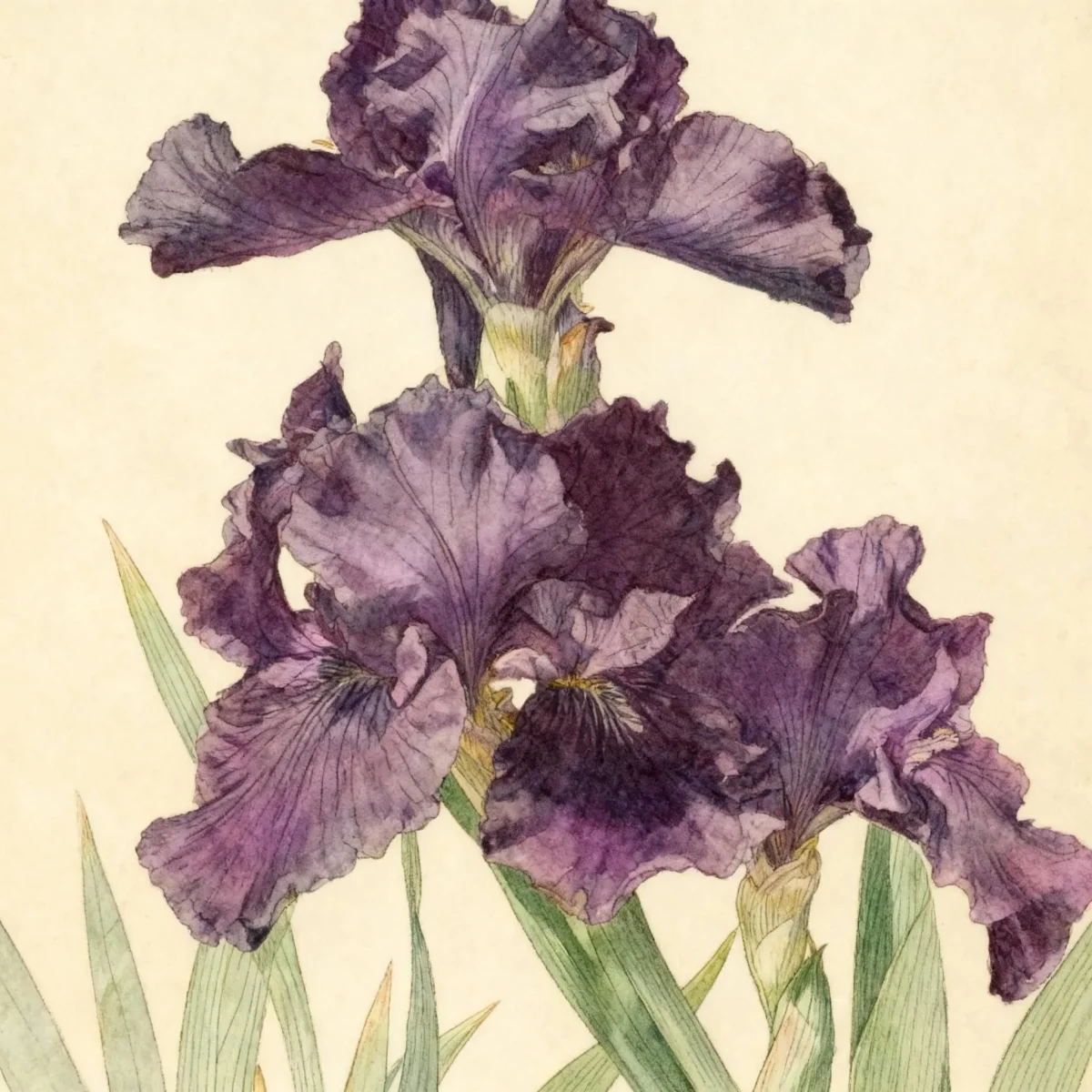
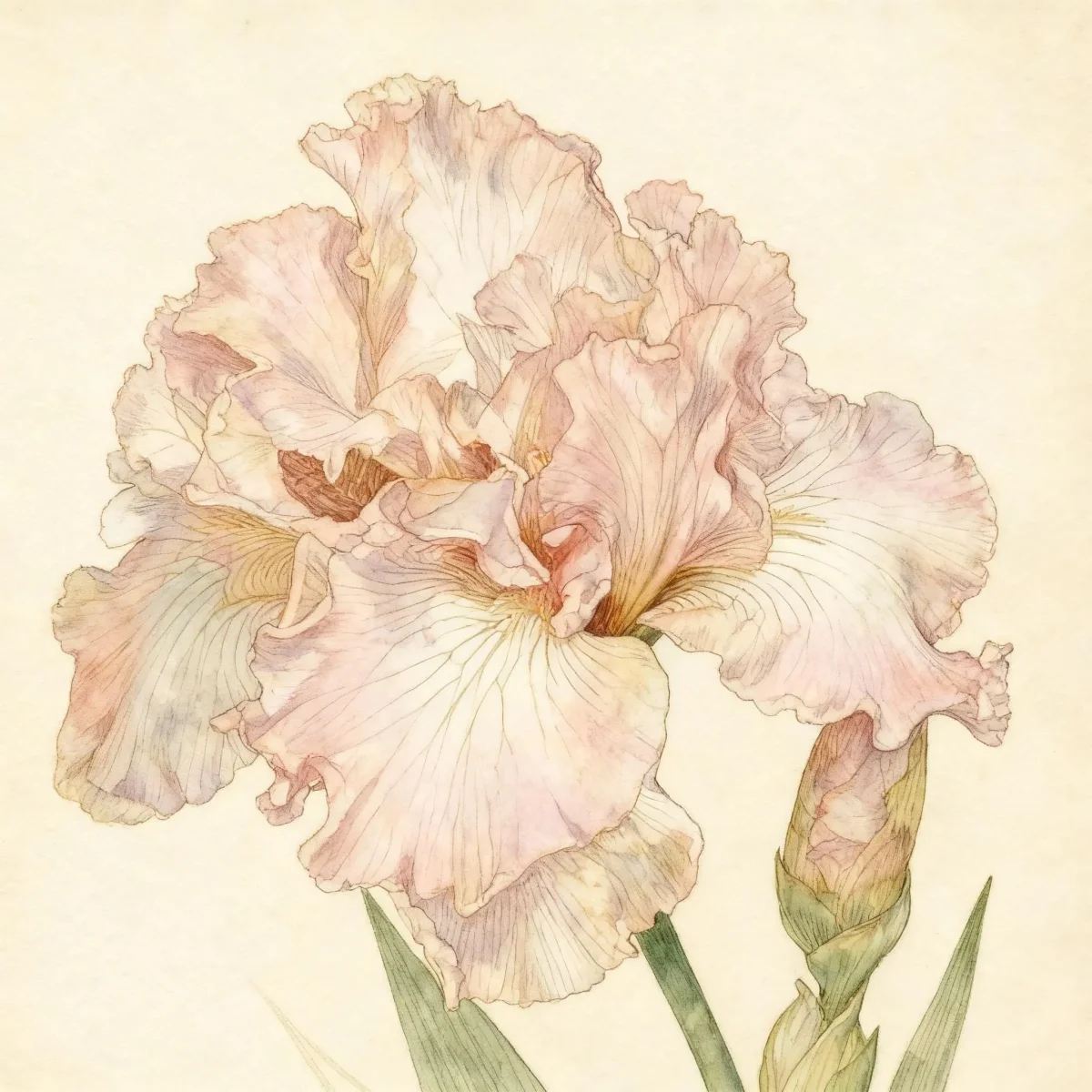
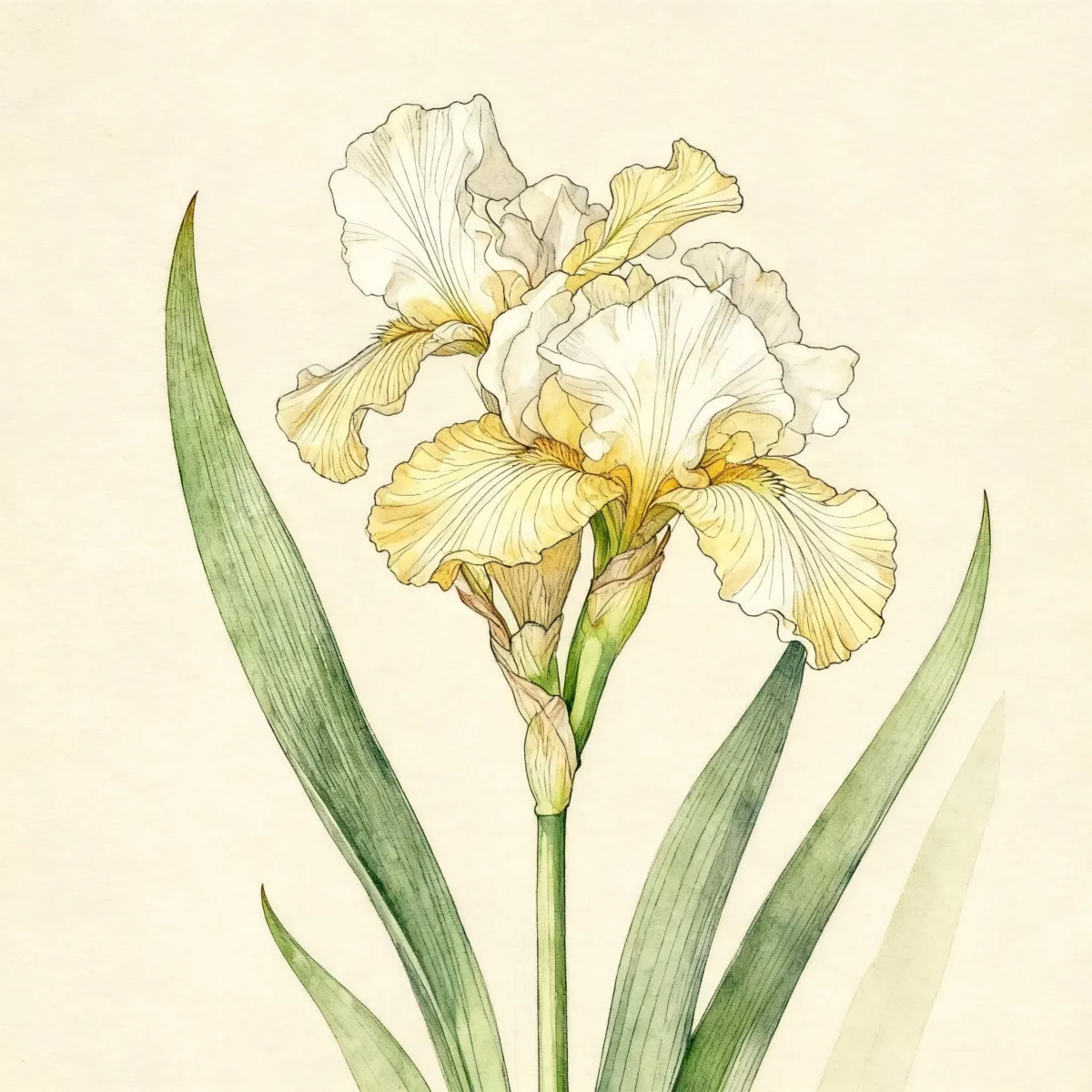
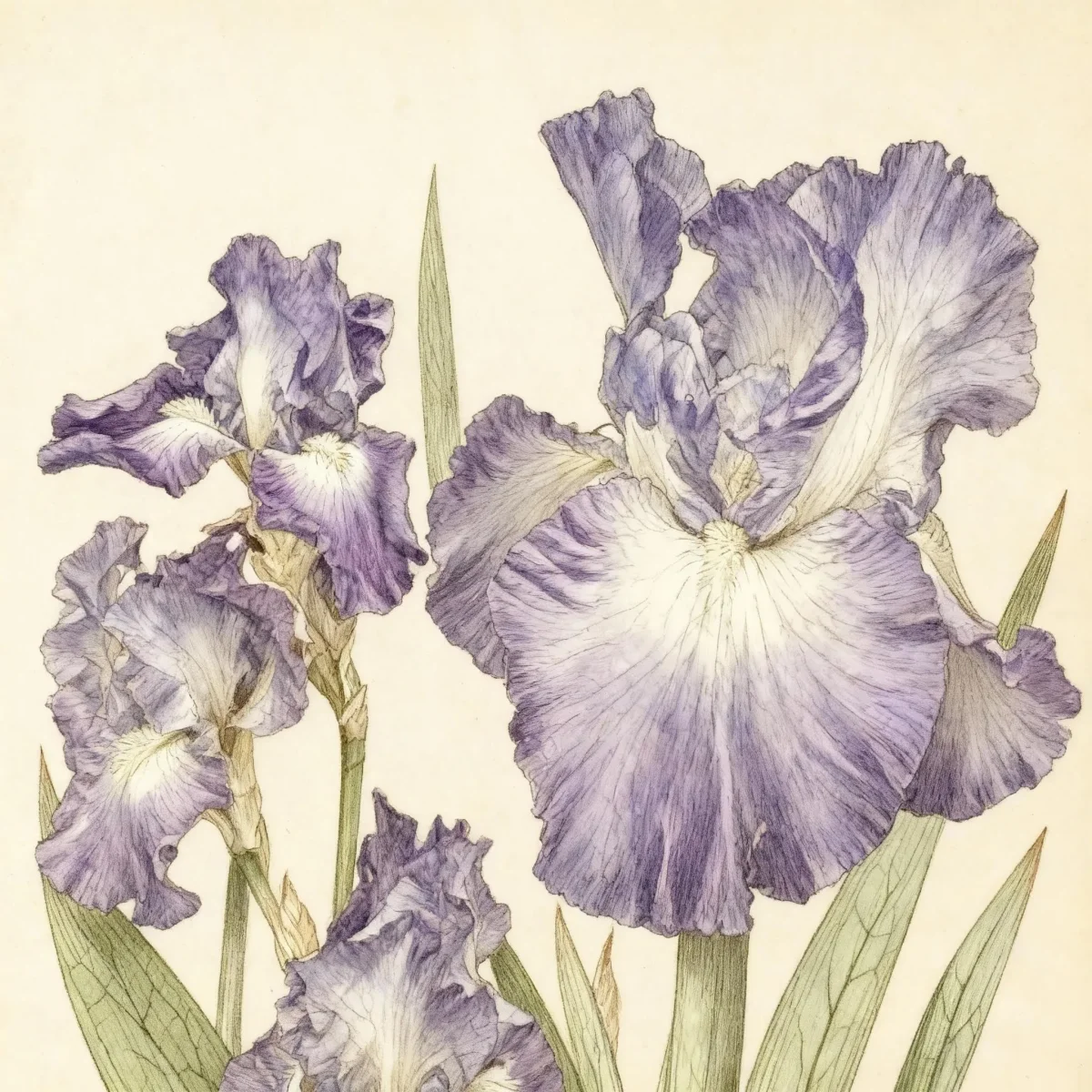
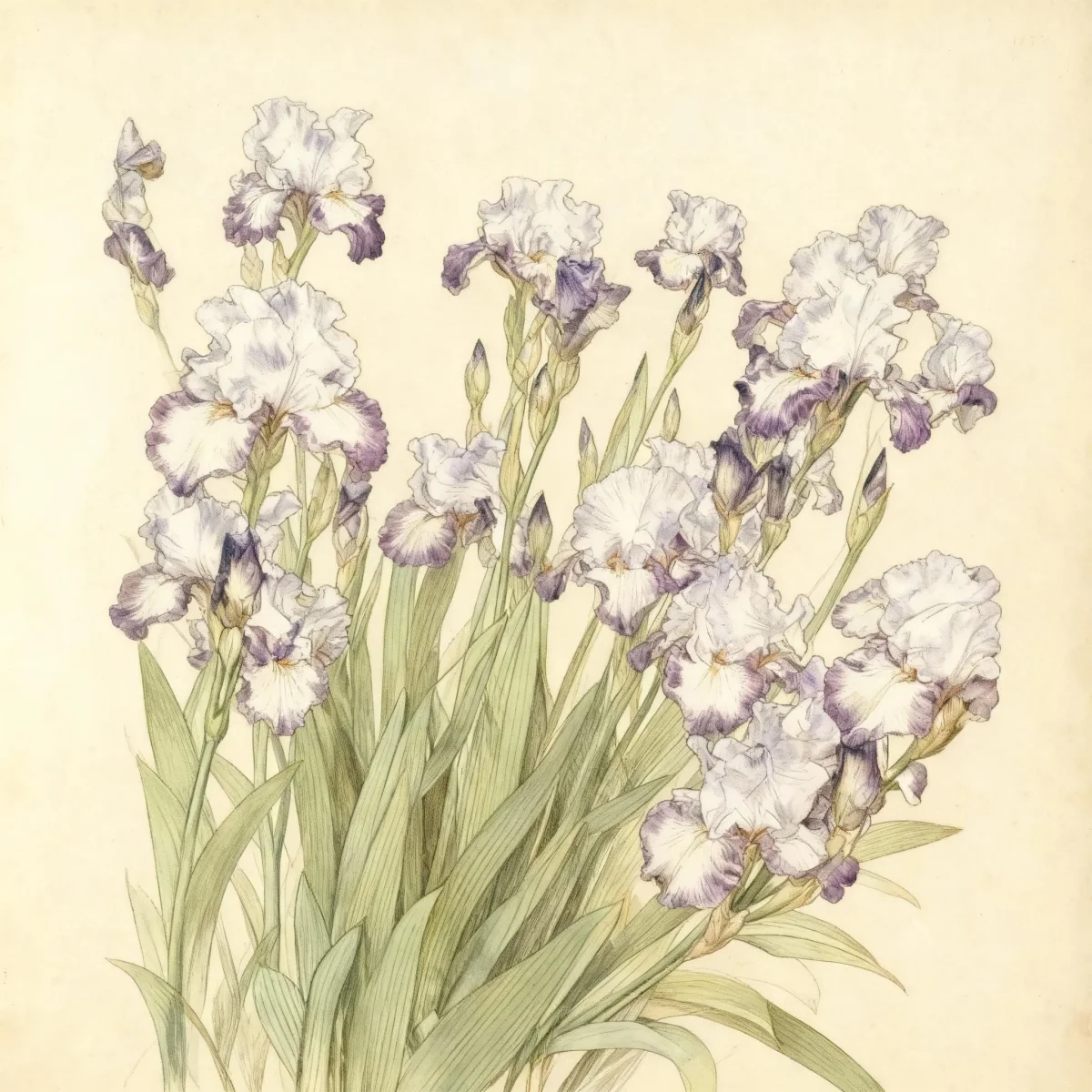
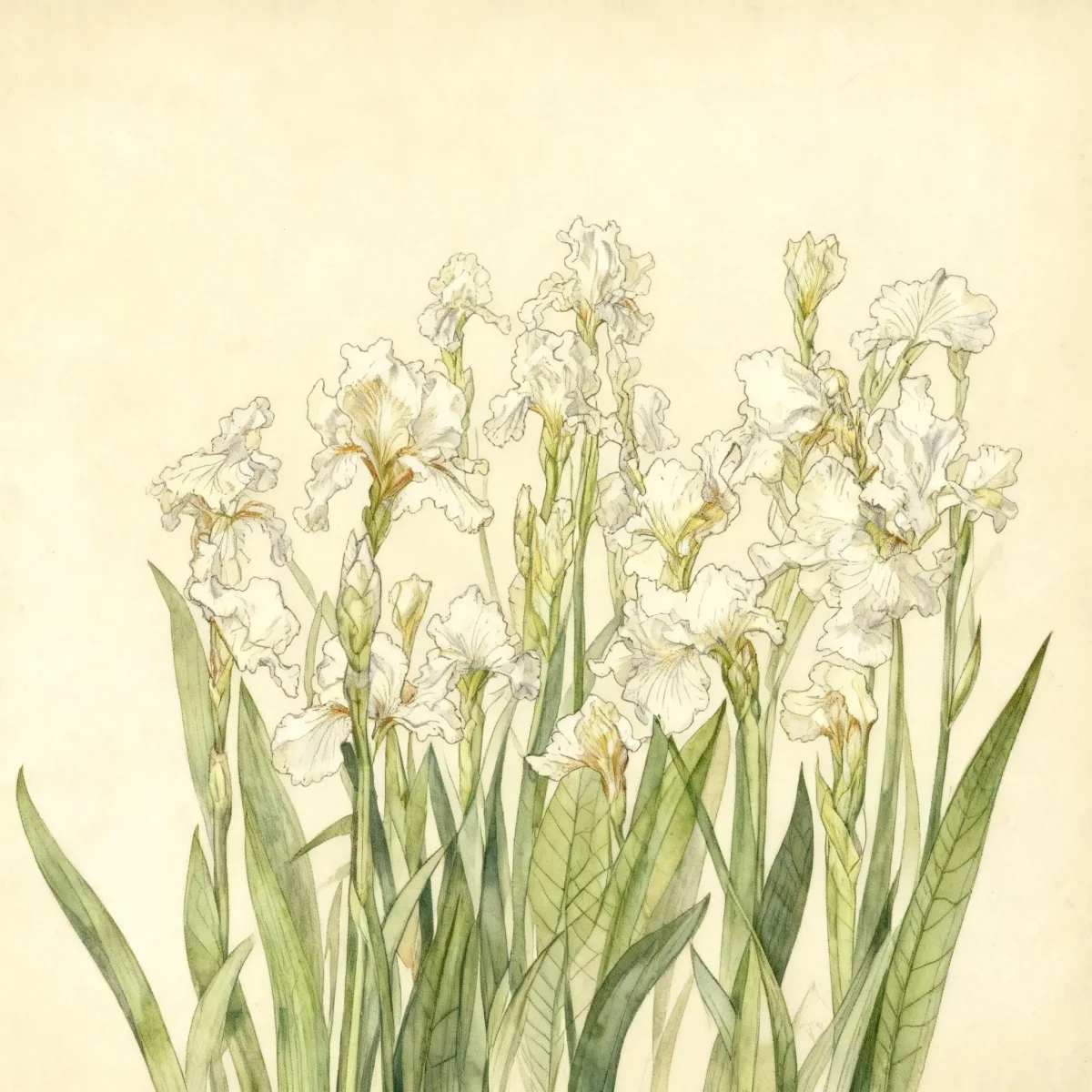
Tall bearded iris (Iris 'Florentina')
Iris 'Florentina', a fragrant Tall bearded iris, offers showy white-blue flowers. Hardy in zones 3-9, it needs full sun and well-drained soil.
Scroll down to discover growing tips, care requirements, companion plants, and more
Complete Plant Information
Overview
Iris ‘Florentina’, a distinguished member of the Tall bearded iris class, brings structure and beautiful fragrance to the late spring garden. This herbaceous perennial slowly spreads by rhizomes, establishing clumps of linear, sword-shaped foliage perfect for adding vertical interest. Its most celebrated feature is the showy, fragrant bloom, typically appearing in June with soft white petals tinged a delicate gray-blue.
Valued not only for its aesthetics but also historically for its rhizomes (orris root), Iris ‘Florentina’ provides enduring architectural beauty in perennial borders. Successful cultivation relies heavily on providing full sun and excellent drainage, crucial factors that promote both robust flowering and disease resistance. Gardeners seeking a classic, aromatic spring bloomer will find the Tall bearded iris variety rewarding.
Fast Facts
- Plant Family: Iridaceae
- Plant Type: Herbaceous perennial
- Hardiness Zones: USDA Zones 3-9
- Size at Maturity:
- Height: 2-2.5 ft
- Spread: 1.5-2 ft
- Bloom Time: June
- Bloom Description: White tinged blue-gray
- Sun Exposure: Full sun
- Water Needs: Medium
- Maintenance Level: Medium
How to Grow
Iris ‘Florentina’ thrives when planted in humus-rich, medium-moisture, well-drained loams. Full sun exposure is non-negotiable; it ensures both the best flowering performance and maximum resistance to common diseases. Due to the susceptibility of the rhizomes to soft rot, ensuring superior drainage is essential, often requiring soil amendment with gypsum, coarse sand, or organic matter, especially in heavy clay. Avoid using mulch directly around the crown for this very reason.
Planting should occur in mid to late summer (July through early September). Rhizomes must be placed shallowly, with the top surface sitting just above the soil line; planting too deeply is a frequent cause of failure to flower. Provide a light fertilization in early spring, followed by another application after the main bloom period concludes. Maintain uniform moisture throughout the summer to encourage a potential late summer or fall rebloom, taking care to avoid overhead watering which can promote fungal issues.
Deadhead individual spent flowers, removing the entire stem down to the ground after flowering ceases. When clumps become overcrowded, generally every third to fourth year, plan to divide the rhizomes. Good sanitation remains critical year-round, especially cleaning up all foliage debris in the fall after the first frost to manage pests and diseases.
Landscape Uses
The structure and height of Iris ‘Florentina’ make it an outstanding choice for sunny beds and borders where architecture is desired mid-season. Its refined white and blue-gray coloring allows it to integrate seamlessly with pastel-toned perennial groupings or stand out as a focal point near walkways or entrances. Consider positioning them where their fragrant blooms can be easily appreciated, such as near a patio or seating area.
As a hardy Tall bearded iris, it pairs naturally with later-blooming perennials that can take over once the iris foliage begins to fade slightly later in the season. Look to pairing Iris ‘Florentina’ with later-flowering salvias, catmint (Nepeta), or summer-blooming phlox to maintain consistent color and texture in the border from early summer onward. The sturdy rhizomes make it a reliable, long-lived specimen plant.
Standout Features
Flower Qualities
- Showy
- Fragrant
Noteworthy Characteristics
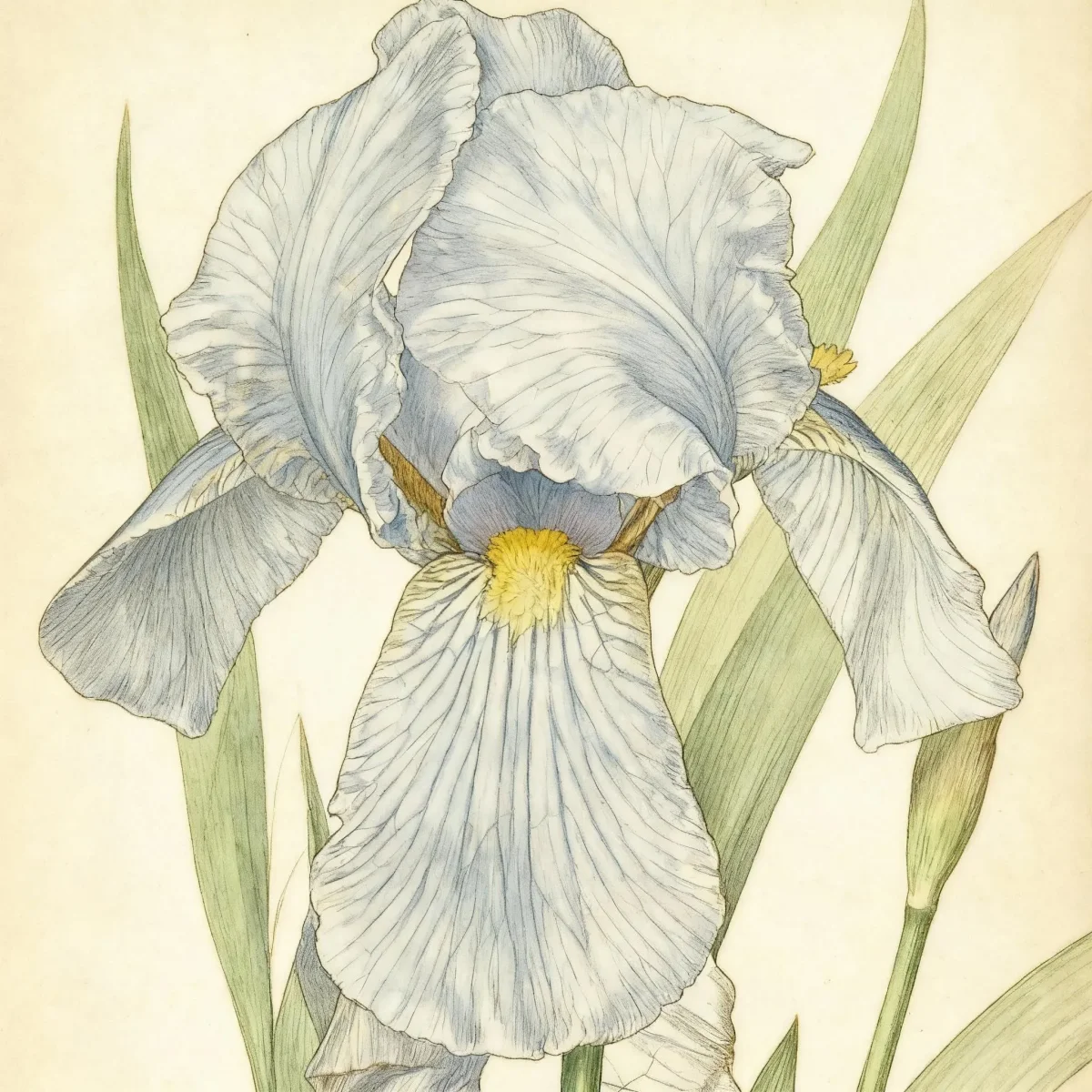
‘Florentina‘, commonly called florentine iris, is a tall bearded iris which grows to 23-29” tall and to 18-23” wide, originating from Italy and southern France. Its fragrant flowers display standards and falls that are soft white tinged gray-blue, featuring contrasting yellow beards on the falls. Importantly, the rhizomes of this Iris ‘Florentina’ are historically used to create dried orris root, which yields a violet-like aroma used as a scent fixative in perfumes and potpourris.
Tolerances
- Deer
- Drought
Potential Problems
The primary adversary for bearded iris cultivation is the iris borer, an insect pest, while major diseases include bacterial soft rot and unsightly fungal leaf spot. Prevention through meticulous cultural hygiene is the best defense against these issues. Promptly remove and destroy any foliage or rhizomes showing signs of borer damage or disease. An annual comprehensive clean-up of plant debris after the fall frost is mandatory.
Failure to flower, or sparse blooming, is often culture-related rather than pest-driven. The most frequent causes include planting the rhizomes too deeply, insufficient sunlight exposure, over-fertilization, or overcrowding requiring division. Addressing these cultural needs directly—ensuring shallow planting and good air circulation—will greatly improve the performance of your Iris ‘Florentina’.
Frequently Asked Questions
What hardiness zones is Tall bearded iris suitable for?
Iris ‘Florentina’ is well-suited for gardeners in USDA Zones 3 through 9.
How large does Iris ‘Florentina’ grow?
This variety typically reaches a mature height between 2 and 2.5 feet tall with a spread ranging from 1.5 to 2 feet wide.
What sun exposure does Tall bearded iris need?
This plant requires full sun for optimal health, best flowering, and resistance to common diseases.
When does Iris ‘Florentina’ bloom?
The bloom time for Iris ‘Florentina’ is generally in June, producing flowers described as white tinged blue-gray.
Conclusion
Providing fragrant, visually appealing blooms and historical utility through its prized rhizomes, Iris ‘Florentina’ remains a cornerstone of the traditional garden. As a robust Tall bearded iris, it offers reliable performance provided its need for full sun and superior drainage is respected. Before planting, verify your climate falls within USDA Zones 3-9, and schedule rhizome planting for mid to late summer for the best seasonal results.
Companion Planting
Selecting companions for Iris ‘Florentina’ should focus on plants that share the love for full sun and well-drained conditions. Grouping them with spring ephemeral bulbs like daffodils or tulips allows the bearded iris to emerge and take center stage as the bulbs finish. For summer interest, contrast the iris foliage with softer, mounding herbs such as lavender or hardy geraniums, whose lower profiles won’t obscure the iris blooms.
It is critical to avoid planting heavy feeders or plants that require constant, damp soil near your iris beds. Plants that require shade or heavy, constant moisture—like hostas or astilbes—will compete poorly and increase humidity around the rhizomes, inviting rot. Focus instead on drought-tolerant, sun-loving perennials to maintain a healthy microclimate around your Iris ‘Florentina’.
Propagation Tips
The primary method for increasing your stock of Iris ‘Florentina’ is through division of the rhizomes, which should ideally be carried out in mid to late summer (July-September). Gently lift the clump using a garden fork, taking care not to damage the thick, fleshy roots. Select healthy, firm sections of the rhizome that possess a healthy fan of leaves attached.
After lifting, clean off excess soil and use a sharp, sterilized knife to cut the rhizome sections apart, ensuring each piece has at least one healthy eye (growing point) and a decent root attachment. Allow these divisions to air dry for a few hours in the shade before replanting them shallowly in their new locations, following the required planting depth guidelines for this Tall bearded iris.