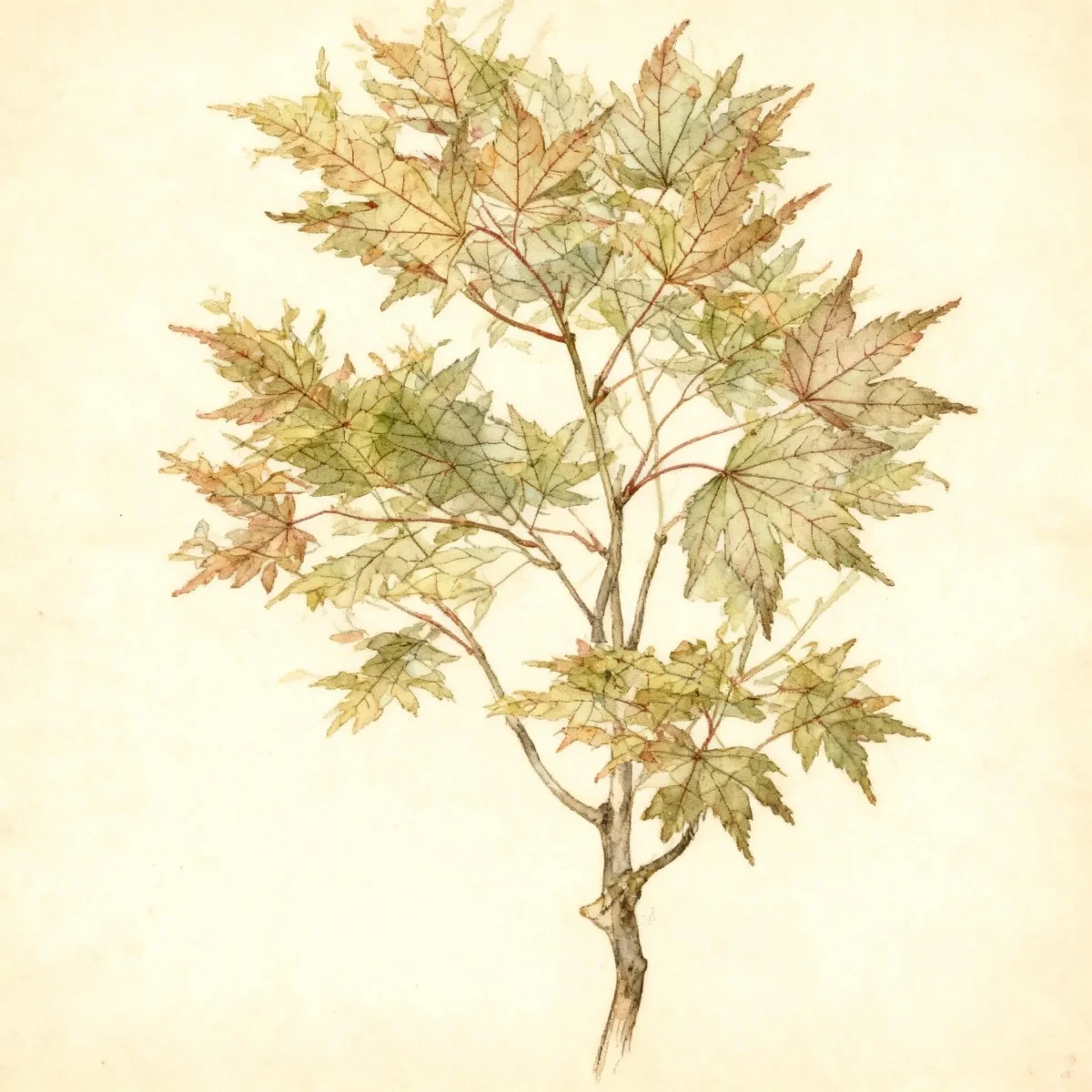
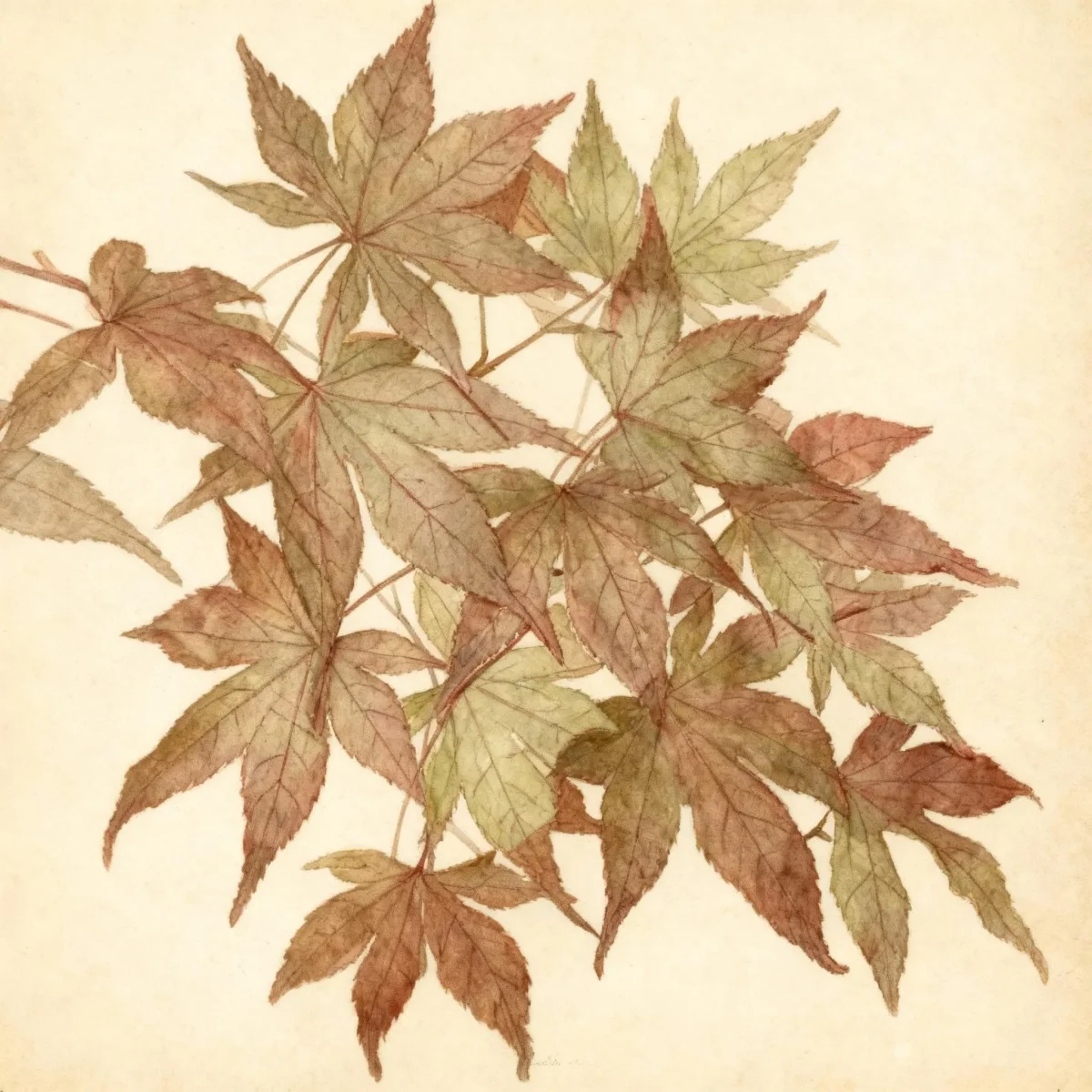
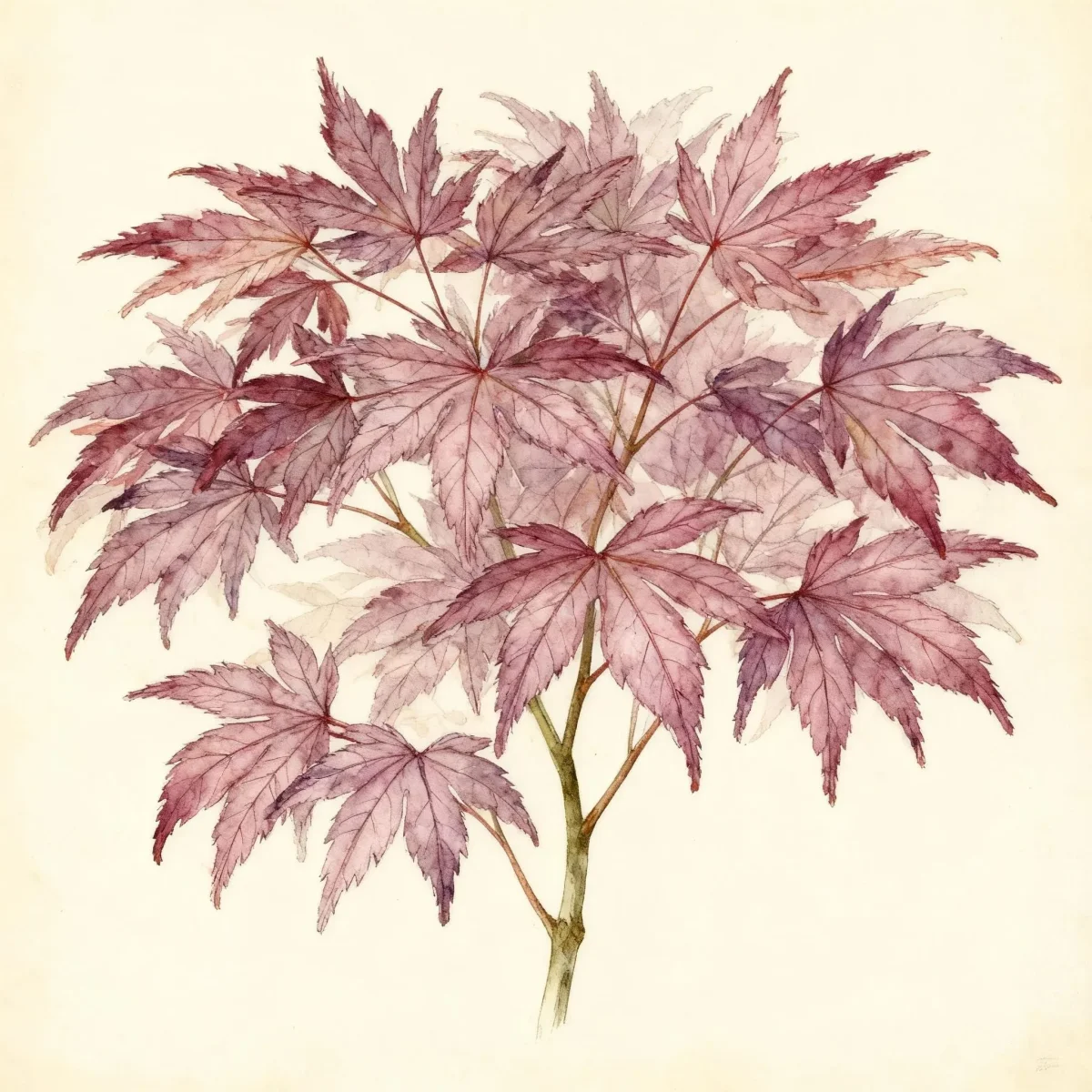
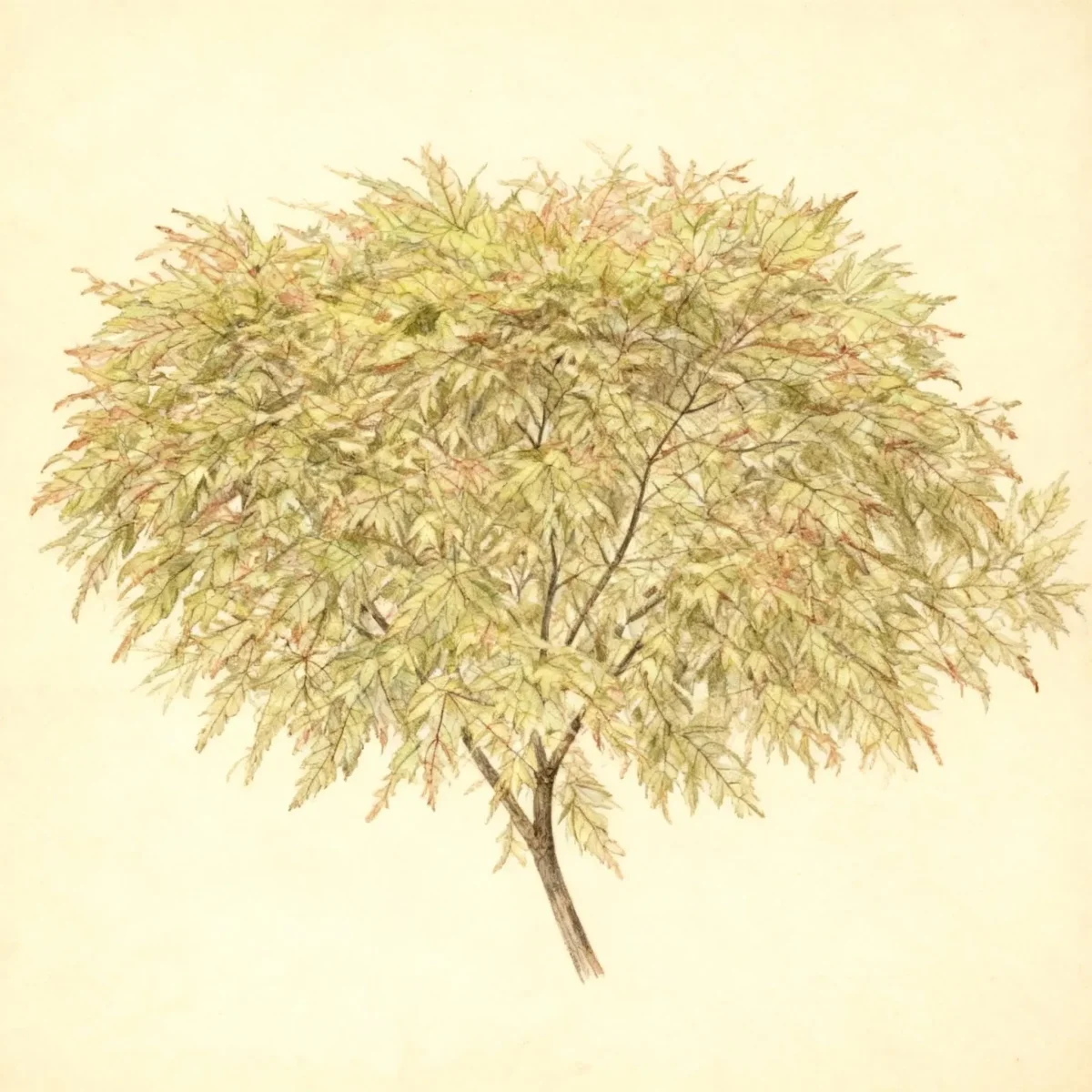
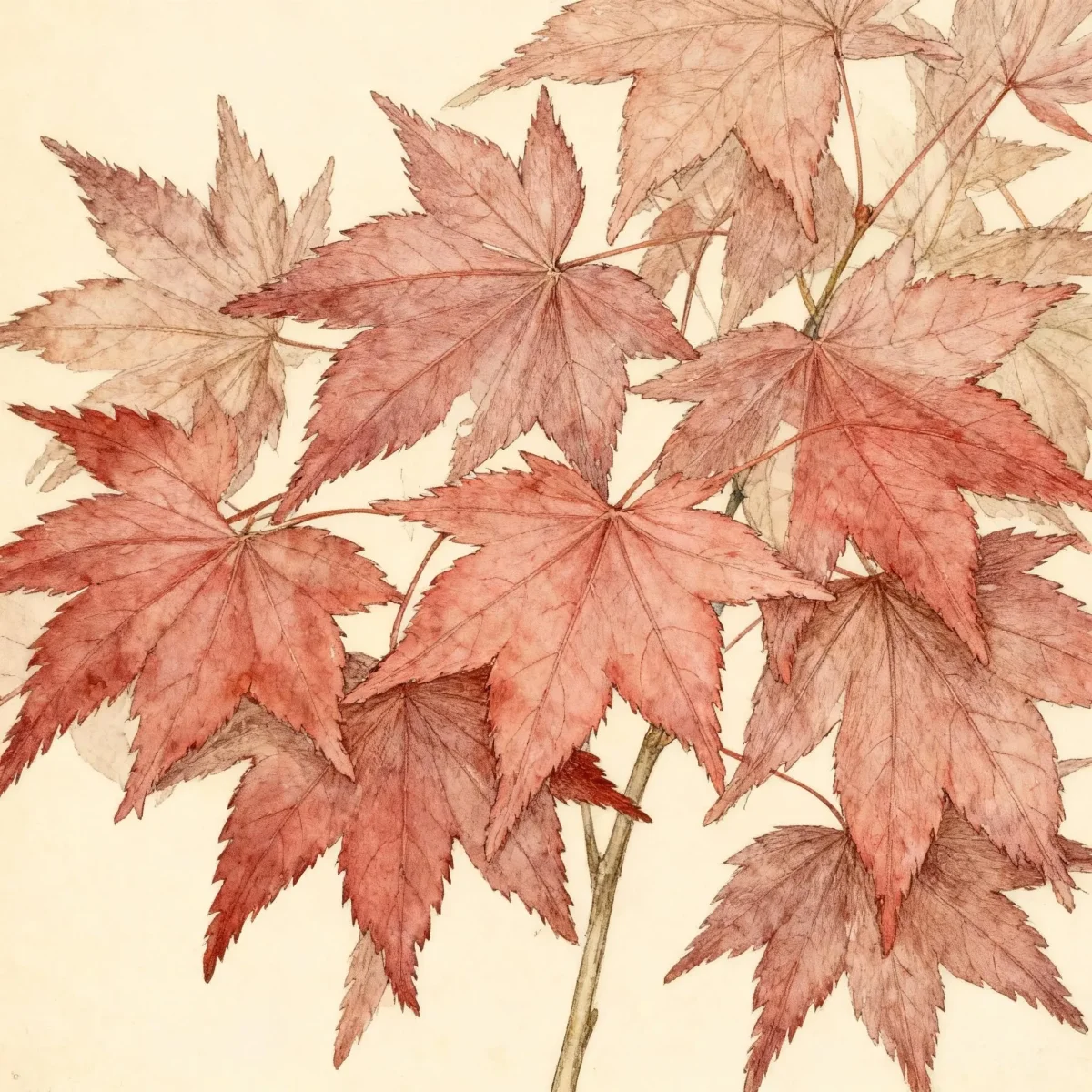
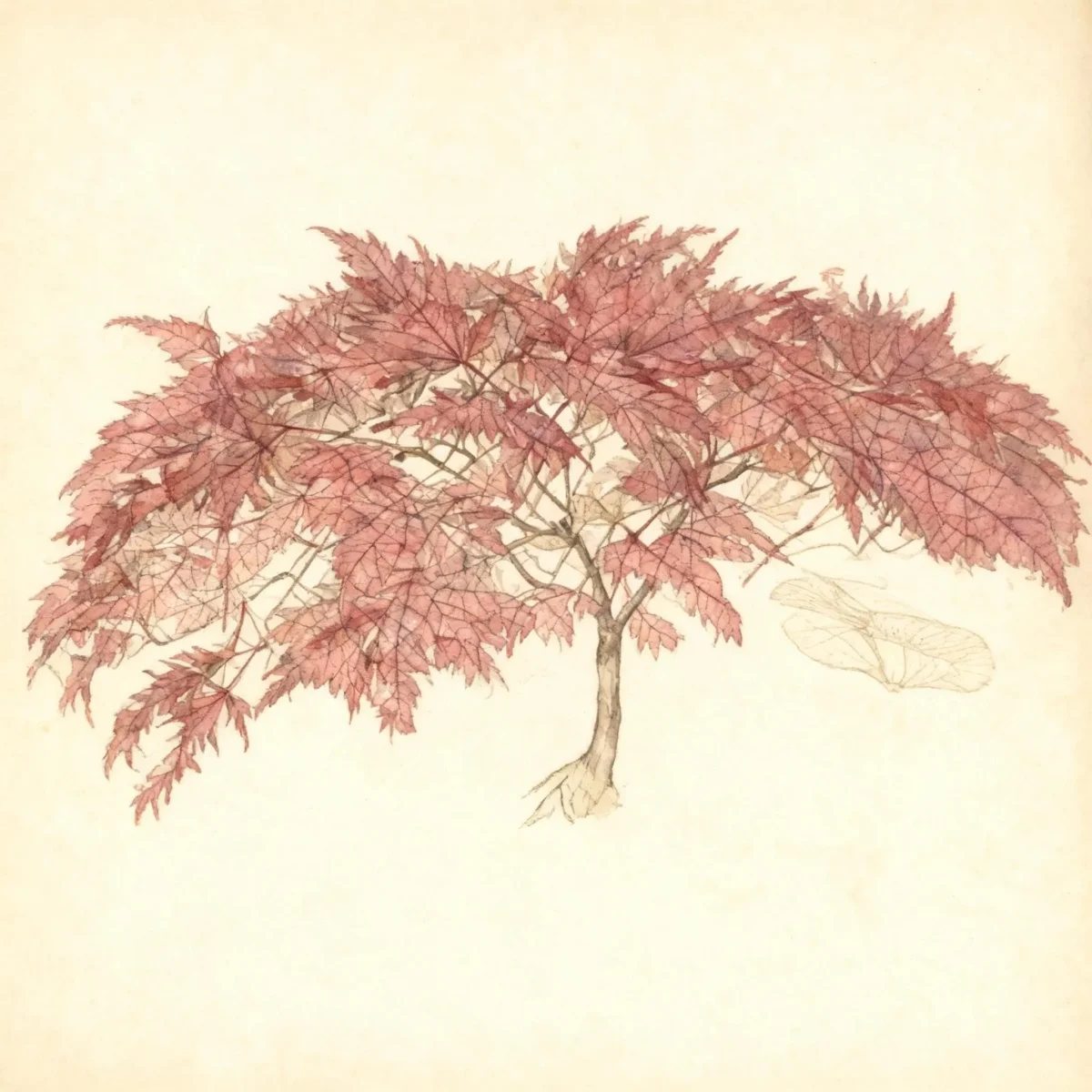
Japanese maple (Acer palmatum 'Utsu-semi')
Acer palmatum 'Utsu-semi' is a low-maintenance Japanese maple known for its heavy-textured green leaves and scarlet fall color, ideal for zones 5-9.
Scroll down to discover growing tips, care requirements, companion plants, and more
Complete Plant Information
Overview
Acer palmatum ‘Utsu-semi’ is a distinctive cultivar of the Japanese maple, prized for its unique foliage texture and manageable size. This upright, shrubby specimen provides excellent year-round structure in the landscape. Gardeners appreciate this specific Japanese maple for the heavy-textured, bright green leaves that transform into showy shades of purple and scarlet as autumn arrives.
While general Acer palmatum varieties can reach significant heights, the ‘Utsu-semi’ cultivar matures more modestly, typically reaching 9 to 12 feet tall and wide with slow to moderate growth. It offers an attractive, rounded profile suitable for smaller garden spaces or as a striking focal point where larger trees would overwhelm the area. Its low maintenance needs make it an excellent choice for integrating refined structure into the garden setting.
This versatile plant thrives across USDA Hardiness Zones 5 through 9 when sited correctly. As an established Acer palmatum ‘Utsu-semi’, it features deep green spring growth that strongly resists scorching compared to some other maples, provided the medium water needs are met during hot summer months.
Fast Facts
- Plant Family: Sapindaceae
- Plant Type: Deciduous shrub
- Hardiness Zones: USDA Zones 5-9
- Size at Maturity:
- Height: 9-12 ft
- Spread: 9-12 ft
- Bloom Time: April
- Bloom Description: Red
- Sun Exposure: Full sun to part shade
- Water Needs: Medium
- Maintenance Level: Low
How to Grow
Planting Acer palmatum ‘Utsu-semi’ is best achieved in spring or fall when temperatures are moderate. Success relies heavily on soil quality; these Japanese maples require moist, organically rich, and slightly acidic soil that drains well. They tolerate sandy loams but must never sit in standing water. While they can take full sun in the cooler northern parts of their range (Zone 5), move planting locations to afternoon shade in hotter southern areas to prevent potential leaf scorch.
Consistent care focuses on moisture management and protection. Keep the soil consistently moist, especially during establishment and during hot summers, using mulch to help retain soil moisture and keep roots cool. Avoid hot, dry sites, and ensure the chosen location is protected from strong winds that can damage branches or foliage. Fertilize in early spring just before the leaves emerge.
Pruning should be kept to an absolute minimum for this ornamental shrub. If pruning is necessary, delay the cuts until late fall or mid-winter. Avoid any pruning during spring or summer, as this often causes significant sap bleeding from the cuts. Early leaf-out in spring means the new foliage of your Japanese maple is susceptible to late spring frost damage, which may require temporary protection if hard frosts are predicted late in the season.
Landscape Uses
Japanese maples are fundamentally grown to showcase their elegant form and exquisite foliage, and Acer palmatum ‘Utsu-semi’ fits this role perfectly as a specimen or accent plant. Its upright, rounded habit makes it an ideal focal point near an entry, patio, or centrally within a mixed border. Because of its somewhat dense, uniform structure, it is also effective when grouped together near the home foundation or used peripherally in landscape borders to create visual anchors.
Consider positioning this Japanese maple where it receives dappled sunlight, mimicking its natural woodland margin habitat. This placement not only protects the leaves from harsh afternoon sun but also highlights the rich fall color display. It works beautifully as an understory tree beneath taller, more open canopy trees, providing textural contrast against larger green leaves.
For foundation planting or screening, the eventual mature spread of 9 to 12 feet allows it to function as a low screen, providing year-round visual appeal. Avoid planting near hardscape areas prone to excess heat radiating upwards, as this exacerbates moisture stress, something the Acer palmatum ‘Utsu-semi’ actively dislikes.
Standout Features
Flower Qualities
- Insignificant
Noteworthy Characteristics
Acer palmatum, commonly called Japanese maple, is defined by its striking palmate leaves, which typically feature 5 to 7 lobes radiating from one point. The specific cultivar, ‘Utsu-semi’, is especially noted for its heavy-textured green leaves that emerge in spring and later develop vibrant purple and scarlet tones in the fall. It maintains an upright, rounded form, maturing over time to heights between 9 and 12 feet, making it smaller and more refined than many of its relatives.
Tolerances
- Rabbit
- Black Walnut
Potential Problems
The Japanese maple cultivar ‘Utsu-semi’ is susceptible to several fungal and pest issues if cultural requirements are ignored. Fungal diseases such as verticillium wilt, anthracnose, and various leaf spots can appear, often exacerbated by poor air circulation or overly wet soils, making good drainage vital. Potential insect pests include scale insects, borers, and bothersome spider mites, especially in hot, dry conditions.
Preventative care is the best defense against these issues. Ensure planting sites allow for adequate air movement, keep foliage dry during watering if possible, and inspect regularly for early signs of scale or borer activity. If chlorosis (yellowing of leaves) occurs, this usually signals an issue with high pH in the soil, requiring amendment to restore the necessary slight acidity for optimal nutrient uptake by this Acer palmatum.
Frequently Asked Questions
What hardiness zones is Japanese maple suitable for?
The Acer palmatum ‘Utsu-semi’ is suitable for USDA Hardiness Zones 5 through 9.
How large does Acer palmatum ‘Utsu-semi’ grow?
This variety typically matures to a height between 9 and 12 feet, with an equal spread of 9 to 12 feet.
What sun exposure does Japanese maple need?
It prefers full sun to part shade; in warmer regions, ensure it receives afternoon shade to prevent leaf scorch.
When does Acer palmatum ‘Utsu-semi’ bloom?
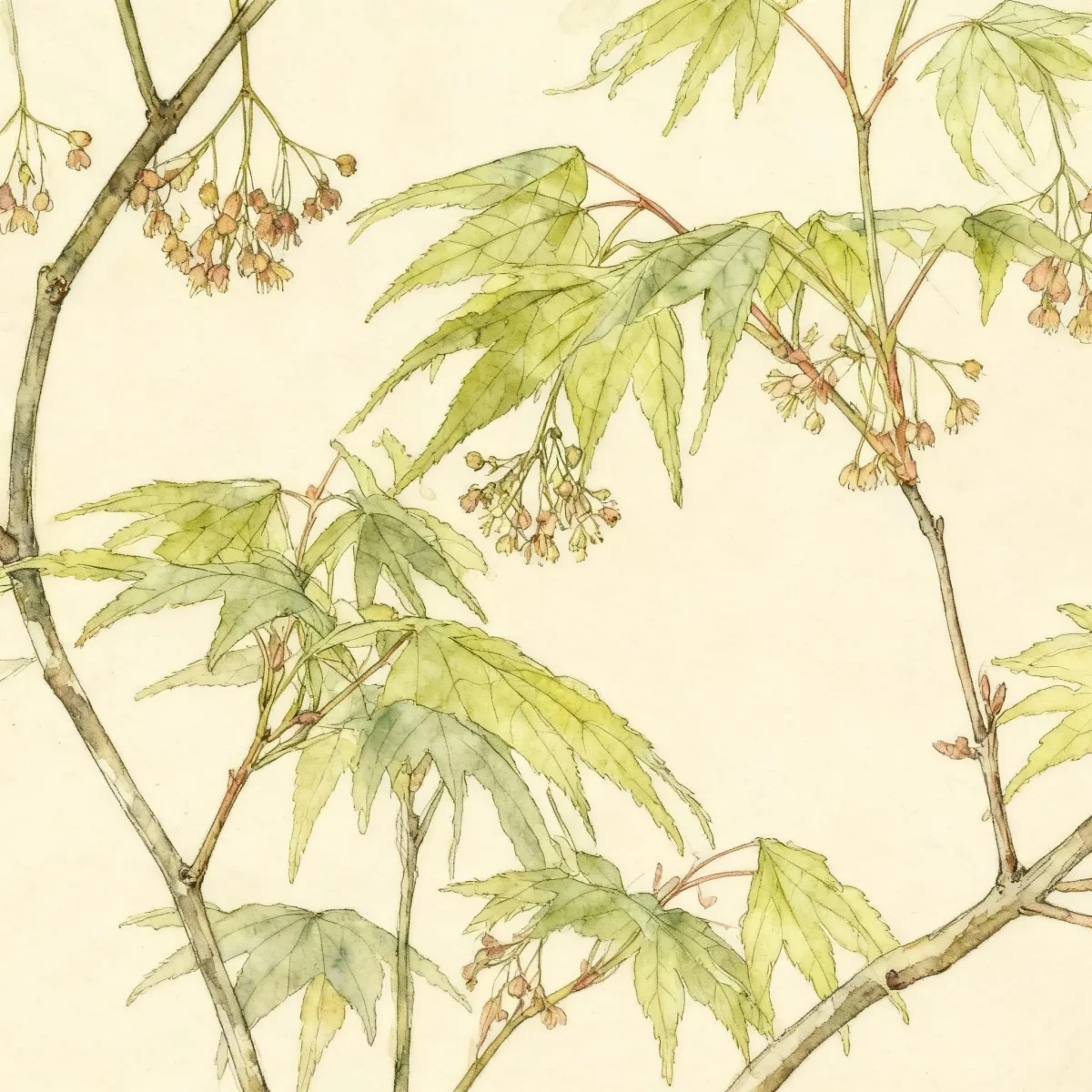
Flowering occurs in April, producing small, somewhat attractive red flowers up close.
Conclusion
The Acer palmatum ‘Utsu-semi’ offers gardeners a superb combination of manageable size, slow growth, and spectacular seasonal color, particularly its transition to scarlet in the fall. As a low-maintenance Japanese maple cultivar, it serves excellently as a specimen planting where structure and texture are desired. Before planting, always confirm that your site offers medium water, well-drained, slightly acidic soil, and appropriate sun exposure for this beautiful shrub.
Companion Planting
This particular Japanese maple performs best when established near compatible companions that share its preference for moist, well-drained, and slightly acidic soil. Consider planting underneath it, allowing the low branching to cascade over the top of lower-growing woodland plants. Good choices include hostas, ferns, and azaleas, which all appreciate bright shade and acidic conditions.
Avoid pairing the Acer palmatum ‘Utsu-semi’ with plants that require heavy, constant moisture or those that aggressively compete for surface soil nutrients, as this can stress the maple. Since it is sensitive to reflected heat, place it away from south-facing brick walls or large expanses of pavement that dry out the root zone quickly during summer.
Design Ideas Using Acer palmatum ‘Utsu-semi’
Due to its strong upright-rounded silhouette, this cultivar acts as a living piece of sculpture in minimalist or contemporary gardens. Use a single Acer palmatum ‘Utsu-semi’ as a focal point contrasted against a pale gravel sweep or a dark green evergreen backdrop to maximize the visual impact of its structure, especially in winter.
In traditional or cottage gardens, integrate it into mixed borders where its fine textures contrast nicely with broadleaf evergreens like Rhododendrons or large Hydrangeas. Ensure the planting location allows viewers to appreciate the spring leaf emergence and the rich fall transition of scarlet and purple on the heavily lobed foliage.