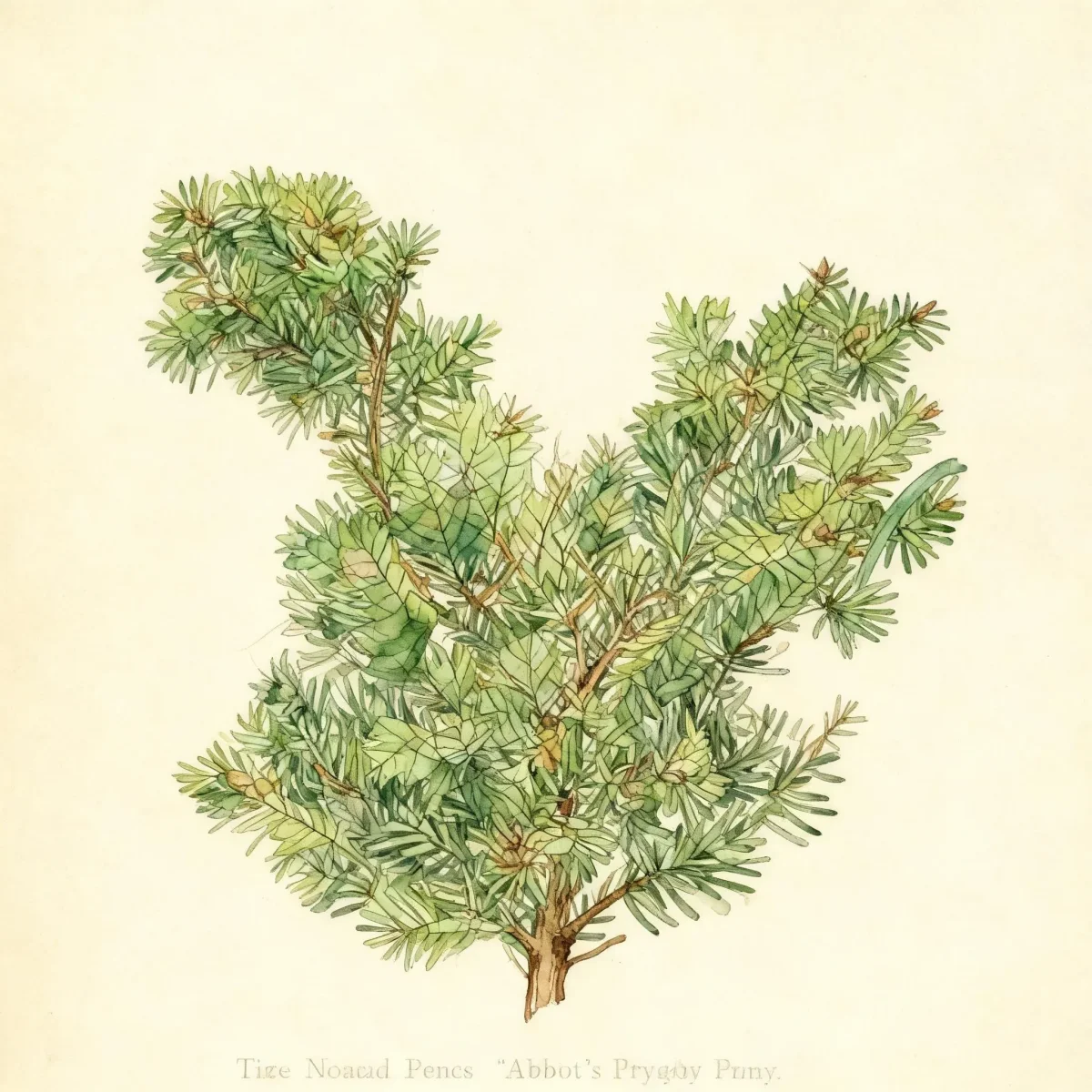
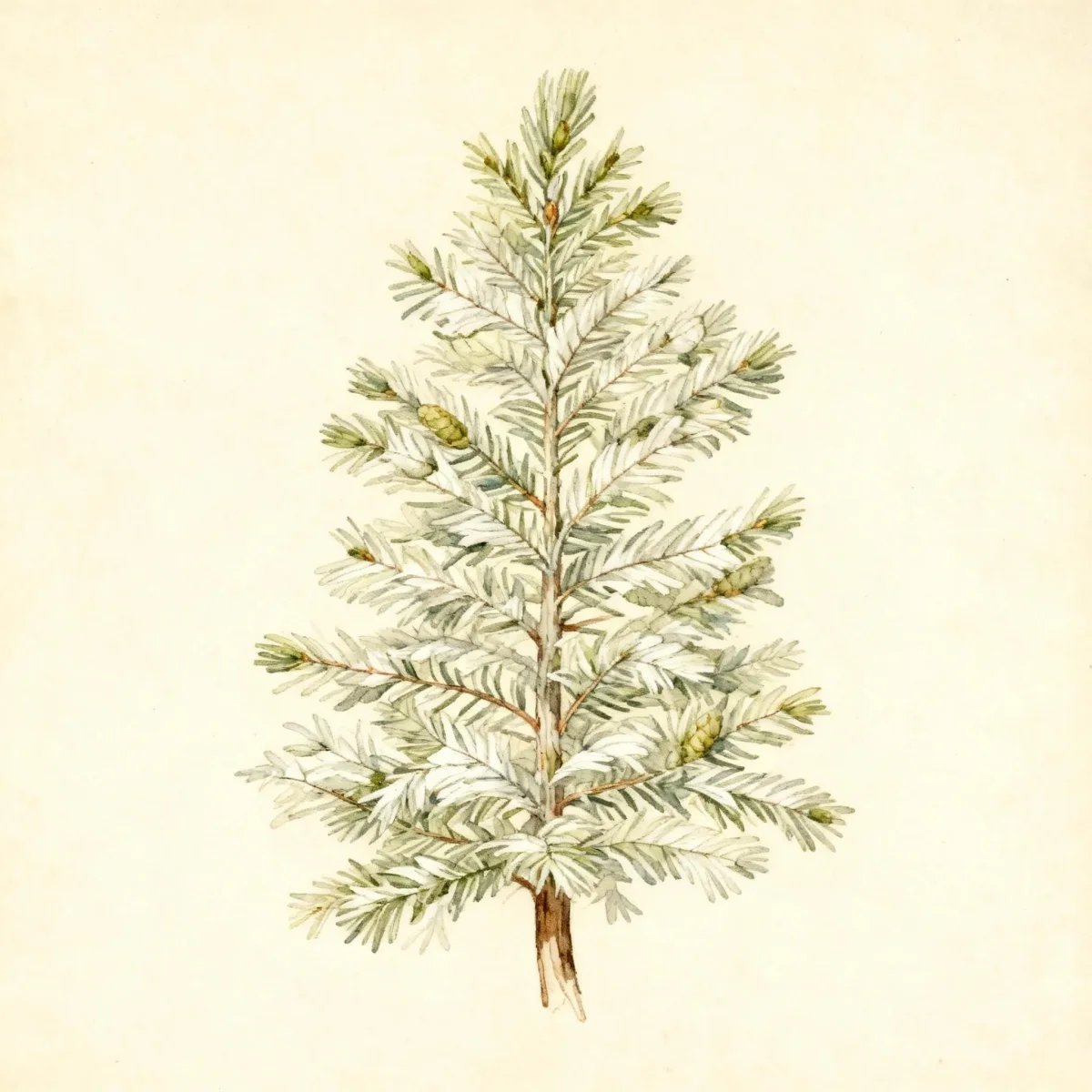
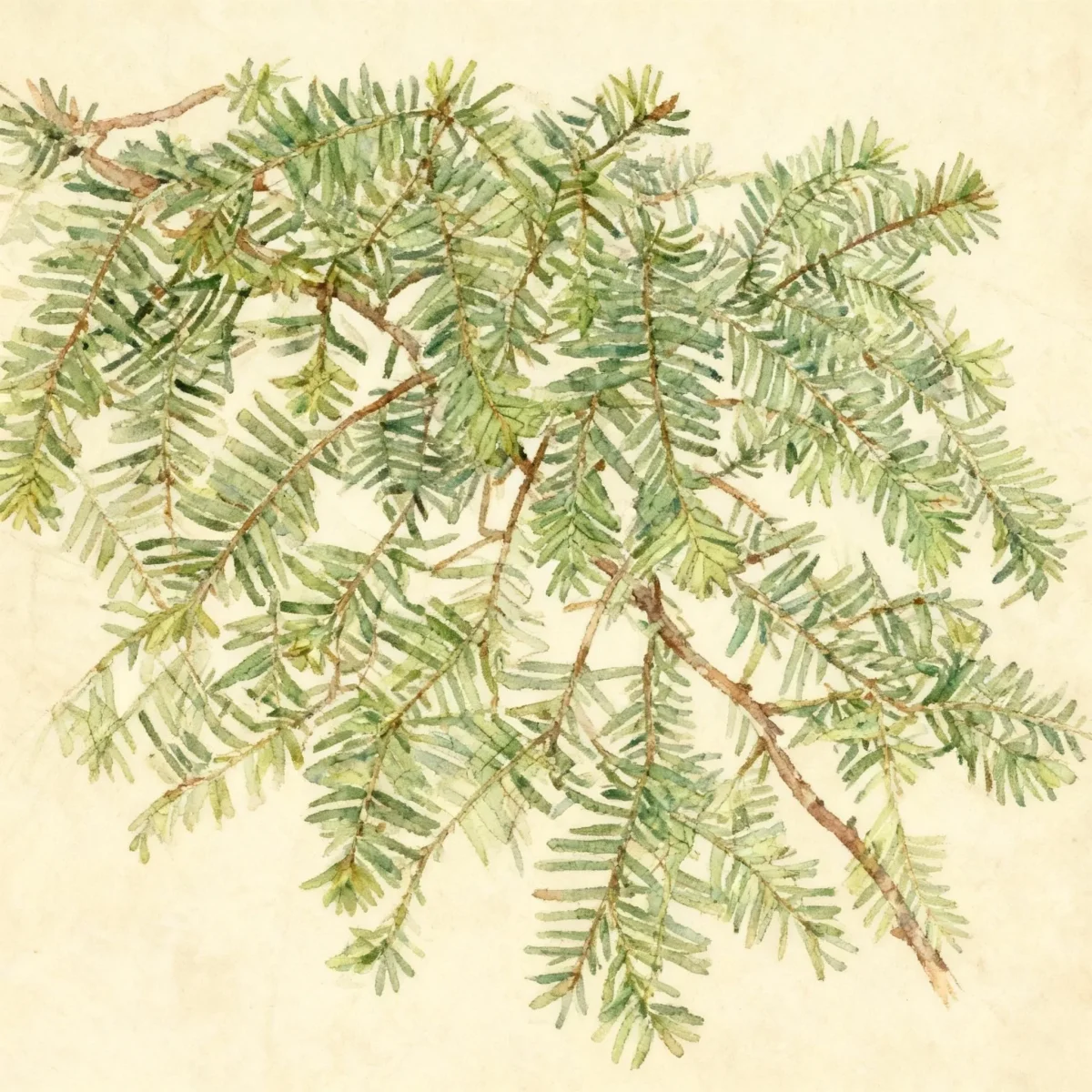
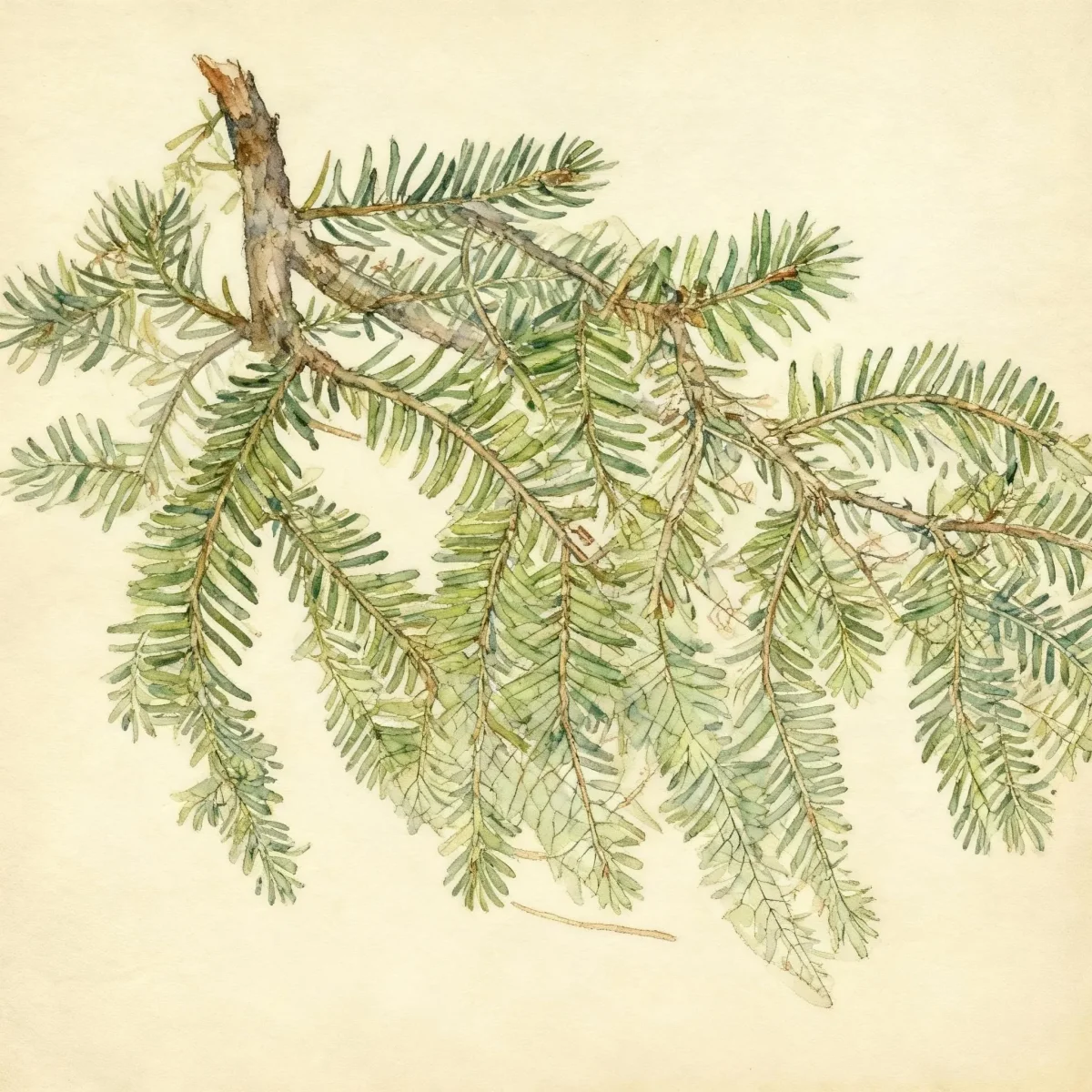
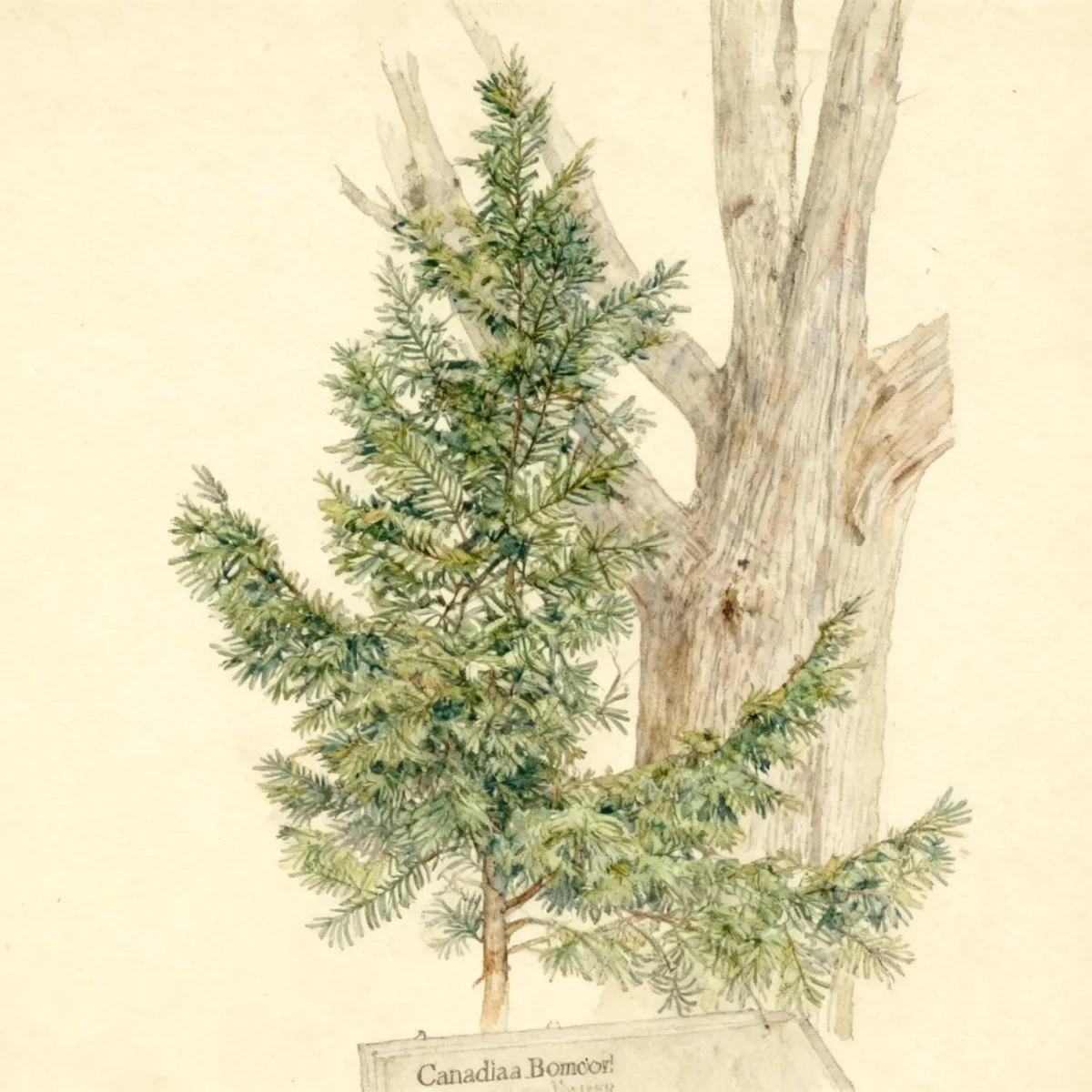
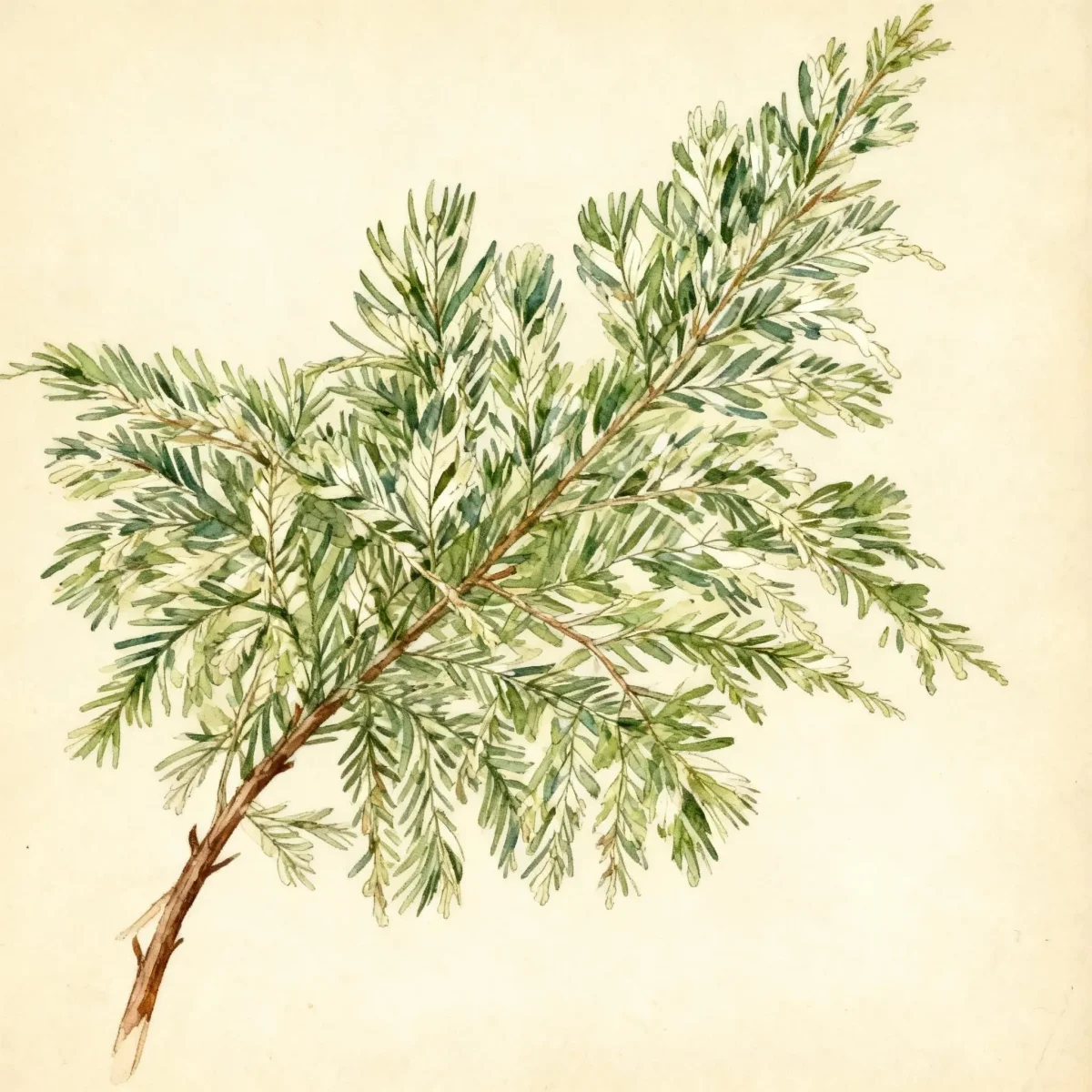
Canadian hemlock (Tsuga canadensis 'Moon Frost')
Tsuga canadensis 'Moon Frost' is a dwarf, variegated Canadian hemlock perfect for shaded spots, offering low maintenance beauty.
Scroll down to discover growing tips, care requirements, companion plants, and more
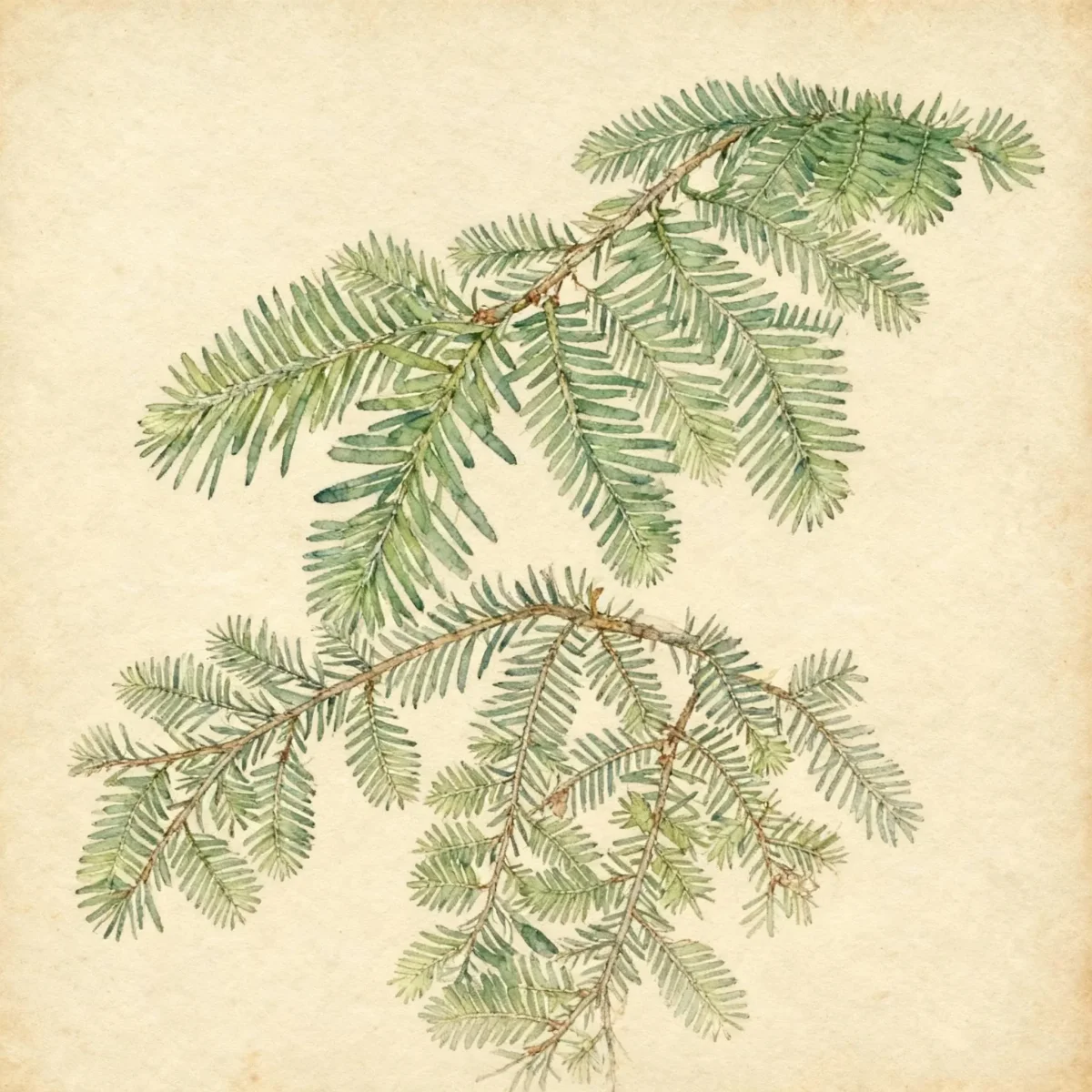
Complete Plant Information
Overview
The Tsuga canadensis ‘Moon Frost’ offers a stunning, compact alternative to the towering native Canadian hemlock. This distinctive cultivar showcases variegated needles that emerge bright white, maturing to a silvery-green hue, often displaying pink blushing during the winter months. Its dense, broad-rounded habit makes it an exceptional focal point where larger conifers would overwhelm the space.
As a striking needled evergreen, Tsuga canadensis ‘Moon Frost’ provides year-round structure and color contrast, especially valuable in shaded garden environments. It requires low maintenance when sited correctly, appreciating protection from intense heat and drying winds common in hotter climates. Gardeners value this dwarf variety for adding texture and light to darker garden corners.
The appeal of the Canadian hemlock cultivar lies in its manageable size, typically reaching only 2 to 4 feet tall and wide, making it an excellent choice for foundation plantings or woodland borders. Successfully growing Tsuga canadensis ‘Moon Frost’ relies on providing consistent moisture and the preferred part-shade conditions characteristic of its species.
Fast Facts
- Plant Family: Pinaceae
- Plant Type: Needled evergreen
- Hardiness Zones: USDA Zones 4-7
- Size at Maturity:
- Height: 2-4 ft
- Spread: 2-4 ft
- Bloom Time: Non-flowering
- Bloom Description: Non-flowering
- Sun Exposure: Part shade to full shade
- Water Needs: Medium
- Maintenance Level: Low
How to Grow
Planting your Tsuga canadensis ‘Moon Frost’ is best done in the early spring or fall when temperatures are mild, ensuring the roots have time to establish before summer stress. Choose a location that receives part shade, particularly protected from harsh afternoon sun, which can scorch the delicate foliage. The soil should be average, consistently medium in moisture, and crucially, well-drained; avoid areas where water pools after rain.
Care for this Canadian hemlock through attentive watering, especially during dry spells, as it is intolerant of drought, particularly when young. While it is a low-maintenance shrub, ensure regular water supply until established. Fertilization is generally unnecessary if the soil quality is adequate, but deep, thick winter mulch is highly appreciated to regulate soil temperature and moisture retention.
Although the standard species tolerates sun in cooler northern zones, the variegated ‘Moon Frost’ performs best when sheltered. Be cautious siting it south of USDA Zone 6, as consistent temperatures over 95°F coupled with humidity can cause sun scald damage to the foliage. Protect this specimen from strong, drying winds which exacerbate moisture loss.
Landscape Uses
The unique characteristics of Tsuga canadensis ‘Moon Frost’ make it an excellent candidate for specialized planting locations where brightness is needed without intense sun exposure. Its dwarf status, combined with the variegated foliage emerging bright white, fulfills the stated purpose as a small evergreen conifer for shady areas. It works beautifully as an accent plant near entrances or integrated into shade gardens alongside hostas and ferns.
Consider using this cultivar as a low-growing specimen plant or repeating it along woodland edges to provide consistent, cool color throughout the year. Because it maintains a tidy, broad-rounded shape, it requires minimal structural pruning. This makes planning around it simple, as designers can rely on its predictable, compact growth habit.
Standout Features
Noteworthy Characteristics
The parent species, Canadian hemlock (Tsuga canadensis), is a native eastern North American conifer known for its lacy foliage and graceful, slightly weeping habit. The specific cultivar, Tsuga canadensis ‘Moon Frost’, is prized for its dwarf stature, typically maturing under 4 feet tall, and its highly variegated needles that emerge white, often showing pink tones in winter. This trait provides essential year-round brightness in shaded environments where few other conifers offer such striking color contrast.
Tolerances
- Deer
- Heavy Shade
- Black Walnut
Potential Problems
Generally, the Canadian hemlock is resilient when established in its preferred conditions, but vigilance against specific pests and environmental stresses is necessary. Potential cultural issues include foliage scorch in overly hot weather and fatal drought stress if watering is neglected during dry periods. Proper siting in cool, moist partial shade mitigates most environmental risks.
The most significant threat to the survival of hemlocks, including Tsuga canadensis ‘Moon Frost’, is the Hemlock Woolly Adelgid (HWA). This tiny, sap-sucking insect can devastate mature trees, though newer chemical controls, often involving systemic applications of treatments like imidacloprid or dinotefuran, can help manage infestations, especially on smaller, younger specimens like this cultivar.
Monitor new growth closely for signs of decline, needle discoloration, or visible pests. Addressing disease, such as needle blight or cankers, usually involves removing affected branches promptly and ensuring good air circulation, which is aided by not overcrowding your plantings.
Frequently Asked Questions
What hardiness zones is Tsuga canadensis ‘Moon Frost’ suitable for?
This dwarf Canadian hemlock thrives best in USDA Zones 4 through 7.
How large does Tsuga canadensis ‘Moon Frost’ grow?
It is a compact shrub, typically reaching a mature height and spread between 2 to 4 feet.
What sun exposure does Tsuga canadensis ‘Moon Frost’ need?
This plant prefers part shade to full shade conditions for optimal foliage presentation and protection from burning.
When does Canadian hemlock bloom?
Tsuga canadensis ‘Moon Frost’ is classified as non-flowering, focusing its energy on evergreen foliage production rather than blooms.
Conclusion
The Tsuga canadensis ‘Moon Frost’ provides gardeners with a uniquely textured, low-growing evergreen solution for year-round color, especially suited for shaded borders or woodland edges. Its variegation and manageable size set it apart from its larger relative, the traditional Canadian hemlock. Before planting, confirm your site offers the required moisture and protection from high heat to ensure your Tsuga canadensis ‘Moon Frost’ displays its best winter hues.
Design Ideas for Shaded Borders
The structure and light color of ‘Moon Frost’ make it an outstanding choice for defining the edges of shaded beds. Use groups of three or five to create repetition leading the eye through a woodland walk. Because it tolerates heavy shade, it pairs visually well with the deep greens of Hosta cultivars or the fine texture of native ferns (Dryopteris species). Its height (under 4 feet) ensures that taller shrubs or understory trees behind it remain visible.
To maximize the visual impact of the white new growth, position this Canadian hemlock near pathways or near light sources, allowing the variegated tips to catch any available ambient light, even under a dense canopy. Avoid planting it directly against dark mulch or foundation walls, as the contrast will be lost; subtle, lighter-colored rocks or gravel edging can enhance its presence.
Companion Planting in Woodland Gardens
When selecting companions for Tsuga canadensis ‘Moon Frost’, prioritize plants that share similar cultural requirements for shade and consistent moisture. Acid-loving companions thrive here, such as Rhododendrons and Azaleas, particularly those suited for partial shade. The fine, needled texture of the hemlock contrasts beautifully with broad-leaved evergreens or flowering perennials that offer seasonal color.
Consider plants that dislike sun exposure, as they will benefit from the light filtering provided by the tree canopy that shelters the hemlock. Groundcovers that spread nicely on slopes, such as Epimedium or Tiarella, provide a softening effect below the shrub, respecting its low-maintenance nature. Always ensure companion planting does not impede air circulation around the base of the Tsuga canadensis ‘Moon Frost’.