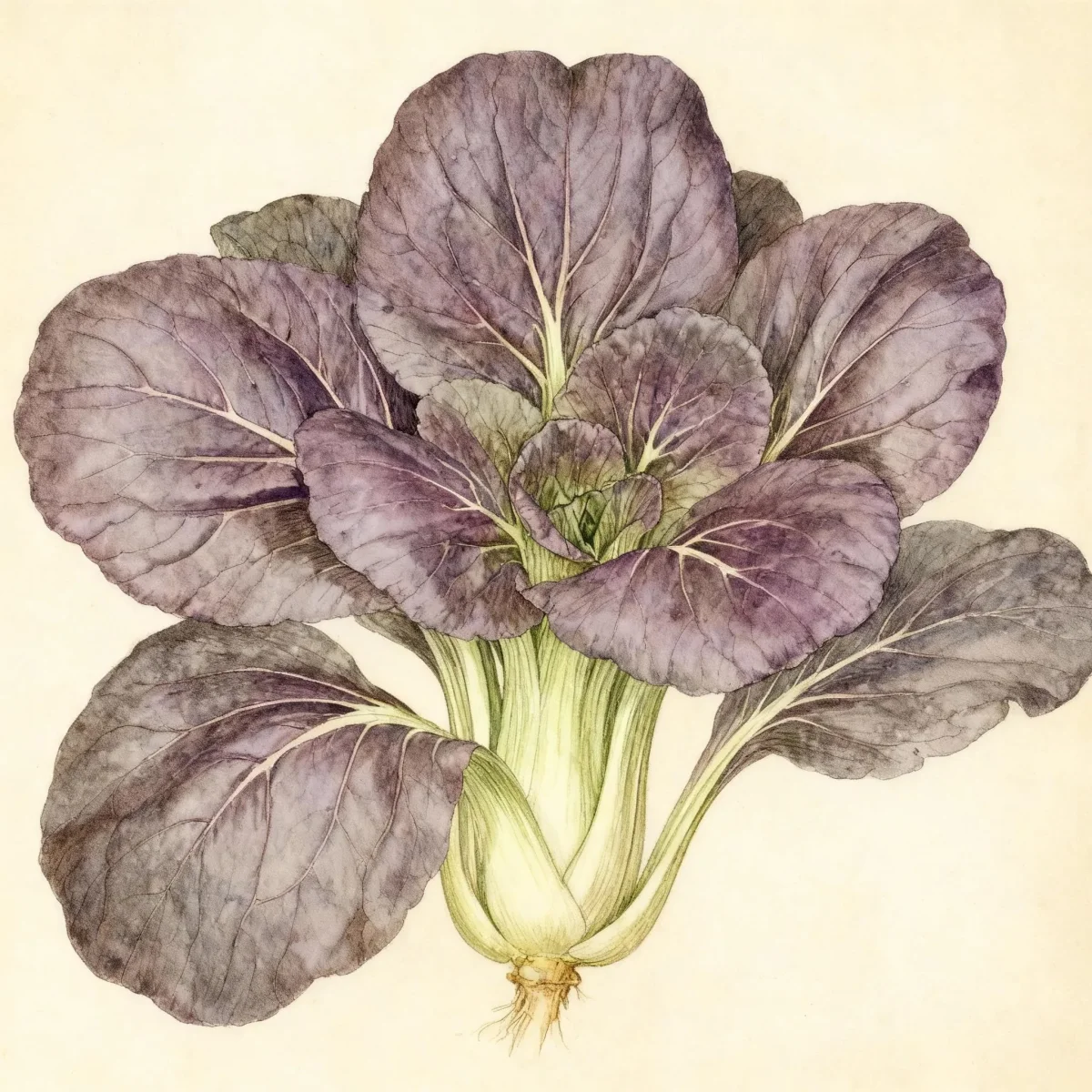
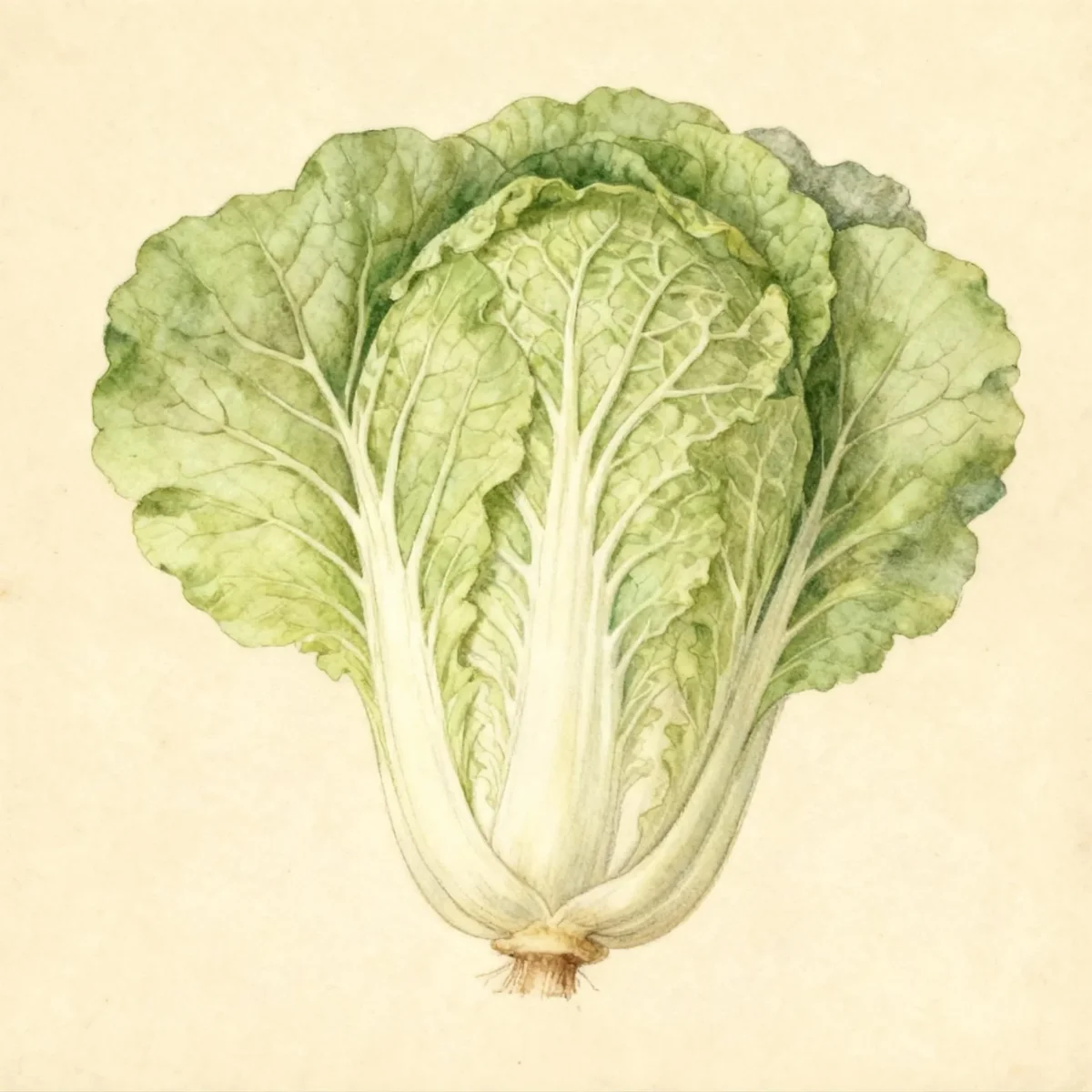
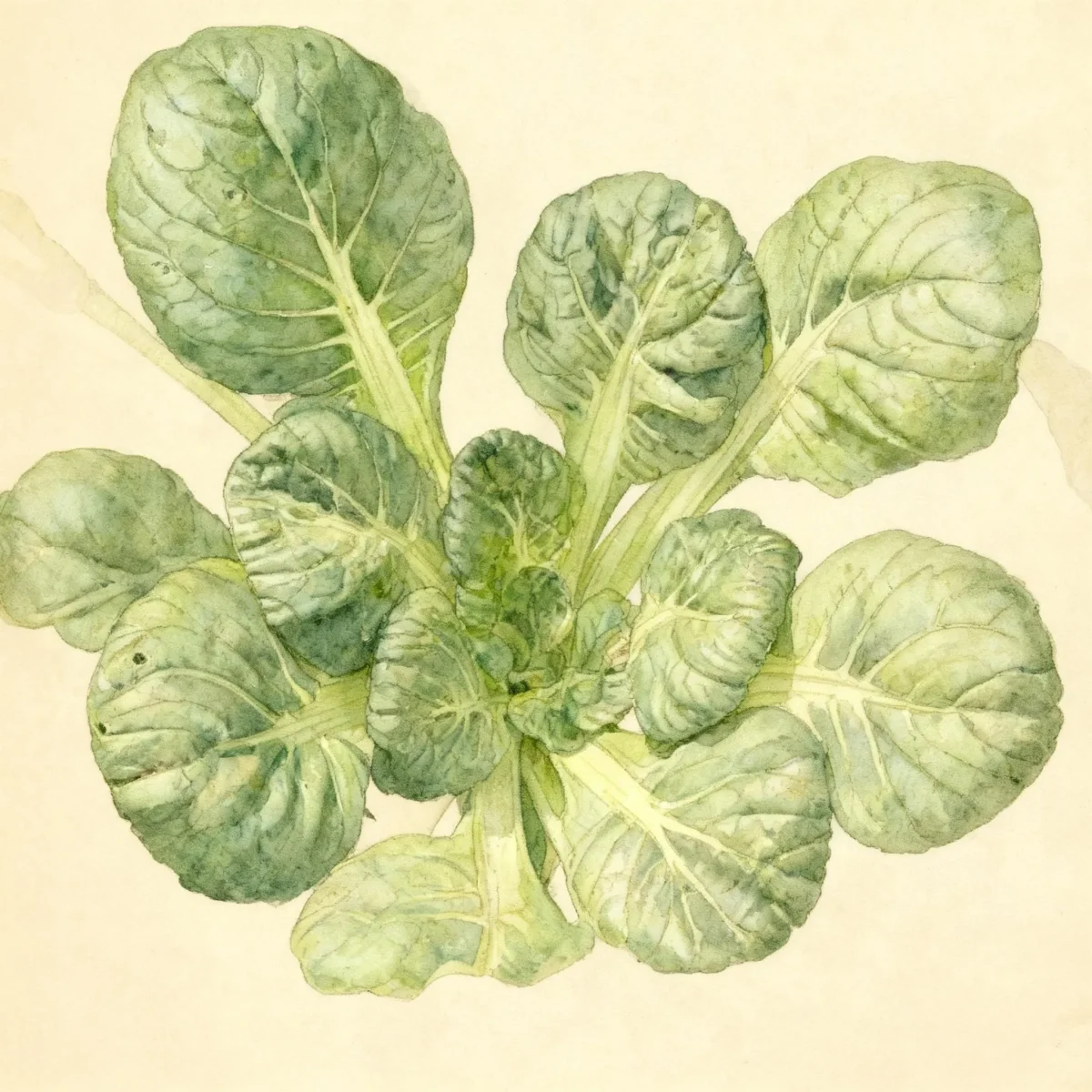
Asian greens (Brassica rapa (Asian Greens Group))
Learn to grow delicious Asian greens (Brassica rapa (Asian Greens Group)), annual vegetables suited for USDA Zones 2-11, offering fast harvests.
Scroll down to discover growing tips, care requirements, companion plants, and more
Complete Plant Information
Overview
The Asian greens group, scientifically classified as Brassica rapa (Asian Greens Group), offers gardeners a rapid route to harvest flavorful, nutrient-dense leaves. These vegetables are highly valuable for their versatility in the kitchen, ranging in form from feathery mizuna to oval-leafed komatsuna. As members of the Brassicaceae family, they share a piquant flavor profile similar to cabbage and mustard greens.
These Asian greens are generally cultivated as annuals, thriving in cooler weather, which allows for multiple plantings throughout the growing year in many climates. They prefer well-prepared, fertile soil and consistent moisture to ensure the developing leaves remain tender and palatable. Their relatively quick maturation makes them perfect for filling gaps in the vegetable patch.
The appeal of Brassica rapa (Asian Greens Group) lies not just in nutrition but in ease of growth, provided temperature swings are managed. Whether you seek leaves for a fresh salad or robust greens for stir-frying, these cultivars provide quick, reliable yields for any gardener utilizing the diverse offerings of Asian greens.
Fast Facts
- Plant Family: Brassicaceae
- Plant Type: Annual
- Hardiness Zones: USDA Zones 2-11
- Size at Maturity:
- Height: 1-1.5 ft
- Spread: 1-1.5 ft
- Bloom Time: Flowers not showy
- Sun Exposure: Full sun to part shade
- Water Needs: Medium
- Maintenance Level: Medium
How to Grow
Planting Asian greens is best accomplished through direct sowing, though starting seeds in flats is viable, especially for early spring crops. For the best quality yields, sow seeds directly in the ground either in early spring or late summer for a substantial fall harvest. If you attempt a mid-summer planting of Brassica rapa (Asian Greens Group), be aware that intense heat often triggers premature bolting (flowering), which ruins the desirable leaf quality.
These vegetables require fertile, moisture-retentive soil to flourish; lack of adequate water at any growth stage significantly diminishes crop quality. Water consistently to maintain even soil moisture. While the process is generally medium maintenance, floating row covers are highly effective—they offer protection from intense summer sun, excessive moisture, and common brassica pests, which is particularly helpful for less cold-hardy varieties like mibuna.
Spacing depends heavily on the specific cultivar chosen, ranging from 4 inches up to 18 inches between plants. Harvest can occur nearly anytime the leaves are large enough to eat. You may choose to harvest outer leaves only, allowing the center to continue producing, or you can use the cut-and-come-again method by snipping the plant about three-quarters of an inch above the base level, encouraging immediate resprouting.
Landscape Uses
As primarily culinary vegetables, the Brassica rapa (Asian Greens Group) fits perfectly into kitchen gardens, raised beds, and attractive edgings near patios. Their clumping habit of dark green foliage with contrasting white stalks provides a neat, orderly texture, making them suitable for integrated pest management borders where food production meets aesthetics.
When used in mixed plantings, these Asian greens pair well with other fast-growing, cool-season crops like radishes or lettuce. For a visually interesting display, intersperse them with bright ornamental kale or taller herbs. Their requirement for fertile, consistently moist soil means you should site them where drainage is good but supplemental irrigation is easily applied.
Because the leaves are edible raw or cooked, integrating a block of these greens into an ornamental vegetable border ensures you always have fresh ingredients at hand. Mizuna, for instance, is easily incorporated into mesclun mixes, adding a spicy-peppery lift to salads grown right outside the back door.
Standout Features
Noteworthy Characteristics
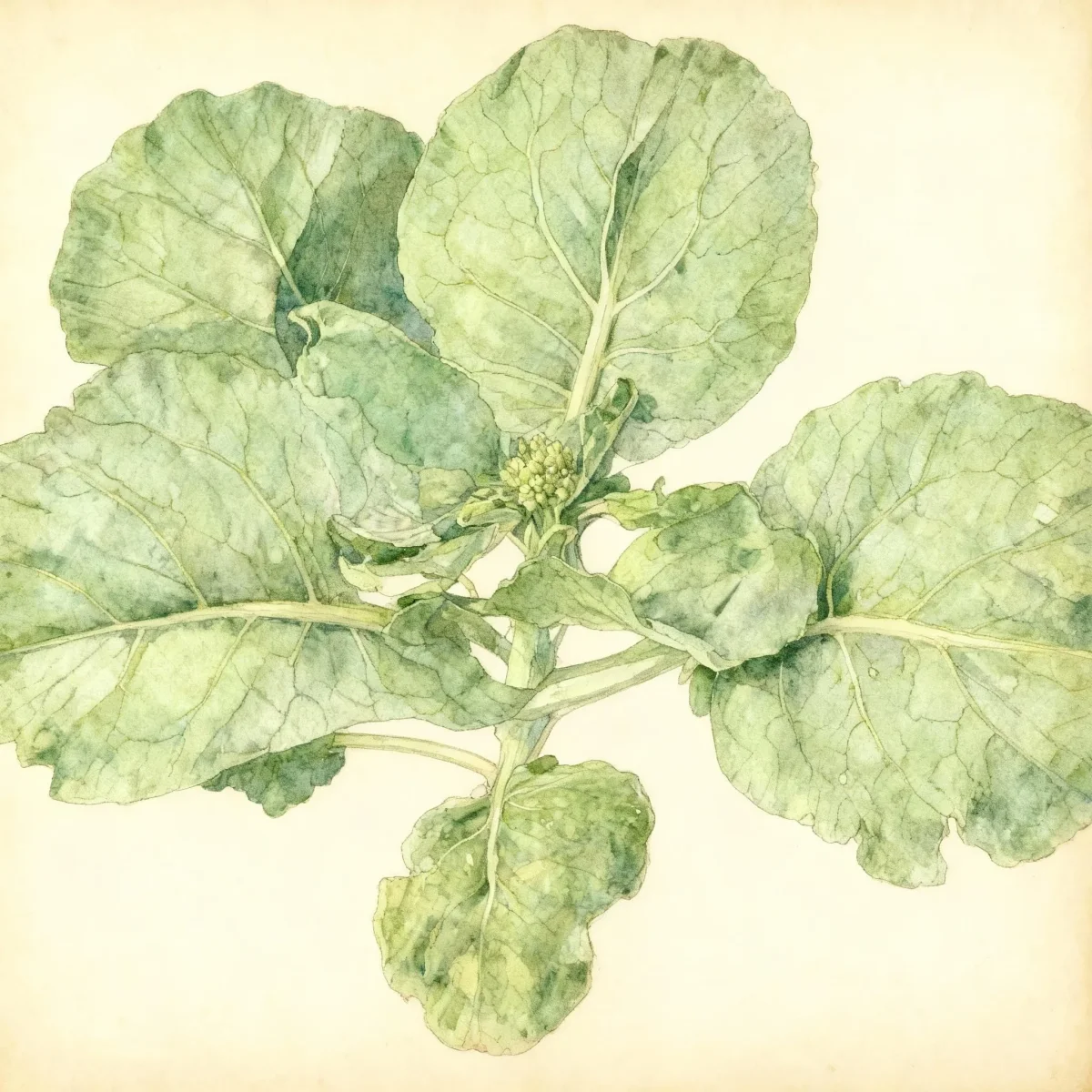
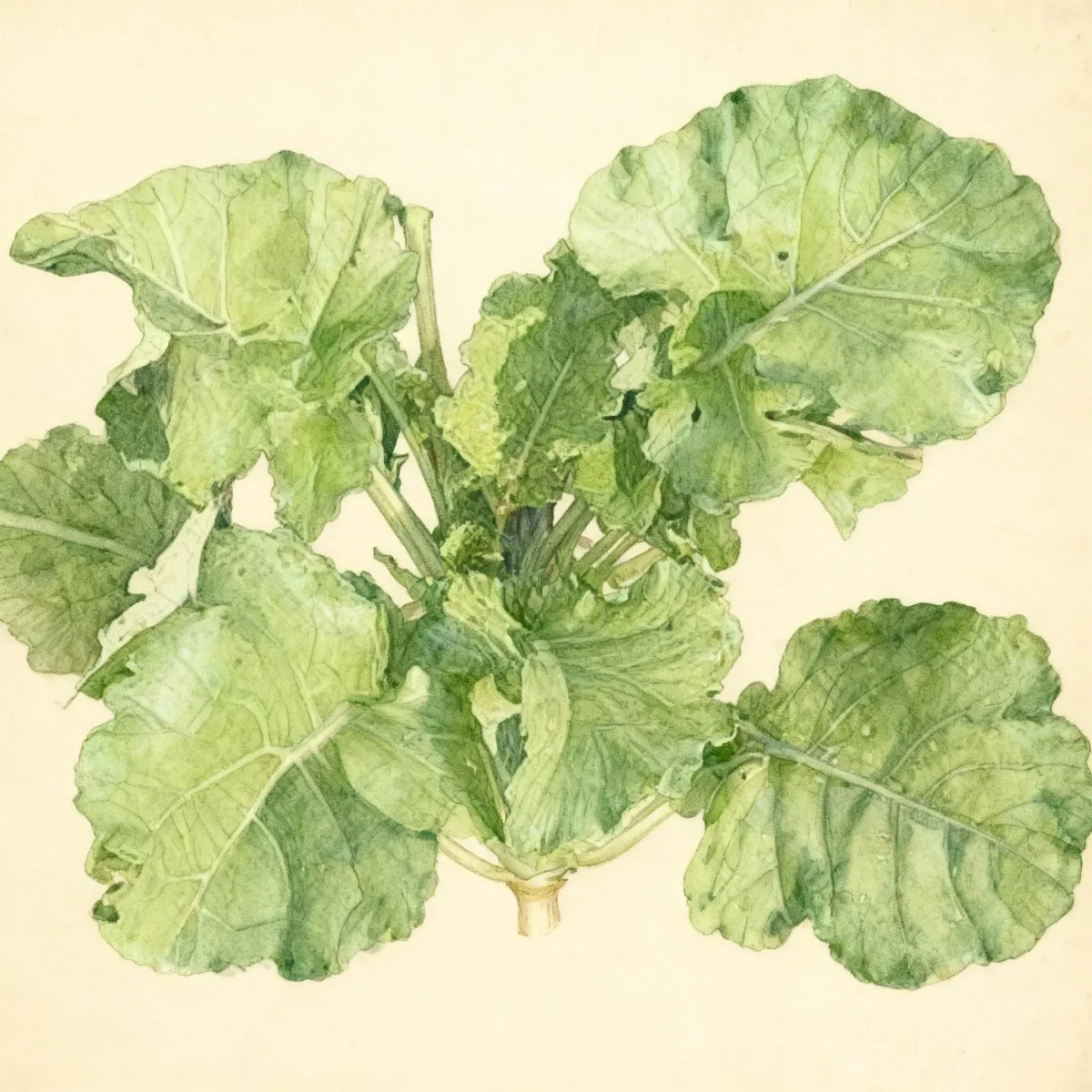
The Asian greens group is a broad term encompassing types such as mizuna, mibuna, and komatsuna, all characterized by dense clumps of dark green leaves atop thin white stalks. Flavor profiles vary; they often start mild, resembling spinach or cabbage, but tend to become distinctly more piquant as the plants mature. Mizuna is recognized by its deeply dissected, feathery leaves, while komatsuna displays broader, oval shapes.
Tolerances
- None listed
Potential Problems
Asian greens attract the usual suspects found bothering cabbage and broccoli. Gardeners should be vigilant against common pests such as flea beetles, aphids, slugs, and damage from cabbage caterpillars and cutworms. Management often involves using floating row covers early in the season to prevent insect access.
Diseases specific to Brassica rapa (Asian Greens Group) generally involve issues like bacterial rot or the highly contagious turnip mosaic virus. Ensuring proper airflow by spacing plants adequately and avoiding overcrowding helps mitigate fungal and bacterial development, while diseased plant material should be promptly removed and destroyed.
Frequently Asked Questions
What hardiness zones is Asian greens suitable for?
Brassica rapa (Asian Greens Group) is notably adaptable, thriving in USDA Zones 2 through 11.
How large does Asian greens grow?
When fully mature, you can expect these plants to reach a height of 1 to 1.5 feet, with a similar spread of 1 to 1.5 feet.
What sun exposure does Asian greens need?
For optimal leaf production and quality, these Asian greens perform best when given full sun, though they tolerate partial shade well.
When does Asian greens bloom?
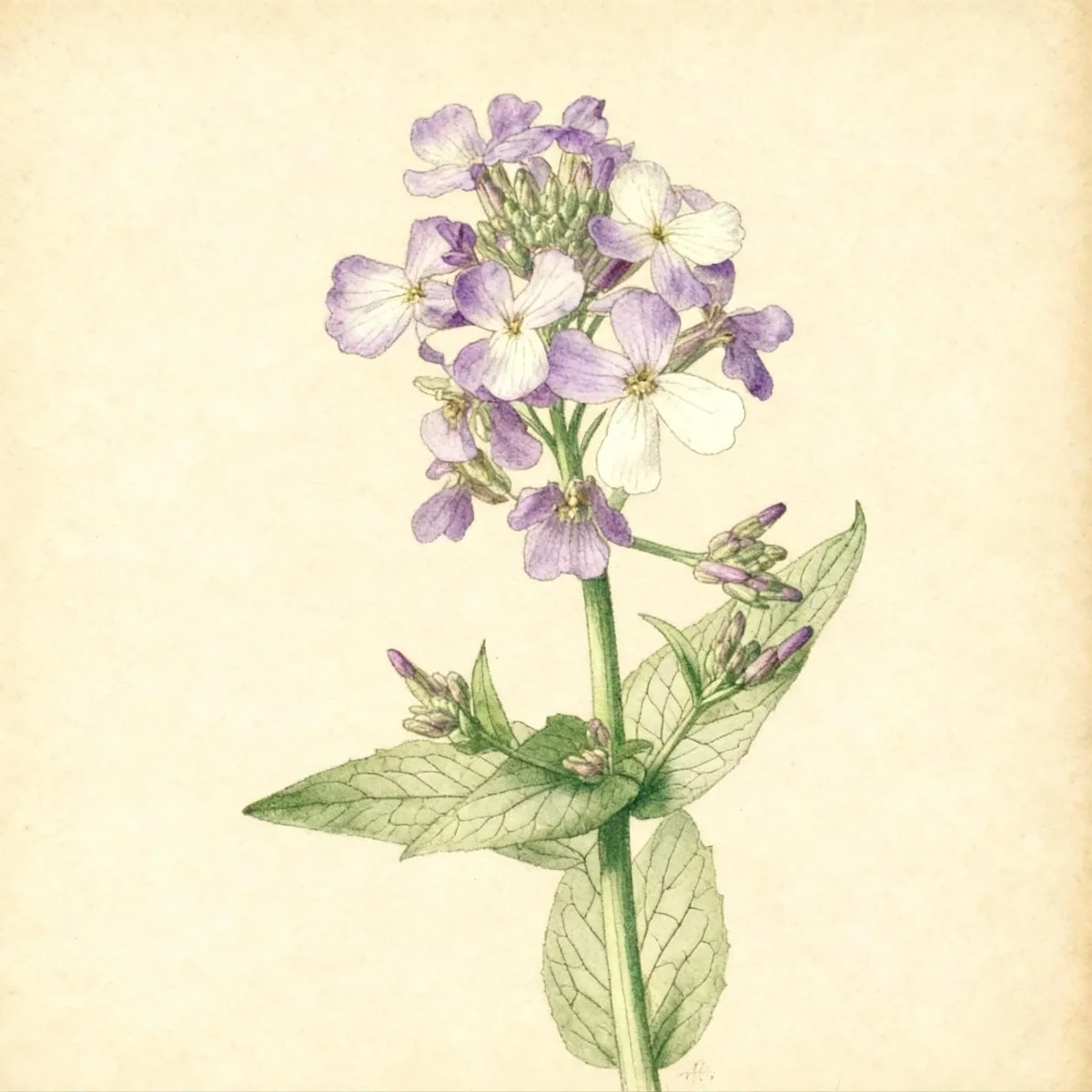
The flowering habit of Brassica rapa (Asian Greens Group) is noteworthy because the flowers are not considered showy; they are primarily produced when the plant bolts due to heat or maturity.
Conclusion
The Asian greens (Brassica rapa (Asian Greens Group) provide exceptional versatility and culinary value, turning any section of the vegetable garden into a source of nutritious, fast-harvested greens. Their cold tolerance allows for extended sowing windows across USDA Zones 2-11. Ensure you provide adequate, consistent moisture and plan for early spring or late summer sowing to maximize your harvest of these delicious crops.
Companion Planting
Selecting good neighbors is crucial when cultivating Brassica rapa (Asian Greens Group) to help manage pests naturally. Because these Asian greens are susceptible to brassica-specific pests, planting strong-smelling companions nearby can confuse or repel common threats like cabbage worms and aphids. Consider planting dill, rosemary, or sage near your rows of Brassica rapa (Asian Greens Group) to mask the attractive scent of the young seedlings.
Another excellent strategy involves using quick-maturing root crops as companions. Radishes, for example, often mature and are harvested before the Asian greens reach their full size or before heat triggers heavy pest pressure on the brassicas. This staggered harvesting optimizes space and keeps the garden environment active.
Seasonal Care Calendar
For cool-season success, focus your attention on water management and pest scouting during most months. During early spring, focus on direct seeding as soon as the soil is workable, using row covers immediately if an unexpected deep freeze is forecast, especially for less cold-hardy mibuna. Summer heat requires vigilance; inspect plants daily for signs of bolting, and deploy light shade cloth if temperatures consistently breach 80°F to preserve leaf texture.
Fall planting should be timed so maturity occurs before the first hard frost, though light frosts often concentrate the sugars and improve the flavor of residual greens. In areas where zones permit overwintering (Zones 8+), apply thicker row covers or low tunnels to protect plants, allowing for winter harvests of hardy Asian greens. Always remove spent summer crops promptly to prevent disease carryover into the following year.