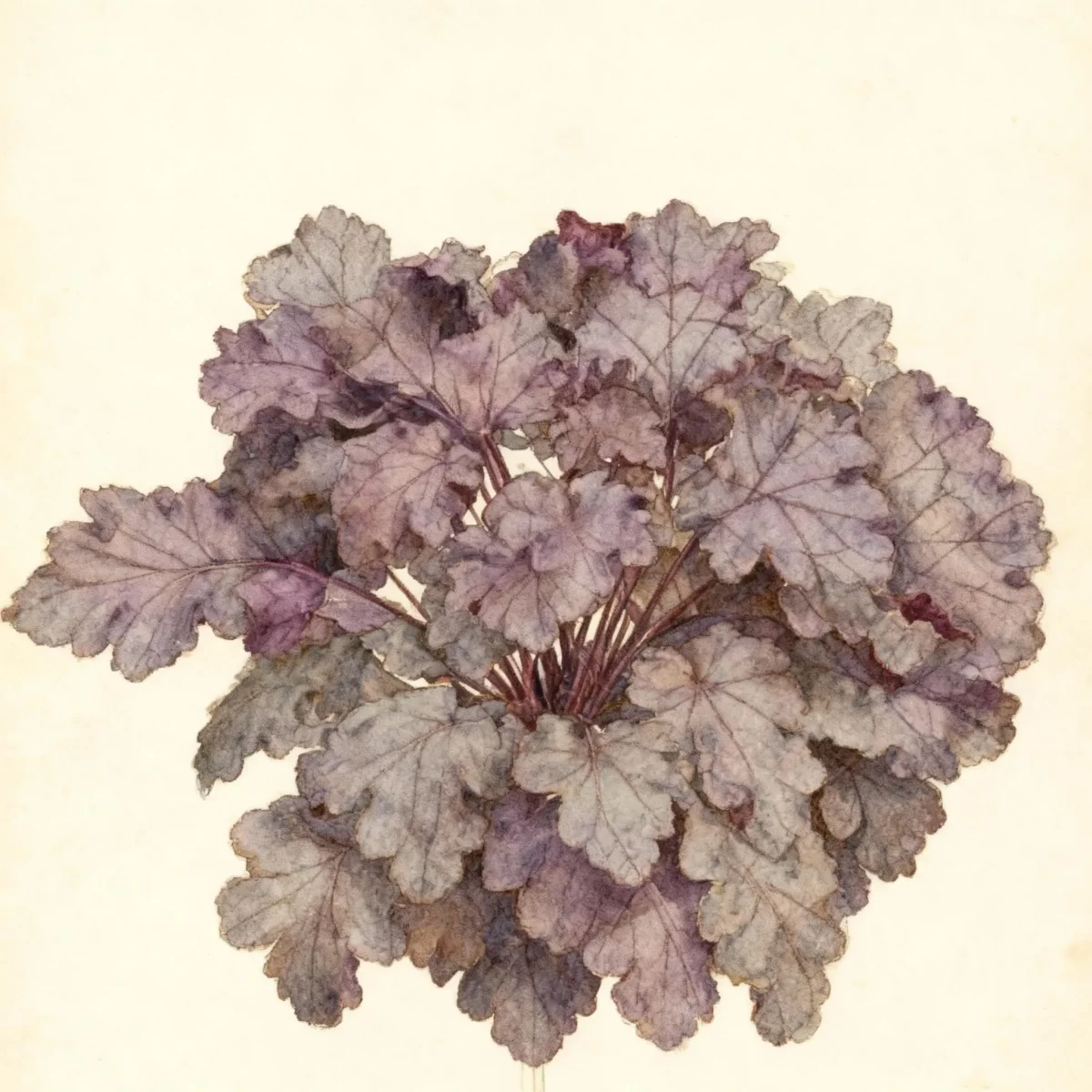
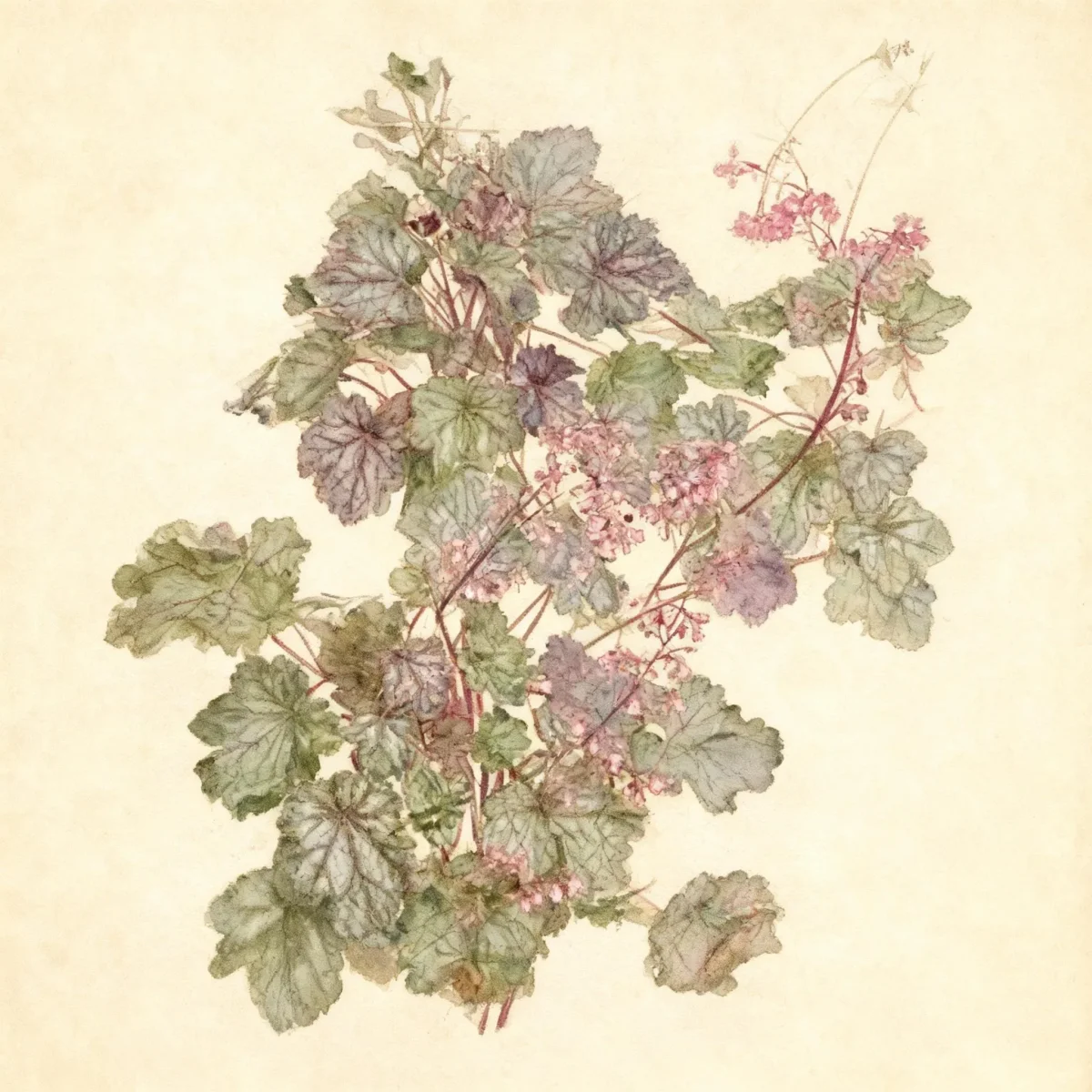
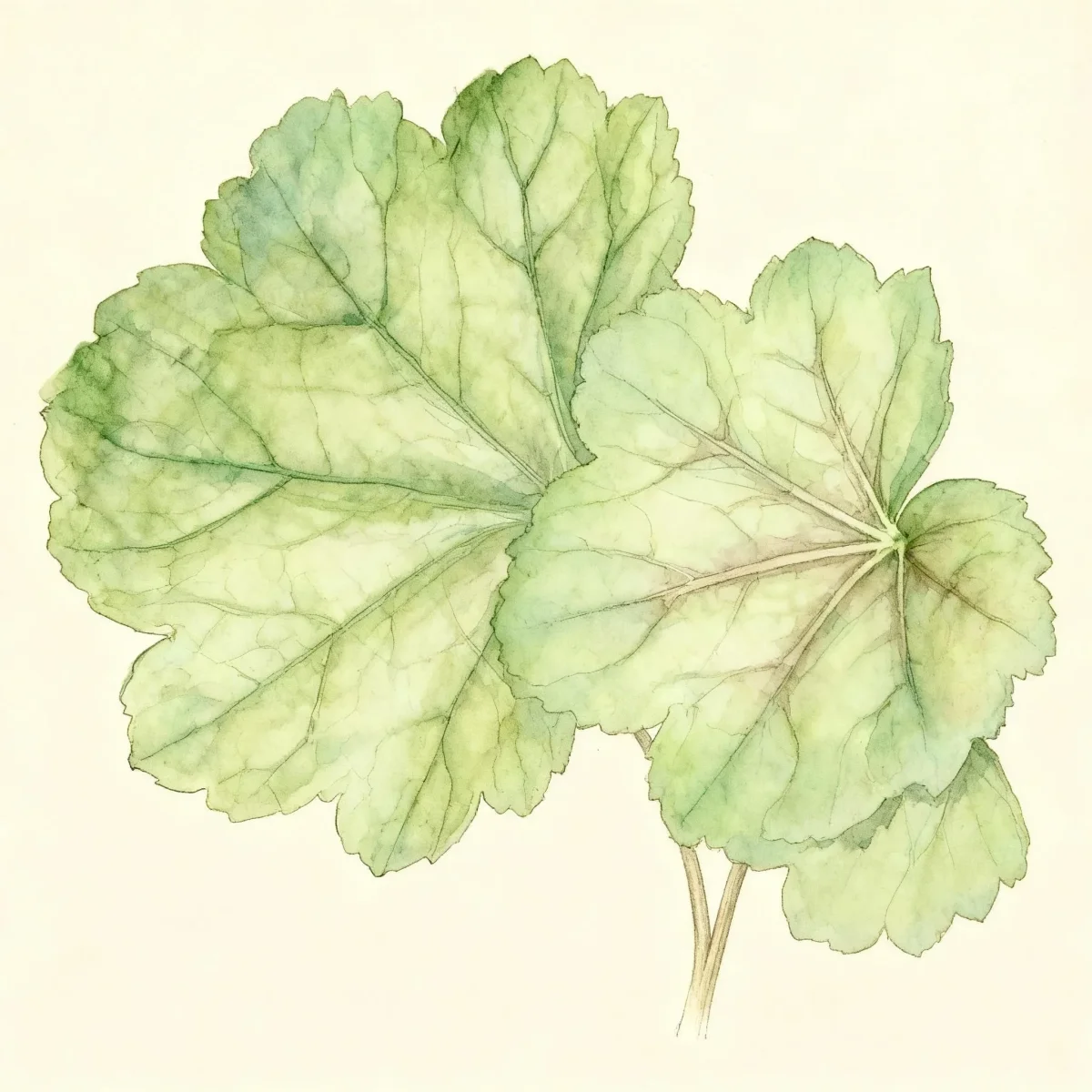
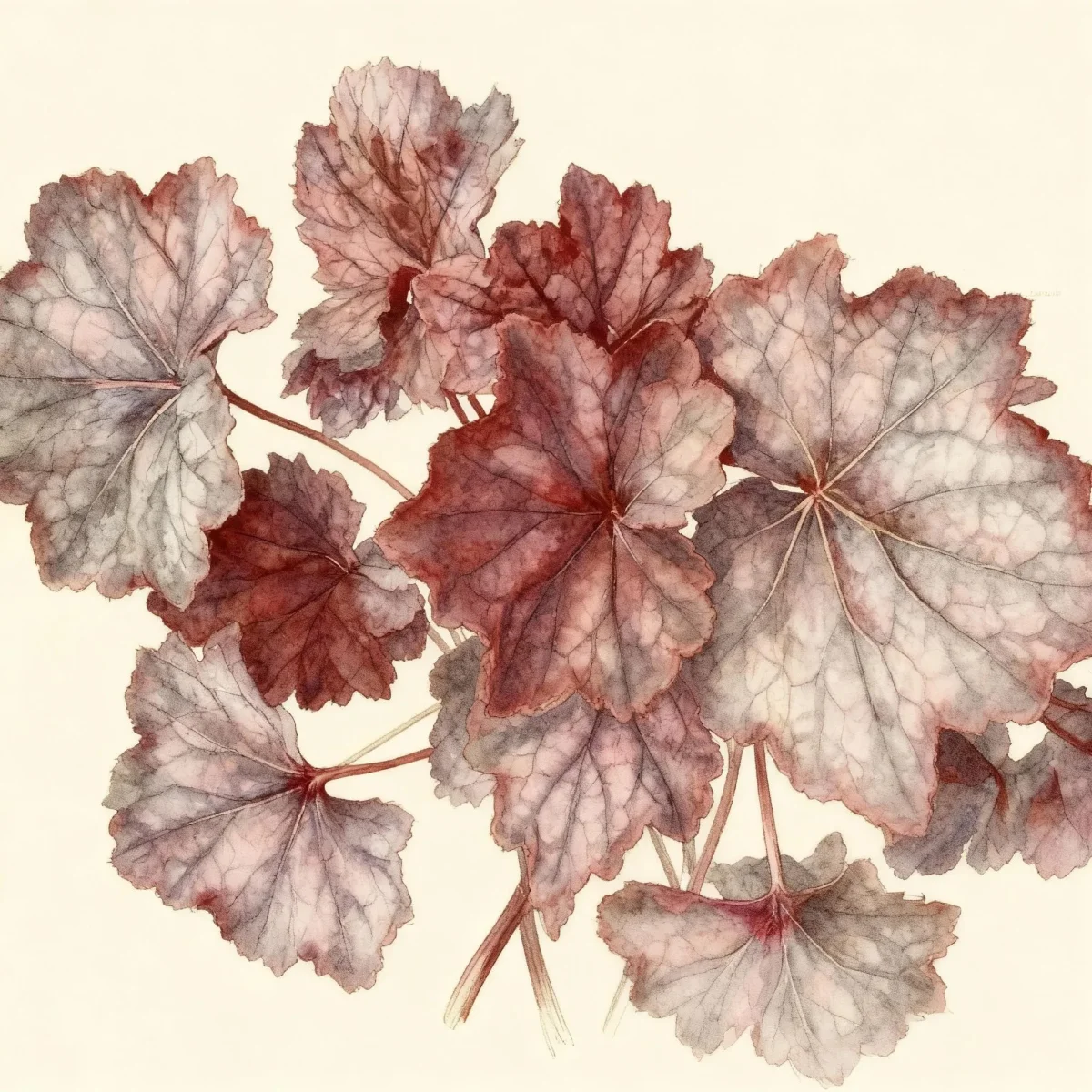
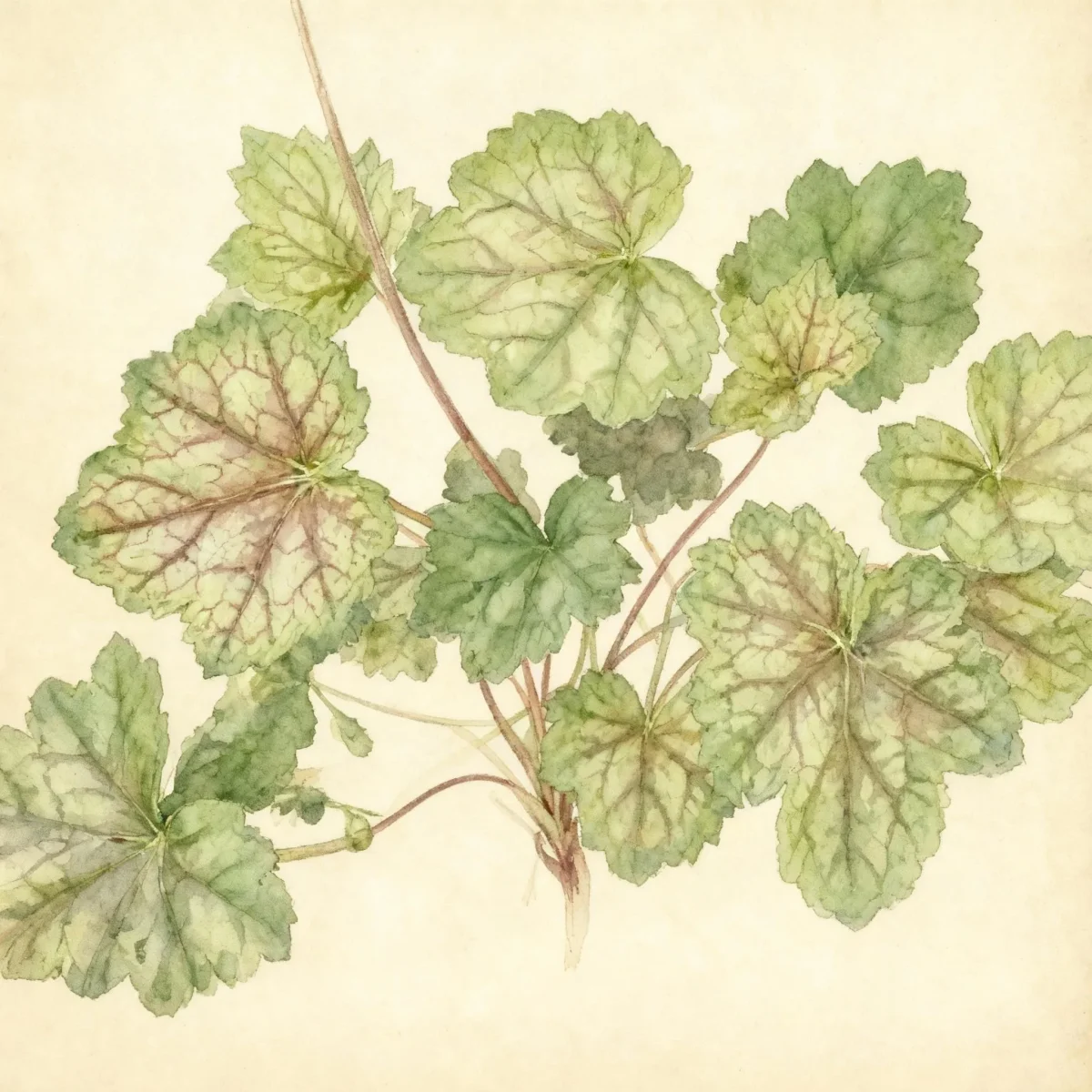
Coral bells (Heuchera 'Cinnabar Silver')
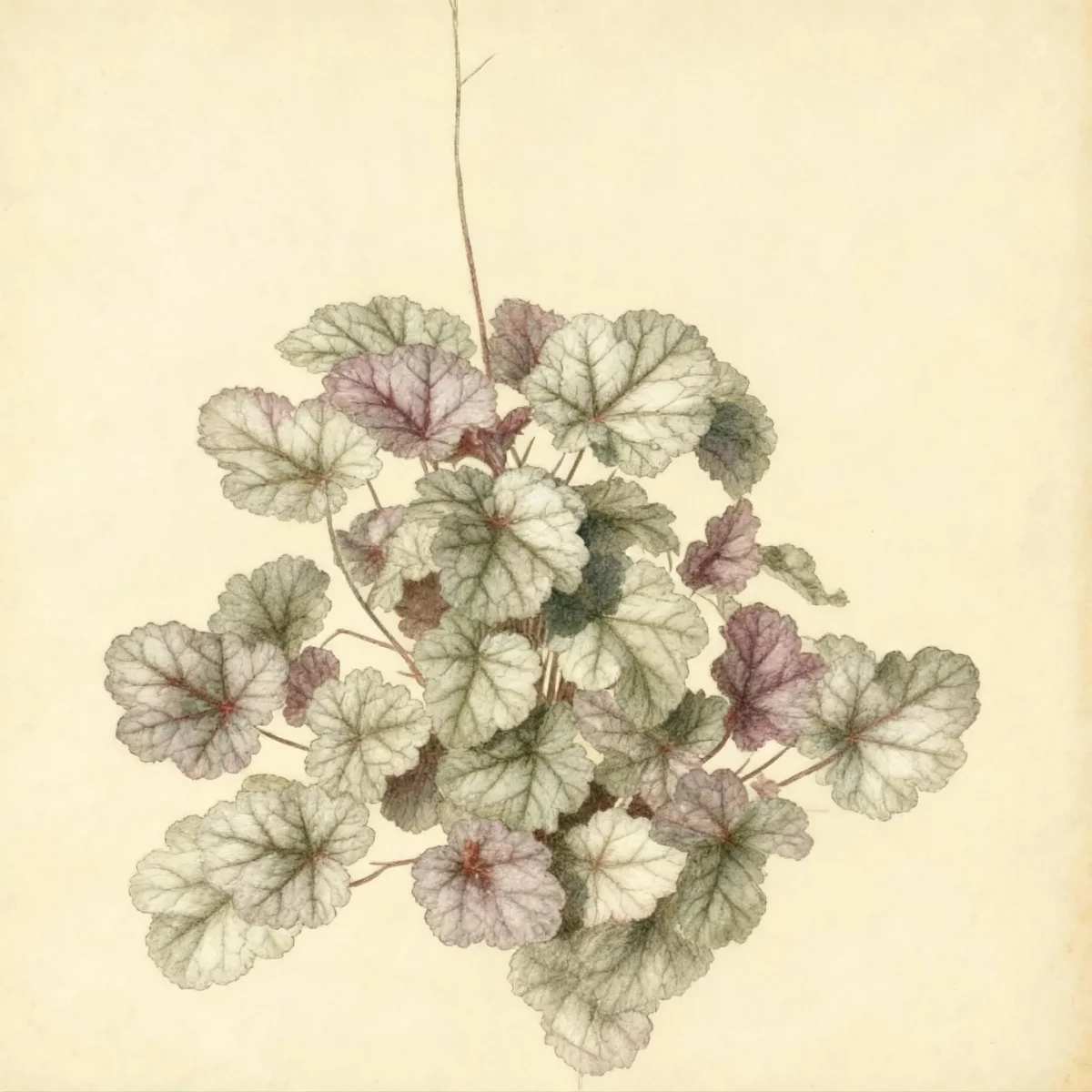
Heuchera 'Cinnabar Silver' offers stunning silvery foliage with purple veins and bright red early summer flowers. This Coral bells cultivar excels in part shade.
Scroll down to discover growing tips, care requirements, companion plants, and more
Complete Plant Information
Overview
The Heuchera ‘Cinnabar Silver’, commonly known as Coral bells, is a vigorous, clump-forming herbaceous perennial prized for its striking foliage display. This cultivar provides season-long visual interest, featuring rounded, shallow-lobed leaves washed in silver tones marked by distinctive purple veins and green edges. While valued for its foliage, Heuchera ‘Cinnabar Silver’ also produces masses of tiny, bright red, cinnabar-colored flowers atop slender stems in late spring to early summer. An excellent choice for adding texture and continuous color, this particular variety of Coral bells adapts well to various filtered light conditions, provided its soil remains consistently moist.
This cultivar is a modern hybrid, yet it brings the classic appeal of North American native Heuchera species into the managed landscape. Its refined size, creating a basal mound typically under 1.5 feet tall, makes it highly versatile for edging, mass planting, or brightening shaded borders. Gardeners should note that the successful culture of Heuchera ‘Cinnabar Silver’ often depends on avoiding extremes in sun exposure and moisture levels, especially during peak summer heat.
Fast Facts
- Plant Family: Saxifragaceae
- Plant Type: Herbaceous perennial
- Hardiness Zones: USDA Zones 4-9
- Size at Maturity:
- Height: 0.75-1.5 ft
- Spread: 0.75-1 ft
- Bloom Time: May to June
- Bloom Description: Red
- Sun Exposure: Full sun to part shade
- Water Needs: Medium
- Maintenance Level: Medium
How to Grow
Heucheras are best planted when dormant or semi-dormant, usually in spring or fall, ensuring they establish roots before facing temperature extremes. The key to thriving Heuchera ‘Cinnabar Silver’ is soil quality: aim for organically rich, humusy, medium-moisture, and exceptionally well-drained conditions. Since the parentage of many hybrids is unknown, test sun exposure carefully; while this cultivar handles full sun in cooler northern climates, southern gardeners must protect it with afternoon shade to prevent leaf scorch.
Maintain consistent moisture, especially if grown in brighter light conditions, as drying soils can quickly cause foliage decline. Fertilization is generally minimal; enriching the soil annually with compost provides sufficient nutrition. Deadheading faded flower stems encourages a tidier appearance and may promote a secondary, though less significant, bloom flush.
Winter care depends on your climate. The foliage of Heuchera ‘Cinnabar Silver’ is semi-evergreen to evergreen. In colder zones, apply a layer of compost mulch only after the ground has frozen solid to prevent disruptive root heaving caused by freeze-thaw cycles. For rejuvenating older plants, divide clumps every 3-4 years during the spring months to maintain vigor.
Landscape Uses
The multi-season appeal of Heuchera ‘Cinnabar Silver’ makes it invaluable for defining structure in mixed garden beds. Its mounding habit is highly effective when used as a dedicated border plant along pathways or walkways, providing a neat, consistent edge that lasts for several seasons. Furthermore, group plantings create a powerful visual impact, transforming areas under deciduous trees or along the northern sides of buildings.
These Coral bells thrive planted in masses where their silvery foliage can reflect light in darker corners of the garden. They pair wonderfully with plants that appreciate similar moisture and shade requirements, such as Hostas, Ferns, and Astilbes. Consider planting them near dark-leaved shrubs or bold-leaved groundcovers to enhance the contrast of the silvery, purple-veined leaves.
Standout Features
Flower Qualities
- Showy
Noteworthy Characteristics
Heuchera, commonly called coral bells or alumroot, is a genus of evergreen to semi-evergreen herbaceous perennials native to North America, found in diverse habitats from woodlands to rocky cliffs. Hybrid cultivars like ‘Cinnabar Silver’ boast an expanded palette of leaf colors beyond those found in many species plants. ‘Cinnabar Silver’ specifically features an attractive basal mound of silvery leaves with purple veins, complemented by tiny, bright red flowers appearing in late spring atop 18-inch stems.
Tolerances
Potential Problems
The most common issue facing Heuchera ‘Cinnabar Silver’ is frost heaving, which occurs when fluctuating winter temperatures cause the soil to heave ground, physically pushing the roots to the surface. You can mitigate this by applying a winter compost mulch only after the ground is already frozen. Culturally, this plant is susceptible to several fungal issues; watch for powdery mildew, rust, and bacterial leaf spot, often signs that air circulation is poor or foliage remains wet too long. Insect pests are infrequent but can include weevils and foliar nematodes, managed through routine inspection and cultural care.
Frequently Asked Questions
What hardiness zones is Coral bells suitable for?
Heuchera ‘Cinnabar Silver’ is reliably hardy across USDA Zones 4 through 9.
How large does Heuchera ‘Cinnabar Silver’ grow?
This cultivar typically reaches a height between 0.75 to 1.5 feet and spreads about 0.75 to 1 foot wide, forming a neat basal mound.
What sun exposure does Coral bells need?
Heuchera ‘Cinnabar Silver’ thrives in full sun to part shade; however, afternoon shade is highly recommended in hotter regions to preserve foliage quality.
When does Heuchera ‘Cinnabar Silver’ bloom?
The blooming period for this Coral bells variety is generally from May through June, producing distinctive red flowers.
Conclusion
Heuchera ‘Cinnabar Silver’ offers indispensable year-round texture and unexpected early-season color, making it a staple for any garden designer looking to brighten shaded areas. This stunning Coral bells cultivar merges reliable clumping habits with richly colored, silvery foliage. Before planting, confirm that your site offers well-drained, humus-rich soil and appropriate light levels for the best performance of your Heuchera ‘Cinnabar Silver’.
Companion Planting
Selecting compatible neighbors dramatically enhances the display of Heuchera ‘Cinnabar Silver’. Choose plants that share the Coral bells’ preference for medium moisture and part shade, creating a unified understory planting scheme. Good companions include low-growing woodland Phlox species or various Heucherella (Foamy Bells), which offer contrasting leaf shapes while maintaining similar cultural demands.
For vibrant contrast, pair the silvery foliage of this Heuchera with deep green or variegated woodland natives. Consider shade-loving ferns, such as Japanese Painted Ferns, whose delicate texture balances the broad, rounded leaves of the Coral bells. If you have rich soil, hostas with deep blue or gold foliage make excellent structural partners against the lighter tones of Heuchera ‘Cinnabar Silver’.
Propagation Tips
For established clumps of Heuchera ‘Cinnabar Silver’, the most reliable propagation method is division since germination from seed is unpredictable for complex hybrids. Plan to divide the plants every three to four seasons in the early spring as new growth begins to emerge. Carefully dig up the entire clump and use a sharp spade or knife to separate it into smaller sections, ensuring each new division has a set of healthy roots and several vibrant growth nodes.
Immediately replant the divided portions into prepared garden locations or containers, watering thoroughly afterward. Division serves the secondary benefit of management, preventing the central crown of older Coral bells from becoming overly congested, which can lead to reduced vigor and poor flowering.