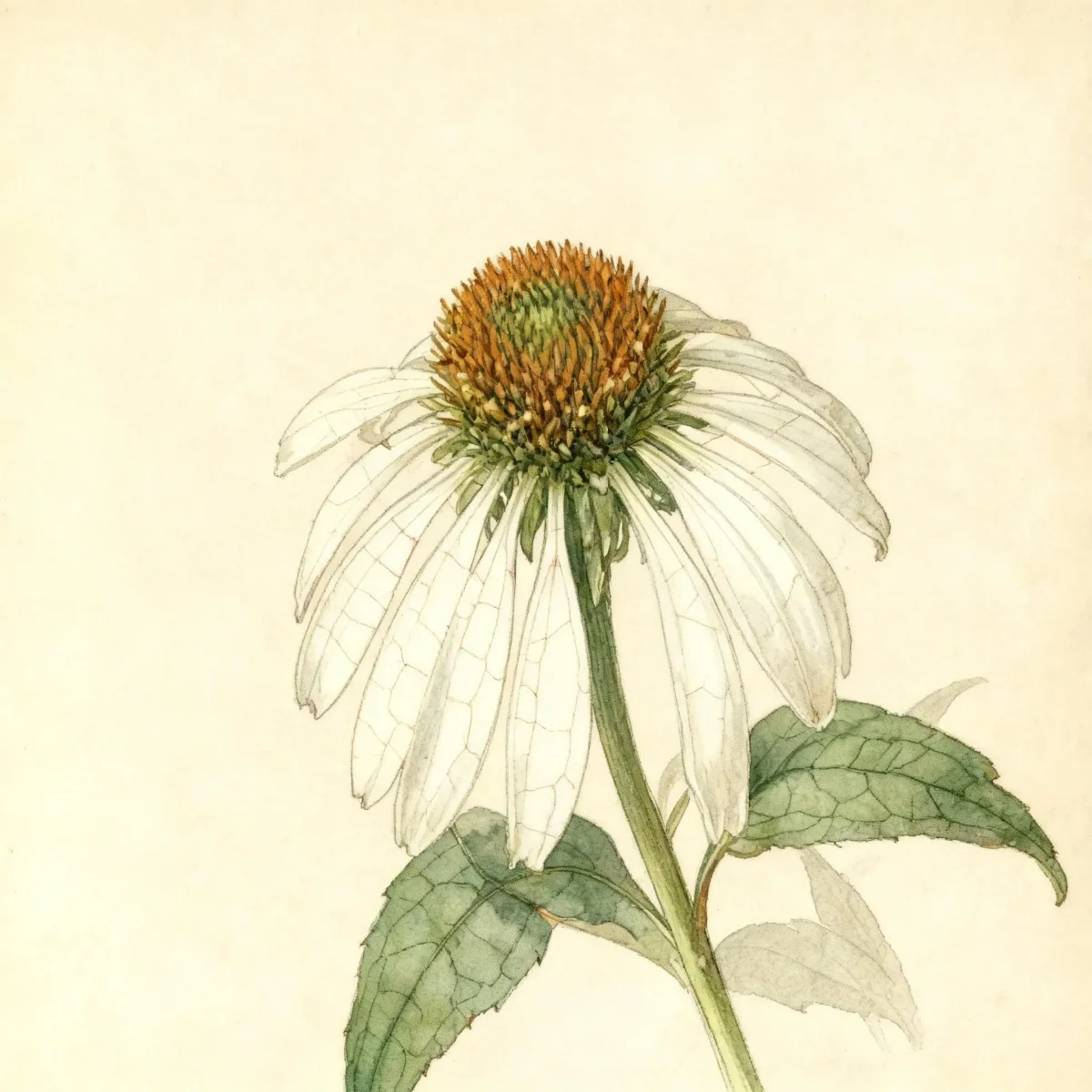
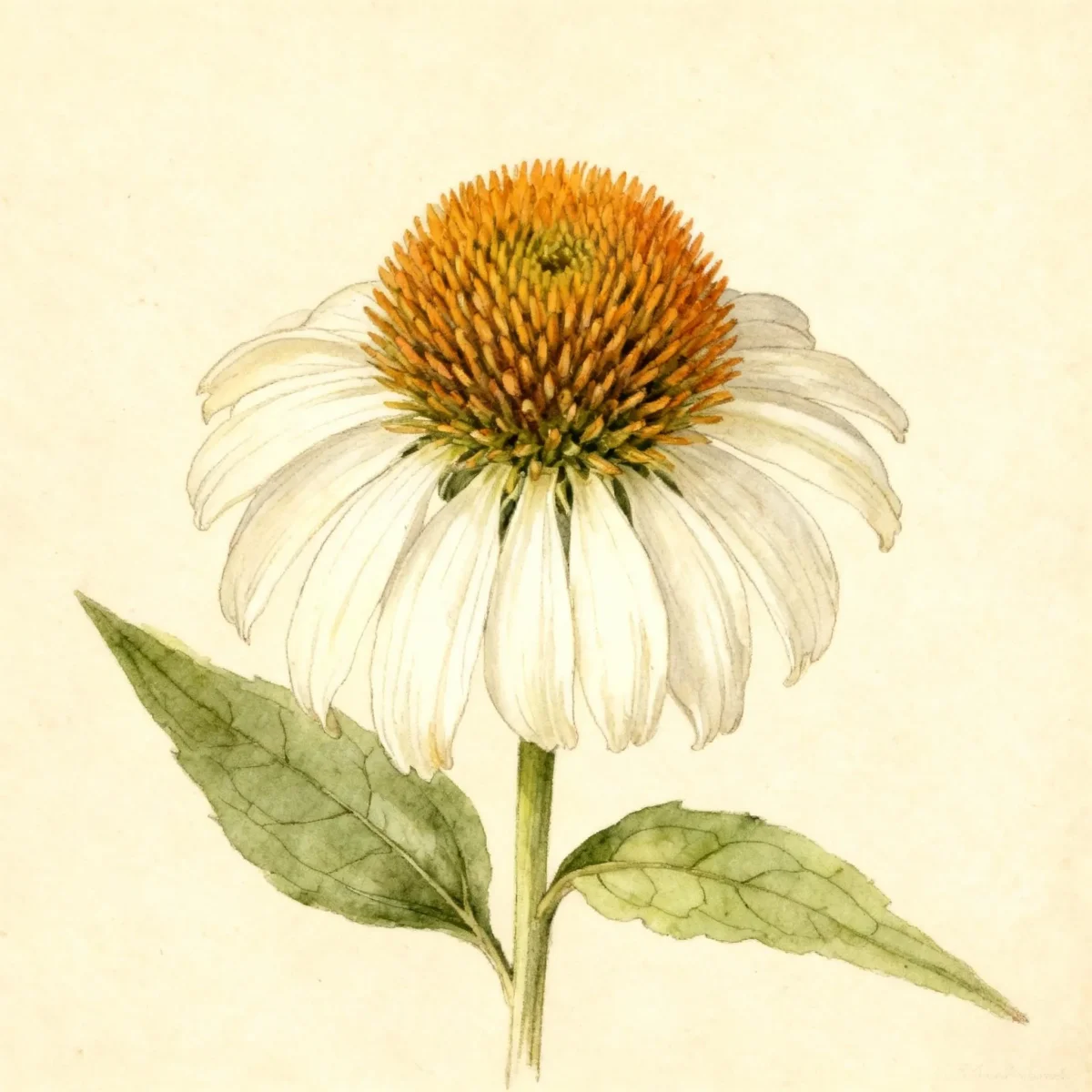
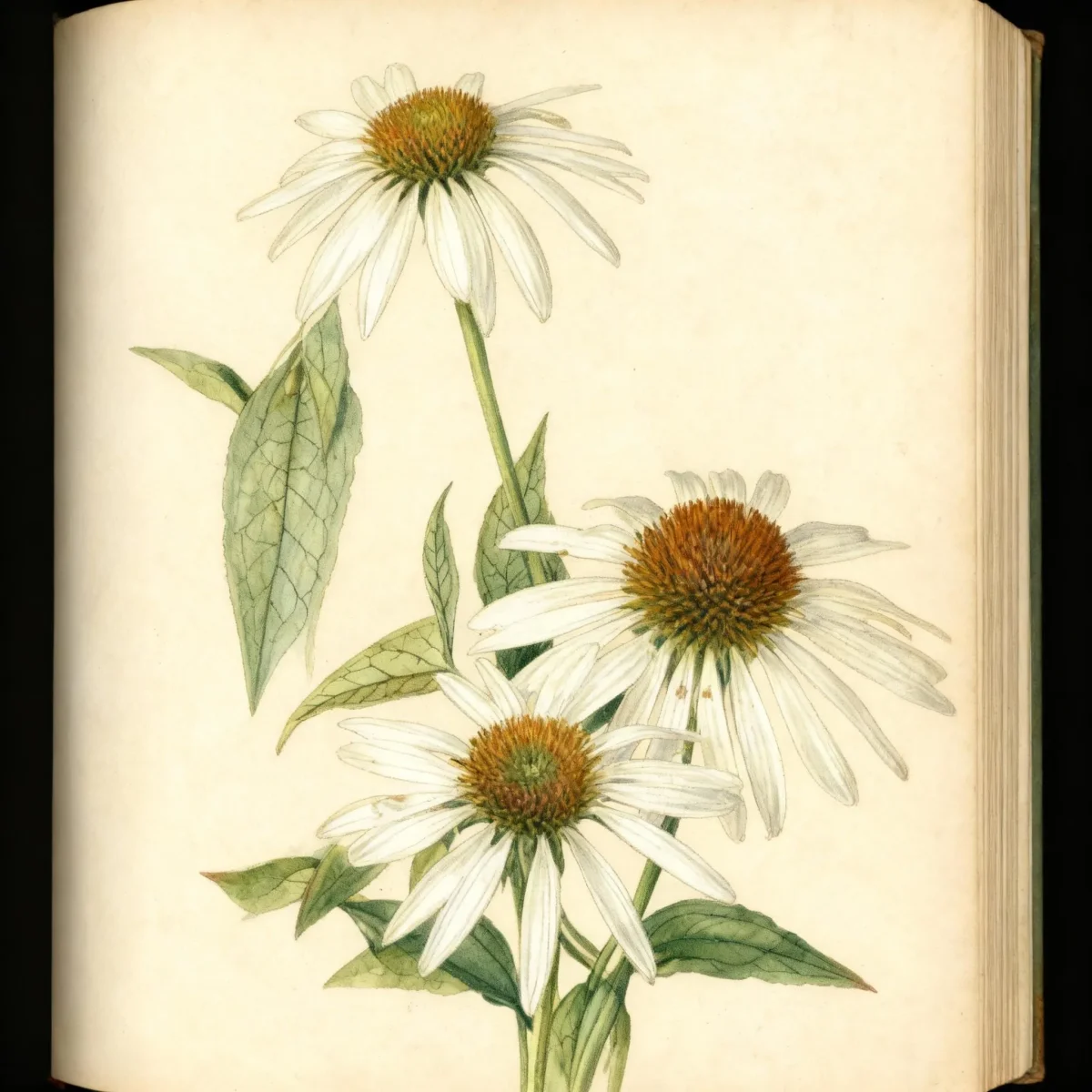
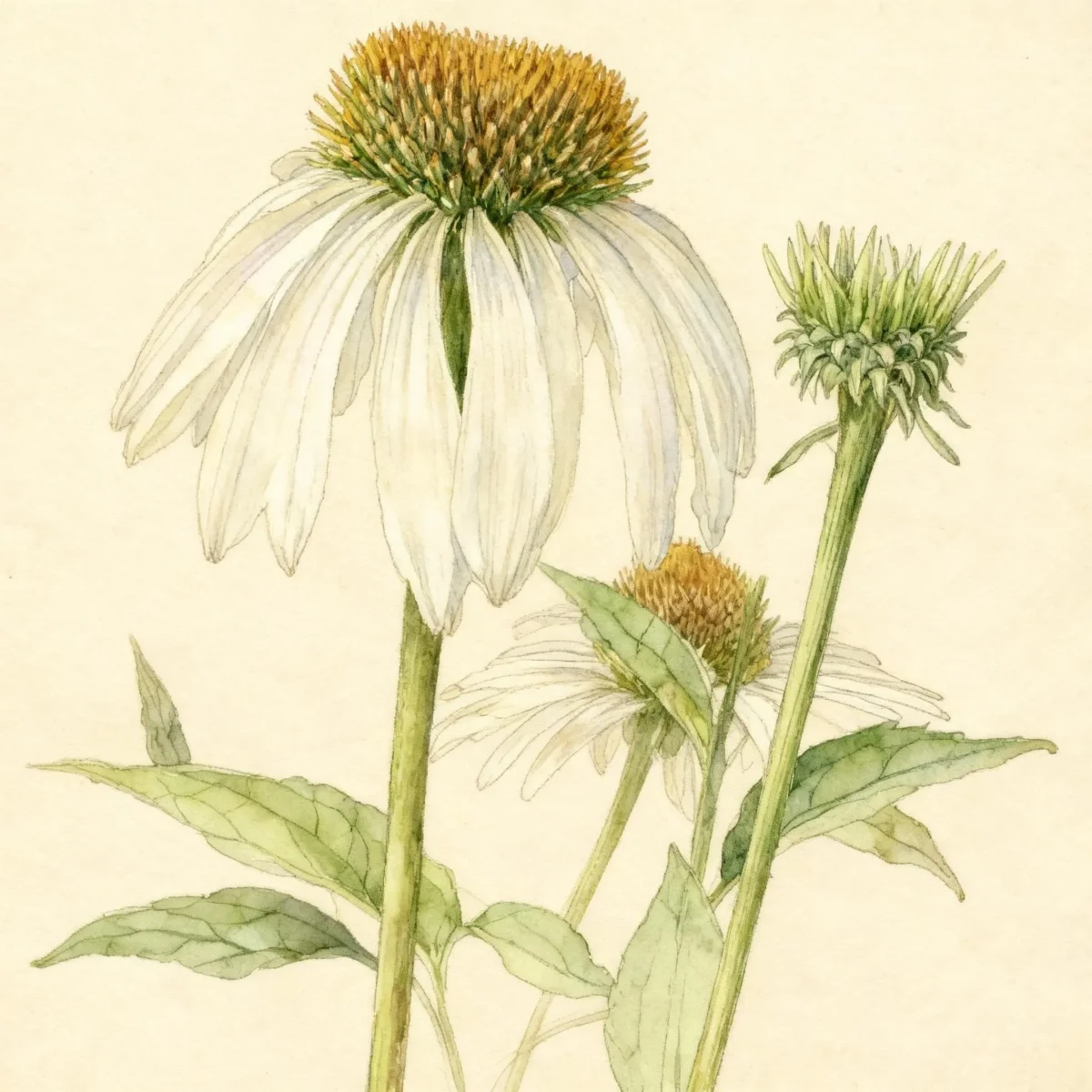
Purple coneflower (Echinacea purpurea 'Fragrant Angel')
Echinacea purpurea 'Fragrant Angel' offers showy, fragrant white blooms on a low-maintenance Purple coneflower. Excellent drought tolerance.
Scroll down to discover growing tips, care requirements, companion plants, and more
Complete Plant Information
Overview
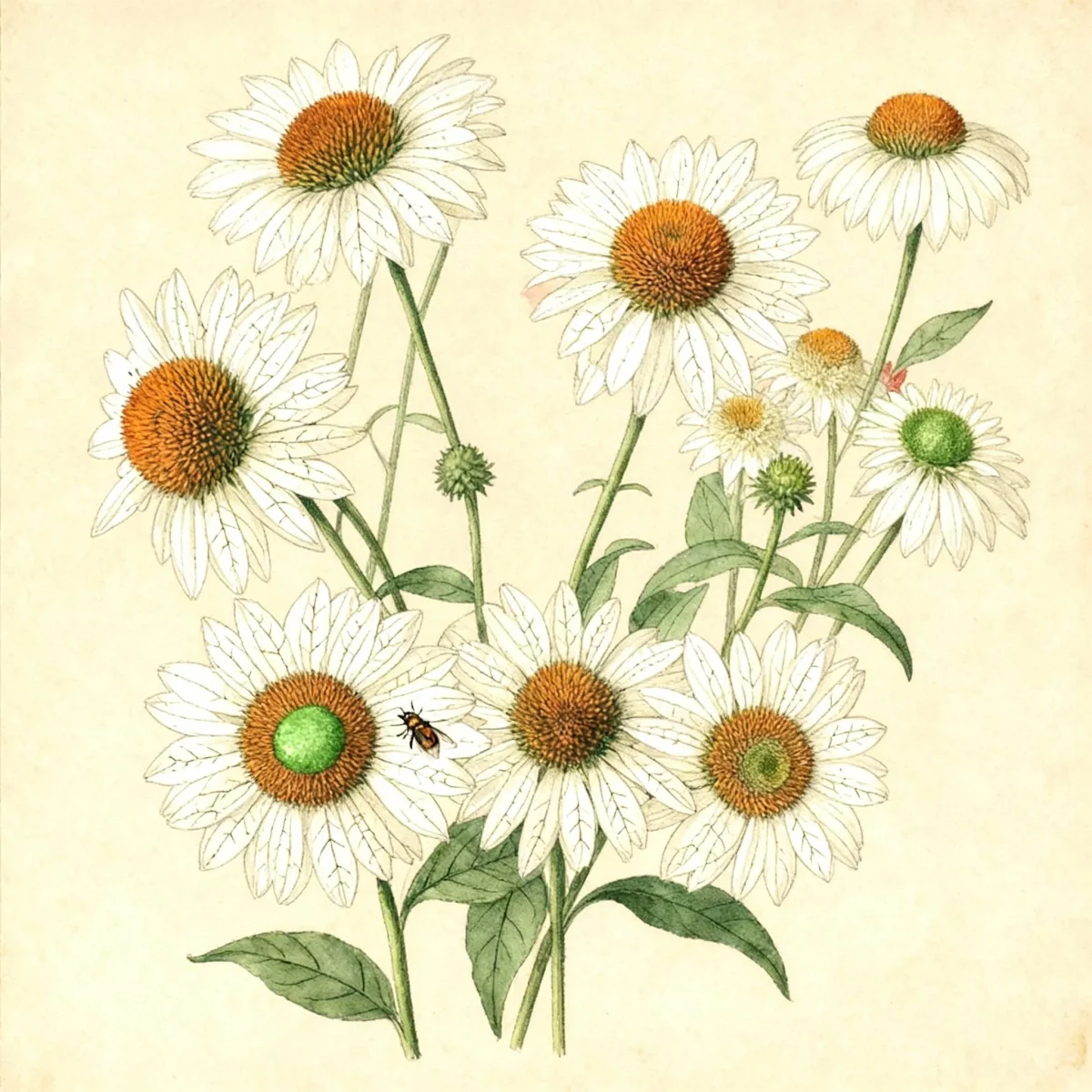
Echinacea purpurea ‘Fragrant Angel’ is a highly valued cultivar of the beloved Purple coneflower, distinguished by its striking bicolored appearance and exceptional scent. This herbaceous perennial brings reliable summer color to the garden with its daisy-like flowers featuring clean white rays arranged in double rows around a prominent yellowish-orange cone. It adapts well to various conditions, making it an excellent choice for gardeners seeking robust, North American native interest without intensive care.
Growing to a manageable size, this variety forms an upright clump ideal for mixed borders or naturalized settings. Beyond its aesthetic appeal, the Purple coneflower supports local ecosystems, contributing valuable structure and seeds late into the season. The combination of low maintenance requirements and long bloom time solidifies Echinacea purpurea ‘Fragrant Angel’ as a staple for season-long performance.
Fast Facts
- Plant Family: Asteraceae
- Plant Type: Herbaceous perennial
- Hardiness Zones: USDA Zones 3-8
- Size at Maturity:
- Height: 2-3 ft
- Spread: 1-2 ft
- Bloom Time: June to August
- Bloom Description: White rays with yellow-orange center cone
- Sun Exposure: Full sun to part shade
- Water Needs: Dry to medium
- Maintenance Level: Low
How to Grow
Start planting Echinacea purpurea ‘Fragrant Angel’ in spring or fall, ensuring well-drained soil is provided. While adaptable, this Purple coneflower performs best when situated in full sun, though it will tolerate light afternoon shade. It thrives in average, well-drained soil and possesses excellent tolerance for drought, heat, and humidity once established.
Water sparingly once established, as this species prefers dry to medium moisture conditions. Fertilizing is generally unnecessary; excessive fertility can lead to floppier stems. Plants usually rebloom without aggressive deadheading, but removing spent flowers promptly will improve the overall appearance throughout the summer season.
Divide overcrowded clumps of Echinacea purpurea ‘Fragrant Angel’ approximately every four years to maintain vigor. If you wish to encourage reseeding or provide winter interest for birds, leave some seed heads intact after blooming stops. This adaptable perennial requires minimal intervention to provide years of reliable blooms.
Landscape Uses
The structure and floral display of Echinacea purpurea ‘Fragrant Angel’ make it highly versatile in landscape design. It functions excellently when massed together in borders or incorporated into meadow plantings, creating drifts of white contrasting against the green landscape. Its robust nature also suits native plant gardens and naturalized areas where minimizing intervention is desired.
Consider pairing this fragrant coneflower with other sun-loving perennials that share similar drought tolerance, such as Black-eyed Susans (Rudbeckia) or ornamental grasses. It offers excellent vertical accent features along the middle or back of a perennial border, providing height without excessive width. Furthermore, the strong stems and lasting blooms make Echinacea purpurea ‘Fragrant Angel’ a fantastic choice for cutting gardens.
Standout Features
Flower Qualities
- Showy
- Fragrant
- Good Cut
- Good Dried
Noteworthy Characteristics
Echinacea purpurea, commonly called purple coneflower, is a coarse, rough-hairy, herbaceous perennial native to moist prairies and meadows of the central to southeastern United States. The cultivar ‘Fragrant Angel’ is noted for its unique flowers featuring clean white rays, yellowish-orange center cones, and excellent, noticeable fragrance. It grows robustly in an upright clump, utilizing sturdy, well-branched stems, and features beautiful, medium green leaves.
Tolerances
- Deer
- Drought
- Clay Soil
- Dry Soil
- Shallow-Rocky Soil
Potential Problems
Japanese beetles can occasionally present an issue, often chewing on the flower petals, making inspection necessary during peak summer activity. Leaf spot diseases are also occasional concerns, typically appearing under humid conditions or if air circulation is poor around dense plantings. To mitigate disease, ensure proper spacing when planting Echinacea purpurea ‘Fragrant Angel’ to promote air flow. Susceptibility to aster yellows disease means prompt removal of affected plants may be necessary to prevent spread.
Frequently Asked Questions
What hardiness zones is Purple coneflower suitable for?
The Echinacea purpurea ‘Fragrant Angel’ is reliably hardy in USDA Zones 3 through 8.
How large does Echinacea purpurea ‘Fragrant Angel’ grow?
This variety typically reaches a height between 2 and 3 feet, spreading moderately between 1 and 2 feet wide.
When does Purple coneflower bloom?
Echinacea purpurea ‘Fragrant Angel’ generally produces its white rays and yellow-orange centers from June through August.
What sun exposure does Echinacea purpurea ‘Fragrant Angel’ need?
It performs best in full sun but tolerates light part shade conditions well.
Conclusion
Echinacea purpurea ‘Fragrant Angel’ delivers exceptional value through its beautiful, fragrant white blooms and remarkable adaptability to challenging garden conditions, including drought and poor soil. Incorporating this low-maintenance Purple coneflower into your landscape ensures consistent summer color and supports biodiversity. Always check your local USDA zone compatibility before planting this stunning cultivar this coming spring or fall.
Companion Planting
When designing a sunny, drought-tolerant border, pair Echinacea purpurea ‘Fragrant Angel’ with companions sharing similar cultural needs. Silver Mound Artemisia or ornamental grasses like Little Bluestem provide excellent textural contrast to the broad leaves and bold flower heads of the coneflower. For continuous color throughout the season, interplant with shorter perennials that bloom earlier or later, such as Russian Sage or late-season Sedum varieties.
Wildlife Benefits
Leaving the prominent dried seed heads of the Purple coneflower intact into winter offers significant ecological advantages. The cone centers dry to a dark, appealing texture that attracts various seed-eating birds, most notably American Goldfinches, throughout the colder months. Furthermore, the large flowers of Echinacea purpurea ‘Fragrant Angel’ are highly attractive to many beneficial pollinators, including various native bees and butterflies seeking nectar during the summer bloom period.