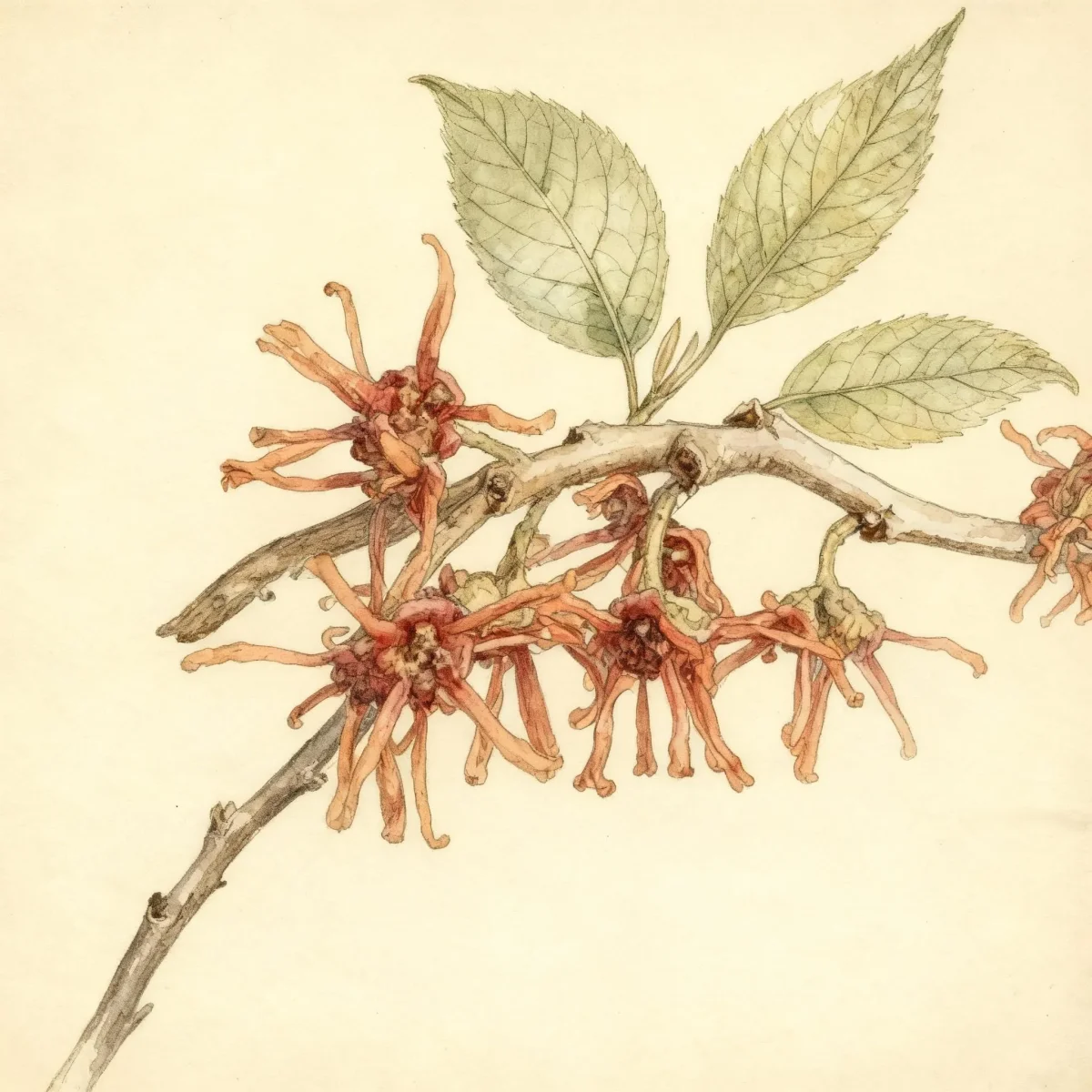
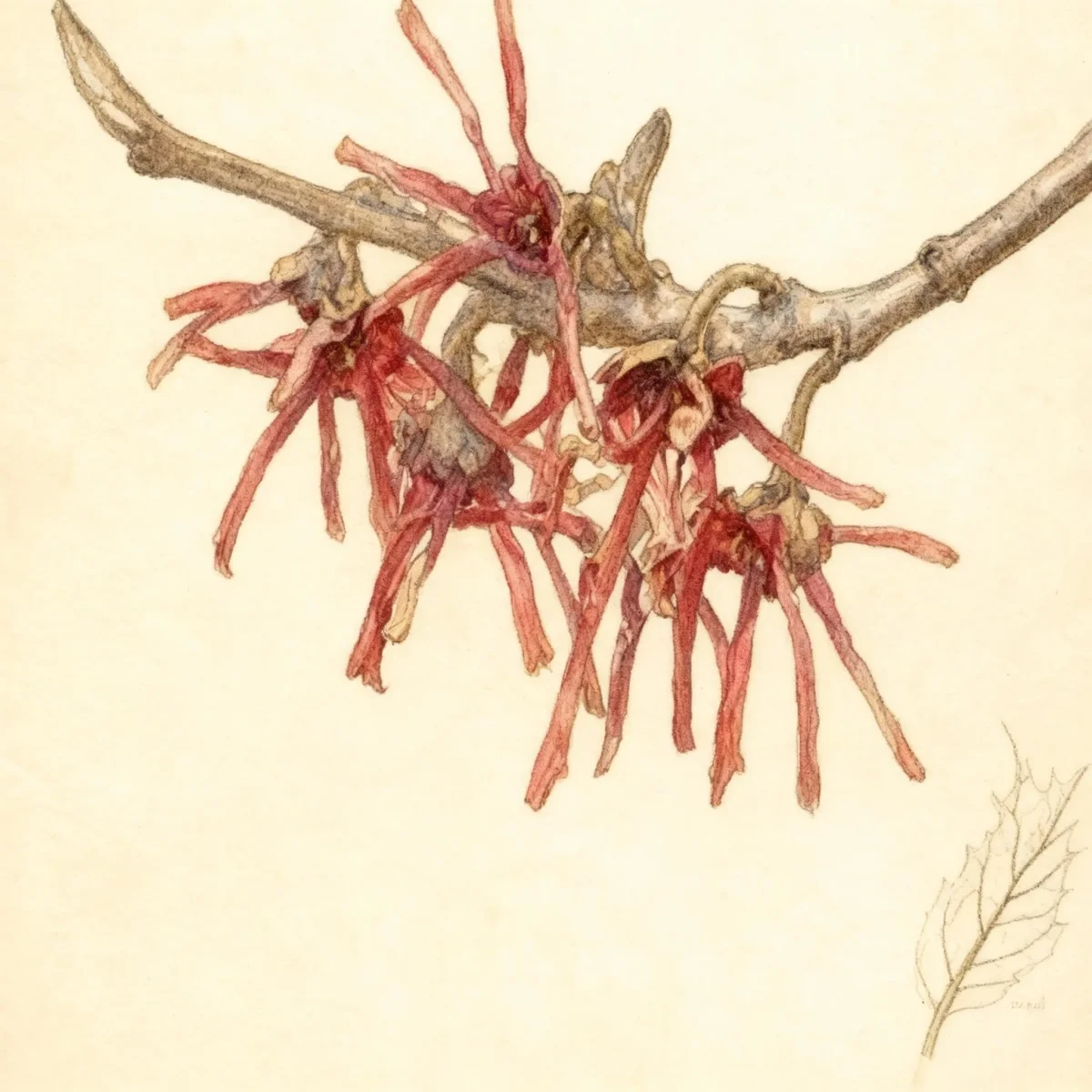
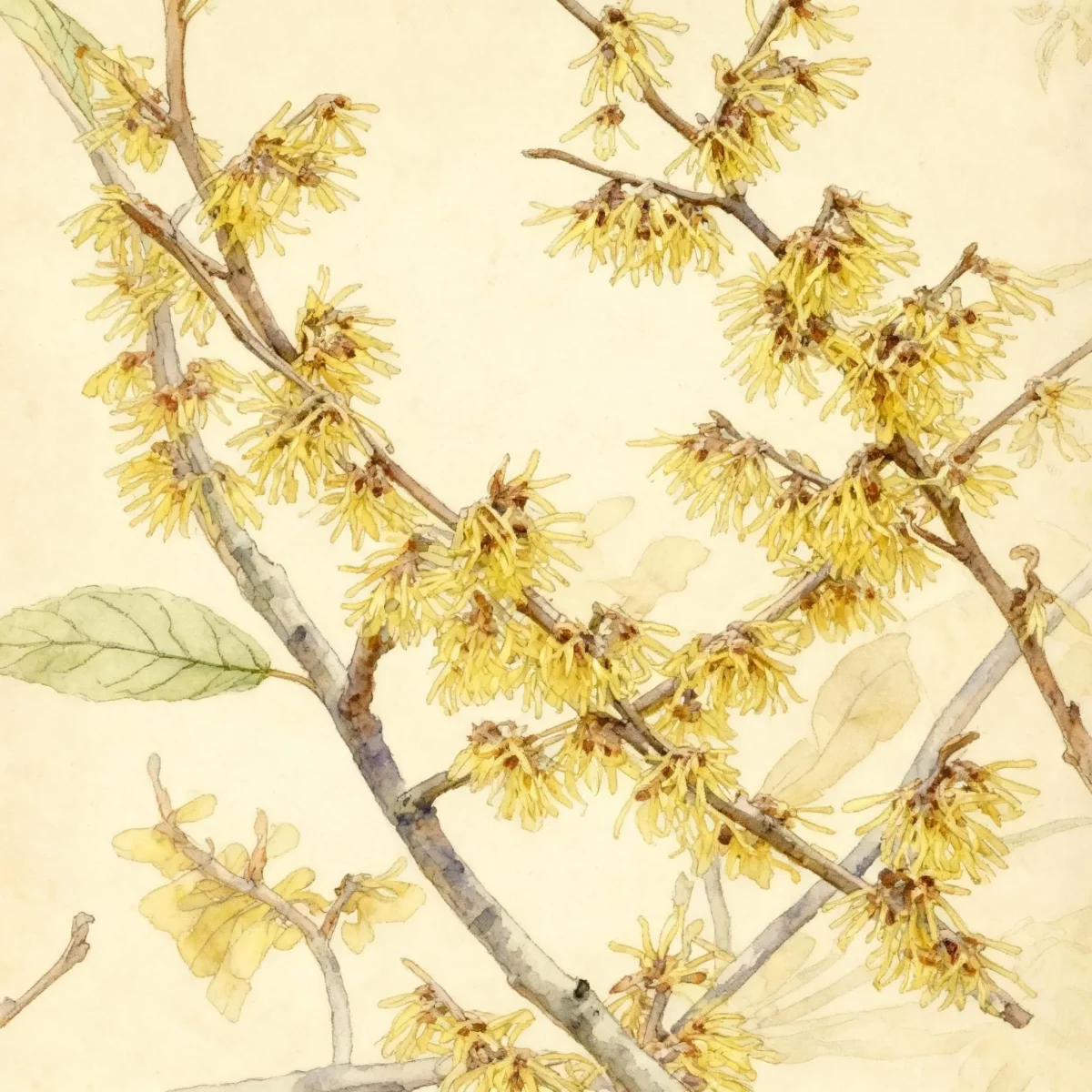
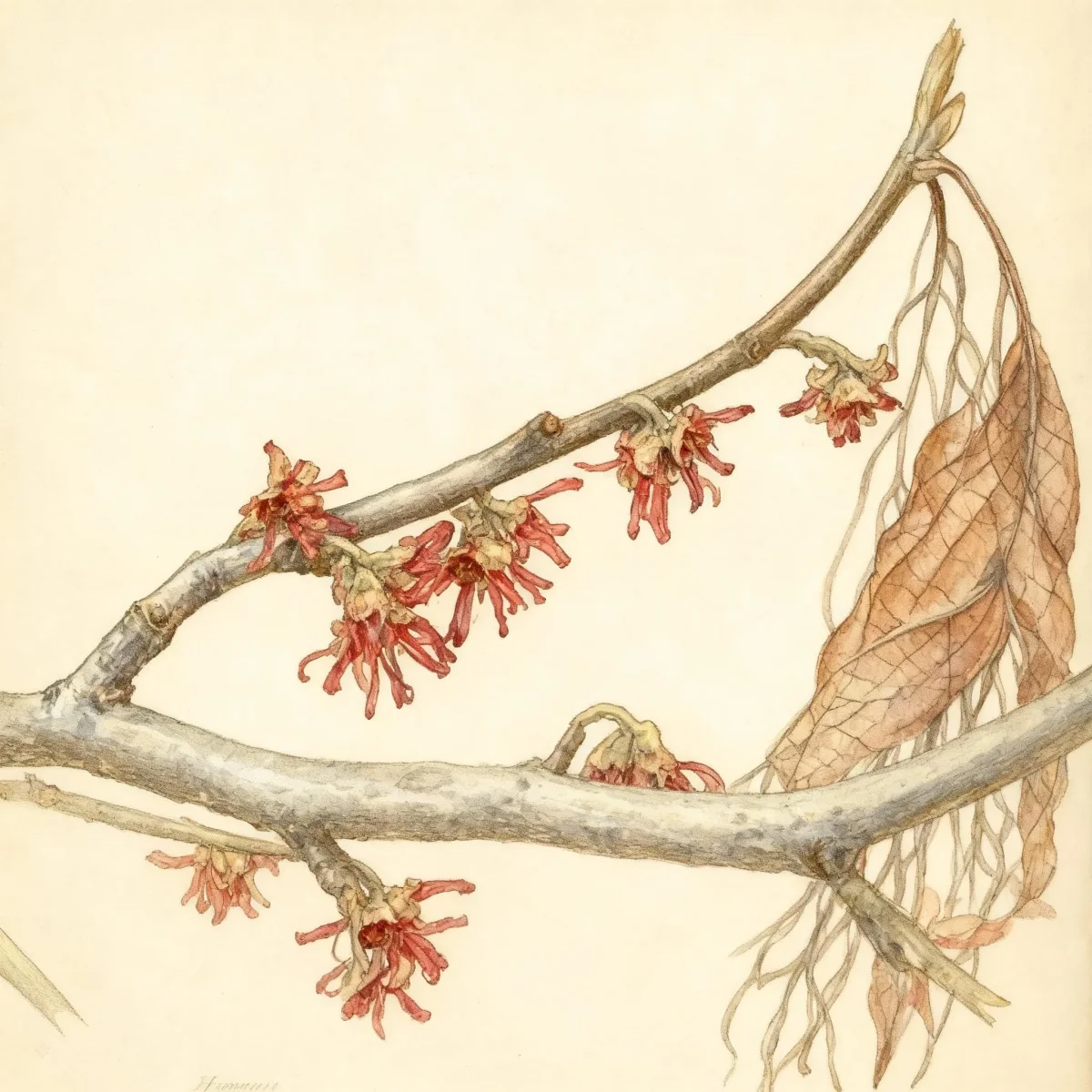
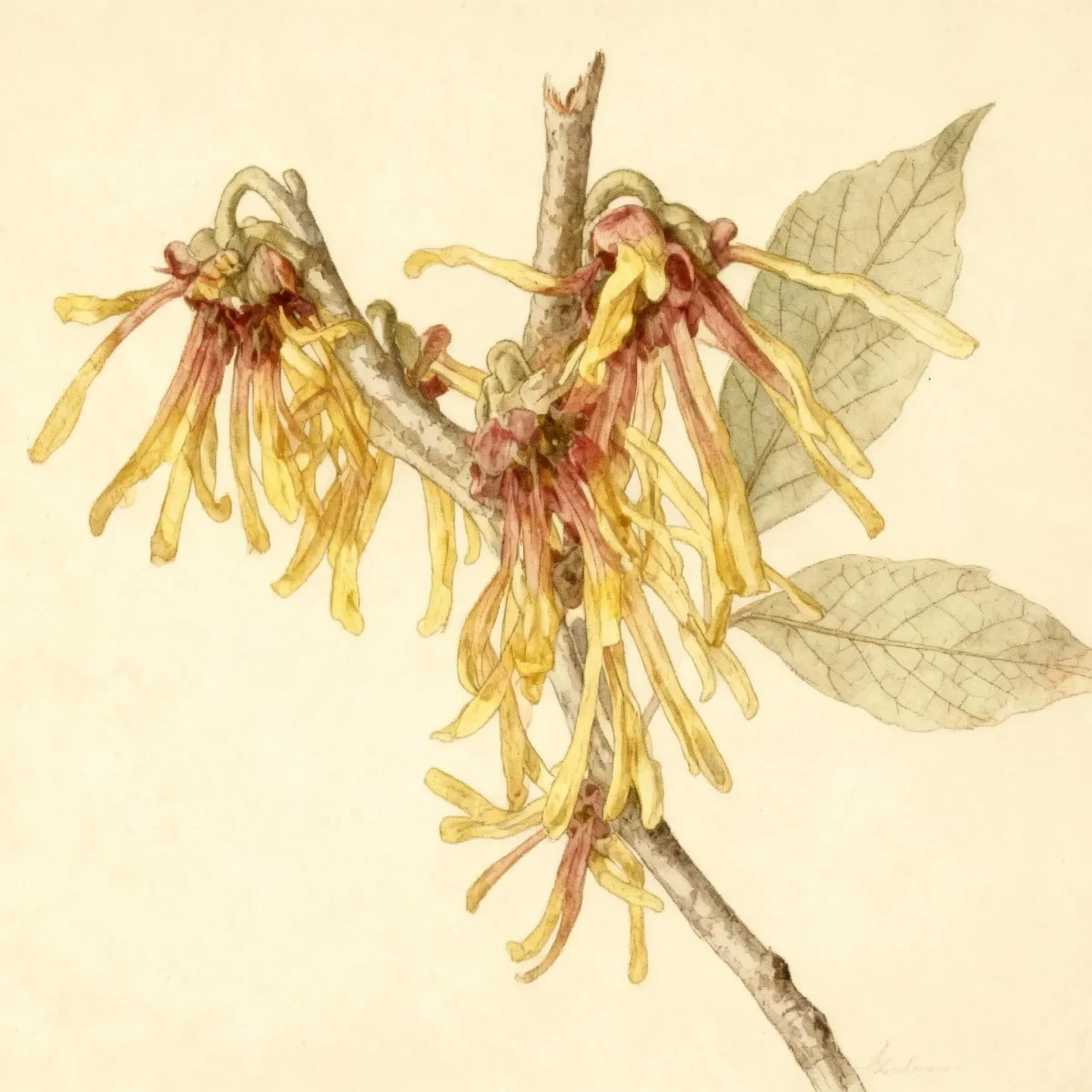
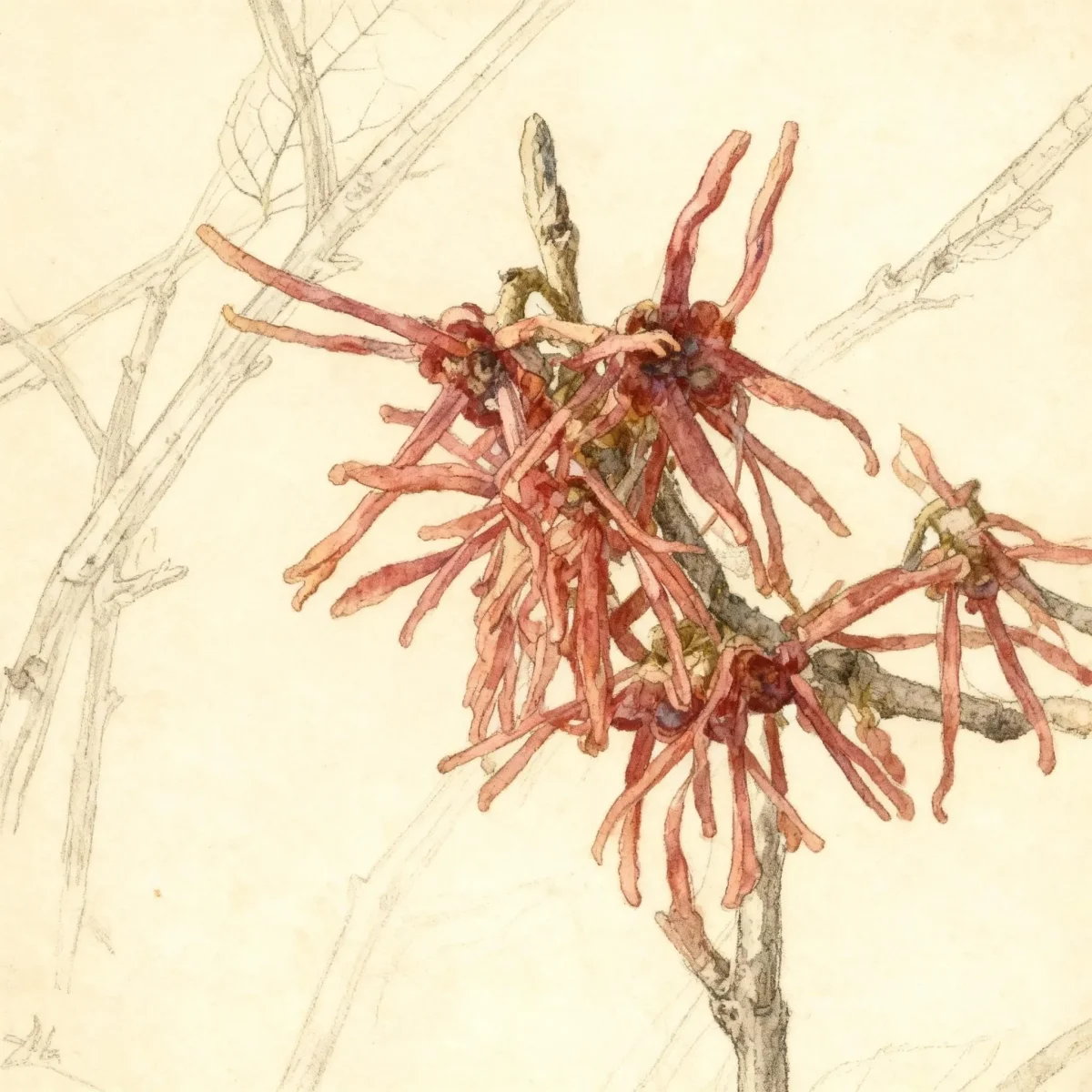
Ozark witch hazel (Hamamelis vernalis 'Kohankie Red')
Hamamelis vernalis 'Kohankie Red' offers dazzling deep red winter blooms and fragrance, perfect for low-maintenance shrub borders.
Scroll down to discover growing tips, care requirements, companion plants, and more
Complete Plant Information
Overview
The Hamamelis vernalis ‘Kohankie Red’, widely known as the Ozark witch hazel, provides crucial winter interest when most gardens are dormant. This cultivar is highly valued for its striking, fragrant flowers that bloom mid-winter, offering deep purple-red colors that transition to orange at the tips. It serves as a fantastic architectural element, providing structure and unexpected color during the cold months.
As a low-maintenance deciduous shrub, Ozark witch hazel is remarkably adaptable once established, tolerating clay soils and deer pressure well. Its mature size typically reaches 7 to 9 feet tall and wide, making it suitable for structural accents or screening, particularly when a touch of late winter fragrance is desired.
This specific variety, Hamamelis vernalis ‘Kohankie Red’, fulfills utilitarian needs as well, being useful for erosion control on slopes while simultaneously cheering the landscape before spring truly arrives. Gardeners seeking reliable performance and seasonal surprises turn to this tough native selection.
Fast Facts
- Plant Family: Hamamelidaceae
- Plant Type: Deciduous shrub
- Hardiness Zones: USDA Zones 4-8
- Size at Maturity:
- Height: 7-9 ft
- Spread: 8-10 ft
- Bloom Time: January to March
- Bloom Description: Purple red lightening to orange at the tip
- Sun Exposure: Full sun to part shade
- Water Needs: Medium
- Maintenance Level: Low
How to Grow
Planting should occur when the soil is cool, ideally in spring before active growth surges or in early fall, allowing the Ozark witch hazel time to establish a strong root system. Locate it where it receives full sun for the most prolific flowering, although it tolerates part shade. It thrives in average, well-drained soils, but prefers conditions that are moist, acidic, and rich in organic matter.
Water needs are best met by maintaining consistent moisture, as the plant can exhibit leaf scorch during summer droughts. While adaptable, good drainage is key, even in clay soils—a tolerance that makes this shrub useful in challenging sites. Fertilization is rarely required; focus instead on amending the soil occasionally with compost to enrich the root zone.
Pruning should be executed immediately after flowering concludes in the spring to shape the shrub without losing next year’s flower buds. A critical maintenance step for Hamamelis vernalis ‘Kohankie Red’ is the prompt removal of any root suckers that emerge, especially suckers originating below the graft union, to maintain the desired growth habit.
Landscape Uses
The Hamamelis vernalis ‘Kohankie Red’ is prized as a superior winter-flowering focal point. Its unique bloom timing allows it to anchor winter garden designs or serve as a mid-layer specimen in woodland settings where its form can be appreciated against the stark background. It matures to a dense screen, making it effective for creating tall hedges or informal visual barriers.
Consider planting the Ozark witch hazel along borders where its early flowers can be enjoyed up close, perhaps near a walkway or outdoor seating area to maximize appreciation of its fragrance. Because it handles clay and erosion, it excels on slightly sloped areas where other ornamental shrubs might struggle to establish.
When pairing plants, select late-flowering evergreens or early spring bloomers like hellebores or snowdrops that can emerge as the witch hazel blooms fade. The golden yellow fall color also provides exceptional contrast against deep green conifers planted nearby.
Standout Features
Flower Qualities
- Showy
- Fragrant
Noteworthy Characteristics
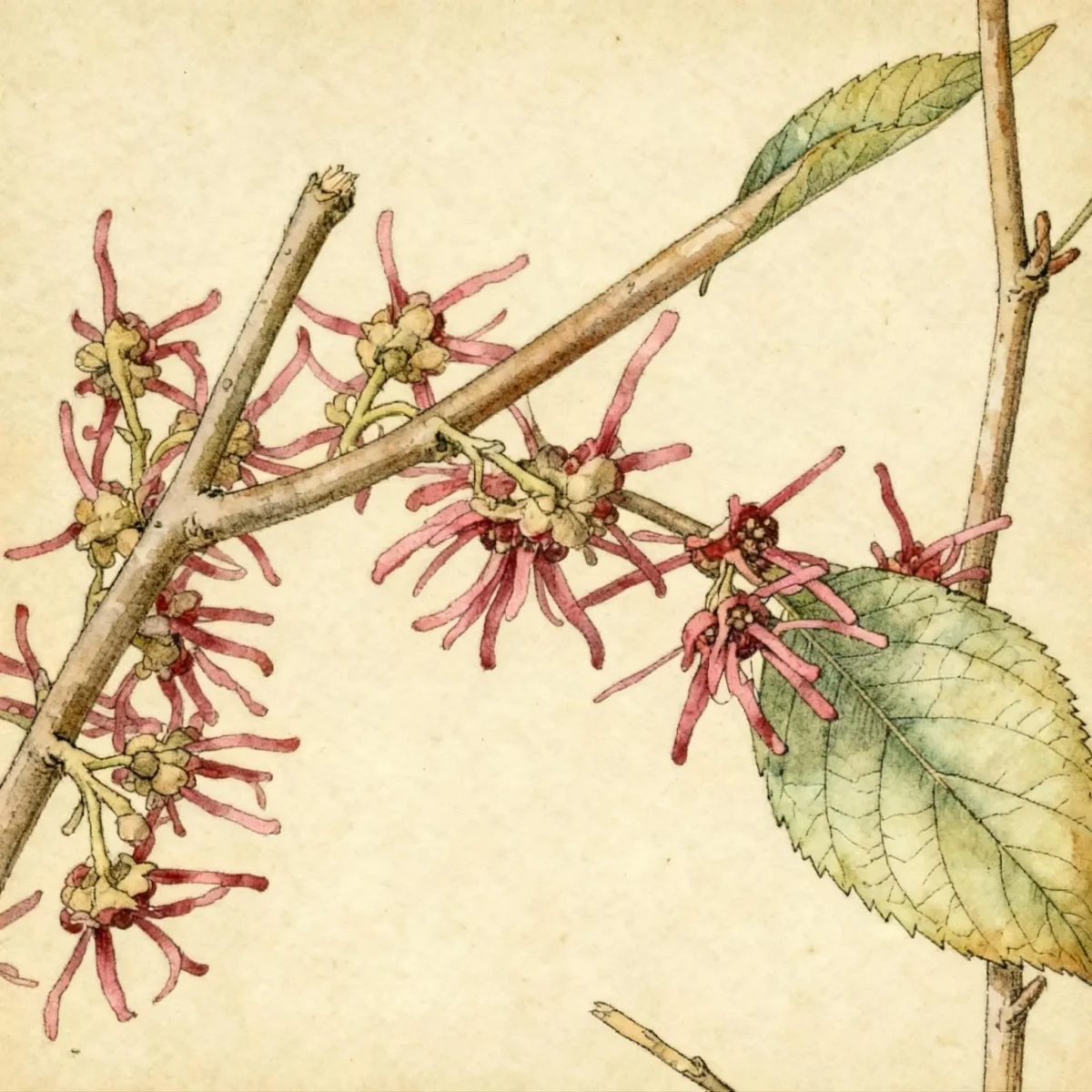
The species, Ozark witch hazel, is native to rocky stream beds and slopes across the Ozark Plateau. The flowers of Hamamelis vernalis ‘Kohankie Red’ are particularly beautiful, clustered along bare stems from late January through March, displaying petals that are deep purple-red lightening to orange at the tips. Mature foliage emerges with purple tints before deepening to dark green, finally providing a respectable yellow-aging-to-red fall display.
Tolerances
- Deer
- Erosion
- Clay Soil
Potential Problems
Insect pests for this Ozark witch hazel are generally minor, though gardeners should monitor for leaf damage caused by caterpillars or Japanese beetles during the growing season. Common sap-sucking pests like gall aphids, scale, leafrollers, and leafminers can occasionally appear but rarely threaten the plant’s overall health severely enough to require chemical intervention. Diseases such as powdery mildew or occasional leaf spots may occur, especially in humid or overly shaded conditions, favoring good air circulation and proper pruning cuts.
Frequently Asked Questions
What hardiness zones is Ozark witch hazel suitable for?
The suitable range for Hamamelis vernalis ‘Kohankie Red’ is USDA Zones 4 through 8.
How large does Ozark witch hazel grow?
This shrub typically matures to a size between 7 and 9 feet in height, with a spread ranging from 8 to 10 feet wide.
When does Ozark witch hazel bloom?
This variety bursts into bloom between January and March, showcasing unique flowers described as purple red lightening to orange at the tip.
What sun exposure does Ozark witch hazel need?
For optimal performance, including the best flower display, Hamamelis vernalis ‘Kohankie Red’ prefers full sun, though it successfully grows in part shade.
Conclusion
The Hamamelis vernalis ‘Kohankie Red’ offers significant value to the winter landscape through its durable nature, deer resistance, and wonderfully fragrant, colorful blooms. This specific Ozark witch hazel is a foundation plant for textural interest during colder months. Verify that your site falls within USDA Zones 4 to 8 and plan to plant during a dormant season for the best establishment success.
Companion Planting
For an effective springtime transition after the winter blooms fade, pair Hamamelis vernalis ‘Kohankie Red’ with shrubs that offer contrasting spring or summer texture. Consider planting early-flowering bulbs like Daffodils or early woodland wildflowers such as Foamflower (Tiarella) whose soft foliage emerges as the witch hazel sheds its flowers. Since this plant appreciates moist, acidic soil, companion selections like Blueberries or Rhododendrons that share these preferences work well in larger borders, creating a layered, seasonal interest plot.
Seasonal Care Calendar
Late Winter/Very Early Spring (January - March): This is prime viewing time for the rich, reddish flowers of the Ozark witch hazel. Protect from extreme winter burn if planted in unusually exposed sites.
Spring (April - June): Prune immediately after flowering finishes to maintain shape and size, removing any unwanted suckers aggressively. Ensure consistent moisture as summer heat approaches to prevent leaf scorch.
Summer (July - August): Monitor moisture levels carefully, particularly during dry spells, as consistent moisture provides the best leaf quality for Hamamelis vernalis ‘Kohankie Red’. Avoid heavy summer pruning.
Fall (September - November): Enjoy the golden yellow to reddish fall color display before leaf drop fully exposes the unique winter branching structure.