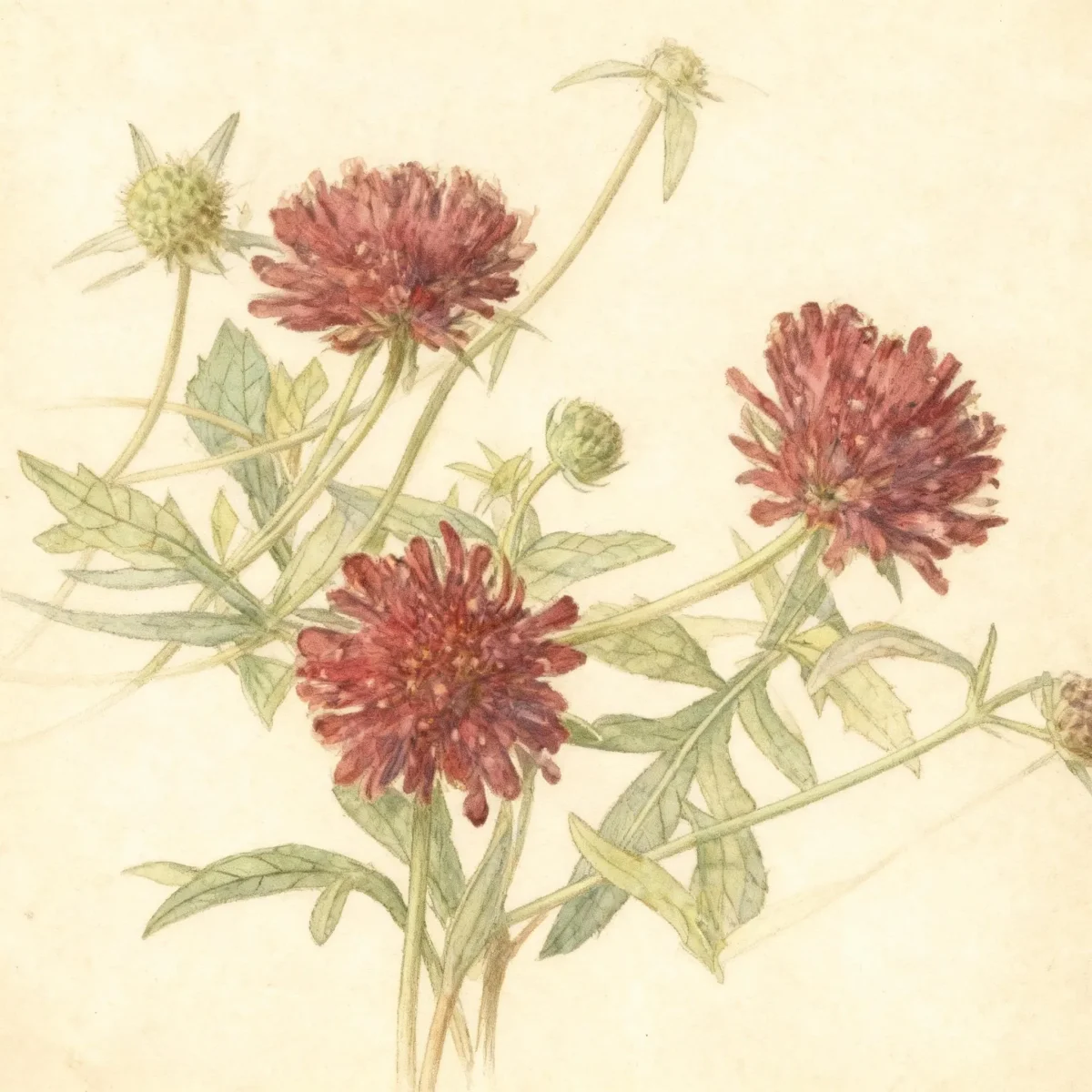
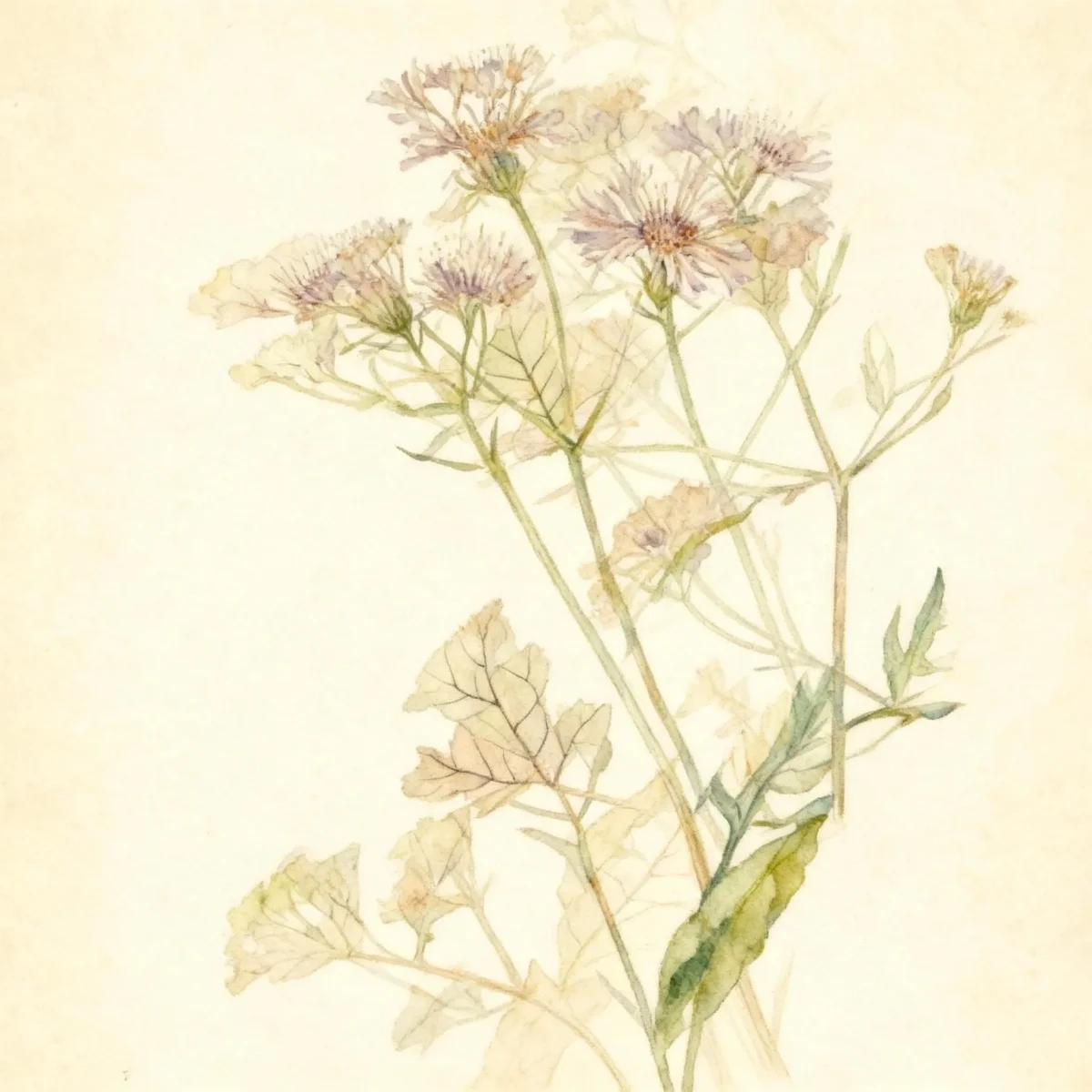
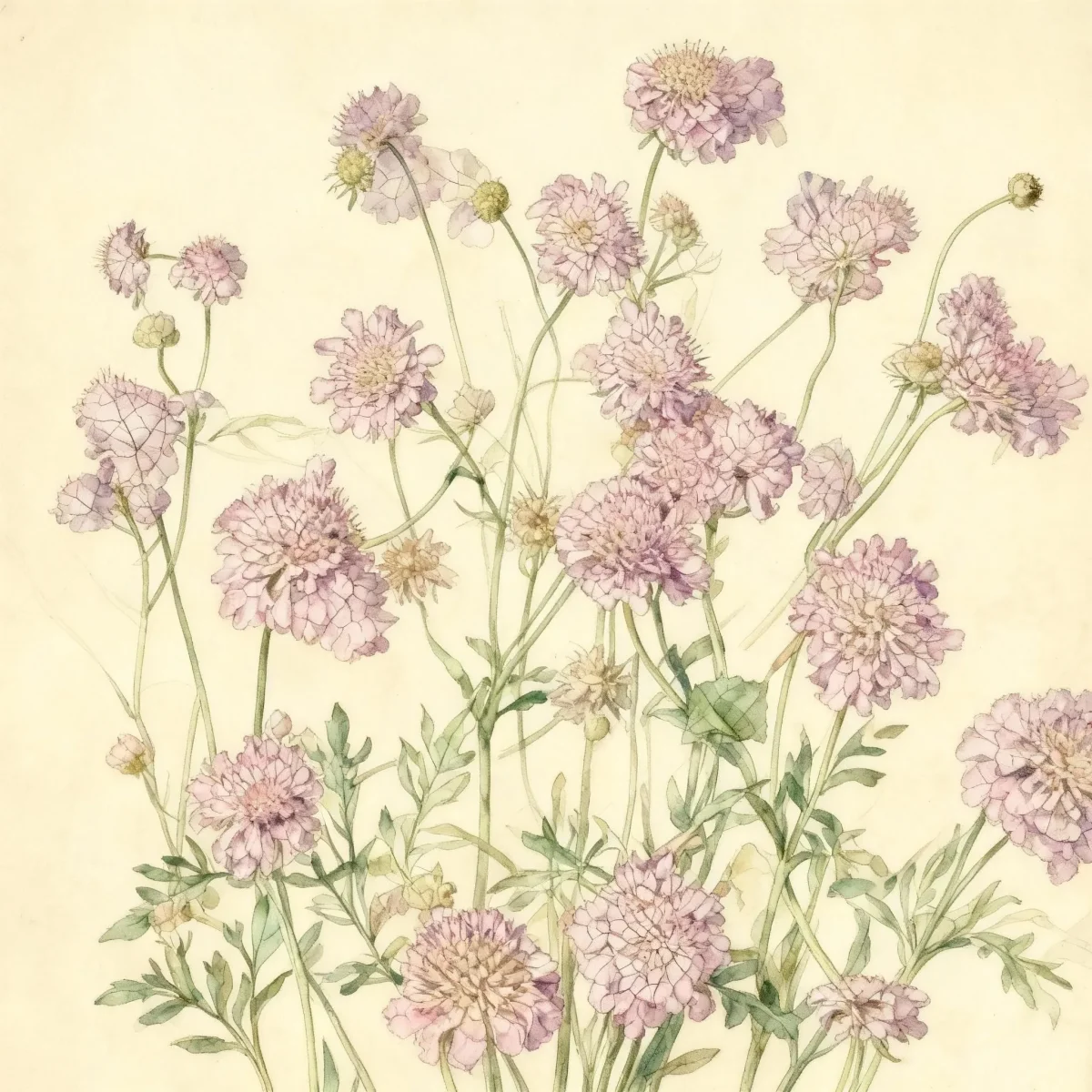
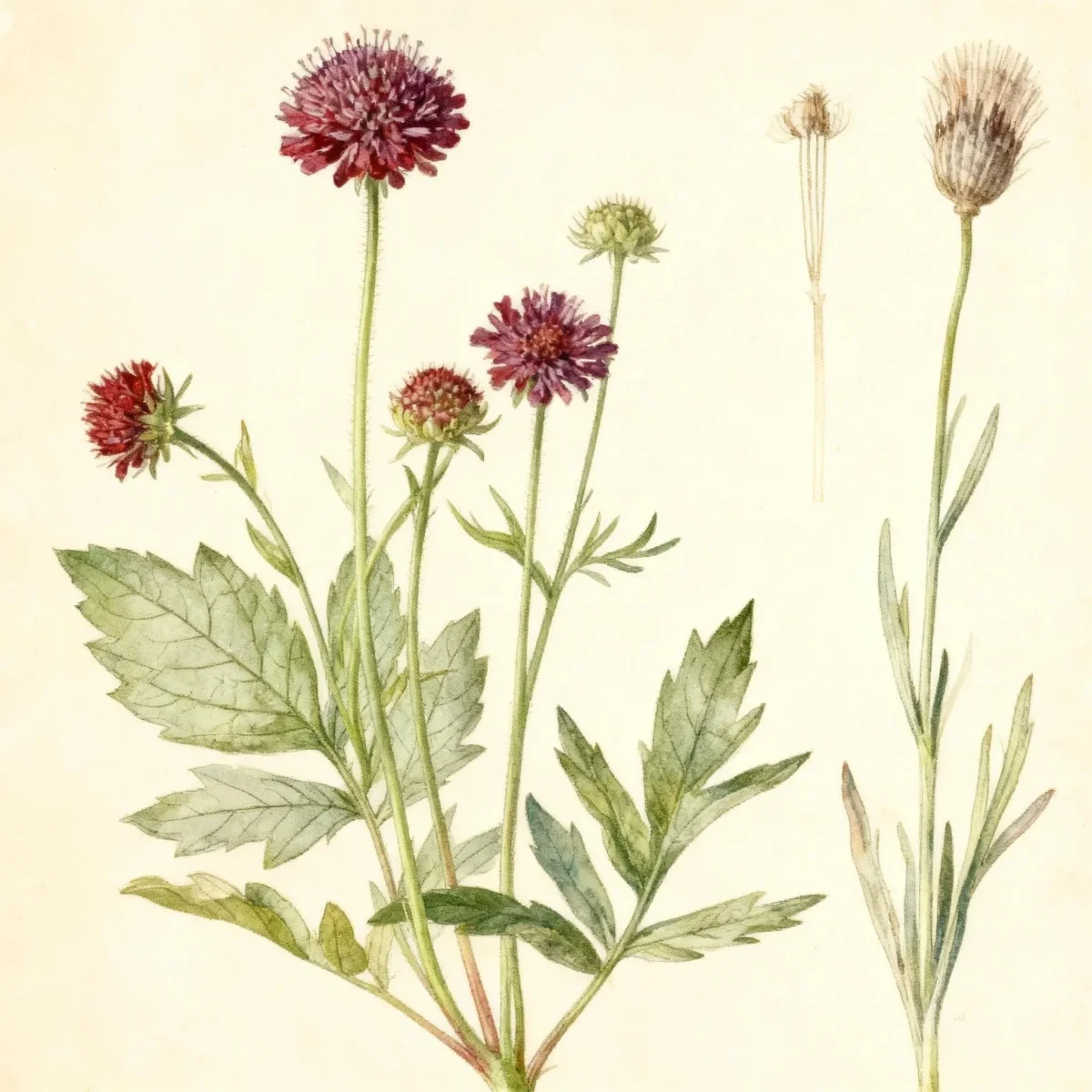
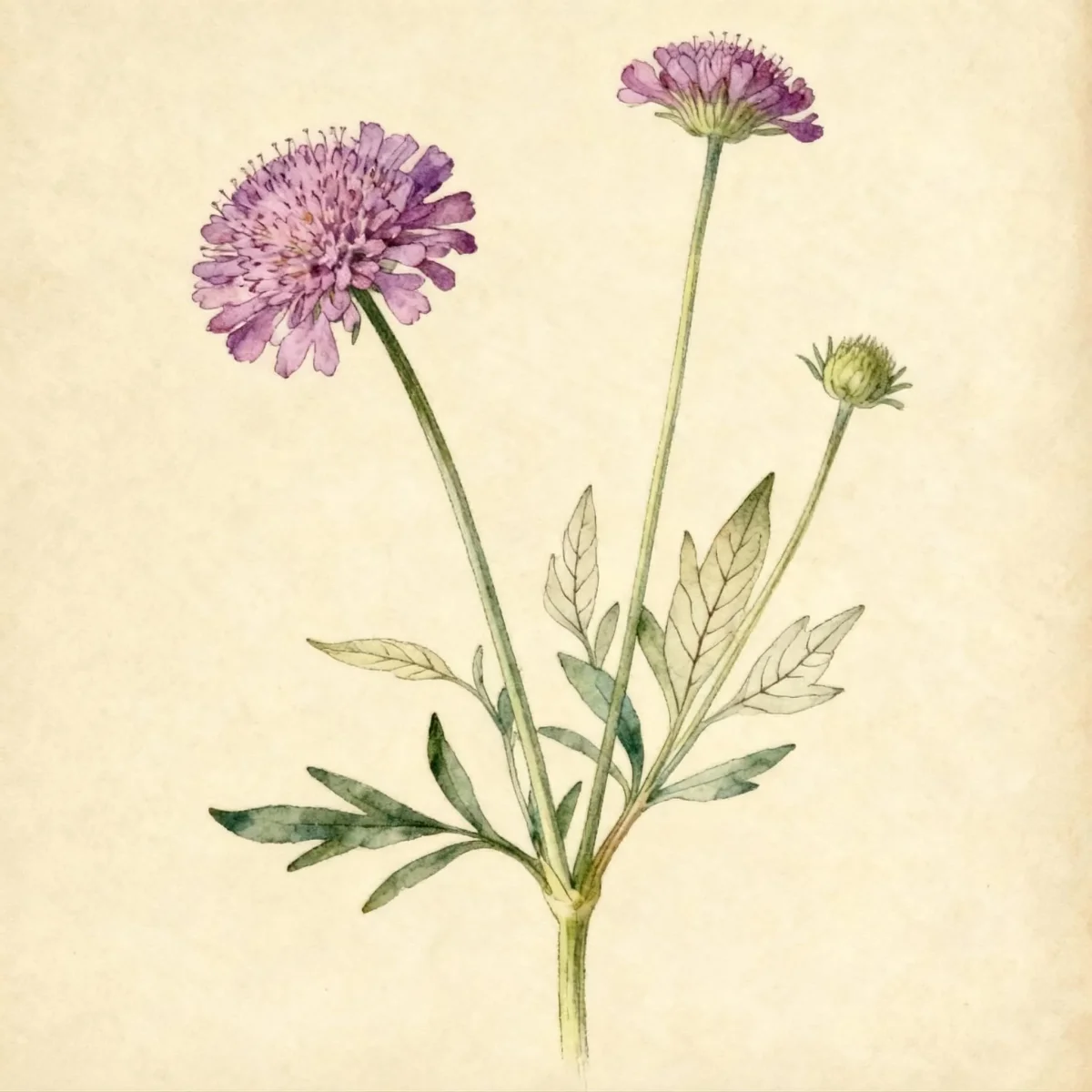
Macedonia scabious (Knautia macedonica MELTON PASTELS)
Knautia macedonica MELTON PASTELS offers continuous summer color. This low-maintenance Macedonia scabious thrives in full sun, perfect for long-lasting cut flowers.
Scroll down to discover growing tips, care requirements, companion plants, and more
Complete Plant Information
Overview
Knautia macedonica MELTON PASTELS, commonly known as Macedonia scabious, is prized for its exceptionally long bloom season stretching from mid-summer until the first frost. This upright perennial provides unique, pincushion-like flower heads in a captivating palette of pastel shades, making it an invaluable late-season addition to the garden. Gardeners rely on this plant for its outstanding performance as a cut flower, both fresh and dried.
As an herbaceous perennial, the Knautia macedonica MELTON PASTELS establishes into a reliable clump, reaching impressive heights of 3 to 4 feet when happy. It requires consistent effort from the gardener to remove spent blooms to maximize its continuous output of flowers throughout the season. While generally considered low maintenance, its preference for cool summer nights means gardeners in hot, humid regions must monitor its placement carefully.
This variety, known for its robust color range, introduces visual texture to mixed borders and cottage gardens. The slender, branching stems allow the flowers to sway gently, adding movement and airy lightness to any sunny perennial display. Successful cultivation hinges on providing adequate drainage and full sun exposure, ensuring the best possible display from your Macedonia scabious.
Fast Facts
- Plant Family: Caprifoliaceae
- Plant Type: Herbaceous perennial
- Hardiness Zones: USDA Zones 5-8
- Size at Maturity:
- Height: 3-4 ft
- Spread: 1-1.5 ft
- Bloom Time: July to September
- Bloom Description: Pastel shades of red, pink, and mauve
- Sun Exposure: Full sun
- Water Needs: Medium
- Maintenance Level: Low
How to Grow
Plant Knautia macedonica MELTON PASTELS in average, medium-moisture, well-drained soils. For optimal results, ensure the planting location receives full sun throughout the day, as insufficient light can cause weaker stems. This species prefers soils that are neutral to slightly alkaline; amending overly acidic soil with lime may be beneficial before planting. Locate your Macedonia scabious where it is somewhat protected from strong winds, which can buffet the tall, slender stems.
Watering should be consistent, maintaining medium moisture levels, especially during dry spells in the summer. Do not allow the soil to become waterlogged, as excellent drainage is critical to prevent root issues. Maintenance is characterized by the necessity of prompt deadheading; remove spent flowers regularly to encourage the plant to push out new blooms profusely until frost arrives.
For gardeners in hotter climates, be advised that Knautia macedonica MELTON PASTELS can struggle when facing intense heat and humidity. In the deep South, stems may twist or flop during the peak of summer, often meaning plants decline considerably by late summer. Providing protection from the hottest afternoon sun through strategic placement may help mitigate this stress. Species plants may self-seed when conditions are ideal, lightly scattering new seedlings around the parent plant.
Landscape Uses
The aesthetic appeal of Knautia macedonica MELTON PASTELS makes it a versatile choice across various garden styles. Its height and airy structure lend themselves perfectly to mass plantings within the middle or rear sections of perennial borders, creating a soft screen effect. They integrate seamlessly into romantic cottage gardens where their delicate, dome-shaped flowers mix well with lavender, salvia, and coreopsis.
Consider using this variety in naturalized areas or meadows where its slightly wild appearance can shine. When planted in drifts, the movement of the flowers attracts the eye without overwhelming the composition. Because the spent heads are excellent for drying, place patches near where you harvest flowers for indoor display.
Beyond traditional borders, the long-stemmed nature of this scabious variety ensures a constant supply for both fresh bouquets and dried arrangements. Its consistent pastel output provides a balancing element against bolder summer perennials, connecting richer reds and deeper purples found elsewhere in the landscape design.
Standout Features
Flower Qualities
- Showy
- Good Cut
- Good Dried
Noteworthy Characteristics
Knautia macedonica is fundamentally an upright, clump-forming perennial that generally reaches 1.5-2’ tall, though the MELTON PASTELS cultivar is notably taller at 3 to 4 feet. It features distinctive, domed, scabiosa-like flower heads, roughly 1 to 1.5 inches wide, borne on slender, branching stems over a long bloom period. Formerly known as Scabiosa rumelica, the MELTON PASTELS selection is praised because it flowers the first year in vibrant pastel shades of mauve, pink, rose, salmon, and crimson, blooming consistently if deadheaded.
Tolerances
Potential Problems
Generally, Knautia macedonica MELTON PASTELS is known for exhibiting no serious insect or disease problems, contributing to its low-maintenance rating. The primary care concern relates to climate stress rather than pests. Plants may experience decline or diminished performance considerably by late summer, particularly when grown in hot, humid southern climates. To combat potential flopping or stem twisting associated with summer heat, ensure excellent air circulation and be prepared to cut back stems that become leggy or wilted during extreme heat waves.
Frequently Asked Questions
What hardiness zones is Macedonia scabious suitable for?
Knautia macedonica MELTON PASTELS is well-suited for USDA cold hardiness zones 5 through 8.
How large does Knautia macedonica MELTON PASTELS grow?
This cultivar typically matures to a height between 3 and 4 feet tall, with a spread ranging from 1 to 1.5 feet wide.
What sun exposure does Macedonia scabious need?
This plant requires full sun exposure to produce the best bloom density and strongest stems.
When does Knautia macedonica MELTON PASTELS bloom?
The bloom time for Knautia macedonica MELTON PASTELS is generally from July through September, producing flowers in pastel shades of red, pink, and mauve.
Conclusion
The Knautia macedonica MELTON PASTELS stands out as a fantastic, visually engaging perennial, delivering extended summer color and excellent utility for florists and home crafters alike. Its low maintenance demands, coupled with its resistance to most common pests, make this Macedonia scabious a reliable choice for bright, sunny positions. Always verify your USDA hardiness zone compatibility before planting and plan to deadhead diligently to ensure season-long performance from your Knautia macedonica MELTON PASTELS.
Companion Planting
Choosing companions that share the need for full sun and well-drained soil will help maintain a cohesive garden environment for your Knautia macedonica MELTON PASTELS. Consider pairing it with silver-foliaged plants like Lamb’s Ears (Stachys byzantina) or Artemisia to contrast the deep green foliage and soft pastel blooms. Plants that bloom later in the season, such as Asters or Sedum, can ensure continuous interest as the scabious begins to fade.
For excellent structural partnership, group the airy Macedonia scabious near stiffer, upright plants like Russian Sage (Perovskia atriplicifolia) or sturdy ornamental grasses. These companions help visually support the slender stems of the Knautia, especially if the plant takes on a slightly leggy appearance during humid spells. Remember that the preference for neutral to alkaline soil is shared by many classic cottage garden favorites, allowing for easy integration.
Designing with Pastels
The pastel shades offered by Knautia macedonica MELTON PASTELS—pinks, mauves, and salmon—are excellent for creating soft, harmonious color schemes that appear lighter in the intense heat of a summer garden. Utilize these subtle tones to bridge bolder colors nearby, muting bright oranges or cooling down fiery reds. When planting the MELTON PASTELS variety high up on a slope or near a pathway, the lighter colors are better appreciated from a distance.
Focus on texture when designing around your scabious. Since the pincushion flowers are fine-textured and airy, contrast them effectively with plants that have broader foliage, such as Hostas placed near the edge of a border, or large-leaved Joe Pye Weed further back. This textural variety keeps the border engaging throughout the season, even when the Knautia is in full, prolific bloom.