Foam flower (Tiarella 'Tntia041' STARGAZER MERCURY)
Discover Tiarella 'Tntia041' STARGAZER MERCURY, a vigorous Foam flower prized for its compact size, patterned foliage, and delicate pink blooms in spring.
Scroll down to discover growing tips, care requirements, companion plants, and more
Complete Plant Information
Overview
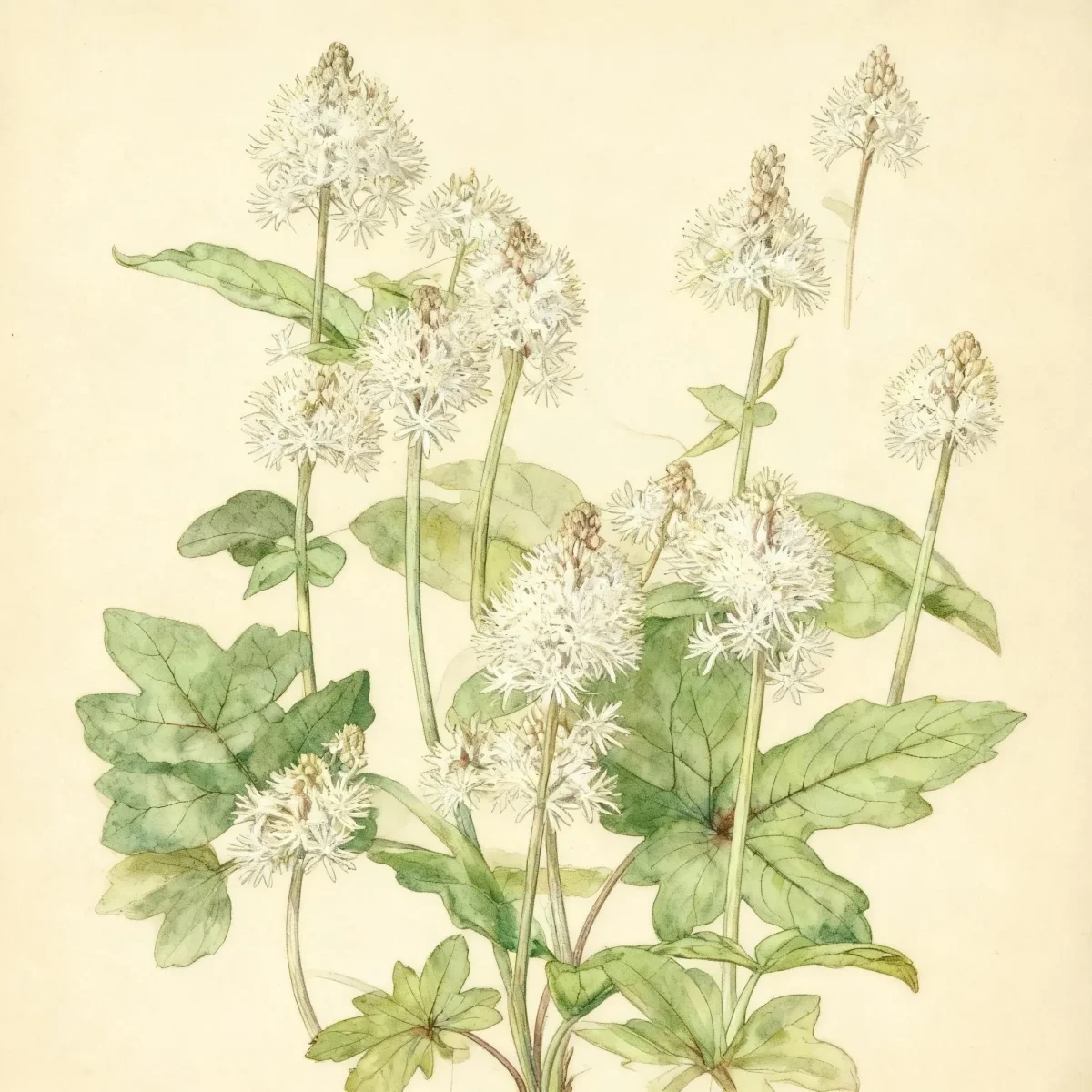
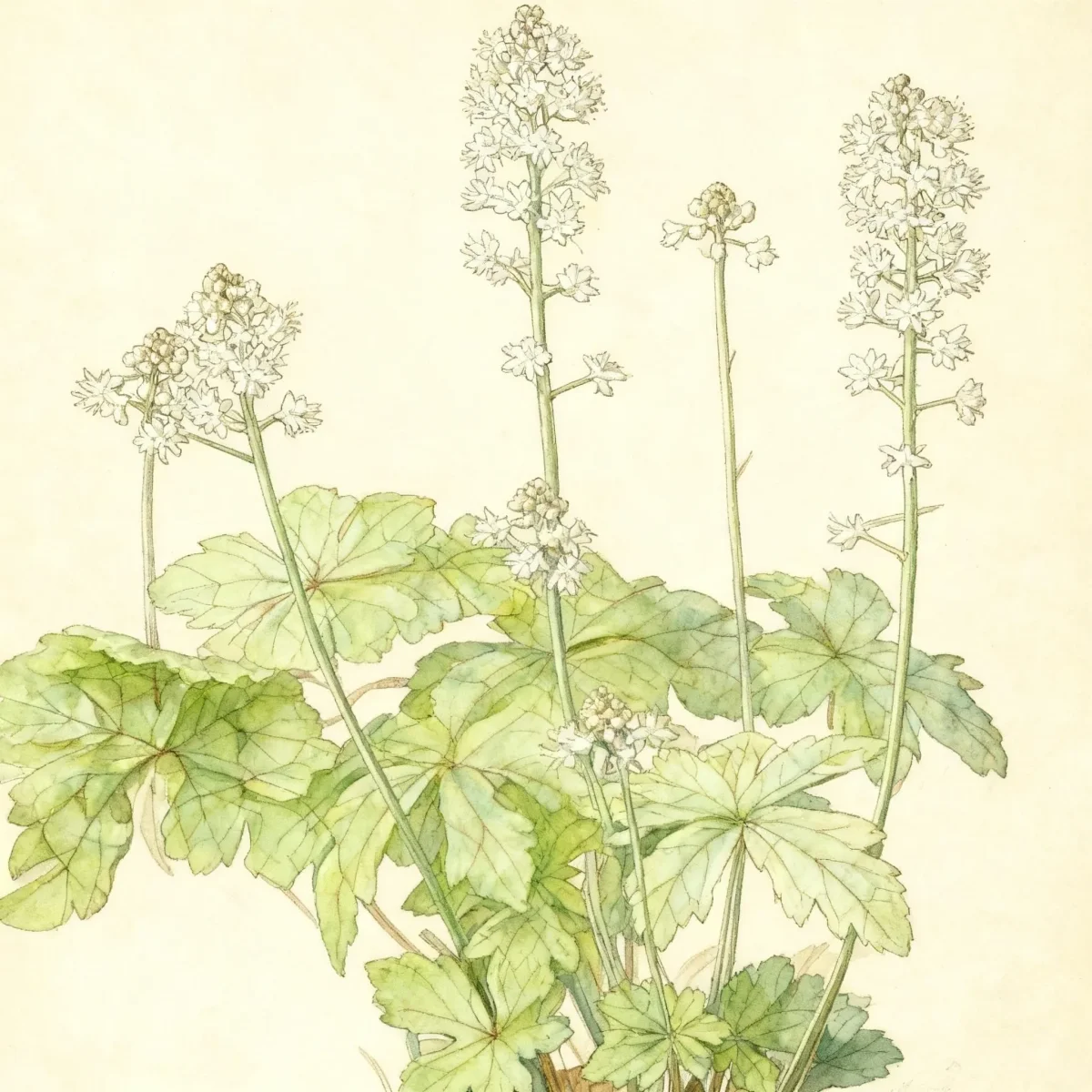
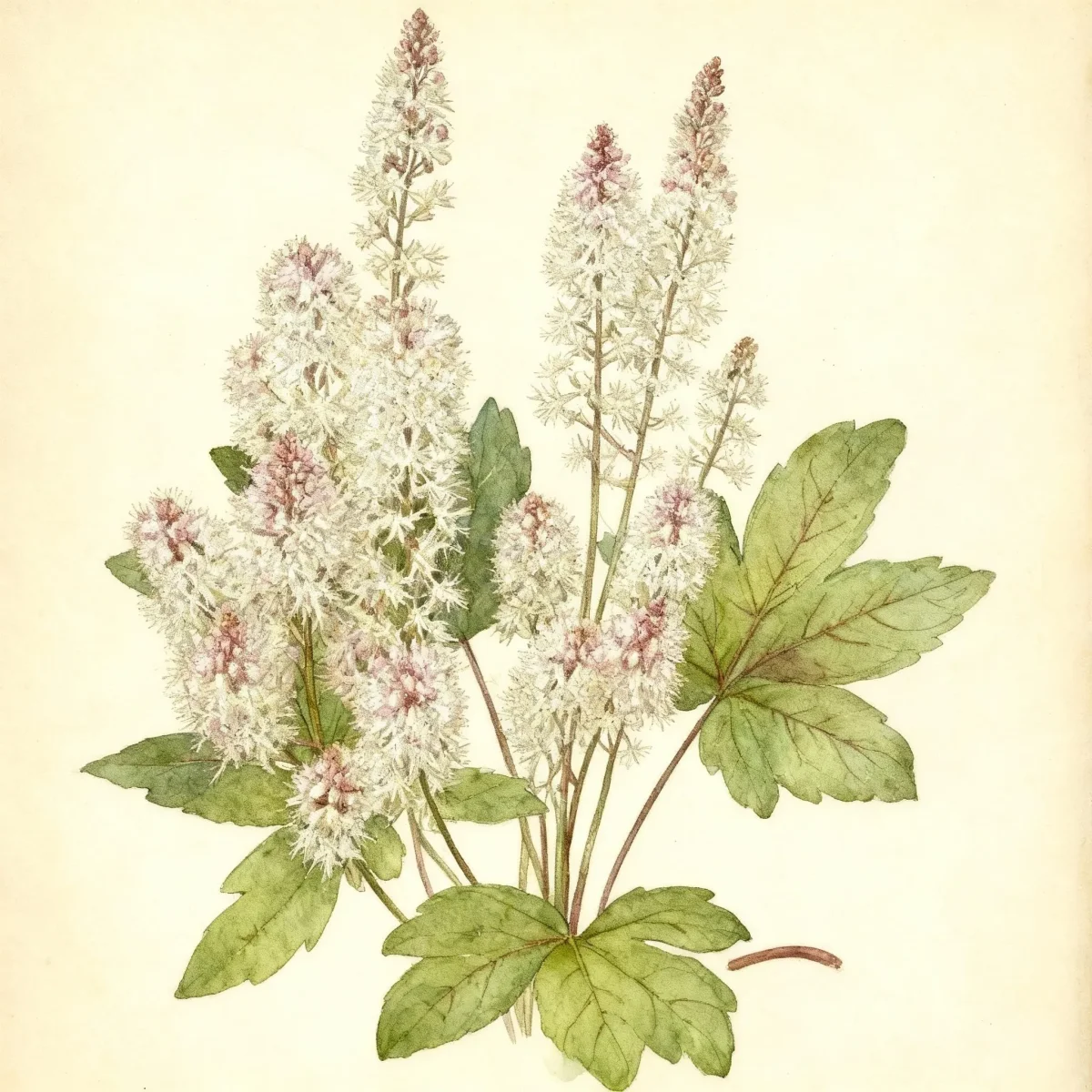
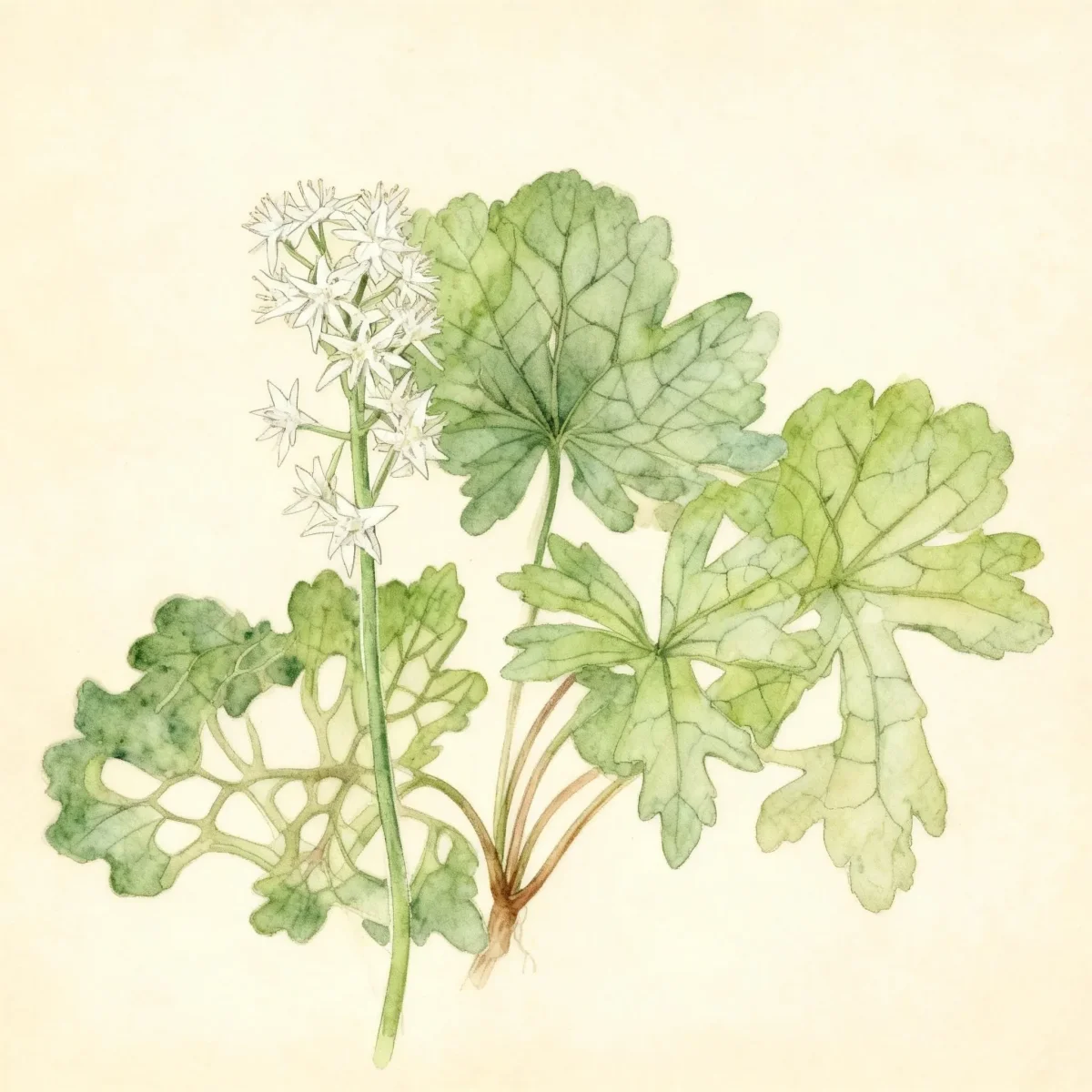
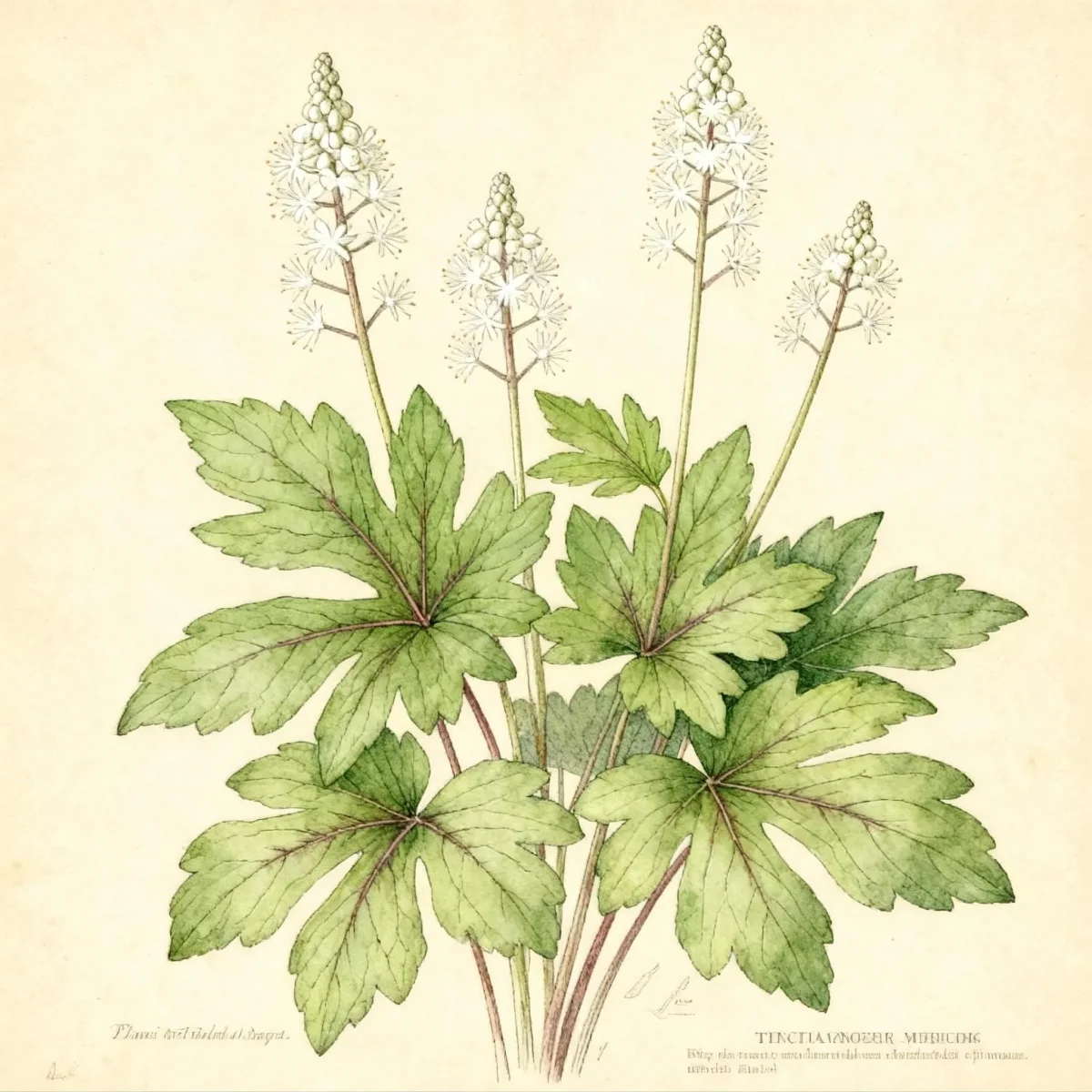
Tiarella ‘Tntia041’ STARGAZER MERCURY is a striking, rhizomatous, clump-forming hybrid of the Foam flower, offering year-round interest for shaded garden spaces. This patented selection is highly valued for its distinct foliage: deeply cut, star-shaped green leaves heavily marked with dark striping along the mid-veins. When spring arrives, Tiarella ‘Tntia041’ STARGAZER MERCURY sends up airy racemes of tiny, attractive pink blossoms, living up to its common name, Foam flower.
As an easy-to-manage herbaceous perennial, this cultivar thrives where many other plants struggle—under the canopy of trees or along shady borders. Its low maintenance profile combined with its compact, tidy mound habit makes it an excellent choice for ground cover applications or defining the edges of woodland designs. Gardeners appreciate the texture and persistent color provided by this robust selection.
The genus Tiarella itself is celebrated for producing excellent ground covers in woodland settings. Tiarella ‘Tntia041’ STARGAZER MERCURY maintains the desirable shade tolerance of its relatives while introducing improved visual intrigue through its patterned leaves, ensuring that even winter interest remains high in milder climates.
Fast Facts
- Plant Family: Saxifragaceae
- Plant Type: Herbaceous perennial
- Hardiness Zones: USDA Zones 4-9
- Size at Maturity:
- Height: 0.75-1.5 ft
- Spread: 0.75-1.5 ft
- Bloom Time: April to May
- Bloom Description: Pink
- Sun Exposure: Part shade to full shade
- Water Needs: Medium
- Maintenance Level: Low
How to Grow
The best results for Tiarella ‘Tntia041’ STARGAZER MERCURY are achieved when planted in early spring or fall. Site selection is crucial; this Foam flower demands part shade to full shade exposure. It thrives best in average, well-drained soils that are amended heavily with organic matter, preferring humusy, moisture-retentive conditions. Avoid wet soils entirely, especially during winter, as standing water is fatal to this plant.
Consistent moisture is key to maintaining the health and appearance of Tiarella ‘Tntia041’ STARGAZER MERCURY. Water regularly to ensure the soil does not dry out between waterings, particularly during establishment and hot summer periods. Fertilization is rarely necessary if the soil is organically rich. Monitor for signs of stress related to dryness, which will quickly diminish its ornamental value.
Maintenance is generally low for this tough perennial. To keep the basal foliage mound looking its tidiest, deadhead or remove the spent flower spikes immediately after the main spring bloom concludes. In regions that experience mild winters, the foliage can remain semi-evergreen; however, severe cold may cause loss of color or foliage retention, requiring a spring cleanup trim.
Landscape Uses
Tiarella ‘Tntia041’ STARGAZER MERCURY excels as textural filler in deeply shaded environments where vibrant flowers are rare. It is an excellent selection for softening the edges of rock gardens or creating dense mats in woodland gardens, mirroring its natural habitat. Its moderate size (mounding to about 10-14 inches high) makes it perfect for border fronts, providing foreground interest before taller shade dwellers.
Mass planting the Foam flower creates an incredibly attractive, uniform ground cover, effectively suppressing weeds while offering consistent visual appeal. Consider planting near moisture-loving companions like ferns, hostas, or Helleborus to enhance the woodland aesthetic. It also performs well when used as an accent in containers set on shaded patios or porches, adding texture that outlasts many seasonal annuals.
Standout Features
Flower Qualities
- Showy
Noteworthy Characteristics
Tiarella is a genus of about 7 species of herbaceous perennials from East Asia and North America. They make good ground covers in woodland gardens and shady borders. Plants are in the same family as and somewhat suggestive of Heuchera, Tellima and Mitella. Tiarella is sometimes commonly called false miterwort because of its similarity to Mitella (miterwort).Genus name comes from the Greek tiara meaning a small crown in reference to the form of the fruit. ‘Tntia041’ is a patented foam flower that is commonly sold under the trademark name of STARGAZER MERCURY. This is a rhizomatous, clump-forming Tiarella hybrid (parents are unknown) which is noted for its compact size, patterned foliage and pink flowers. It typically forms a basal foliage mound to 10” tall and 15” wide of palmate, deeply cut, star-shaped, green leaves with dark striping along the mid-veins of the finger-like lobes. Tiny pink flowers bloom in spring (April-May) in bottle-brush-like racemes atop erect, wiry, mostly leafless stems which rise above the foliage mound to a height of 14”. Plants may rebloom, albeit sporadically, throughout late spring and summer. U.S. Plant Patent PP16,734 was issued on June 27, 2006.
Tolerances
- Deer
Potential Problems
This Foam flower generally presents few serious insect or disease challenges, contributing significantly to its low maintenance rating. However, garden conditions must be managed to prevent common issues. Inspect plants routinely for early signs of powdery mildew, which can develop when air circulation is poor or humidity is exceptionally high, even though the plant prefers moisture.
Be vigilant against low-crawling pests; Tiarella ‘Tntia041’ STARGAZER MERCURY can be susceptible to root weevils and slugs, both of which are primarily attracted to damp, shaded environments. Management typically involves inspecting plant crowns for slug activity and applying organic baits or controls as needed beneath the foliage litter.
Frequently Asked Questions
What hardiness zones is Foam flower suitable for?
Tiarella ‘Tntia041’ STARGAZER MERCURY is adaptable, thriving through USDA Zones 4 through 9.
How large does Tiarella ‘Tntia041’ STARGAZER MERCURY grow?
This cultivar typically forms a basal mound reaching 0.75 to 1.5 feet in height and spreads between 0.75 and 1.5 feet wide.
What sun exposure does Foam flower need?
This variety requires part shade to full shade conditions to thrive; direct, hot afternoon sun should be avoided to protect its foliage.
When does Tiarella ‘Tntia041’ STARGAZER MERCURY bloom?
The primary bloom time for Tiarella ‘Tntia041’ STARGAZER MERCURY is from April to May, presenting delicate pink flowers.
Conclusion
Tiarella ‘Tntia041’ STARGAZER MERCURY stands out as a superior woodland perennial, offering beautiful patterned foliage and charming sporadic pink blooms, establishing itself as a reliable, low-maintenance ground cover. For gardeners seeking reliable texture and color in deep shade, the Foam flower hybrid is an exceptional choice. Ensure your garden area offers rich, consistently moist, yet well-drained soil, and verify that your location falls within USDA Zones 4-9 before planting.
Companion Planting in Shade Gardens
Selecting companions that share cultural requirements—namely part shade and moist, organically rich soil—will maximize the beauty of Tiarella ‘Tntia041’ STARGAZER MERCURY. Hostas provide substantial leaf contrast, pairing the finely cut texture of the Foam flower with broad, architectural shapes. Ferns, such as Japanese Painted Ferns or Autumn Ferns, also complement the genus Tiarella perfectly, reinforcing the natural, layered look of a woodland border front.
To ensure continuous visual impact, mix Tiarella ‘Tntia041’ STARGAZER MERCURY with spring-blooming bulbs like snowdrops (Galanthus) or dwarf daffodils, which emerge just before or concurrent with the pink flowers. Later in the season, ground-hugging shade perennials like Epimedium (Barrenwort) or creeping Ajuga can fill in any space left as the Foam flower recedes slightly after its peak flowering period.
Seasonal Care Calendar
Spring is the most active time for Tiarella ‘Tntia041’ STARGAZER MERCURY care. After any lingering winter damage is cleaned up, focus on amending the soil before the hard growth flush begins. Once the bottle-brush racemes fade in late May or early June, prompt deadheading will encourage any secondary, sporadic blooms throughout the summer months.
Summer care centers entirely on moisture management for this medium-water plant. Do not allow the soil to dry out completely; check the top inch regularly, especially during heatwaves. Avoid high-nitrogen fertilizers, as these can encourage soft, floppy growth which may make the plant more susceptible to slugs and mildew.
As autumn approaches, minimal intervention is needed unless you are in a colder zone, where protection or heavy mulching over the roots might be beneficial if foliage is retained. In fall or early spring, the rhizomatous nature of this Tiarella hybrid allows for easy division of crowded clumps, refreshing the planting area.