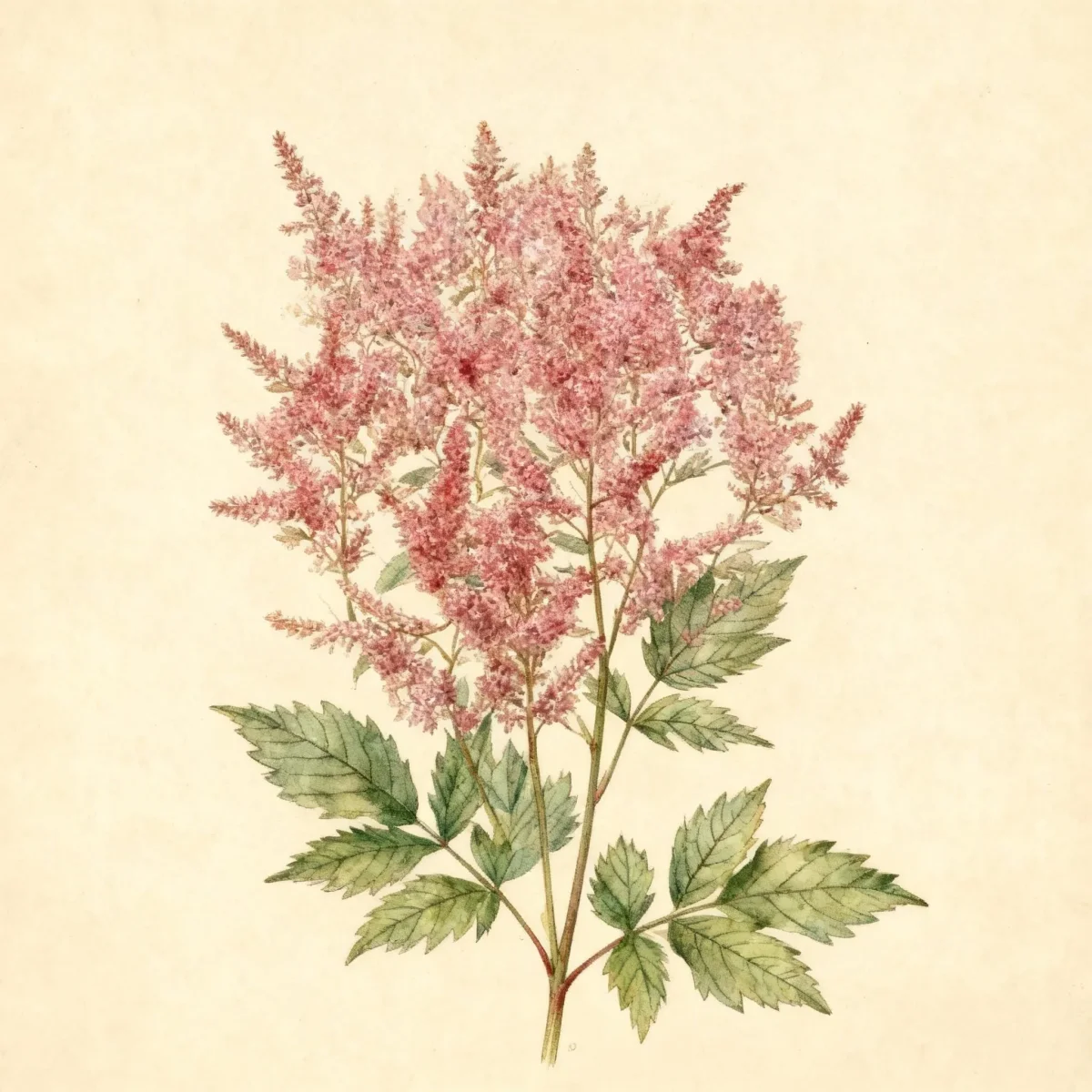
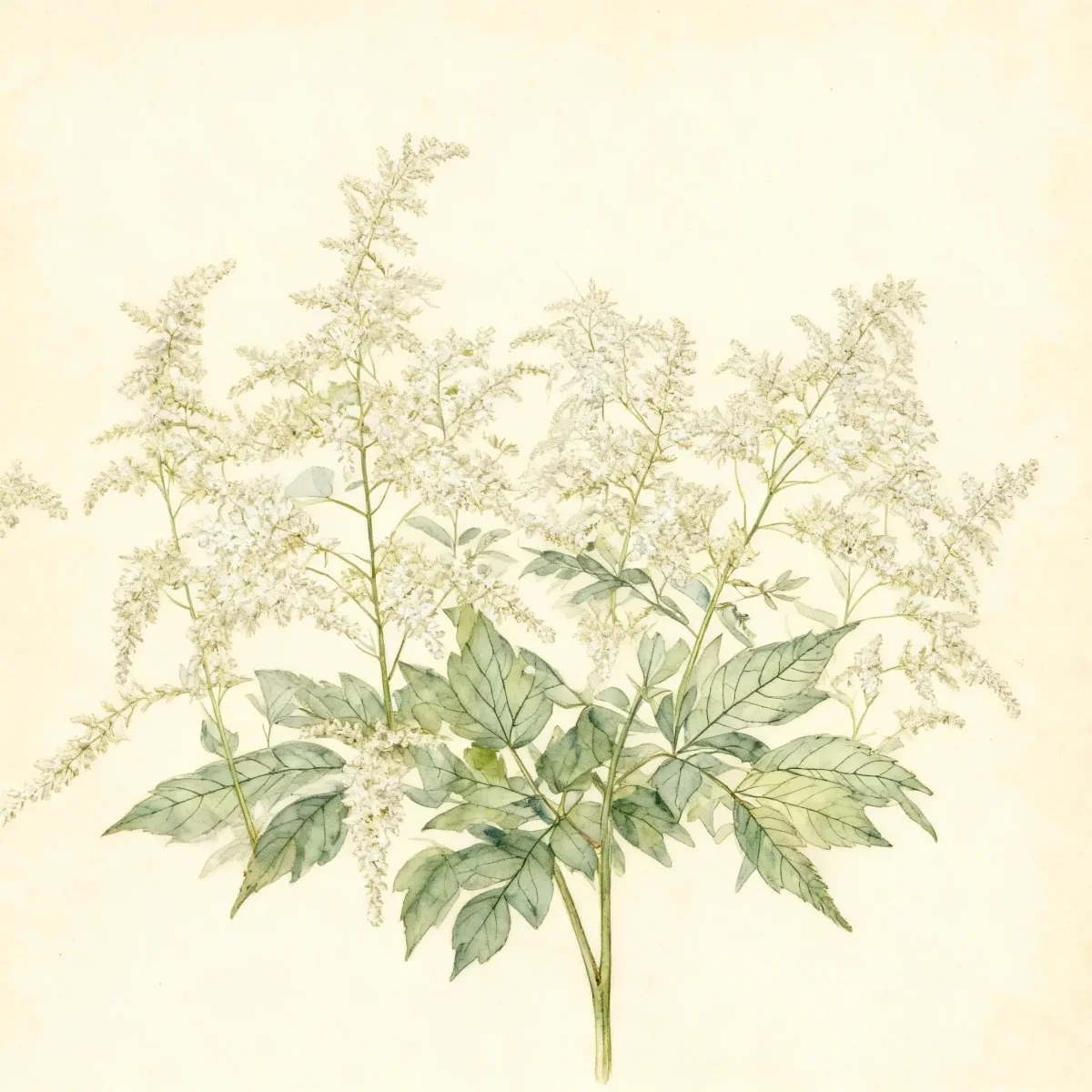
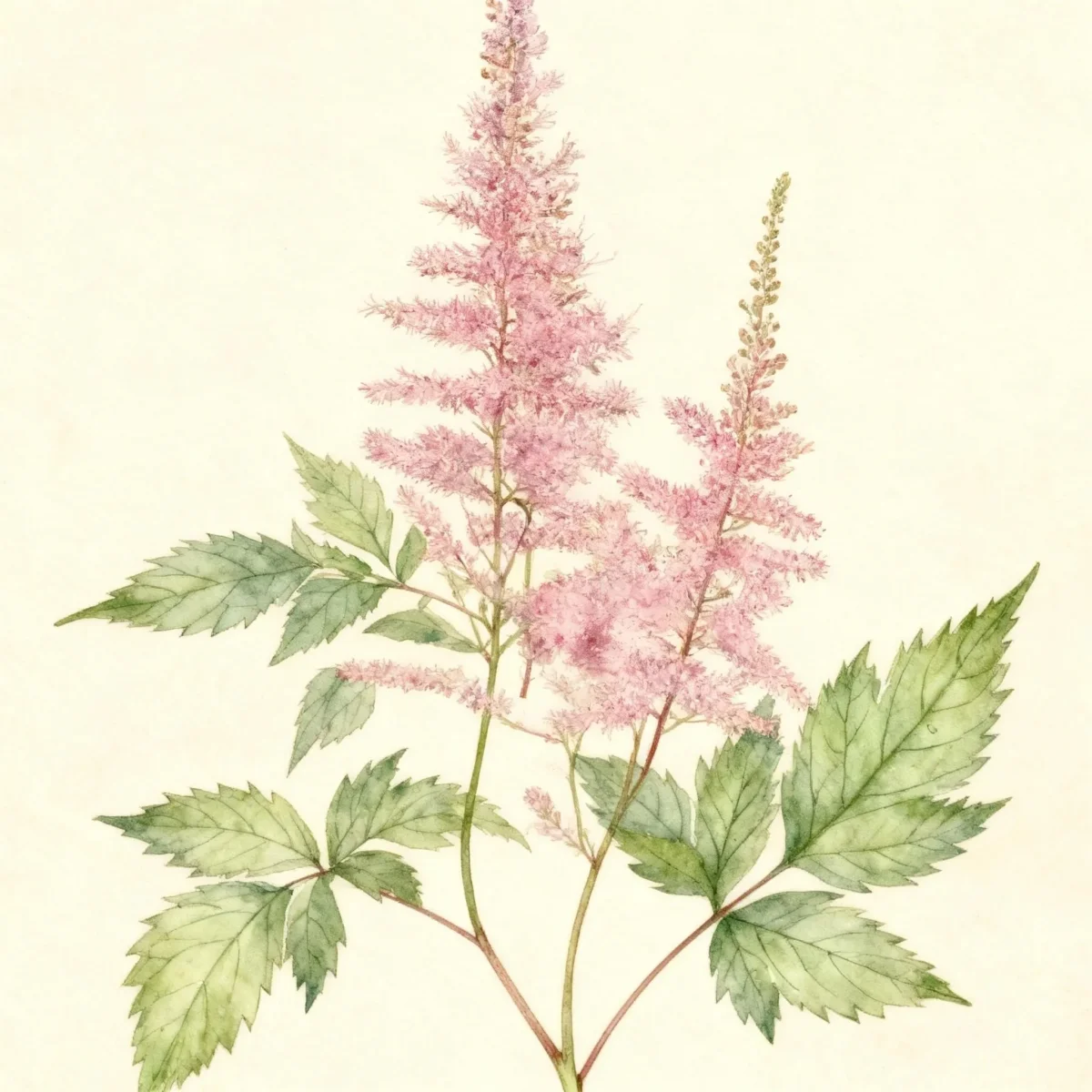
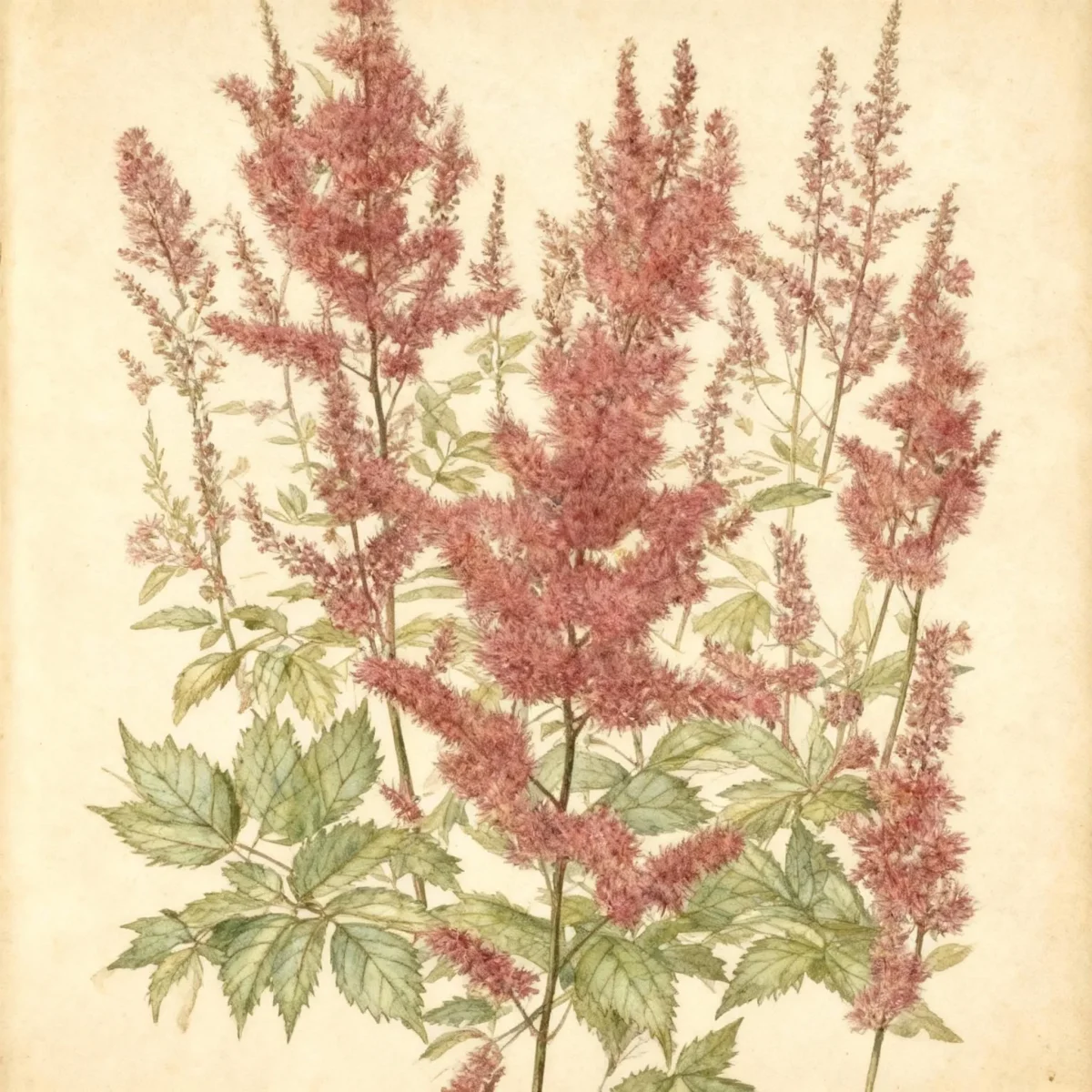
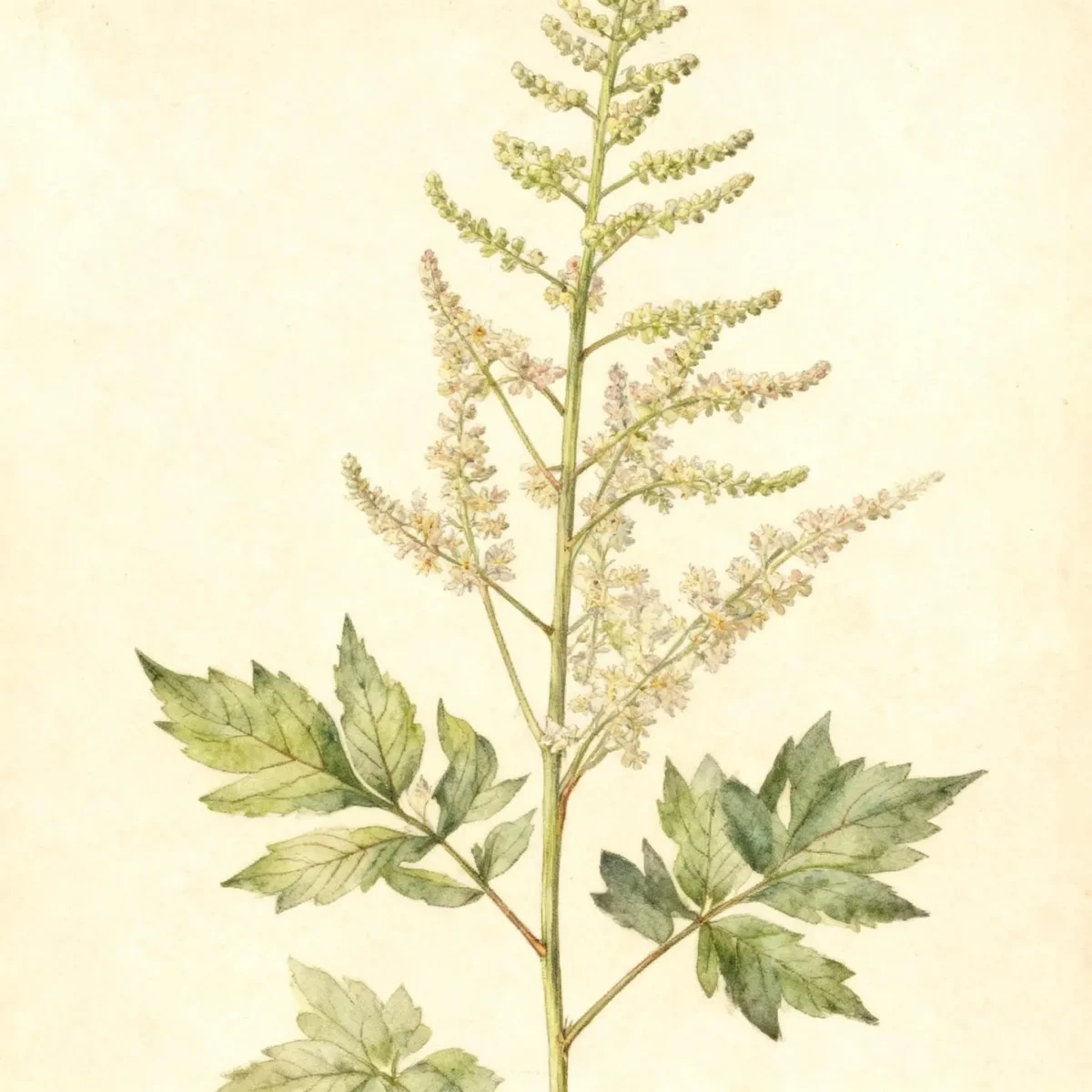
Astilbe (Astilbe 'Darwin's Dream')
Astilbe 'Darwin's Dream' offers mounding, fern-like foliage and deep pink plumes from June to July. Low maintenance perennial for shade.
Scroll down to discover growing tips, care requirements, companion plants, and more
Complete Plant Information
Overview
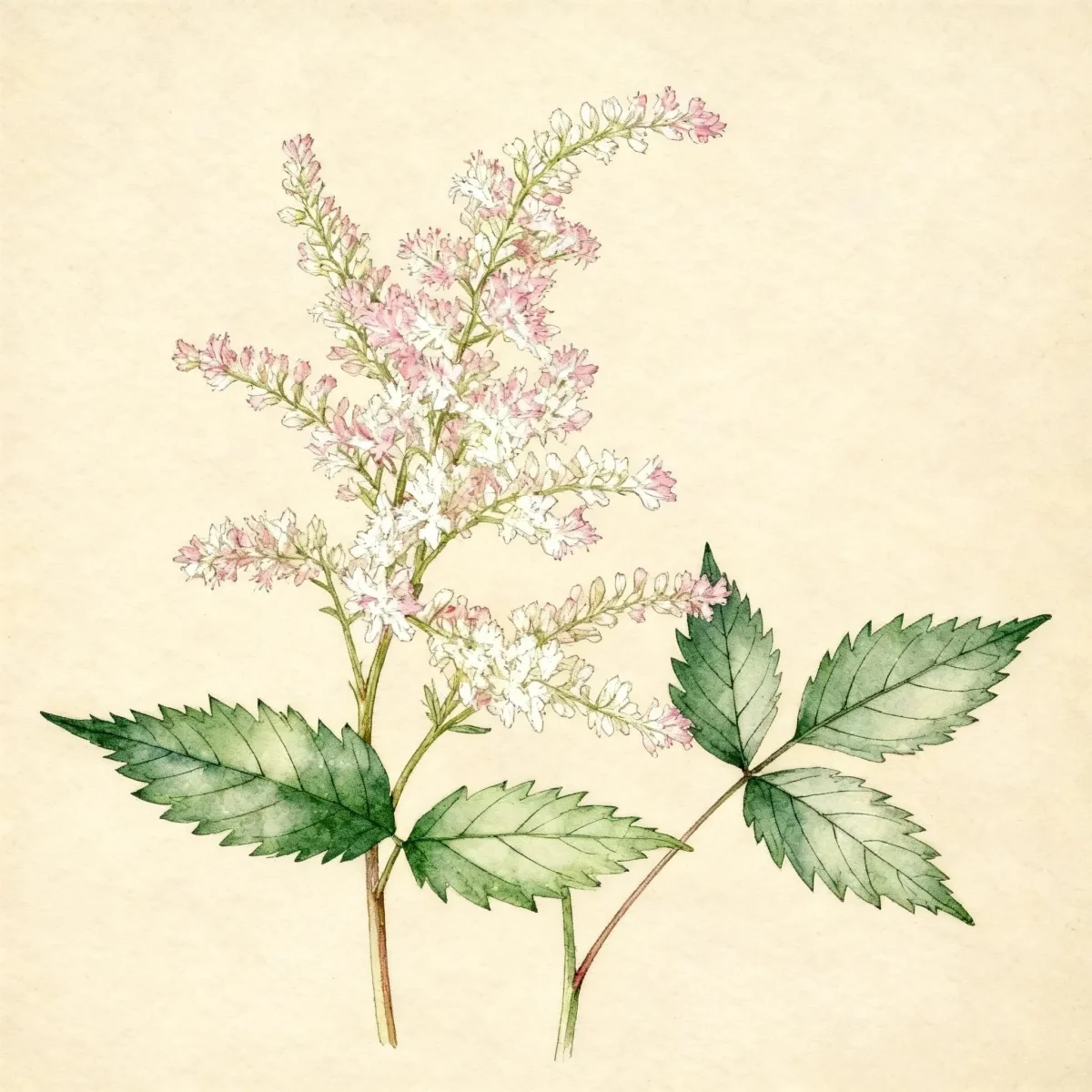
Astilbe ‘Darwin’s Dream’ is a highly prized herbaceous perennial valued for its reliable texture and vibrant summer color in shaded garden areas. This specific Astilbe cultivar produces dense, deep pink, plume-like flower panicles rising above attractive, glossy, fern-like mounds of foliage. Gardeners appreciate Astilbe for its dependable, low-maintenance growth habit, making it a staple for dark corners needing consistent interest.
Characterized by its compact, mounding form, Astilbe ‘Darwin’s Dream’ reaches heights near 1.5 feet, creating excellent mid-level structure in the shade garden. Successful cultivation relies on providing consistent moisture, as the genus name suggests a need for consistent water supply to keep the foliage looking pristine throughout its season of performance.
For those seeking textural contrast under trees or near water features, this Astilbe variety delivers textural elegance and reliable color. With its low maintenance requirements once established, Astilbe ‘Darwin’s Dream’ proves that deep shade doesn’t have to mean a lack of visual impact.
Fast Facts
- Plant Family: Saxifragaceae
- Plant Type: Herbaceous perennial
- Hardiness Zones: USDA Zones 4-8
- Size at Maturity:
- Height: 1-1.5 ft
- Spread: 0.75-1 ft
- Bloom Time: June to July
- Bloom Description: Deep pink
- Sun Exposure: Part shade to full shade
- Water Needs: Medium
- Maintenance Level: Low
How to Grow
The best time to plant Astilbe ‘Darwin’s Dream’ is in spring or early fall, ensuring the plant has time to establish roots before temperature extremes. This Astilbe thrives in average, medium-moisture, well-drained soils situated in full shade to part shade conditions. It strongly prefers soils that are humusy and organically rich, mirroring its natural woodland environments.
Consistent watering is crucial for keeping Astilbe looking its best, especially during hot summers. Soils must not be allowed to dry out completely; if kept regularly watered, the attractive foliage of Astilbe ‘Darwin’s Dream’ will remain lush. Annual application of a summer compost mulch will significantly aid in retaining necessary soil moisture around the roots.
Maintenance is generally low. While removing faded flower stalks can improve the appearance if a tidy ground cover look is desired, many gardeners leave the dried seed heads for winter structural interest. Clumps of Astilbe should be divided every three to four years when they begin to overcrowd the planting space.
Landscape Uses
Astilbe ‘Darwin’s Dream’ excels when massed or grouped in significant numbers, transforming the character of deep shade gardens and woodland settings. Its arching plumes provide vertical contrast against broad-leaved shade dwellers. Consider using this compact Astilbe variety along the shaded fronts of borders or nestled within cottage garden schemes where texture is paramount.
It functions effectively as an excellent edging plant, clearly defining walkways or garden beds that receive limited direct sunlight. Furthermore, their moisture needs make them perfect companions for pond or stream banks, integrating them into naturalized aquatic landscapes. When properly sited, this robust perennial adds depth and sophistication to foundation plantings that are typically difficult to fill successfully.
Standout Features
Flower Qualities
- Showy
Noteworthy Characteristics
Astilbe is a genus of around 20 species of clump-forming, herbaceous perennials native to eastern Asia and eastern North America, characterized by fern-like foliage and tiny flowers densely packed into plume-like panicles. ‘Darwin’s Dream’ is specifically noted as a compact, upright astilbe displaying tiny deep pink flowers in early summer atop slender stems, complemented by a dense mound of bi-ternate compound glossy dark green leaves. The genus name is derived from Greek words meaning ‘without brightness,’ historically referring to the dull leaves of some ancestors of this vibrant cultivar.
Tolerances
- Rabbit
- Deer
- Heavy Shade
- Black Walnut
Potential Problems
Foliage decline, characterized by leaves browning up, is the most common issue and usually signals insufficient moisture during hot, dry summers. To prevent this browning in Astilbe ‘Darwin’s Dream’, ensure consistent deep watering during heat waves. Pests like Japanese beetles may sometimes chew on the foliage, requiring manual removal or targeted treatments. Additionally, powdery mildew and wilt diseases can appear if air circulation is poor or if plants are stressed; good soil preparation and appropriate spacing help mitigate these fungal concerns.
Frequently Asked Questions
What hardiness zones is Astilbe ‘Darwin’s Dream’ suitable for?
Astilbe ‘Darwin’s Dream’ is reliably hardy in USDA Zones 4 through 8.
How large does Astilbe ‘Darwin’s Dream’ grow?
This variety typically reaches a height between 1 and 1.5 feet and spreads approximately 0.75 to 1 foot wide, forming a manageable mound.
When does Astilbe ‘Darwin’s Dream’ bloom?
This Astilbe flowers during the peak summer months, generally from June through July, presenting showy deep pink blooms.
What sun exposure does Astilbe need?
Astilbe ‘Darwin’s Dream’ thrives best in conditions ranging from part shade to full shade, needing protection from intense afternoon sun.
Conclusion
Astilbe ‘Darwin’s Dream’ stands out as a reliable performer, providing essential deep pink color and lush, fern-like texture to shaded garden beds with minimal fuss. For successful establishment, remember that consistent soil moisture is the key to enjoying the full potential of this low-maintenance Astilbe. Before planting, confirm your site falls within USDA Zones 4-8 and prepare the soil to be rich and well-drained.
Companion Planting
Selecting the right companions enhances the aesthetic of your shade garden alongside Astilbe ‘Darwin’s Dream’. Because both plants require consistent moisture and prefer dappled light, ferns (especially Japanese Painted Ferns for color contrast) make excellent neighbors. Hosta varieties with chartreuse or blue foliage offer wide, structural leaves that contrast beautifully with the fine texture of the Astilbe plumes. For early spring color before the Astilbe emerges fully, consider planting spring bulbs like snowdrops or bleeding hearts, ensuring they tolerate similar shady, moist environments.
Seasonal Care Calendar
Spring Cleanup: Gently remove old, dried flower and foliage stalks from the previous year once new growth of the Astilbe begins to push up, usually late March or early April depending on your zone. Top-dress the soil with a thin layer of compost to feed the emerging plant.
Summer Maintenance: Focus heavily on watering during dry periods. Apply a mulch layer, like shredded bark or compost, during early summer to lock in soil moisture, which directly prevents foliage browning for Astilbe ‘Darwin’s Dream’. Deadheading spent blooms is optional; leave them if you prefer the look of dried seed heads through autumn.
Autumn/Winter Care: As temperatures cool, the foliage will die back naturally. There is no need for heavy winter protection for plants established in their appropriate hardiness zones (4-8). Allow foliage to remain until spring cleanup to protect dormant buds.