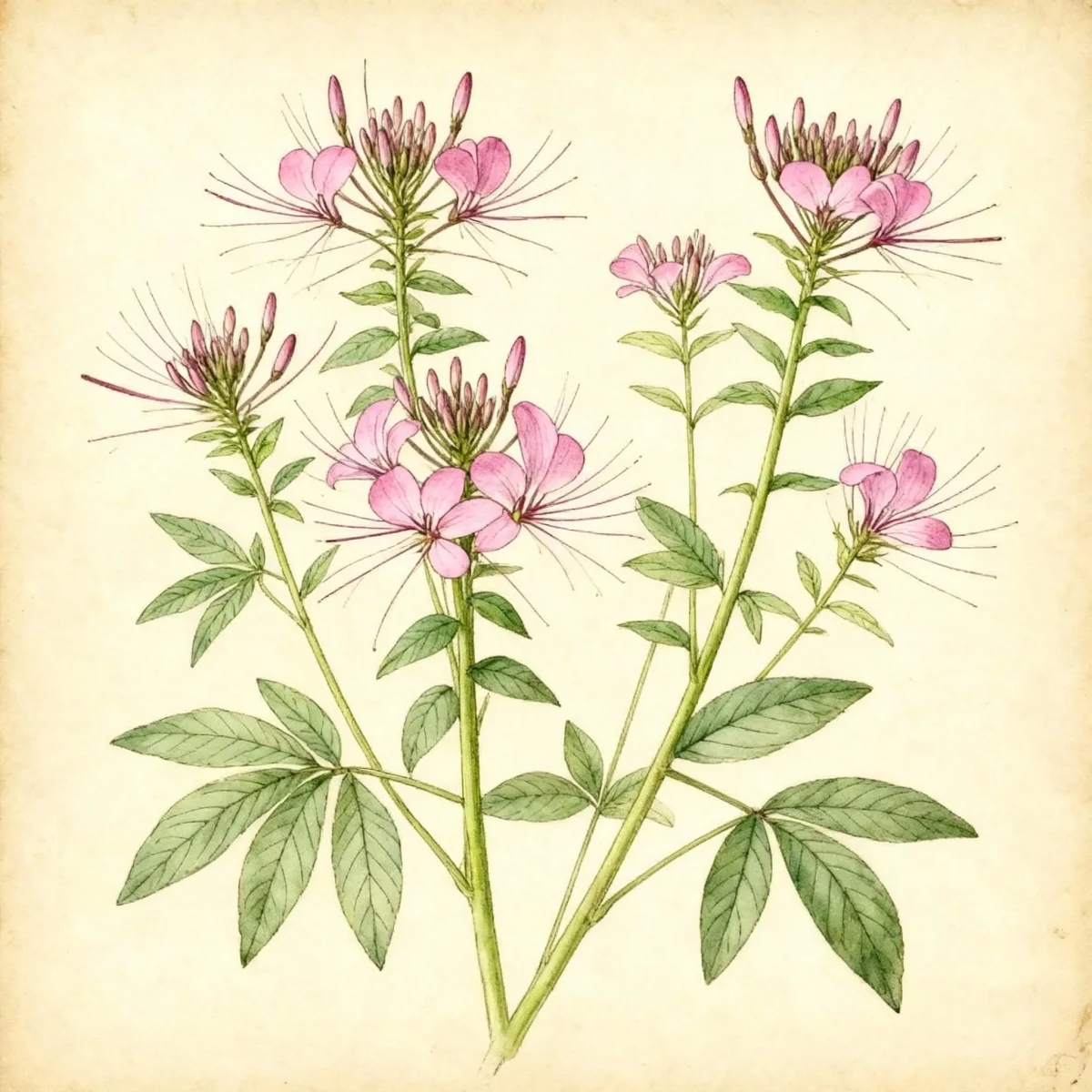
Spider flower (Cleome 'Inncleosr' SENORITA ROSALITA)
The elegant Cleome 'Inncleosr' SENORITA ROSALITA, or Spider flower, offers season-long lavender-pink blooms. Low maintenance, it thrives in heat while attracting pollinators.
Scroll down to discover growing tips, care requirements, companion plants, and more
Complete Plant Information
Overview
Cleome ‘Inncleosr’ SENORITA ROSALITA is a highly valued selection within the spider flower genus, prized for its continuous, airy blooms from early summer until the first hard frost. This cultivar stands out because, unlike some older varieties, the modern SENORITA ROSALITA lacks thorns, undesirable aromas, and bothersome seedpods, making cleanup virtually nonexistent. It offers gardeners a fast-growing, upright annual display, reaching heights of 2 to 4 feet.
As a tender perennial grown as an annual across most of the US, the Spider flower combines adaptability with a refined appearance. Its unique, spidery lavender-pink flowers attract hummingbirds and butterflies, lending vertical interest to mixed plantings. Furthermore, once established, Cleome ‘Inncleosr’ SENORITA ROSALITA shows excellent resilience to heat and drought conditions.
This variety provides substantial garden impact with remarkably low effort. Its sterile nature ensures it won’t reseed aggressively, providing reliable, season-long performance in beds, borders, or large containers. Consider incorporating the graceful habit of the Spider flower into your landscape plans for easy, continuous color.
Fast Facts
- Plant Family: Cleomaceae
- Plant Type: Herbaceous perennial
- Hardiness Zones: USDA Zones 9-10
- Size at Maturity:
- Height: 2-4 ft
- Spread: 1.5-2 ft
- Bloom Time: June to frost
- Bloom Description: Lavendar-pink
- Sun Exposure: Full sun to part shade
- Water Needs: Dry to medium
- Maintenance Level: Low
How to Grow
Plant Cleome ‘Inncleosr’ SENORITA ROSALITA in the spring after the danger of frost has passed, or early in the season if starting indoors in cooler climates. This plant thrives in average, well-drained soils, preferring full sun for the best flower production, though it tolerates light shade. Ensure the planting location offers sufficient room for its 1.5 to 2-foot spread.
During the main growing season, maintain consistent moisture, especially as the plant establishes its roots. While the established Cleome ‘Inncleosr’ SENORITA ROSALITA tolerates heat and drought periods well, providing consistent watering will yield the strongest growth and most abundant blooms. Fertilization is rarely necessary if the soil is reasonably fertile, keeping the maintenance level low.
As the season winds down, deadheading is unnecessary because this sterile cultivar does not produce seedpods. In USDA Zones 9-10, it can be treated as a true perennial; simply cut back old growth in early spring. For gardeners in cooler zones where it is grown as an annual, cleanup is simple when frost kills the plant, leaving you free of straggling seeds for next year.
Landscape Uses
Cleome ‘Inncleosr’ SENORITA ROSALITA excels when planted in groups or massed plantings to maximize its airy vertical texture. The Spider flower is an excellent choice for informal borders, providing a soft transition between lawn areas and denser shrub plantings. Its height (2 to 4 feet) makes it ideal for the middle or back of a mixed perennial or annual border.
This versatile plant also shines in large containers, where its upright habit offers structure throughout the summer. Because it is attractive to beneficial insects, it is a fantastic addition to dedicated butterfly or pollinator gardens. Pair the lavender-pink blooms of the Spider flower with lower-growing, sun-loving annuals like Petunias or Lantana for a dynamic contrast in color and form.
Standout Features
Flower Qualities
- Showy
Noteworthy Characteristics
Cleome is a a genus of about 150 species from tropical and subtropical areas worldwide.Genus name of unknown origin.SENORITA ROSALITA, commonly known as cleome or spider flower, is a fast-growing tender perennial with a compact upright habit. In comparison to some other cleomes in commerce today, SENORITA ROSALITA is noted for having no thorns, no unpleasant aroma, no sticky foliage, no seedpods and better disease resistance. The plant typically rises to 2-4’ tall on rigid stems clad with compound palmate green leaves, featuring terminal racemes of 4-petaled, spider-like, lavender-pink flowers that bloom continuously from late spring to frost.
Tolerances
- Rabbit
- Drought
Potential Problems
Cleome ‘Inncleosr’ SENORITA ROSALITA is generally robust, presenting no serious insect or disease problems under ideal conditions. However, gardeners should monitor for common pests such as aphids, spider mites, and whiteflies, especially if air circulation is poor. Where humidity is high or foliage remains damp, the plant shows susceptibility to fungal issues like powdery mildew and rust.
Prevention is the best defense against these common issues. Ensure adequate spacing between plants to encourage good air flow, which helps dry foliage quickly after rain or irrigation. If pest pressure becomes significant, a strong blast of water can dislodge aphids, or insecticidal soap can be applied as needed.
Frequently Asked Questions
What hardiness zones is Spider flower suitable for?
The Cleome ‘Inncleosr’ SENORITA ROSALITA is winter hardy in USDA Zones 9 through 10, but it is widely grown as a fast-maturing annual in cooler regions.
How large does Cleome ‘Inncleosr’ SENORITA ROSALITA grow?
This variety typically reaches a mature height between 2 and 4 feet tall, with a spread of 1.5 to 2 feet wide, forming an upright, airy habit.
When does Spider flower bloom?
The spectacular lavender-pink blooms of the Spider flower appear continuously from June all the way until the first frost arrives.
What sun exposure does Cleome ‘Inncleosr’ SENORITA ROSALITA need?
For optimal performance, plant this cleome where it receives full sun, though it will tolerate conditions with part shade.
Conclusion
The Cleome ‘Inncleosr’ SENORITA ROSALITA offers an effortless way to add height, texture, and continuous cool-toned color to the summer landscape, valued particularly for its thornless, sterile habit. If you seek reliable, low-maintenance drama, the Spider flower is an excellent choice. Confirm your local hardiness zone and plan to incorporate this magnificent annual or tender perennial into your beds this coming spring.
Wildlife Benefits
This Spider flower offers significant value to beneficial insect populations throughout the season. While the flowers are not fragrant, their open, accessible structure makes the nectar readily available to long-tongued pollinators. They are noted for attracting hummingbirds, which are drawn to the flower shape and the continuous bloom period spanning mid-summer through fall.
Planting mass drifts of Cleome ‘Inncleosr’ SENORITA ROSALITA creates a reliable feeding station for pollinators facing late-season scarcity. Including this plant alongside other heat-tolerant species like Zinnias or Coreopsis helps build a robust ecosystem in your garden space. The presence of pollen and nectar sources is crucial for supporting local butterfly and bee populations.
Companion Planting
Due to its medium height and dry-to-medium water needs, Cleome ‘Inncleosr’ SENORITA ROSALITA pairs beautifully with heat-loving, similarly drought-tolerant companions. Consider pairing it with plants that have contrasting foliage texture, such as the fine, grassy leaves of ornamental grasses like Stipa tenuissima.
For color contrast, utilize shorter, mounding plants to fill the space below this upright marvel. Plants like silvery Artemisia or blue creeping Phlox (in zones where it can handle the heat) provide solid blocks of contrasting color beneath the floating, lavender-pink canopy of the Spider flower.