Toad lily (Tricyrtis 'Empress')
Discover the unique beauty of Tricyrtis 'Empress' Toad lily. This low-maintenance perennial offers striking spotted summer blooms in partial shade.
Scroll down to discover growing tips, care requirements, companion plants, and more
Complete Plant Information
Overview
The Tricyrtis ‘Empress’ Toad lily provides a spectacular, unique finale to the summer garden when many other perennials are fading. Valued for its distinctive, intricate flowers appearing in late summer, this plant adds exceptional texture and visual interest to shady spots. Its elegant form, featuring lily-like leaves on stiff stems, transitions beautifully from green foliage to its late-season floral display.
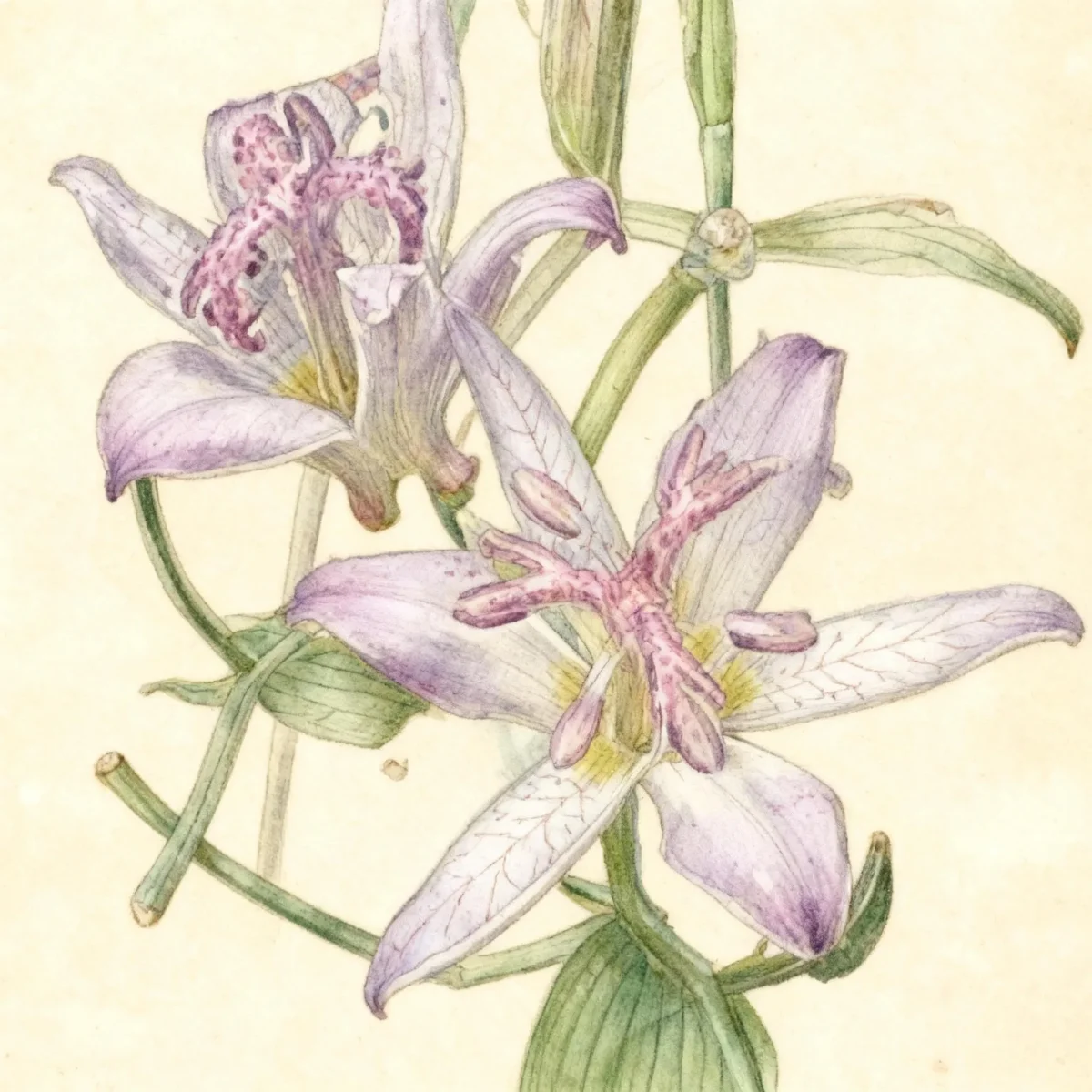
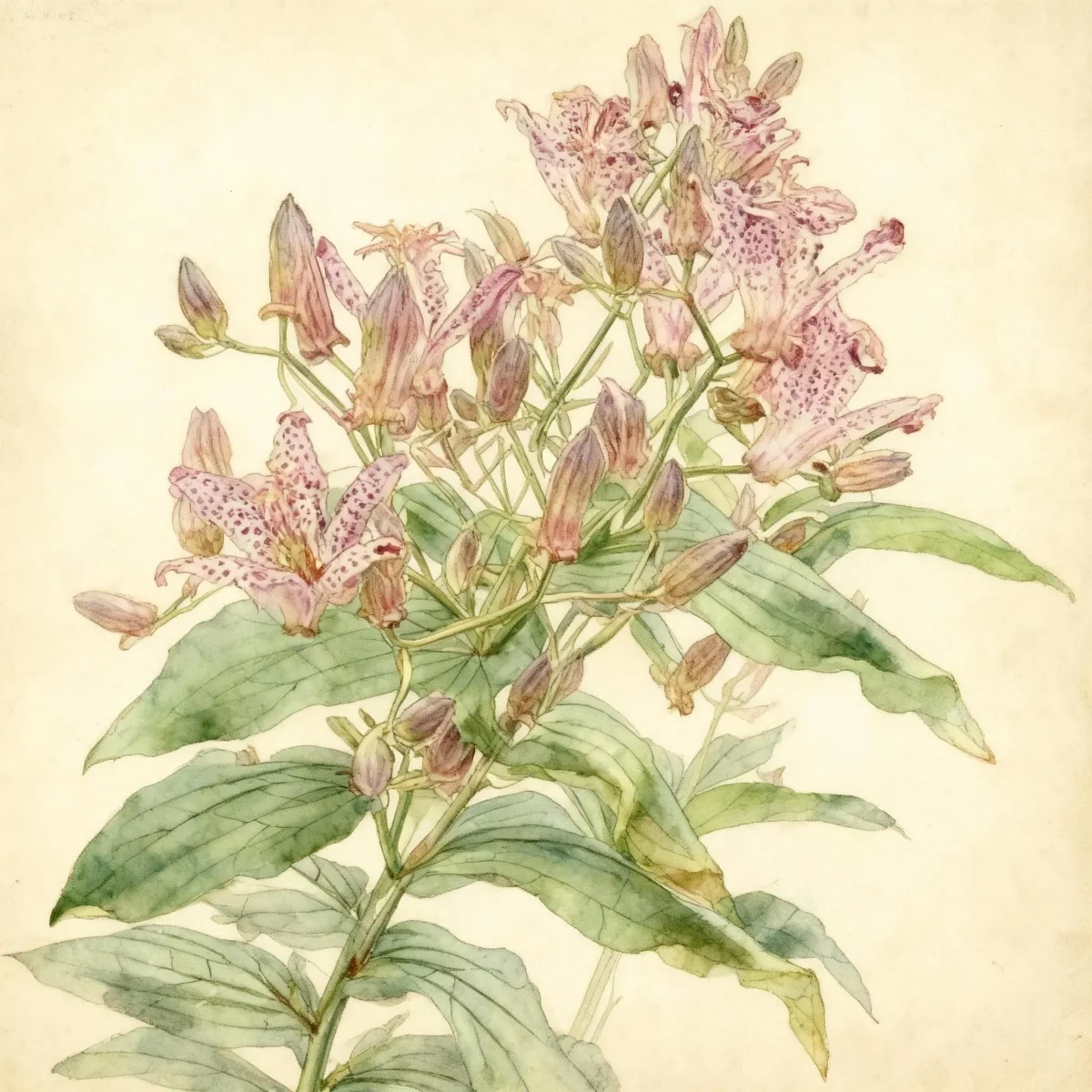
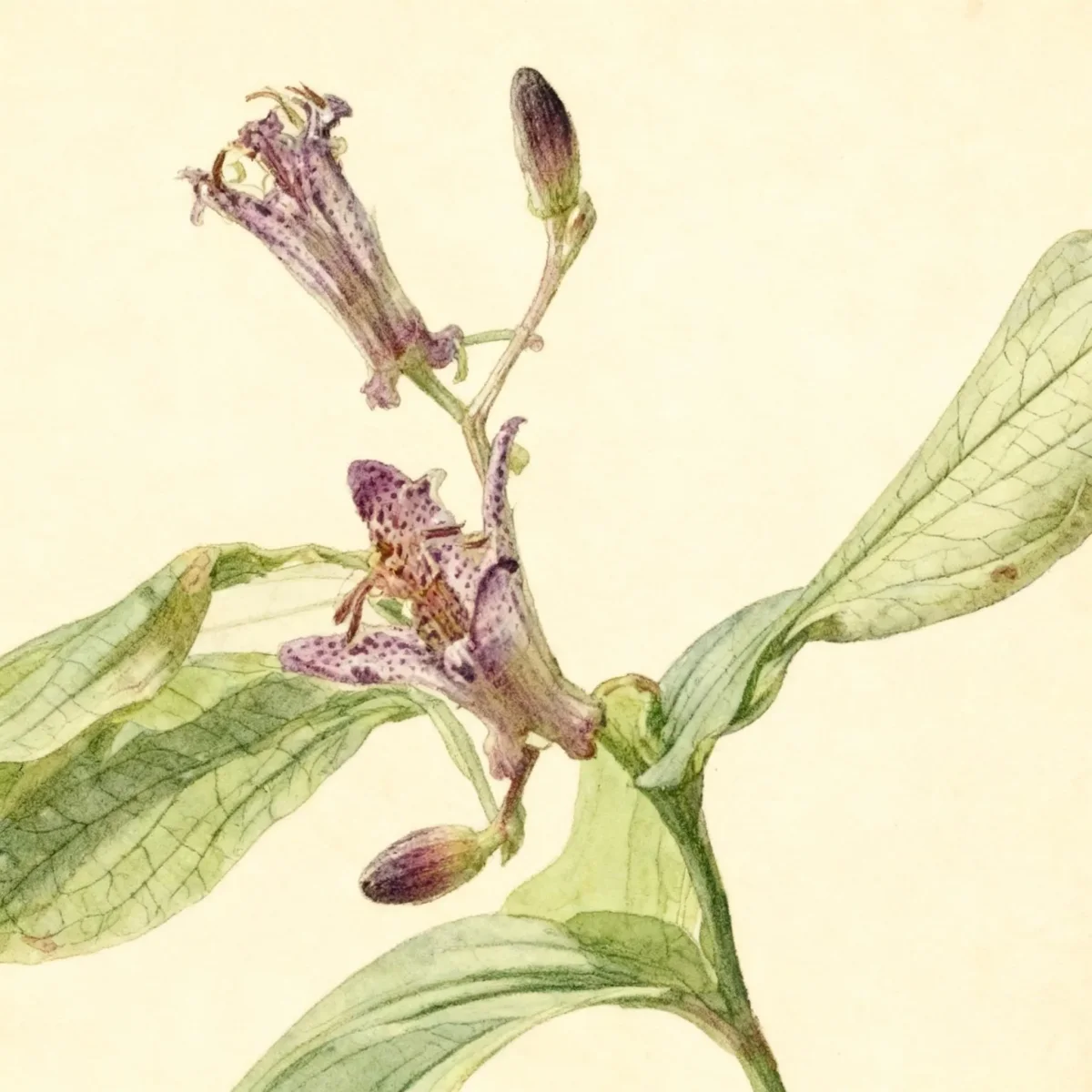
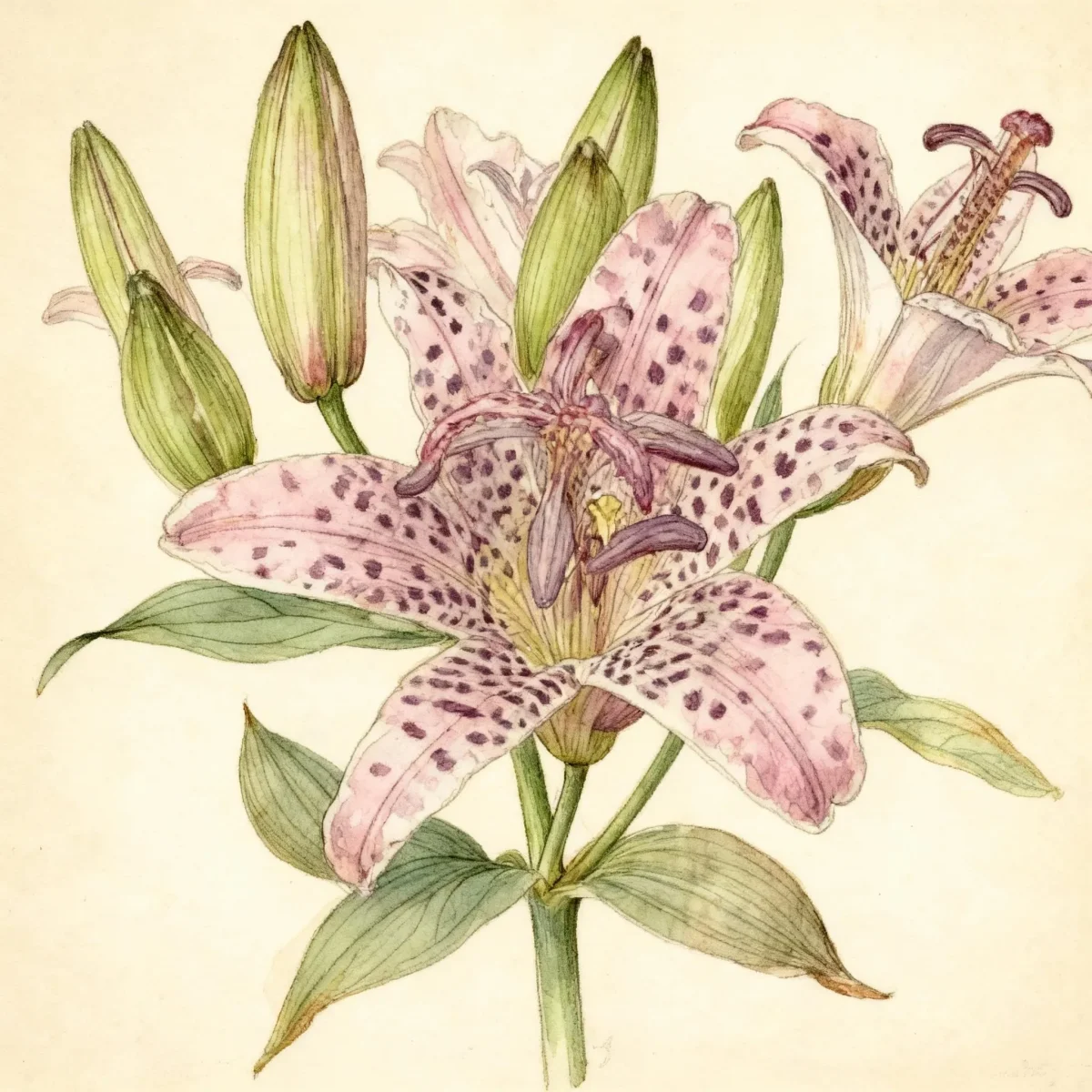
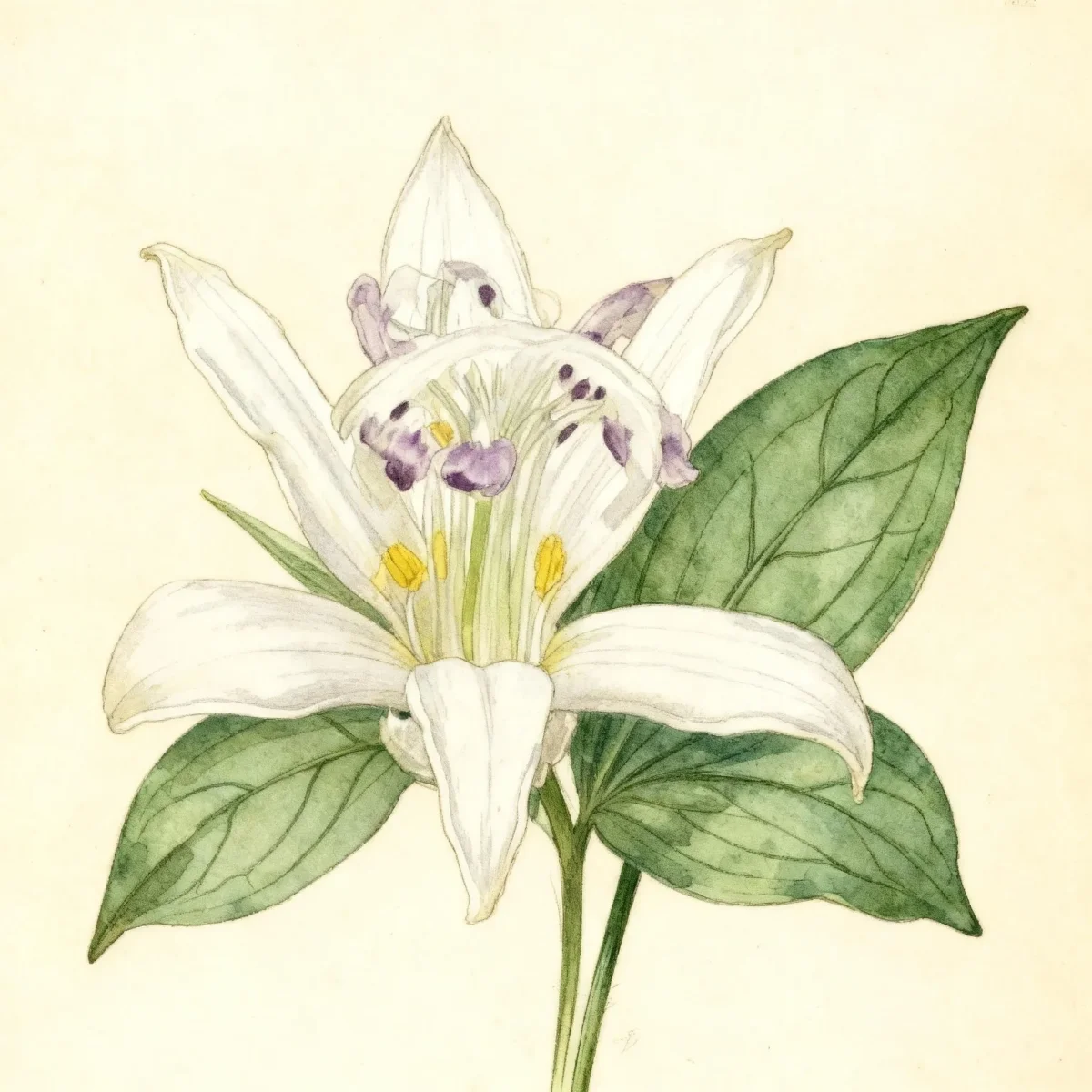
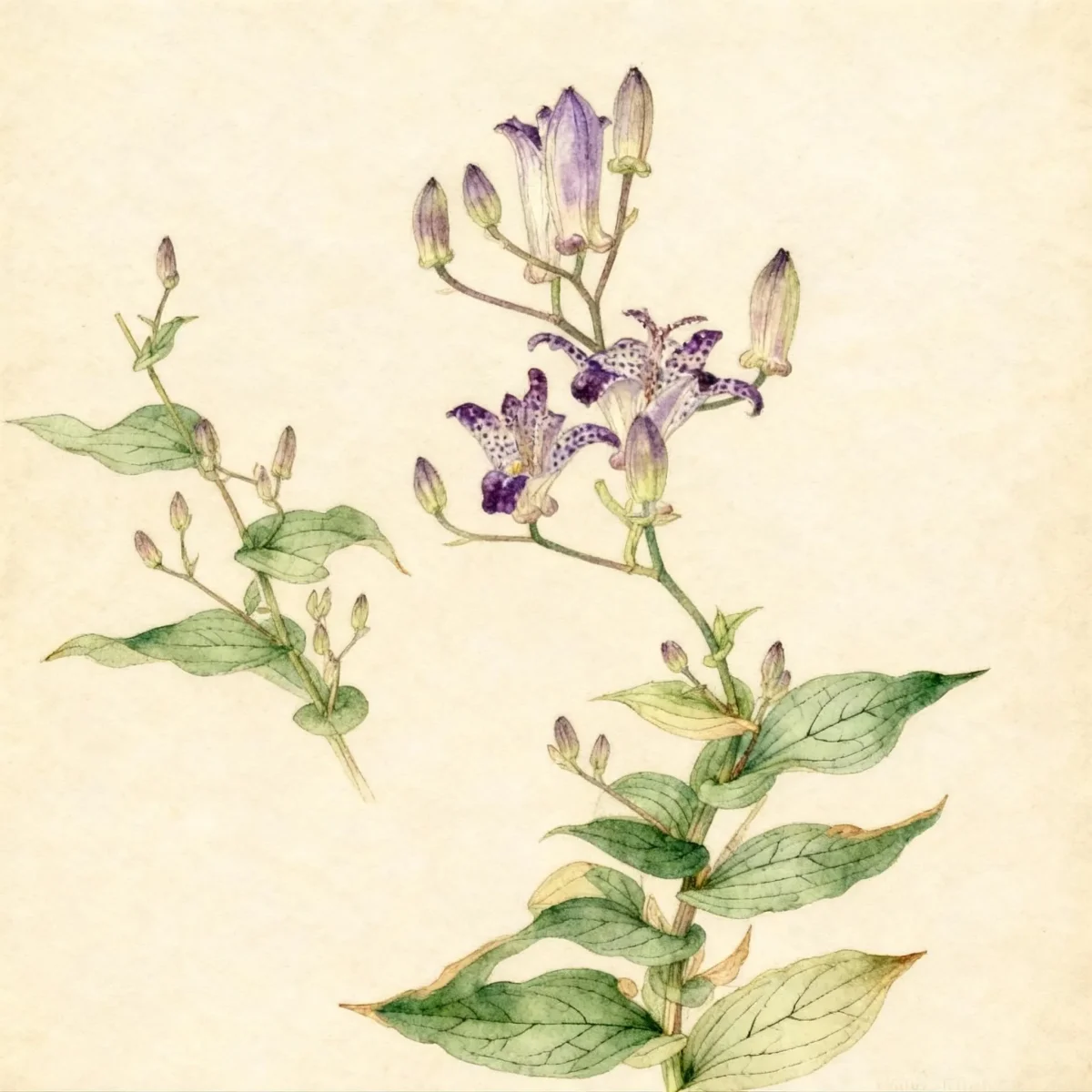
This herbaceous perennial is remarkably easy to care for, thriving in conditions where many colorful bloomers struggle—namely, shade. The common name, Toad lily, references the spots adorning its blossoms, which are stark white overlaid with heavy, irregular dark purple markings. Tricyrtis ‘Empress’ is a stoloniferous plant, meaning it will gently spread over time to form attractive, non-invasive colonies.
Gardeners appreciate Tricyrtis ‘Empress’ for its dual appeal: robust green foliage throughout the season and its truly sculptural, rewarding flowers appearing from August into September. It offers critical late-season color and structure, making it a must-have for woodland settings or beneath mature trees.
Fast Facts
- Plant Family: Liliaceae
- Plant Type: Herbaceous perennial
- Hardiness Zones: USDA Zones 5-9
- Size at Maturity:
- Height: 2-2.5 ft
- Spread: 2-2.5 ft
- Bloom Time: August to September
- Bloom Description: White with dark purple spotting
- Sun Exposure: Part shade to full shade
- Water Needs: Medium to wet
- Maintenance Level: Low
How to Grow
Planting Tricyrtis ‘Empress’ should occur ideally in the spring or early fall, ensuring the soil is prepared to meet its specific needs. This Toad lily requires well-drained soil that is kept consistently moist, leaning towards medium to wet moisture levels. The preference is for organically rich, humusy, and slightly acidic soil conditions. Good drainage is critical, even though moisture retention is necessary.
Ongoing care for Tricyrtis ‘Empress’ is minimal. Ensure that the soil is never allowed to dry out completely, especially during hot summer spells. Fertilizing is rarely necessary if the soil is amended with plenty of organic matter annually. As this is a stoloniferous plant that spreads by underground runners, monitor its progress if you prefer strictly contained clumps, though its spread is non-invasive.
To prepare your Toad lily for winter, apply a light layer of winter mulch once the ground freezes lightly to protect the root system. In early spring, clean up any remaining dead foliage and enjoy watching the new shoots emerge. The structural growth of Tricyrtis ‘Empress’ remains attractive throughout the entire growing season.
Landscape Uses
Tricyrtis ‘Empress’ excels in environments that mimic its native woodland origins. It performs beautifully as an edging plant in deep borders where its late flowers can contrast with earlier blooming perennials. It is also perfectly suited for naturalized areas or woodland gardens, where it can spread gently beneath larger shrubs or trees.
Due to the small size and complex detail of the flowers—each up to 1 1/2 inches wide—this plant benefits significantly from close placement. Site Tricyrtis ‘Empress’ where you frequently walk by or sit near, ensuring you can examine its incredible spotting up close. It mixes well with other shade lovers like hostas, ferns, and astilbes, whose broader foliage highlights the delicate blooms.
Beyond the garden bed, the stiff stems bearing the unique flowers make Tricyrtis ‘Empress’ a good cut flower choice for small arrangements requiring an unusual focal point. Its ability to flower late in the season provides much-needed color when the late summer garden palette starts to thin out.
Standout Features
Flower Qualities
- Showy
Noteworthy Characteristics
Tricyrtis, commonly called toad lilies, is a genus of about 16 species of herbaceous perennials from the Eastern Himalayas to the Philippines. They are valued garden plants in large part because of their unique flowers, ability to flower in shade and late summer to fall bloom time. Genus name comes from the Greek words tri- meaning three and kyrtos meaning humped as the bases of the three outer petals are swollen and sacklike. Common name presumably relates to the spotting on the flowers. ‘Empress’ is reportedly a hybrid of T. Formosana, featuring lily-like, white flowers with heavy irregular dark purple spotting blooming in branched terminal clusters primarily at the stem ends in late summer to early fall.
Tolerances
- No serious insect or disease problems. Slugs and snails are occasional visitors
Potential Problems
Tricyrtis ‘Empress’ generally enjoys robust health and is not plagued by serious insect or disease issues, which contributes significantly to its low maintenance level. The main occasional visitors to watch for around the foliage and blooms are slugs and snails. Be vigilant, especially during damp periods, as these pests can chew unsightly holes in the young spring growth and the developing flowers.
Management of slugs involves standard preventive measures suitable for moisture-loving shade plants. Applying slug bait strategically around the base of the Toad lily, or using copper barriers, can deter these mollusks. Maintaining good air circulation, though secondary to consistent moisture, also helps discourage fungal issues, though Tricyrtis rarely suffers from them.
Frequently Asked Questions
What hardiness zones is Toad lily suitable for?
Tricyrtis ‘Empress’ is hardy across USDA Zones 5 through 9, offering reliable perennial performance in a wide range of northern and southern gardens.
How large does Tricyrtis ‘Empress’ grow?
This Toad lily typically reaches a mature height between 2 and 2.5 feet, with a spread of 2 to 2.5 feet, forming a solid clump that gradually expands.
What sun exposure does Tricyrtis ‘Empress’ need?
This plant prefers part shade to full shade conditions, thriving best where it is protected from intense afternoon sun.
When does Toad lily bloom?
The bloom season for Tricyrtis ‘Empress’ is reliably late summer into early fall, specifically from August to September, featuring white flowers with dark purple spotting.
Conclusion
The unique beauty and dependable performance of Tricyrtis ‘Empress’ make it an indispensable choice for gardeners seeking late-season interest and low-stress cultivation in shaded areas. Its extraordinary, spotted flowers ensure that the Toad lily provides a captivating visual focal point just as many other plants finish their display. Be sure to site your Tricyrtis ‘Empress’ where moisture is consistent and admire its details up close.
Companion Planting
When selecting companions for Tricyrtis ‘Empress’, focus on plants that share its preference for moist, well-drained, organically rich soils and partial shade. Contrast the vertical stems of the Toad lily with plants that offer differing textures, such as fine-leaved ferns like Japanese Painted Ferns (Athyrium niponicum). Hosta varieties with blue or variegated foliage also provide an excellent backdrop that grounds the white and purple spotting of the blooms.
Consider pairing Tricyrtis ‘Empress’ with other late-season bloomers to extend the garden show. Heuchera (Coral Bells) offer consistent foliage color through the autumn and appreciate similar soil moisture levels. For depth in woodland settings, use native shade groundcovers that won’t compete aggressively with the Toad lily’s slow, stoloniferous spread.
Seasonal Care Calendar
Spring: As the plant emerges, ensure soil fertility is boosted with a fresh layer of compost or well-rotted leaf mold, satisfying the need for humusy soil. Monitor slug activity closely as new shoots develop.
Summer: Maintain consistent moisture; especially critical as the bloom time approaches in late summer. Water deeply rather than frequently if the soil starts to approach its drier limit. Avoid heavy fertilization; simply maintain soil richness.
Autumn: Enjoy the peak bloom of the unique Tricyrtis flowers. After the first hard frost, the foliage will die back naturally. Apply a light layer of protective mulch before the ground freezes solid to safeguard the roots through winter.