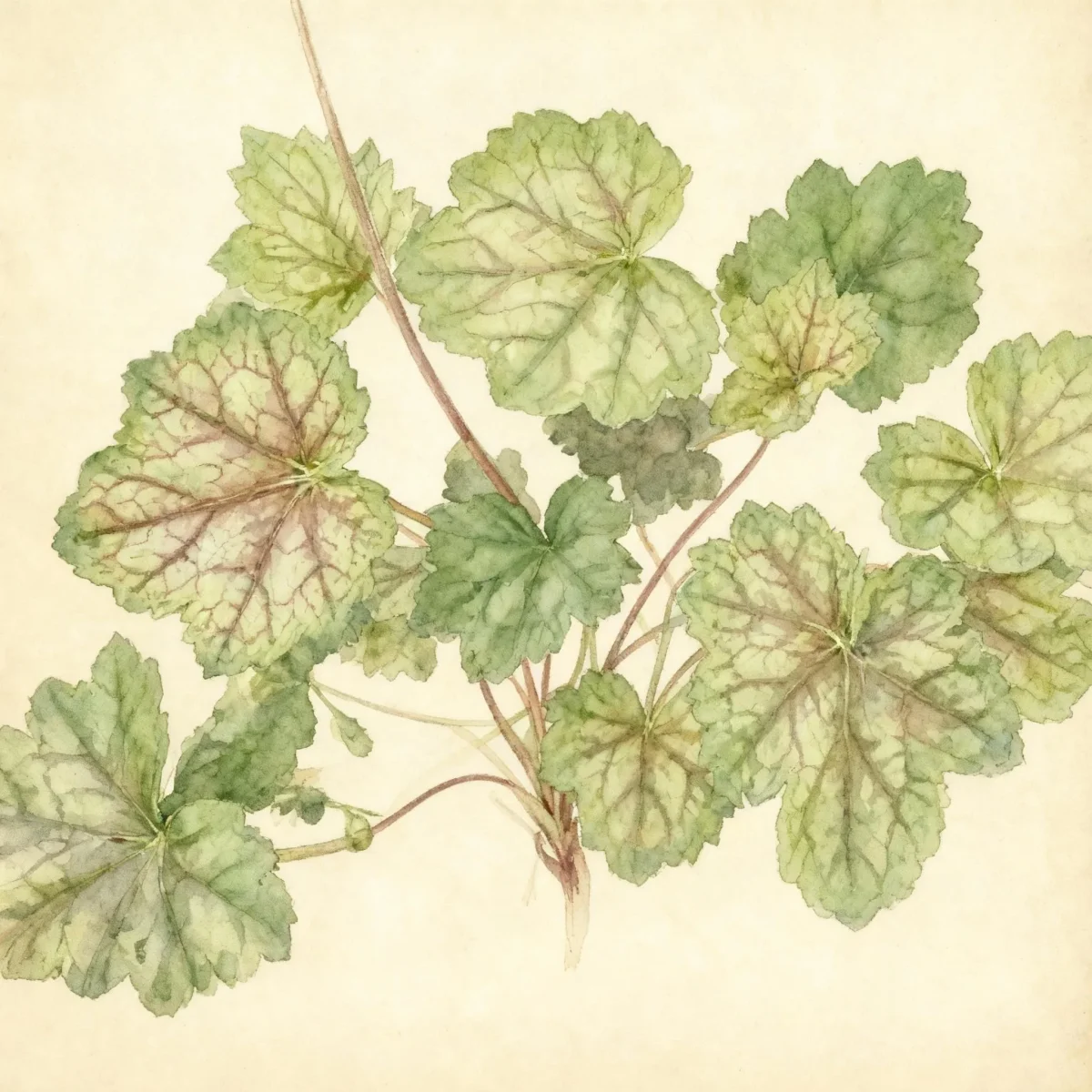
Coral bells (Heuchera 'Molly Bush')
Heuchera 'Molly Bush' Coral bells offers vigorous, clump-forming dark purple foliage, thriving in part shade zones 4-8.
Scroll down to discover growing tips, care requirements, companion plants, and more
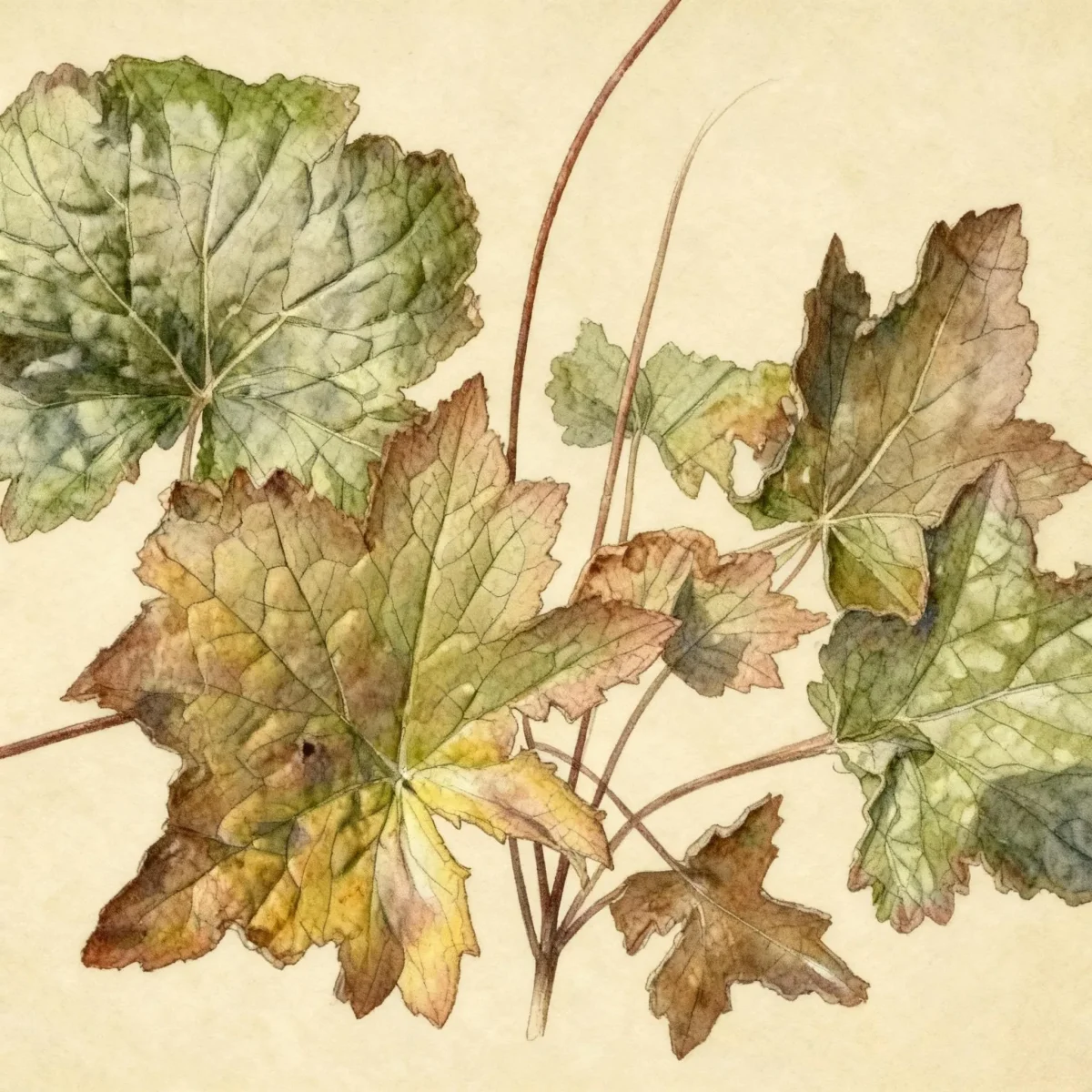
Complete Plant Information
Overview
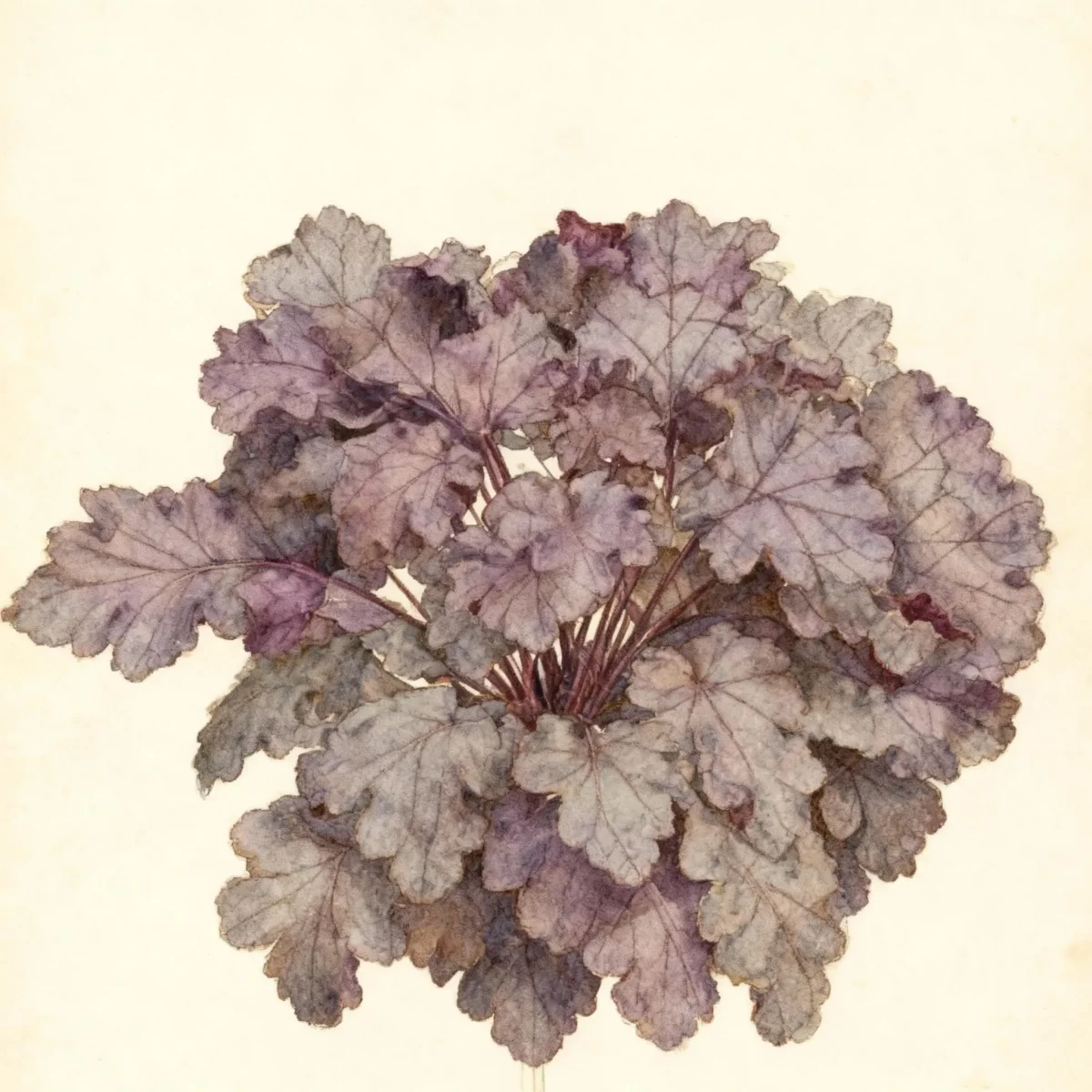
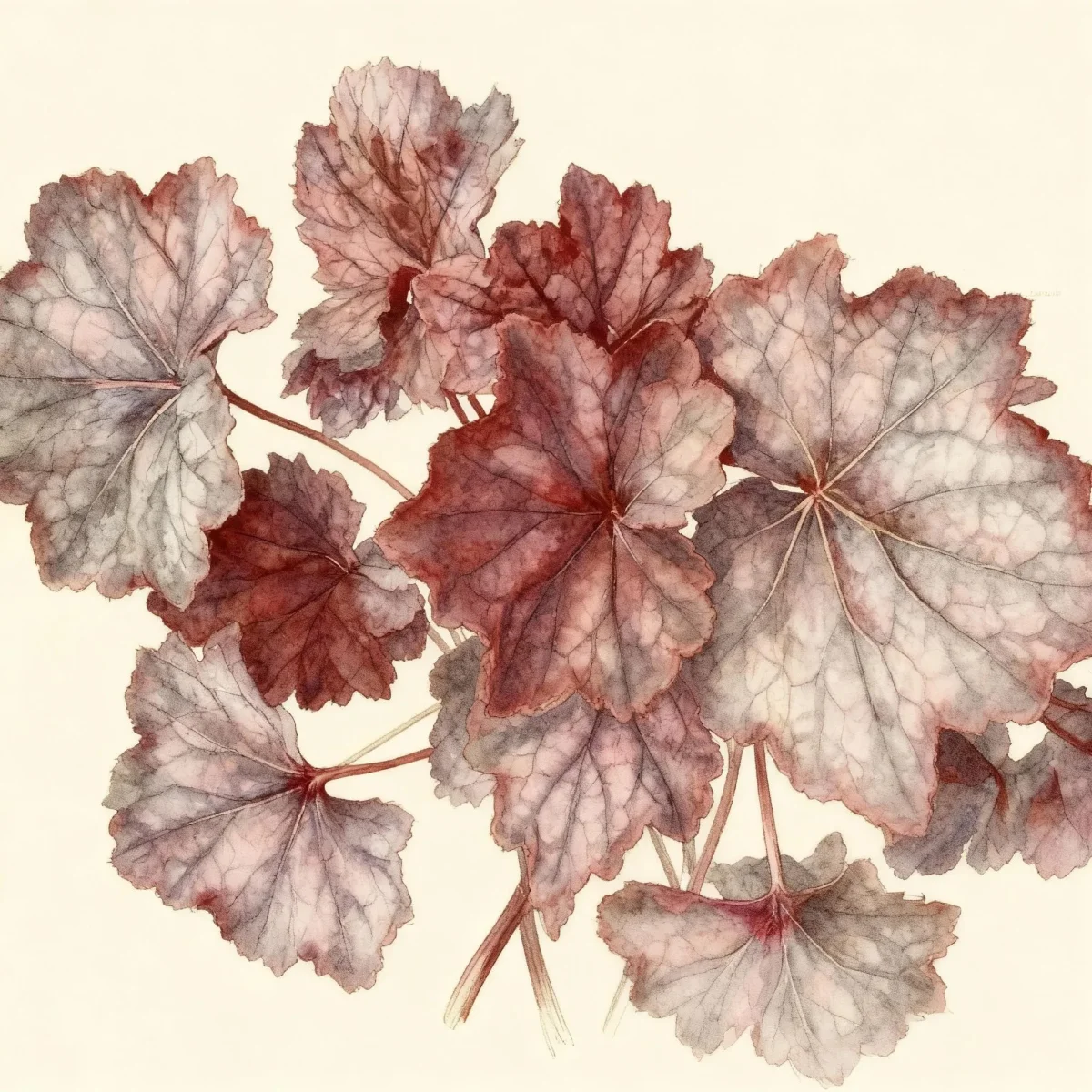
Heuchera ‘Molly Bush’, commonly known as Coral bells, is celebrated for its dense basal mound of large, crinkled, dark purple leaves that remain attractive throughout much of the year. This vigorous cultivar provides essential color and texture, acting as a reliable specimen or mass planting accent in shaded garden areas. Its modest size and strong foliage make Heuchera ‘Molly Bush’ a versatile bedrock plant for textured garden designs.
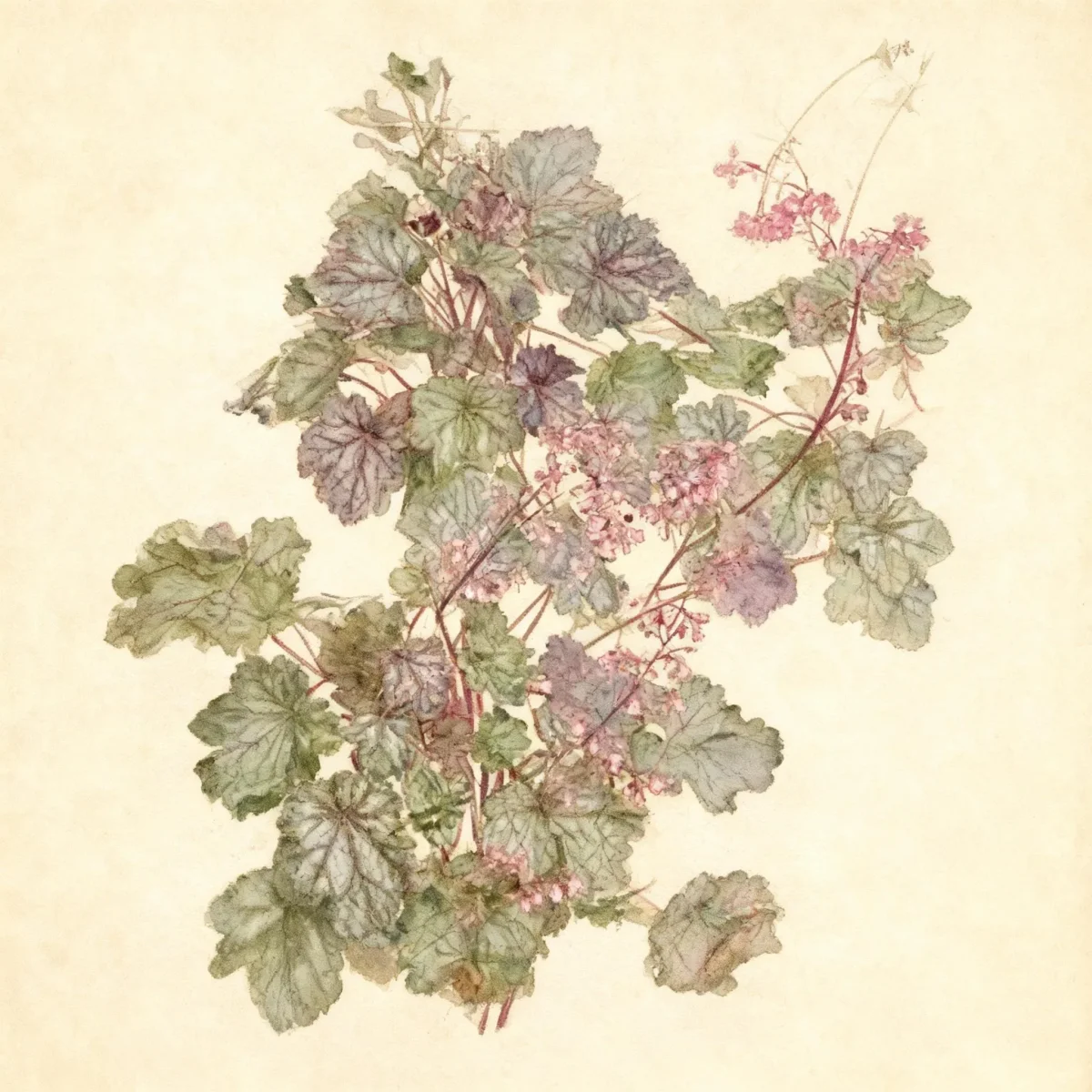
The plant produces slender stems bearing tiny, greenish-white, bell-shaped flowers from early summer into mid-summer, which subtly rise above the rich foliage mound. While the flowers are charming, the primary appeal of this variety lies in its robust, year-round leaf display contrasted against dappled light. It thrives best when provided with rich, consistently moist soil, reflecting the woodland heritage of the Alum root genus.
Gardeners particularly value Coral bells for their adaptability across various light conditions, though afternoon shade is crucial in hotter climates. Proper siting ensures the dark foliage of Heuchera ‘Molly Bush’ remains vibrant without scorching, cementing its role as an indispensable perennial for structure and depth in the landscape.
Fast Facts
- Plant Family: Saxifragaceae
- Plant Type: Herbaceous perennial
- Hardiness Zones: USDA Zones 4-8
- Size at Maturity:
- Height: 1.5-2.5 ft
- Spread: 1-1.5 ft
- Bloom Time: June to August
- Bloom Description: Greenish-white
- Sun Exposure: Full sun to part shade
- Water Needs: Medium
- Maintenance Level: Medium
How to Grow
Planting Coral bells is best done in spring or fall, ensuring they are situated in organically rich, humusy, well-drained soils. While some hybrids tolerate full sun, particularly in northern regions, Heuchera ‘Molly Bush’ generally performs best with protection from intense afternoon sun, especially in southern gardens. If you do place this cultivar in brighter light, remember that consistent moisture is non-negotiable, as drying soil leads to foliage scorch and decline.
Maintenance for Heuchera ‘Molly Bush’ is straightforward but requires attention to moisture. Water regularly to keep the soil medium moist but never waterlogged. Prune faded flower stems immediately after blooming to encourage any potential secondary flush of blossoms. Foliage generally remains evergreen in milder winters; however, in colder zones, applying a winter compost mulch after the ground freezes helps insulate the roots and prevents problematic frost heaving.
Clumps should be divided every three to four years during the spring to maintain vigor and prevent overcrowding, ensuring the longevity and performance of your planting. These perennials thrive best when their roots are not overly disturbed, so select a permanent spot carefully.
Landscape Uses
Coral bells integrate seamlessly into various structural garden designs due to their consistent mounding habit and rich color tapestry maintained by Heuchera ‘Molly Bush’. They are exceptional when massed together to create carpets of dark purple beneath deciduous trees or taller shrubs, offering year-round visual interest. The compact size makes this cultivar highly effective when used as a permanent edging element along pathways and walkways where they provide a crisp, dark line.
Consider pairing the deep tones of Heuchera ‘Molly Bush’ with plants that contrast in texture or color, such as silvery Lamb’s Ears (Stachys byzantina) or fine-textured ferns. They are excellent components for rock gardens where soil pockets are well-draining or incorporated into partial shade borders that transition into woodland settings. Their enduring foliage ensures that even when associated plants are dormant, the Coral bells maintain garden structure.
Standout Features
Flower Qualities
- Showy
Noteworthy Characteristics
Heucheras, commonly called coral bells or alumroot, originate from North America, inhabiting diverse locales from woodlands to rocky cliffs. Hybrid cultivars like ‘Molly Bush’ showcase expanded leaf palettes beyond the species, often featuring complex variegations absent in wild forms. ‘Molly Bush’ specifically is a vigorous, clump-forming variety, noted for large, crinkled, dark purple leaves beneath greenish-white flowers that peak from June through August.
Tolerances
- Frost heaving of roots may occur when winter temperatures fluctuate widely.
Potential Problems
The primary concern for Heuchera ‘Molly Bush’ during winter is frost heaving of roots, which occurs when freeze-thaw cycles lift the crown. To mitigate this, apply a protective compost mulch only after the soil has frozen solid in late fall. Culturally, these Coral bells can be susceptible to common fungal issues like powdery mildew and rust, as well as bacterial leaf spot, especially if air circulation is poor or persistent dampness occurs. Watch out for insect pests such as weevils and foliar nematodes, managing any outbreaks promptly according to best horticultural practices.
Frequently Asked Questions
What hardiness zones is Coral bells suitable for?
Heuchera ‘Molly Bush’ Coral bells is typically suited for USDA Hardiness Zones 4 through 8.
How large does Heuchera ‘Molly Bush’ grow?
This cultivar usually reaches a height between 1.5 to 2.5 feet with a spread of 1 to 1.5 feet, forming a dense clump.
What sun exposure does Coral bells need?
These plants prefer full sun to part shade. In warmer climates, ensure they receive afternoon shade and consistent moisture to prevent leaf scorch.
When does Coral bells bloom?
Heuchera ‘Molly Bush’ produces its greenish-white blooms primarily from June to August.
Conclusion
The robust, dark purple foliage offered by Heuchera ‘Molly Bush’ makes it an invaluable four-season anchor plant for beds and borders where adaptable color is needed. This particular Coral bells cultivar offers reliable performance and dramatic contrast, provided its medium water and soil enrichment requirements are met. Before planting, always verify that your local growing zone aligns with USDA 4-8 compatibility for the best long-term success.
Companion Planting
Selecting appropriate neighbors for Heuchera ‘Molly Bush’ enhances both the garden design and the health of the Coral bells. Because they thrive in humus-rich, medium-moisture soils, pair them with other shade-tolerant perennials that share similar cultural needs. Hostas, especially those with chartreuse or highly variegated foliage, create a stunning color contrast against the dark purple leaves of Heuchera ‘Molly Bush’. Ferns provide necessary fine texture, while Astilbes offer vertical presence with their airy summer plumes, complementing the mounding habit of your H. ‘Molly Bush’.
Propagation Tips
The most effective way to propagate Heuchera ‘Molly Bush’ and maintain the exact characteristics of this named cultivar is through division. Every three to four years, during the early spring while new growth is just beginning, carefully lift the entire clump. Gently sever the crown into sections, ensuring each new division has a healthy portion of roots and at least a few viable leaf buds. Replant these divisions immediately into prepared, well-draining soil, giving them consistent moisture for several weeks as they re-establish their robust root systems for future years of rich Coral bells foliage.