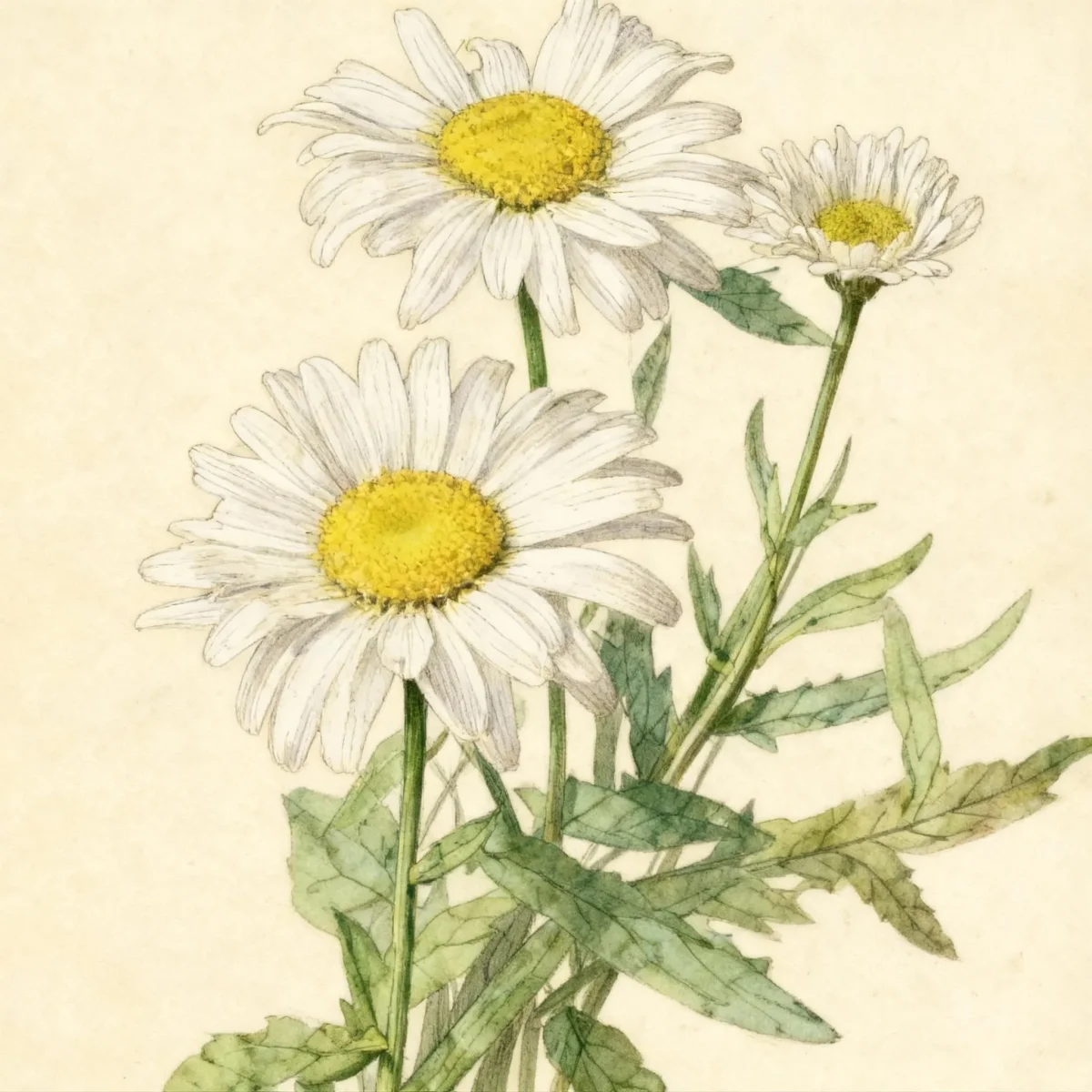
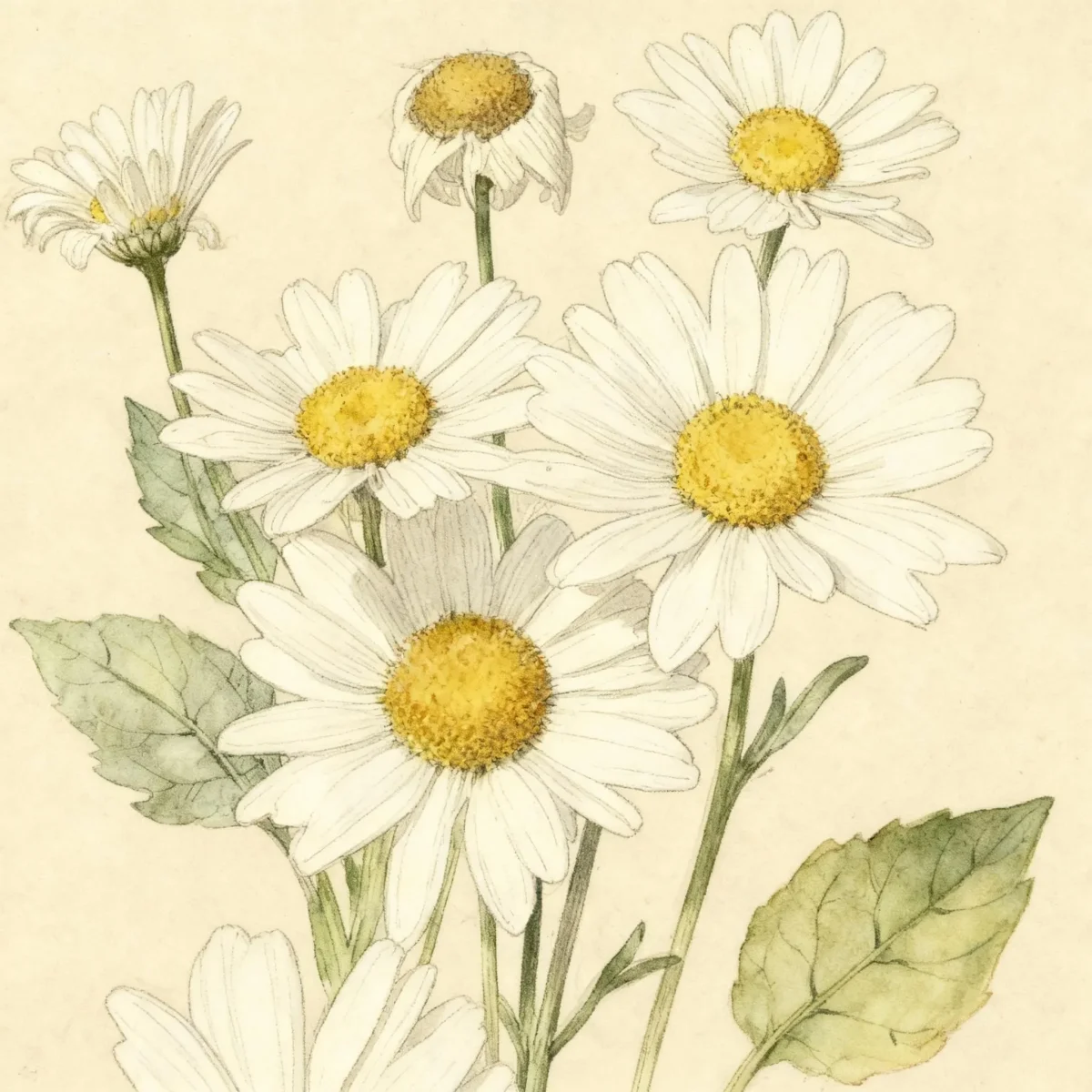
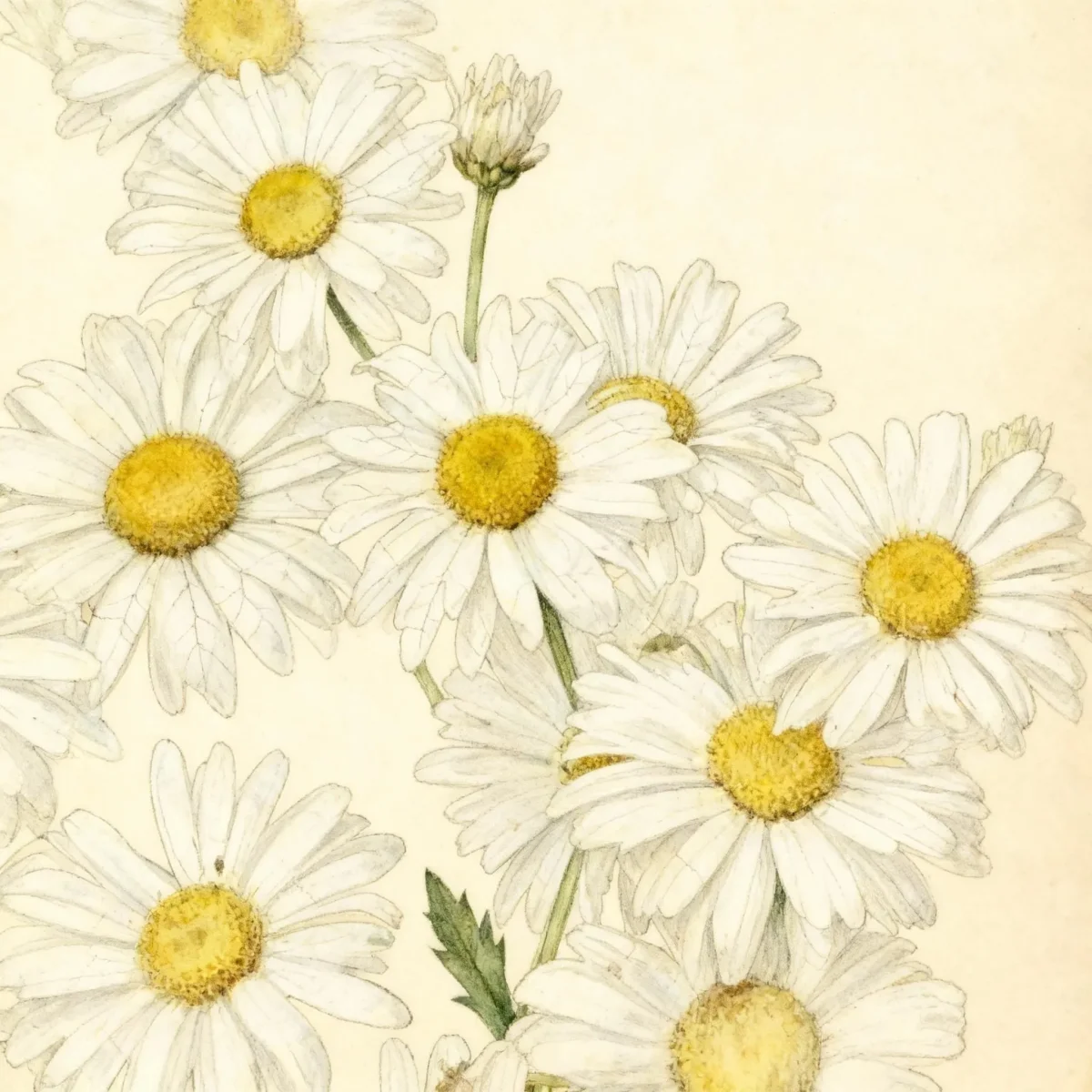
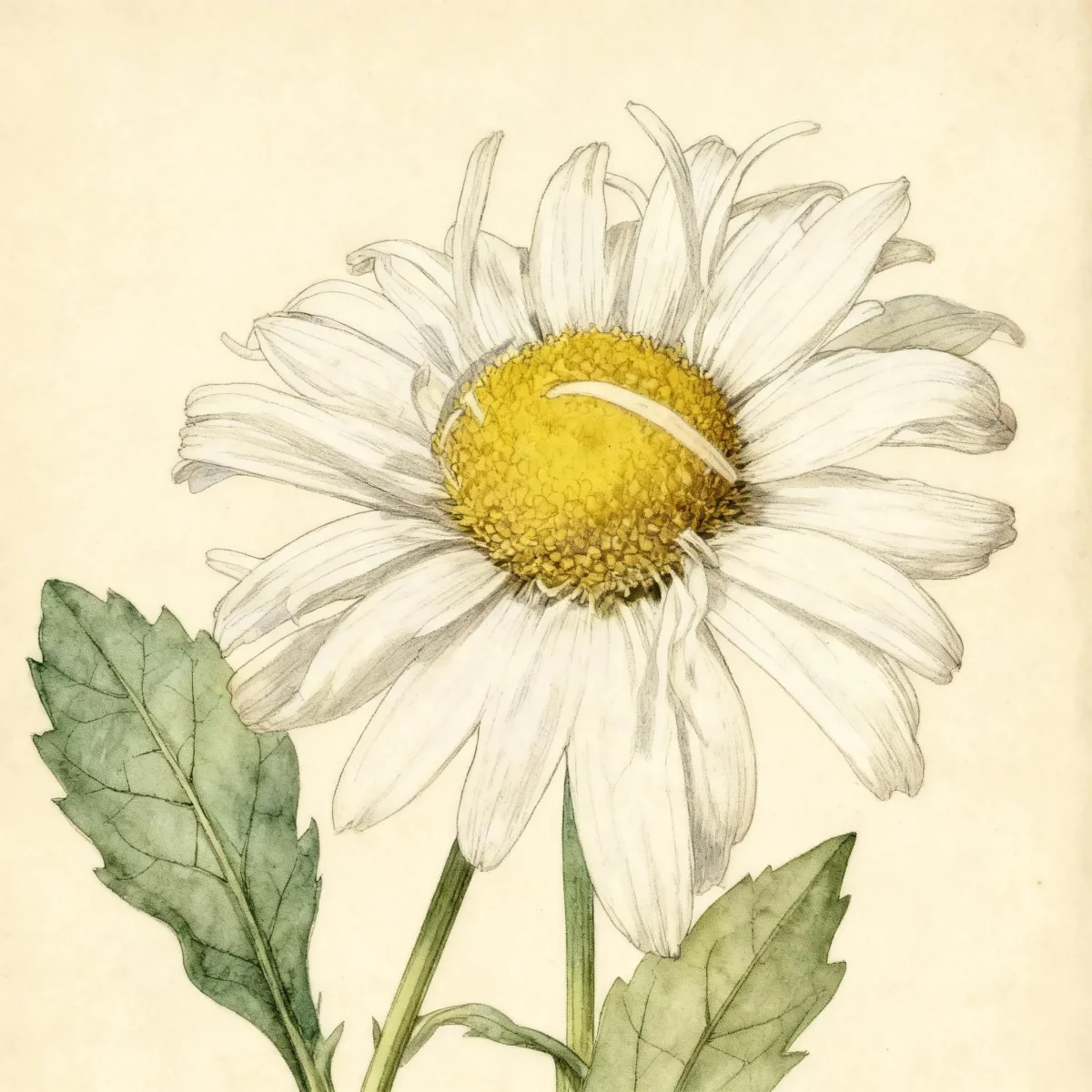
Shasta daisy (Leucanthemum × superbum 'Tinkerbelle')
Leucanthemum × superbum 'Tinkerbelle' is a dwarf Shasta daisy, offering 2-inch white blooms in summer atop low mounds. Low maintenance and drought tolerant.
Scroll down to discover growing tips, care requirements, companion plants, and more
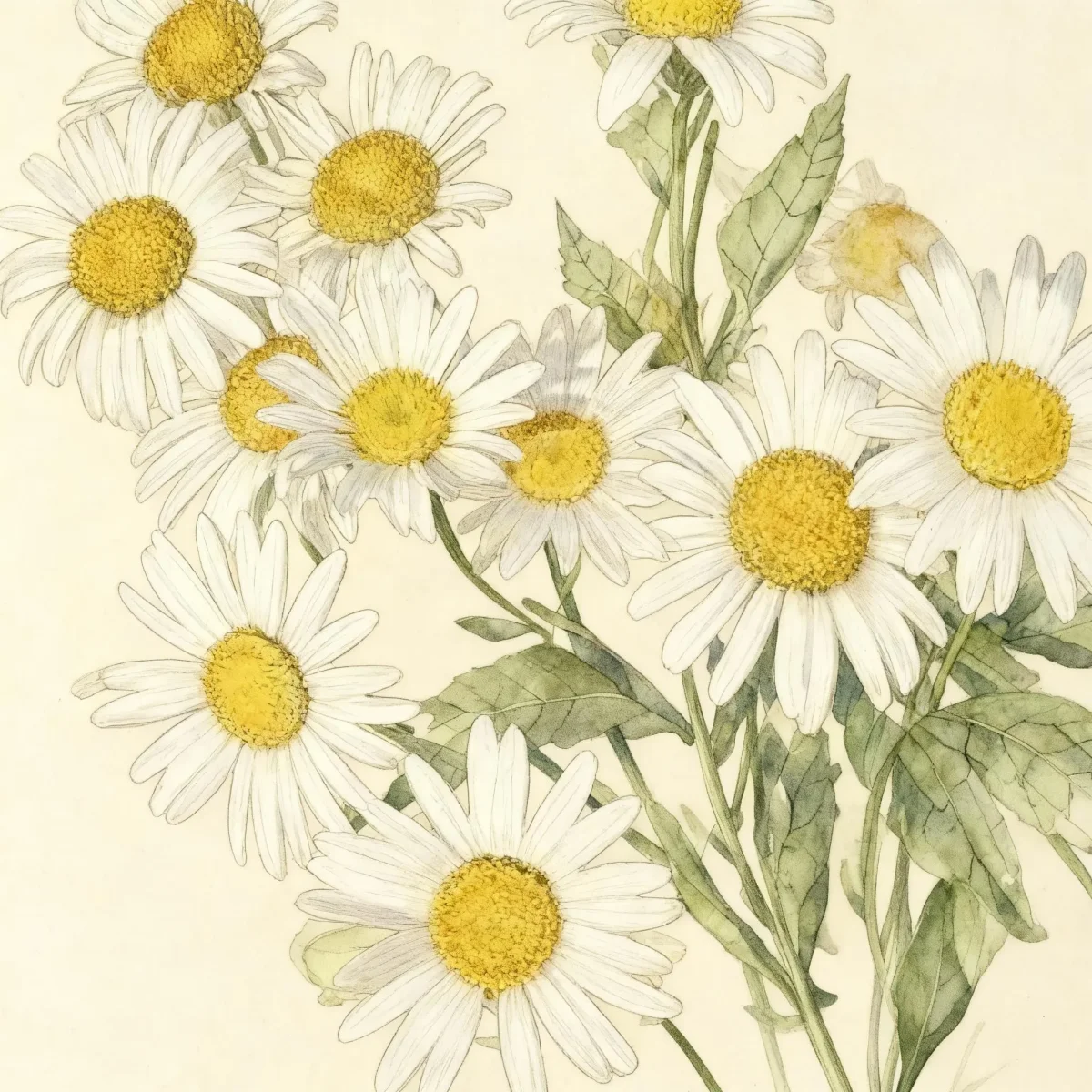
Complete Plant Information
Overview
Leucanthemum × superbum ‘Tinkerbelle’ is an exceptional dwarf variety of the beloved Shasta daisy, providing reliable summer color without excessive height. This cultivar is highly valued for its compact stature, making it perfect for front-of-border plantings or container gardens where taller perennials dominate. Expect an excellent flush of classic, 2-inch daisies featuring bright white rays surrounding cheerful yellow centers.
As an herbaceous perennial, this Shasta daisy offers low-maintenance beauty once established in appropriate conditions. It thrives in the sun and handles drier soil once mature, aligning well with water-wise landscape designs. The consistent bloom period stretching from June through August ensures your garden retains vibrant interest throughout the hottest months.
The hybrid origins of Leucanthemum × superbum trace back to Luther Burbank, who sought to combine the best traits of several daisy species. Choosing Leucanthemum × superbum ‘Tinkerbelle’ means selecting a modern, easy-to-manage version of this classic garden staple, bringing brilliant, dependable white flowers to any sunny spot.
Fast Facts
- Plant Family: Asteraceae
- Plant Type: Herbaceous perennial
- Hardiness Zones: USDA Zones 4-9
- Size at Maturity:
- Height: 0.5-0.75 ft
- Spread: 0.25-0.5 ft
- Bloom Time: June to August
- Bloom Description: White rays with yellow center
- Sun Exposure: Full sun
- Water Needs: Dry to medium
- Maintenance Level: Low
How to Grow
Planting Leucanthemum × superbum ‘Tinkerbelle’ is best achieved in spring or fall when temperatures are moderate, allowing the roots to establish before summer heat or winter cold sets in. These plants require full sun for the best performance and bloom density. Good soil drainage is absolutely essential; wet soils, especially during the winter months, can quickly prove fatal to your Shasta daisy clump.
Once planted, water regularly until the plant is well-established. Afterward, the needs drop to dry or medium moisture levels; they readily tolerate drought conditions once fully rooted. Avoid excessive fertilization, which can lead to floppy, weak stems. If the plant begins to look tired after the initial main flush, remove spent flower heads to encourage secondary blooming through late summer.
To maintain vigor, plan on dividing the clumps of Leucanthemum × superbum ‘Tinkerbelle’ every two to three years, as they can become crowded over time. Because these plants are somewhat short-lived compared to some perennials, division also ensures a continuous supply of healthy new crowns. A helpful maintenance tip is to cut the stems back to the basal leaves immediately after flowering ceases to conserve plant energy, potentially prolonging the life of the individual plants.
Landscape Uses
Shasta daisies, including the compact Leucanthemum × superbum ‘Tinkerbelle’, are long-standing mainstays of cottage gardens, providing that classic, cheerful texture. Because of its small stature, ‘Tinkerbelle’ excels where space is limited, such as in rock gardens or modern mixed borders where height graduation matters. It brings long-lasting summer bloom right to the front edge where its 2-inch daisies are easily admired.
This cultivar performs wonderfully when paired with plants that share similar sun and drainage requirements. Consider grouping it with catmints (Nepeta), low-spiking salvias, or shorter ornamental grasses that offer contrasting foliage texture. The bright white flowers of Leucanthemum × superbum ‘Tinkerbelle’ act as a visual resting spot in complex color schemes.
Furthermore, these flowers are intrinsically useful in the cutting garden. Their durability both on the stem and in a vase makes the Shasta daisy a reliable source of fresh material throughout mid-summer. Do not hesitate to use Leucanthemum × superbum ‘Tinkerbelle’ generously in containers to brighten patios or entryways.
Standout Features
Flower Qualities
- Showy
- Good Cut
Noteworthy Characteristics
Leucanthemum × superbum, commonly called Shasta daisy, is a hybrid developed by Luther Burbank in the 1890s, resulting from crosses involving multiple field daisy species. The resulting hybrid name superbum means superb, referencing its excellent ornamental quality; genus name Leucanthemum refers to its white flowers. The diminutive ‘Tinkerbelle’ is notable for staying very short, typically only 6-8 inches tall, yet it still produces magnificent 2-inch daisies throughout the summer on rich, green foliage.
Tolerances
- Rabbit
- Deer
- Drought
- Dry Soil
Potential Problems
Leucanthemums generally exhibit some susceptibility to fungal issues like verticillium wilt, various leaf spots, and stem rots, particularly in crowded or overly moist conditions. To mitigate these risks, always ensure excellent air circulation around the plants and confirm that soil drainage is unimpeded—remember, wet winter soil is a primary threat. Occasional insect visitors might include aphids, leaf miners, or mites. Regular inspection when deadheading spent blooms allows early detection of pests, which can often be managed with horticultural oil or a strong jet of water.
Frequently Asked Questions
What hardiness zones is Shasta daisy suitable for?
Leucanthemum × superbum ‘Tinkerbelle’ thrives in USDA Zones 4 through 9, offering reliable perennial performance across a broad range of climates.
How large does Leucanthemum × superbum ‘Tinkerbelle’ grow?
This compact variety is quite small, reaching only about 0.5 to 0.75 feet (6 to 9 inches) in height with a spread of 0.25 to 0.5 feet.
What sun exposure does Shasta daisy need?
For the richest blooming performance, Leucanthemum × superbum ‘Tinkerbelle’ requires full sun exposure in the garden.
When does Shasta daisy bloom?
This plant offers continuous flowering from June straight through August, displaying beautiful white rays with bright yellow centers.
Conclusion
The compact size and robust bloom of Leucanthemum × superbum ‘Tinkerbelle’ make it an indispensable choice for gardeners seeking classic summer color in small spaces. This low-maintenance, drought-tolerant Shasta daisy is exceptionally easy to integrate into borders or containers while offering exceptional cut flower quality. Before planting, confirm you can provide full sun and well-drained soils, ensuring your ‘Tinkerbelle’ thrives for seasons to come.
Propagation Tips
Division is the primary and most successful method for propagating Leucanthemum × superbum ‘Tinkerbelle’. Due to their somewhat short natural lifespan, dividing healthy clumps every 2 to 3 years rejuvenates the plant mass and keeps blooming strong. Perform this division in early spring before new growth vigorously emerges, or in early fall. Carefully dig up the entire clump, use a sharp spade or knife to separate it into smaller sections, ensuring each division has a respectable crown and roots, and immediately replant the sections at the same depth they were previously growing.
If you wish to try from seed, be aware that the resulting seedlings may not breed true to the dwarf characteristics of the ‘Tinkerbelle’ parent, as this is a hybrid cultivar. However, collecting seeds from the spent summer blooms and sowing them in a cold frame or greenhouse in early spring can produce new plants. Allow the seedlings to mature in a protected environment for one growing season before planting the strongest specimens out into the garden.
Companion Planting
The cultural needs of Leucanthemum × superbum ‘Tinkerbelle’—full sun and a tolerance for average to dry, well-drained soil—guide excellent companion choices. Pair this Shasta daisy with other tough perennials that thrive in similar conditions to create a cohesive, low-maintenance display. Consider planting alongside varieties of Russian Sage (Perovskia atriplicifolia) for vertical texture contrast or low-growing Campanulas that appreciate excellent drainage.
Excellent partners for the cottage look include Lavender (Lavandula), whose silvery foliage contrasts beautifully with the dark green leaves of the daisy. Smaller Geranium varieties work well at the base of the Leucanthemum × superbum ‘Tinkerbelle’ to keep the soil cool and suppress any stray weeds. Avoid planting near moisture-loving plants, as these companions will quickly lead to drainage problems for your daisy.