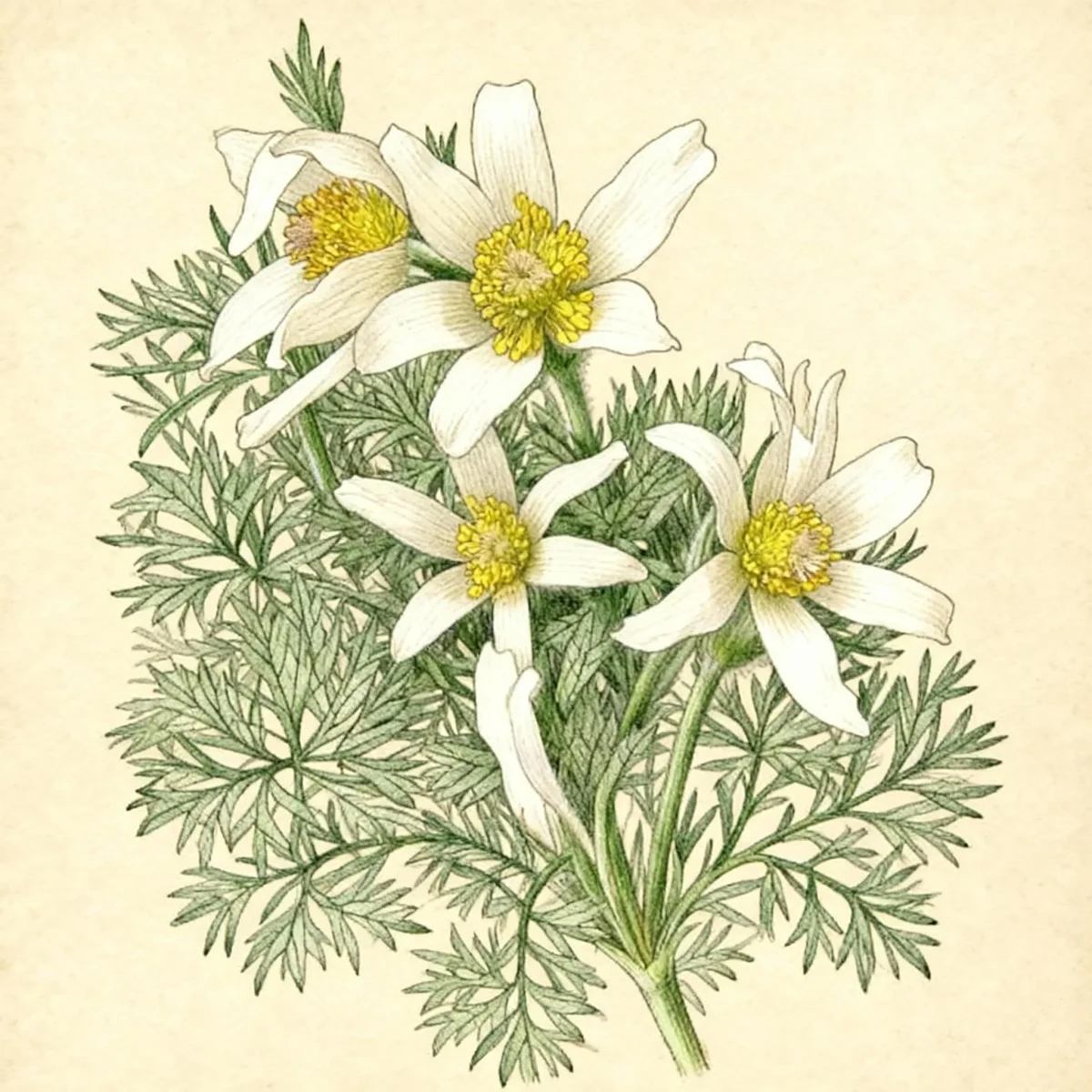
Pasque flower (Pulsatilla vulgaris 'Alba')
Discover Pulsatilla vulgaris 'Alba', the white Pasque flower, offering early spring color and low maintenance in zones 4-8.
Scroll down to discover growing tips, care requirements, companion plants, and more
Complete Plant Information
Overview
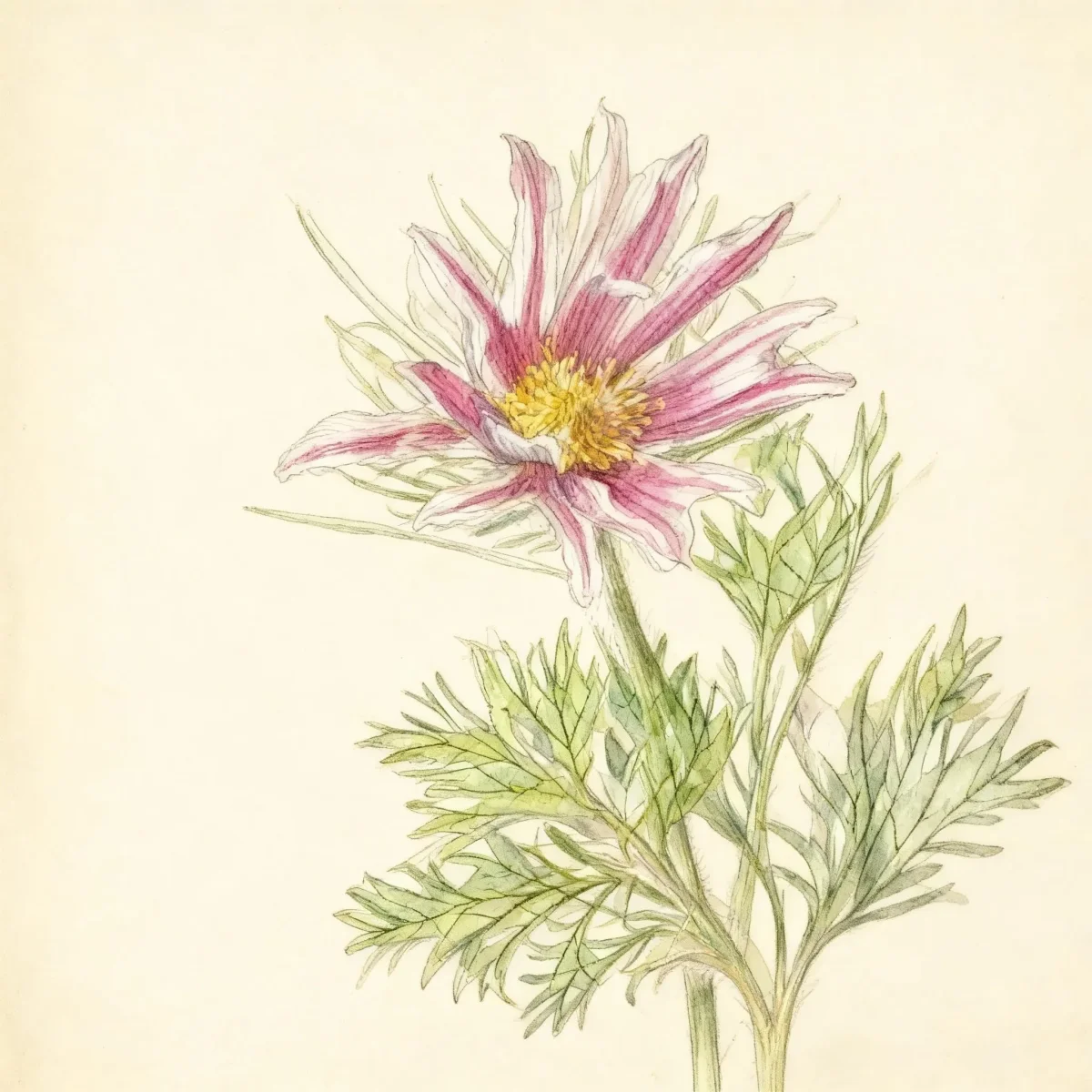
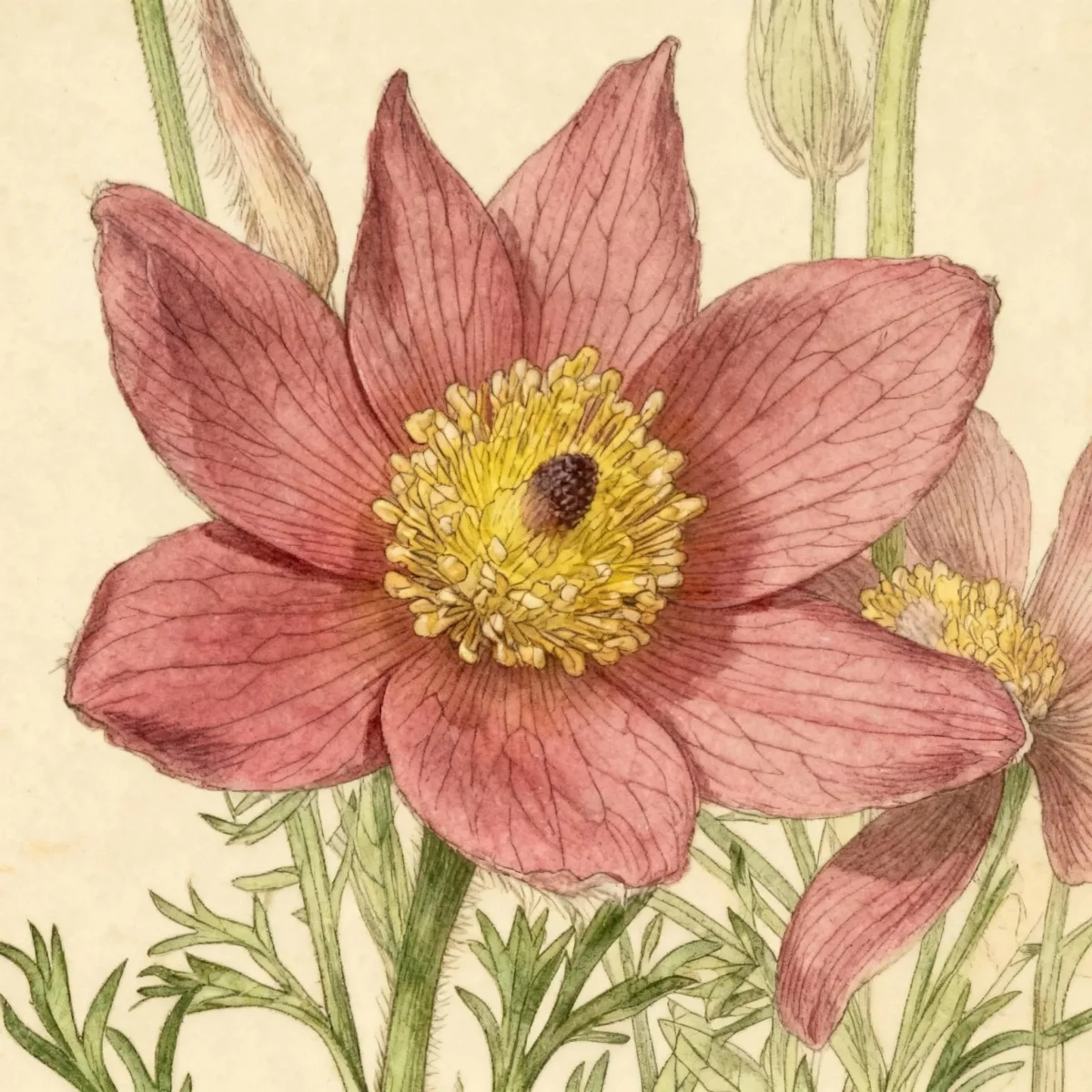
The Pasque flower, specifically the white-flowered variety Pulsatilla vulgaris ‘Alba’, is highly valued for its exceptionally early spring emergence. Hairy flower stems often push through the soil while snow patches may still linger, providing crucial early-season interest long before most perennials awaken. This herbaceous perennial features solitary, erect-to-nodding, bell-shaped flowers whose white petals contrast beautifully with a bright yellow center.
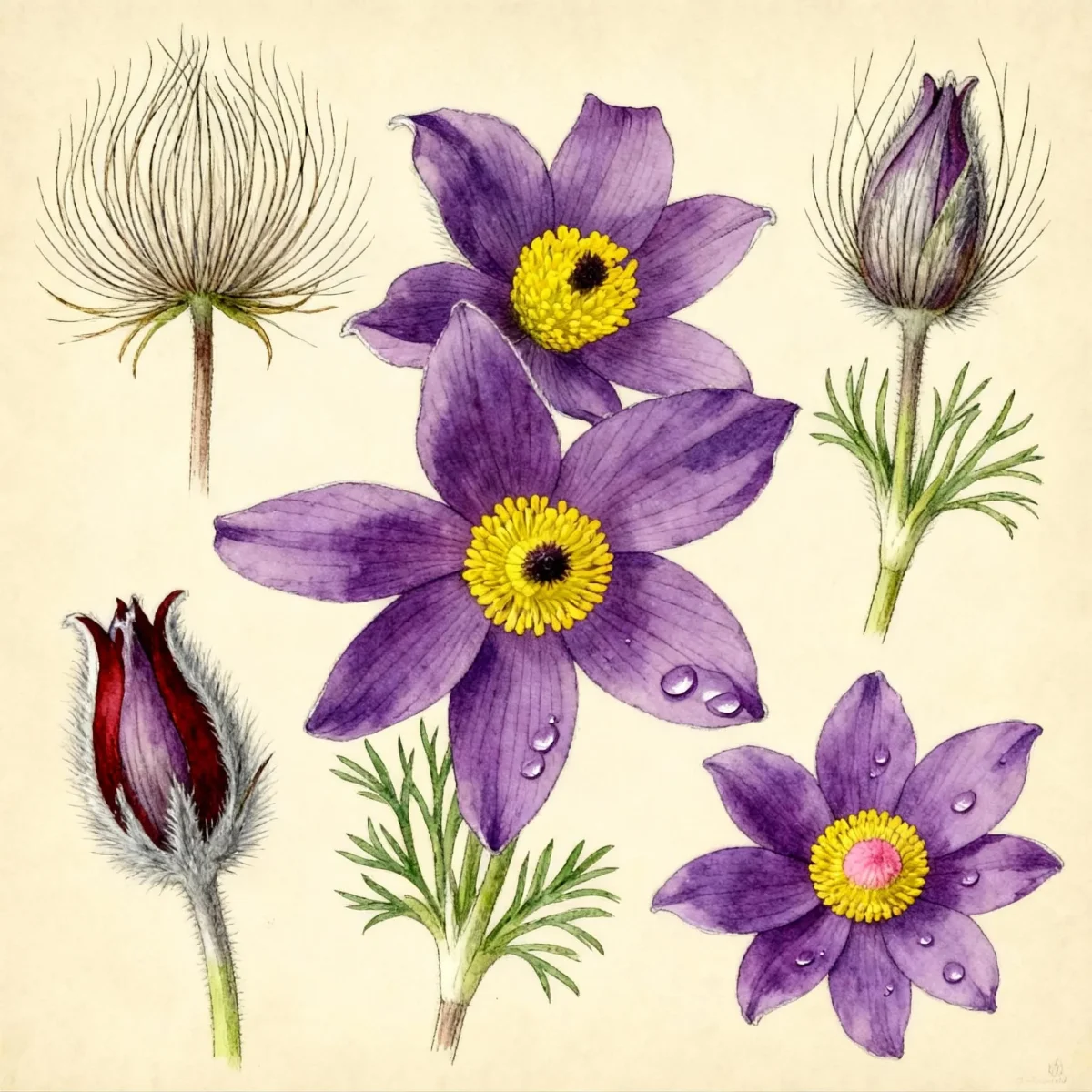
Pulsatilla vulgaris ‘Alba’ matures relatively low, typically reaching between 0.75 to 1 foot tall, making it perfect for defining the edges of beds or setting off rockery stones. After the ephemeral bloom period, the plant develops ornamental, plume-like, spherical seedheads, adding textural appeal to the mid-spring garden. Its deeply-divided, fern-like basal foliage remains attractive throughout the growing season.
Its low maintenance needs combined with its unique timing ensure that the Pasque flower earns its place in many gardens. It thrives best in cool climates, but garden management must focus primarily on ensuring superior soil drainage, a critical factor for the long-term success of Pulsatilla vulgaris ‘Alba’.
Fast Facts
- Plant Family: Ranunculaceae
- Plant Type: Herbaceous perennial
- Hardiness Zones: USDA Zones 4-8
- Size at Maturity:
- Height: 0.75-1 ft
- Spread: 0.75-1 ft
- Bloom Time: April to May
- Bloom Description: White
- Sun Exposure: Full sun to part shade
- Water Needs: Medium
- Maintenance Level: Low
How to Grow
Planting is best done when dormant, either in early spring or fall, allowing the Pasque flower to establish its roots before summer heat arrives. The culture for this plant demands fertile, humusy, and gritty soil augmented with ample drainage, as soggy conditions are detrimental. Position Pulsatilla vulgaris ‘Alba’ where it receives full sun throughout the day or afternoon dappled light; excellent soil drainage is absolutely essential for its survival.
Once established, the general water needs are medium, though performance is maximized in cooler regions where plants can tolerate drier summer spells. In hotter climates, such as those in the St. Louis area, consistent moisture must be maintained throughout the warmer months to prevent stress. Avoid disturbing established clumps of Pasque flower as they resent being transplanted.
Maintenance is wonderfully low once site conditions are met. No heavy fertilization is typically required; overly rich soil can encourage excessive foliage growth at the expense of flowers. Prepare winter beds by keeping the area relatively dry heading into dormancy, and enjoy watching the hairy stems emerge early the following spring.
Landscape Uses
The characteristic low-growing nature and early bloom time make Pulsatilla vulgaris ‘Alba’ an ideal candidate for border fronts where its delicate white blooms can be clearly seen. They serve as excellent edging plants, softening the hard lines between paths or lawns and taller plantings. The Pasque flower also shines in specialized settings where sharp drainage is naturally provided.
Rock gardens are perhaps the perfect environment for cultivating the Pasque flower. Nestled among gritty soil pockets between stones, they mimic their native, well-drained habitats. Their short stature ensures they do not overwhelm neighbouring alpine or small perennial specimens, creating a beautiful, textural tapestry that becomes active very early in the season.
Standout Features
Flower Qualities
- Showy
Fruit Qualities
- Showy
Noteworthy Characteristics
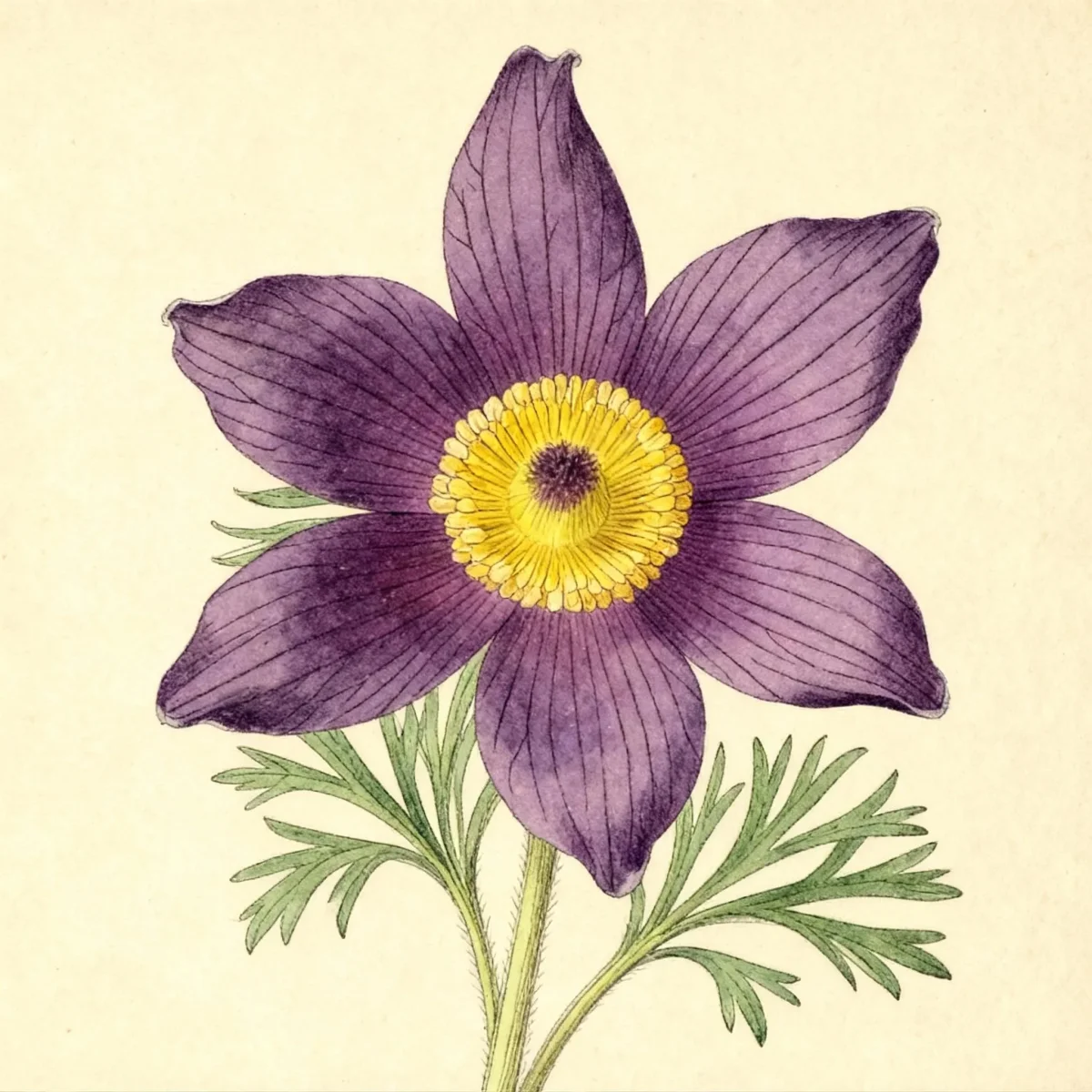
Pulsatilla vulgaris is a purple-flowered pasque flower that is native to Europe (Great Britain and France to the Ukraine). Hairy flower stems emerge from the ground in spring (March-April in St. Louis), sometimes when patches of snow are still on the ground, and the white-petaled ‘Alba’ variant follows this timing. Flowers are followed by equally-ornamental, plume-like seedheads reminiscent of some clematis, while the basal, deeply-divided leaves are attractive all season.
Tolerances
- Rabbit
Potential Problems
This plant generally experiences no serious insect or disease problems when grown in appropriate conditions. The primary threat to Pulsatilla vulgaris ‘Alba’ comes from poor soil management, particularly inadequate water drainage leading to root rot during wet seasons. Ensure the soil is gritty and airy to maximize health and prevent latent fungal issues.
Frequently Asked Questions
What hardiness zones is Pasque flower suitable for?
The Pulsatilla vulgaris ‘Alba’ is reliably hardy in USDA Zones 4 through 8, making it adaptable to many temperate garden settings.
How large does Pulsatilla vulgaris ‘Alba’ grow?
This perennial reaches a modest height between 0.75 and 1 foot tall, with a corresponding spread of 0.75 to 1 foot wide.
When does Pasque flower bloom?
The characteristic bloom period for this variety is typically from April into May, displaying distinctive white flowers early in the season.
What sun exposure does Pasque flower need?
It prefers a balance, thriving in full sun but also tolerating light afternoon shade, which can be beneficial in very hot garden locations.
Conclusion
The enchanting, early-season display provided by the white blooms of Pulsatilla vulgaris ‘Alba’ makes it an essential addition for gardeners seeking movement and life in the spring landscape. Given its low maintenance nature, the key to success lies in respecting its fundamental need for gritty, perfectly drained soil, especially as the Pasque flower establishes deep root systems. Check your local USDA hardiness rating and plan to incorporate this beauty into a sunny or lightly shaded rock garden this coming planting season.
Propagation Tips
While generally best left undisturbed, gardeners interested in increasing their stock of Pulsatilla vulgaris ‘Alba’ can attempt seed propagation. Collect the seeds once the highly ornamental, plume-like seedheads fully mature in summer. Sow these seeds in a gritty, well-drained medium, ideally employing cold stratification techniques to mimic natural winter cycles, as germination can be erratic otherwise. Division of established clumps should be avoided unless absolutely necessary due to the plant’s aversion to root disturbance.
Companion Planting
When planning placements for the Pasque flower, consider companions that share its preference for sharp drainage and cool roots, ideally while offering staggered bloom times to maintain interest. Low-growing creeping thyme, sedums, or small ornamental grasses work wonderfully alongside Pulsatilla vulgaris ‘Alba’ in rock garden settings. These companions won’t compete heavily for the limited space or drastically alter the lean, gritty soil composition this plant requires to flourish.