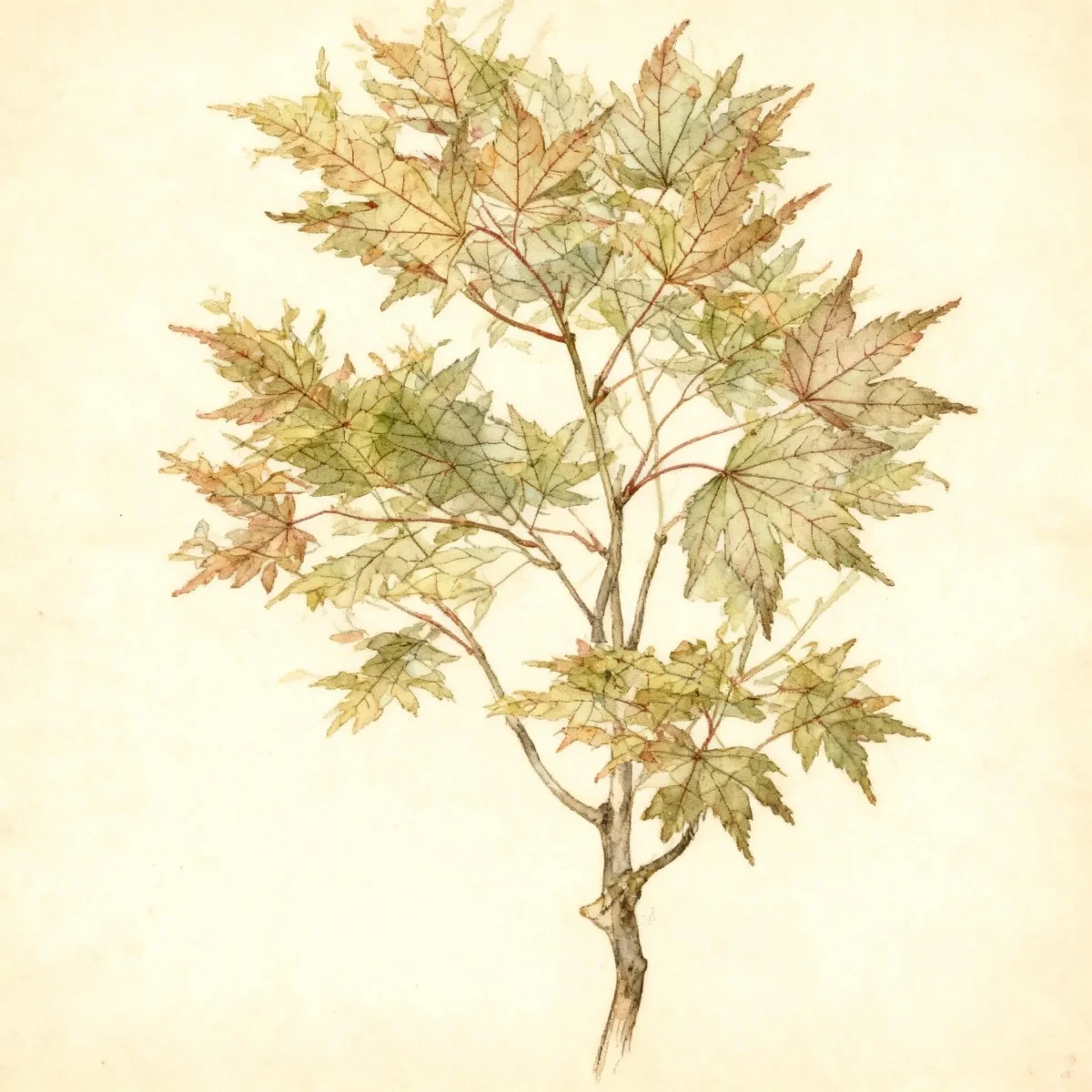
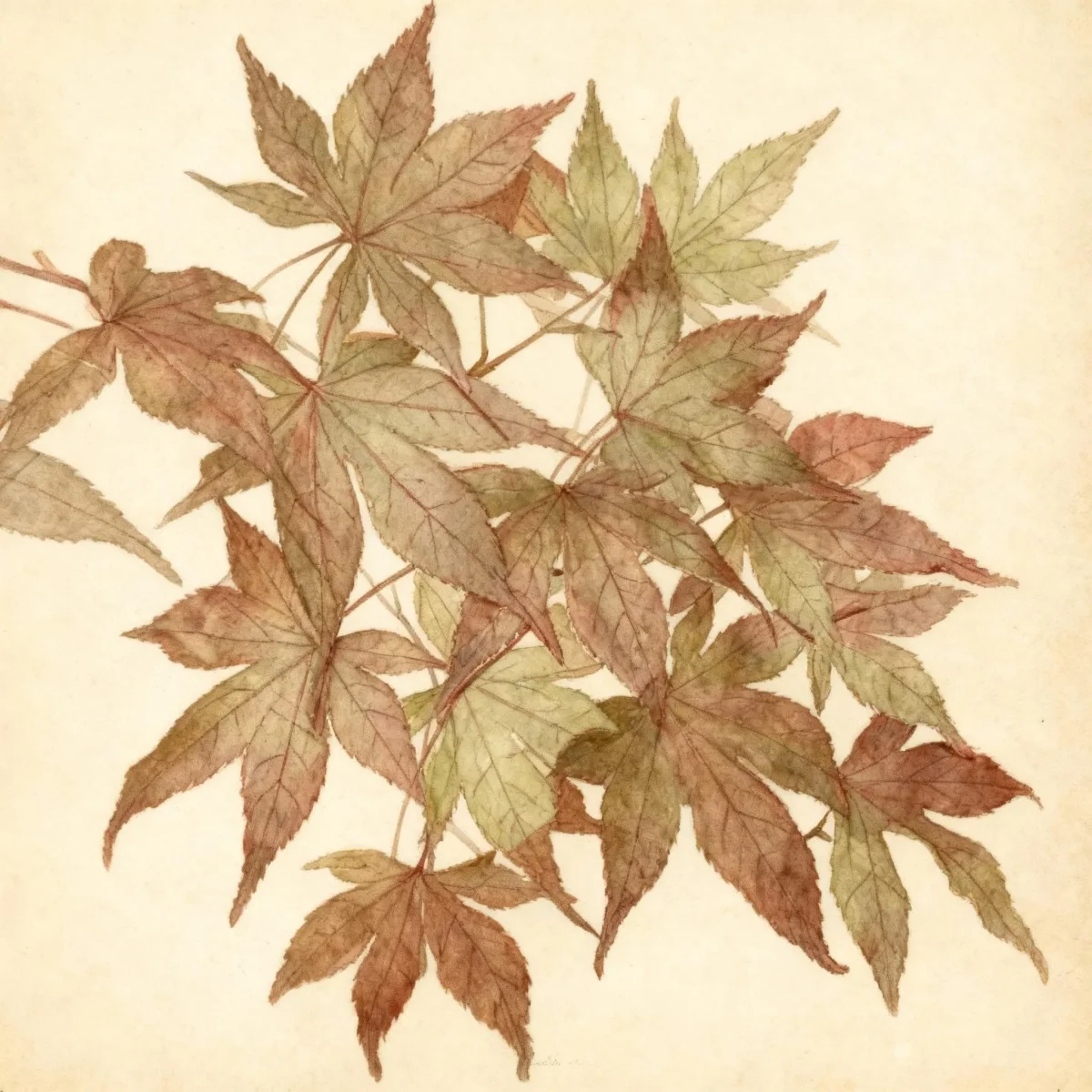
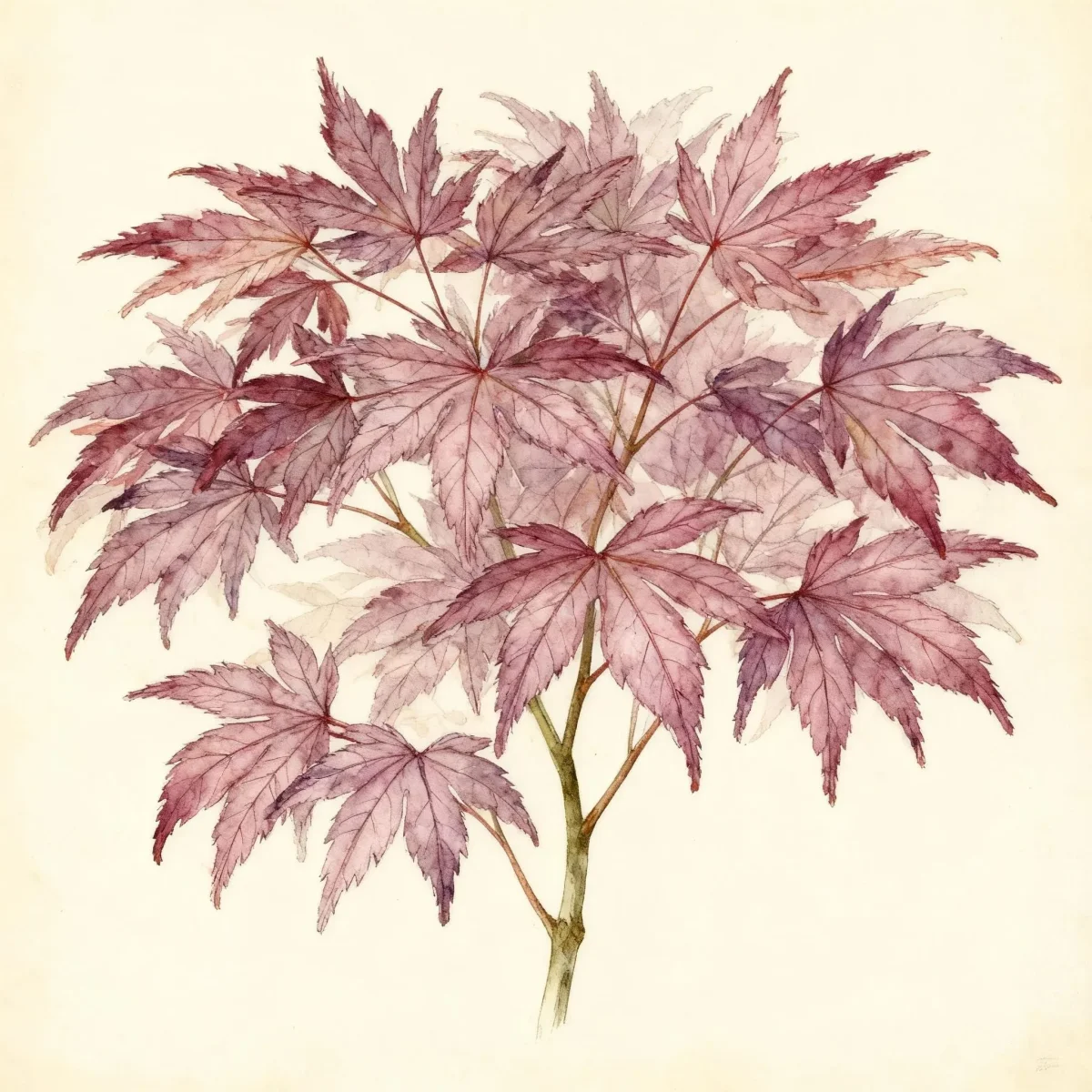
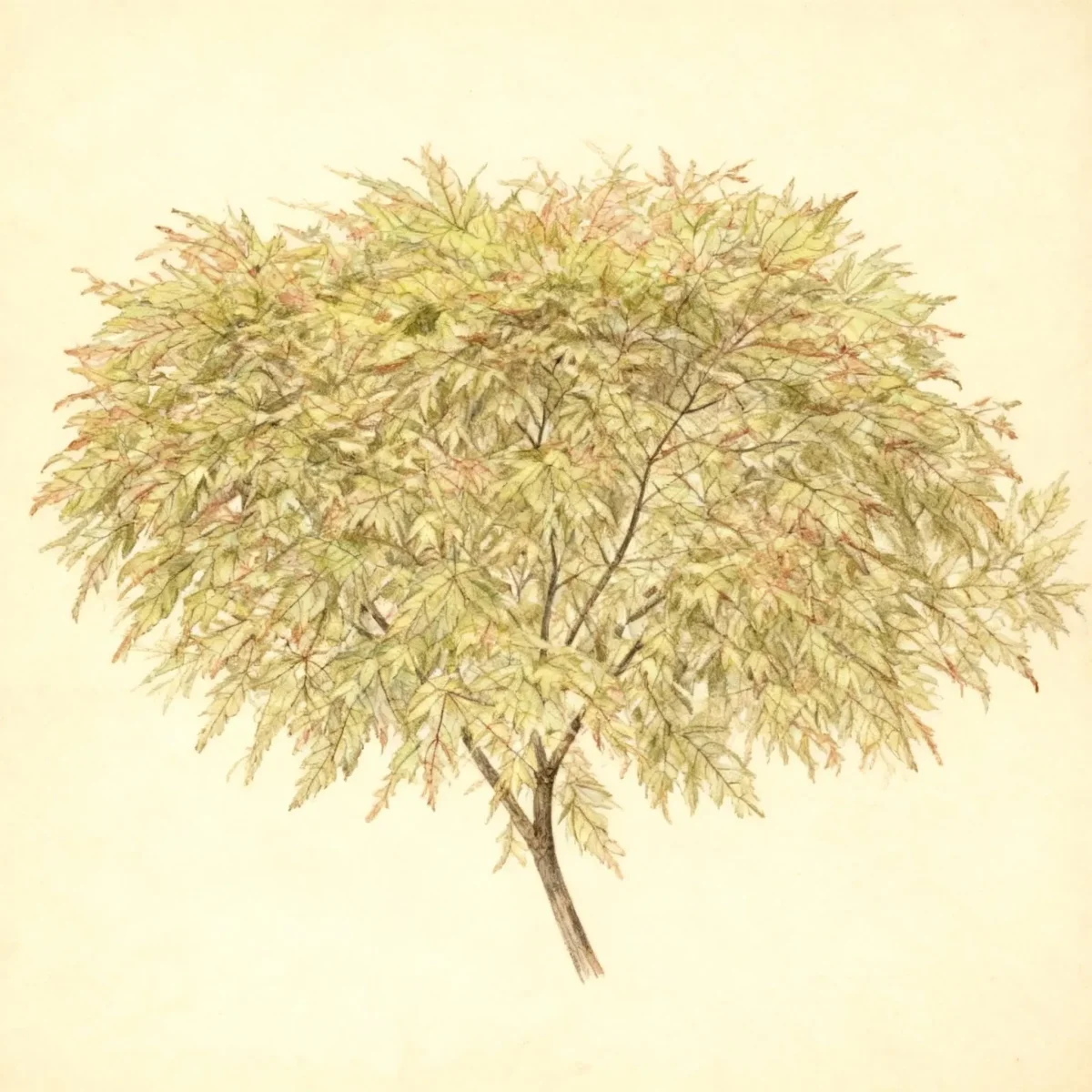
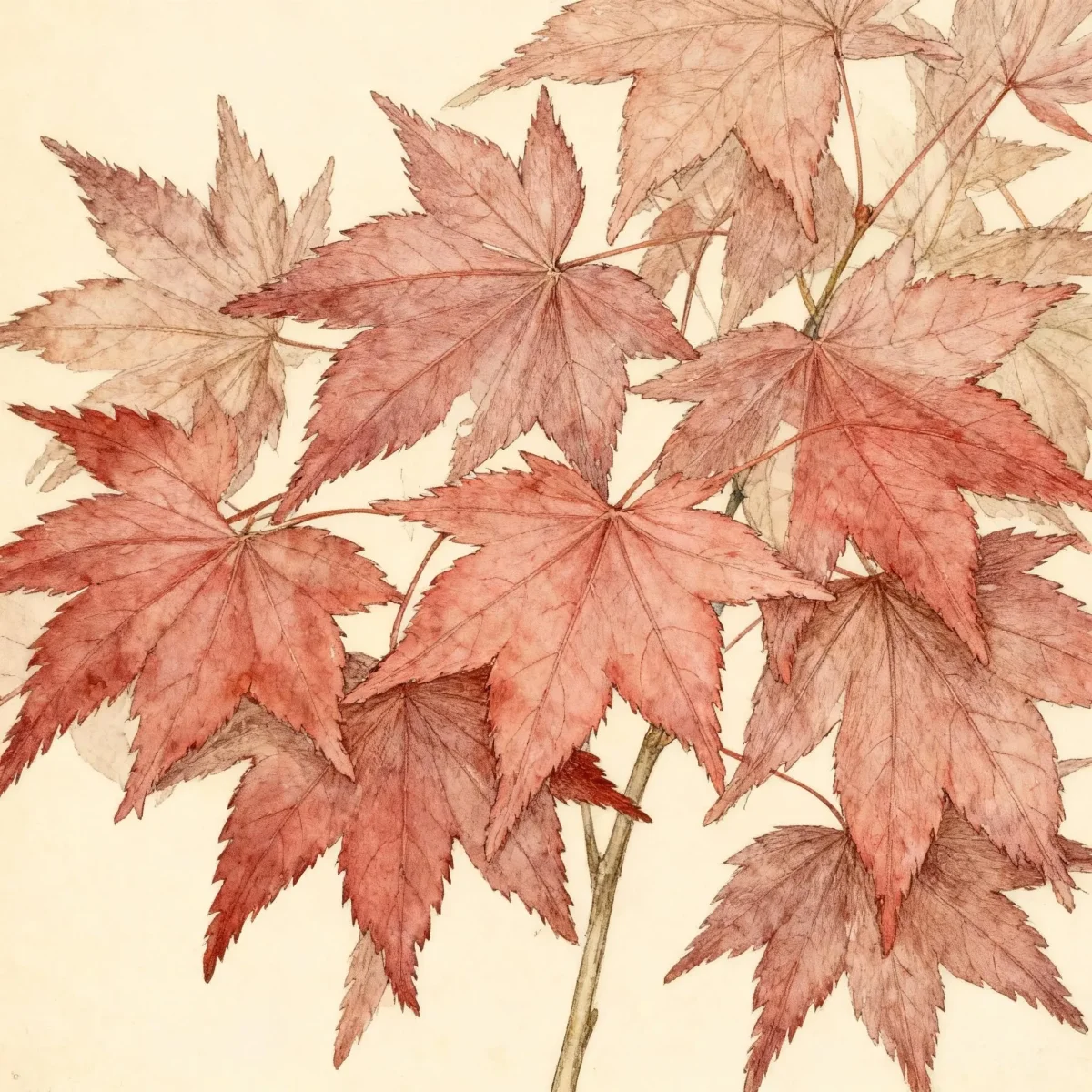
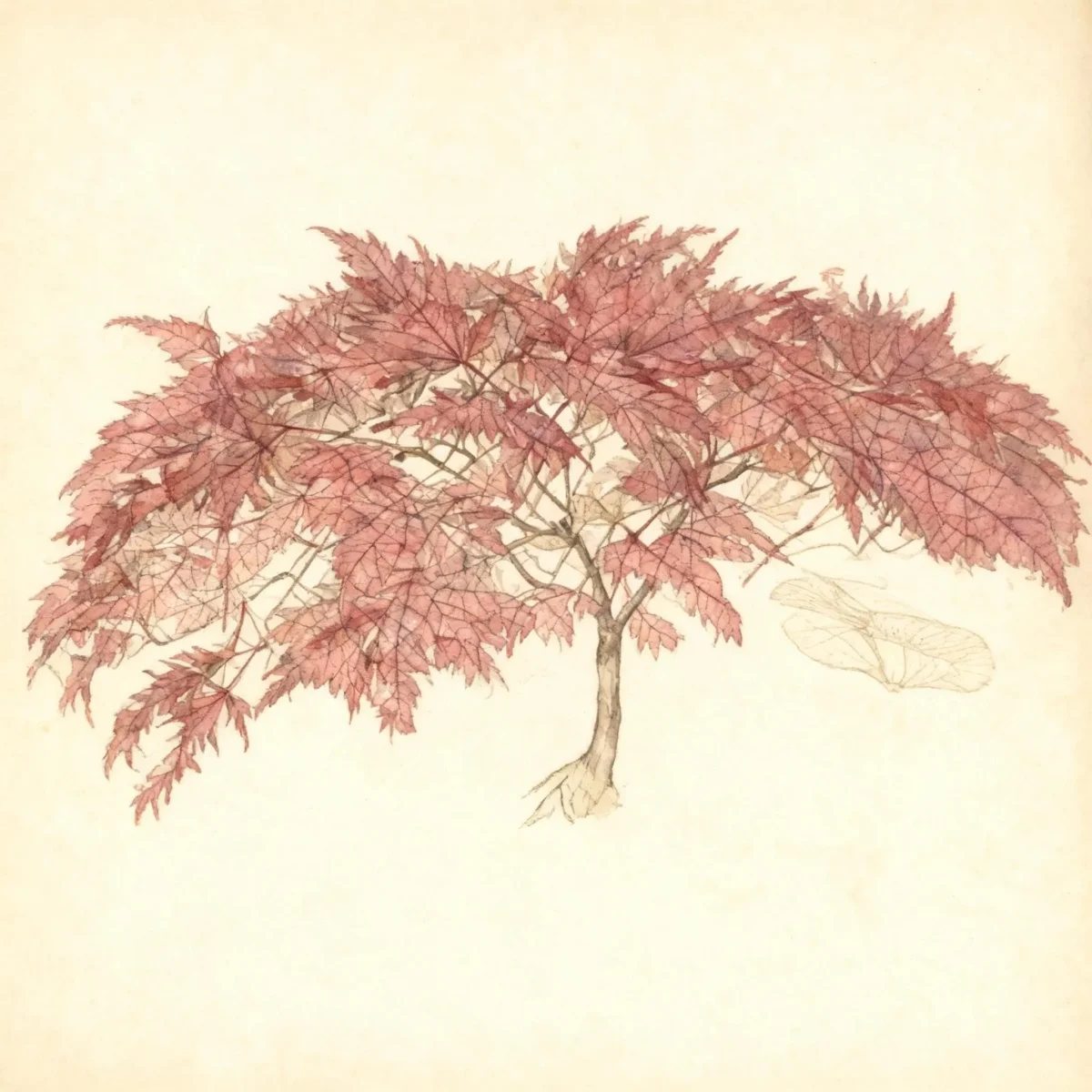
Japanese maple (Acer palmatum 'Osakazuki')
Acer palmatum 'Osakazuki' is a vigorous Japanese maple famed for its brilliant crimson fall color. Grows 15-25 ft tall in zones 5-9.
Scroll down to discover growing tips, care requirements, companion plants, and more
Complete Plant Information
Overview
The Acer palmatum ‘Osakazuki’, often referred to simply as Japanese maple, is celebrated for its striking, upright growth habit and spectacular seasonal change. This cultivar stands out significantly in the landscape due to its intensely vibrant, crimson fall display, making it a focal point for any garden design. As a deciduous shrub or small tree, it offers year-round interest, transitioning gracefully from green summer foliage to unparalleled autumnal brilliance.
This cultivar typically matures to a height between 15 and 25 feet, forming a broad, rounded crown. It thrives best when given space to develop its natural structure without excessive crowding. While the overall maintenance level is low once established, proper initial siting is crucial for ensuring the long-term health and performance of your Acer palmatum ‘Osakazuki’.
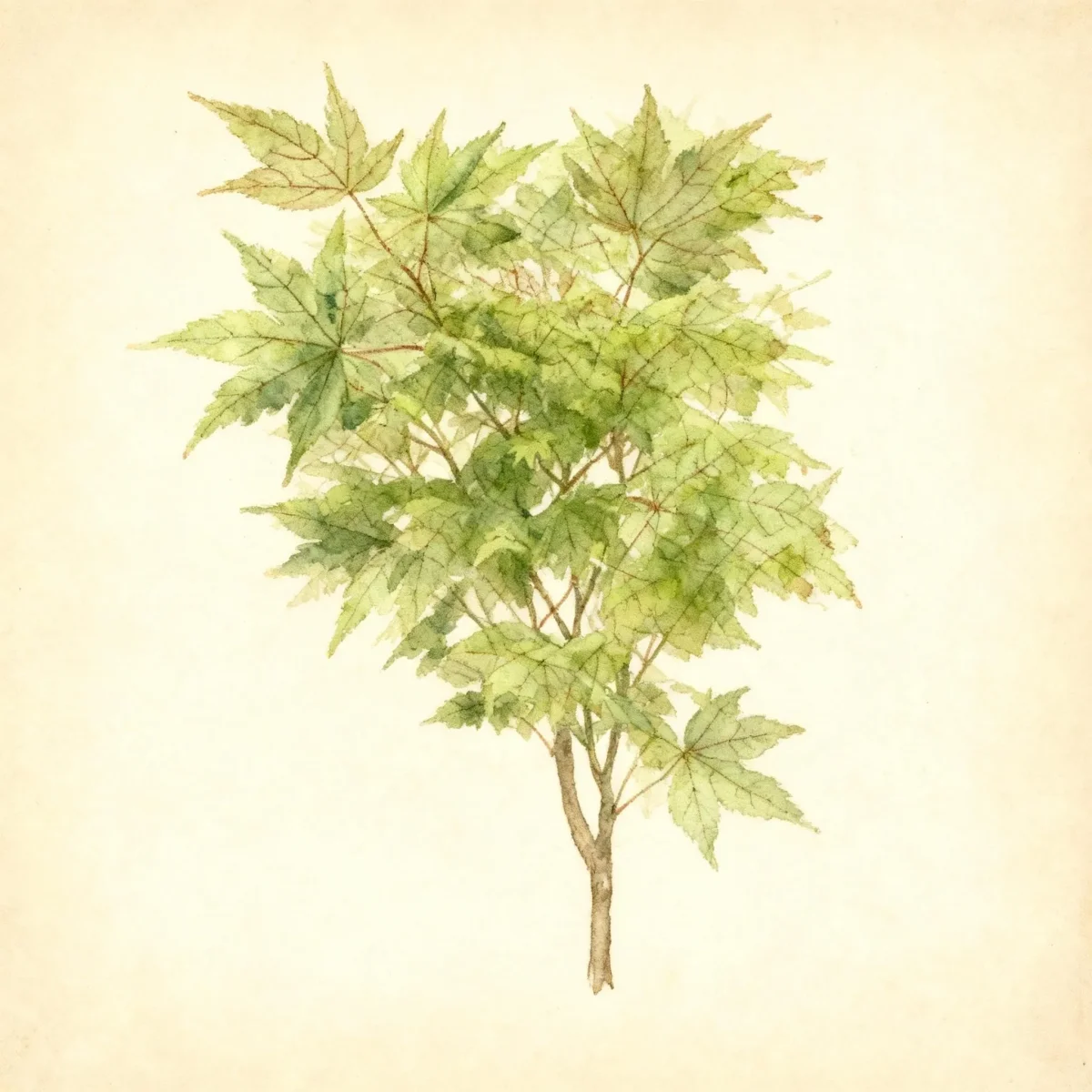
Gardeners appreciate this Japanese maple not only for its eventual size and shape but for its reliable foliage, which holds a deep green hue throughout the growing season before turning that famous red. Planting the correct cultivar, like ‘Osakazuki’, ensures you achieve that sought-after, high-impact color performance season after season.
Fast Facts
- Plant Family: Sapindaceae
- Plant Type: Deciduous shrub
- Hardiness Zones: USDA Zones 5-9
- Size at Maturity:
- Height: 15-25 ft
- Spread: 10-15 ft
- Bloom Time: April
- Bloom Description: Reddish-purple
- Sun Exposure: Full sun to part shade
- Water Needs: Medium
- Maintenance Level: Low
How to Grow
For optimal establishment, plant Acer palmatum ‘Osakazuki’ in the spring or fall when temperatures are moderate. The Japanese maple requires moist, organically rich, slightly acidic, and well-drained soil, taking particularly well to sandy loams. While it can handle full sun in cooler northern zones, southern gardeners should ensure placement where it receives part afternoon shade to prevent leaf scorch during hot summers.
Consistent moisture is key to success; soils that are not kept consistently moist can lead to foliage burning, especially in full sun. Applying a layer of mulch around the root zone helps significantly by retaining soil moisture and keeping the roots cool during summer heat. Furthermore, site this tree away from areas prone to strong winds, as protection from harsh air movement is beneficial.
Fertilization should occur in the spring just before the leaves emerge to support seasonal growth. Pruning should be kept minimal. If trimming is necessary, schedule it for late fall through mid-winter. Avoid pruning during spring or summer, as cutting during active sap flow often results in significant, unsightly sap bleeding from the cuts.
Landscape Uses
The primary purpose of owning a Japanese maple, including the stunning Acer palmatum ‘Osakazuki’, is leveraging its attractive foliage and distinctive mature shape. These trees function exceptionally well as specimen plantings, providing an immediate focal point due to their architectural appeal and spectacular fall color. They can also be grouped strategically around the perimeter of a yard or home foundation for layered interest.
Consider utilizing Japanese maples in areas where dappled shade is present, such as woodland garden margins, where they can thrive beneath taller canopy trees. Their moderate size also makes them excellent candidates for creating informal screens or providing accent structure near entryways. For advanced horticulturalists, the inherent structure of the Japanese maple lends itself beautifully to the art of Bonsai.
When selecting companions, choose broadleaf evergreens or textural plants that contrast nicely with the fine-textured, palmate leaves of the maple. Avoid planting in hot, dry sites, favoring sheltered locations where their elegant form is protected and celebrated.
Standout Features
Flower Qualities
- Insignificant
Noteworthy Characteristics
Acer palmatum, commonly called Japanese maple, is a deciduous shrub or small tree that typically grows to 10-25’ (infrequently to 40’) tall, native to Japan, Korea and China. This cultivar, ‘Osakazuki’ (Amoenum Group), is noted for its vigorous upright habit and its particularly vibrant crimson red fall color. Its large palmate leaves feature seven serrate, moderately-cut lobes, and the leaf base is cupped, referencing its Japanese name meaning ‘leaf like a wine cup.‘
Tolerances
- Rabbit
- Black Walnut
Potential Problems
Acer palmatum ‘Osakazuki’ is susceptible to several potential disease issues, including stem canker, leaf spots, and various root rots like Verticillium wilt and Botrytis. Insect pests common to maples, such as aphids, scale, borers, bagworms, and root weevils, may also require management. Additionally, since the foliage leafs out early, the tender new growth is vulnerable to damage from late spring frosts.
Managing soil pH is important, as chlorosis (yellowing of leaves) can occur if the soil pH is too high. To mitigate pest and disease pressure, ensure excellent air circulation around the tree and maintain consistent soil moisture without waterlogging the roots. Inspect foliage regularly for signs of mite activity, which can become troublesome in dry conditions.
Frequently Asked Questions
What hardiness zones is Japanese maple suitable for?
The Acer palmatum ‘Osakazuki’ is suitably hardy across USDA Zones 5 through 9.
How large does Japanese maple grow?
This deciduous shrub typically reaches a mature height between 15 and 25 feet, with a spread ranging from 10 to 15 feet wide.
What sun exposure does Japanese maple need?
The optimal condition for Acer palmatum ‘Osakazuki’ is full sun to part shade, though afternoon shade is highly recommended in hotter regions.
When does Japanese maple bloom?
Its bloom time is in April, producing small flowers described as reddish-purple.
Conclusion
The Acer palmatum ‘Osakazuki’ is a superior specimen tree, highly valued for its elegant structure and unmatched vibrant crimson fall foliage. Providing the necessary acidic, well-drained soil and appropriate partial shade during intense heat will ensure this Japanese maple flourishes for decades. Before planting, verify your growing zone compatibility and plan for placement that highlights its striking seasonal transformations.
Companion Planting
Selecting companion materials that share similar cultural needs ensures a cohesive planting palette. Since Acer palmatum ‘Osakazuki’ prefers moist, acidic, and well-drained soils, pair it with other woodland-edge lovers such as shade-tolerant rhododendrons, azaleas, or acid-loving ferns. These plants offer contrasting foliage textures that make the finely cut leaves of the maple stand out beautifully.
Groupings of hostas with variegated or blue foliage provide excellent low-level ground cover underneath the canopy, shading the maple’s roots and further helping to retain necessary soil moisture. Avoid constructing the immediate planting area using limestone or other alkaline materials, as this will artificially raise the soil pH and inhibit nutrient uptake by the Japanese maple.
Seasonal Care Calendar
Spring is the crucial time for preparation; water deeply as the plant breaks dormancy and apply fertilizer before the leaves fully expand. Summer care focuses primarily on maintaining consistent moisture levels, particularly during dry spells, and ensuring the roots remain cool via adequate mulching.
In the fall, allow the Acer palmatum ‘Osakazuki’ to display its magnificent crimson color show, but avoid heavy pruning until the leaves have completely dropped. Winter protection centers on avoiding exposure to drying winter winds and ensuring the root zone is insulated by a healthy layer of mulch against extreme temperature swings.