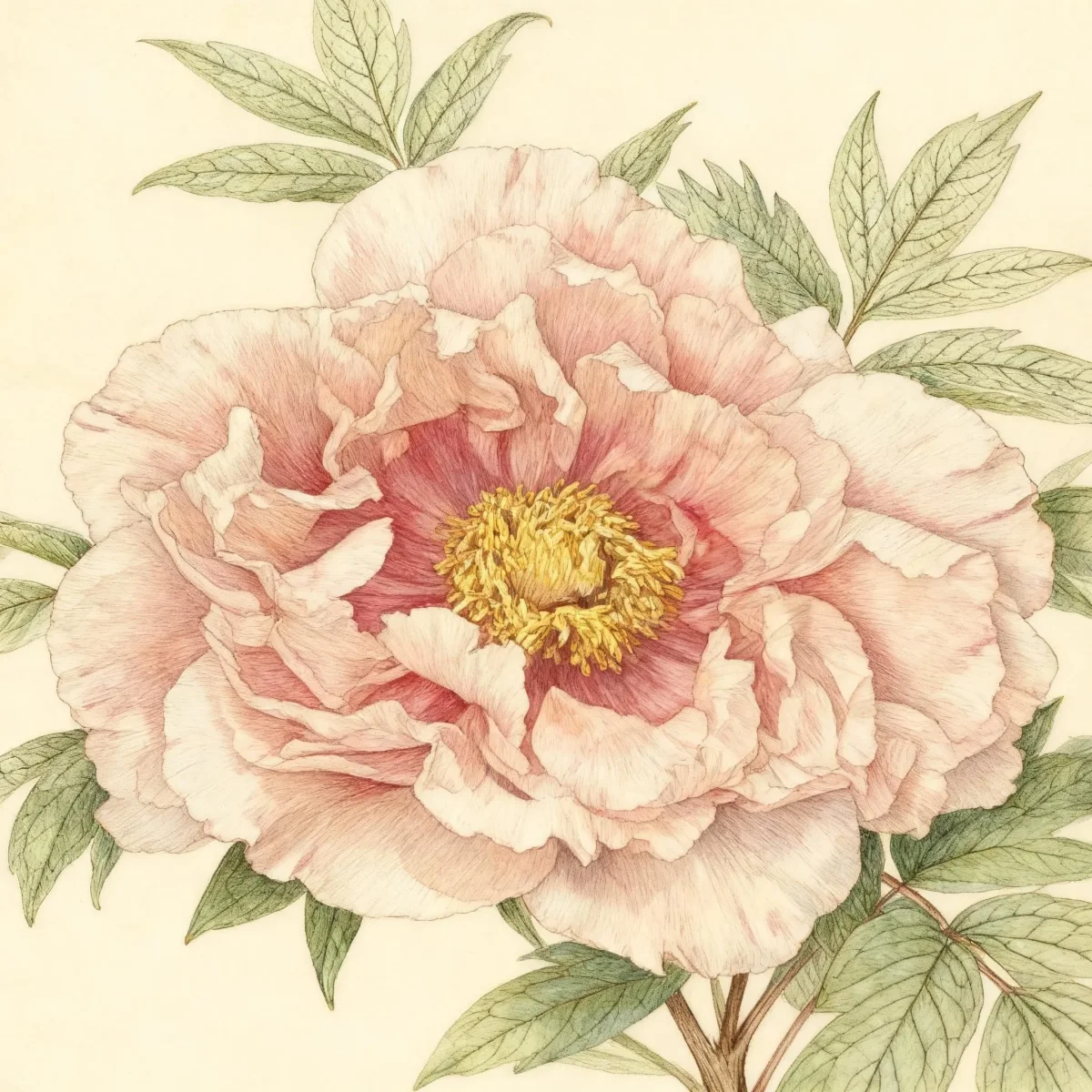
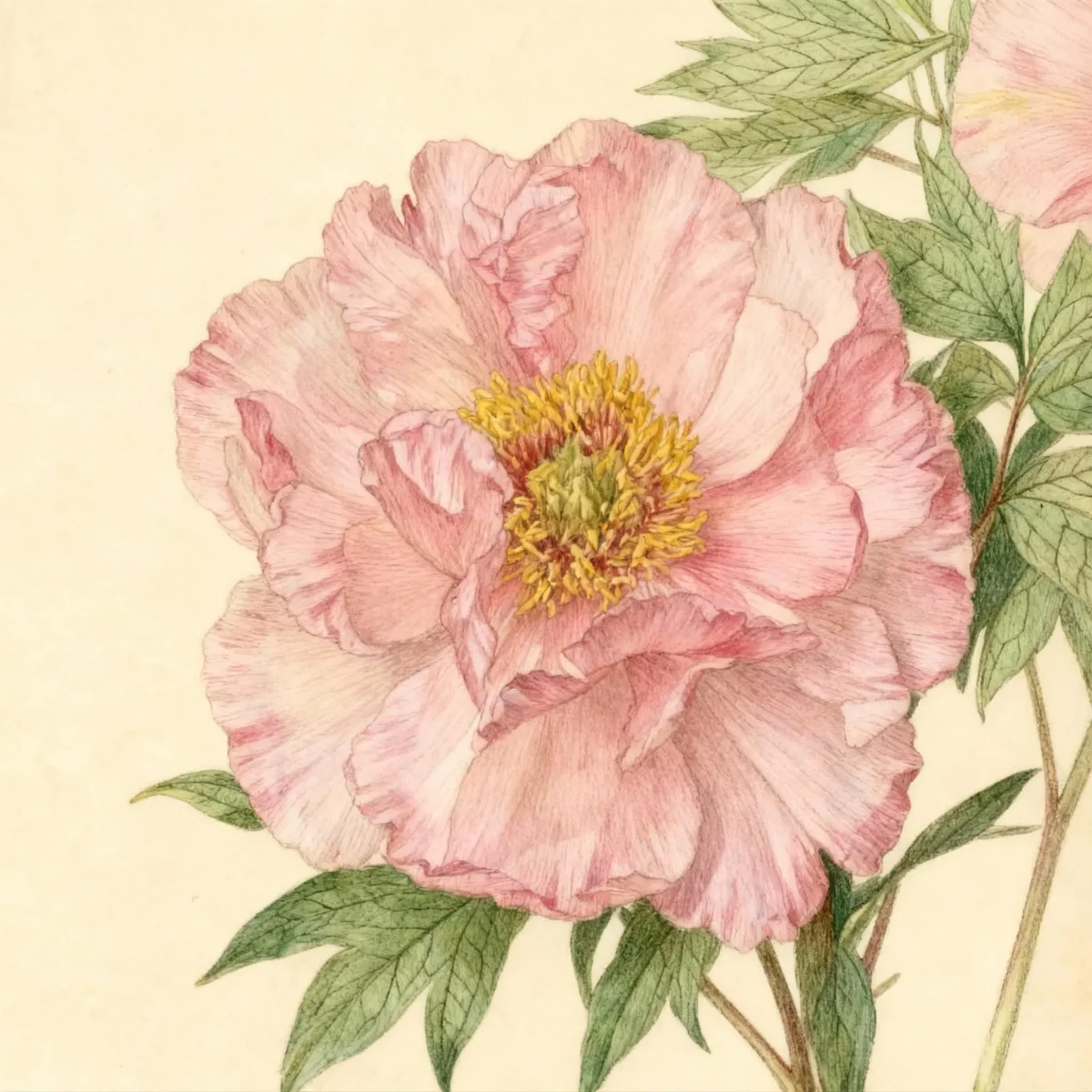
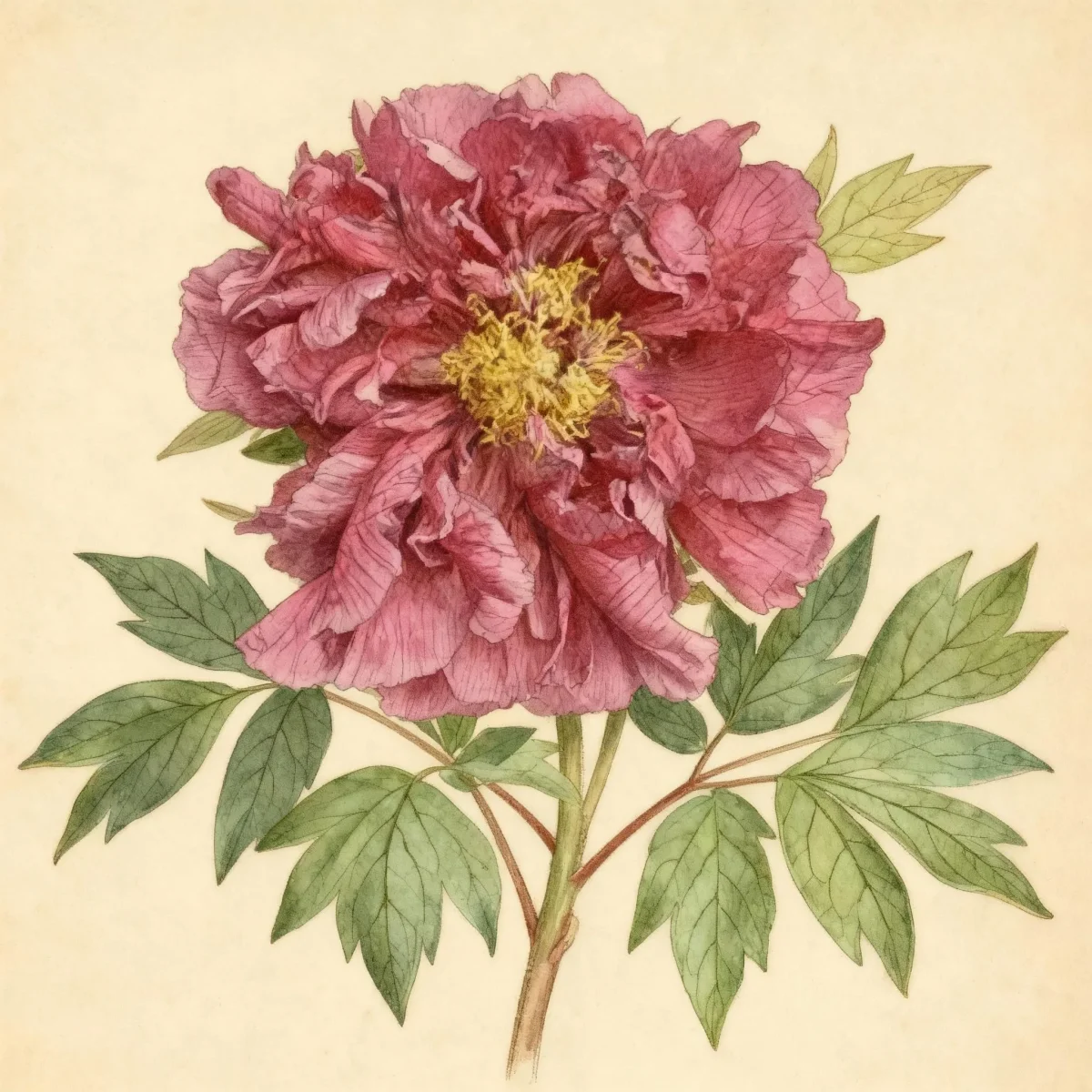
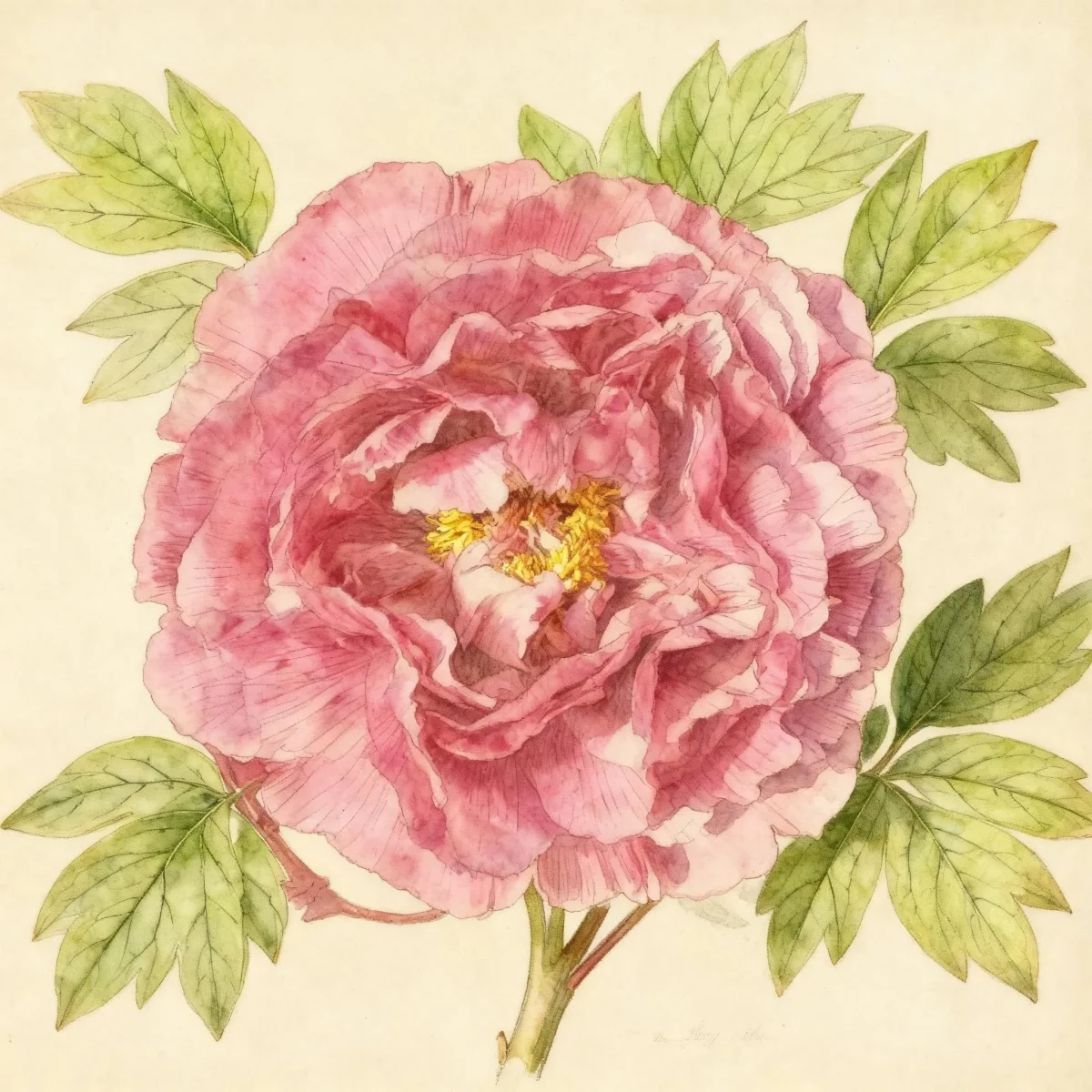
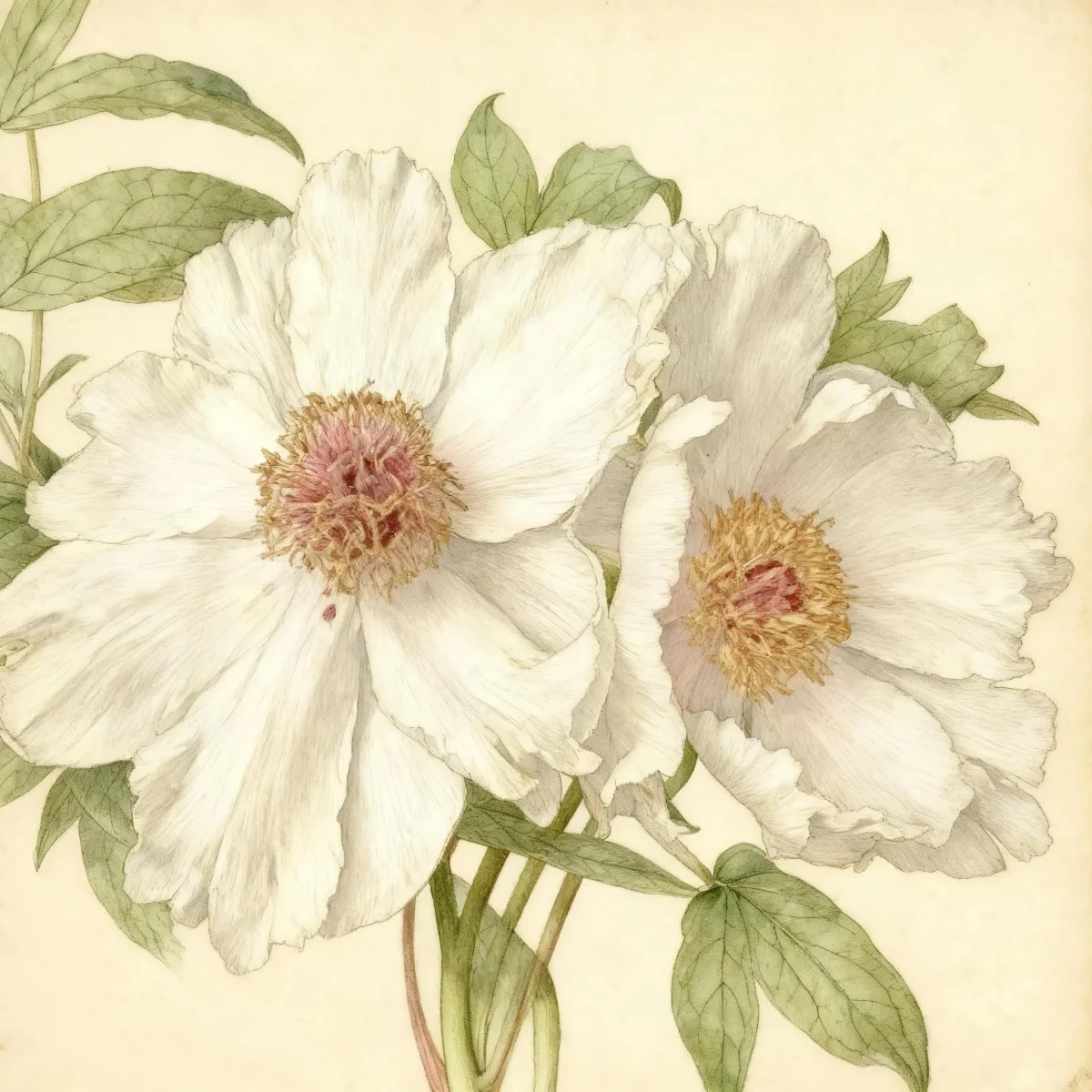
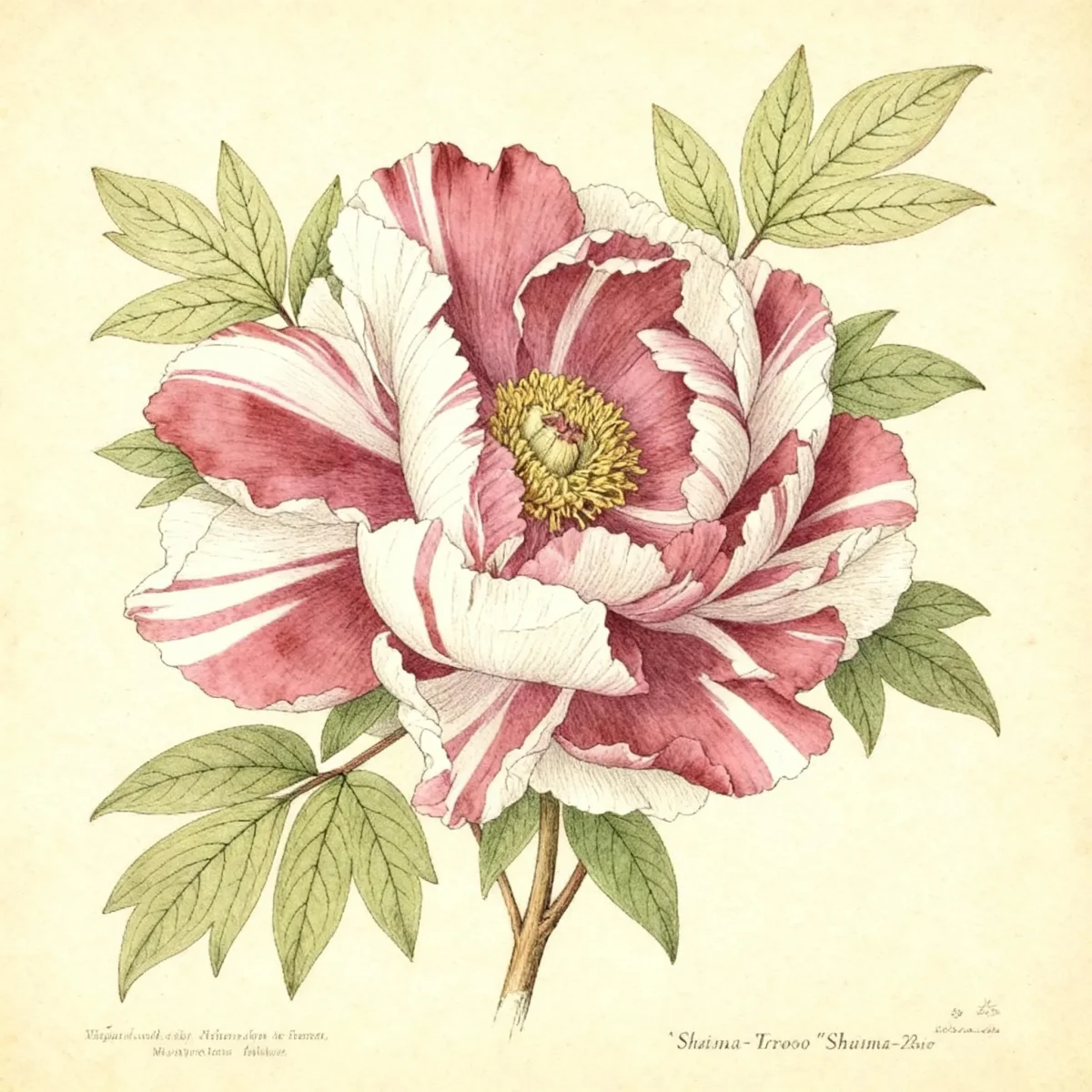
Tree peony (Paeonia suffruticosa 'Shima-Nishiki')
Paeonia suffruticosa 'Shima-Nishiki' is a showy, fragrant Tree peony shrub, producing purple-red blooms in Zones 4-8.
Scroll down to discover growing tips, care requirements, companion plants, and more
Complete Plant Information
Overview
Paeonia suffruticosa ‘Shima-Nishiki’ is a superb deciduous woody shrub, widely known as the Tree peony. This cultivar offers striking visual interest, featuring semi-double flowers distinguished by vibrant purplish-red coloration dramatically highlighted with prominent white striping. Its medium green, deeply divided foliage remains attractive throughout the growing season, providing excellent texture long after the blooms fade.
As a long-lived specimen plant, the Tree peony establishes deep roots and requires few heavy interventions once sited correctly. Gardeners appreciate Paeonia suffruticosa ‘Shima-Nishiki’ for its stature, fragrance, and ability to serve as a stunning accent or structural hedge in the landscape. It brings a touch of exotic elegance combined with reliable performance in its designated hardiness range.
Fast Facts
- Plant Family: Paeoniaceae
- Plant Type: Deciduous shrub
- Hardiness Zones: USDA Zones 4-8
- Size at Maturity:
- Height: 3-4 ft
- Spread: 3-4 ft
- Bloom Time: May
- Bloom Description: Purple-red with white striping
- Sun Exposure: Full sun to part shade
- Water Needs: Medium
- Maintenance Level: Medium
How to Grow
The ideal time to plant your Paeonia suffruticosa ‘Shima-Nishiki’ is in the fall, though spring planting is also acceptable. Select a location that receives full sun to light part shade, ensuring the site provides deep, fertile, well-drained soil with medium moisture retention. Prior to planting, enrich the soil by incorporating compost to enhance fertility. Larger specimens benefit from some protection against harsh, strong winds.
Water requirement is medium; ensure consistent moisture, especially during establishment, although Tree peonies are tolerant of summer heat once mature. Unlike their herbaceous cousins, the woody stems of this Tree peony do not die back, meaning they should never be cut back in the spring after frost. Pruning is minimal, restricted only to removing dead wood or basal suckers in early spring. If you desire shaping, a moderate pruning can be done in early fall to encourage lower branching.
Remember that Paeonia suffruticosa ‘Shima-Nishiki’ can take several years to fully establish itself, and transplanting is difficult due to deep root structures, so choose the final location wisely. Gardeners in the colder reaches of Zone 4 and 5 should provide some supplemental winter protection for added security during harsh winters. Deadhead spent flowers promptly after the bloom period ends.
Landscape Uses
The striking, uniquely striped flowers make the Tree peony an outstanding focal point. Paeonia suffruticosa ‘Shima-Nishiki’ excels when planted as a specimen, allowing its structure and fragrance to be fully appreciated. They also perform beautifully when grouped together or used as a formal or informal hedge, lining sidewalks, driveways, or property borders.
The attractive, finely divided green foliage complements many other spring and summer flowering perennials or shrubs. Use them as a sophisticated backdrop for smaller, earlier blooming spring bulbs, which then transition beauty to the Tree peony itself. Their medium height (3-4 ft) makes them excellent mid-border plants that don’t overwhelm smaller companions.
Standout Features
Flower Qualities
- Showy
- Fragrant
Noteworthy Characteristics
Paeonia suffruticosa, commonly called tree peony, is a deciduous, woody shrub that typically grows 3-5’ tall with a 4’ spread. The true species features large flowers (6-8” across) with pink to white petals, each petal having a purple basal patch. Many cultivars of this species have been developed, with a wide range of petal colors including red, pink, purple, white and yellow. Cultivar flower forms range from single to semi-double to double. Blooms in early spring (May in the St. Louis area). Medium green foliage is deeply divided into oval to lance-shaped leaflets and remains attractive throughout the growing season.Genus name comes from the Greek name for Paeon, physician of the gods and reputed discoverer of the medicinal properties of plants in this genus.Specific epithet means sub-shrub or somewhat shrubby.‘Shima-Nishiki’ is a multi-stemmed, deciduous, woody shrub that typically grows to 3-4’ tall and as wide. Upward facing, mildly fragrant, semi-double flowers are purplish-red with prominent white striping. Yellow center stamens provide excellent contrast. Flowers bloom in early spring (late April-May in the St. Louis area). Medium green foliage is deeply divided into oval to lance-shaped leaflets. Foliage remains attractive throughout the growing season. No fall color. ‘Shima-Nishiki’ means fire flame in Japanese.
Tolerances
- Rabbit
- Deer
Potential Problems
Tree peonies are generally considered pest-free, offering relatively low management concern for insect pressure. However, be alert for the possibility of canker, leaf blight, stem wilt, or scale insects. Ants are commonly observed congregating on the developing peony buds; these are entirely harmless and are usually just drawn to the sweet nectar produced by the bud casings.
If fungal diseases like leaf blight are noticed, ensure good air circulation around the established shrub during planting and maintenance. Promptly remove and destroy any affected foliage or stems to prevent the spread of common peony diseases.
Frequently Asked Questions
What hardiness zones is Tree peony suitable for?
Paeonia suffruticosa ‘Shima-Nishiki’ is well-suited for cultivation across USDA Hardiness Zones 4 through 8.
How large does Tree peony grow?
This plant typically matures to a height between 3 and 4 feet, with a comparable spread of 3 to 4 feet wide, maintaining a shrub-like form.
When does Tree peony bloom?
The spectacular flowers of Paeonia suffruticosa ‘Shima-Nishiki’ generally appear in May—or late April in warmer regions of its range—boasting a unique purple-red color enhanced by distinct white striping.
What sun exposure does Tree peony need?
For the optimal display of blooms and foliage, plant your Tree peony where it will receive full sun to partial shade.
Conclusion
The Paeonia suffruticosa ‘Shima-Nishiki’ Tree peony offers unparalleled beauty with its uniquely patterned, fragrant blooms and enduring foliage, making it a worthy investment for the perennial border. Ensure you align its location with the rich soil and sun requirements listed before planting this long-lived woody shrub. Take the time now to site your Paeonia suffruticosa ‘Shima-Nishiki’ correctly for decades of spectacular spring color.
Companion Planting
When selecting neighbors for your Tree peony, focus on plants that thrive in similar soil and light conditions (full sun to light shade in rich, well-drained soil). Consider underplanting with late spring and early summer blooming perennials whose foliage matures after the peony finishes blooming, such as Salvia or Oriental Poppies (Papaver orientale).
Avoid placing aggressive spreaders too close, as the established root system of the Paeonia suffruticosa ‘Shima-Nishiki’ should not be disturbed frequently. Low-growing groundcovers that don’t compete heavily for surface moisture are ideal companions that help keep the soil cool around the base of this magnificent shrub.
Seasonal Care Calendar
Spring: This is the critical time for pruning, focusing only on removing any winter-killed or damaged wood, or suckers emerging from the base below the graft union. Remove spent flowers shortly after the bloom fades to direct energy back into the woody structure.
Summer: Focus on consistent, medium watering, particularly during dry spells, to support the substantial root system of the Tree peony. Foliage remains attractive through summer, requiring little intervention besides checking for pests like scale.
Fall: If necessary for shaping, conduct any moderate pruning now to encourage densification before dormancy. Prepare for winter by ensuring the planting site is mulched lightly but avoid piling mulch directly against the stems.