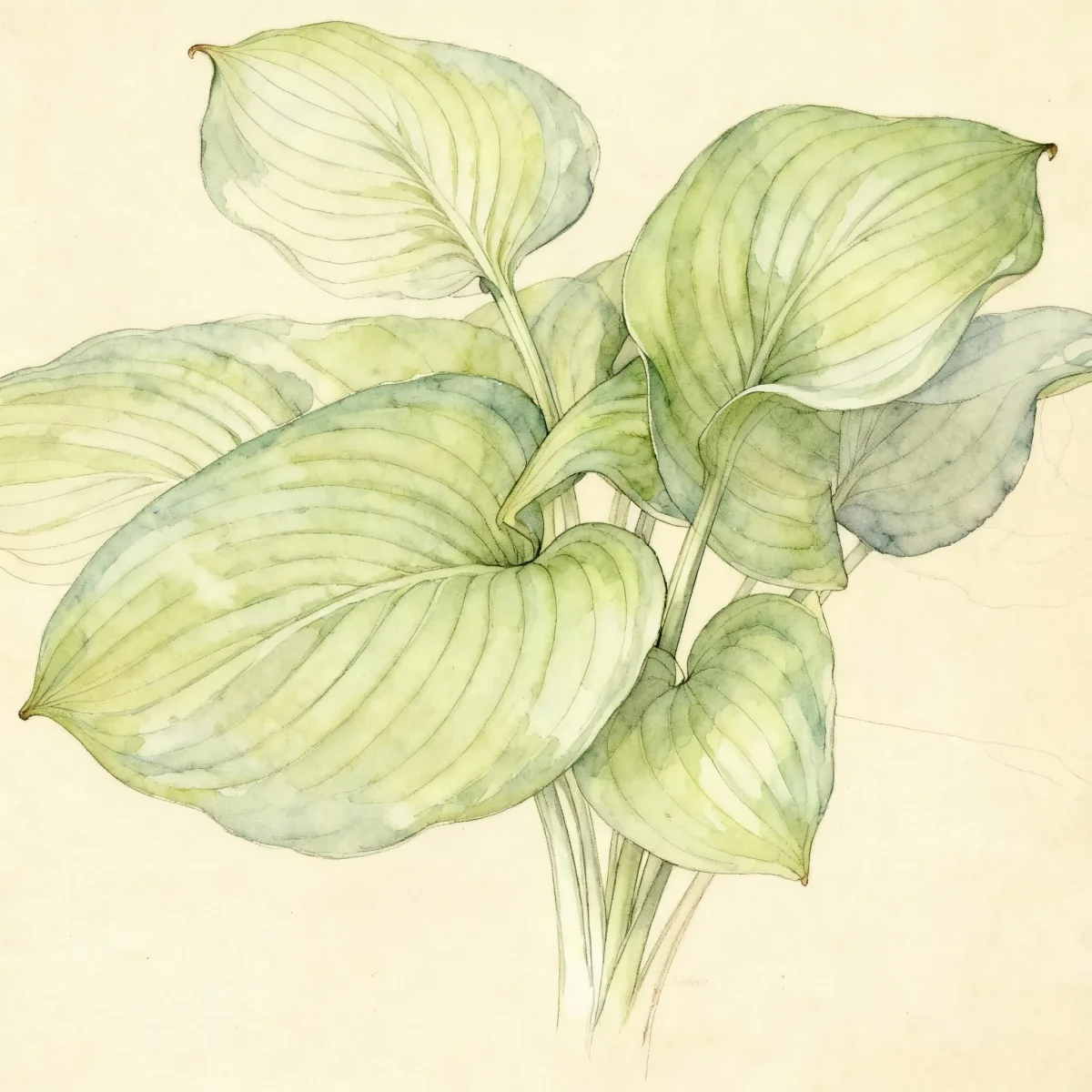
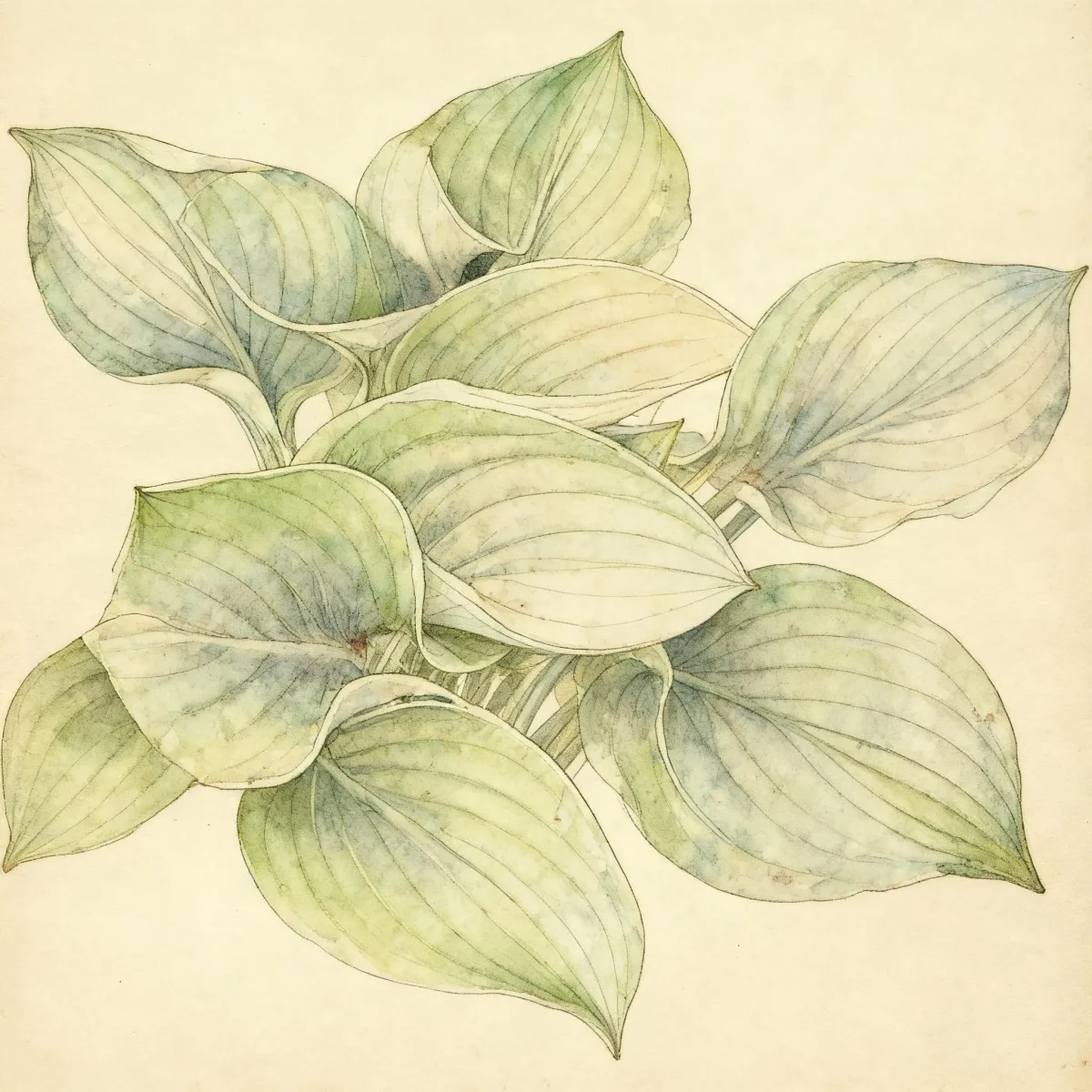
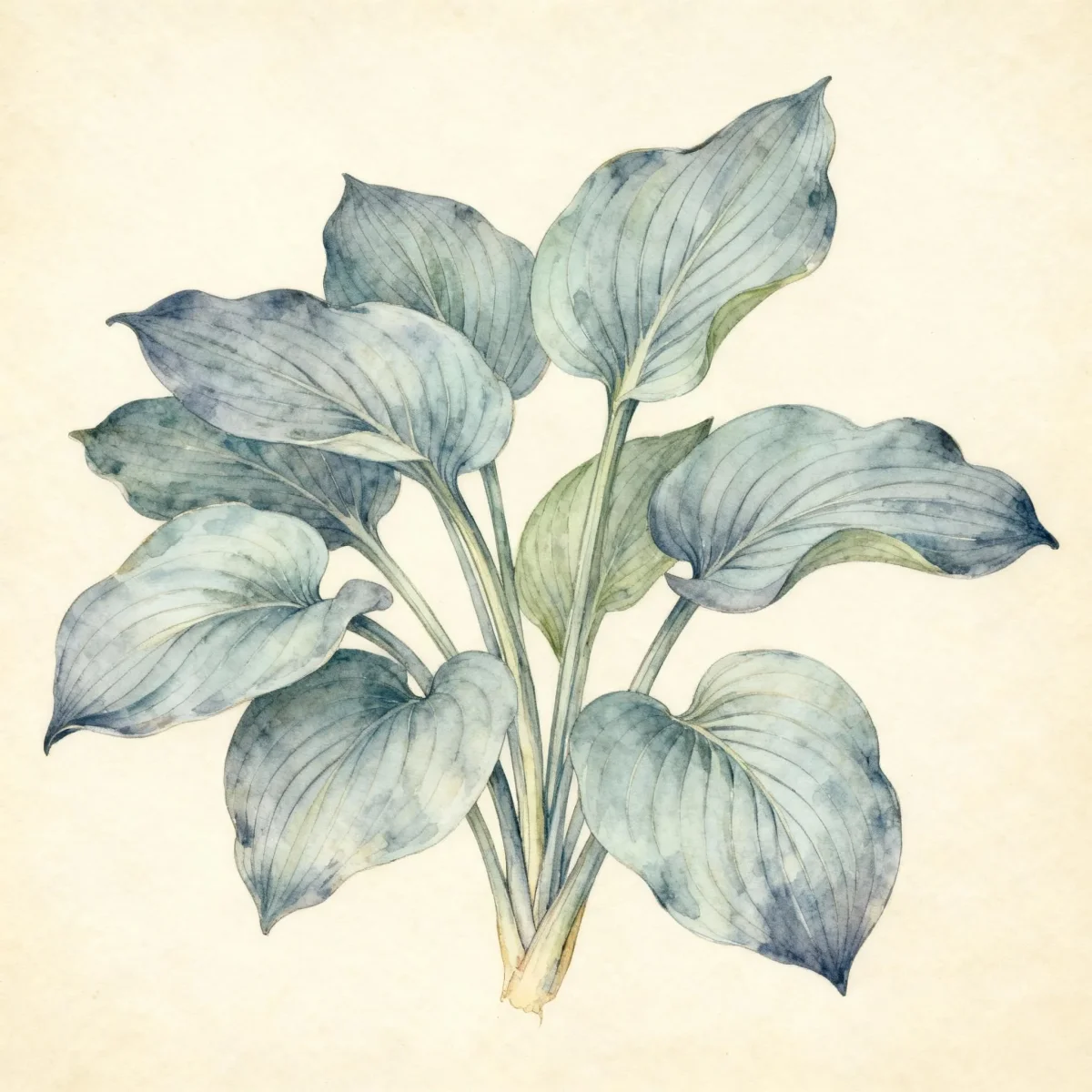
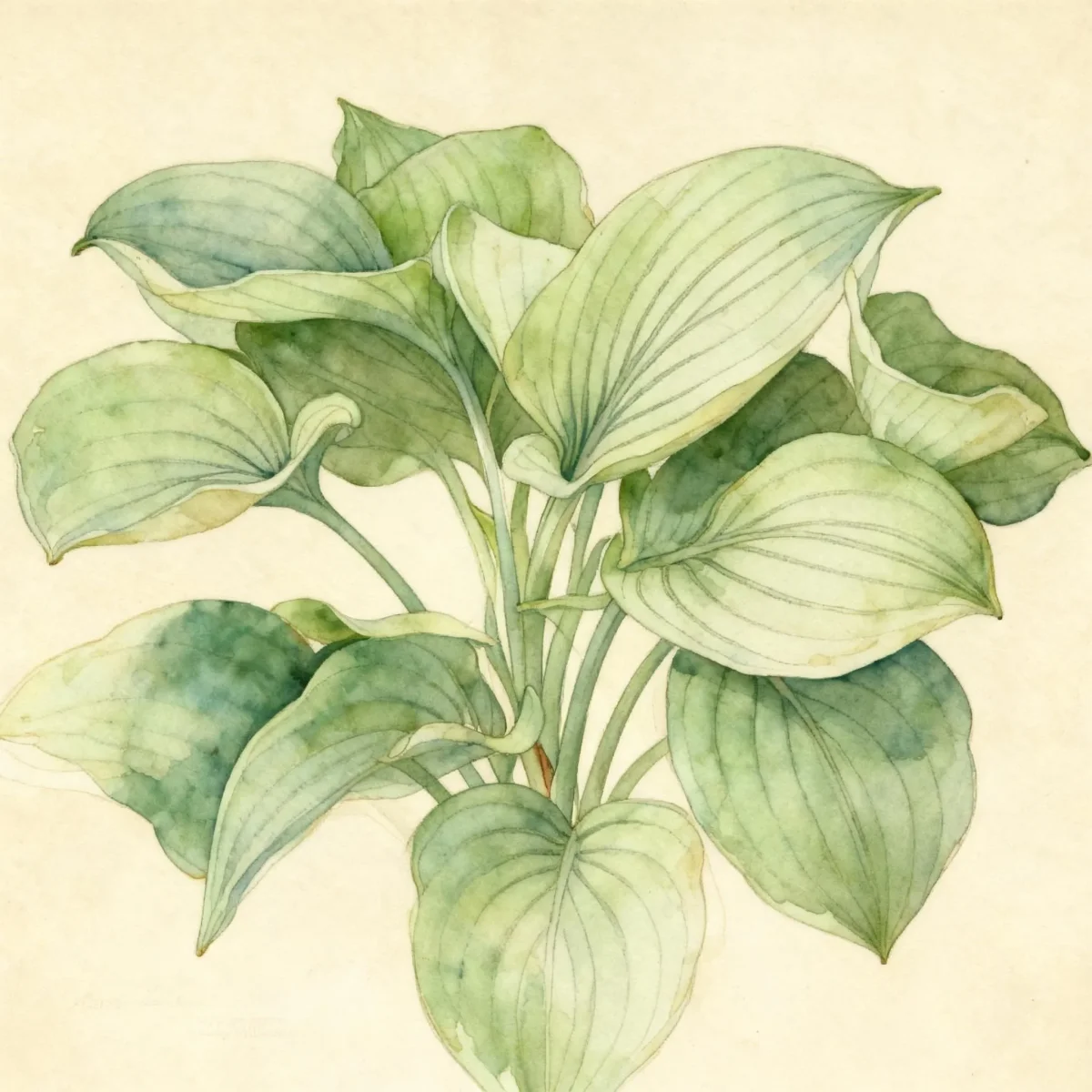
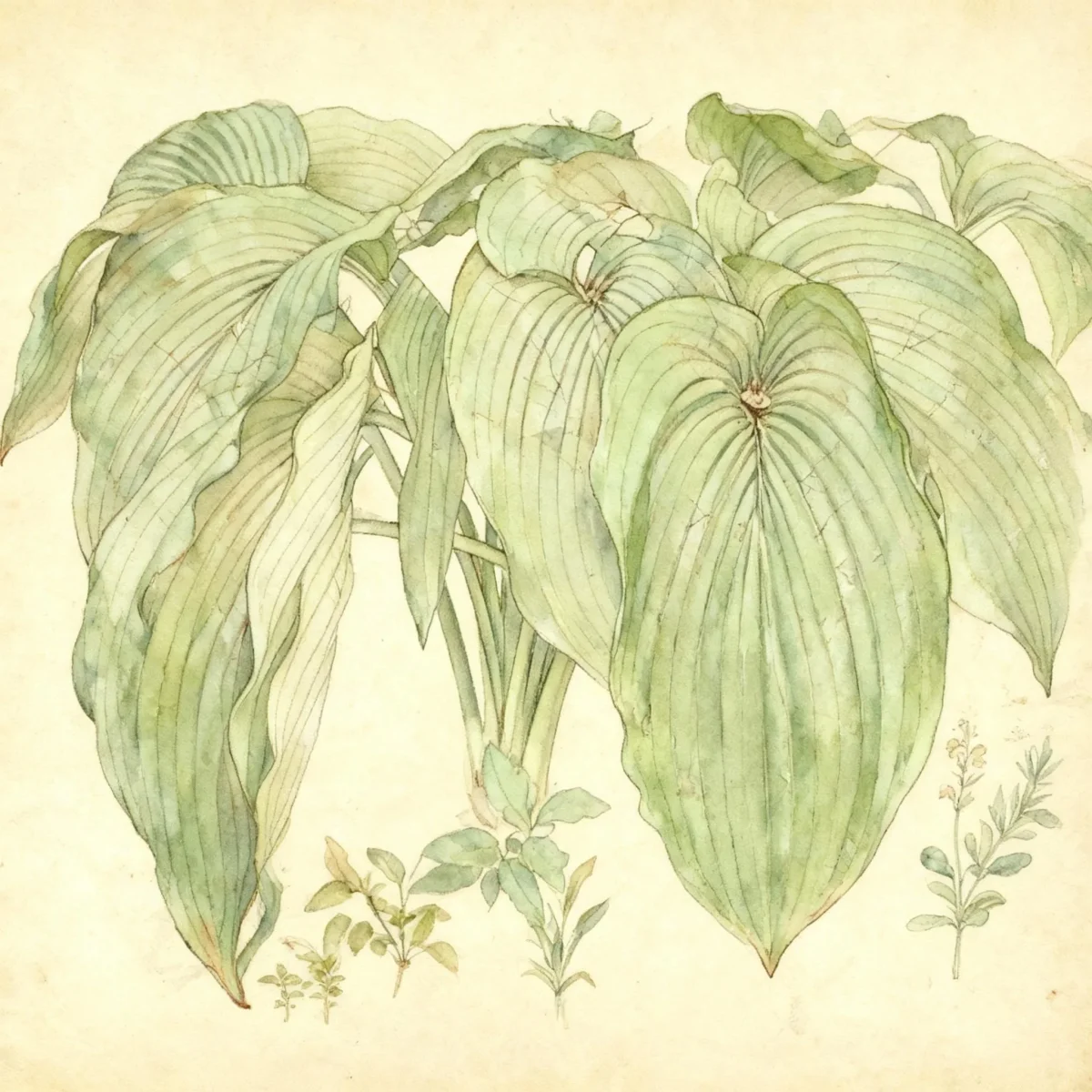
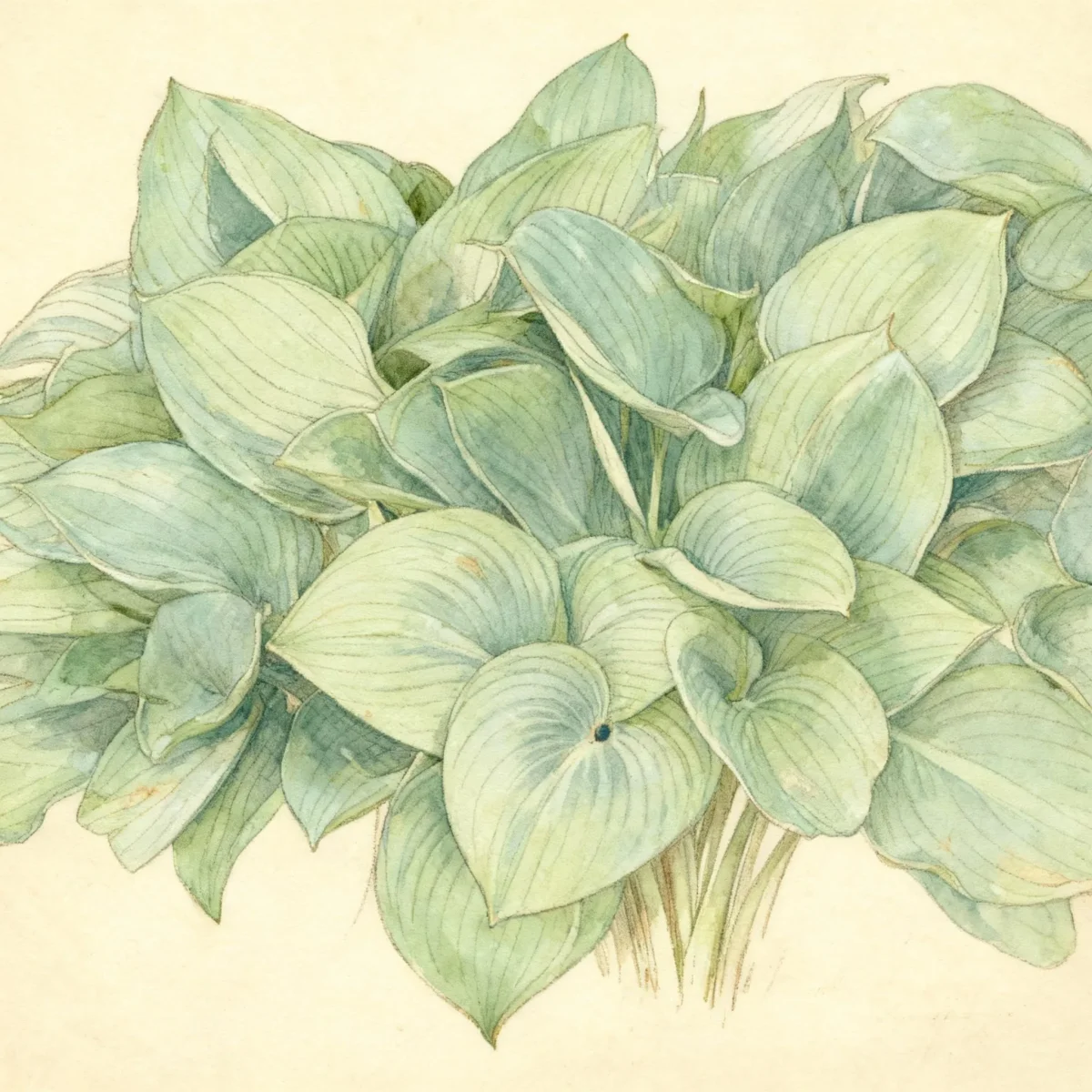
Hosta (Hosta 'Miss Ruby')
Hosta 'Miss Ruby' offers deeply veined, medium green foliage accented by striking red petioles in USDA Zones 3-8.
Scroll down to discover growing tips, care requirements, companion plants, and more
Complete Plant Information
Overview
Hosta ‘Miss Ruby’ is a highly desirable herbaceous perennial, valued primarily for its ornamental foliage that provides structure to shaded garden areas. This specific cultivar stands out due to its deeply veined, medium green leaves, which are uniquely framed by contrasting red petioles that transition into the leaf blades. As a relatively low-maintenance addition, the Hosta genus thrives in woodland margins and shady borders, offering reliable seasonal performance.
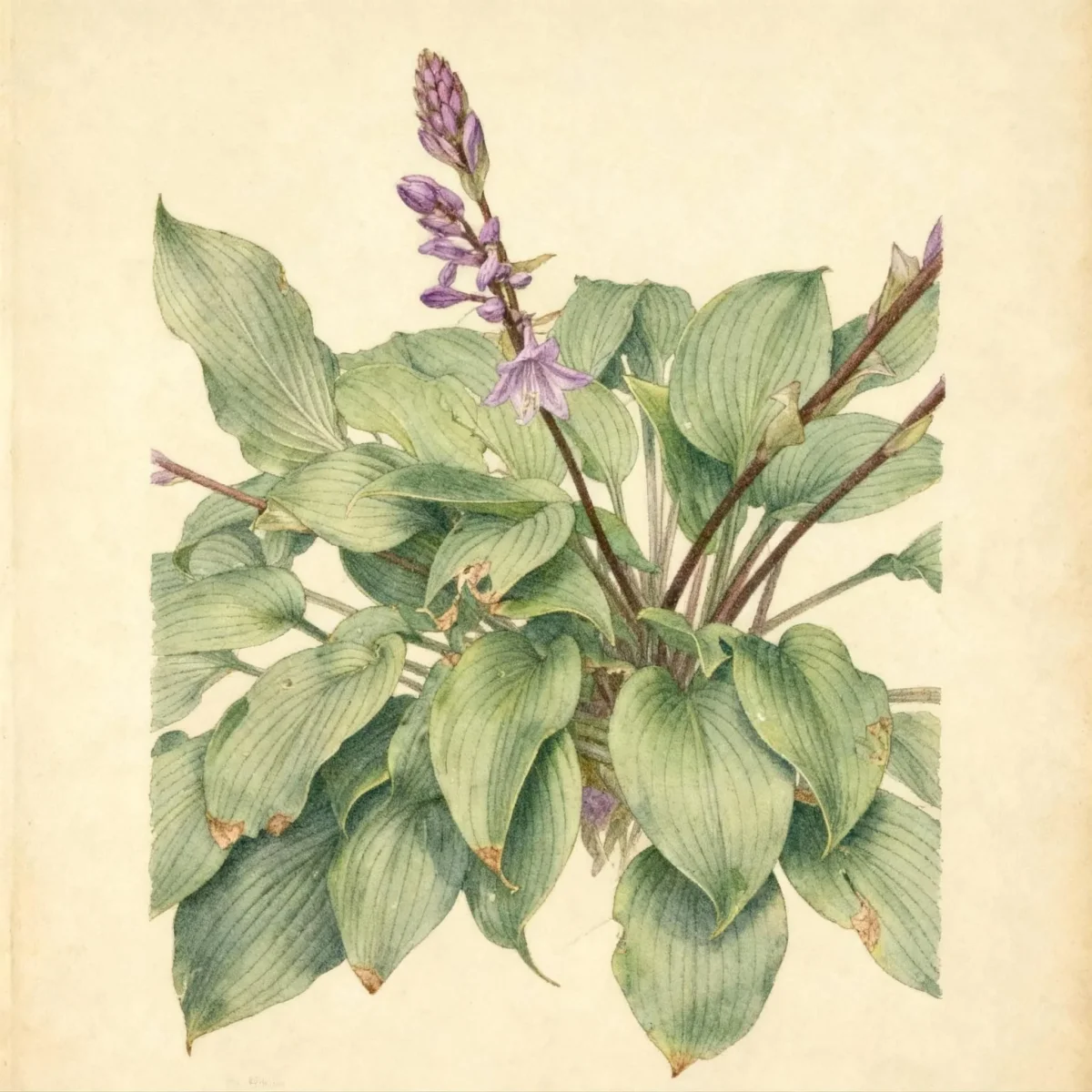
The plant forms a dense mound of leaves, typically reaching under 1.5 feet tall. During mid-summer, Hosta ‘Miss Ruby’ produces spikes of pale lilac flowers that rise elegantly above the foliage mound, adding a subtle layer of color contrast. This Hosta variety is an excellent choice for gardeners seeking texture and year-round interest in deep shade locations where many other flowering plants struggle to establish.
Fast Facts
- Plant Family: Asparagaceae
- Plant Type: Herbaceous perennial
- Hardiness Zones: USDA Zones 3-8
- Size at Maturity:
- Height: 0.75-1.5 ft
- Spread: 1-1.5 ft
- Bloom Time: July to August
- Bloom Description: Pale lilac
- Sun Exposure: Part shade to full shade
- Water Needs: Medium
- Maintenance Level: Low
How to Grow
Plant Hosta ‘Miss Ruby’ in the spring or autumn when conditions are mild. Ideal locations require evenly moist, organically rich, well-drained soils. While these Hostas tolerate full shade, they achieve their best size and foliage quality with consistent moisture and dappled sunlight, such as from morning sun exposure. Avoid planting in exposed, windy sites where leaf tearing might occur.
Maintain consistent moisture levels, especially during dry spells, as prolonged drought stresses the plant. Water should be applied directly to the soil beneath the leaves to keep the foliage dry, minimizing the risk of fungal issues. Hostas are famously low-maintenance; however, dividing the dense clumps every few years can revitalize the plant and is most easily accomplished in early spring before the leaves fully emerge.
Landscape Uses
Hostas are the undisputed champions for brightening deep and dappled shade in the landscape. The strong foliage presence of Hosta ‘Miss Ruby’ makes it an incredibly versatile plant for creating contrast against lighter-colored groundcovers or fine-textured ferns. Use this medium-sized Hosta in mass plantings for powerful visual impact along shady borders or as an accent within woodland gardens.
Because they serve as excellent background elements, consider pairing Hosta ‘Miss Ruby’ with shade-tolerant flowering perennials that bloom earlier or later in the season, such as Astilbe or Bleeding Hearts, to maintain color interest throughout the growing season. Their clumping habit also makes them effective for edging pathways in shaded areas.
Standout Features
Flower Qualities
- Showy
Noteworthy Characteristics
Hosta is a genus primarily grown for its ornamental foliage, featuring dense, basal leaves rising from a central crown. ‘Miss Ruby’ specifically showcases ovate, deeply veined, medium green leaves up to 7 inches long, dramatically highlighted by distinctive red petioles. Foliage forms a dense mound to about 8 inches tall, with its pale lilac summer flowers blooming on scapes reaching 12-15 inches high.
Tolerances
- Heavy Shade
- Black Walnut
Potential Problems
The foliage of Hosta ‘Miss Ruby’ is highly palatable to common garden pests, making vigilant monitoring necessary. Slugs and snails are frequently attracted to the leaves, resulting in characteristic jagged holes; immediate application of appropriate controls is crucial to prevent severe defoliation. Be aware of foliar nematodes, which cause interveinal browning, and watch for fungal issues like leaf spots or crown rot, although these are less common with proper soil drainage. Deer and rabbits may also consume the leaves enthusiastically, so protection may be necessary in areas with high wildlife populations.
Frequently Asked Questions
What hardiness zones is Hosta suitable for?
Hosta ‘Miss Ruby’ is reliably hardy in USDA Zones 3 through 8.
How large does Hosta ‘Miss Ruby’ grow?
This perennial typically reaches a height between 0.75 to 1.5 feet, with a spread ranging from 1 to 1.5 feet wide.
When does Hosta ‘Miss Ruby’ bloom?
The blooms appear from July into August, featuring attractive pale lilac flowers.
What sun exposure does Hosta need?
This Hosta variety thrives best in part shade to full shade conditions, appreciating dappled light over intense afternoon sun.
Conclusion
Hosta ‘Miss Ruby’ delivers essential texture and reliable structure for any shaded landscape, distinguishing itself with its unique red-tinged petioles against deep green foliage. As a low-maintenance perennial, this Hosta offers exceptional aesthetic value with minimal effort, provided its need for consistent moisture is met. Evaluate your garden conditions to ensure this plant suits your USDA zone compatibility before planning your spring installation.
companion planting
Selecting appropriate neighbors enhances the visual appeal and cultural success of Hosta ‘Miss Ruby’. Because this Hosta prefers consistently moist, organic-rich soil and partial shade, companion plants should share these preferences. Good partners include shade-loving woodland plants such as Japanese painted ferns (Athyrium niponicum), which offer feathery, silvery contrast to the broad leaves of the Hosta.
Consider using shade-tolerant flowering perennials like Coral Bells (Heuchera) whose varied leaf colors will pop alongside the green foliage, or Impatiens for seasonal groundcover color beneath taller shrubs where the Hosta is situated. Massing different foliage textures together, rather than relying solely on flower color, is the key to successful shade garden design with plants like Hosta.
propagation tips
The most straightforward method for increasing your collection of Hosta ‘Miss Ruby’ is through division. Since Hostas grow from a central crown, the clump naturally expands over several seasons, becoming denser. Division is best performed when the plant is dormant or just beginning to grow in very early spring, before the leaves have fully unfurled.
To divide, carefully lift the entire clump using a sharp spade or garden fork. Gently separate the root ball into sections, ensuring that each new division has a healthy portion of the crown and several viable roots attached. Replant these divisions immediately at the same depth as the parent plant, ensuring thorough watering to help them re-establish quickly in their new location.