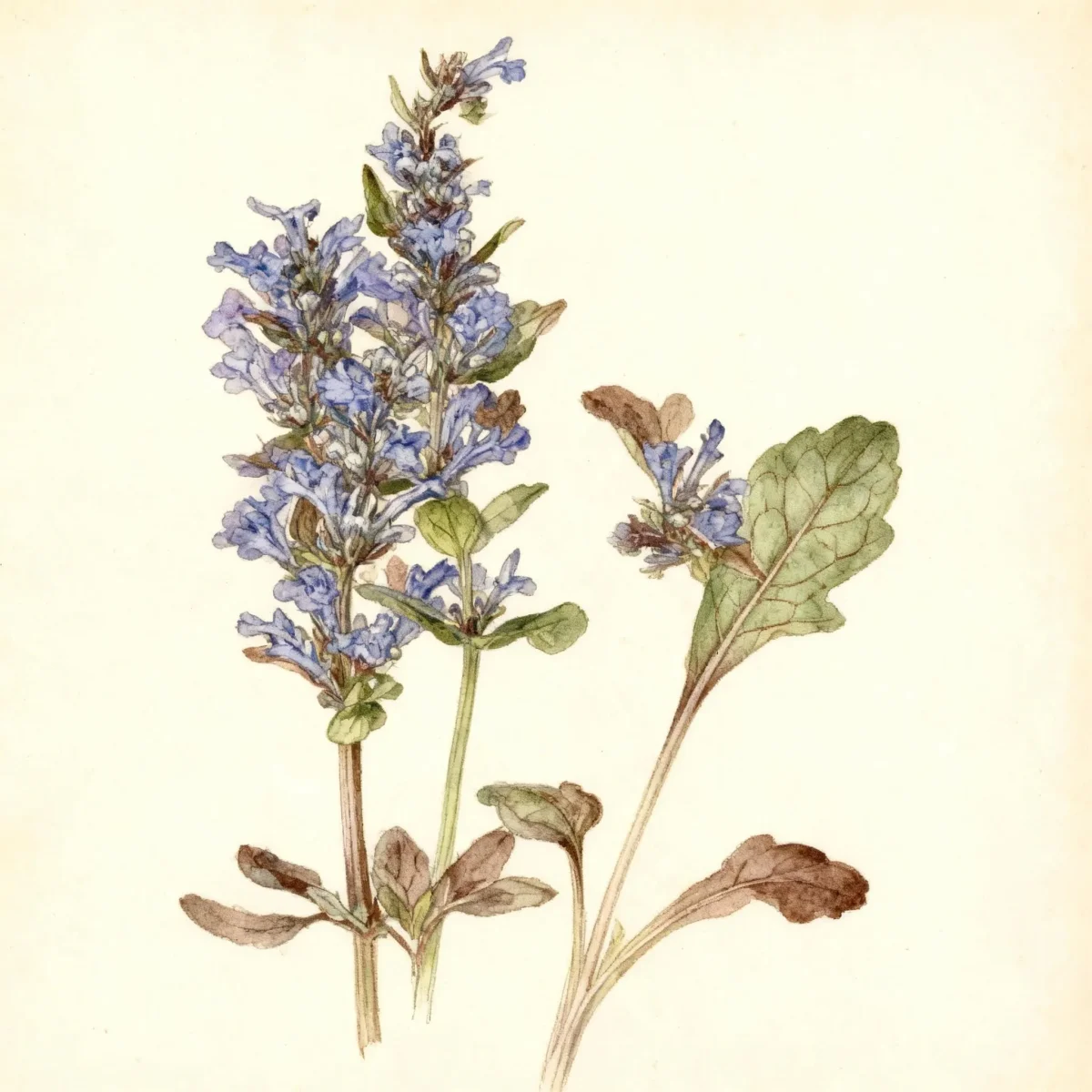
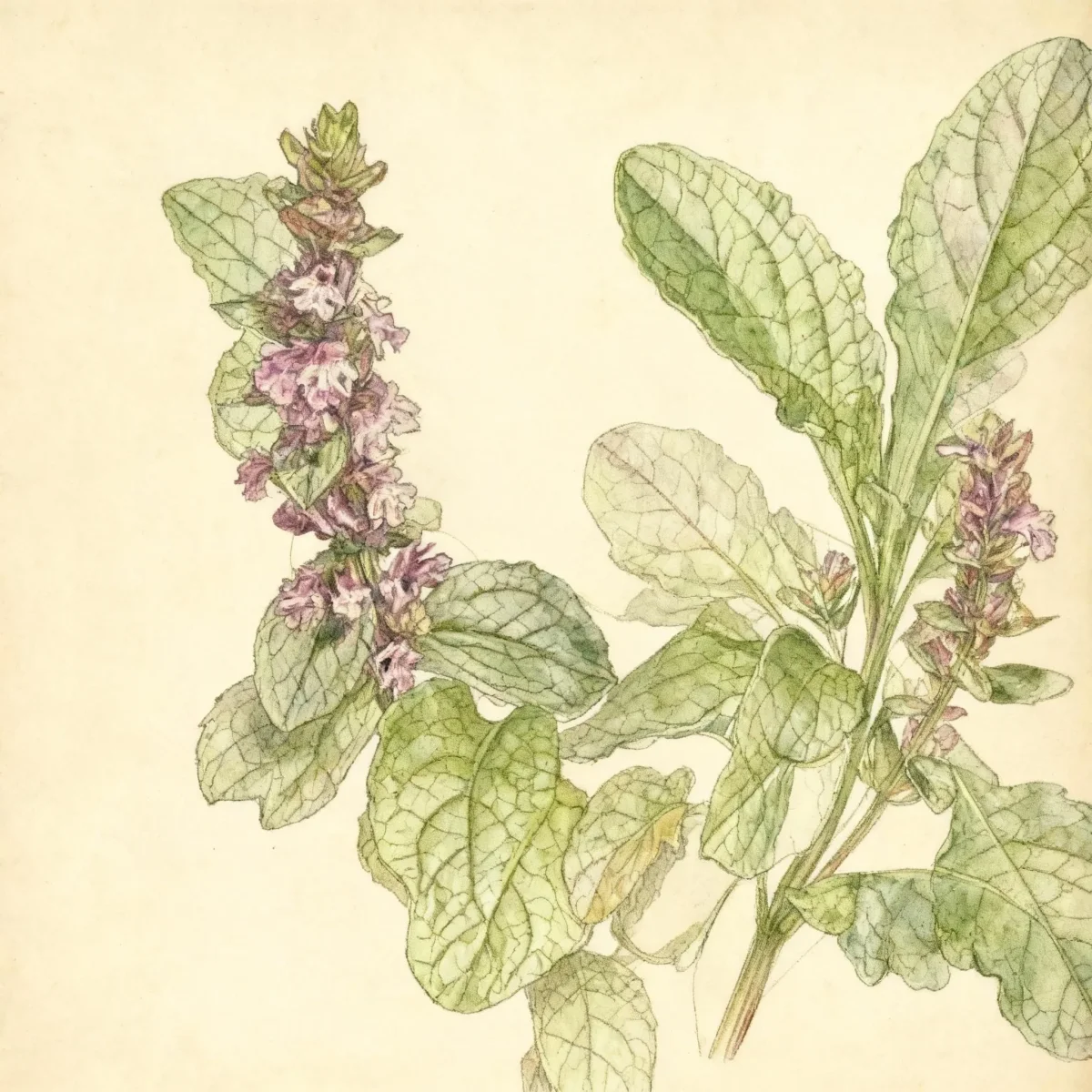
Bugleweed (Ajuga reptans 'Toffee Chip')
Ajuga reptans 'Toffee Chip' bugleweed is a low-maintenance, creeping ground cover prized for its khaki-brown variegated foliage.
Scroll down to discover growing tips, care requirements, companion plants, and more

Complete Plant Information
Overview
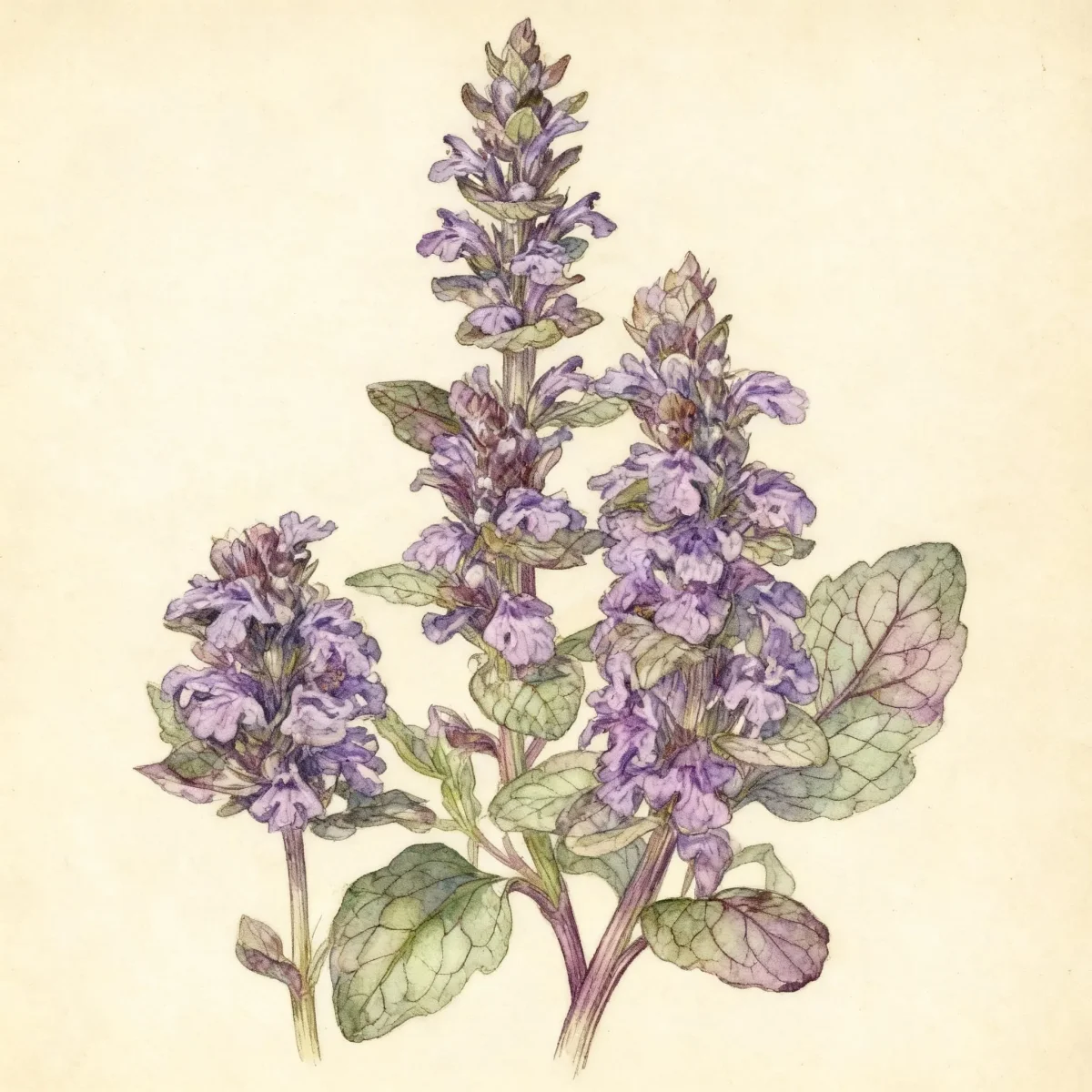
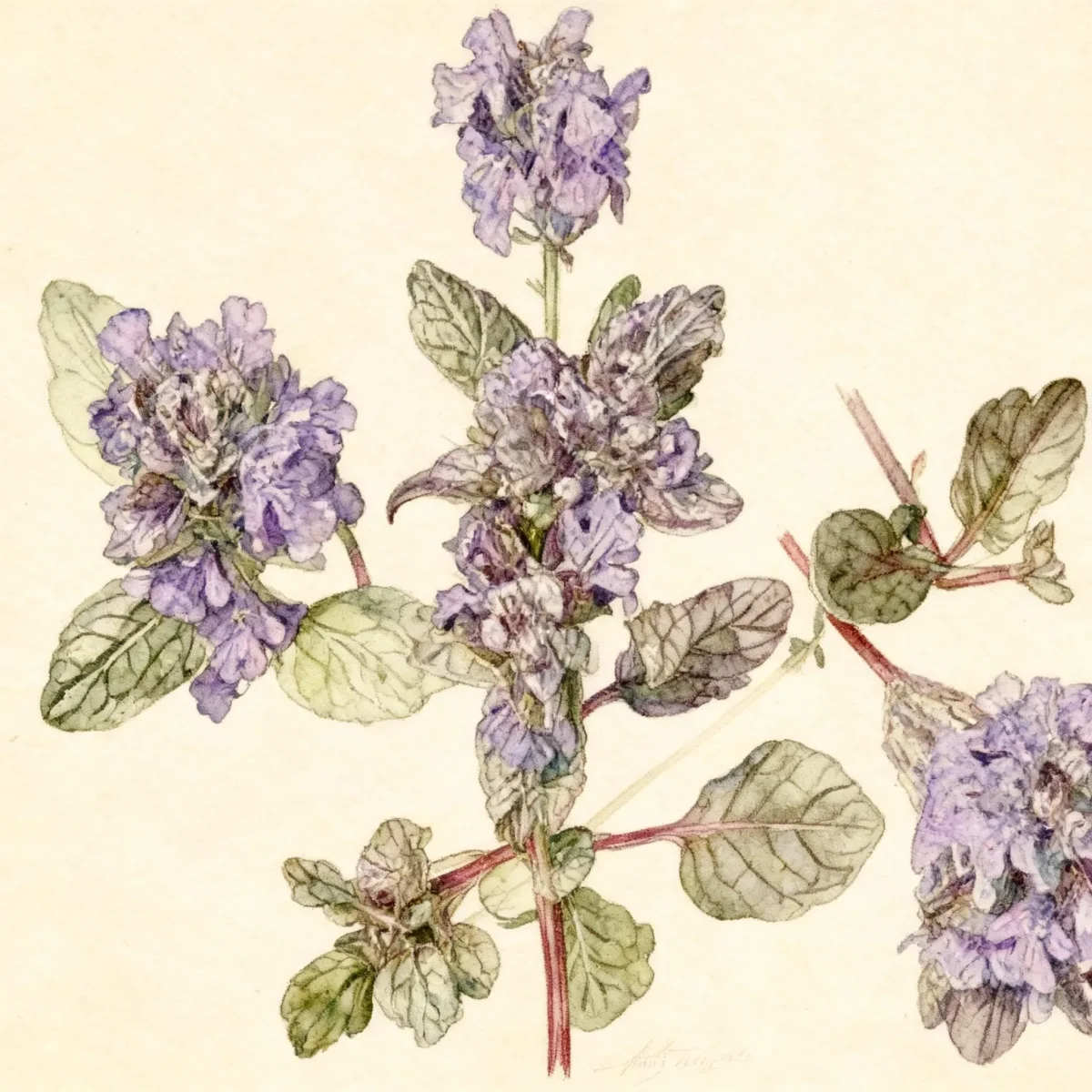
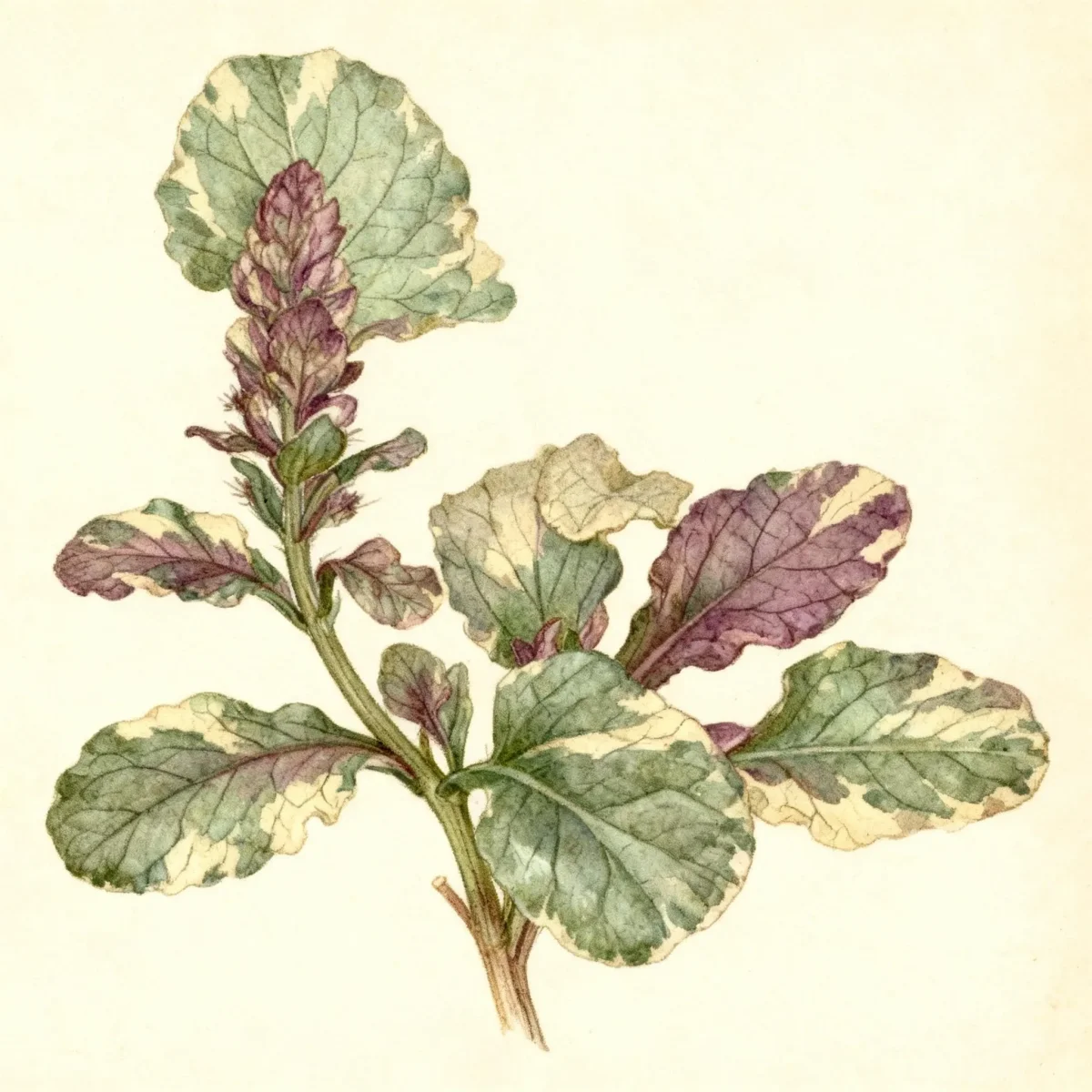
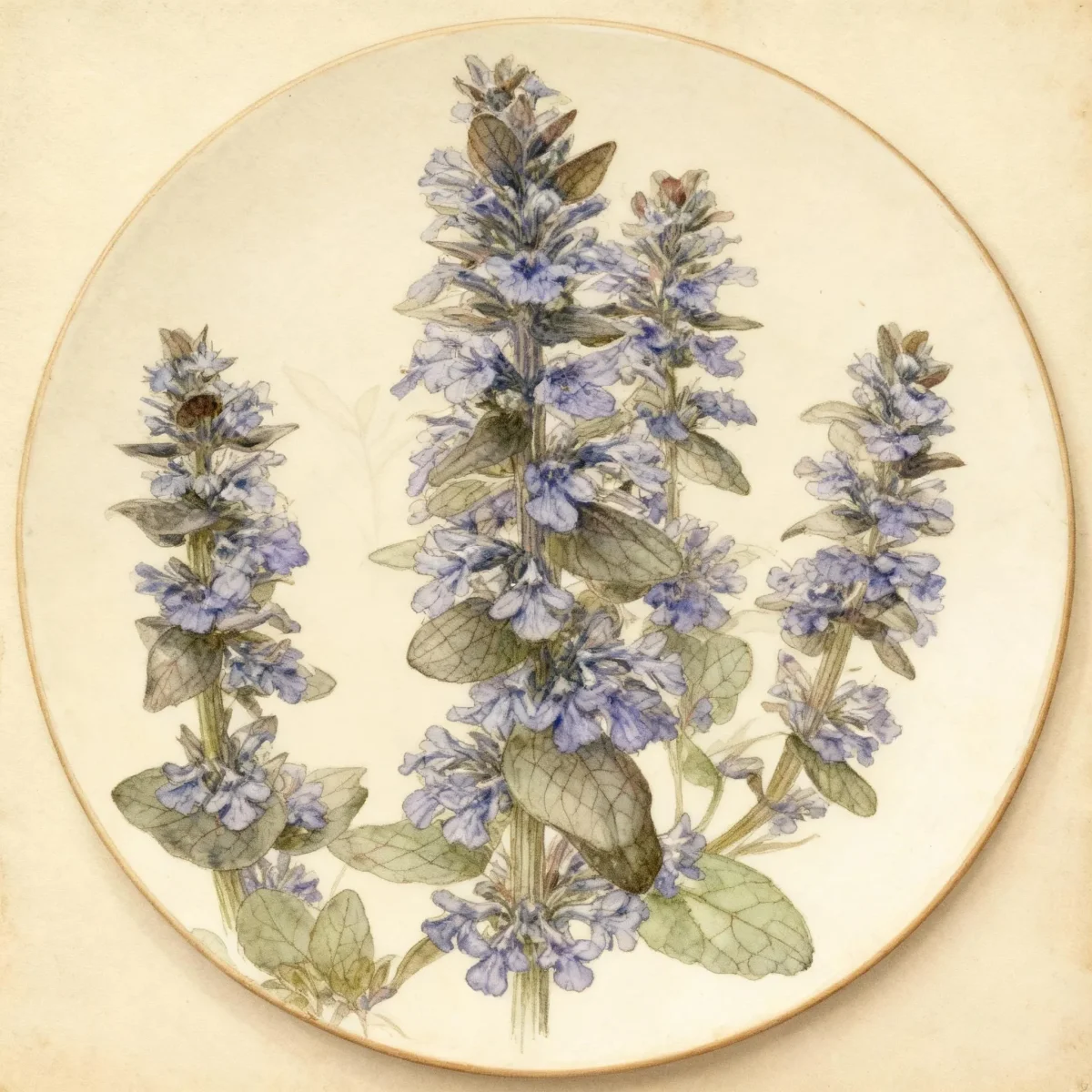
Ajuga reptans ‘Toffee Chip’ is a standout herbaceous perennial celebrated for its dense, mat-forming habit, making it an exceptional choice for ground cover applications. This specific cultivar of Bugleweed features striking variegated foliage that emerges with pale khaki and brown tones before maturing to a lovely gray-green edged with gold or cream margins. While beautiful violet-blue flower spikes emerge in late spring (May to June), this Bugleweed is primarily valued for its evergreen, year-round texture and color contrast.
This low-growing perennial spreads reliably via stolons, quickly forming an attractive, weed-suppressing carpet in medium moisture areas. Gardeners appreciate the low maintenance level of Ajuga reptans ‘Toffee Chip’, as it establishes easily and requires minimal intervention once sited correctly. Its spreading nature fulfills many landscape roles, including stabilizing slopes and filling in deep shade where turf struggles.
The dwarf habit of Ajuga reptans ‘Toffee Chip’ sets it apart from larger Bugleweed varieties, allowing for use in smaller gardens or rockeries. Its inherent hardiness across USDA Zones 4 through 9 further cements its utility across diverse climates, providing reliable ground coverage with minimal fuss.
Fast Facts
- Plant Family: Lamiaceae
- Plant Type: Herbaceous perennial
- Hardiness Zones: USDA Zones 4-9
- Size at Maturity:
- Height: 0.25-0.75 ft
- Spread: 1-1.5 ft
- Bloom Time: May to June
- Bloom Description: Violet-blue
- Sun Exposure: Full sun to part shade
- Water Needs: Medium
- Maintenance Level: Low
How to Grow
Plant Ajuga reptans ‘Toffee Chip’ in average, well-drained soil, ideally sourcing locations that receive part-sun exposure for the best foliage color development. While it tolerates full shade, achieving the rich, variegated tones of ‘Toffee Chip’ requires at least three to four hours of direct sun daily. Space plants between 6 to 9 inches apart if you desire a prompt, solid ground cover, as this Bugleweed spreads effectively through creeping stolons.
Water requirements are medium; ensure the soil remains consistently moist, especially when establishing new plants. Although it tolerates moderately dry conditions, avoid letting the area become completely parched. If planting in hot, humid regions, ensure good air circulation to mitigate the risk of crown rot, a potential issue for this species. Fertilization is rarely needed if the soil is reasonably rich.
Maintenance is generally low. After the brief bloom period, spent flower spikes can be removed by cutting the plants back close to the ground to rejuvenate the foliage display. In fact, established masses of Bugleweed can sometimes be mowed on a high setting to tidy up spent blooms. Be vigilant about removing any reverted, non-variegated leaves that may occasionally appear on your patented Ajuga reptans ‘Toffee Chip’ specimens.
Landscape Uses
The primary function of Ajuga reptans ‘Toffee Chip’ is serving as an effective, attractive ground cover. It excels at filling in large, shaded areas, such as beneath mature tree canopies or around foundational shrubs, where traditional lawns struggle to thrive. Its creeping nature makes it excellent for planting on banks and slopes, offering erosion control while providing visual interest low to the ground.
Designers frequently incorporate this low-growing Bugleweed as an edging material or as a living mulch within mixed perennial beds. It pairs well with spring-blooming bulbs, such as snowdrops, as the ground cover emerges quickly to mask the fading foliage of the bulbs. Exercise caution when planting near lawns, as its vigorous spreading from stolons can result in unwanted islands of Bugleweed appearing in the grass, demanding diligent edging control.
The rich, variegated tapestry created by Ajuga reptans ‘Toffee Chip’ makes it perfect for small spaces, containers that spill over the edges, or as a textural component in shaded rock gardens. Its dense mat chokes out competing weeds, ensuring the desired aesthetic remains unimpeded throughout the growing season.
Standout Features
Flower Qualities
- Showy
Noteworthy Characteristics
Ajuga reptans, commonly called bugleweed, forms a dense, mat-forming ground cover featuring shiny foliage, sending up small whorls of blue-violet flowers in spring. The ‘Toffee Chip’ cultivar is particularly distinguished by its dwarf habit and unique variegated foliage, which transitions from khaki and brown tones to gray-green with gold or cream margins. This specific variety is sterile, meaning it will not produce seed, keeping its spread focused on vegetative creeping rather than self-seeding.
Tolerances
- Rabbit
- Deer
- Black Walnut
Potential Problems
Crown rot poses the most significant threat to the health of Ajuga reptans ‘Toffee Chip’, especially in the humid climates of the deep South or where soils are heavy and retain too much moisture. To ensure success, always select planting sites with good drainage and avoid overly wet areas entirely. Maintaining adequate air circulation around the low-growing plants is crucial for prevention.
Should the plants begin to look overcrowded, division is the recommended management practice; separating the rooted stolons rejuvenates the mass. A common cultural mistake involves planting Bugleweed too closely to borders of lawns or desirable perennial beds, as its spreading tendency requires regular monitoring to prevent unwanted encroachment into these areas.
Frequently Asked Questions
What hardiness zones is Bugleweed suitable for?
Ajuga reptans ‘Toffee Chip’ is adaptable and hardy across USDA Zones 4 through 9, offering reliable perennial performance in many regions.
How large does Bugleweed grow?
This dwarf cultivar remains quite low, typically reaching only 0.25 to 0.75 feet in height, with a spread ranging between 1 and 1.5 feet wide through creeping stolons.
What sun exposure does Ajuga reptans ‘Toffee Chip’ need?
This plant manages well in full sun to part shade, although gardeners aiming for the best variegated leaf coloration should ensure it receives several hours of direct sun each day.
When does Bugleweed bloom?
The fragrant, violet-blue flowers of Ajuga reptans ‘Toffee Chip’ generally emerge on short spikes from May through June.
Conclusion
Ajuga reptans ‘Toffee Chip’ offers gardeners a virtually fail-safe, low-maintenance ground cover solution defined by its distinctive, multi-toned foliage. Its ability to thrive in variable light conditions while suppressing competitive weeds makes this Bugleweed a highly practical landscape asset. Before planting, confirm that your garden falls within USDA Zones 4-9 and ensure your chosen spot offers adequate soil drainage for long-term health.
Companion Planting
Selecting appropriate neighbors is key to maximizing the aesthetic appeal of Ajuga reptans ‘Toffee Chip’ while managing light requirements. Since Bugleweed thrives in part shade, pair it with other shade-loving perennials that offer contrasting forms or bloom times, such as Hostas, Brunnera, or ferns. The creeping habit of the Bugleweed makes it an excellent textural underplanting beneath taller shade shrubs like Hydrangeas or Japanese Maples.
Avoid companion planting with aggressive spreading grasses or shallow-rooted plants that might compete directly for surface moisture, as the Ajuga will quickly claim the available space. Because this cultivar is sterile, you won’t have to worry about cross-pollination or excessive seeding near more delicate border plants.
Seasonal Care Calendar
Spring marks the time to assess the health of your Ajuga reptans ‘Toffee Chip’ after winter dormancy. If the foliage appears messy or tired, this is the ideal time to cut the entire mat back close to the ground to encourage fresh, vibrant new growth, including the variegated Khaki-brown tones. Once spring fades, the violet-blue flowers appear, signaling potential heat and humidity challenges ahead.
Summer care focuses largely on monitoring moisture; supplement watering during dry spells, especially if planted in sunny, exposed areas or containers. As blooms fade, lightly trim the flower stalks to keep the focus purely on the attractive foliage display. If the mat becomes too dense, divide clumps in late summer to maintain vigor.
In autumn, the foliage of this Bugleweed generally stays evergreen or semi-evergreen depending on winter severity, offering continued color contrast near deciduous plants preparing for dormancy. Minimal fall cleanup is required; simply ensure the plant is not buried under excessive leaf litter, which can smother the low-growing Ajuga and promote moisture retention leading to rot.