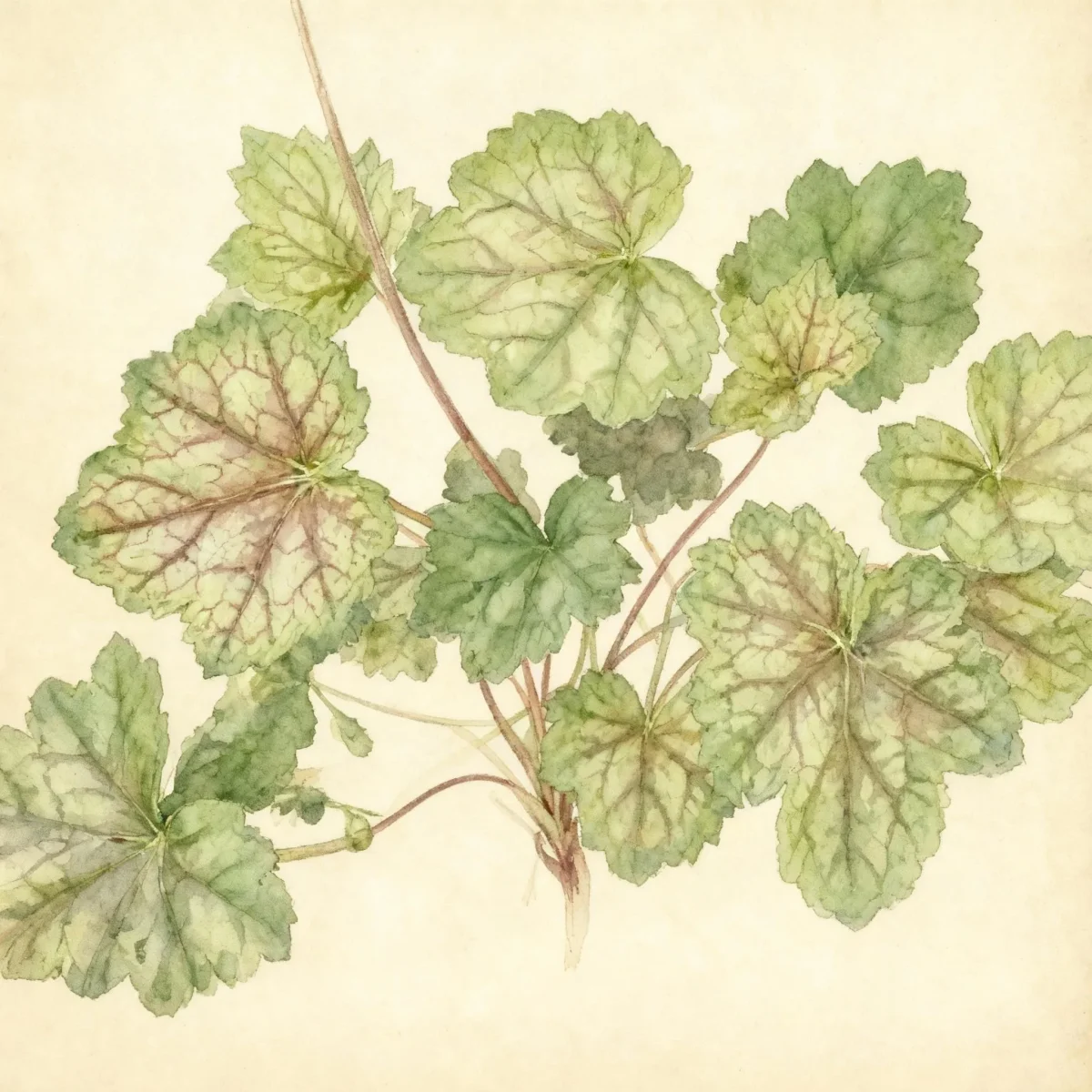
Coral bells (Heuchera 'Mahogany')
Heuchera 'Mahogany' (Coral bells) offers rich mahogany-red foliage, thriving as a perennial in zones 4-9 with minimal fuss.
Scroll down to discover growing tips, care requirements, companion plants, and more
Complete Plant Information
Overview
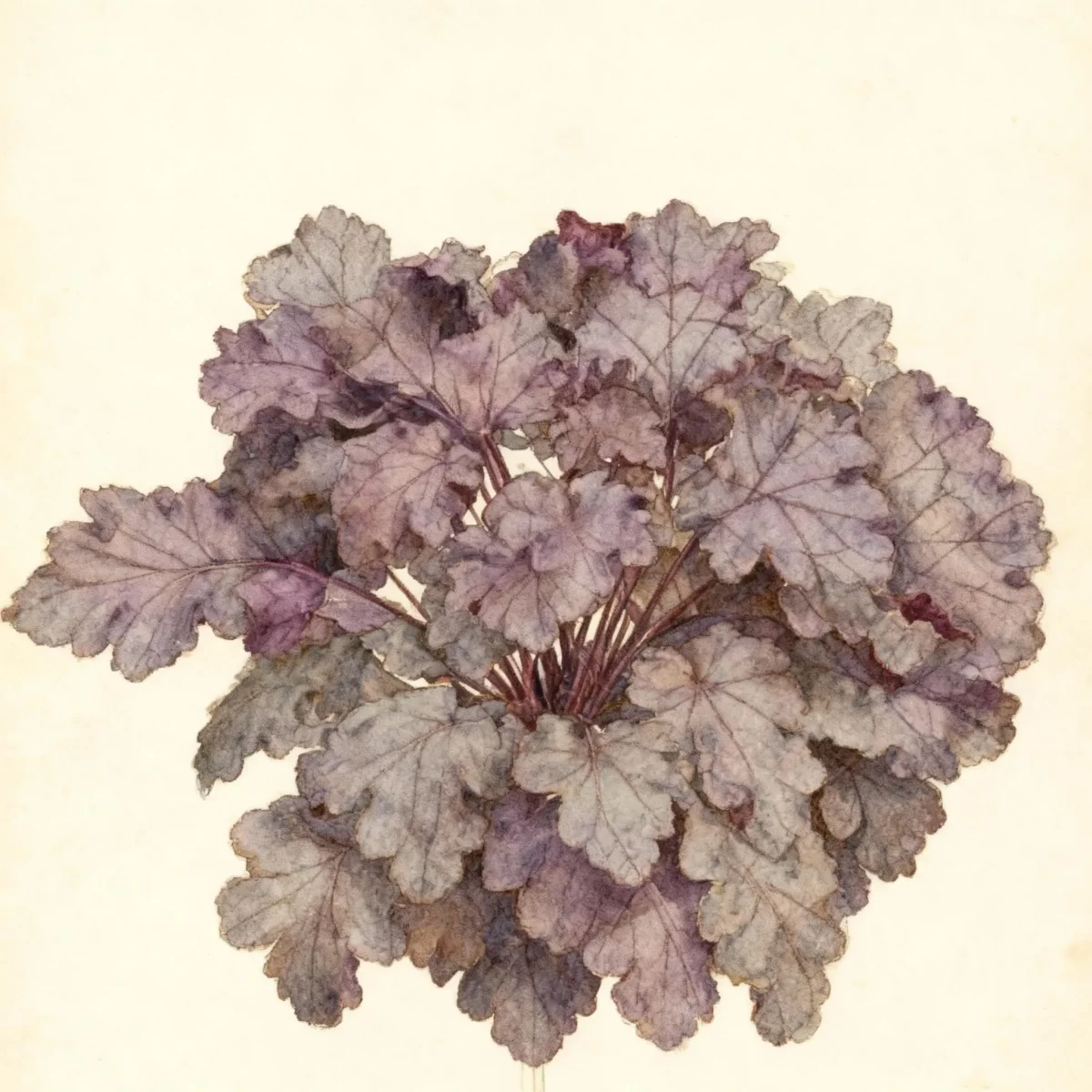
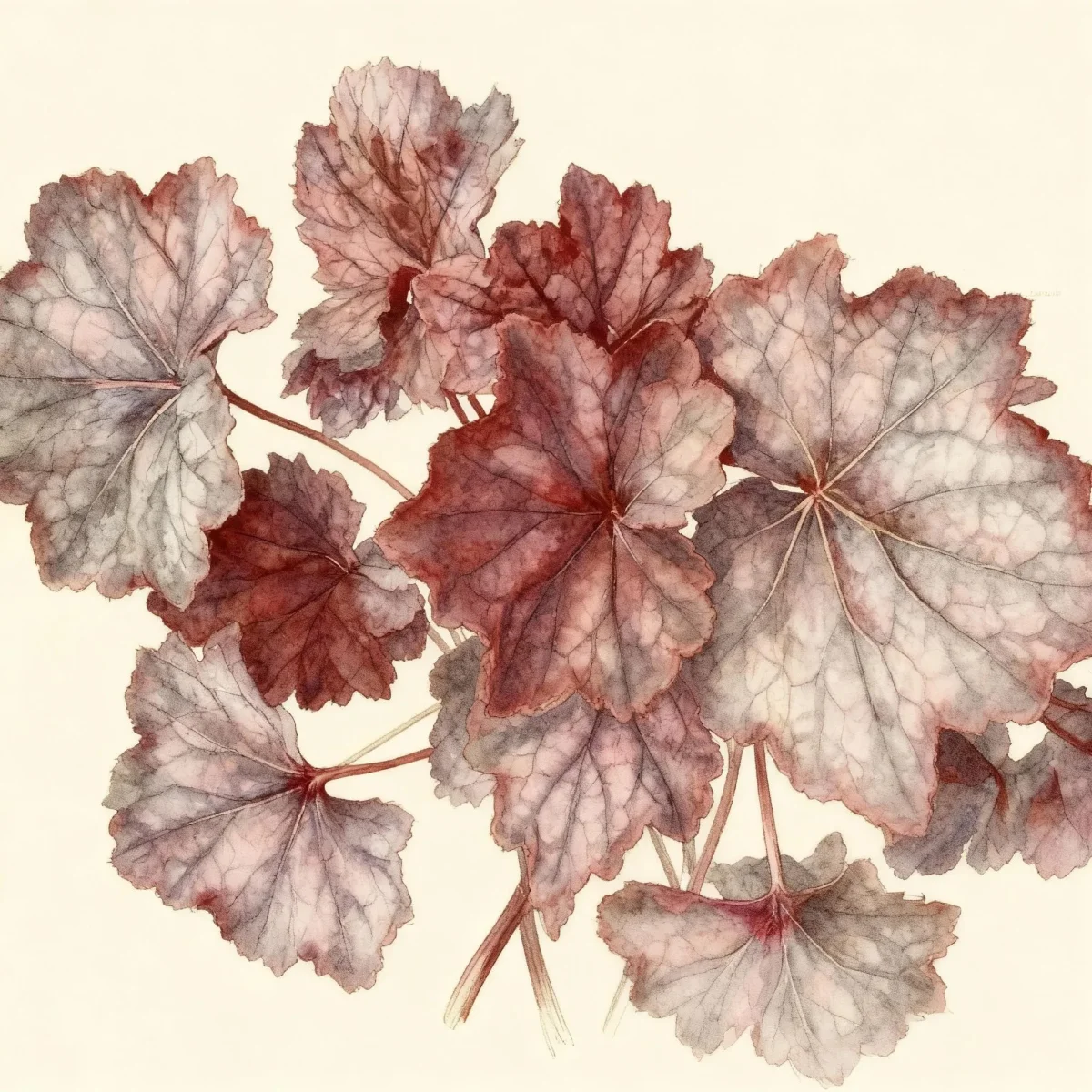
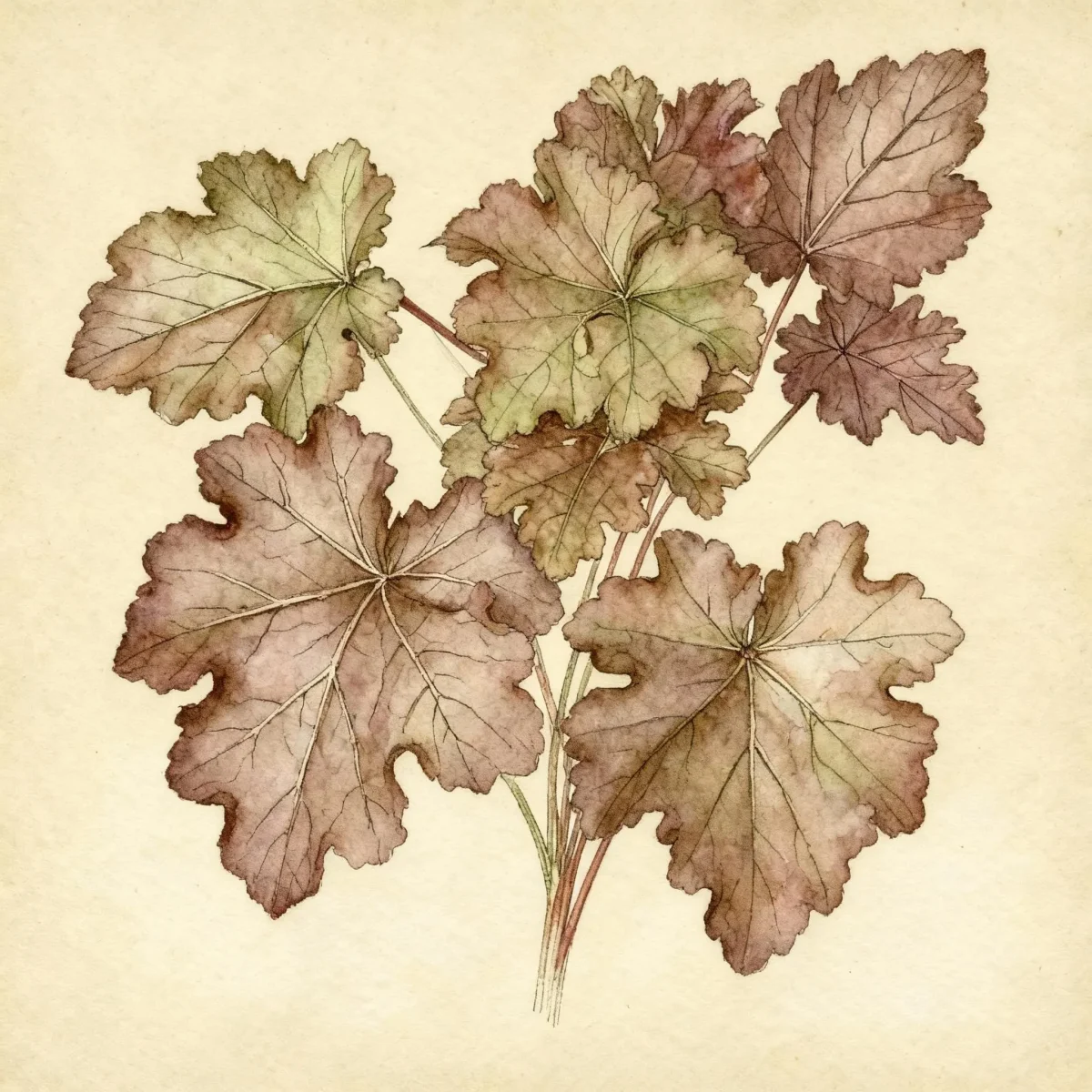
The Heuchera ‘Mahogany’, commonly known as Coral bells, is prized by gardeners for its striking, consistently colored foliage that provides year-round interest. This cultivar develops a dense basal mound, making Heuchera ‘Mahogany’ an exceptional choice for adding deep mahogany-red hues to any shady corner of the garden. As a rugged herbaceous perennial, it offers beauty with relatively straightforward care requirements across many climates.
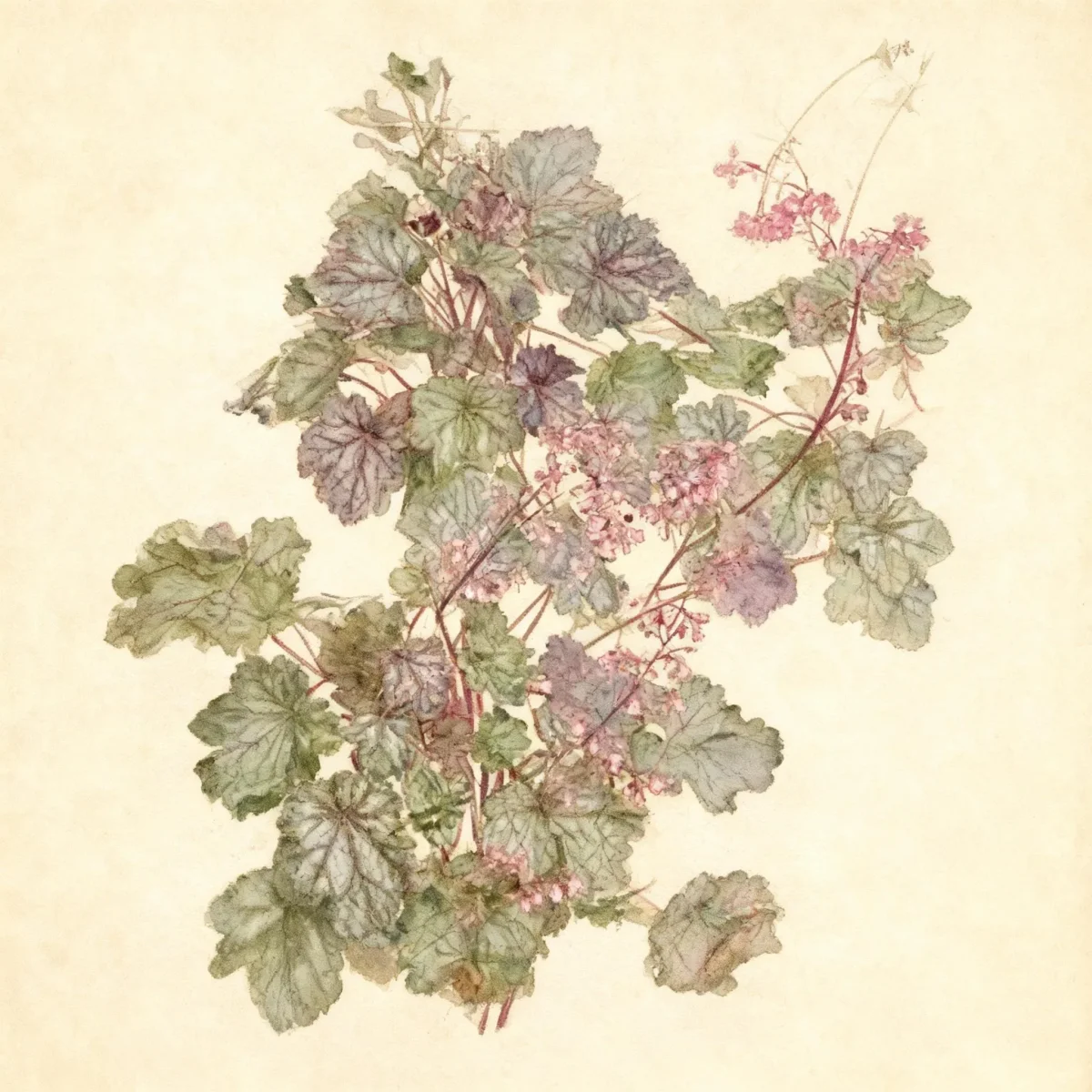
While the foliage is the main draw, this variety also produces delicate, creamy white flowers throughout early summer on slender stems that rise above the dense mound. Belonging to the Saxifragaceae family, these Coral bells hybrid cultivars have become staples in modern landscape design due to their adaptability and vibrant leaf coloration, far surpassing the characteristics of their species ancestors.
Heuchera ‘Mahogany’ is robust, typically maintaining its presence even through cooler winters, though the intensity of the winter color depends on the severity of the cold. Its manageable size and clumping habit ensure it integrates seamlessly into mixed borders or rock gardens, serving as a dependable, colorful anchor plant.
Fast Facts
- Plant Family: Saxifragaceae
- Plant Type: Herbaceous perennial
- Hardiness Zones: USDA Zones 4-9
- Size at Maturity:
- Height: 0.75-1 ft
- Spread: 0.75-1.5 ft
- Bloom Time: June to July
- Bloom Description: Creamy white
- Sun Exposure: Full sun to part shade
- Water Needs: Medium
- Maintenance Level: Medium
How to Grow
Planting Heuchera ‘Mahogany’ is best done when soils are workable, typically in spring or early fall. These Coral bells perform optimally in organically rich, humusy soils that retain medium moisture but drain exceptionally well. Ensure no low spots collect standing water, as poor drainage can lead to root issues.
Consistent watering is crucial, especially if you choose an area receiving full afternoon sun, as dryness can cause leaf scorch and decline. For southern locations, prioritize afternoon shade to protect the rich mahogany foliage from intense heat. While fertilization is usually unnecessary in rich soil, a light dressing of compost annually helps maintain soil vitality.
Maintenance for Heuchera ‘Mahogany’ is generally low. Deadhead (remove) the stems of faded flowers to encourage any possible repeat blooming, though the primary appeal remains the leaf color. In very cold regions, apply a winter compost mulch only after the ground freezes completely to prevent root heaving during freeze-thaw cycles.
To maintain vigor and size, plan to divide these clumps every three to four years during the spring. This division process refreshes the plants and prevents overcrowding, ensuring the best possible display of the signature mahogany leaves.
Landscape Uses
Heuchera ‘Mahogany’ excels when used to line pathways or accent the edges of garden beds, providing a low-growing, richly colored border that defines space without obstructing views. Because they form attractive, dense mounds, they are highly effective when planted in mass groupings where their deep mahogany tones can create a dramatic, unified sweep of color.
Beyond traditional borders, these Coral bells thrive in less conventional settings. They are excellent additions to rock gardens, benefiting from the sharp drainage often provided in such environments. They also add essential dark contrast in open woodland gardens where dappled light filters through the canopy.
Consider pairing Heuchera ‘Mahogany’ with plants that offer contrasting textures or lighter colors. Hostas, light green ferns, or silver-leaved Lamb’s Ears create stunning visual dynamics next to the deep mahogany foliage of this cultivar.
Standout Features
Flower Qualities
- Showy
Noteworthy Characteristics
Heuchera, commonly called coral bells or alumroot, is a genus consisting of about 55 species of evergreen to semi-evergreen herbaceous perennials which are all native to North America. The leaves of these hybrid plants are available in an expanded variety of colors, often featuring variegation, but the ‘Mahogany’ cultivar is recognized for its consistent mahogany leaf color that emerges with purple tones before maturing to a deep mahogany-red. This vigorous, clump-forming variety typically grows to about 8 inches tall, producing tiny, showy, creamy white flowers in summer.
Tolerances
Potential Problems
Frost heaving presents a risk when winter temperatures fluctuate widely, potentially pushing the roots out of the soil; prevention involves applying mulch only after the ground freezes solid. Disease pressures can include powdery mildew, rust, and bacterial leaf spot, typically exacerbated by poor air circulation or overly wet foliage. Watch for insect pests such as weevils and foliar nematodes, managing infestations promptly.
Frequently Asked Questions
What hardiness zones is Coral bells suitable for?
Heuchera ‘Mahogany’ is reliably hardy across USDA Zones 4 through 9.
How large does Coral bells grow?
This cultivar typically reaches a height between 0.75 and 1 foot tall, spreading between 0.75 and 1.5 feet wide as a dense basal mound.
What sun exposure does Coral bells need?
Heuchera ‘Mahogany’ is adaptable, tolerating conditions ranging from full sun to partial shade, though afternoon shade is recommended in hotter climates.
When does Coral bells bloom?
These Coral bells produce their creamy white flowers between June and July.
Conclusion
Heuchera ‘Mahogany’ provides exceptional ornamental value through its deep mahogany foliage, making it a low-maintenance cornerstone for shade or partial sun plantings. This vigorous Coral bells cultivar ensures strong visual structure throughout the season. Before planting, confirm your site falls within USDA Zones 4-9 and ensure you provide well-draining, humus-rich soil for the best performance.
Companion Planting Ideas
Selecting appropriate neighbors for Heuchera ‘Mahogany’ greatly enhances its visual impact in the garden. Because Coral bells thrive in similar conditions (part shade, moist, rich soil), many woodland and shade-loving companions integrate seamlessly. Hostas, especially those with chartreuse or variegated leaves, offer a brilliant contrast to the dark mahogany coloring, emphasizing the deep saturation of the Heuchera.
Consider planting along shaded borders with Columbine (Aquilegia) or Astilbe. The airy, fine texture of these companions softens the mounding habit of the Heuchera ‘Mahogany’ while their bloom times often overlap or provide sequential interest. Remember that the primary goal when pairing is to contrast both color and texture against the solid, year-round presence of these Coral bells.
Propagation Tips
The most reliable method for increasing the stock of Heuchera ‘Mahogany’ is through division, as established hybrids are rarely grown true to seed. Divide the clumps in spring just as new growth is emerging, ensuring each section you separate has a healthy portion of roots and crown tissue attached. This rejuvenation process should ideally be performed every three to four years to keep the existing mounds vigorous and prevent overcrowding.
Conclusion
Heuchera ‘Mahogany’ provides exceptional ornamental value through its deep mahogany foliage, making it a low-maintenance cornerstone for shade or partial sun plantings. This vigorous Coral bells cultivar ensures strong visual structure throughout the season. Before planting, confirm your site falls within USDA Zones 4-9 and ensure you provide well-draining, humus-rich soil for the best performance.