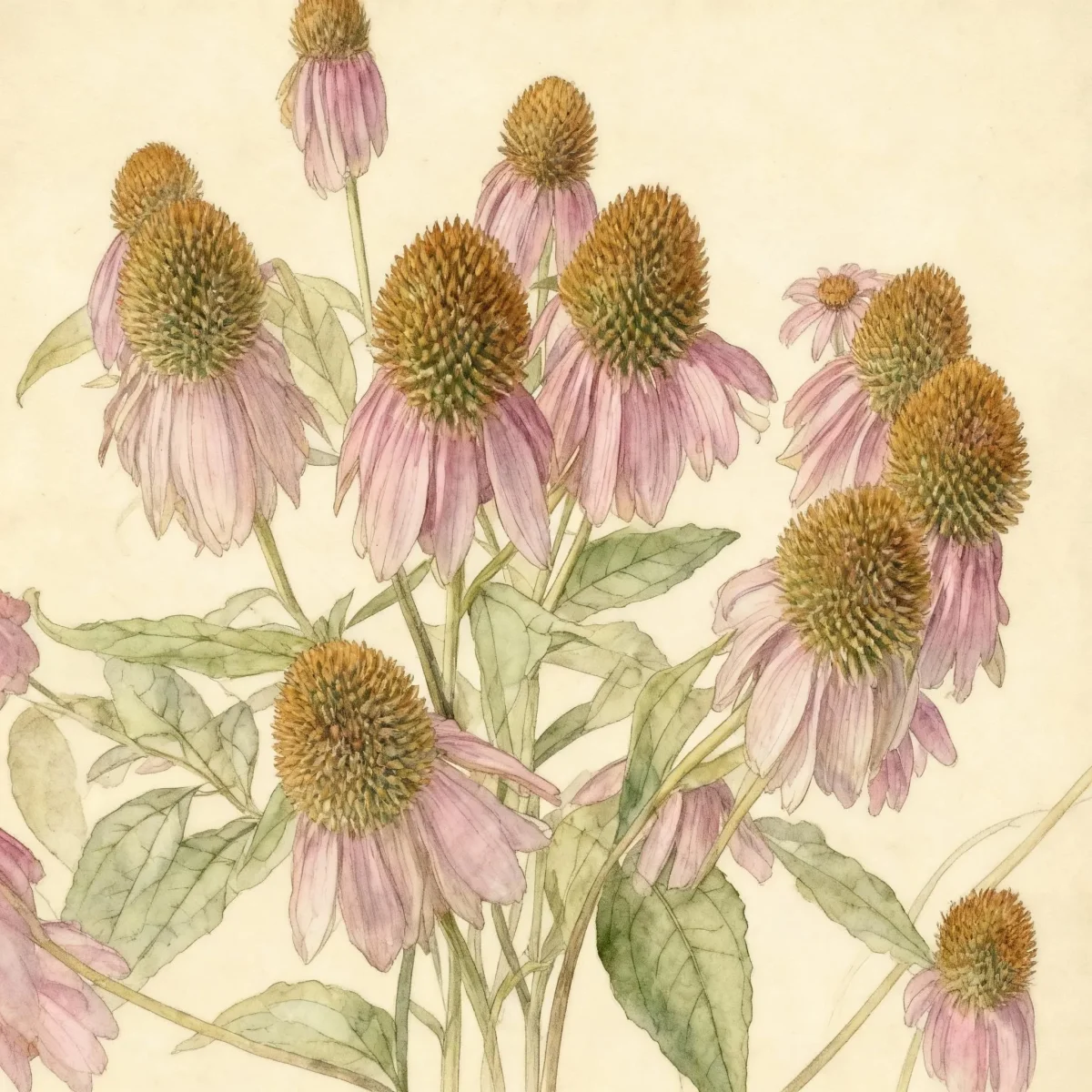
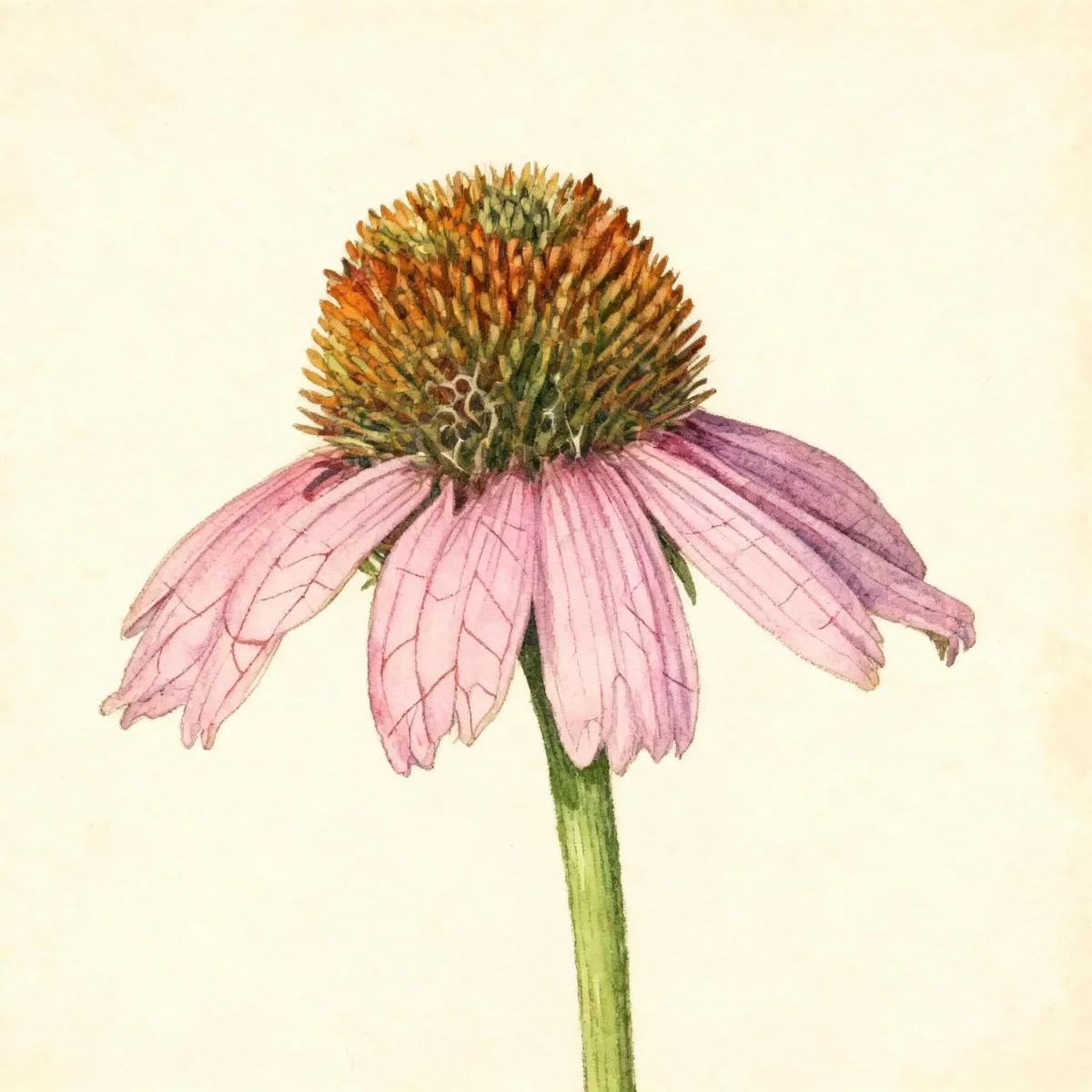
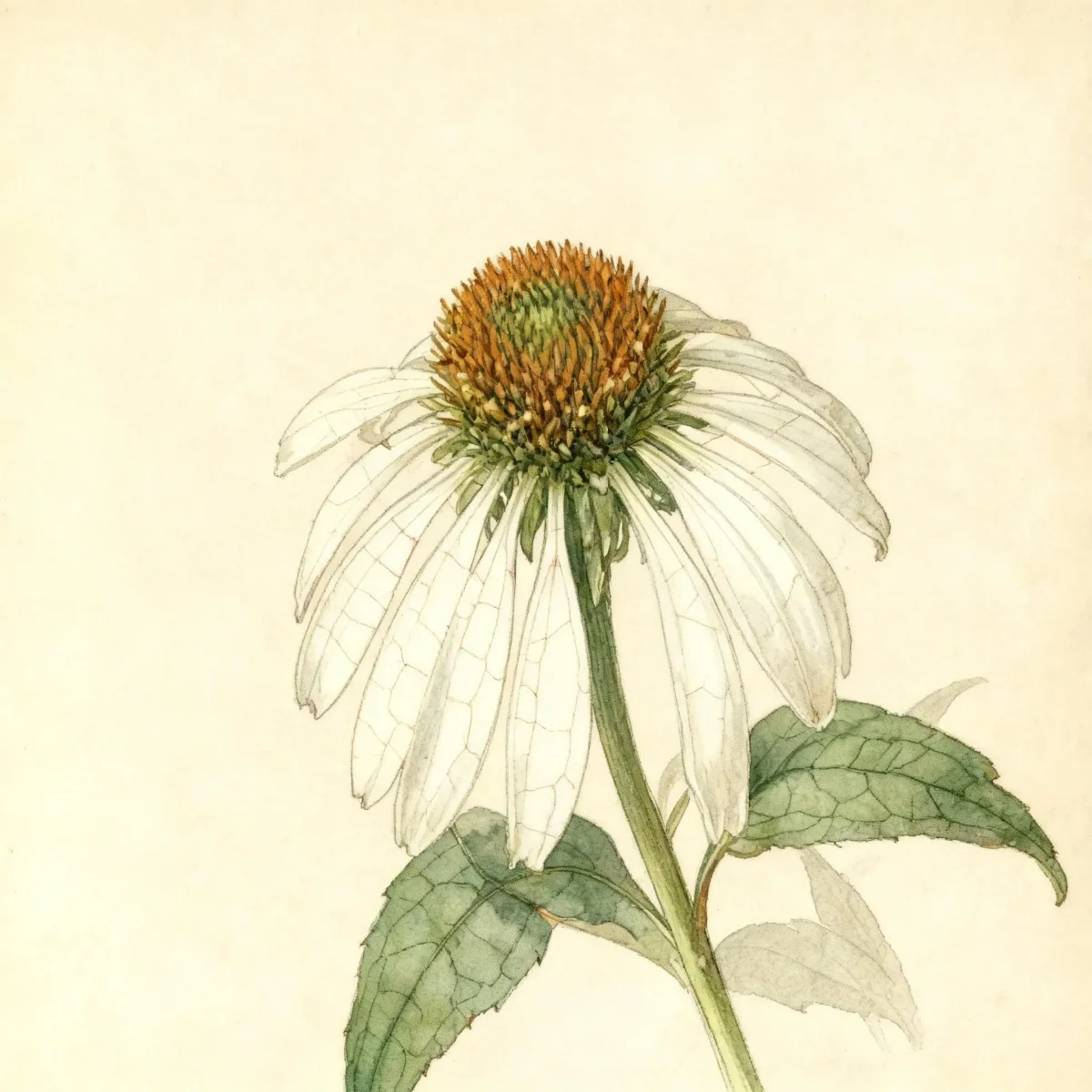
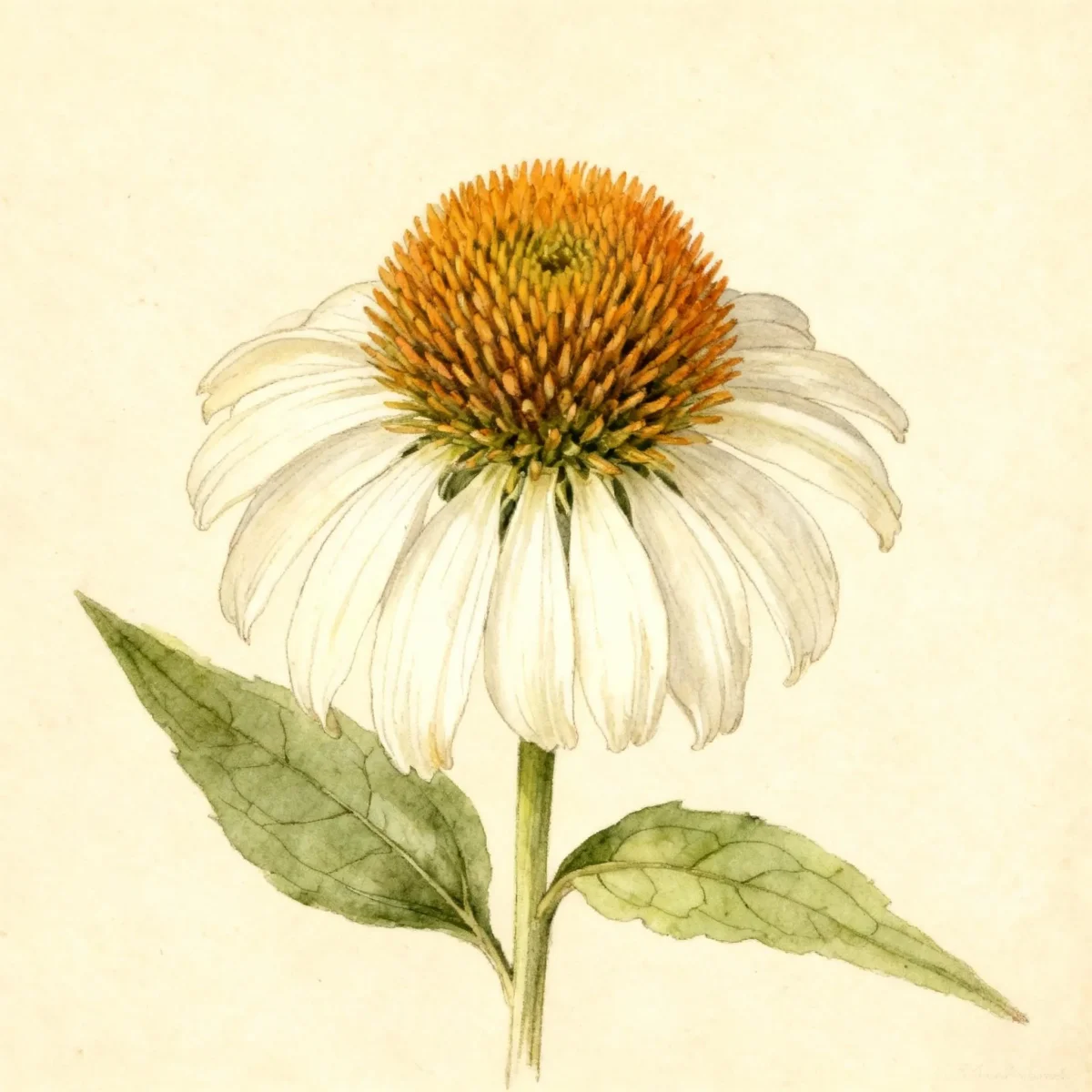
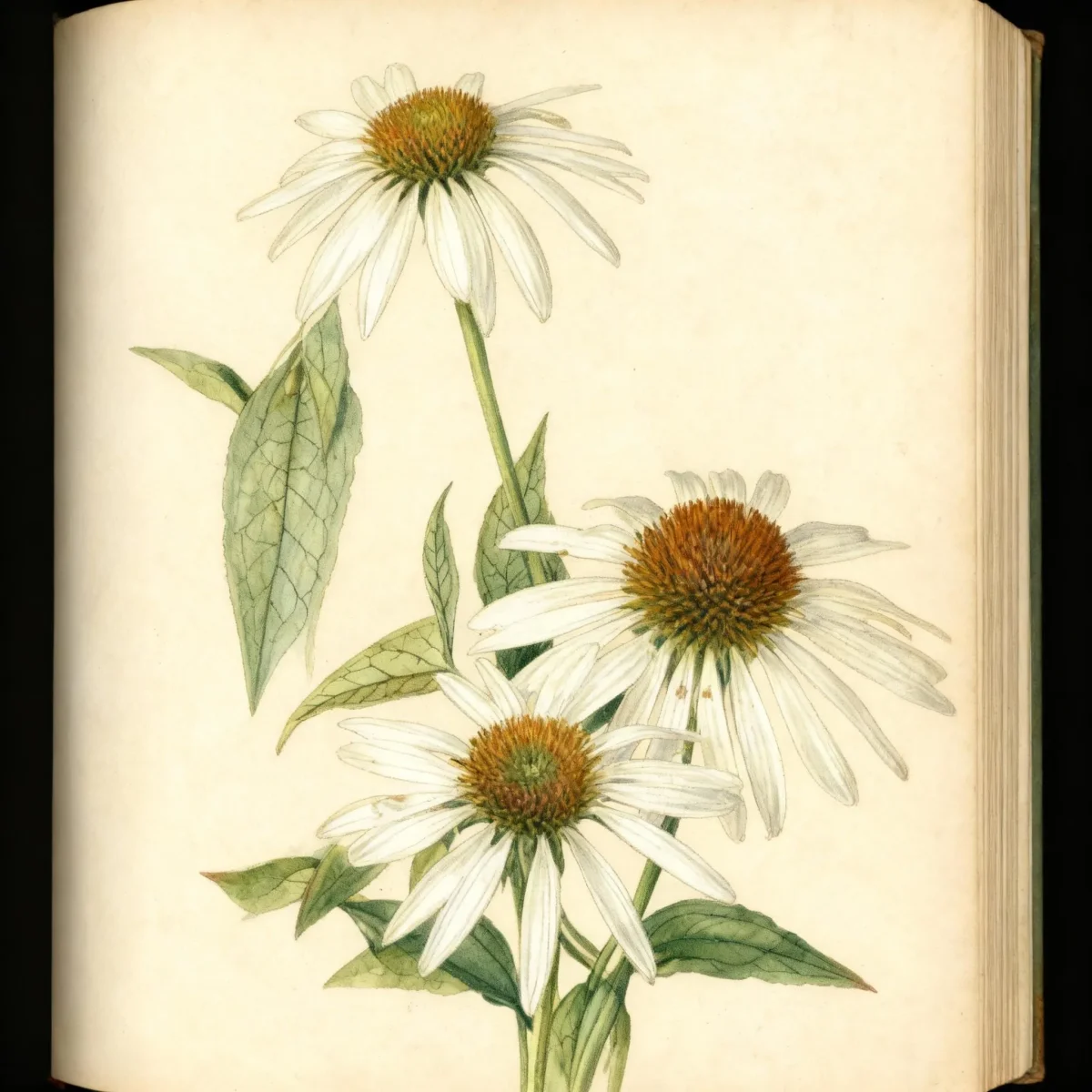
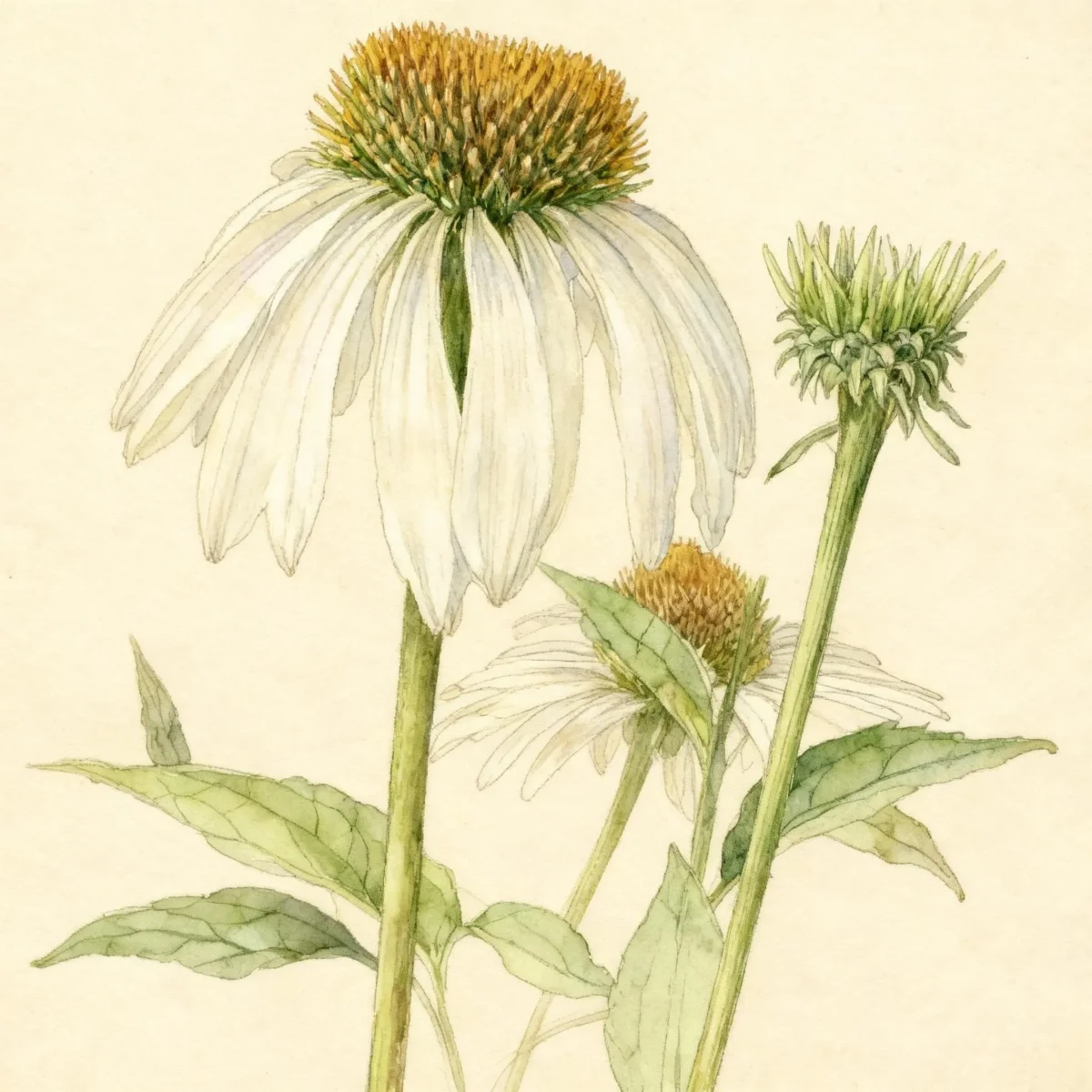
Purple coneflower (Echinacea purpurea 'Avalanche')
Echinacea purpurea 'Avalanche' is a low-maintenance, showy purple coneflower cultivar with striking white blooms and good cut flower potential.
Scroll down to discover growing tips, care requirements, companion plants, and more
Complete Plant Information
Overview
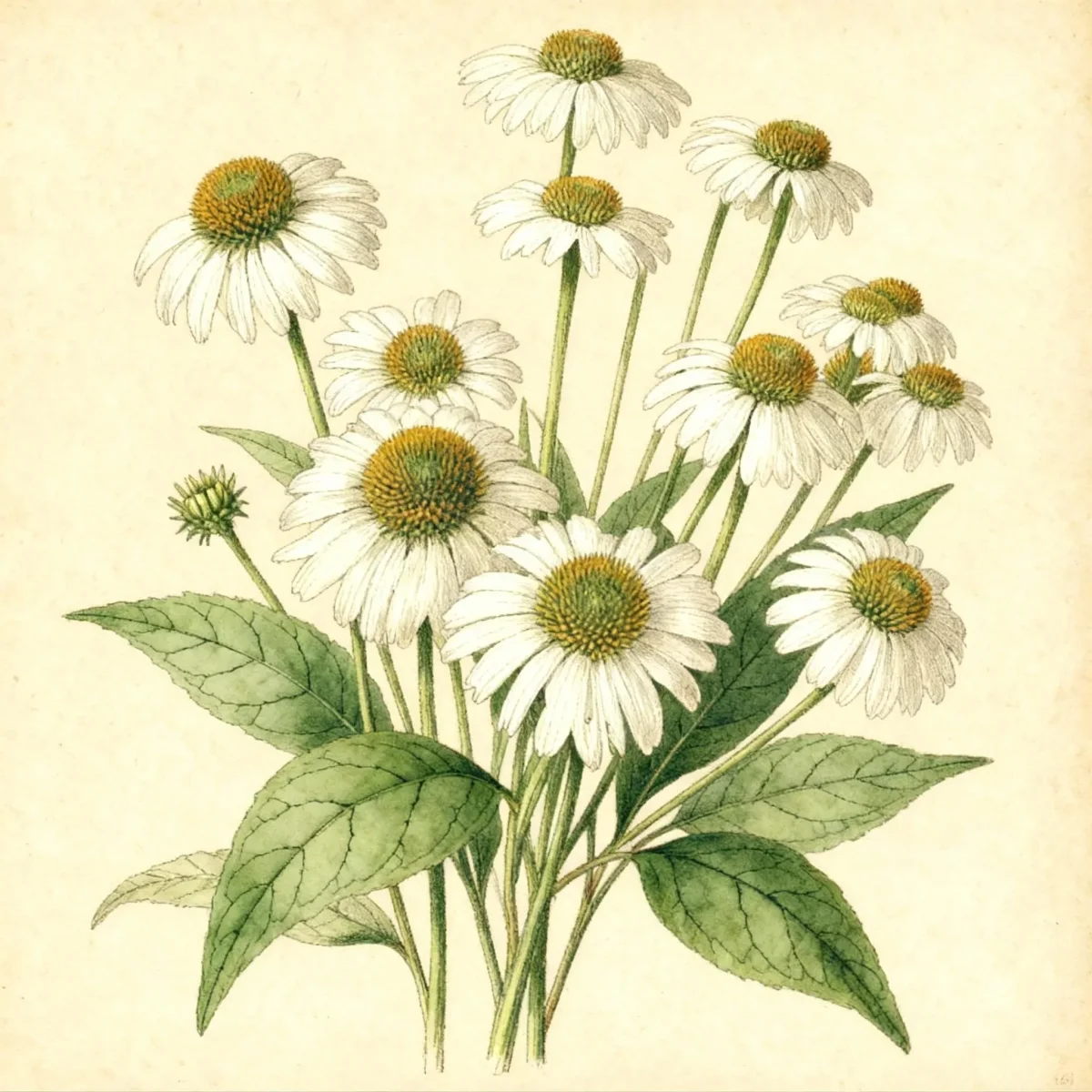
Echinacea purpurea ‘Avalanche’, a celebrated cultivar of the Purple coneflower, offers gardeners a crisp, bright accent in the summer landscape. This variety stands out with its refined, upright habit and classic daisy-like flowers featuring clean white ray petals contrasting beautifully against a prominent yellow-green center cone. As a relatively compact herbaceous perennial, it brings structure to garden beds without becoming overly large or floppy.
This adaptable Echinacea thrives across a wide range of conditions, prized for its low maintenance requirements once established. It handles everything from drought to poor soil types with resilience, making it an excellent choice for both novice and experienced gardeners seeking reliable summer color. The long bloom period from June to August ensures sustained visual interest.
Beyond its aesthetic appeal, the Purple coneflower supports local ecosystems. While the blooms are showy and excellent for cutting, leaving some seed heads offers valuable winter interest and for feeding goldfinches. Planting Echinacea purpurea ‘Avalanche’ means investing in a sturdy, long-lived perennial that anchors perennial borders year after year.
Fast Facts
- Plant Family: Asteraceae
- Plant Type: Herbaceous perennial
- Hardiness Zones: USDA Zones 3-8
- Size at Maturity:
- Height: 1-1.5 ft
- Spread: 0.75-1 ft
- Bloom Time: June to August
- Bloom Description: White with yellow-green center cone
- Sun Exposure: Full sun to part shade
- Water Needs: Dry to medium
- Maintenance Level: Low
How to Grow
Plant Echinacea purpurea ‘Avalanche’ in the spring or fall, ensuring the location provides full sun for the best flowering performance, though it tolerates light afternoon shade. The key to success lies in excellent drainage; this plant strongly dislikes wet feet, so amend heavy clay soil if necessary, though it exhibits good tolerance once established. Incorporate compost at planting time to improve soil structure, but heavy fertilization is rarely needed.
Water new plantings regularly until they are fully established, allowing the soil to dry between waterings as the established plant is highly drought tolerant. For established clumps, supplemental watering is generally only necessary during prolonged dry spells. Deadheading spent flowers is typically optional; plants often rebloom without it, but prompt removal improves the season-long appearance.
For maintaining vigor, divide overcrowded clumps every four years, usually in spring or early fall. If you wish to encourage self-seeding for a more naturalized look or to feed birds, leave the seed heads standing into the winter. Otherwise, trim back spent stems in late fall or early spring before new growth emerges.
Landscape Uses
Echinacea purpurea ‘Avalanche’ is perfectly suited for mass planting, creating impactful drifts of white across the landscape. Its sturdy, compact nature makes it an excellent choice for the middle or front of mixed perennial borders where its clean white flowers can pop against darker foliage of neighboring plants. Consider grouping it with other drought-tolerant natives like black-eyed Susans (Rudbeckias) for a classic prairie or meadow garden aesthetic.
Due to its manageable height of 1 to 1.5 feet, this Purple coneflower cultivar fits well into structure garden designs, cottage gardens, or even naturalized settings where its rigid stems provide necessary vertical elements. It performs admirably in drier sections of a woodland garden or areas prone to poor soil conditions, provided it receives adequate sunlight.
This versatile plant acts as a brilliant visual counterpoint to deep purples and blues in the summer garden. Use the showy blooms as dependable fresh cut flowers or for drying; the sturdy stems of Echinacea purpurea ‘Avalanche’ hold up well after harvest.
Standout Features
Flower Qualities
- Showy
- Good Cut
Noteworthy Characteristics
Echinacea purpurea, commonly called purple coneflower, is a coarse, rough-hairy, herbaceous perennial native to moist prairies, meadows, and open woods across the central to southeastern United States. Showy daisy-like flowers typically bloom throughout summer atop stiff stems clad with coarse, dark green leaves. The genus name Echinacea refers to the Greek word for hedgehog, referencing the spiny central cone found on most flowers. The specific cultivar ‘Avalanche’ grows compactly, only reaching 15-18 inches tall, and produces flowers with distinct white rays and yellow-green centers.
Tolerances
- Deer
- Drought
- Clay Soil
- Dry Soil
- Shallow-Rocky Soil
Potential Problems
The primary pests occasionally noted for this Purple coneflower include Japanese beetle feeding and localized leaf spot diseases. Susceptibility to aster yellows disease, which can cause distorted growth, is also a consideration in some regions. Good air circulation, achieved through proper spacing and a commitment to full sun exposure, helps mitigate fungal issues like leaf spot. Monitoring for Japanese beetles early in the season allows for prompt control before significant aesthetic damage occurs.
Frequently Asked Questions
What hardiness zones is Echinacea purpurea ‘Avalanche’ suitable for?
Echinacea purpurea ‘Avalanche’ is a resilient perennial suited for USDA Hardiness Zones 3 through 8.
How large does Purple coneflower grow?
This cultivar typically reaches a mature height between 1 and 1.5 feet tall, with a spread of about 0.75 to 1 foot wide.
What sun exposure does Echinacea purpurea ‘Avalanche’ need?
For optimal blooming, this plant requires full sun, though it can tolerate conditions classified as part shade.
When does Purple coneflower bloom?
Echinacea purpurea ‘Avalanche’ displays its beautiful white flowers from June through August.
Conclusion
The Echinacea purpurea ‘Avalanche’ provides gardeners with a dependable, low-fuss perennial celebrated for its striking white blooms and excellent adaptability. This specific cultivar of Purple coneflower maintains a tidy stature while offering the proven hardiness of its species. Ensure your site provides full sun and well-drained conditions before planting this summer star.
Companion Planting
When designing a perennial bed around Echinacea purpurea ‘Avalanche’, prioritize companions that share similar architectural needs and drought tolerance. Plants requiring similar conditions of sun and drainage will flourish alongside this coneflower. Grouping with lower-growing Sedums or ornamental grasses creates interesting textural contrast without shading out the shorter coneflower blooms.
Consider surrounding your ‘Avalanche’ with deep-colored bloomers to maximize the visual impact of the white petals. Plants like Russian Sage (Perovskia atriplicifolia) or tall Salvia varieties peak around the same time, creating beautiful layered effects in a full-sun border. Remember that Echinacea provides great vertical structure, so place shorter, mounding plants in front.
Wildlife Benefits
While this cultivar is prized for its aesthetic value, the structural elements of Echinacea purpurea ‘Avalanche’ naturally benefit birds. The sturdy seed heads that mature in the late season provide an essential food source for goldfinches throughout the cooler months if left standing. Planting Echinacea is a reliable method to attract beneficial pollinators, as the open cone structure is easily accessible to bees and butterflies visiting during the peak bloom time of June to August.