Dalmatian iris (Iris pallida 'Dalmatica')
Discover the heirloom Iris pallida 'Dalmatica', the Dalmatian iris, prized for fragrant lavender-purple blooms and durable foliage.
Scroll down to discover growing tips, care requirements, companion plants, and more
Complete Plant Information
Overview
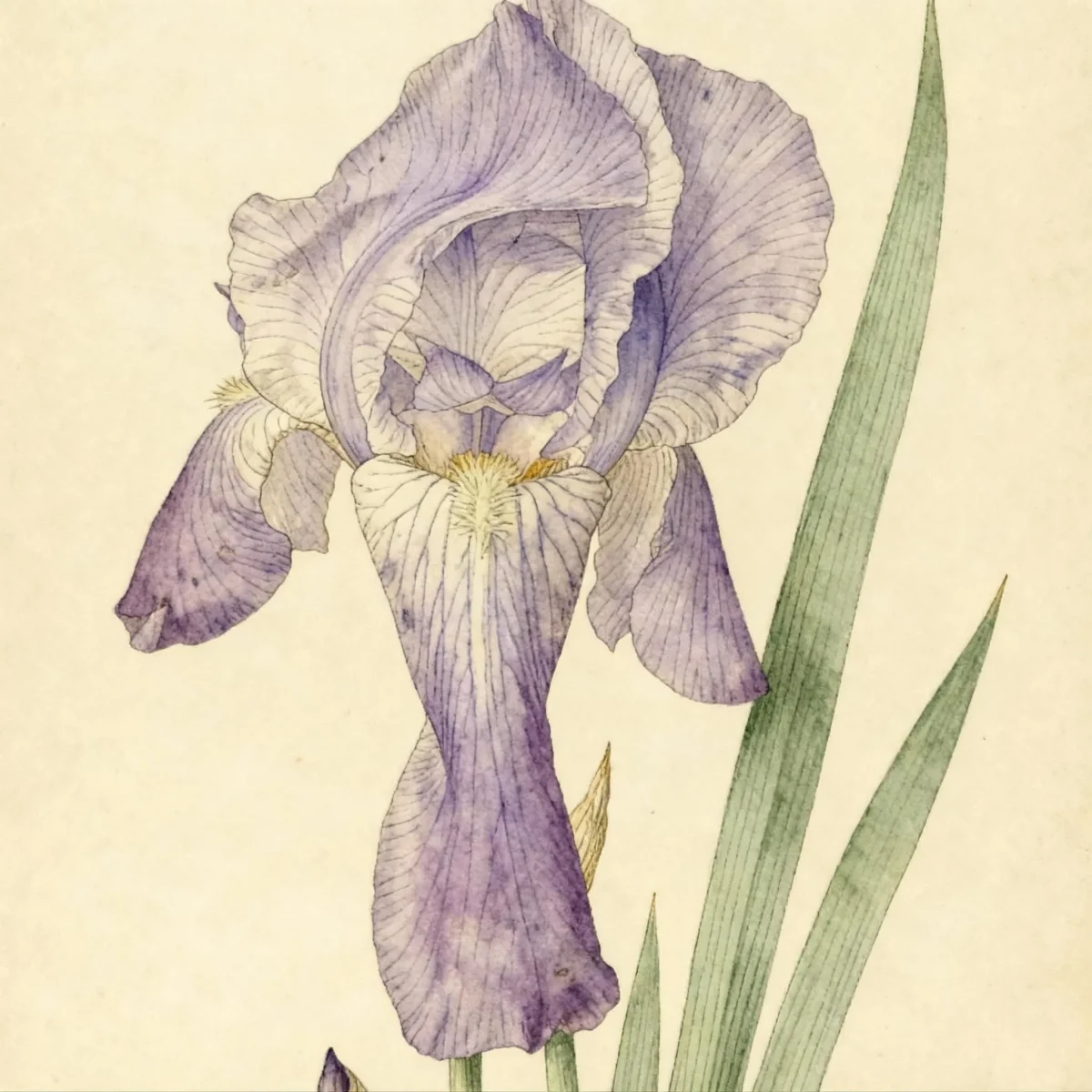
The Dalmatian iris, scientifically known as Iris pallida ‘Dalmatica’, is an ancient and highly valued variety of bearded iris, first recorded in 1597. Gardeners treasure this cultivar for its distinctively sweet fragrance emanating from its lavender-purple flowers, which appear reliably in late spring. Beyond its bloom, this species provides excellent texture with upright, sword-like, green-grey foliage that remains attractive throughout the season.
This resilient herbaceous perennial spreads slowly via rhizomes, creating tidy clumps ideal for defined borders. Native to the Dalmatia region of Croatia and the southern Alps, Iris pallida ‘Dalmatica’ offers robust performance across a wide range of hardiness zones. It is a rhizomatous bearded iris that provides visual interest long after the showy flowers have faded.
Historically, the rhizomes of the Dalmatian iris were harvested to produce orris root, an essential fixative used globally in perfumes and spirits. For the modern gardener, it serves as a fragrant, low-maintenance perennial that handles moderate dryness once established, making it a wonderful heirloom plant to feature near seating areas or walkways.
Fast Facts
- Plant Family: Iridaceae
- Plant Type: Herbaceous perennial
- Hardiness Zones: USDA Zones 3-8
- Size at Maturity:
- Height: 3-3.25 ft
- Spread: 1-1.5 ft
- Bloom Time: May to June
- Bloom Description: Lavender-purple
How to Grow
For optimal blooming and health, Iris pallida ‘Dalmatica’ must be planted where it receives full sun. The most critical factor for success is drainage; best results occur in humusy, well-drained soils that remain evenly moist throughout the establishment phase. If your native soil is heavy clay, incorporate sand generously to improve aeration and prevent rhizome rot.
Plant the rhizomes just beneath the soil surface, ensuring the upper part of the rhizome is exposed to the air, similar to standard bearded iris planting techniques. While young plants benefit from consistent moisture, established clumps of Dalmatian iris are reasonably drought-tolerant once fully settled. Avoid overwatering, especially in humid climates or poorly draining areas.
No significant fertilization is usually needed, as too much richness can promote excessive foliage at the expense of flowers. The primary maintenance task is division, which should be performed in the late summer, as needed, to prevent overcrowding. Healthy clumps of Iris pallida ‘Dalmatica’ propagate easily this way.
Landscape Uses
The strong vertical structure and signature scent make this heirloom iris invaluable near garden pathways or patios, where its fragrance can be fully appreciated during the May to June bloom window. Because of its height—reaching over three feet—it functions excellently as a mid-border specimen, providing a transition between low groundcovers and taller background shrubs.
While generally performing best when slightly crowded, be cautious about planting it too close to sun-loving, delicate neighbors; the foliage of the Dalmatian iris is dense. Since it develops a significant root structure, it pairs well with robust companions that share similar sun and drainage needs, such as certain salvias or ornamental grasses that do not aggressively compete for moisture.
Do not rely on Iris pallida ‘Dalmatica’ for container displays; its rhizomatous nature and required height mean it becomes root-bound quickly and performs poorly when restricted compared to its in-ground performance.
Standout Features
Flower Qualities
- Showy
- Fragrant
Noteworthy Characteristics
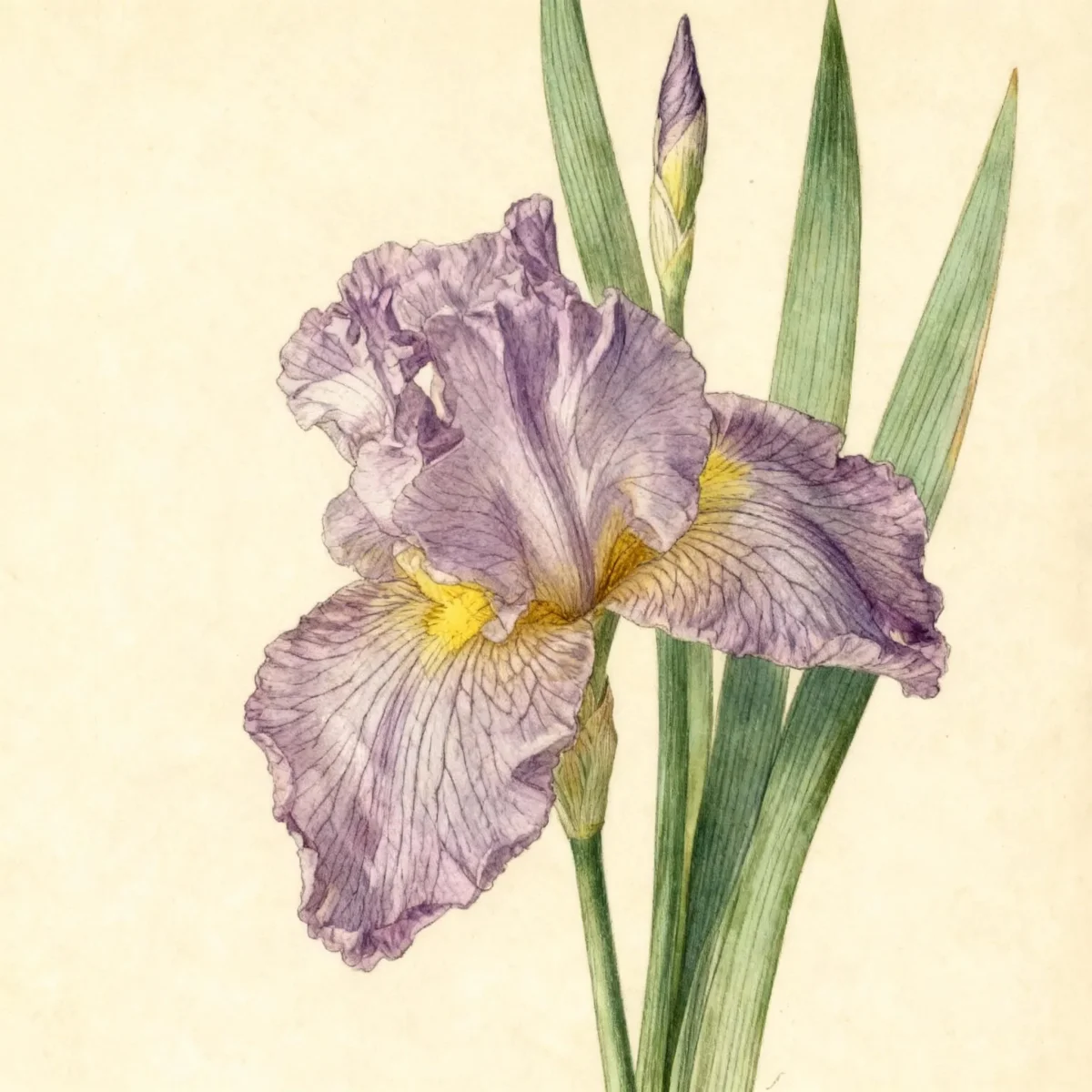
Iris pallida ‘Dalmatica’ is commonly known as Dalmatian iris because it is native to Dalmatia, a province of Croatia, and it is also native to the southern Alps. It is a rhizomatous bearded iris that features sword-shaped, grey-green leaves reaching up to 24 inches long and sweetly fragrant, pale lavender-blue flowers with yellow beards. The sweetly fragrant flowers are a muted lavender-purple in color and held on 3’ tall stalks above the upright, green-grey, sword-like foliage.
Tolerances
- Rabbit
- Deer
Potential Problems
This heirloom variety generally exhibits excellent health and is notably less susceptible to the debilitating iris borer compared to many modern hybrids. The most significant cultural problem is related to poor drainage; Iris pallida ‘Dalmatica’ will quickly fail if left in heavy, perpetually wet soils, which encourages rhizome rot. Ensure planting sites are bright, as shady conditions also severely inhibit flowering. Deer and rabbits typically find this plant unappealing, offering a useful defense mechanism in the landscape.
Frequently Asked Questions
What hardiness zones is Dalmatian iris suitable for?
The Dalmatian iris is hardy across a broad range, thriving in USDA Zones 3 through 8, offering flexibility for many gardeners.
How large does Iris pallida ‘Dalmatica’ grow?
This variety typically reaches a mature height between 3 and 3.25 feet tall, spreading slowly to occupy an area about 1 to 1.5 feet wide.
When does Iris pallida ‘Dalmatica’ bloom?
The fragrant, lavender-purple blooms of the Dalmatian iris are usually observed from May into June.
What sun exposure does Dalmatian iris need?
This perennial performs best when situated in full sun conditions to maximize flowering potential.
Conclusion
The Dalmatian iris remains a cherished antique for its reliability, stately foliage, and profoundly sweet fragrance, making Iris pallida ‘Dalmatica’ a staple for heirloom gardens. To ensure success, confirm your planting location offers excellent drainage and receives ample direct sunlight. Plan to divide large clumps in late summer to maintain vigorous growth and plentiful blooms next season.
Companion Planting
Selecting appropriate companions is key to integrating the Dalmatian iris into a cohesive border design. Focus on plants that thrive in full sun and require similar excellent drainage, avoiding moisture-loving neighbors. Consider pairing the upright, vertical lines of the iris foliage with mounding plants like Lamb’s Ears (Stachys byzantina) for texture contrast, or plants with contrasting flower colors like yellow or white Alliums (before they go dormant).
Since the foliage of Iris pallida ‘Dalmatica’ remains upright after flowering, use companions that will fill in the gap left by spent peonies or early spring bulbs. Lavender varieties or Catmint (Nepeta) make excellent low-growing partners whose grayish-green foliage subtly complements the iris’s own grey-green leaves.
Seasonal Care Calendar
Spring preparation for your Dalmatian iris should focus on keeping the soil clear of heavy mulch right near the crowns to allow the rhizomes to warm up. Once leaves emerge, check for any winter damage and trim away any brittle, dead foliage that survived the cold. Watering should be consistent during the spring growth flush leading up to bloom time.
After the flowers fade in early summer, trim off the spent flower stems (scapes), but leave the sword-like foliage intact as it provides garden structure throughout summer and fall. In late summer or early fall, if the clump is dense, this is the ideal time to carefully lift and divide the rhizomes of the Dalmatian iris, replanting healthy sections immediately.
Conclusion
The Dalmatian iris remains a cherished antique for its reliability, stately foliage, and profoundly sweet fragrance, making Iris pallida ‘Dalmatica’ a staple for heirloom gardens. To ensure success, confirm your planting location offers excellent drainage and receives ample direct sunlight. Plan to divide large clumps in late summer to maintain vigorous growth and plentiful blooms next season.