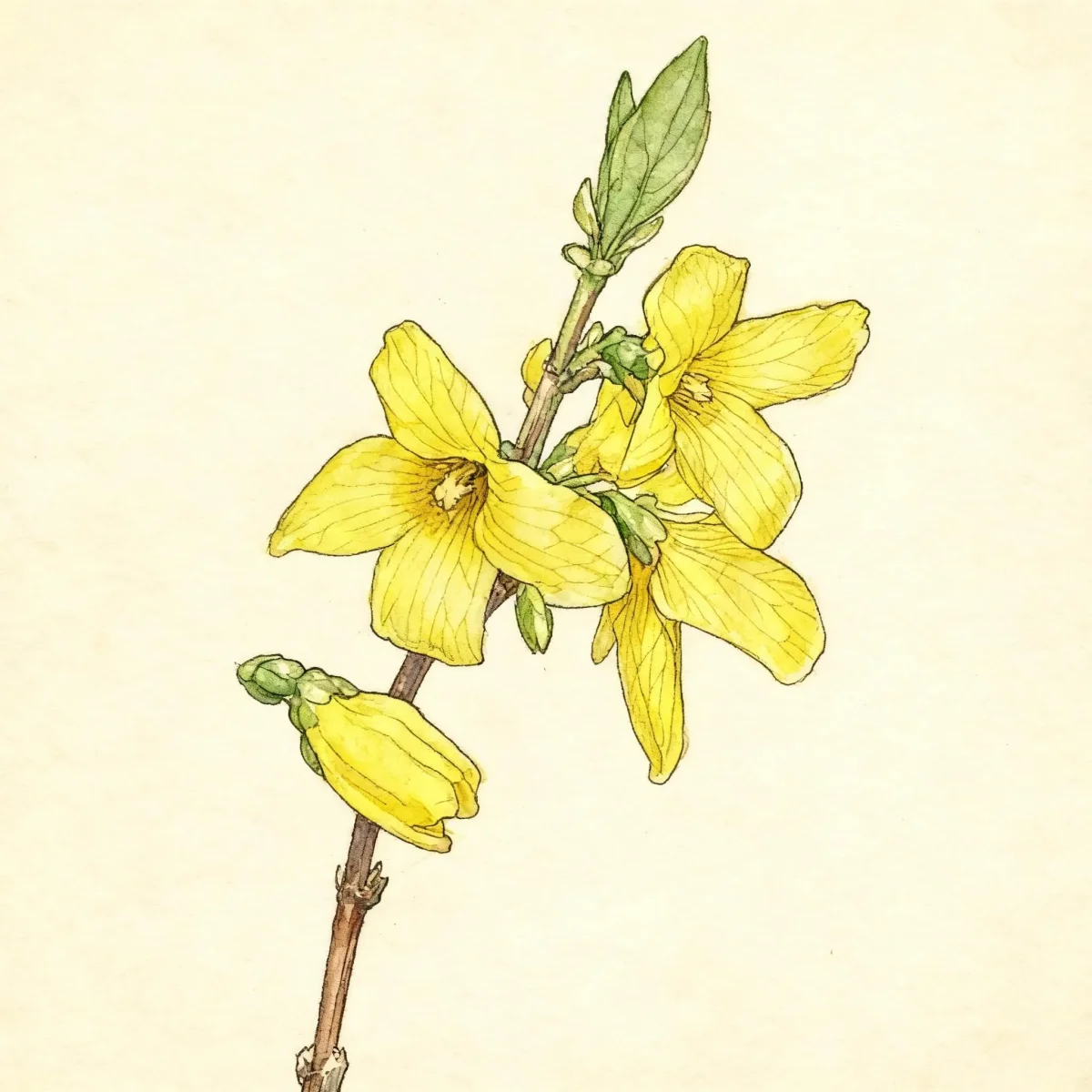
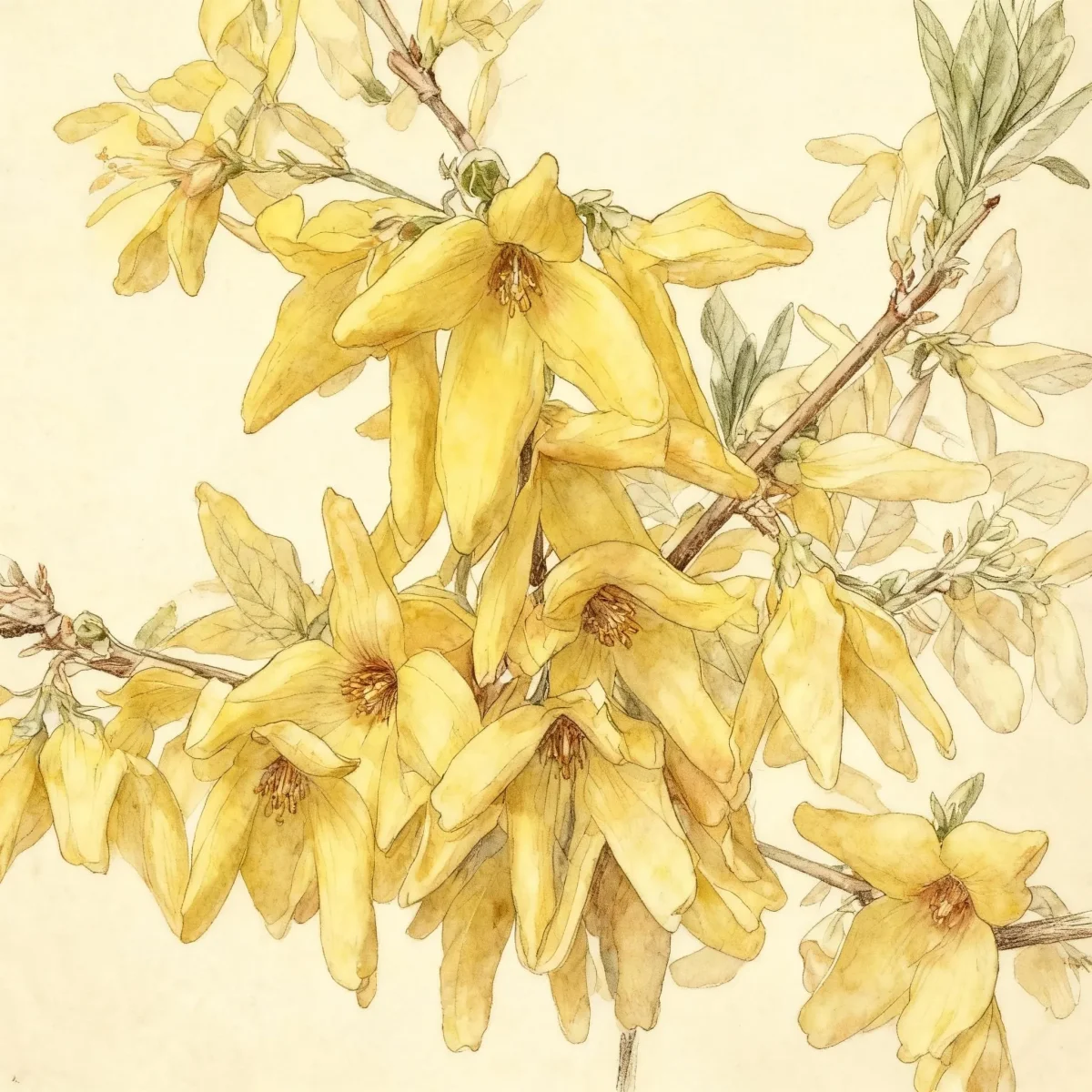
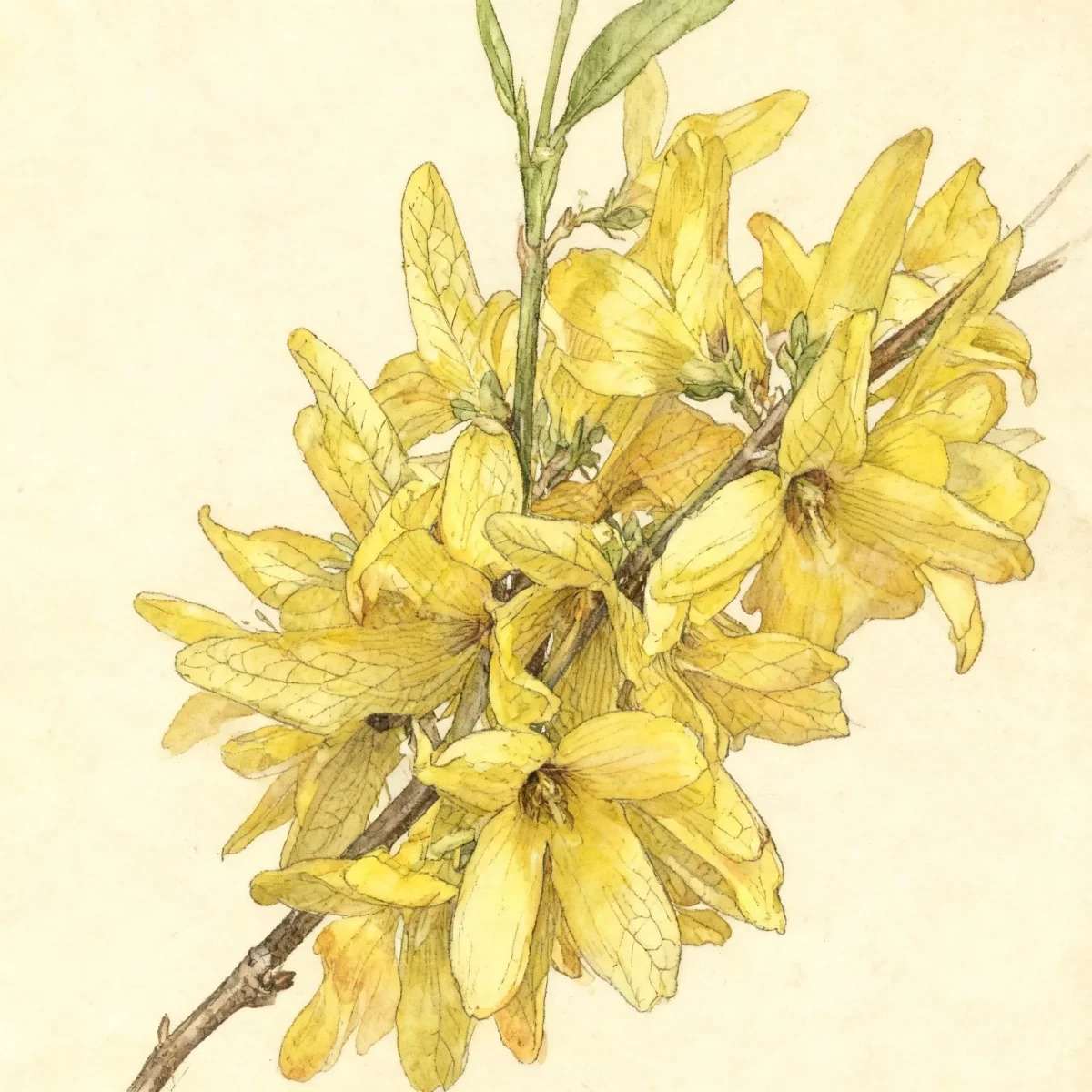
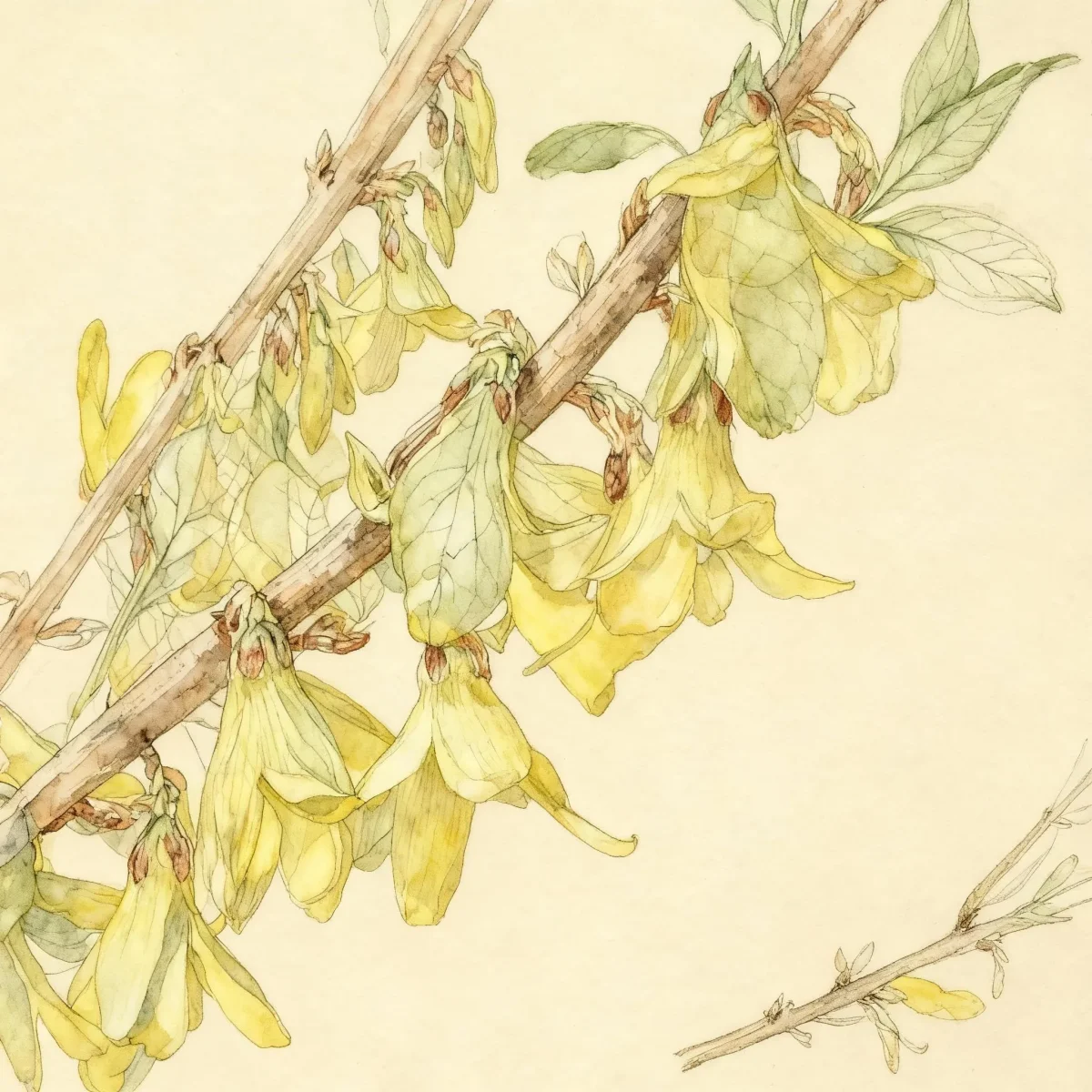
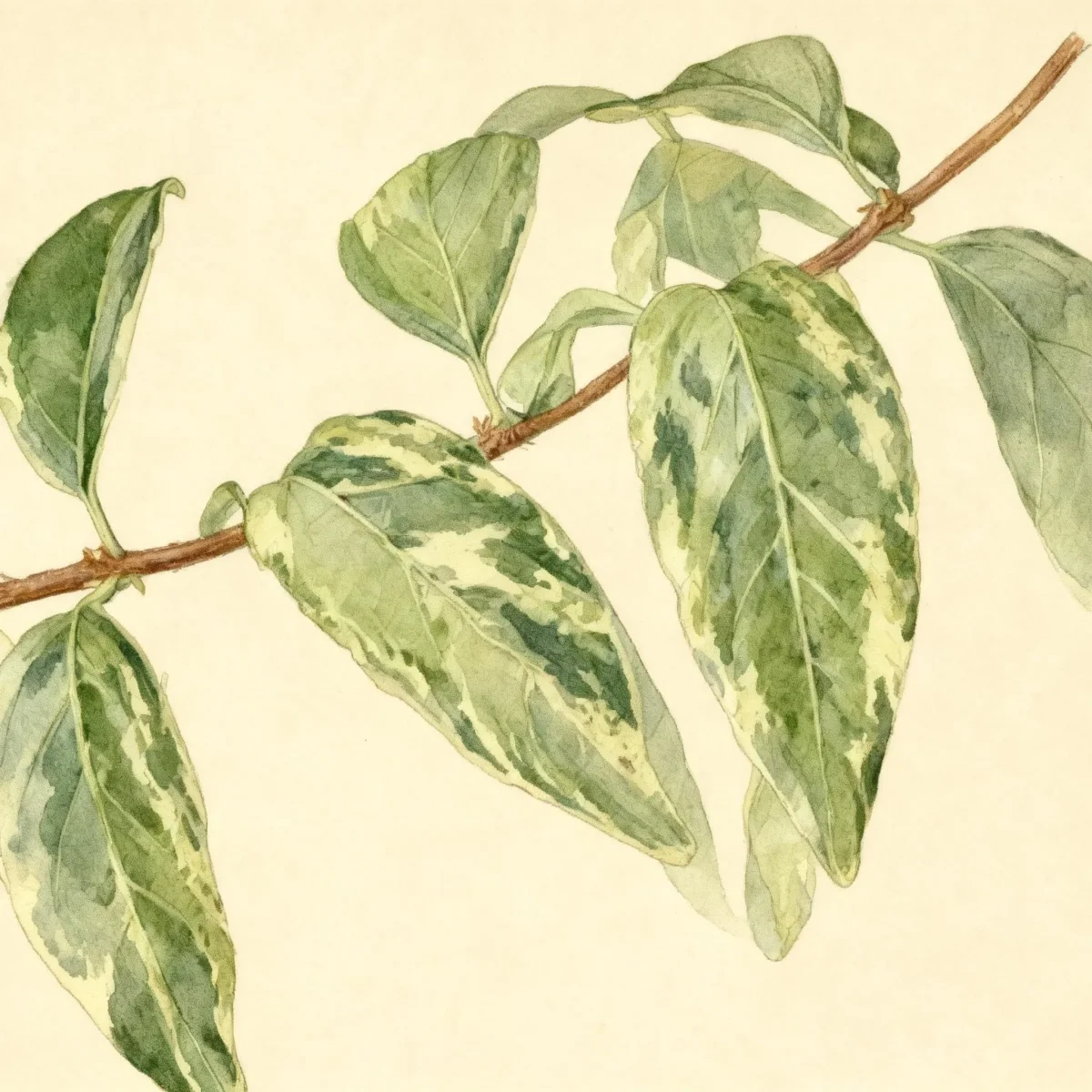
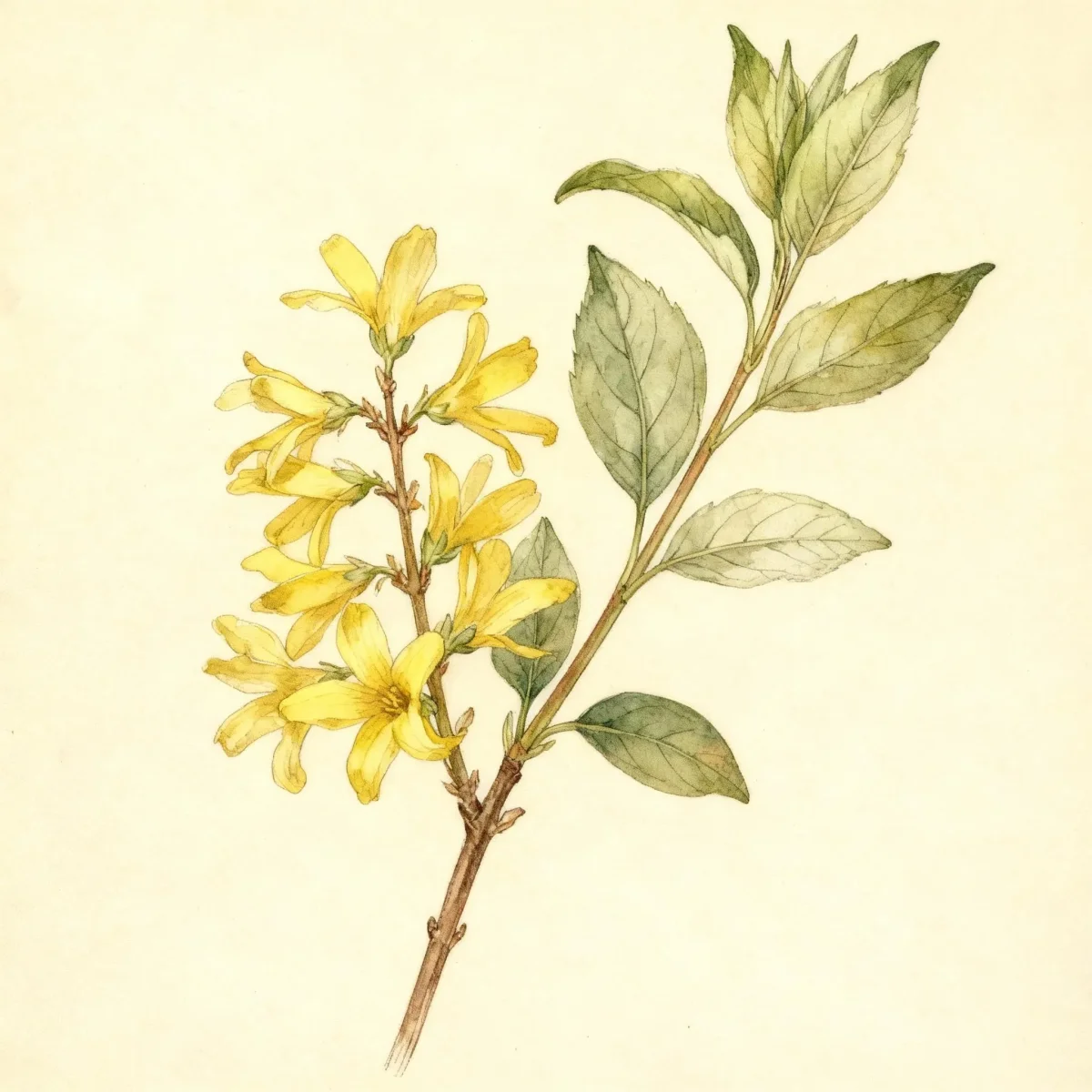
Border forsythia (Forsythia × intermedia 'Lynwood Variety')
Brighten early spring with Forsythia × intermedia 'Lynwood Variety', a low-maintenance Border forsythia known for vivid yellow blooms.
Scroll down to discover growing tips, care requirements, companion plants, and more
Complete Plant Information
Overview
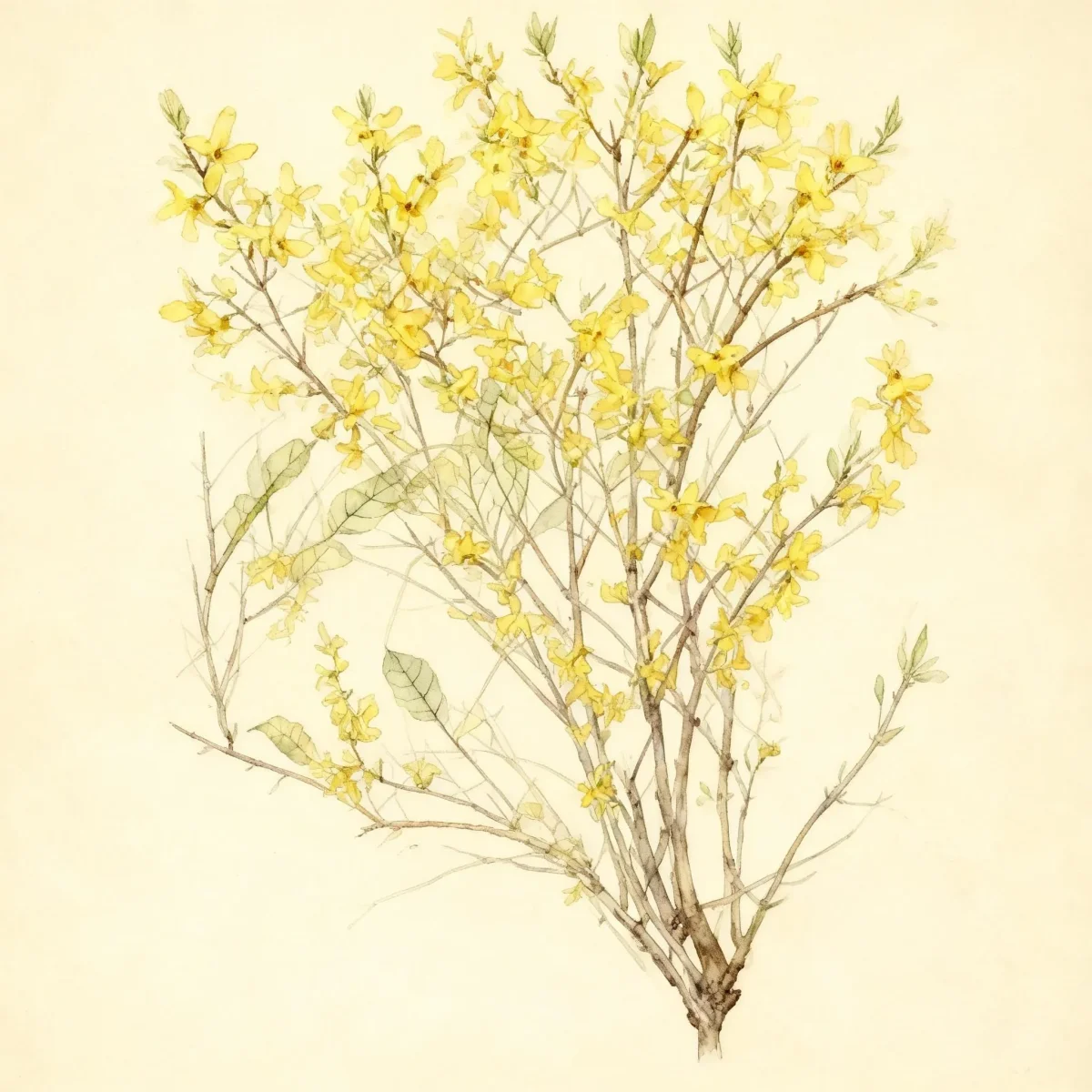
Border forsythia, specifically the cultivar Forsythia × intermedia ‘Lynwood Variety’, is prized as one of the earliest harbingers of spring, decking the landscape in brilliant golden flowers before the new leaves fully emerge. This deciduous shrub offers significant visual impact during the late winter and early spring transition, making it a crucial element for creating early season interest. Forsythia × intermedia ‘Lynwood Variety’ typically reaches 6 to 9 feet tall and wide, offering a substantial, upright-arching presence ideal for mass plantings. Its low maintenance needs and adaptability to various soil conditions make this classic shrub a reliable staple in gardens across USDA Zones 5 through 8.
Fast Facts
- Plant Family: Oleaceae
- Plant Type: Deciduous shrub
- Hardiness Zones: USDA Zones 5-8
- Size at Maturity:
- Height: 6-9 ft
- Spread: 6-9 ft
- Bloom Time: March to April
- Bloom Description: Yellow
- Sun Exposure: Full sun to part shade
- Water Needs: Medium
- Maintenance Level: Low
How to Grow
Plant Forsythia × intermedia ‘Lynwood Variety’ in the fall or early spring in well-drained soil. While it tolerates relatively poor and clayey soils, best flower production is achieved in full sun; partial shade is acceptable but may result in slightly fewer blooms. Water moderately, ensuring the soil remains fairly consistent, though the shrub develops moderate drought tolerance once established.
Maintenance for Border forsythia is minimal outside of necessary pruning. Since this cultivar blooms on old wood, pruning must occur immediately after flowering concludes in spring. Pruning after mid-July will inadvertently remove the flower buds set for the following year. Light shaping can be done annually to remove spent wood, or you can rejuvenate older shrubs with a major cutback closer to ground level every three to four years during the post-bloom window.
Established shrubs transplant well and exhibit good tolerance for urban conditions. Be aware that flower buds are susceptible to damage if winter temperatures drop below -5 degrees F, which is a concern particularly in the cooler areas of its hardiness range, Zone 5.
Landscape Uses
The striking color display of Forsythia × intermedia ‘Lynwood Variety’ makes it an excellent choice for borders, where its height (6-9 feet) provides a vibrant backdrop or mid-layer. These shrubs are highly effective when massed on banks or slopes, helping to stabilize soil with their spreading root systems while providing seasonal color. They integrate well into cottage gardens or sunny open woodland settings where they can naturalize slightly. Use them strategically near walkways to maximize the impact of their early spring flowering, often before other landscape elements have awakened.
Standout Features
Flower Qualities
- Showy
Noteworthy Characteristics
Forsythia × intermedia, commonly known as border forsythia, is a deciduous hybrid shrub noted for its brilliant, 4-lobed, often abundant golden flowers that bloom in clusters before the foliage emerges in early spring. The ‘Lynwood Variety’ specifically features somewhat larger-than-normal, bright yellow flowers and dark green foliage that may show purple tinges in the fall. Often called the harbinger of spring, this shrub fades visually after its spectacular blooming period but remains a dependable structural element throughout the growing season.
Tolerances
- Deer
- Clay Soil
- Black Walnut
Potential Problems
Forsythia × intermedia ‘Lynwood Variety’ is generally robust but can show some susceptibility to various issues including leaf spot, crown gall, and dieback. During warm, dry periods, gardeners should monitor for common pests such as spider mites, aphids, and the four-lined plant bug. While deer typically avoid this shrub, vigilance against root-knot nematodes is sometimes necessary. Ensure excellent drainage to minimize the risk of crown issues and use cultural best practices to keep foliage healthy following the bloom cycle.
Frequently Asked Questions
What hardiness zones is Border forsythia suitable for?
Forsythia × intermedia ‘Lynwood Variety’ is reliably winter hardy in USDA Zones 5 through 8.
How large does Border forsythia grow?
This cultivar typically matures to a height between 6 and 9 feet, with an equal spread of 6 to 9 feet.
What sun exposure does Border forsythia need?
For optimal flowering, Forsythia × intermedia ‘Lynwood Variety’ requires full sun, though it will tolerate light afternoon shade.
When does Border forsythia bloom?
The brilliant yellow flowers of the Border forsythia appear relatively early, blooming from March into April before leaf-out.
Conclusion
The low maintenance requirements and dramatic, early-spring golden display confirm the lasting value of Forsythia × intermedia ‘Lynwood Variety’ in the landscape. As a quintessential symbol of spring, this reliable shrub provides invaluable color when little else shows life. Plan your pruning schedule carefully to immediately follow flowering to ensure spectacular blooms next season, and confirm your location falls within USDA Zones 5-8 before planting.
Companion Planting
When selecting companions for Border forsythia, consider plants that can aesthetically fill the gap after the forsythia loses its visual impact post-bloom. Plant early-season bulbs like daffodils or crocuses beneath the shrubs; their foliage will mature and cover the declining forsythia leaves naturally. Later-blooming shrubs, such as late lilacs or deciduous azaleas, can be placed slightly behind the Forsythia × intermedia ‘Lynwood Variety’ to provide sequential flowering interest throughout spring and early summer.
Design Ideas for Early Spring Impact
To maximize the effectiveness of Forsythia × intermedia ‘Lynwood Variety’, use its upright-arching habit to create informal screens or focal points against dark evergreen backgrounds. Placing it near paths or entryways ensures maximum viewing pleasure during its brief but intense flowering period. For a classic cottage effect, intersperse the shrubs with early-blooming perennials that appreciate similar sun conditions, allowing the yellow to contrast beautifully with blues and whites emerging nearby.