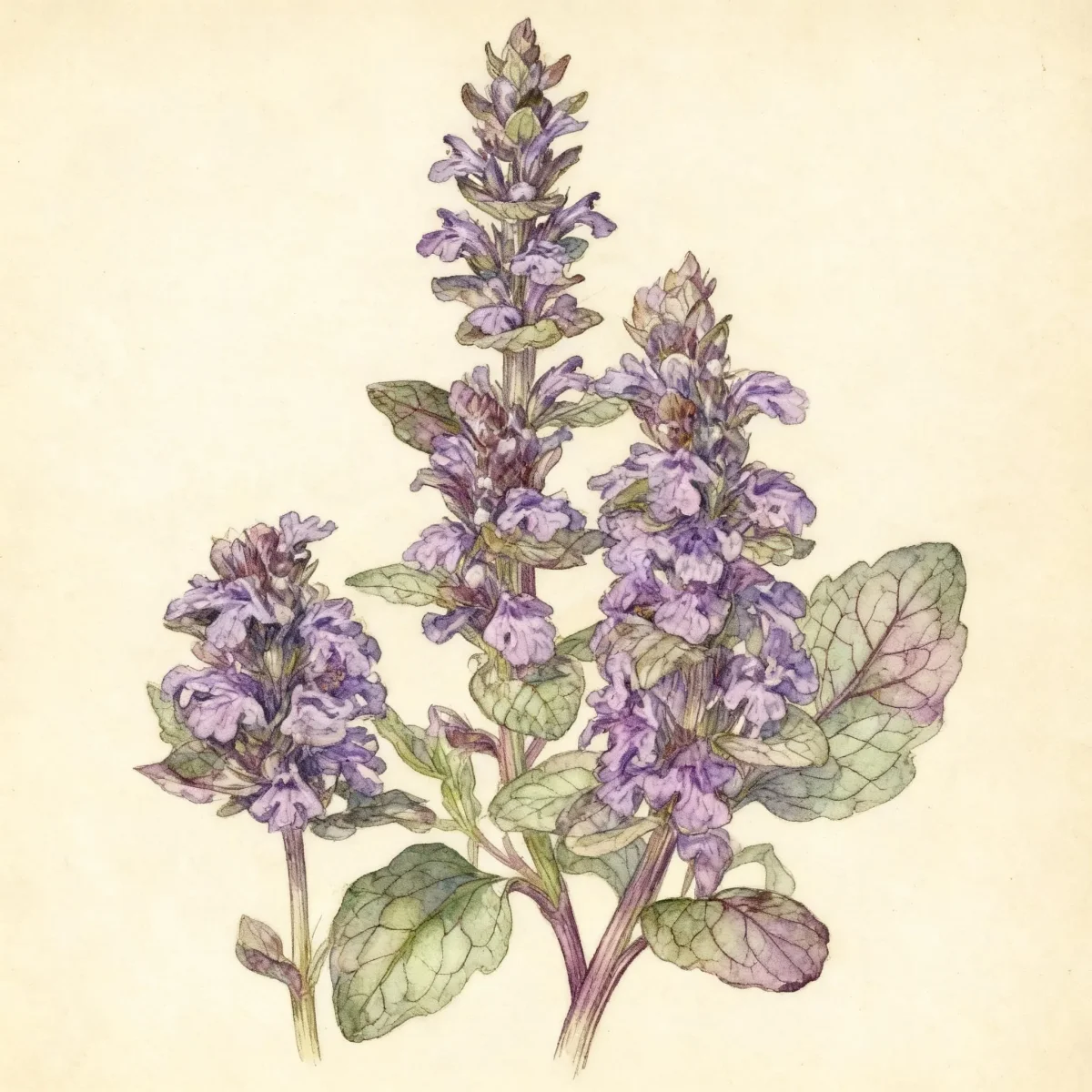
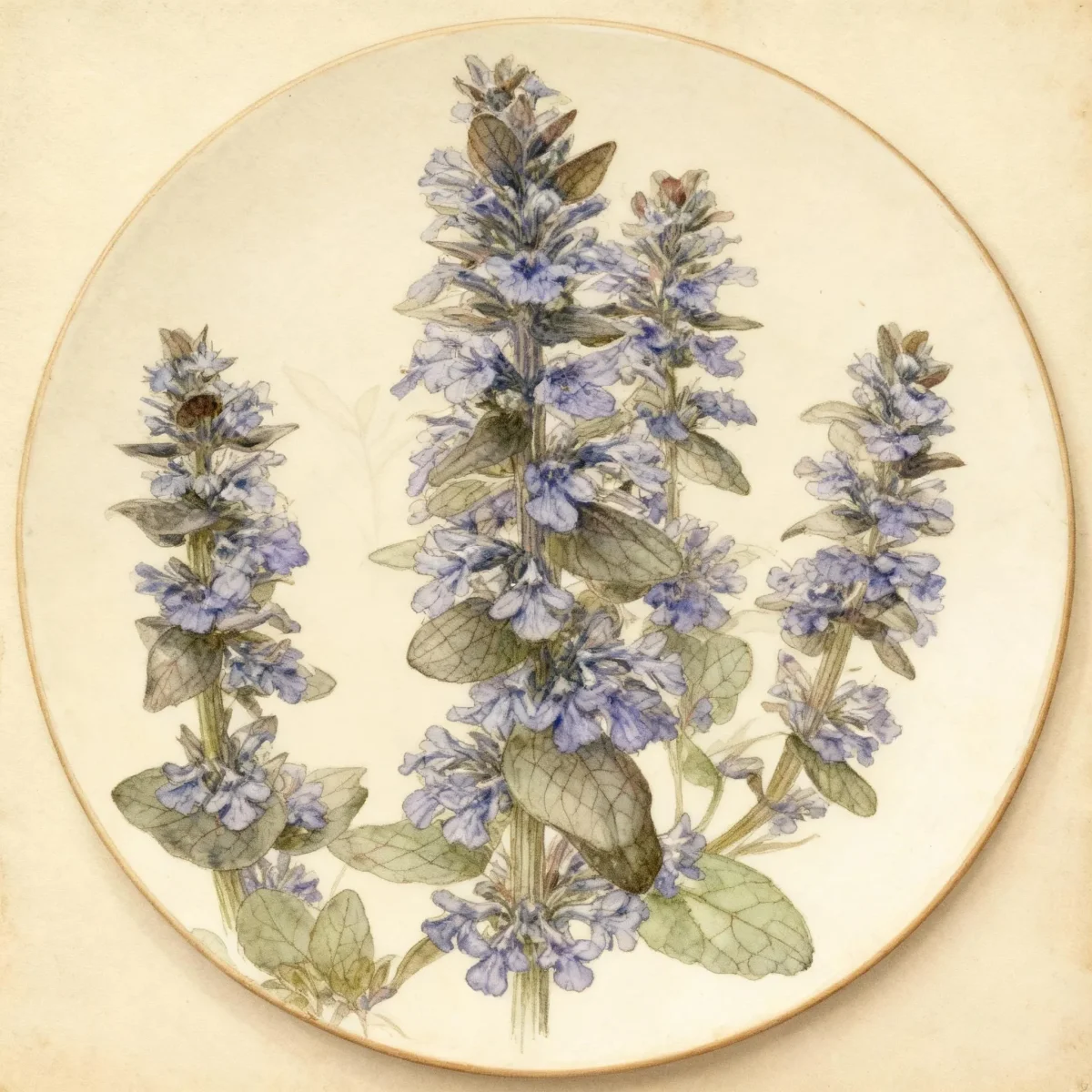
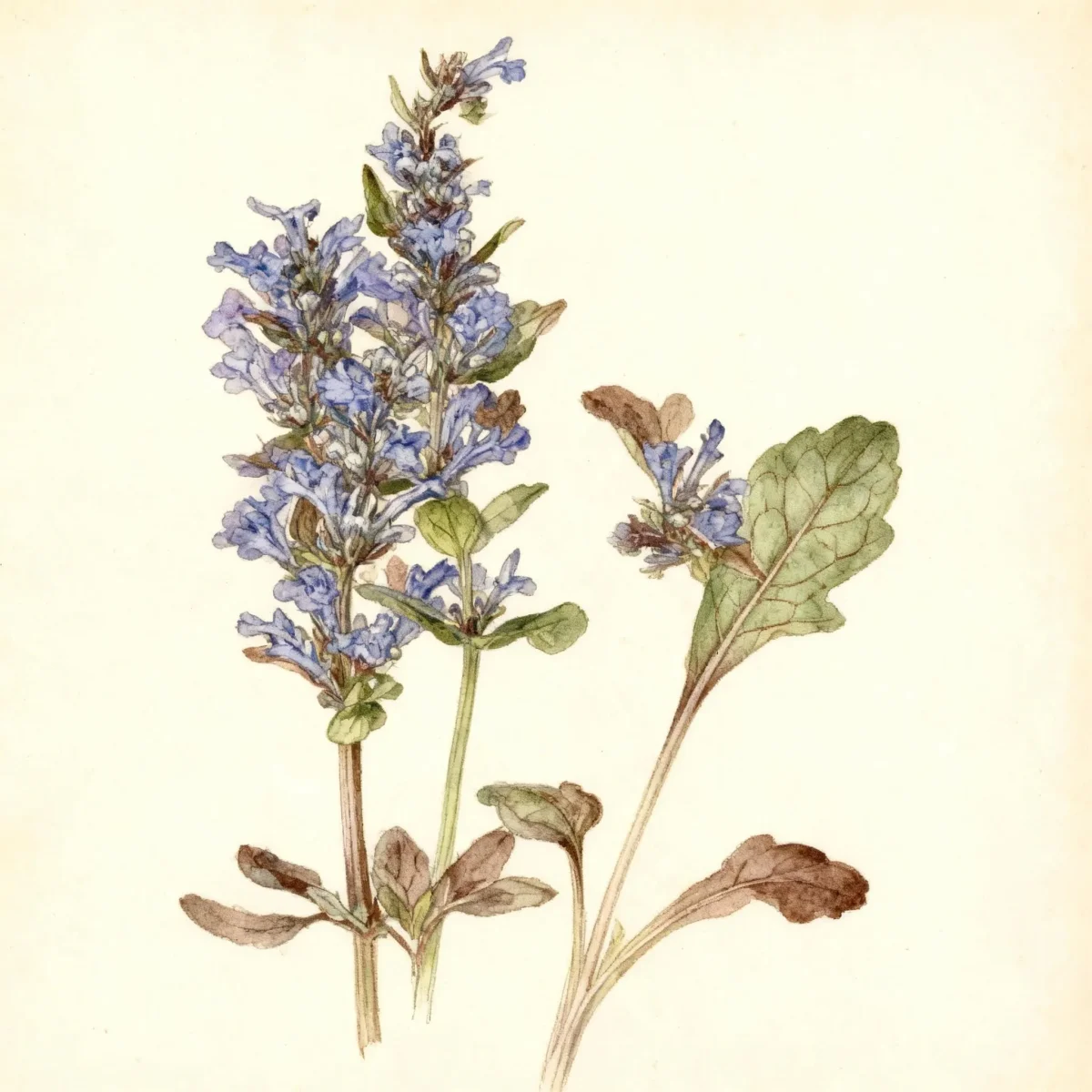
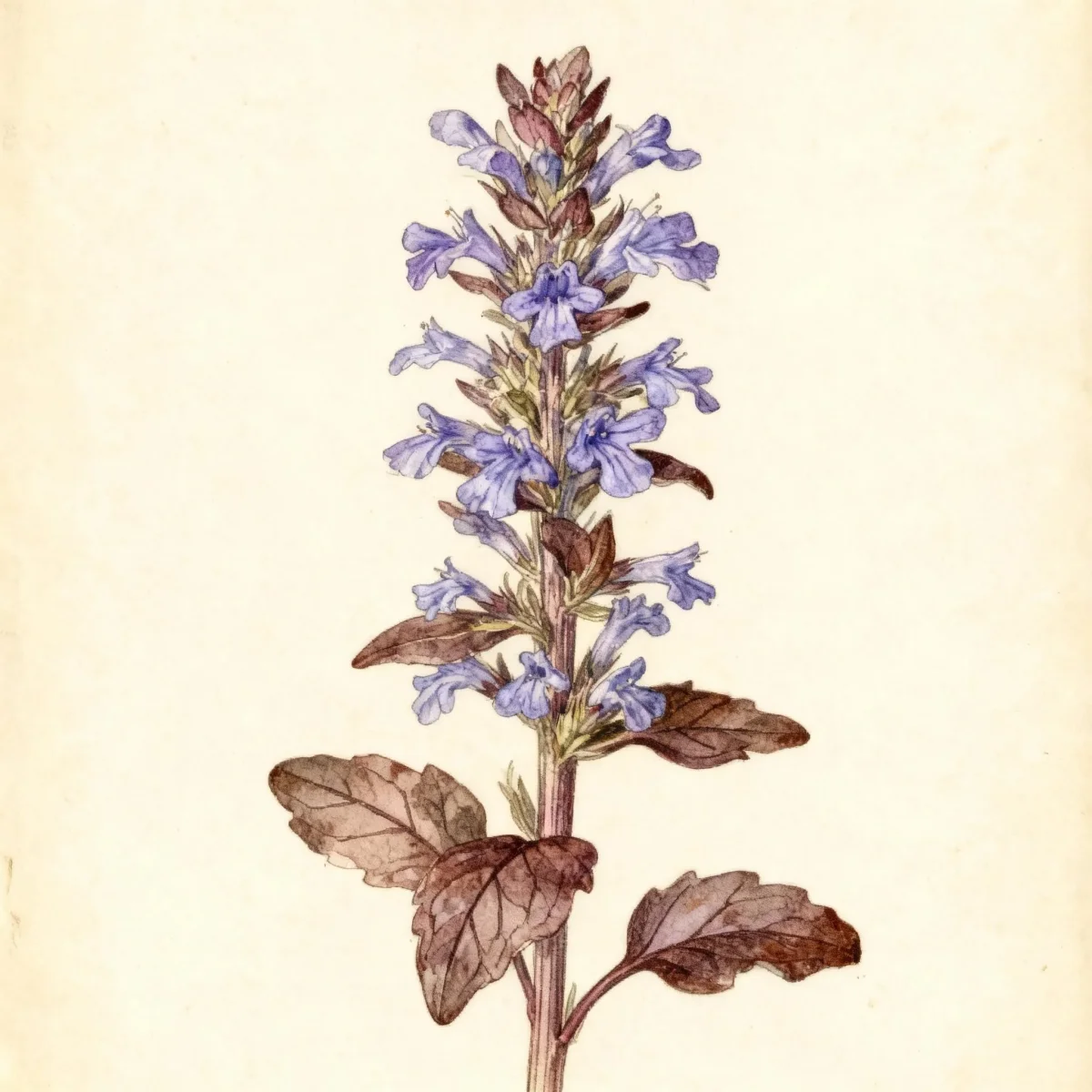
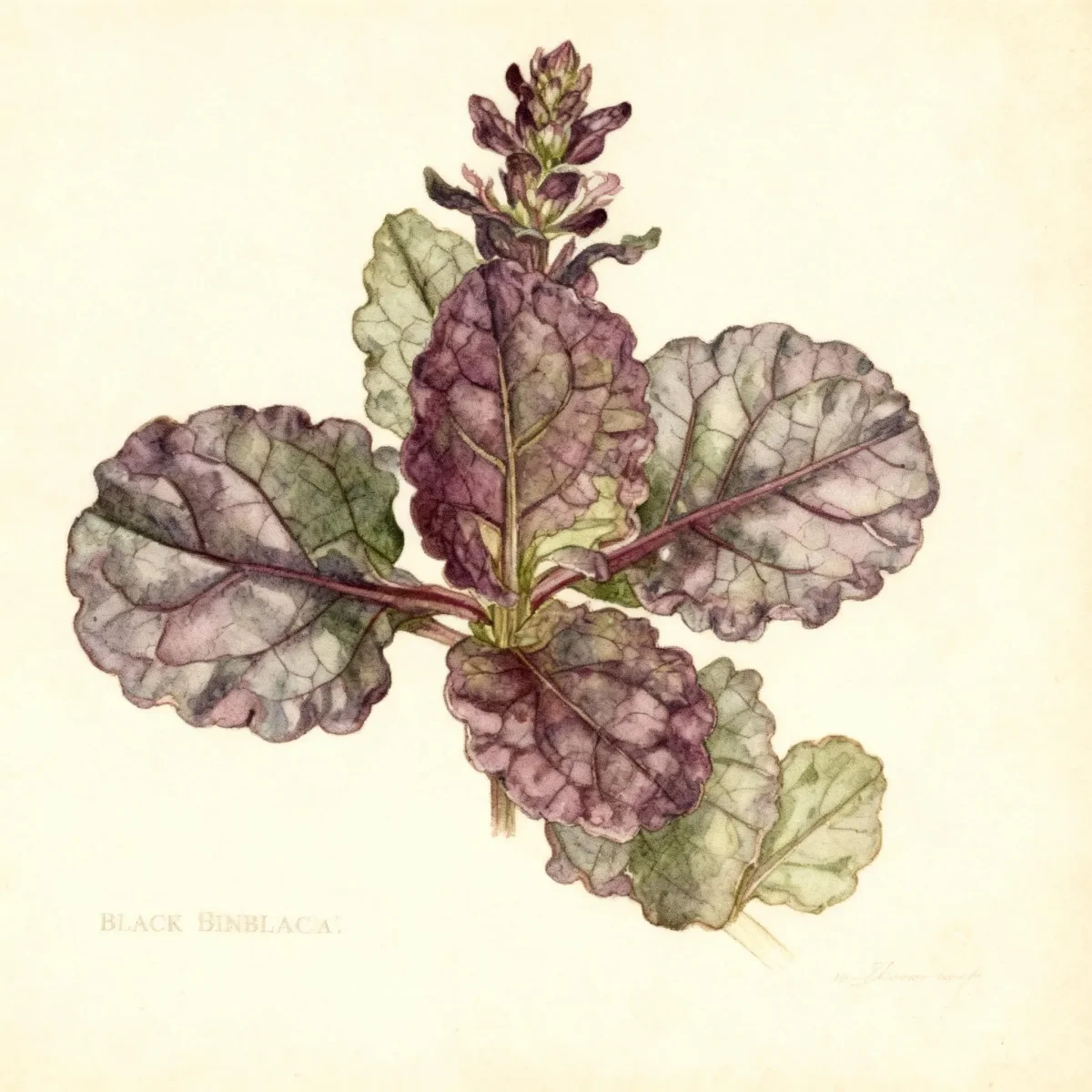
Bugleweed (Ajuga ''Sparkler'')
Ajuga 'Sparkler' Bugleweed offers stunning variegated foliage, forming a dense, low-growing ground cover ideal for shady areas.
Scroll down to discover growing tips, care requirements, companion plants, and more
Complete Plant Information
Overview
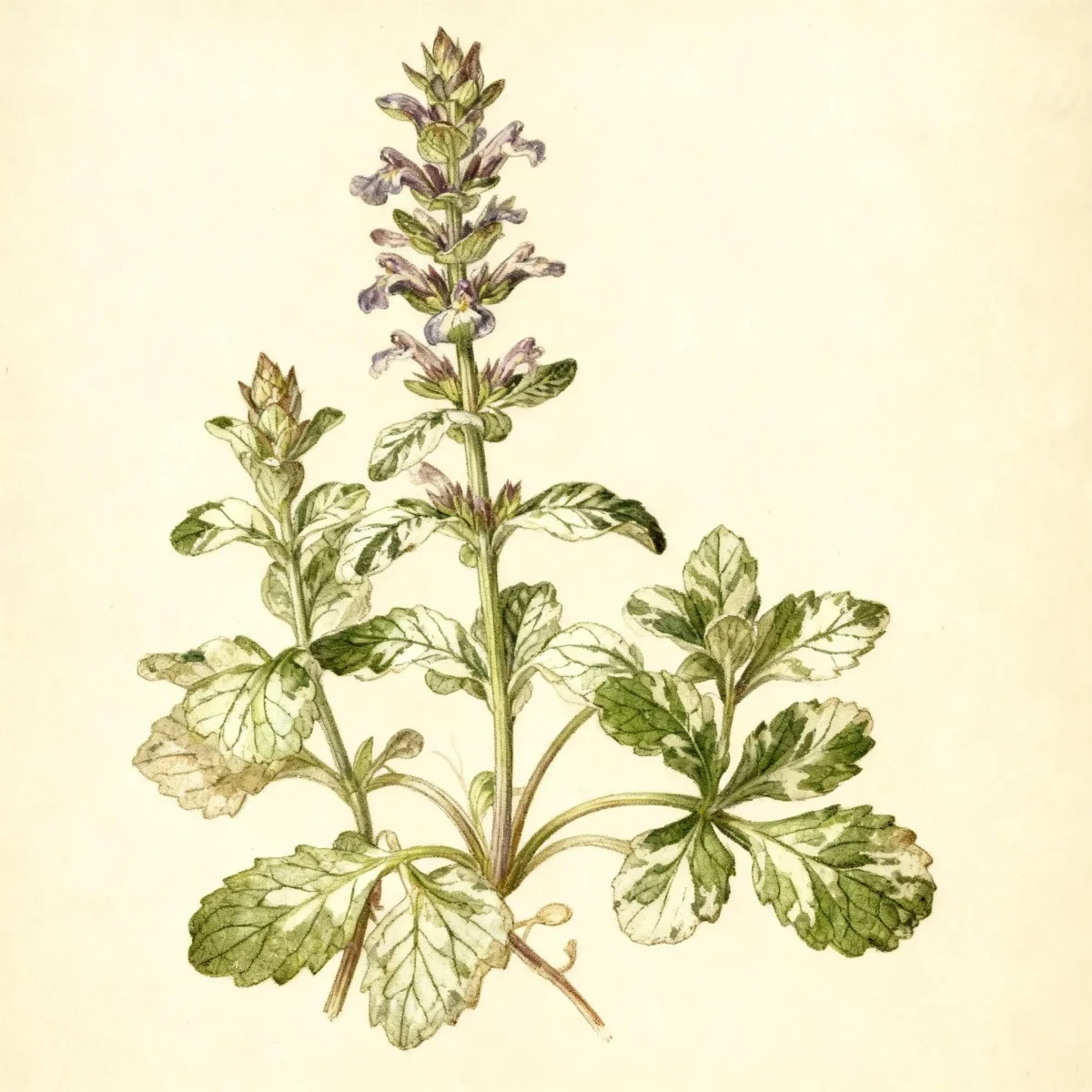
Ajuga ‘Sparkler’ is a highly desirable herbaceous perennial renowned for its dense, creeping habit, making it an indispensable ground cover. This specific cultivar of Bugleweed stands out due to its attractive, variegated foliage splashed with creamy white against the dark green base. It successfully fills in difficult, shady spots where traditional turf grass struggles, offering consistent aesthetic appeal throughout the growing season.
This low-growing perennial spreads readily by means of above-ground stolons, quickly forming a uniform mat that suppresses weeds naturally. The foliage of this Ajuga remains semi-evergreen through milder winters, but regardless of condition, the emergence of short spikes bearing characteristic bright blue, two-lipped flowers in late spring is a reliable, cheerful sight. Gardeners prize Ajuga ‘Sparkler’ for its low maintenance requirements and vigorous yet manageable spreading nature.
Fast Facts
- Plant Family: Lamiaceae
- Plant Type: Herbaceous perennial
- Hardiness Zones: USDA Zones 5-9
- Size at Maturity:
- Height: 0.25-0.5 ft
- Spread: 1-1.5 ft
- Bloom Time: May to June
- Bloom Description: Blue
- Sun Exposure: Full sun to part shade
- Water Needs: Medium
- Maintenance Level: Low
How to Grow
Plant Ajuga ‘Sparkler’ during the spring or fall in average, medium moisture, well-drained soils. While it tolerates moderately dry conditions once established, this Bugleweed performs best when kept consistently moist and humus-rich. Although it will grow in full shade, ensure locations receive at least 3-4 hours of direct sun daily to achieve the best variegation in the foliage of Ajuga ‘Sparkler’. Space individual plants 6 to 9 inches apart for the fastest formation of a dense ground cover.
Watering needs are medium; aim for consistent moisture, especially during dry spells, but never allow the soil to become waterlogged, as this increases the risk of crown rot. Fertilization is generally unnecessary if planted in rich, humusy soil. If the plants become overcrowded, divide the clumps, which is best done in early spring or fall.
To rejuvenate the appearance, especially after flowering time in June, spent flower spikes and older foliage can be cut back close to the ground. For very large areas of Ajuga ‘Sparkler’, mowing at a high setting works effectively to tidy the planting. Good air circulation is essential, particularly in hot, humid climates, to mitigate potential issues with fungal diseases.
Landscape Uses
The primary strength of Ajuga ‘Sparkler’ lies in its exceptional performance as a ground cover, effectively blanketing large, shady expanses under trees or shrubs where lawn alternatives are needed. Its spreading habit makes it perfect for naturalizing bankings or slopes, providing erosion control with its dense root system. This Bugleweed is also excellent for bordering paths or defining edges where its vibrant variegation can contrast sharply with surrounding stone or mulch.
Consider planting bulbs like snowdrops directly into the Ajuga ‘Sparkler’ mat; the creeping foliage will obscure the dying back foliage of the bulbs in late spring. Be mindful when using this plant near manicured lawn edges, as its stoloniferous spread can lead to unwanted colonization within the grass, requiring diligent vigilance for rogue Ajuga islands.
Standout Features
Flower Qualities
- Showy
Noteworthy Characteristics
Ajuga is a genus of about 40 species from temperate Europe and Asia, and the specific epithet for this plant means creeping. ‘Sparkler’ is a variegated Bugleweed that forms a dense ground cover, with tiny, narrow, dark green leaves splashed with creamy white. It produces two-lipped, bright blue flowers typical of the mint family in the spring, typically between late April and June.
Tolerances
- Rabbit
- Deer
- Black Walnut
Potential Problems
Crown rot is the main concern for Ajuga ‘Sparkler’, especially in areas with high humidity like the deep South or in poorly draining, heavy clay soils. To prevent this fungal issue, ensure excellent soil drainage and maximize air circulation around the plants. If clumps become too dense or show signs of distress, division in spring is necessary to refresh the planting. Gardeners must also monitor the spread near lawns, as this vigorous Bugleweed can aggressively creep into turf areas, necessitating proactive edging or removal of unwanted runners.
Frequently Asked Questions
What hardiness zones is Bugleweed suitable for?
Ajuga ‘Sparkler’ is typically hardy and thrives in USDA Zones 5 through 9.
How large does Bugleweed grow?
This low-growing Bugleweed reaches a mature height of only 0.25 to 0.5 feet, spreading outward to cover an area between 1 and 1.5 feet wide.
What sun exposure does Ajuga ‘Sparkler’ need?
Ajuga ‘Sparkler’ performs well in full sun to part shade, though part-sun sites usually best accentuate its variegated foliage.
When does Bugleweed bloom?
Blooming for this variety occurs from May through June, featuring distinctive bright blue flowers.
Conclusion
Ajuga ‘Sparkler’ offers exceptional value to the landscape through its hardiness, low maintenance, and striking variegated foliage that brightens partially shaded areas. This reliable Bugleweed forms an attractive, weed-suppressing mat that softens hardscaping elements beautifully. Before planting, verify that your growing region falls within USDA Zones 5-9 and ensure adequate drainage to enjoy years of vibrant coverage from your Ajuga ‘Sparkler’.
Companion Planting
Selecting suitable companions enhances the overall appeal of a shady garden bed dominated by Bugleweed. Pair Ajuga ‘Sparkler’ with plants that share similar medium water and shade requirements, such as Hostas, especially those with contrasting textures like finely cut ferns. Consider taller woodland flowers like Astilbe or Dicentra spectabilis (Bleeding Heart) whose upright forms contrast nicely with the creeping habit of the Ajuga.
When planting near spring bulbs, which is a recommended use for this ground cover, enjoy the floral show before the Ajuga’s foliage completely envelops the emerging spring growth. Avoid letting aggressive, high-maintenance ground covers compete directly with the spreading Ajuga, allowing this low-care perennial to dominate its designated area.
Propagation Tips
Propagation of Ajuga ‘Sparkler’ is exceptionally simple due to its natural method of spreading. The plant produces numerous stolons—horizontal stems that root wherever they touch the ground—which are essentially pre-made new plants. To propagate, simply snip these rooted stolons from the parent plant during the mid-spring or early fall growing season.
Once separated, these rooted segments can immediately be transplanted to their desired new locations across the garden. Because of this easy asexual propagation, division is the primary method used by gardeners to manage overcrowding or to rapidly increase coverage without purchasing new plants. This makes spreading Ajuga ‘Sparkler’ a cost-effective way to quickly fill large shady borders.