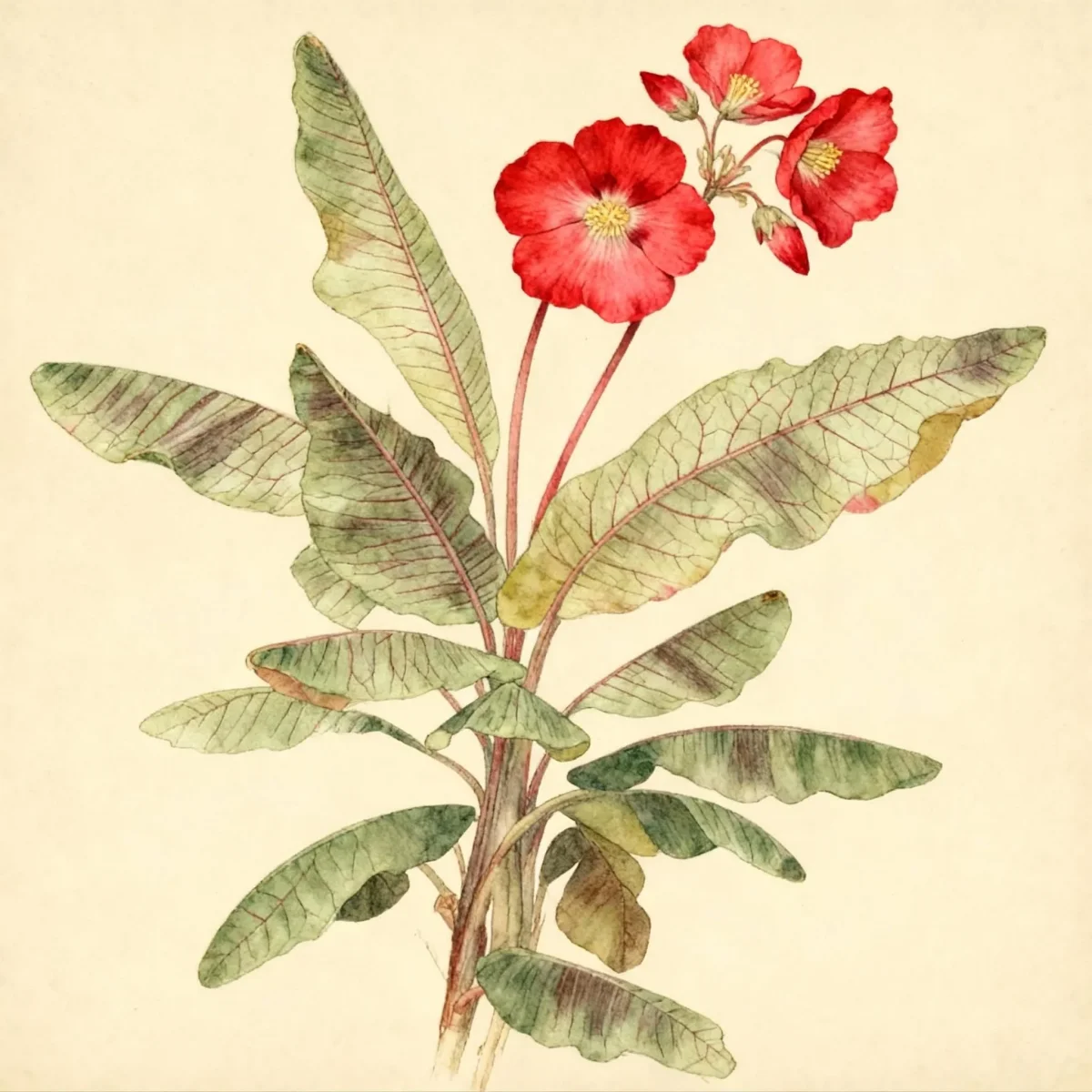
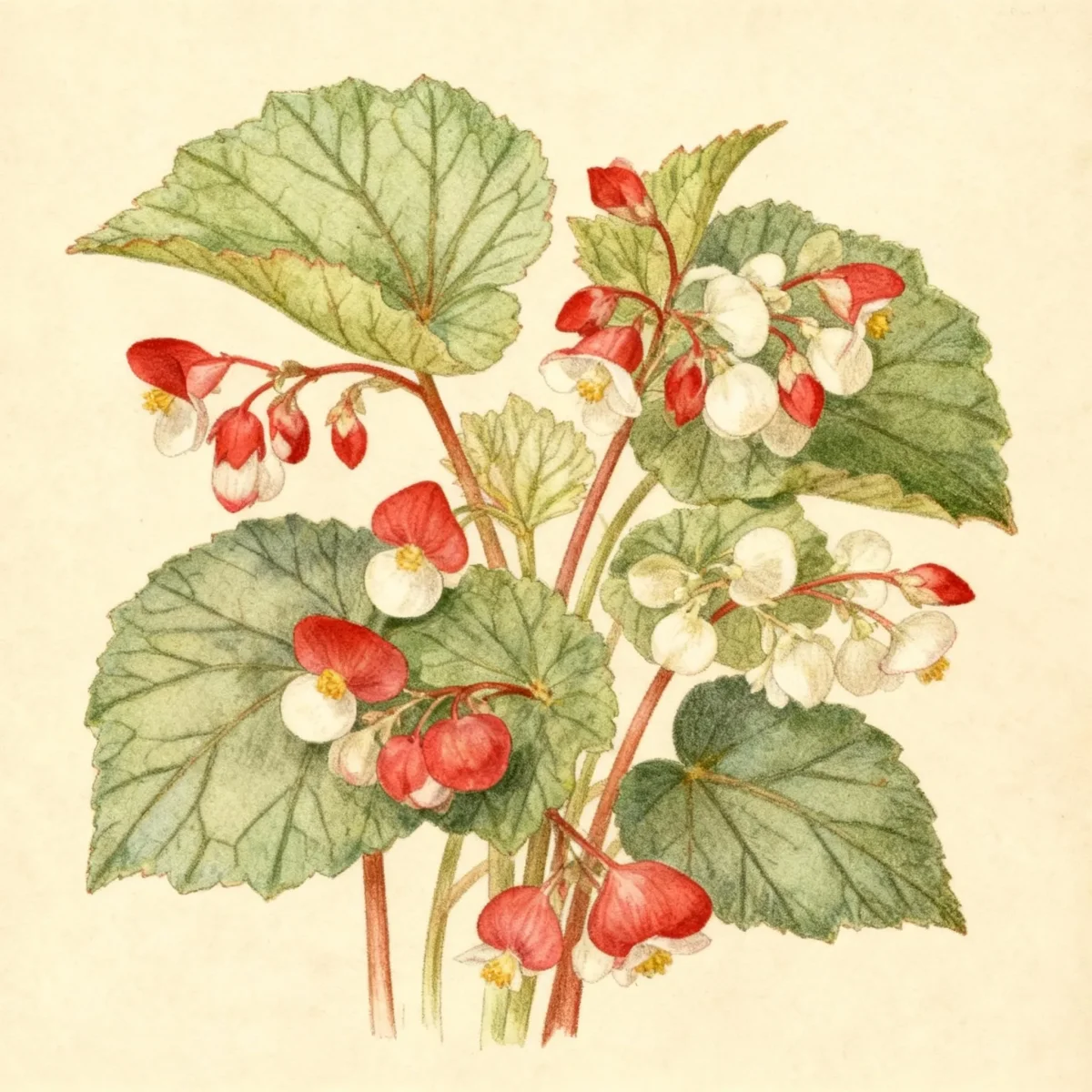
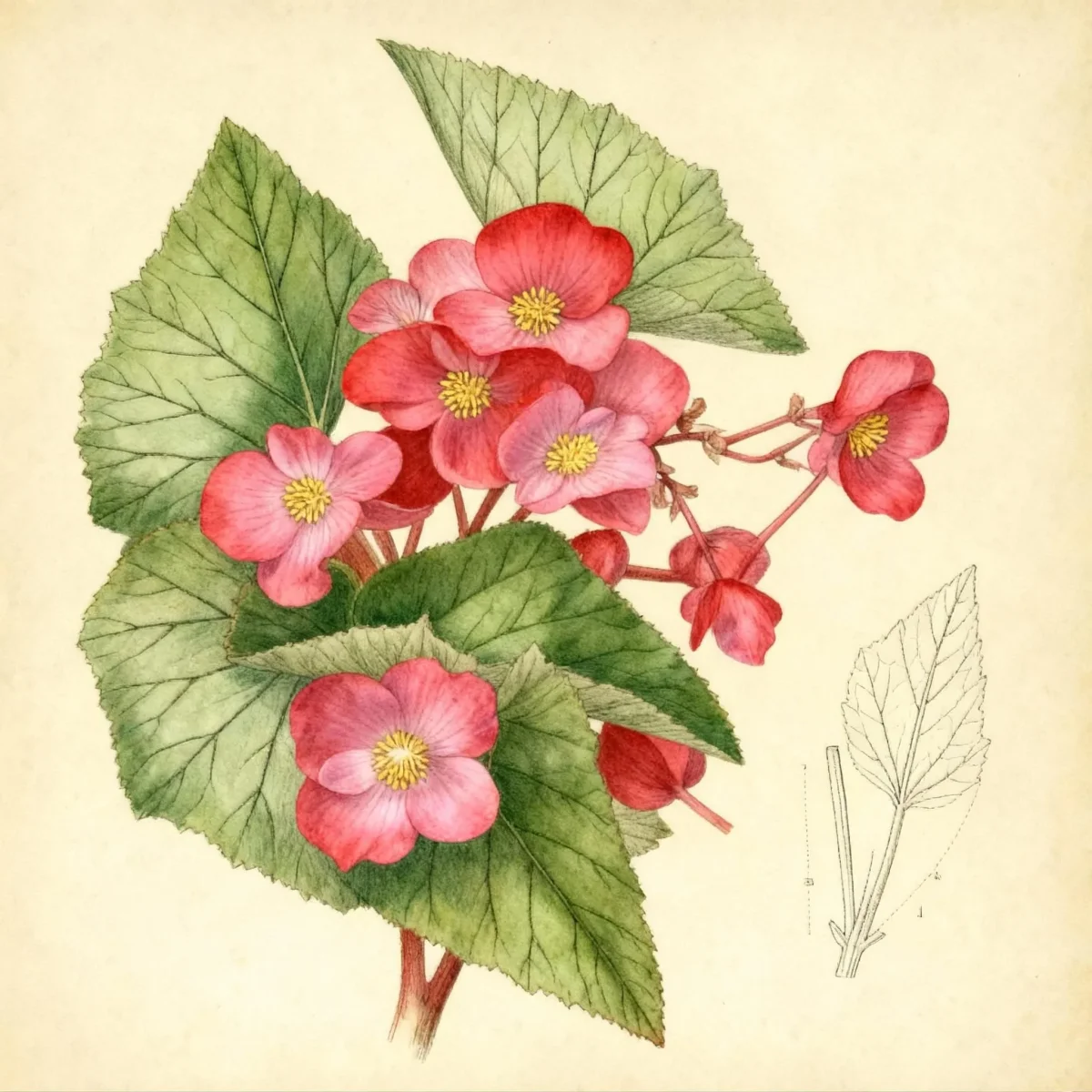
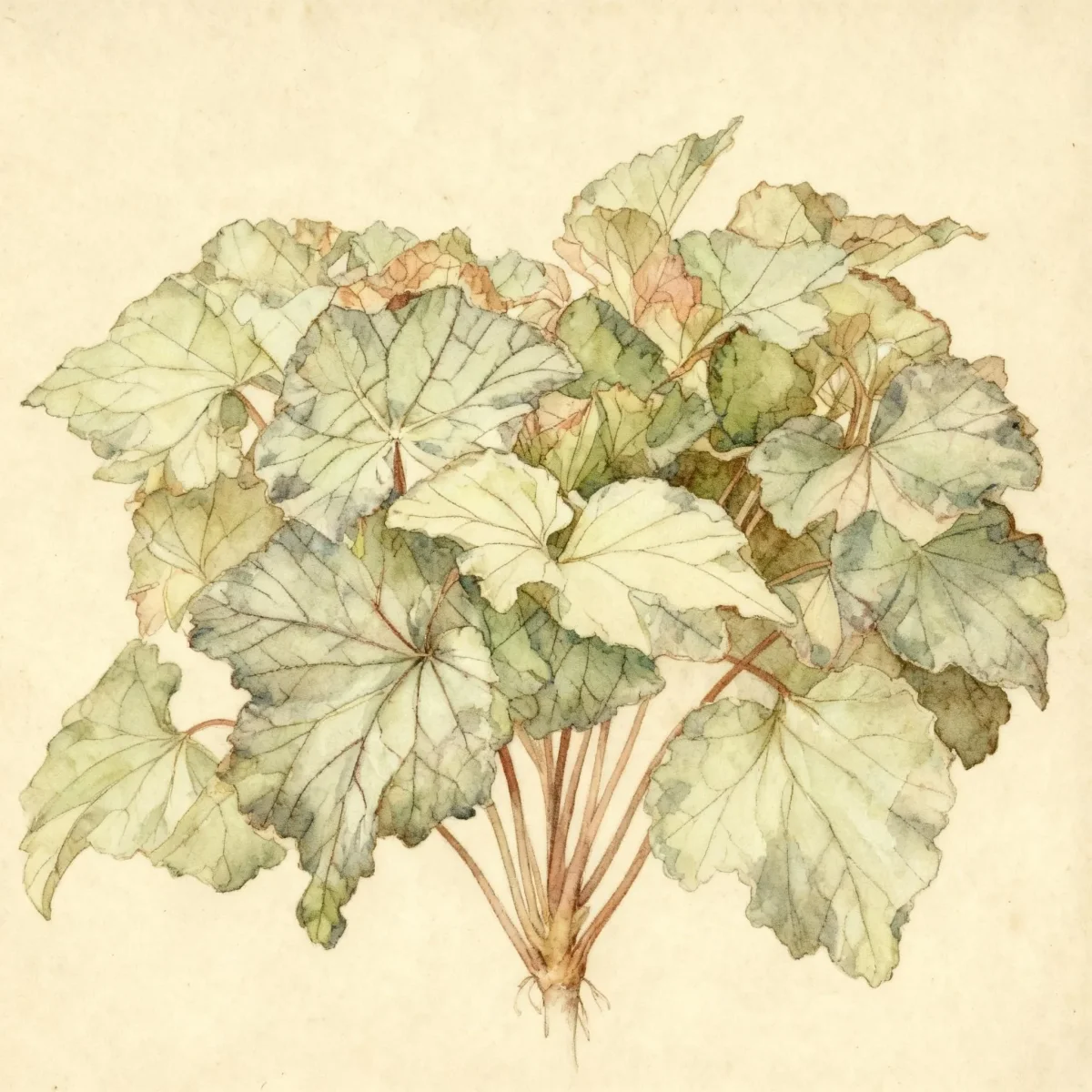
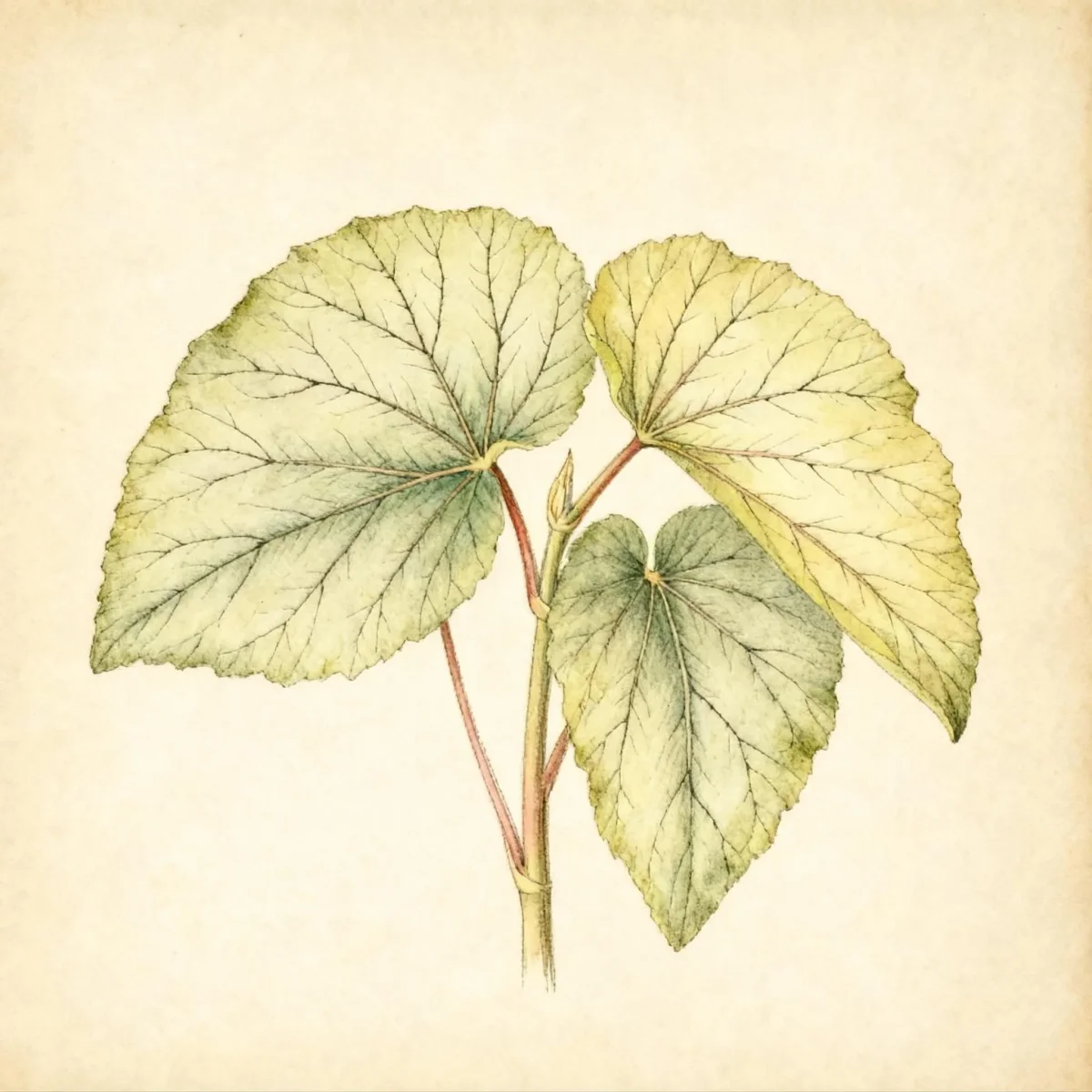
Begonia (Begonia 'Curly Fireflush')
Begonia 'Curly Fireflush' is a rex begonia prized for fuzzy, spiral foliage and fragrant white blooms. Ideal for zones 10-11.
Scroll down to discover growing tips, care requirements, companion plants, and more
Complete Plant Information
Overview
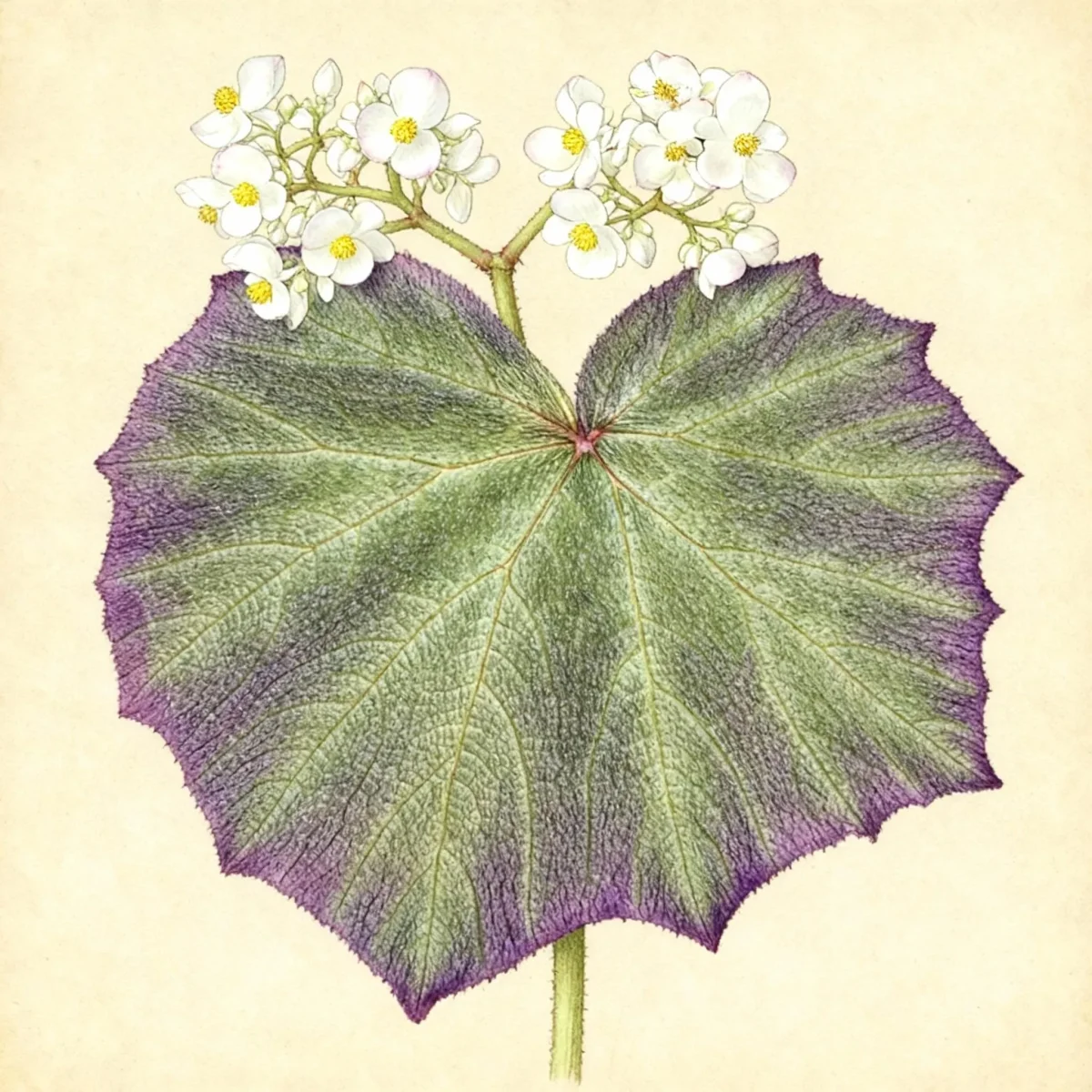
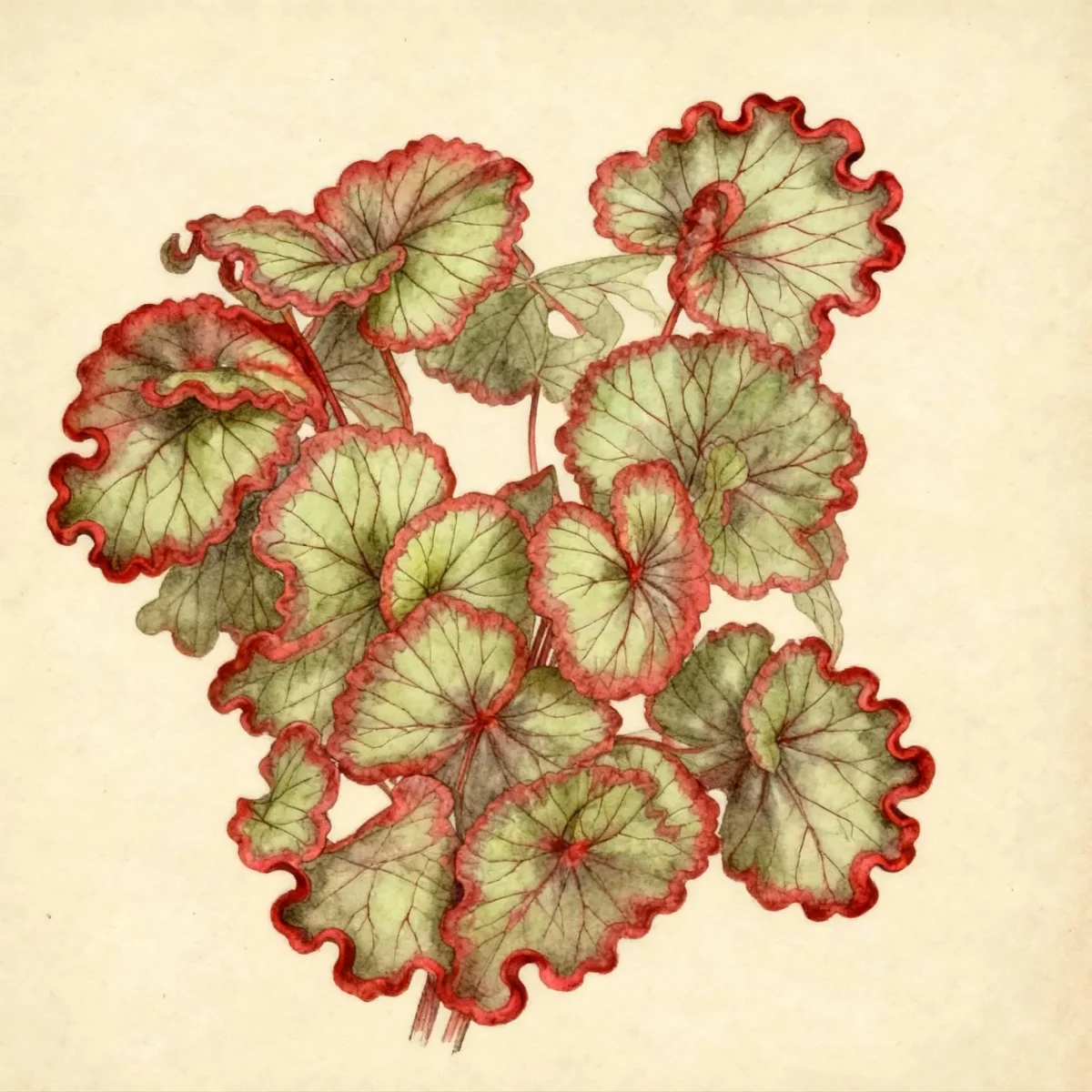
Begonia ‘Curly Fireflush’ is a highly desirable Rex Begonia hybrid, cherished by gardeners for its dramatic, textural foliage that remains vibrant during the growing season. This specific Begonia selection features deep green leaves accented by maroon highlights along the veins, all covered in fine, reddish hairs that give the leaves a unique fuzzy texture. Beyond its stunning leaves, the Begonia ‘Curly Fireflush’ provides sweetly fragrant, white flowers intermittently throughout the warm season.
As a tender herbaceous perennial, this plant thrives outdoors in USDA Zones 10 and 11 but is widely grown as a striking annual or versatile houseplant elsewhere. It offers substantial garden value due to its relatively compact, mounding nature, reaching about 1.5 feet tall and nearly 2 feet wide. Gardeners value the Begonia genus for its diversity, and ‘Curly Fireflush’ stands out with its colorful, spiral leaves.
This particular Begonia cultivar exhibits notable tolerance to hot and humid summer conditions, making it a reliable performer when other ornamentals might struggle. Providing it with consistently moist, well-drained soil and appropriate light levels ensures a healthy display of both foliage and subtle white blooms from your Begonia ‘Curly Fireflush’.
Fast Facts
- Plant Family: Begoniaceae
- Plant Type: Herbaceous perennial
- Hardiness Zones: USDA Zones 10-11
- Size at Maturity:
- Height: 1.25-1.5 ft
- Spread: 1.75-2 ft
- Bloom Time: Seasonal bloomer
- Bloom Description: White
- Sun Exposure: Full sun to part shade
- Water Needs: Medium
- Maintenance Level: Medium
How to Grow
Begin planting Begonia ‘Curly Fireflush’ outdoors once all danger of frost has passed, ensuring ample space, generally 1.75 to 2 feet apart, to encourage good air circulation. This Begonia flourishes in average to moderately fertile, well-drained soils. While it tolerates full sun, dappled or partial shade is preferred, especially in hotter summer climates where a good layer of mulch will help maintain consistent soil moisture and temperature.
Watering should be consistent throughout the active growing period, aiming for soils to remain moist but never soggy; allow the surface to dry slightly between waterings. Although they prefer steady moisture, the thick leaves of the Begonia ‘Curly Fireflush’ help minimize water loss, granting some tolerance to brief dry spells. Consistent moisture prevents stress that could lead to dormancy or foliage drop.
Care involves vigilance regarding air flow to mitigate common fungal issues. As a tender perennial in cooler regions, plan for overwintering. Container-grown plants can be pruned back in the fall and kept in a cool location indoors with reduced watering. Alternatively, cultivate them as houseplants in bright indoor settings until spring signals time to set the Begonia back out.
Landscape Uses
The diverse growing habits of the Begonia genus make them invaluable in varied landscape designs, and Begonia ‘Curly Fireflush’ excels in refined settings. Due to its stunning, textural foliage, this rex hybrid is primarily used where the leaves can be closely appreciated. It performs beautifully as an edging plant along foundations or within mixed annual beds where its mounding form provides structure.
For high-impact displays, utilize the Begonia ‘Curly Fireflush’ in containers, hanging baskets, and window boxes. These placements allow for strategic positioning to maximize the mottled leaves’ visual appeal while ensuring excellent drainage necessary for root health. When using them as houseplants, they bring year-round color and texture to bright indoor corners.
When integrating this Begonia into garden designs, pair it with plants that share similar moisture and light preferences, such as impatiens or hostas, depending on the overall light profile. Its mounding habit offers a nice contrast to trailing annuals spilling over the edges of containers.
Standout Features
Flower Qualities
- Showy
- Fragrant
Noteworthy Characteristics
The Begonia genus encompasses approximately 1,300 species of diverse habits, often easily identified by their fleshy stems and underground rhizomes or tubers. ‘Curly Fireflush’ is specifically identified as a hybrid rex begonia selection, celebrated globally for its beautifully colored, spiral foliage contrasted against its fragrant, white flowers. A key aesthetic feature is the leaf surface, which is covered in tiny red hairs, lending a distinctive fuzzy quality to the deep green and maroon-veined leaves.
Tolerances
N/A
Potential Problems
The primary concerns for Begonia ‘Curly Fireflush’, especially when grown in humid conditions or poor air circulation, revolve around fungal and bacterial diseases. Be alert for signs of bacterial leaf spot, powdery mildew, botrytis (gray mold), and stem rot, all of which thrive in overly damp, stagnant air. Ensure plants are spaced adequately to allow leaves to dry quickly after watering or rain.
Pest monitoring is also crucial. Regularly inspect the undersides of the leaves for common pests such as mealybugs and thrips, treating any infestations immediately to prevent widespread damage. If you are overwintering your Begonia indoors, expect a period of dormancy where the plant may drop its foliage; reduce watering significantly until new growth resumes in the spring.
Frequently Asked Questions
What hardiness zones is Begonia ‘Curly Fireflush’ suitable for?
The Begonia ‘Curly Fireflush’ is winter hardy only in USDA Zones 10 through 11. In all other climates, it is best grown as a seasonal annual or successfully overwintered indoors as a houseplant.
How large does Begonia grow?
Mature plants of Begonia ‘Curly Fireflush’ typically reach a height between 1.25 and 1.5 feet tall, spreading outward to a width of 1.75 to 2 feet, exhibiting a pleasing mounding habit.
What sun exposure does Begonia need?
Begonia ‘Curly Fireflush’ requires an environment ranging from full sun to part shade. For optimal performance, particularly during intense summer heat, provide dappled shade.
When does Begonia bloom?
This plant is noted as a seasonal bloomer, offering clusters of white flowers intermittently throughout the growing season.
Conclusion
Begonia ‘Curly Fireflush’ offers exceptional ornamental value through its fuzzy, architecturally interesting foliage and delicate, fragrant white blooms. Understanding its requirement for consistent moisture and good air circulation is key to maintaining a healthy specimen, whether as an annual feature or a year-round houseplant. Before planting, confirm that your local climate aligns with USDA Zones 10-11, or plan your strategy for winter protection for your Begonia display.
Companion Planting
Selecting appropriate companions is vital to ensuring the long-term health of Begonia ‘Curly Fireflush’. Companion plants should share the Begonia’s medium water needs and preference for bright shade or filtered sunlight. Shade-loving groundcovers or annuals with contrasting leaf textures work excellently beneath taller specimens or alongside them in mixed containers.
Consider pairing this Begonia with foliage plants like Caladiums, which offer equally vibrant colors but generally drier soil tolerances, or shade-loving ferns that enjoy similar humidity levels. Ensure that any pairing allows for adequate space around the Begonia ‘Curly Fireflush’ to promote the necessary air movement which deters fungal pathogens common to the Begoniaceae family.
Propagation Tips
The best time to increase your stock of this attractive Begonia is by taking cuttings from healthy, established plants, usually done in late summer or early fall before moving specimens indoors for winter. Softwood cuttings, taken just below a leaf node, root reliably in a moist, sterile rooting medium like perlite or a peat-based mix.
Ensure cuttings are kept warm and humid during the rooting process, often achieved by covering them with a clear plastic dome or bag to maintain high ambient moisture. Once roots have established, gradually acclimate the new Begonia plants to lower humidity before transplanting them into their own pots for continued growth or overwintering.